Resting quietly along the northern bank of the Irtysh River as it surges toward the Arctic Ocean, Five-Colored Beach Burqin (布尔津五彩滩 – Wucaitan) does not pierce the sky with the upturned eaves of imperial palaces or the imposing grandeur of man-made temples. Instead, it is a pure geological masterpiece sculpted by the hand of nature over millions of years of weathering, concealing within its vivid strata of rock and gravel an epic chronicle of shifting dynasties across the vast expanse of Xinjiang. Strategically situated in the Altay region, this site historically served as a vital geographical crossroads—a fiercely contested focal point for northern nomadic empires along the steppe corridor linking Asia and Europe.
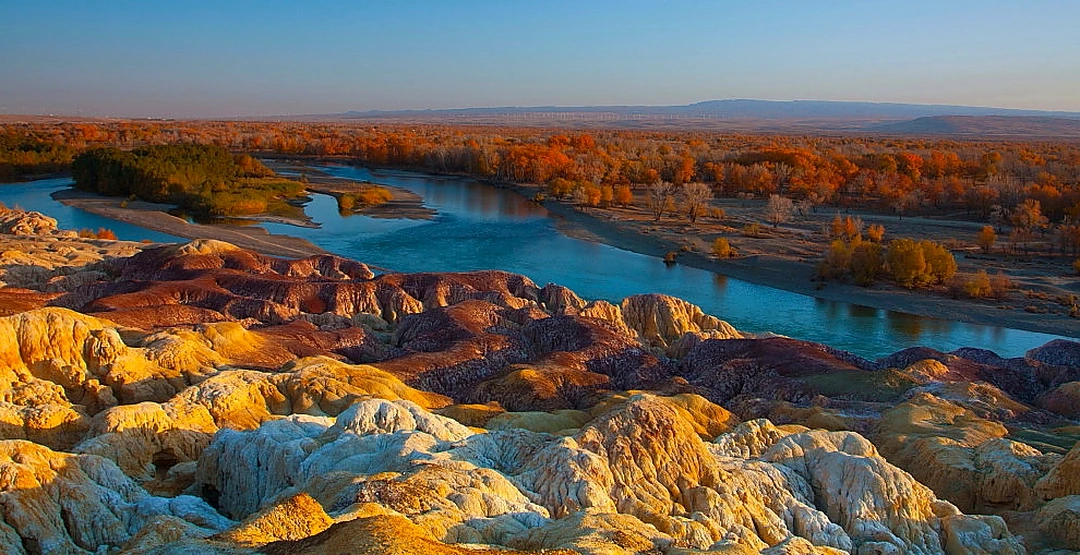
Turning back the pages of ancient history from the pre-Qin era through the Han and Tang dynasties, the land of Burqin was never tranquil. It once served as an expansive grazing ground and a contested domain for proud nomadic peoples, including the Saka, Xiongnu, Rouran, and Göktürks. The thunder of galloping hooves and the whistle of arrows slicing through the wind once echoed all along the banks of the Irtysh River. Over the centuries, successive waves of nomadic culture intertwined and layered upon one another, transforming this territory into a crucial military and commercial corridor where rival tribes rose and fell, each leaving an indelible mark on the frontier’s rugged history.
By the Yuan dynasty, the meteoric rise of the Mongol Empire redrew the entire geopolitical map of the region. Five-Colored Beach and the surrounding Burqin area became a natural boundary and a flashpoint of power struggles between two mighty khanates descended from Genghis Khan’s lineage: the Ögedei Khanate and the Chagatai Khanate. The riverside steppes were not only garrisoned by elite Mongol cavalry units, but also served as a vital waystation for merchant caravans traveling the Northern Silk Road. Controlling the strategic water sources and pastures of Burqin meant holding the upper hand in governing trade routes and military movements across the towering Altay Mountains.
Entering the Qing dynasty under the reign of the Qianlong Emperor, following the imperial pacification of the Dzungar Khanate, the strategic standing of the Altay region was reinforced even further. Recognizing the vital importance of this borderland, the Qing court progressively bolstered its garrison forces and established a strict frontier administration to maintain stability across the entire Western Regions. This military presence reached a defining milestone in the late Qing period—specifically in 1907—when the court officially established a strategic border post along the Burqin River. Beyond patrolling and securing the frontier, this outpost laid the formal administrative foundation for governing the region in the modern era.
The very name of this land carries deep, multi-ethnic cultural resonance. The toponym “Burqin” (Búrjin) emerged from linguistic exchanges among indigenous peoples. In the Kazakh language, “Burqin” evokes vivid imagery meaning “nesting ground on the steppe” or “riverbank where male camels graze,” faithfully reflecting a pastoral way of life intimately bound to nature and livestock. Conversely, in Mongolian, the word describes a rugged topography where “three mountains flank a single river.” It was not until the late 20th century, alongside the rapid growth of geological tourism and environmental conservation, that the modern name “Five-Colored Beach” was proudly coined to celebrate this dazzling stretch of Yardang hills—a ribbon of otherworldly beauty draped along a frontier river.
Viewed through the topographical contours of the Altay Mountains and the rushing current of the Irtysh—the only river in China that flows northward to empty into the Arctic Ocean—Five-Colored Beach Burqin occupies an extraordinary geomantic nexus embodying the Eastern feng shui philosophy of “water and fire in mutual harmony, yin and yang in opposition.” Seen from above, the scenic area’s spatial layout conforms to the classic formation of “precipitous north, tranquil south,” resembling a miraculous mirror image painted by nature. The northern bank consists of rugged Yardang landforms with jagged cliffs thrusting skyward, radiating potent, masculine yang energy. Directly across the jade-green ribbon of water, the southern bank unfolds into a low-lying alluvial plain, opening up a serene ecological expanse brimming with aquatic energy and vitality. The simultaneous presence of fiery reds on the northern bank and lush greens on the southern bank creates an exquisite energetic equilibrium, where the “fire” of desert sun and wind is gracefully tempered by the “water” of the river and its primeval vegetation.
In terms of geological formation and tectonic evolution, Five-Colored Beach is a textbook example of Quaternary lacustrine-alluvial sedimentary strata shaped over millions of years of weathering and extreme climatic shifts. Its terrain is composed of an intricate layering of mudstone, soft sandstone, and gravel conglomerates. The secret behind its legendary “five-colored” palette lies in the uneven distribution of mineral compounds within the earth. Through intense oxidation under the scorching desert sun and relentless wind erosion, iron oxide compounds have stained the cliff faces in hues of deep crimson, dark purple, umber, and burnished gold; meanwhile, copper oxides and natural mineral salts weave contrasting streaks of emerald green, azure, and ash gray throughout the rock. Because each sedimentary layer possesses a distinct hardness and chemical composition, the erosive forces of the Irtysh River and the fierce local gales carve the rock at varying rates, sculpting a richly terraced geological complex.
Delving deeper into the architecture of the northern bank, visitors are left awestruck by nature’s monumental sculpting process. Tens of millennia of howling desert winds combined with surging seasonal floodwaters have gouged deep vertical gullies and towering stone pillars into the sandstone. Rather than soft, rolling contours, the landscape takes on the appearance of ancient fortresses, opulent palaces, and sacred stupas reflected in the river below. The sheer, razor-edged cliffs project a powerful, rugged, and majestic presence that shifts its appearance with every passing hour. When the late afternoon sun casts slanting rays across the metal-rich rock strata, the entire northern shoreline ignites like a magnificent five-colored velvet tapestry, vividly illustrating the dynamic interplay of the Five Elements: Metal, Wood, Water, Fire, and Earth.
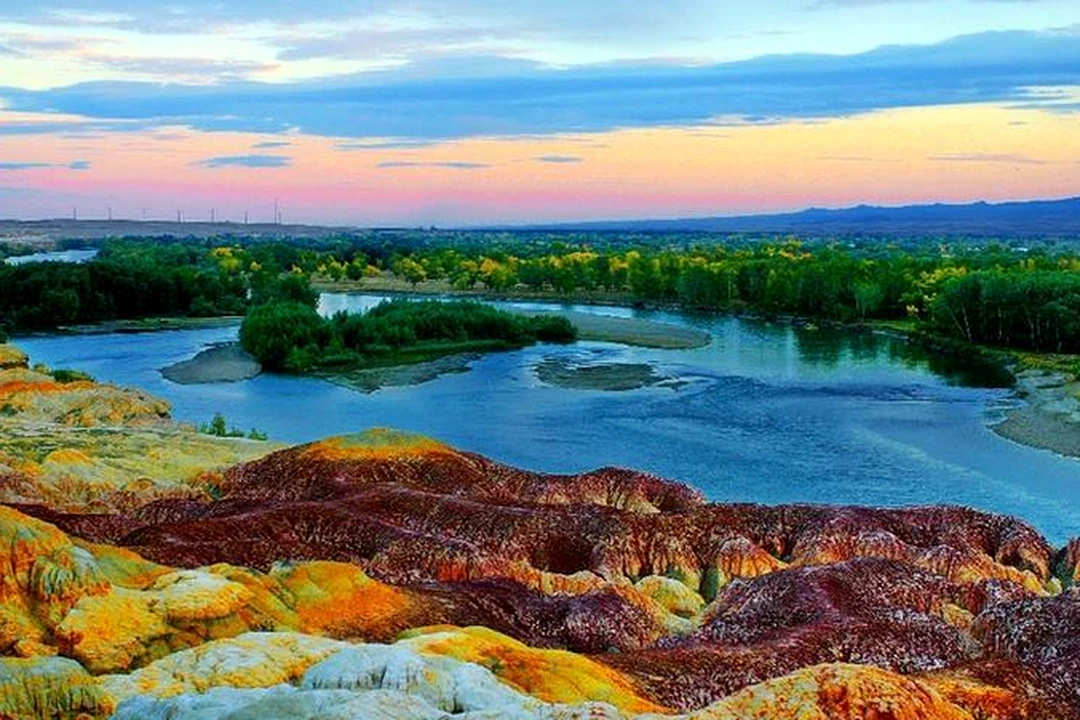
In stark contrast to the jagged severity of the northern shore, the landscape of the southern bank exudes the tranquil, gentle grace of a serene sanctuary steeped in yin energy. Here lies an endless oasis blanketed by a primeval forest of desert poplars (Populus euphratica)—a legendary species celebrated as the immortal symbol of the desert for living a thousand years without dying, standing a thousand years after death without falling, and lying a thousand years after falling without decaying. Together with flooded wetlands and riparian sandbars, this poplar forest forms a natural ecological buffer that moderates the microclimate across the entire valley. The interplay between the rushing river in the center, the blazing multicolored desert cliffs to the north, and the lush, water-nourished woodland to the south not only completes a Yardang landform unmatched anywhere else in the world, but also stands as a testament to nature’s subtle artistry in uniting complex geology with timeless geomantic harmony.
Commanding a prime setting where the Irtysh River carves its path through the Xinjiang Uyghur Autonomous Region, the spatial planning of the Five-Colored Beach Burqin Scenic Area is a masterclass in national AAAA-rated ecotourism infrastructure. The entire site was developed under a strict design philosophy: “minimal intervention, ecological priority, and regional authenticity.” The overall layout is divided into clearly defined functional zones that seamlessly connect the vibrant Yardang formations of the northern bank with the dense broadleaf woodland of the southern shore. Rather than imposing heavy concrete structures upon the land, the built environment dissolves organically into the wilderness, using thoughtful spatial design to honor and showcase the ancient geological wonders.
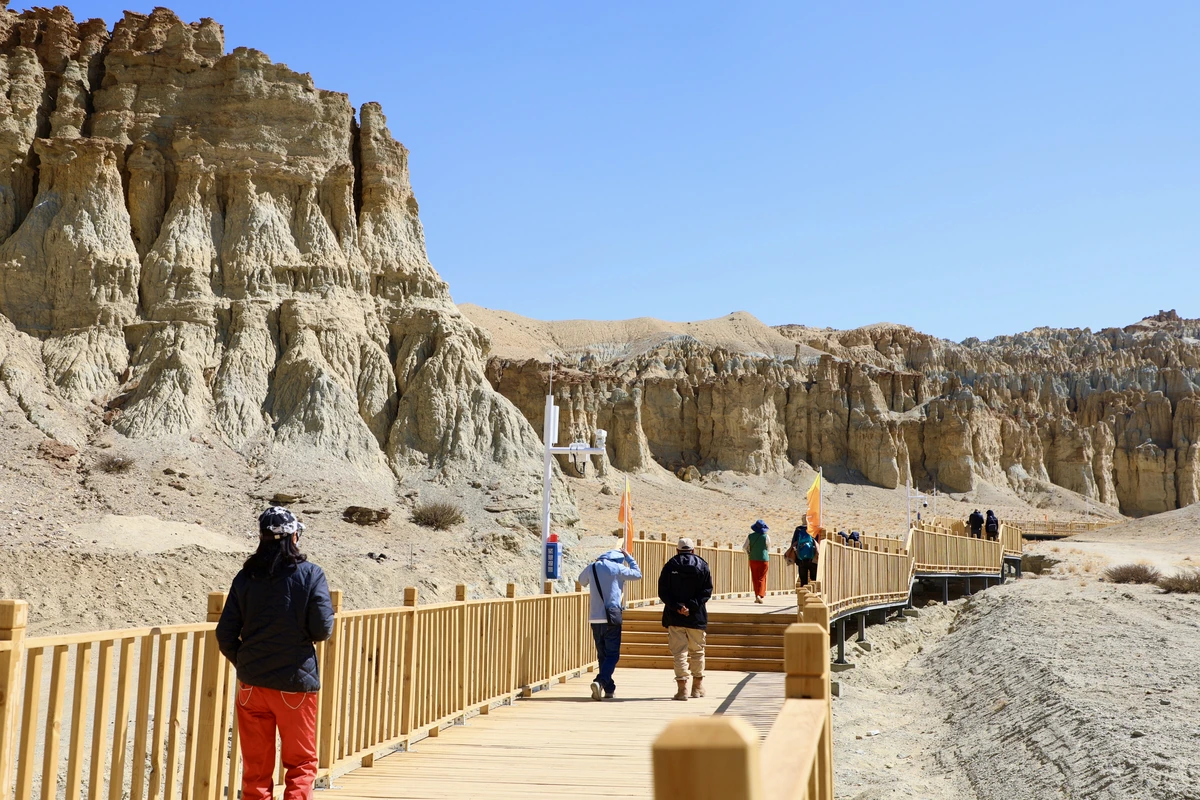
To safeguard the million-year-old Yardang mudstone formations—which are exceptionally fragile and prone to erosion beneath human footsteps—designers constructed an elevated network of wooden boardwalks stretching for kilometers, winding gracefully through the folds of the canyon. The viewing walkways and observation decks are crafted from specialized, corrosion-resistant timber such as Finnish pine and redwood paired with weathering-steel structural frames. This pairing of high-performance materials not only withstands the region’s extreme temperature swings and fierce frontier sandstorms, but also lends a warm, earthy palette that blends effortlessly into the terracotta, ochre, and crimson tones of the geological basin.
The ingenuity of Five-Colored Beach’s engineering also lies hidden beneath the surface. To anchor the observation decks without fracturing or deforming the delicate sedimentary strata, engineers utilized helical screw-pile foundations driven deep into the mudstone. This technique eliminates the need for large-scale excavation, preserving the vital underground aquifers that sustain the riverside flora. Meanwhile, along sections directly exposed to the powerful current of the Irtysh River, an eco-friendly flood-control system employs advanced gabion baskets. These wire-mesh cages filled with natural river cobbles dissipate the destructive kinetic energy of seasonal floodwaters and prevent bank erosion while maintaining unobstructed hydrological exchange between groundwater and surface flow.
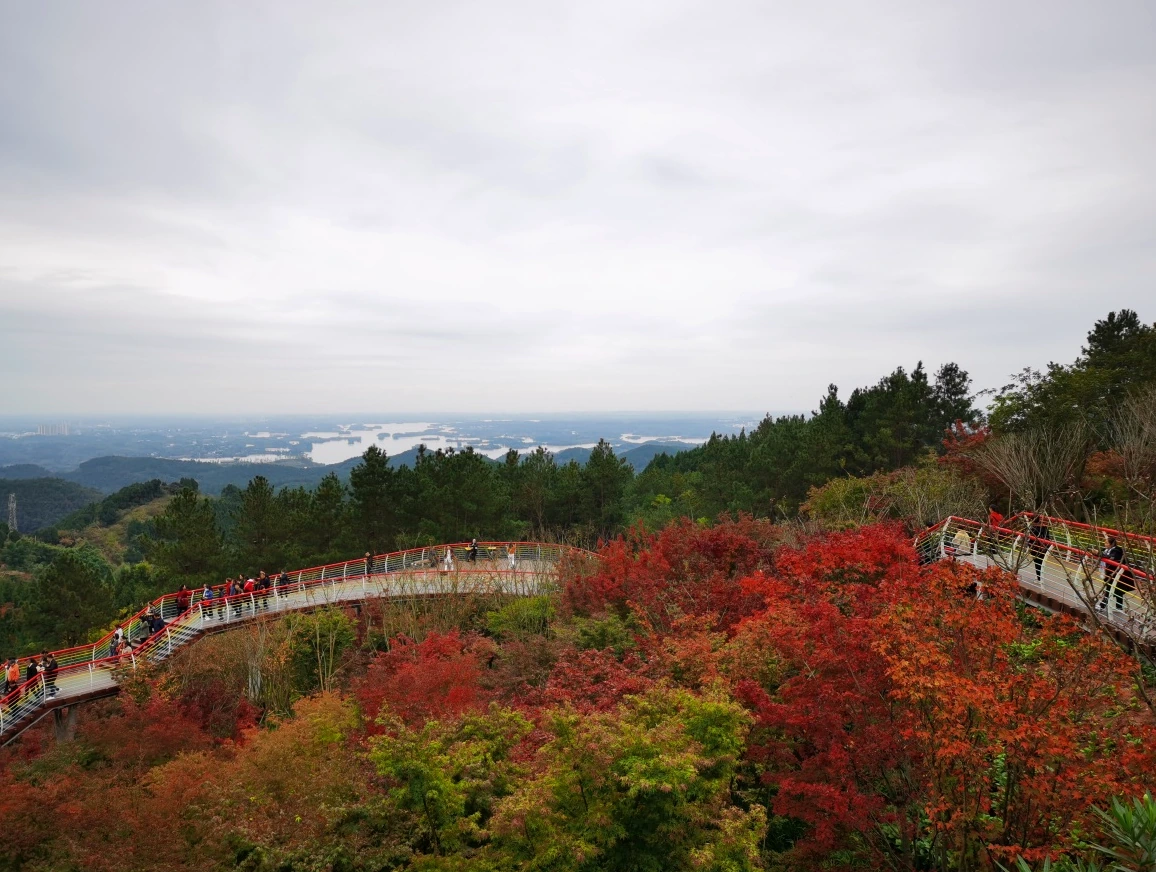
In its architectural language and aesthetic sensibility, the elevated observation towers serve as artistic focal points infused with nomadic heritage. Their design distills and reinterprets the traditional domed silhouette of the yurt—the iconic dwelling central to the ancestral lifestyle of the Altay Kazakh people. Sweeping roof curves paired with modern load-bearing steel frames provide unobstructed 360-degree panoramic views—allowing visitors to take in the dramatic contrast of “one river dividing fire and ice, two distinct worlds on either shore”—while paying deep homage to indigenous cultural heritage. This fusion of modern engineering and locally rooted spatial design has established Five-Colored Beach Burqin as a benchmark for sustainable architectural infrastructure on the global tourism map.
As twilight settles over the Irtysh River, Five-Colored Beach transforms into a spellbinding visual installation thanks to a nocturnal lighting system guided by the aesthetic principle of “borrowing natural scenery to sculpt light.” Rather than flooding the night sky with high-powered spotlights that would strip the terrain of its primal mystery, lighting architects discreetly recessed LED fixtures beneath both sides of the wooden boardwalks and along the base of the millennia-old cliffs. Calibrated to a warm color temperature between 2700K and 3000K, the gentle amber and golden glow harmonizes seamlessly with the lingering hues of the frontier sunset. Boasting a superior color rendering index (Ra > 90), the light grazes across every eroded crevice, faithfully accentuating the vertical striations and intricate stratification of the Yardang formations. The multi-hued limestone and mudstone cliffs seem to awaken in the dark, emerging as a monumental cubist relief against the night. The luminous splendor of the northern Yardang shore grows all the more haunting when juxtaposed against the silent desert poplar forest casting dark reflections onto the inky waters of the southern bank.
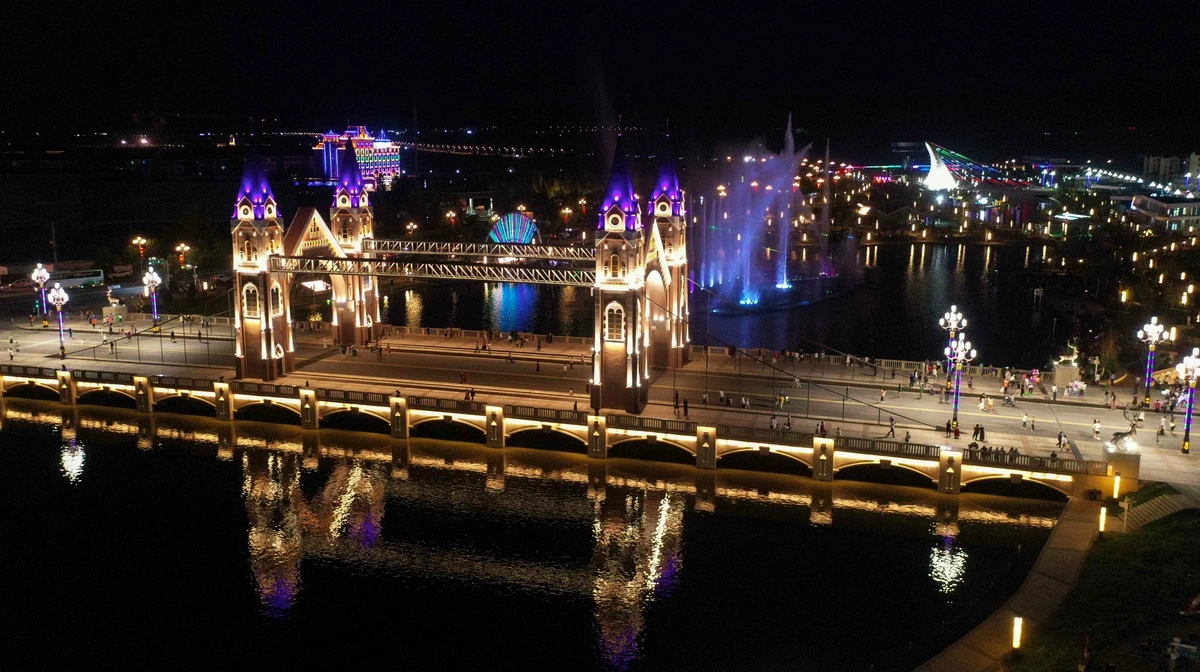
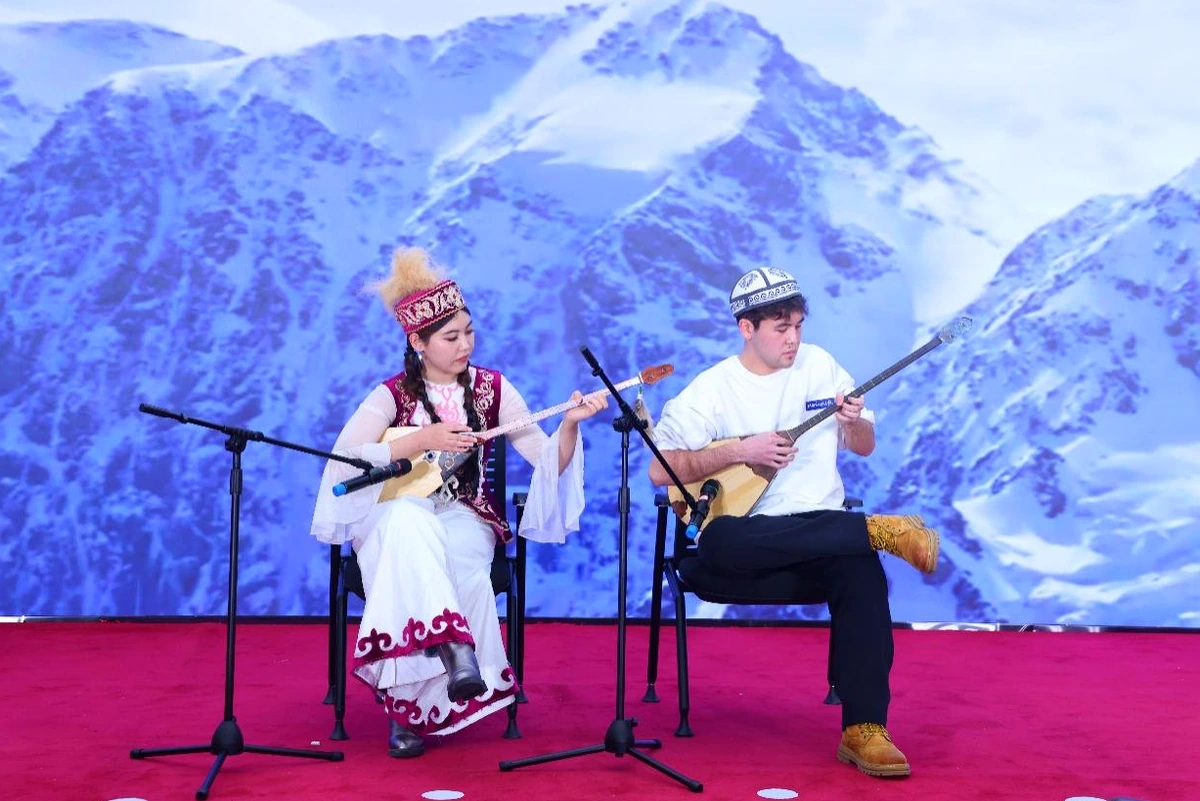
Beyond its visual feast of light, the cultural precinct within the Five-Colored Beach service area preserves and showcases the priceless intangible cultural heritage of the Kazakh nomadic community. In the crisp evening air of Northern Xinjiang, the resonant plucking of the dombra rings out like wind sweeping across open grasslands. Traditional akyn poet-singers chant ancient epics recounting tales of triumph over nature and timeless romance in lyrical verse. As the tempo quickens, dancers perform the lively Kara Zhorga (Black Steed Dance), captivating onlookers with expressive shoulder shimmies and fluid hip movements that mimic a proud Kazakh warrior galloping on horseback. The interplay of rustic traditional instruments and high-spirited folk dance breathes vibrant life into a geological landscape that might otherwise feel frozen in timeless stillness.
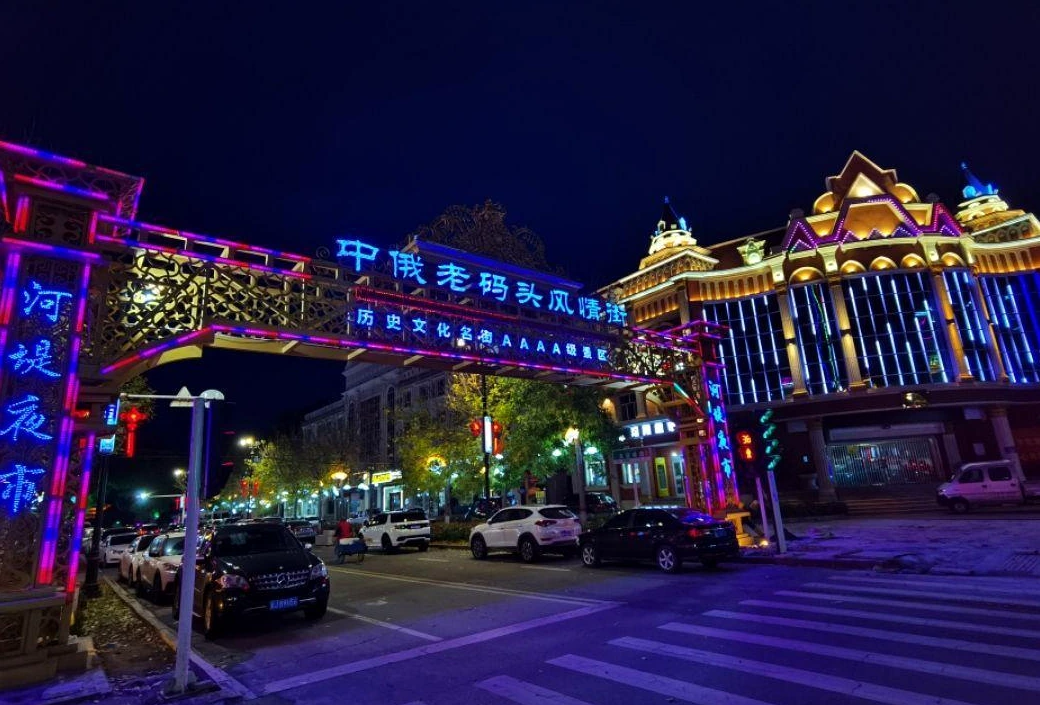
Leaving the core scenic area to return to the county seat of Burqin, the evening’s charm continues at the Riverside Night Market (Hédi Yèshì – 河堤夜市). Stretching along the banks of the Arctic-bound river, this lively market stands out for its wooden architecture modeled after classic Russian styles, evoking the bustling era of cross-border trade along the Northern Silk Road. Beneath rows of glowing lanterns, the enticing aroma of frontier cuisine fills the air. Visitors should not miss the chance to savor time-honored specialties prepared from cold-water fish caught in the Irtysh River, such as fragrant charcoal-grilled pike and perch. The firm, naturally sweet fillets are seasoned with sea salt, chili powder, and aromatic Western Regions cumin, best paired with a chilled, effervescent glass of fermented barley kvass lightly sweetened with wildflower honey. Burqin’s nightlife blends the lively bustle of a northern bazaar with the poetic calm of a quiet Far Eastern river town.
This seamless fusion of contemporary lighting art, Kazakh folk performance, and distinctive night-market gastronomy turns a visit to Five-Colored Beach Burqin into a multisensory journey. As the quiet night envelops this remote borderland, the boundary between millions of years of geological history and living contemporary culture dissolves. Amber light caressing the Yardang cliffs, the strains of the dombra drifting across the Irtysh River, and the lingering warmth of local kvass on the palate come together as Xinjiang’s heartfelt welcome to nostalgic wanderers.
Situated at the cultural crossroads of the Irtysh River basin, Burqin County enchants visitors not only with its breathtaking five-colored sunsets, but also as a cradle of diverse culinary heritage—a delicious synthesis of free-spirited Kazakh nomadism, bold Hui seasoning techniques, and subtle Eastern European notes inherited from neighboring Russia. At the heart of the local dining experience is the prized cold-water catch of the Irtysh, China’s sole river flowing northward to the Arctic Ocean. Fed year-round by pure, mineral-rich, oxygen-abundant glacial meltwater from the Altay Mountains, the river nurtures cold-water fish renowned for firm, delicately sweet flesh that few other waters can rival.
When it comes to the cuisine of Five-Colored Beach, the undisputed centerpiece of any table is Irtysh grilled fish—a culinary craft officially recognized as an intangible cultural heritage of the region. Local fishmongers select wild cold-water species caught fresh that very day, such as northern pike, European perch, and river burbot. The fish is cleaned and butterflied with its thick scales left intact to lock in moisture, then lightly seasoned with sea salt, finely minced onion, and fragrant cumin seeds. The secret behind its signature heritage flavor lies in skewering the fish onto fresh red willow branches harvested from the riverbank and arranging them in a circle around a glowing bed of fruitwood charcoal. Absorbing both the radiant heat of the embers and the natural aromatic oils released from the red willow bark, the fish cooks to perfection—yielding a crispy, savory skin over tender, succulent, richly flavored flesh that is indulgent without ever feeling heavy.
Alongside river specialties, the culinary tradition of the Altay steppes treats travelers to the famed Kazakh hand-grabbed mutton (Shouzhuarou). Raised free-range across high-altitude pastures where they drink glacial spring water and graze on wild medicinal herbs, Altay fat-tailed sheep produce remarkably tender meat completely free of gaminess. Local cooks keep seasonings wonderfully simple: large cuts of mutton are simmered in a cast-iron cauldron with crystal-clear snowmelt water, a touch of onion, and rock salt. This pure minimalism elevates the meat’s natural sweetness, richness, and savory aroma, traditionally eaten by hand in accordance with centuries-old nomadic custom. For more elaborate banquets, guests can also indulge in the Whole Fish Feast—an extravagant spread featuring over a dozen meticulously prepared dishes crafted from Irtysh river fish, ranging from spicy braises and soy-steamed fillets to crispy golden-fried delicacies.

To balance the rich flavors of meat and fish, Kazakh tea culture offers a soothing, warming pause amid the crisp frontier air. A steaming bowl of Kazakh milk tea—brewed by simmering compressed brick black tea with freshly milked cow’s milk, a knob of rich butter, and a pinch of rock salt—releases an inviting aroma that wards off the northwest chill. Locals typically pair this tea with tandoor-baked naan bread spread with fresh butter and accompanied by pieces of kurt, tangy sun-dried yogurt curds traditionally stored for winter. The harmony of brisk tea tannins, bright yogurt acidity, and creamy butterfat serves not only as a folk remedy to dispel cold and aid digestion, but also as a heartfelt expression of Burqin hospitality extended to every traveler passing through.
Exploring the natural masterpiece of Five-Colored Beach Burqin requires thoughtful timing to capture the most vivid chromatic displays of Xinjiang. The ideal visiting window runs from May through October each year. Within this season, photographers and geologists alike pinpoint the golden hour—roughly 1.5 hours before sunset—as the prime moment to visit. At this time, the low-angled evening sun strikes the iron-oxide-rich strata head-on, igniting a surreal spectrum of deep crimson, burnt orange, and radiant gold. Conversely, from November through April, harsh winter grips Northern Xinjiang, plunging temperatures below -30°C alongside fierce blizzards that freeze the landscape and close most connecting roadways.
Getting there is straightforward, as Five-Colored Beach sits in a convenient location just 24 kilometers from downtown Burqin County. The best way to reach the site is by hiring a private chartered car or self-driving along Provincial Highway S232. The smooth, paved drive takes only about 30 minutes, carrying travelers across expansive plains and lush green corridors skirting the Irtysh River valley. Traveling by private vehicle also provides maximum flexibility, allowing you to time your arrival precisely as the setting sun begins to bathe the colorful rock formations in golden light.
Because the region features a semi-arid climate with sharp diurnal temperature swings and intense ultraviolet radiation typical of Northwest China, packing smartly is essential for a comfortable trip. Visitors should bring windproof and well-insulated layers, as brisk breezes sweeping through the river valley in the late afternoon carry a biting chill. Sandstorm-protective eyewear and high-SPF sunscreen are also indispensable for shielding your skin and eyes from harsh sunlight and fine windblown grit. For photography enthusiasts, a camera equipped with a long telephoto lens will prove invaluable, letting you capture the intricate weathered textures of the Yardang pillars across the river without venturing too close to the fragile terrain.
Alongside proper preparation, environmental stewardship and adherence to conservation rules at Five-Colored Beach are mandatory for every visitor. Sculpted over millions of years by wind and water, the Yardang formations here are extraordinarily delicate and prone to collapse. Consequently, park authorities strictly require all visitors to remain on the designated wooden stairways and elevated boardwalks. Stepping off the wooden paths, climbing, trampling, or carving onto the earthen pillars is strictly prohibited. Furthermore, because the river valley contains dense vegetation and dry poplar groves that can easily ignite, lighting open fires anywhere within the valley is strictly forbidden to prevent wildfires.
After soaking in the unforgettable sunset at Five-Colored Beach, you can head back into downtown Burqin to indulge in celebrated local specialties like charcoal-grilled cold-water fish at the night market or sip a refreshing glass of frontier barley kvass. For a seamless journey that optimizes travel times and eliminates the hassle of complex borderland logistics, consider booking an all-inclusive tour package to ensure the most rewarding and memorable expedition across Xinjiang.