Tucked away within a deep valley of the Altai Mountains in northern Xinjiang, the name “Kanas” carries the spirit of a sacred land, tracing back to ancient Mongolian roots meaning roughly “mysterious, serene beauty” or “water nestled within a deep gorge.” The name first appeared in classical texts and steppe maps during the Yuan Dynasty, marking turquoise waters reflecting towering conifers year-round. Across thousands of years of wind and weather, this setting is not only a striking geological formation of nature, but also a quiet witness to waves of migration, free-roaming nomadic life, and rivalries among peoples of the Central Asian steppes.
Human settlement across the Kanas highlands stretches back to pre-Qin eras, when Saka groups herded livestock along fertile glacial valleys. By the Han Dynasty, the region became strategic ground for the Xiongnu confederation before seeing the rise of Tiele tribes during the Tang Dynasty. Under the Anxi Protectorate—the Tang court’s western administrative authority—Kanas served both as an outpost along the northern Silk Road corridor and as rich pastureland raising sturdy warhorses. During the Liao and Jin periods, the presence of groups such as the Tie’le/Kipchak-related clans and Naiman tribes turned the basin into a varied cultural crossroads where nomadic life met wild nature.
Historical shifts intensified under the Yuan Dynasty as Mongol rule expanded across wide territories. At that time, Kanas came under direct administration tied to upper Yenisei jurisdictions, acting as an important transport and supply link between central territories and distant Siberia. By the Ming Dynasty, it became core herding territory for Oirat Mongol confederations, notably under the rise of the Dzungar Khanate. The Dzungars made the Altai valleys a strong military and spiritual base where older customs and steppe independence endured amid shifts in the Central Plains.
The fall of the Dzungar Khanate in the mid-eighteenth century under Qing campaigns under Emperor Qianlong opened a new chapter in Kanas history. After pacifying the region, the Qing court brought Kanas into formal administrative oversight under frontier officials. By the early twentieth century, amid shifting regional rule in Xinjiang, the area was folded into Altai administrative districts, gradually moving from a remote steppe frontier into a distinctive geopolitical point along the northwestern border.
Kanas’s historical imprint is also preserved across geographical gazetteers and regional chronicles, which depict local life and customs in detail. Records note the Tuva people—longstanding residents keeping shamanistic traditions who view Kanas’s waters and forests as sacred ground guarded by nature spirits. Pairing historical threads, nature-attuned customs, and glacial terrain turns Kanas into both a scenic landmark and a rich cultural storehouse of northern Xinjiang.
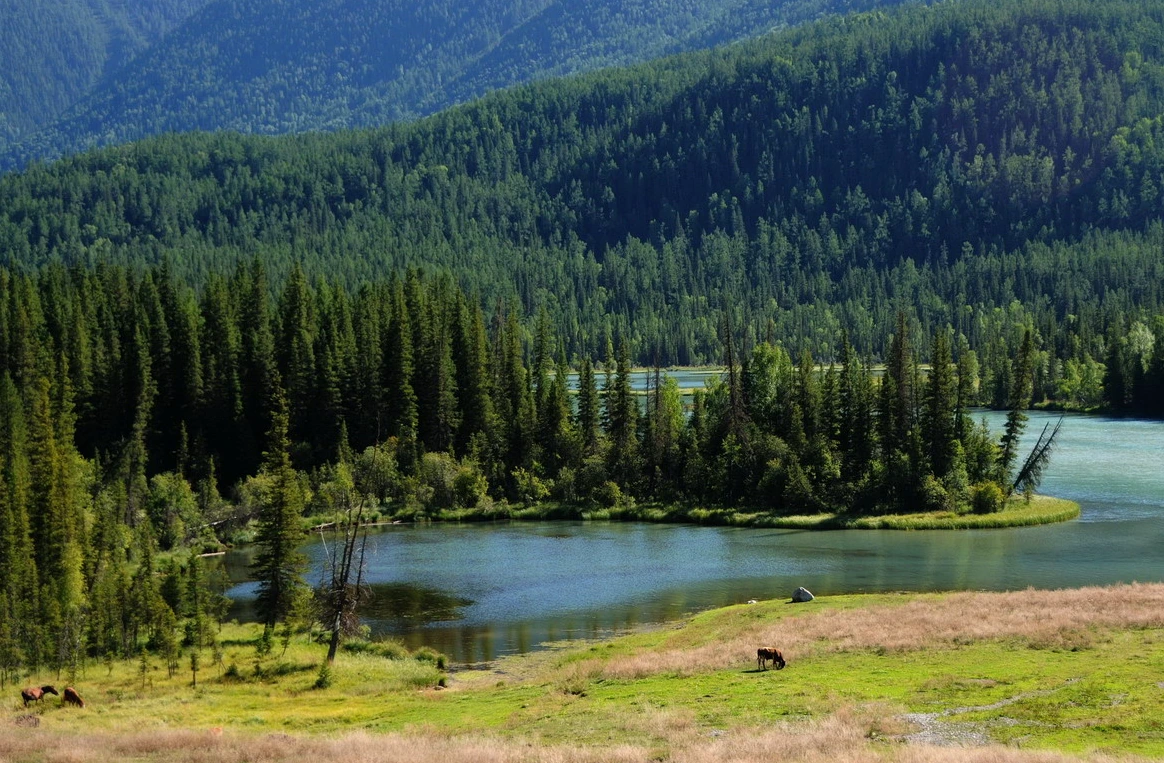
Viewed through modern geology and traditional Eastern geomancy, Kanas Lake is not only a scenic highland spot, but also a notable glacial basin shaped over time. During Quaternary glaciations roughly 200,000 to 10,000 years ago, large glaciers flowing down from the Altai carved a deep U-shaped trough. As glacial ice retreated, moraine ridges dammed natural drainage to form a prominent moraine-dammed lake in northern Xinjiang. Sitting at 1,374 meters above sea level, the lake covers roughly 45.73 square kilometers and reaches a maximum depth of 188.5 meters, making its narrow, winding basin one of the deepest glacial freshwater lakes in China.
In broader feng shui terms, terrain around Kanas Lake presents a classic mountain-and-water setting of “sheltering wind and gathering qi.” Anchoring the northern end of the valley is snow-capped Friendship Peak at 4,374 meters—near where China, Russia, and Mongolia meet. High ridges along the flanks curve like sheltering arms while surrounding hills temper cold northern winds, helping water and mountain air settle calmly inside the valley basin.
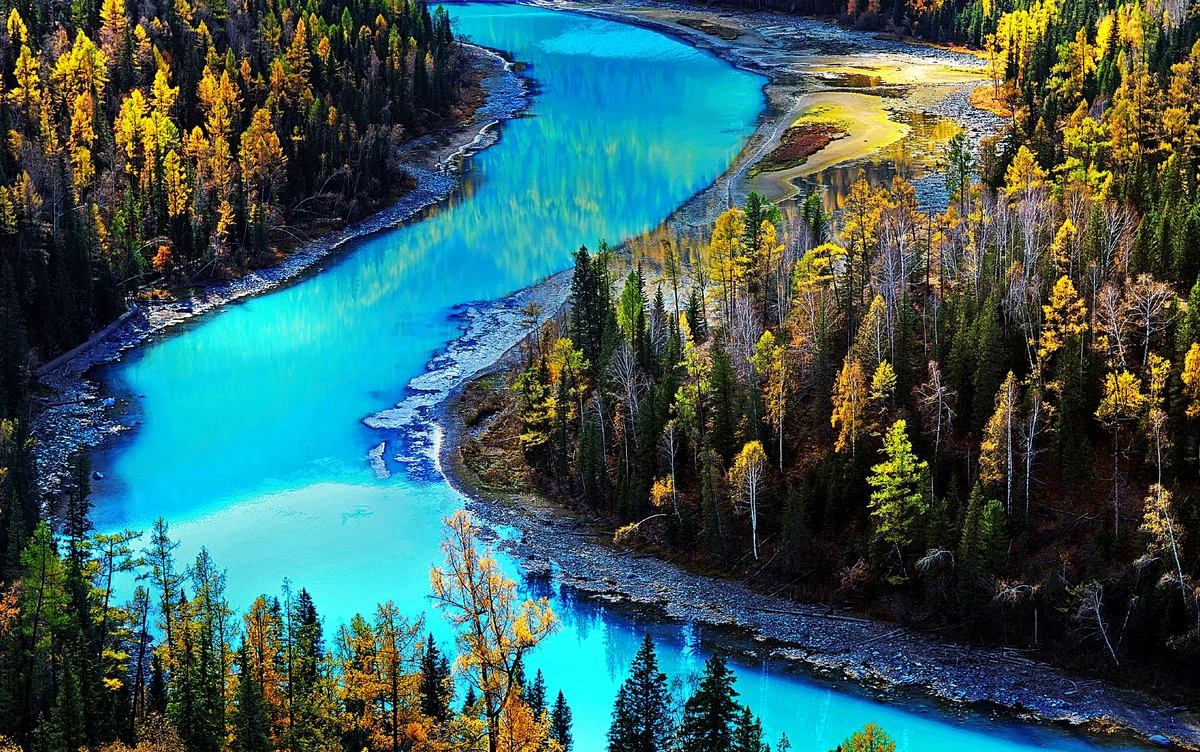
At the heart of that sheltered basin, Kanas Lake gathers glacial meltwater and mountain streams. In traditional geomancy, deep, calm water represents yin balance alongside surrounding rock and ridges; from the southern outlet, emerald water winds southward into the scenic Kanas River. Curving past gravel bars and primeval forest, the river traces a gentle bend through the valley while helping moderate local microclimate and support centuries of pastoral life.
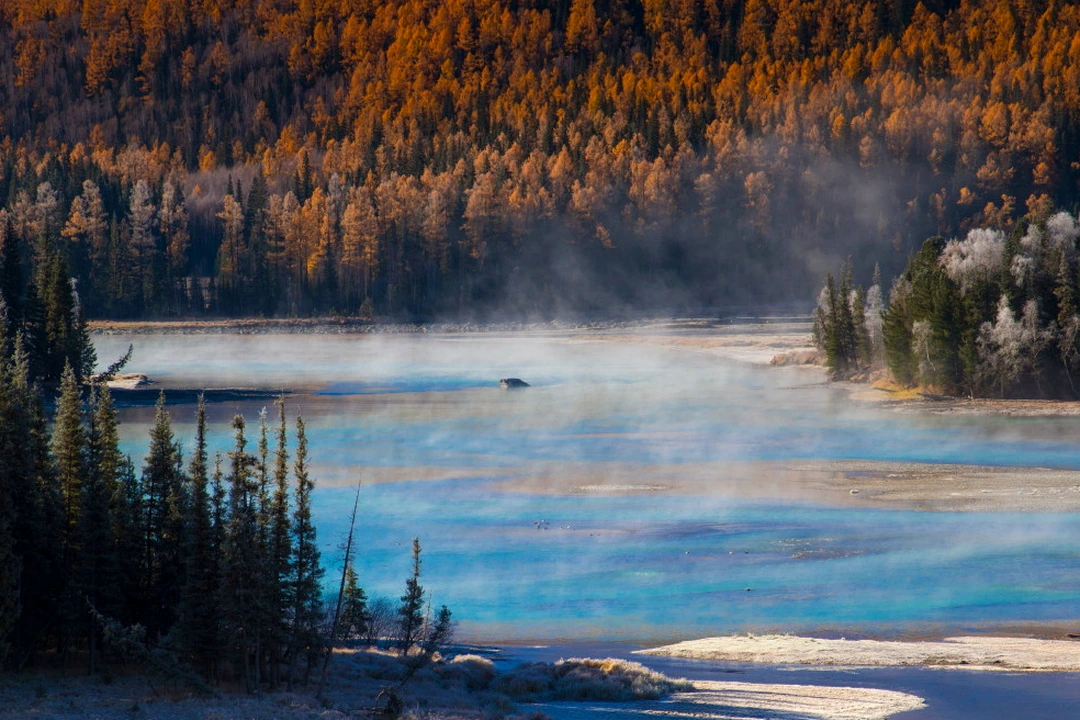
Signature scenery at Kanas comes from the close tie among snow peaks, clear lake waters, and dense northern forests. Framing the shoreline are stands of Siberian larch and spruce rooted in glacial terrain. Seasonal shifts across Siberian larch groves—from soft green in summer to bright gold and amber in autumn—bring clear seasonal rhythm as morning mist drifts over water and pine scent carries on the breeze.
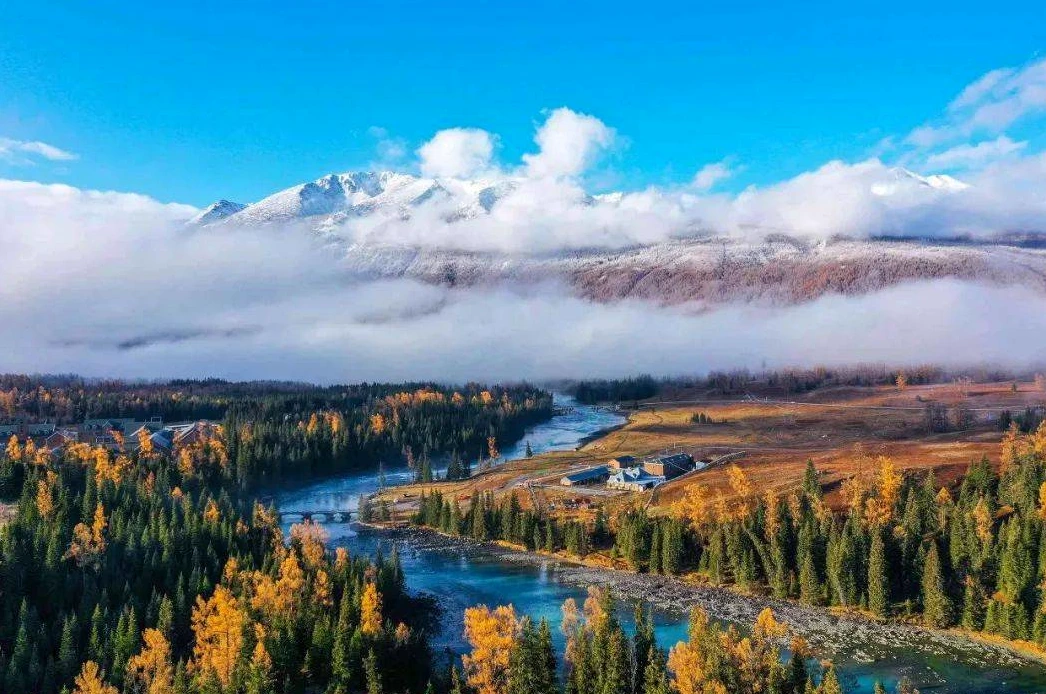
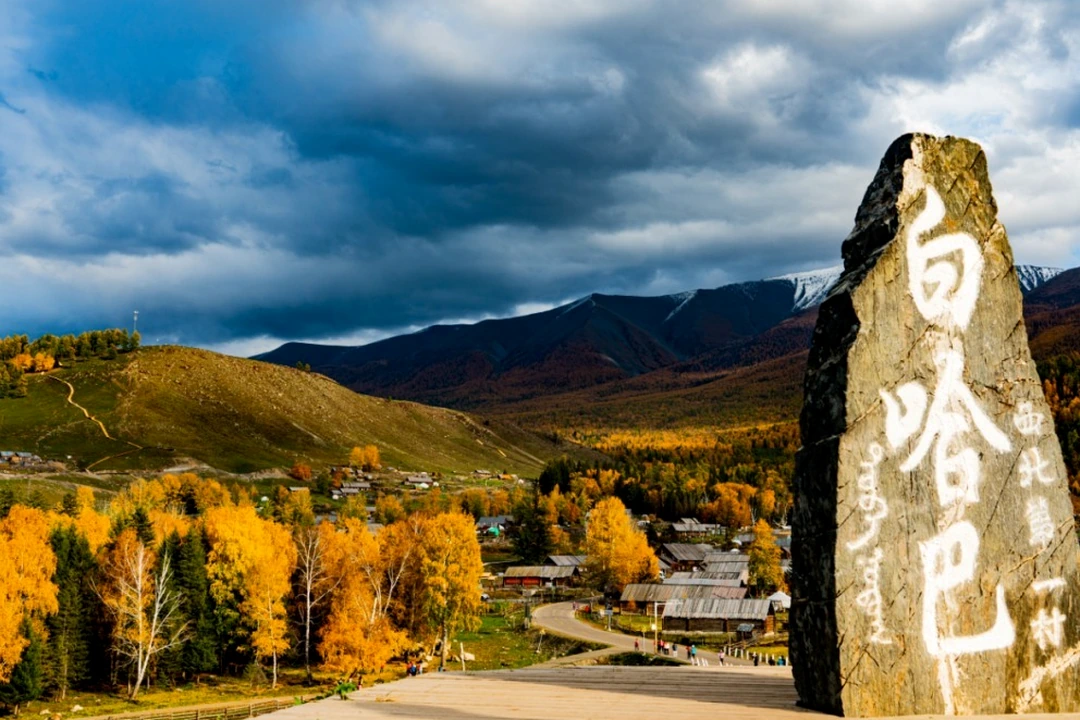
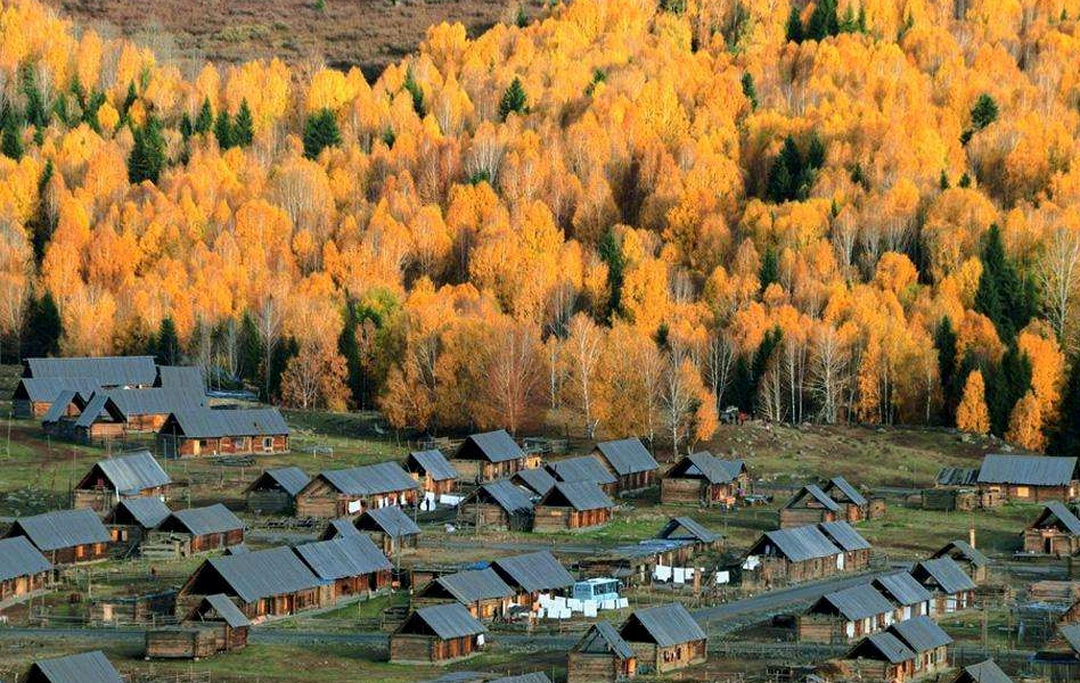
Tucked in northern Xinjiang valleys, vernacular architecture at Kanas is seen clearly in historic villages such as Baihaba (White Haba) and Kanas Village. Set beside stretches of Siberian larch forest, village layouts follow natural river-valley contours in harmony with mountain terrain. Timber homes built by the Tuva people—an ethnic group with distinct traditions in the area—serve both as winter shelter and as practical folk carpentry shaped by generations in cold mountains, spaced neatly to preserve household privacy within a close-knit community.
A core feature of Tuva architecture at Kanas is traditional log construction (“jinggan” / interlocking timber) using no metal nails. Builders craft walls from thick Siberian larch trunks (“Larix sibirica”), prized for dense grain, resilience, and natural resin that resists decay and handles sharp temperature swings. Skilled carpenters notch round logs along underside grooves and use saddle-notch joints at corners, letting the wooden frame flex slightly with seasonal changes and ground movement common in Altai terrain without losing structural tightness.
Attention to local ecology also shows in joint sealing and roof design. As logs are stacked, Tuva builders pack sphagnum moss gathered from damp meadows or dried grass into gaps between timbers to block cold drafts and help moderate indoor humidity. Roofs feature steep pitches often exceeding 45 degrees—a practical design for heavy winter snow in northern Xinjiang where temperatures can drop toward -40°C—allowing snow to slide off rather than build up excessive load. Traditional split-wood roofing is sometimes paired today with weather-resistant metal panels to boost durability while keeping classic lines.
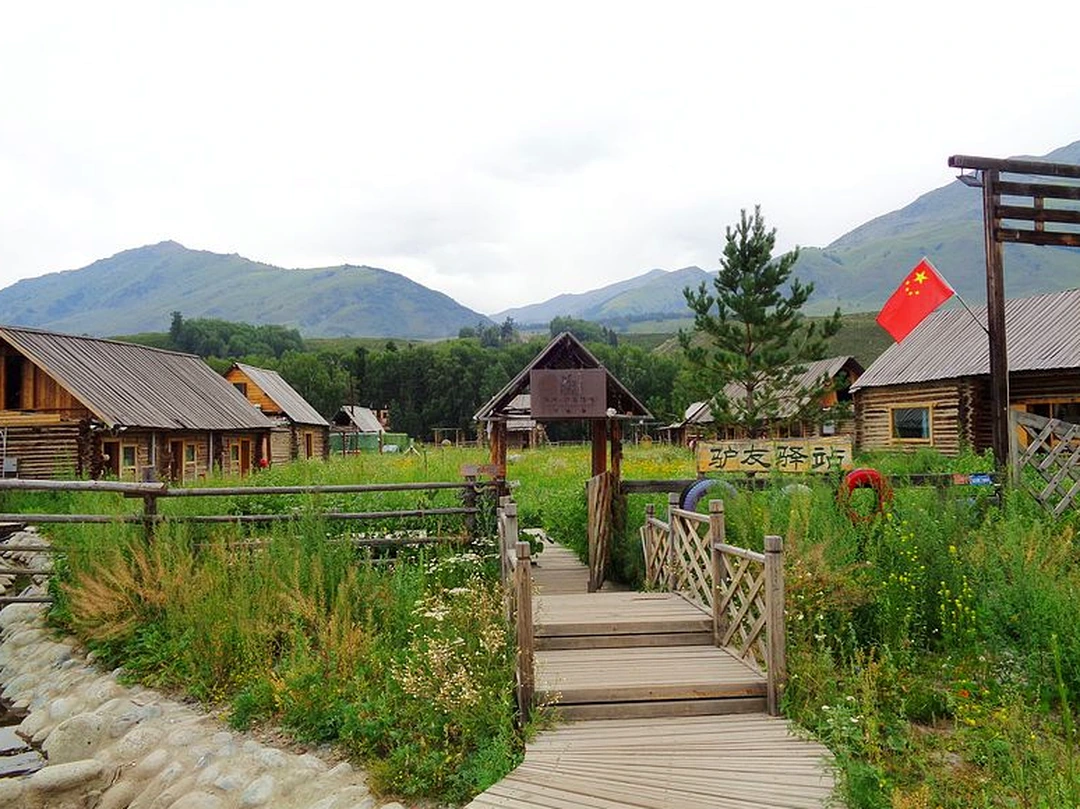
Inside, Tuva wooden houses follow a simple, functional layout—commonly single-room or three-bay plans centered around a stone or brick hearth stove. A chimney rises straight through the roof, letting woodsmoke curl into snowy air while radiating steady warmth through the house. Cooking, gathering, and sleeping spaces organize neatly around this warmth, making timber log craft an enduring part of Xinjiang’s highland heritage.
When dusk settles over birch canopies and Kanas Lake turns deep blue, nighttime lighting follows a restrained approach that respects dark skies and wildlife. Warm low-temperature LED fixtures (under 2700K) are placed discreetly along wooden boardwalks, boat landings, and service areas to limit glare and light spill. Keeping artificial light low protects nocturnal mountain habitats and leaves clear views of stars and the Milky Way overhead on crisp nights.
In that quiet evening setting, live outdoor performances connect visitors with local stories. Shows such as “Return to Kanas” stage music, dance, and storytelling against natural forest and lakeshore backdrops rather than heavy artificial sets, sharing tales of pastoral heritage, frontier resilience, and respect for Altai mountains and waters.
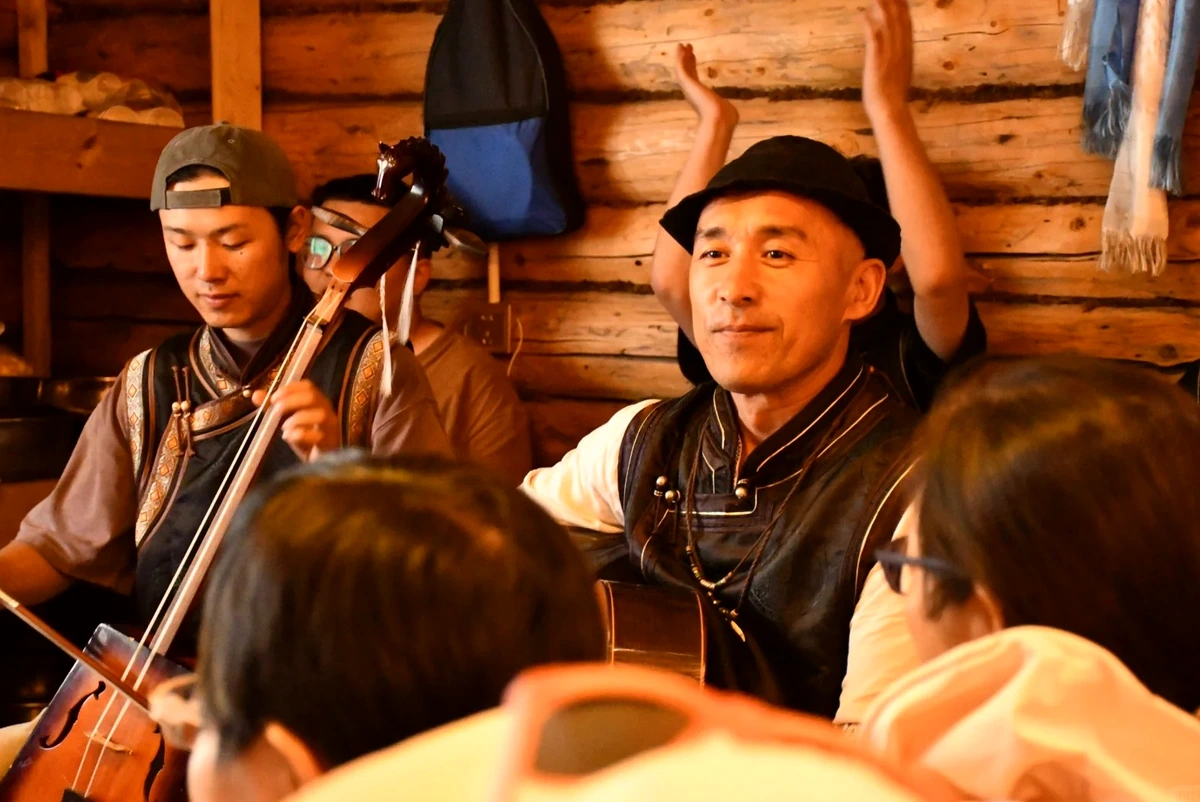
Traditional music is central to Kanas’s cultural evenings. Highlights include “Köömei” (throat singing) practiced in Altai traditions—where a singer produces resonant low overtones alongside higher harmonics—paired with the “Tsuur,” a traditional straight wooden end-blown pipe/flute whose airy, resonant tones evoke mountain wind, running streams, and highland wildlife.
Evening life around Kanas feels calm and welcoming. After outdoor shows, guests often gather inside warm Tuva log homes for hot milk tea or mare’s-milk drinks beside a glowing stove while listening to local tales and melodies—blending simple highland hospitality with quiet mountain surroundings.
Set where the Altai range meets northern Xinjiang pastures, Kanas cuisine reflects Kazakh and Tuva herding traditions. Cold sub-arctic winters and mountain grazing shaped hearty, wholesome dishes focused on warmth and nourishment from local meats, dairy, and cold-water fish.
Mutton is a centerpiece of nomadic gatherings, especially from hardy local breeds such as Altai fat-tailed sheep. Sheep grazing on mountain grasses and cold meltwater yield tender, flavorful meat. Traditional boiled mutton (“beshbarmak” / boiled meat dishes) keeps seasoning simple with clean water, onion slices, and salt to highlight natural meat flavor, while pit- or hearth-roasted mutton prepared in traditional styles offers rich aroma and crisp exterior texture.
Cold glacial waters of Kanas Lake also support prized cold-water fish, including Taimen (“Hucho taimen”), Siberian whitefish (“Coregonus peled”), and Arctic grayling (“Thymallus arcticus”). Living in cold, clean water gives firm, sweet flesh often prepared steamed to keep delicate flavor or braised with warm spices and chili in northern Xinjiang style.
Meals around Kanas also center on salted milk tea and fermented dairy drinks served beside a warm stove in timber homes. Brick tea simmered with fresh milk and a pinch of salt pairs naturally with toasted grain, dried cheese (“aaruul”), clotted cream, and crisp fried dough (“boortsog”), followed by mildly tart fermented mare’s milk (“airag”) that rounds out hearty meals with warmth and hospitality.
Choosing the right season helps make the most of Kanas’s changing scenery. June through August brings lush greenery, wildflowers, and mild summer days ideal for nature viewing. Mid-September through early October is peak golden autumn, drawing photographers as larch and birch turn bright gold along blue water. From November through April, heavy snow and cold bring strict mountain-road controls for winter safety.
Getting to Kanas is straightforward with regional flights and scenic highways. Travelers can fly into Kanas Airport (KAS) or Altay Airport (AAT) and continue by bus or transfer, or drive along National Highway G216 via Burqin County across wide steppe scenery. Private vehicles stop at Jiadengyu Transfer Center, where visitors board reserve eco-shuttles into the core area with stops such as Fairy Bay, Moon Bay, and Wolong Bay. Because daily visitor quotas apply, booking admission and shuttle passes online 3 to 7 days ahead is recommended.
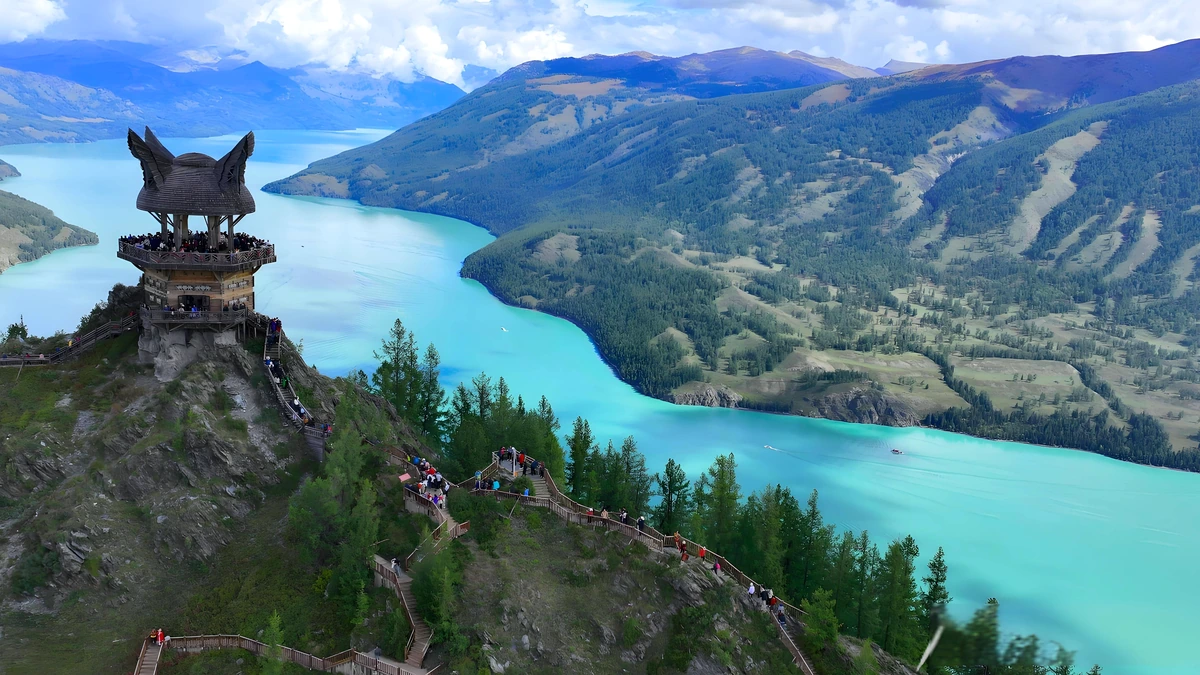
A three-day pace works well for exploring Kanas’s main highlights. On Day 1, enjoy morning mist along river bends between 07:30 AM and 09:00 AM before strolling near Kanas boat pier. On Day 2, climb the steps up to Fish Viewing Terrace (Guanyutai) for sweeping views over the lake and distant snow peaks, then spend the afternoon exploring Tuva village life. On Day 3, continue toward border-area Baihaba Village or head toward Hemu Village.
Because mountain basin temperatures swing sharply between day and night—even dropping below 5°C at night in midsummer—layering clothes is key for comfort. High-altitude sun calls for high-SPF sunscreen, UV sunglasses, and a sun hat, while insect repellent helps along wooded paths. Inside traditional timber homes, avoid stepping on raised thresholds, respect local nature beliefs, and keep litter out of Kanas’s waters.
Careful planning across transport, timing, and local etiquette makes exploring northern Xinjiang smooth and rewarding. If you want a well-organized trip without transport or permit hassle, you can check out our 8-Day 7-Night Northern Xinjiang Tour for a comfortable, well-paced itinerary.