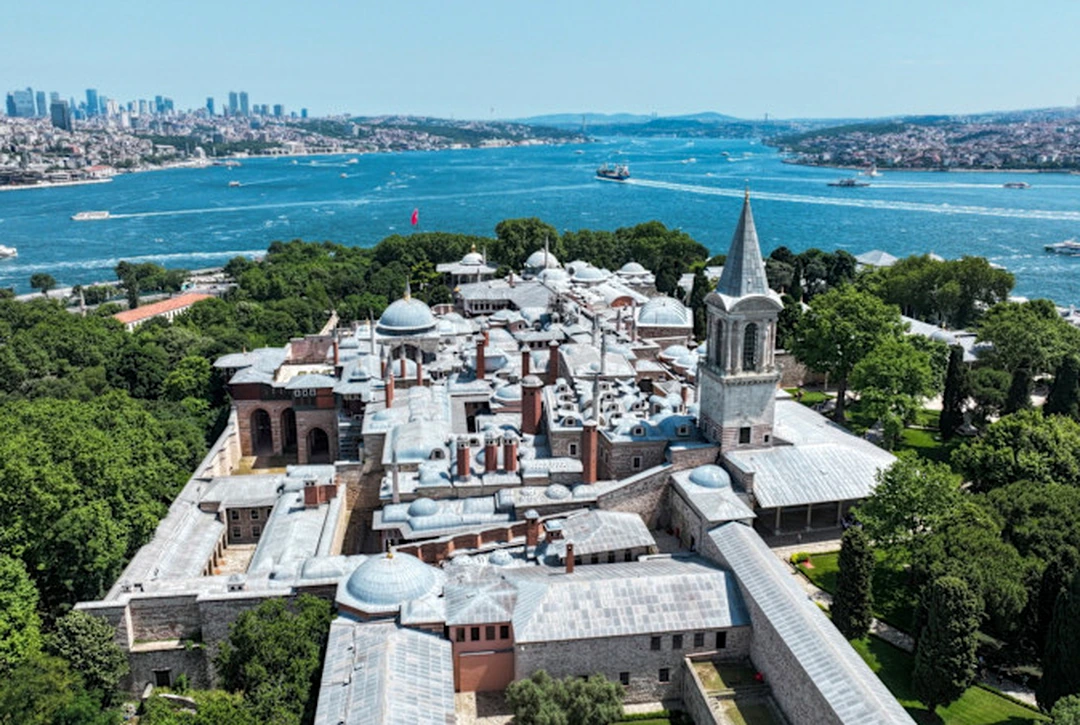
The history of Topkapi Palace is inextricably linked to a monumental turning point that reshaped the medieval world: the fall of ancient Constantinople on May 29, 1453, beneath the victorious banners of the Ottoman Empire. After bringing an end to more than a millennium of the Byzantine Empire, the young Sultan Mehmed II—known to history as Fatih Sultan Mehmed (the Conqueror), who reigned from 1451 to 1481—quickly recognized the unrivaled military and geopolitical significance of the Sarayburnu promontory. Standing like a towering beacon, this headland commands the sacred confluence of the Golden Horn, the tranquil Sea of Marmara, and the surging Bosphorus Strait, marking the natural boundary between Europe and Asia. Around 1459 to 1460, Fatih Sultan Mehmed ordered the construction of an imposing imperial complex originally named Saray-ı Cedîd-i Âmire, or Yeni Saray (the New Palace), to distinguish it from the Old Palace (Eski Saray) located at Beyazıt Square.
From the laying of its first foundation stone until the mid-19th century, the New Palace served as the seat of absolute power, the administrative nerve center, and the official residence of the Ottoman Sultans for nearly four hundred years. Rather than adhering to the rigid axial symmetry typical of European châteaux, its original spatial layout evolved organically from traditional Turkic nomadic encampment philosophy, seamlessly blended with the sacred traditions of Islamic culture. Under Mehmed II’s reign, the formidable Sur-ı Sultani fortress walls were erected to enclose a vast expanse exceeding 700,000 square meters. This became the beating heart of a multi-ethnic empire spanning three continents—from the Danube marshes of Central Europe, across the Arabian Peninsula, to the sun-scorched shores of North Africa.
Entering the 16th century, the Ottoman Empire reached its most dazzling golden age under Kanuni Sultan Süleyman (Süleyman the Magnificent). This era ushered in a profound shift in power centered on Haseki Hürrem Sultan—a former enslaved concubine who shattered every royal precedent to become the Sultan’s legal wife and empress. At Hürrem Sultan’s urging, the Harem (imperial private quarters) completed its historic relocation from the Old Palace directly inside Topkapi Palace. This watershed event transformed the Harem into a true political powerhouse known as Darü’s-Saâde (the House of Felicity), inaugurating an illustrious era historians call Kadınlar Saltanatı (the Sultanate of Women). From chambers adorned in brilliant ceramic tiles, the Queen Mothers (Valide Sultan) and imperial consorts actively participated in governance, orchestrated diplomatic maneuvers, and wielded decisive influence over imperial succession.
Yet the course of history atop Sarayburnu Hill was not immune to devastating calamities and the shifting tides of fortune. Topkapi Palace suffered severe damage on multiple occasions from catastrophic fires—most notably the great blaze of 1574 that gutted the imperial kitchens (Matbah-ı Âmire) and the devastating fire of 1665 that destroyed nearly the entire Harem complex. After each wave of destruction, reigning Sultans swiftly commissioned large-scale reconstructions led by master royal architects, foremost among them the legendary Mimar Sinan. These restorations not only preserved classical Ottoman architectural poise but also gracefully absorbed prevailing Western artistic currents, weaving in the dramatic curves of the Baroque style and the ornate splendor of Rococo. The palace’s silhouette continued to evolve across successive reigns until 1853, when Sultan Abdülmecid I moved the imperial court to the modern Dolmabahçe Palace along the Bosphorus shore, bringing Topkapi’s grand political chapter to a close as an immortal monument to the Ottoman Golden Age.
Viewed from the open waters of the Sea of Marmara looking north, Sarayburnu Hill rises like a commanding natural outpost positioned at a legendary maritime crossroads. Resting atop the First Hill of ancient Byzantion, Topkapi Palace occupies the entire seaward headland where three strategic bodies of water converge: the vast Sea of Marmara to the south, the rushing Bosphorus Strait to the east, and the curving emerald ribbon of the Golden Horn to the north. This three-sided maritime vantage point not only offers sweeping panoramas reaching all the way to the snow-capped peaks of Mount Uludağ in the distance, but also formed an virtually impregnable natural fortress. Every warship and merchant vessel passing through the gateway linking the Black Sea to the Mediterranean had to sail directly beneath the watchful gaze of the Ottoman palace pavilions.
Instead of overpowering the landscape with monolithic stone walls built to strict Western symmetry, Topkapi’s master plan follows the natural contours of Sarayburnu Hill with remarkable grace. Spreading across nearly seventy hectares, the palace complex unfolds through four consecutive inner courtyards, arranged hierarchically from the outer gates inward like ascending thresholds into the innermost sanctum of imperial authority. Each courtyard functions as an ecological buffer zone, where domed audience halls and royal bedchambers sit interspersed among ancient cypress trees, fragrant rose gardens, and murmuring marble fountains that temper the Mediterranean sun. Wrapping around the gentle slopes descending toward the water’s edge, the sturdy Sur-i Sultani walls embrace Gülhane Park—the former imperial garden where thousands of tulips once bloomed during the lavish full-moon banquets of the celebrated Tulip Era.
Sweeping past this historic promontory lies the geological marvel of Boğaziçi—the thirty-kilometer-long strait dividing Europe and Asia. Born from complex tectonic fault lines and cataclysmic Pleistocene floods when Mediterranean waters tore through an ancient river valley into the Black Sea basin, the Bosphorus possesses a remarkable two-layer hydrological structure. Along the surface, fresher, low-salinity water fed by major Eastern European rivers flowing into the Black Sea surges southward at speeds reaching four to five knots in places. Conversely, dozens of meters beneath the surface, a dense, high-salinity undercurrent from the Sea of Marmara pushes steadily northward along the seabed. This dynamic interplay of opposing currents not only created treacherous whirlpools that tested the skill of ancient mariners, but also acts as a colossal natural climate regulator for the entire historic peninsula.
This extraordinary dual-current system blesses both shores of the strait with a remarkably mild microclimate, shielding the city from biting northern winds sweeping off the steppes and the dry heat of the Anatolian plateau. These seasonally shifting currents also transform the waterway into one of the region’s richest marine migration corridors. When crisp autumn winds ripple across the waves, schools of plump, silver-scaled bluefish (lüfer) begin their annual migration southward from the cold waters of the Black Sea toward warmer winter grounds. For centuries, this prized delicacy has inspired Ottoman court gastronomy, gracing refined imperial banquets while sustaining the tranquil livelihoods of historic fishing villages nestled beneath pine-forested hills.
Commanding the strategic Sarayburnu headland where the Golden Horn, the Sea of Marmara, and the Bosphorus meet, the Topkapı Palace complex covers a core built area of 59,260 to 70,000 square meters, expanding to an extraordinary 700,000-plus square meters when its surrounding imperial gardens and parks are included. Departing completely from the monolithic geometric symmetry of Western palaces, Topkapı was conceived as a progressive spatial hierarchy inspired by early Turkic nomadic encampments, unfolding rhythmically across four interconnected courtyards of increasing exclusivity and protocol. From the expansive First Courtyard welcoming subjects and the elite Janissary corps, visitors pass through the Gate of Salutation into the serene Second Courtyard, home to the Imperial Council Chamber (Divan-ı Hümâyûn) and the monumental Imperial Kitchens (Matbah-ı Âmire), crowned by distinctive conical chimneys piercing the clear blue sky.
These royal kitchens were far more than a culinary workshop feeding thousands of palace guards and courtiers each day; they also safeguarded a priceless diplomatic treasure—a collection of over 20,000 pieces of Chinese porcelain spanning the Yuan, Ming, and Qing dynasties. Exquisite jade-green celadon platters and intricate blue-and-white porcelains were fiercely prized by the Sultans not merely for their unmatched artistry, but also because court lore held that the special glaze would instantly change color or crack upon contact with poison. Every lustrous glaze, dragon-and-phoenix motif, and East Asian wave pattern preserved inside an Islamic palace stands as vivid testimony to transcontinental maritime trade along the legendary Silk Road.
Venturing deeper into the Harem-i Hümâyûn, the architecture transforms into a secluded, multi-level labyrinth encompassing over 300 rooms, marble-clad Turkish baths (hamam), private mosques, and narrow, dimly lit stone corridors. At the heart of this forbidden world stand the authoritative apartments of the Queen Mother (Valide Sultan Dairesi) and the quiet Courtyard of the Concubines (Cariye Taşlığı), once trodden by palace women brought from conquered lands across the empire. Ottoman decorative artistry reaches its zenith inside the Hünkâr Sofası—also known as the Kubbeli Salon (Domed Hall)—a magnificent ceremonial chamber where the Sultan hosted royal festivities. Here, celebrated 16th-century İznik tiles bursting with cobalt blue, emerald green, and coral red sit juxtaposed with 18th-century French-style gilded rococo wood paneling. Immediately adjacent lies the private Privy Chamber of Murad III (Murad III Has Odası), designed by chief imperial architect Mimar Sinan himself, featuring a graceful hemispherical dome, a towering bronze fireplace, and a tiered wall fountain whose gentle trickle purified the air while masking confidential state discussions from eavesdroppers.
Descending from this hilltop citadel toward the shimmering waters of the Bosphorus, the architectural vocabulary softens into graceful waterfront residences. Lining both the European and Asian slopes, hundreds of traditional wooden mansions known as yalı sit nestled right at the water’s edge. Constructed using the resilient hımış technique—a timber frame infilled with brick and mortar designed to withstand earthquakes and salty sea humidity—these yalı villas evoke the weathered nostalgia of the old Ottoman aristocracy. Contrasting with their understated wooden charm is the grand 19th-century transformation, when the dynasty relocated to opulent stone waterfront palaces such as Dolmabahçe and Beylerbeyi. Boasting monumental marble facades blending European Neoclassical and Baroque aesthetics reflected in the waters uniting two continents, they form the final crescendo in an architectural symphony bridging East and West.
As the last streaks of twilight settle over Sarayburnu Hill, Istanbul’s majestic skyline undergoes a mesmerizing visual transformation, weaving imperial history and contemporary energy into an enchanting tapestry of light. During the Ottoman Golden Age, nightfall inside Topkapi Palace brought an intimate, mysterious illumination. Along the echoing marble corridors of the Harem, concubines and eunuchs relied on the soft glow of hundreds of scented beeswax candles, bronze torches, and suspended olive-oil lamps releasing wisps of warm incense to dispel the evening chill of the inner palace. Even more extraordinary was the art of mahya—a priceless 17th-century visual tradition in which master artisans strung cables between the twin minarets of imperial mosques to suspend hundreds of oil lamps, spelling out glowing lines of Arabic calligraphy across the night sky during Kandil holy nights and Ramadan, creating a luminous “sky of words” floating high above Istanbul.
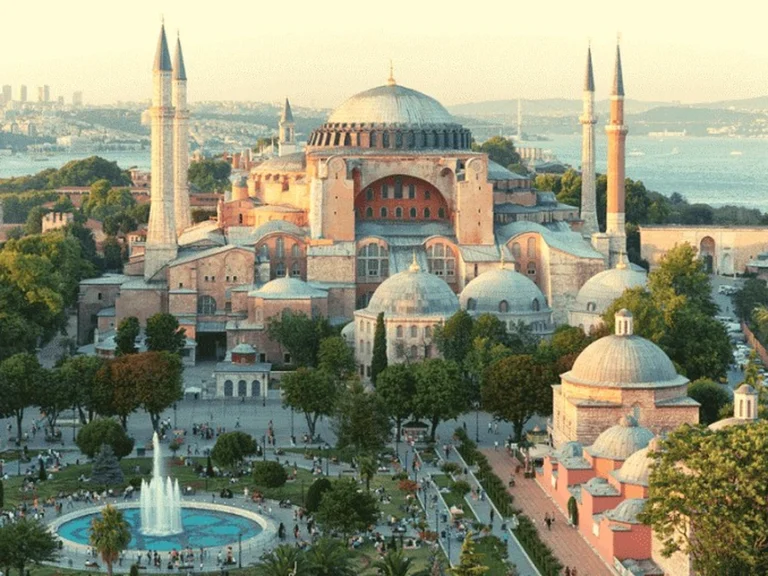
Stepping out from the quiet shadows of the palace toward the piers of Eminönü or Kabataş, travelers can witness an unforgettable sunset transition aboard an evening cruise along the Bosphorus. As the sun dips behind the European shore, the massive domes and slender minarets of Ayasofya, Sultanahmet, and Süleymaniye stand silhouetted in crisp relief against a sky ablaze with burnt orange and deep violet. This iconic skyline mirrors every delicate brushstroke of the gilded Ottoman miniature paintings (minyatür) preserved in the 16th-century imperial library, blurring the boundary between reality and illusion in nature’s shifting palette.
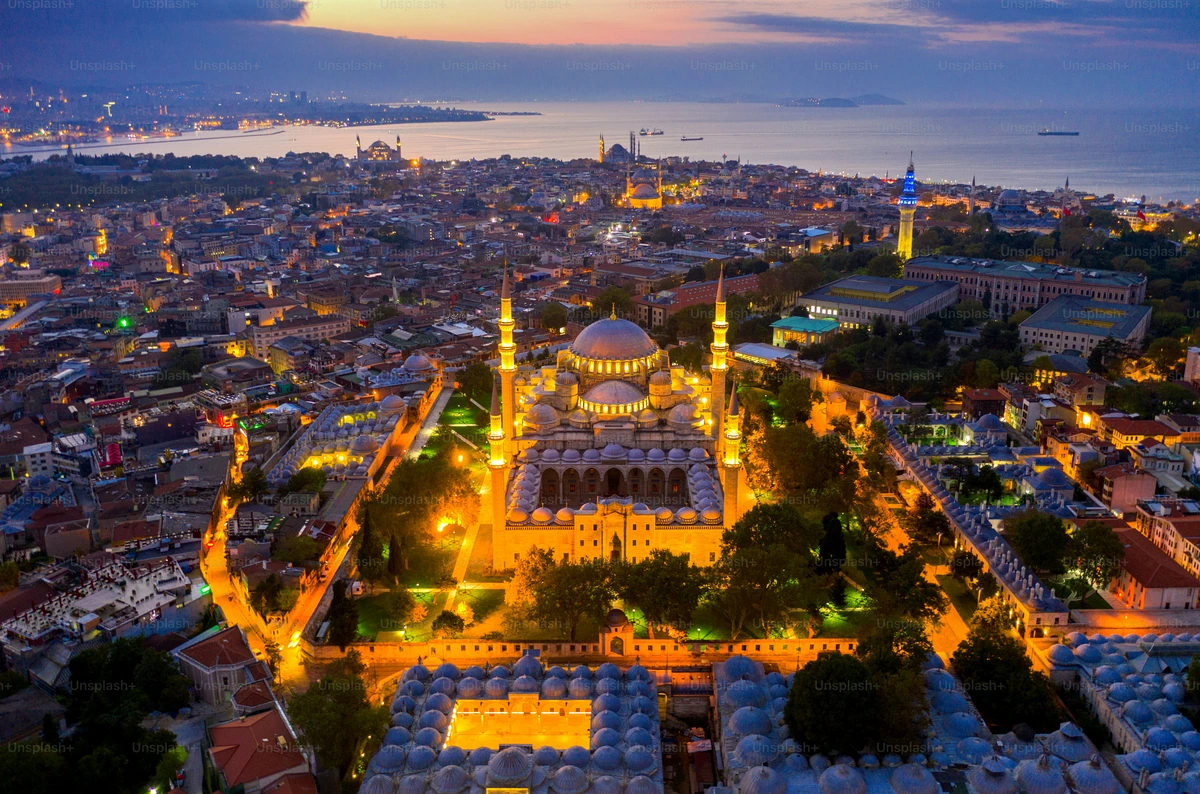
As night deepens, the Bosphorus Strait becomes a living stage where modern lighting artistry harmonizes with millennia of heritage. Intelligent LED lighting systems installed across historic suspension bridges—most notably the July 15 Martyrs Bridge (15 Temmuz Şehitler) and the Fatih Sultan Mehmet Bridge—illuminate in shifting spectrums from turquoise to amethyst, casting shimmering reflections across the current linking the Black Sea and the Sea of Marmara. Along both winding shores, warm golden lights from historic wooden yalı waterfront mansions—symbols of old Ottoman aristocratic refinement—dance gently across the rippling water. Standing proudly among them is Amcazade Hüseyin Paşa Yalısı, built in 1699 as the oldest surviving wooden mansion on the strait, glowing softly in amber light and recalling centuries-old nights of court poetry and chamber music.
Experiencing the Bosphorus by night engages far more than sight alone, blending evocative soundscapes with timeless local flavors. From the deck of a smooth-gliding evening cruise, the haunting breath of the reed ney flute, the crystalline notes of the kanun zither, and the rhythmic pulse of the darbuka drum guide guests into the spiritual serenity of the Sama whirling ceremony performed by Mevlevi Sufi dervishes, their white robes spinning endlessly in imitation of celestial orbits. The evening atmosphere grows richer still with traditional Turkish dining, where the aroma of charcoal-grilled meats mingles with anise-scented rakı and curated platters of delicate meze. Sparkling lights stretching from Asia to Europe, gentle waves lapping against the hull, and the enduring spirit of a capital straddling two worlds unite to create a deeply atmospheric, unforgettable nocturnal experience.
Tucked behind the fortified walls of Topkapı Palace lies Matbah-ı Âmire, the legendary imperial kitchens that once brought together hundreds of master chefs under the patronage of the Ottoman Sultans. Rebuilt by master architect Mimar Sinan with soaring domes and proud conical chimneys, Matbah-ı Âmire was not simply a bustling kitchen preparing thousands of daily meals for the royal court, but the birthplace of a sophisticated culinary tradition. This palace gastronomy represents an extraordinary fusion of Central Asian nomadic flavors, Seljuk refinement, Persian courtly elegance, stately Byzantine heritage, and the abundant aromatic herbs of the Balkans. Under the strict supervision of the chief imperial physician, every royal dish was carefully formulated according to humoral balance principles, harmonizing the five tastes with nourishing properties for body and mind.
A crowning masterpiece exemplifying the pinnacle of palace flavor artistry is Mutancana, a celebrated meat stew documented at royal banquets as early as the reign of Sultan Mehmed II. This dish elevates tender young lamb, seared in clarified butter and shallots before slow-simmering over gentle heat with prized dried fruits—tart prunes, golden apricots, and sweet raisins. What gives Mutancana its unmistakable signature lies in the masterful balance of its sauce: the pure sweetness of natural honey meets a splash of fermented vinegar to create a bright, refined acidity that cuts through the richness of the lamb and the nutty crunch of blanched roasted almonds. Fragrant cinnamon sticks infused throughout the dish neutralize any gamey notes while lifting the entire aromatic profile, turning a royal meal into an opulent, deeply memorable sensory experience.
Stepping beyond the spice-scented royal kitchens, Istanbul’s culinary map opens outward onto the cobalt waters of the Bosphorus, where the rushing Boğaziçi current brings bountiful seasonal seafood migrations. Foremost among them is lüfer—revered as Boğaz Lüferi, the undisputed queen of the strait—captivating discerning palates for generations. As water temperatures cool between September and November, schools of lüfer migrate from the Black Sea toward the Sea of Marmara, developing rich layers of fat and firm, snow-white flesh imbued with the crisp salinity of the crossroads between two continents. Autumn lüfer fishing is more than a livelihood for historic waterfront villages like Arnavutköy, Bebek, and Çengelköy; it is a cherished annual cultural ritual woven into the fabric of city life.
At time-honored waterfront restaurants hugging the Bosphorus shoreline, lüfer is prepared using classic techniques designed to celebrate its pristine freshness. Pan-fried tava style yields a crisp golden crust locking in tender, naturally sweet juices, while pilaki slowly braises the fish in extra-virgin olive oil with sliced carrots, onions, and fragrant garlic for a silky, glossy finish. For diners craving deeper savory richness, kiremitte buğulama—baked in a traditional clay dish—infuses the fish with a luscious sauce of ripe tomatoes, bell peppers, fresh butter, and native herbs. Savoring freshly grilled lüfer right beside the water, sipping hot Turkish black tea while a brisk breeze sweeps between Europe and Asia, remains the quintessential way to experience the enduring culinary soul of fabled Istanbul.
To fully absorb the grandeur of Topkapi Palace alongside the timeless rhythm of the Bosphorus Strait, travelers benefit from understanding the practical rhythms and etiquette of the former Ottoman capital. The Topkapı Sarayı complex welcomes visitors daily from 09:00 AM to 06:00 PM, closing regularly on Tuesdays for ongoing conservation and restoration work. Seasoned travelers arrive right as the palace gates open at nine in the morning, when morning mist is lifting off the Golden Horn and plane-tree-shaded courtyards like Alay Meydanı and Divan Meydanı remain peaceful before international tour groups arrive. Purchasing a separate admission ticket for the Harem (Harem-i Hümayun) is essential for uncovering the private world of the Valide Sultans, while renting a multilingual audio guide or exploring alongside a knowledgeable local historian transforms every İznik ceramic tile and mother-of-pearl inlaid door into a living chapter of history.
Upon entering the sacred precincts of the empire, traditional palace decorum remains reflected in strict dress standards. Inside revered spaces—especially the Chamber of the Sacred Relics (Kutsal Emanetler), which houses priceless treasures such as the Mantle of the Prophet Muhammad and the swords of the early Caliphs—visitors are required to dress modestly with shoulders and knees fully covered; women should carry a lightweight silk scarf to cover their hair when needed. Optical preservation rules are equally strict: flash photography is strictly prohibited throughout the galleries to protect delicate pigments on ancient parchment manuscripts, gold-threaded Persian carpets, and centuries-old jeweled treasures.
For seamless local transit, the T1 surface tram line serves as the most convenient and scenic artery connecting key landmarks across the historic Fatih peninsula. Simply disembarking at the Sultanahmet stop places visitors within a short, pine-shaded stroll through the grand square linking Hagia Sophia and Topkapi Palace, completely bypassing the road congestion of a metropolis of sixteen million people.
When it comes to cruising the waves of Boğaziçi between two continents, two distinct options suit different schedules and travel styles. For a classic, nostalgic local journey, the municipal Şehir Hatları ferry operates the Uzun Boğaz Turu, departing from bustling Eminönü pier, gliding past the imposing Rumeli Hisarı fortress, and continuing all the way to the Black Sea fishing village of Anadolu Kavağı over a leisurely six-hour round trip. Along the waterfront there, steaming grilled fish sandwiches (Balık Ekmek) or hot black çay served in tulip-shaped glasses alongside sesame-crusted simit rings delight every traveler. Conversely, those seeking tranquility and tailored comfort can charter a private yacht from Kabataş or Beşiktaş at dusk for exclusive views of golden sunset light washing over opulent Yalı waterfront mansions.
These immersive cultural and historical discoveries become even smoother and more rewarding when experienced through a thoughtfully curated itinerary led by seasoned destination specialists on an all-inclusive Turkey tour package.