Before rising to become one of the most prosperous metropolises on the Arabian Peninsula, the coastal strip of Jumeirah was a quiet cluster of fishing villages where courageous pearl divers plunged into the deep blue waters of the Persian Gulf in search of precious natural pearls. Through the lens of linguistics and historical toponymy, the name Burj Al Arab Jumeirah carries layers of profound symbolic meaning. In classical Arabic, “Burj” signifies a towering spire or an impregnable fortress; paired with “Arab,” it defines the monument as a supreme marvel representing the contemporary Arab world as a whole. Meanwhile, “Jumeirah”—long associated with powdery white sands and vital maritime trade routes spanning centuries—serves as the cultural cradle preserving the seafaring soul of the land of One Thousand and One Nights prior to the discovery of black gold.
Toward the closing decades of the twentieth century, as a keen awareness of finite hydrocarbon reserves weighed upon Gulf strategists, a bold, epoch-defining vision took shape under the leadership of the Ruler of Dubai, Sheikh Mohammed bin Rashid Al Maktoum. Recognizing that Dubai needed a historic turning point to redefine its stature on the global economic and tourism map, the sovereign looked to Paris with its proud Eiffel Tower and Sydney with its resplendent Sydney Opera House, resolving to create an unmistakable architectural icon with immediate worldwide recognition. Far more than a luxury hotel, it was conceived as an enduring manifesto of a nation rising from arid desert sands, proving to the world that Arab ambition knows no bounds.
That historic commission was entrusted to acclaimed architect Tom Wright of the renowned design firm WATG. Searching for a silhouette capable of distilling both indigenous maritime heritage and the spirit of a new era, Wright gazed out over the Gulf where traditional Dhow sailboats had glided smoothly over waves and winds through centuries of fishing and commerce. Inspiration struck in an instant as he sketched the first sweeping curves of a billowing sail filled with wind upon a simple napkin. That fateful sketch immediately captivated Dubai’s leadership, laying the foundation for a postmodern masterpiece modeled after a legendary Dhow vessel riding the waves toward the open sea.
On July 10, 1994, the first industrial drills broke ground on this revolutionary project. To preserve the natural shoreline without casting shadows across Jumeirah’s public beach—while creating the sensation of a secluded oasis floating at sea—world-leading engineers spent two full years reclaiming and constructing an artificial island 280 meters offshore. The process required engineering hollow, honeycomb-patterned concrete armor units designed to dissipate wave impact without eroding the surrounding seabed. The next three years unfolded as a breathtaking feat of structural engineering, as an immense steel exoskeleton and central mast soaring 321 meters high were erected amid harsh desert heat, relentless winds, and corrosive sea salt.
After half a decade of continuous construction uniting thousands of engineers, master artisans, and specialists from five continents, the hotel officially opened its doors to the world on December 1, 1999. Its inauguration served as a heralding signal ushering Dubai into the new millennium as a global capital of ultimate luxury. The majestic presence of Burj Al Arab not only fulfilled its mission of catapulting Dubai into worldwide prominence, but endures as a timeless monument to a miraculous transformation—from a humble port of pearl merchants into a glittering powerhouse of tourism and finance at the crossroads of global civilization.
Set along the fertile coastline of the Persian Gulf, the Burj Al Arab complex occupies an extraordinary geomantic position rooted in the Arabian philosophy of gathering water to generate prosperity. Viewed through both Eastern feng shui principles and Middle Eastern urban aesthetics, situating an isolated artificial island 280 meters off Jumeirah Beach was far more than a display of engineering might—it was a deliberate gesture to embrace unimpeded vital energy circulating across the open ocean. Rising dramatically from a flat, sweeping stretch of equatorial desert shoreline, the tower mirrors a traditional Dhow sail taut with wind, its bow pointed toward the open sea and its back anchored toward the mainland. This proud stance channels refreshing sea breezes while tempering the desert’s fierce heat into a serene microclimate, symbolizing an extraordinary journey from a modest pearl-fishing settlement to one of the planet’s premier hubs of wealth.
Constructing an artificial island atop a seabed of coral and loose sand ranks among the most complex geotechnical achievements in modern architectural history. Marine engineers labored for three full years to tame a demanding offshore environment where desert sandstorms collide with powerful underwater currents and sudden swells. To ensure the 321-meter tower would never settle beneath its colossal deadweight, a composite foundation of 250 reinforced concrete piles—each 1.5 meters in diameter—was driven more than 40 meters deep through loose marine sediment into underlying calcified rock strata. The engineering breakthrough lay in relying on skin friction along the pile shafts rather than end-bearing resistance alone, effectively turning the entire island into an immovable artificial reef. Encircling the triangular island is a breakwater armored with thousands of specially shaped perforated concrete blocks that act like a giant sponge, absorbing and dispersing wave energy without raising the island’s elevation, allowing the tower to maintain an effortless, low-slung relationship with the water’s surface.
Leading from Jumeirah Beach Road out to the private island is a single gently curving 280-meter bridge, serving as an umbilical link channeling energy between mainland and island. Its graceful arc provides both discreet security control for high-profile guests and a choreographed visual prelude: as travelers cross the bridge, the soaring silhouette of the sail shifts continuously from panoramic vistas to towering close-ups, leaving urban clamor behind to enter an exclusive realm. Furthermore, the island’s height and orientation were scientifically calibrated down to the centimeter so the giant tower never casts a shadow across the public beaches on shore during daylight hours, preserving Dubai’s signature golden coastal sunshine for the local community.
The most striking technical feature defining the exterior facade is its double-skinned woven fiberglass membrane coated with polytetrafluoroethylene (PTFE), spanning thousands of square meters across the northwestern elevation. Under intense desert solar radiation and salt-laden air, the PTFE screen reflects the majority of solar heat while allowing soft, diffused daylight to filter inside, simultaneously streamlining aerodynamics against fierce Gulf gusts. After nightfall, this tensioned textile facade transforms into a monumental projection canvas shifting through luminous hues against the inky sky and turquoise sea, completing an unforgettable fusion of muscular structural engineering and sublime spatial artistry.
The pride of Burj Al Arab stems from an unprecedented geotechnical triumph off the Jumeirah coast, where the tower rises to a commanding height of 321 meters above the deep blue Persian Gulf. To anchor a colossal sail-shaped superstructure against offshore gales and seismic activity without solid bedrock near the shallow seabed, structural engineers drove 230 large-diameter reinforced concrete piles more than 40 meters deep into dense marine sand layers. The building’s hundreds of thousands of tons are held fast to the ocean floor purely through mechanical skin friction between rough concrete shafts and compacted sand—forming a subterranean root system as steadfast as a millennia-old tree.
Stepping through the grand entrance doors separating everyday reality from the opulent realm within, space erupts upward into the world’s tallest atrium, soaring an astonishing 180 meters high. This vast vertical cathedral of light is framed by sweeping curved balconies radiating across a vivid color spectrum—from crisp white and burnished gold to deep cobalt blue—echoing the rhythm where desert sands meet ocean waves. At the heart of the lobby atrium, a choreographed fountain sends precision-pressurized jets of water arcing dozens of meters into the air, drawing the eye naturally upward along undulating tiers toward the radiant artificial sky overhead.
Interior craftsmanship inside Burj Al Arab represents a sumptuous dialogue between regal Islamic aesthetics and master artisans from around the globe, orchestrated by acclaimed interior designer Khuan Chew. Across walls, moldings, balustrades, and vaulted ceilings, approximately 24,000 square meters of pure 24-carat gold leaf were applied by hand sheet by tiny sheet, casting a warm, sovereign radiance beneath sparkling crystal chandeliers. Balancing that imperial gold is the cool, luminous purity of rare white Carrara marble quarried directly from ancient Tuscan mountains in Italy—the very stone from which Renaissance master Michelangelo sculpted his legendary David, shipped thousands of miles across the sea to pave the floors and clad the walls of Dubai’s grand lobby.
The hotel’s accommodations shatter conventional hospitality standards by eliminating standard single-level rooms altogether. Every guest residence is one of 202 two-story duplex suites, offering multi-level living spaces designed like private aristocratic mansions. Even the most intimate suite spans an expansive 170 square meters, framed by floor-to-ceiling panoramic windows sweeping across the Persian Gulf horizon. At the summit of extravagance stands the 780-square-meter Royal Suite, styled like a miniature Al-Andalus palace complete with a gilded marble staircase, private cinema, silent rotating bed, and bespoke hand-woven silk furnishings.
Extending beyond the traditional Dhow sail profile, the tower’s most astonishing engineering flourish is its circular helipad suspended 211 meters above sea level. Cantilevering dramatically outward from the northwestern face of the main mast, this aerial landing pad not only welcomes monarchs, heads of state, and global dignitaries arriving by private helicopter, but stands as a gravity-defying structural tour de force crowning an enduring architectural icon of the modern age.
As the final crimson rays of sunset fade across the turquoise waters of the Persian Gulf, Burj Al Arab sheds its stately daytime poise to wrap itself in a mesmerizing cloak of spectral light. Its towering sail facade—crafted from thousands of square meters of double-layered Teflon-coated woven fiberglass—instantly becomes a colossal canvas for one of the world’s most sophisticated architectural lighting displays. Computer-choreographed LED arrays glide seamlessly across rich shades of deep ocean blue, warm desert vermilion, royal purple, and gleaming gold. Reflected across the gentle ripples of the Gulf, the illumination creates a shimmering visual symphony where the boundary between human architectural marvel and Arabian night sky dissolves entirely.
Guiding guests into this nocturnal wonderland is the solitary curved causeway linking the sands of Jumeirah to the private island. Along its approach, ceremonial welcome torches blaze with living flames on either side, evoking the timeless Bedouin philosophy of desert hospitality. To ancient Arabian nomads, fire burning against the pitch-black desert night was far more than a guiding beacon—it was a sacred promise of shelter, signaling a warm tent ready to share sweet dates and cardamom-scented coffee. The interplay between dancing primal flames and color-shifting water fountains orchestrates an elemental harmony of fire and water, transforming arrival at the sail tower into a regal Arabian Nights ritual.
Stepping deeper inside, the soaring 180-meter central atrium—among the tallest lobby spaces on earth—unveils an equally breathtaking nocturnal spectacle. Thousands of concealed uplights gleam across nearly 2,000 square meters of intricate 24-carat gold leaf, harmonizing with graceful arcs of water leaping from the central fountain. Illuminated by multi-colored fiber optics, the dancing waters pulse in rhythm with the evocative melodies of traditional Arabian oud and qanun strings intertwined with classical Western piano passages. Soft acoustics ripple upward through colorful horseshoe tiers, enveloping guests in serene yet unmistakably aristocratic grandeur.
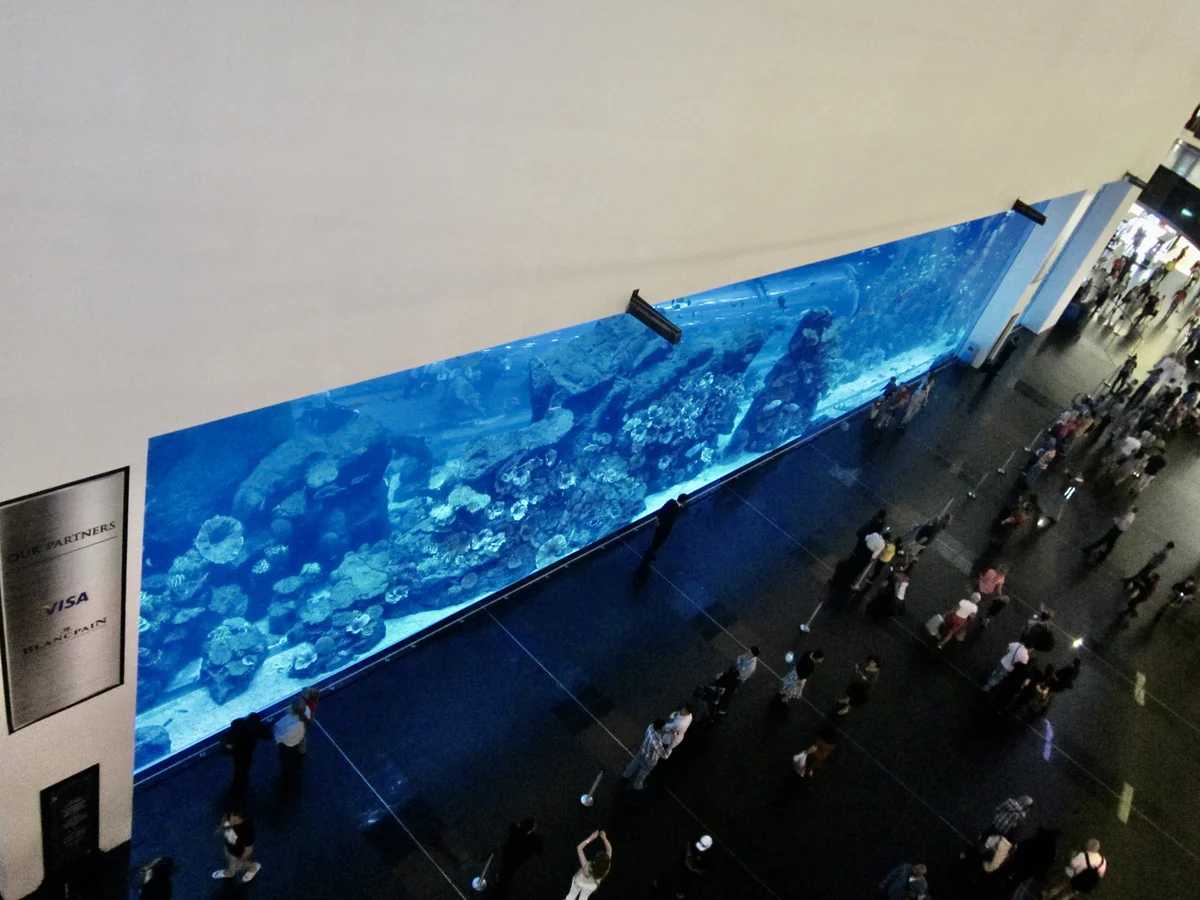
As night deepens, life inside Burj Al Arab evolves into a refined multi-sensory indulgence. High above the sea in cantilevered sky lounges extending more than 200 meters above the waves, guests sip handcrafted cocktails while gazing out over the glittering Jumeirah coastline and illuminated offshore islands strung like pearls across the Gulf. Far below water level, dining at Al Mahara reveals an enchanting subaquatic sanctuary where tables encircle a cylindrical floor-to-ceiling marine aquarium holding over one million liters of seawater, illuminated by ethereal emerald light as tropical fish glide silently past. Every breath, footstep, and glance is immersed in supreme luxury, defining an unrivaled nocturnal experience on the Arabian Peninsula.
Within a sail-shaped masterpiece poised over open waters, Burj Al Arab’s culinary philosophy goes far beyond sheer opulence—it stages a thoughtful cultural dialogue between Bedouin nomadic roots and classical European haute cuisine. The dining landscape inside the seven-star landmark forms a captivating microcosm spanning ocean depths to open sky, where Michelin-starred chefs transform prized Persian Gulf ingredients through exacting contemporary culinary craft.
Dining at Al Mahara immerses guests in a tranquil undersea world, entered via a gleaming golden archway opening onto a massive hundred-thousand-liter saltwater aquarium. Bathed in serene sapphire light alive with thousands of tropical marine species, seafood fine dining celebrates native Gulf fish prized by coastal fishermen for centuries. Foremost among them is Arabian spotted grouper (hamour), prized for its thick, naturally sweet fillets cooked at precision temperatures to preserve pristine flavor, alongside rare emperor bream (shari) pan-seared simply and elevated with delicate herb-infused lemon butter emulsions.
In striking contrast to this subaquatic serenity, Al Muntaha perches proudly 200 meters in the sky, cantilevering boldly outward from the sail structure to command sweeping panoramas across the skyline and azure Arabian Gulf. Dedicated to contemporary French gastronomy, this sky-high sanctuary pairs artistic European technique with boundless horizon views. Every plate arriving at Al Muntaha achieves exquisite harmony of texture, visual artistry, and flavor—proving that culinary excellence thrives effortlessly amid the clouds.
Yet the true soul lending unmistakable cultural depth to Burj Al Arab lies in how its culinary masters elevate treasured Gulf heirloom recipes into regal heritage cuisine. Traditional Machboos—the centerpiece of celebratory Arabian feasts—arrives in royal style with golden Basmati rice infused with prized saffron threads, cinnamon bark, cardamom pods, and a bespoke bezar spice blend. Fall-off-the-bone tender lamb or free-range chicken slow-simmered for hours finds ideal balance in the tangy, subtly smoky acidity of sun-dried black limes (loomi), an iconic spice cured under the intense sun and wind of the Arabian Peninsula.
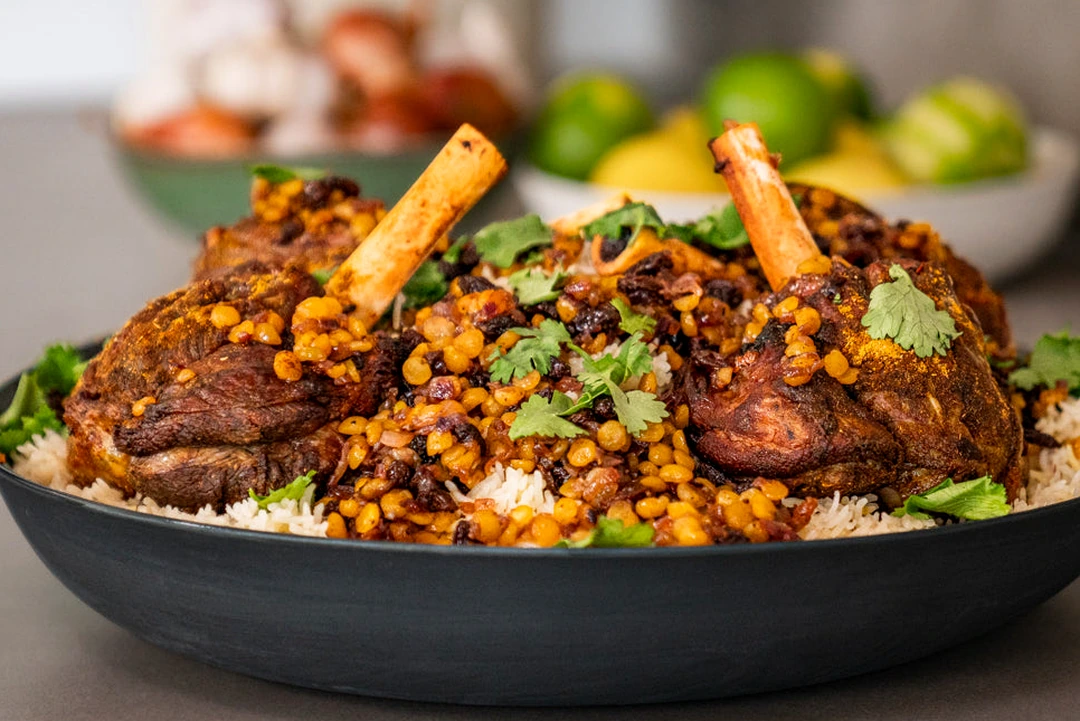
Emirati culinary heritage unfolds further through Thareed, a deeply symbolic historical dish featuring rich slow-simmered meat and vegetable stew ladled generously over crisp, paper-thin regag flatbread so every layer absorbs the savory broth. The feast concludes with a delightful surprise in Balaleet—a daring interplay of sweet vermicelli sautéed with fragrant cardamom, rosewater, and golden saffron, crowned with a savory black-pepper omelet. Under the touch of master chefs, a humble breakfast staple of desert nomads sheds its rustic simplicity to become an unforgettable symphony of contrasting flavors.
No culinary ritual here is complete without steaming cups of aromatic Gahwa coffee brewed with crushed cardamom and cloves, savored alongside honey-sweet Khalas dates. More than mere dining, the experience immerses guests in the enduring Arab tradition of karam—generous hospitality—reimagined with breathtaking refinement at the pinnacle of modern luxury.
Stepping inside the sail-shaped marvel of Burj Al Arab is far more than an ordinary hotel visit—it is entry into an exclusive sanctuary reserved for global travelers and dignitaries. Nestled peacefully on its private artificial island 280 meters off Jumeirah Beach and connected to the mainland by a sweeping bridge, the entire complex is safeguarded by multi-layered security protocols. The checkpoint stationed at the foot of the bridge raises its barrier exclusively for guests presenting a valid confirmed reservation code. Whether booking an overnight stay in a two-story royal suite, indulging in signature afternoon tea at the Sahn Eddar atrium lounge, or savoring modern fine dining suspended high above the Gulf at Al Muntaha, securing an online reservation weeks in advance is strictly mandatory.
Arriving at this icon of extravagance is itself choreographed as a ceremony honoring each guest’s arrival. Travelers may arrive via private chauffeur car from Downtown Dubai or elevate the journey by booking transfers aboard the hotel’s renowned fleet of bespoke white Rolls-Royce Phantoms. For arrivals transcending conventional road travel, the iconic cantilevered helipad jutting out 210 meters above the Arabian Gulf welcomes scenic helicopter transfers soaring over Palm Jumeirah and the coastline, whisking international guests from Dubai International Airport straight onto the tower in just fifteen minutes in the sky.
Within interiors gleaming with gold leaf and scented with native Oud incense, a strict “Smart Elegant” dress code is enforced to preserve the property’s refined atmosphere. As evening descends for dinner and lounge service, gentlemen are required to wear collared shirts, tailored trousers paired with a blazer or suit jacket, and closed-toe leather dress shoes; ladies shine in evening gowns, cocktail dresses, or sophisticated tailored ensembles paired with heels. The hotel strictly declines entry to guests wearing sportswear, sleeveless tank tops, shorts, flip-flops, or beachwear in dining venues and public lounges after 6:00 PM.
Another essential rule in any Burj Al Arab visitor guide is absolute respect for the privacy of visiting statesmen, Arab royalty, and international celebrities. Hotel management and Dubai maritime security enforce a strict no-fly ban on all drones and unmanned aerial vehicles throughout the airspace surrounding the sail tower. Any commercial filming, video recording, or use of long-range telephoto lenses without prior written authorization from Jumeirah Group will result in equipment confiscation and penalties under local regulations. Individual visitors may take personal still photographs only within designated public areas without intruding upon the tranquility of fellow guests.
To experience the splendor of this architectural icon while optimizing your travel budget, booking afternoon tea or sunset cocktails at the 27th-floor Skyview Bar offers a far more accessible yet equally memorable alternative to overnight suite rates. For travelers eager to witness the 24-carat gold interiors firsthand while hearing fascinating architectural stories from knowledgeable local guides, joining an all-inclusive Dubai – Abu Dhabi tour package provides a seamless way to enjoy curated experiences without worrying about complex advance reservations.