Before the crisp white concrete sails rose proudly into the salty breeze of Port Jackson, the harbor promontory where the landmark stands held tens of thousands of years of Indigenous cultural heritage. In the worldview of the Gadigal clan of the Eora nation, this sacred headland was long known as Tubowgule, meaning “where the waters meet,” marked by shell-strewn ledges and serving as a ceremonial gathering place for traditional Corroboree dances and spiritual rites tied to the sea. When the First Fleet arrived in the late eighteenth century, the site became intertwined with the turbulent life of Woollarawarre Bennelong, a prominent Indigenous figure who acted as an intermediary between the Eora people and Governor Arthur Phillip. The Governor had a small brick hut built for him right on the point, and from then on, that headland of early cross-cultural history became permanently known as Bennelong Point.
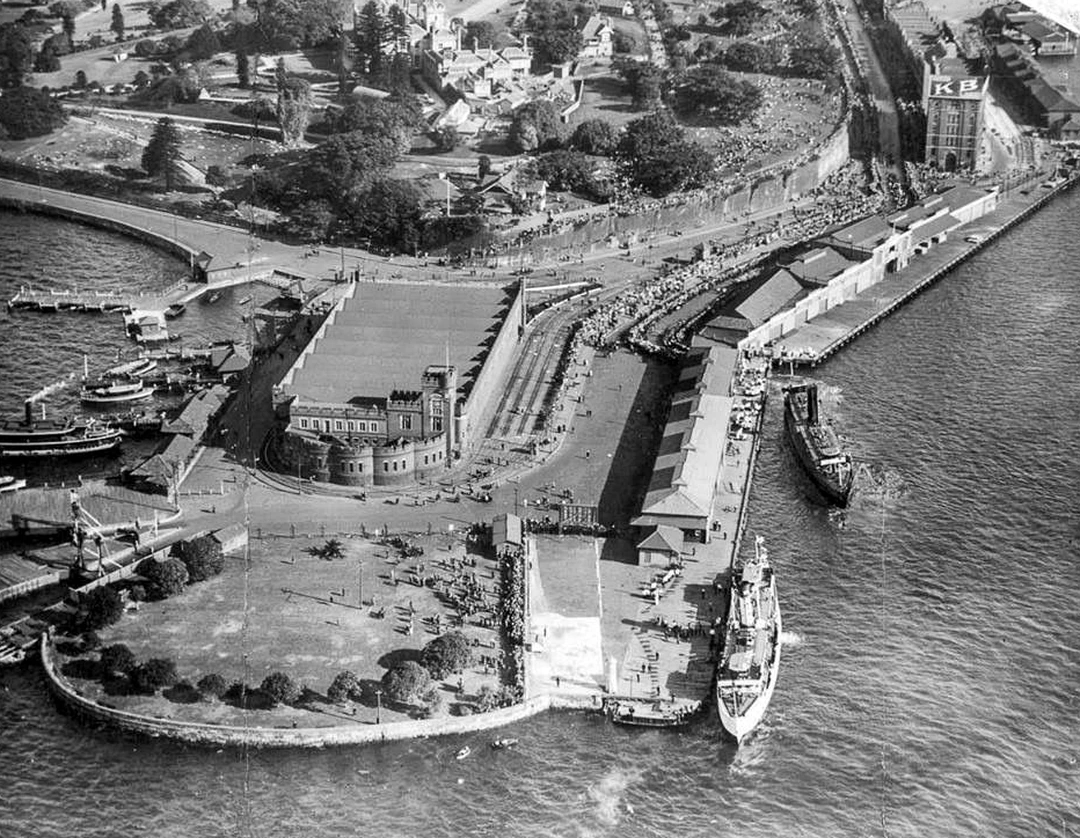
Entering the twentieth century, as the city of Sydney surged forward after the war years and aspired to cement its status as a global cultural hub, New South Wales Premier John Joseph Cahill made a watershed decision: to transform Bennelong Point—then home to a dilapidated tram depot—into a grand opera house. In September 1955, an unprecedented international design competition was launched, drawing 233 entries from 32 countries. Amid hundreds of rectilinear modernist proposals, Entry No. 218 by Danish architect Jørn Utzon was initially discarded during preliminary screening, only to be rescued from the reject pile by renowned jury member Eero Saarinen—who had arrived late—and declared a stroke of genius. In 1957, Utzon’s design was officially announced the winner, opening an unprecedented chapter in architectural history with shell structures inspired by billowing sails and the geometry of a sphere.
Yet turning a visionary sketch into reality became an epic struggle of artistic conviction against political headwinds. From the very start of construction, the project encountered technical hurdles beyond the era’s conventional reach, requiring early computers to calculate self-supporting geometric concrete shells while escalating cost estimates and timelines. Political turmoil struck in 1965 with a change of government in New South Wales, and the new Minister for Public Works, Davis Hughes—driven by strict fiscal pragmatism—repeatedly cut funding, delayed interior design approvals, and withheld Utzon’s fees. Friction between a fiercely purist artist and bureaucratic pressures pushed Utzon to a breaking point. In February 1966, deeply disillusioned, Jørn Utzon resigned and quietly left Australia, vowing never to return to see his creation finished without him on the interiors.
Even as staffing upheavals and political controversies cast a shadow over the final phases of construction under a local team of architects led by Peter Hall, the building ultimately fulfilled its grand destiny. On October 20, 1973, beneath Sydney’s bright skies, Queen Elizabeth II formally opened the Sydney Opera House before crowds of onlookers, cementing its place as an enduring national icon. Over time and through reappraisal, old wounds began to heal; in 2003, Utzon was awarded architecture’s highest honor, the Pritzker Prize, accompanied by a belated yet heartfelt apology from Sydney’s leadership. Then in 2007, UNESCO inscribed the Sydney Opera House on the World Heritage List, affirming it as a landmark of twentieth-century creative daring and engineering ingenuity.
Viewed across the sweep of Port Jackson, Bennelong Point juts proudly into breezy currents like a ribbon of quartz. In the ancient memory of the Gadigal people of the Eora nation, the point was known as Tubowgule, where tides and white sand met in generations-old ceremonies, before becoming linked with Woollarawarre Bennelong, a key cultural go-between during Governor Arthur Phillip’s early colonial years. Through shifting eras—from an eighteenth-century brick cottage and the sandstone defenses of Fort Macquarie in the colonial period to a gritty mid-twentieth-century tram depot—the site finally found its crowning purpose as the stage for a world-famous landmark. Geographically, the harbor creates a rare landscape setting: the complex faces sweeping ocean waters on three sides while its backdrop is framed by the lush greenery of the Royal Botanic Garden and the vertical towers of the central business district, making it a dramatic gateway linking urban energy with the wide expanse of the southern sea.
The spatial balance of Bennelong Point is further elevated by its close relationship with bustling Circular Quay and the mighty Sydney Harbour Bridge. Where the bridge’s industrial steel arch projects muscular strength, the Opera House’s sweeping curves offer a graceful, fluid counterpoint. Together they turn the headland into an expansive public plaza where granite promenades lead pedestrians from the hubbub of the train station and ferry wharves into a calmer, more contemplative realm of visual and performing arts.
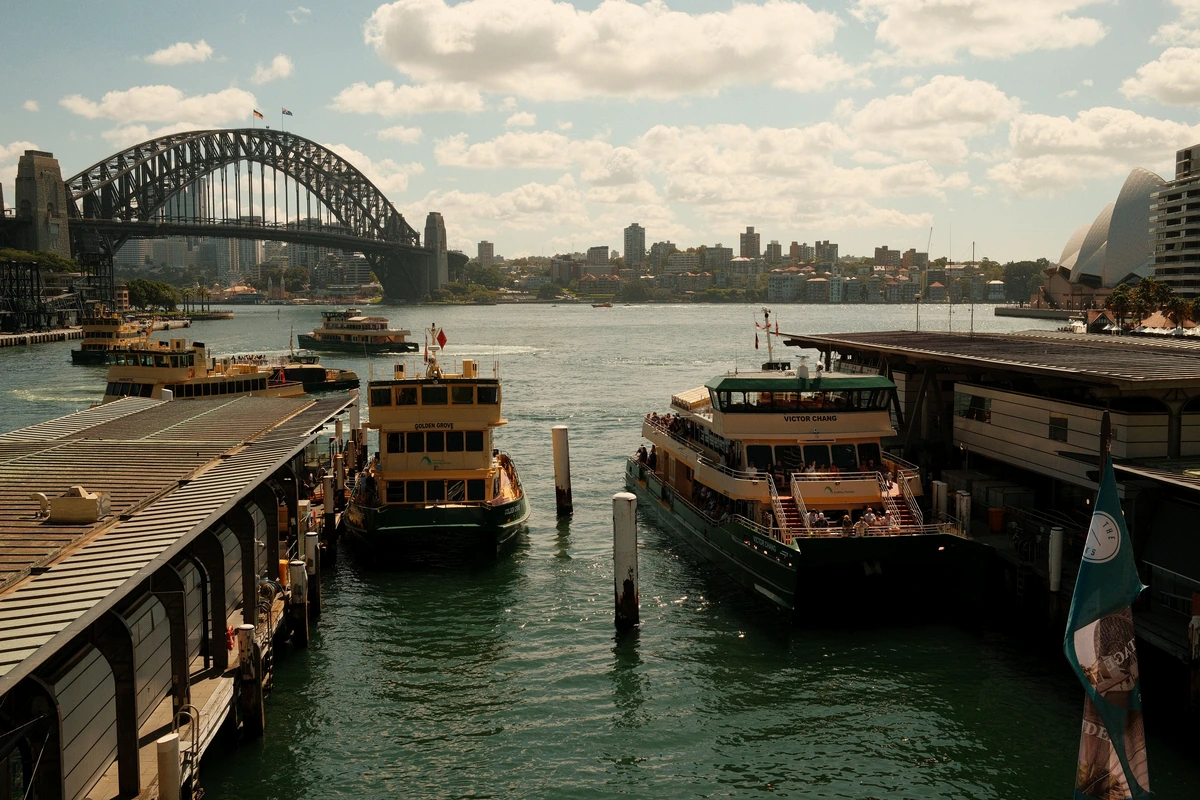
To bring a waterside vision to life, engineering the massive podium pushed contemporary structural construction to new limits. Drawing inspiration from the stepped stone platforms of ancient Maya civilization, the design created a sprawling podium covering more than 1.8 hectares above high tide, supporting the entire complex while concealing intricate mechanical and electrical systems beneath. Building this foundation required driving hundreds of large-diameter reinforced concrete piers through harbor silt deep into Sydney sandstone, establishing a sturdy base resistant to saltwater corrosion and tidal forces.
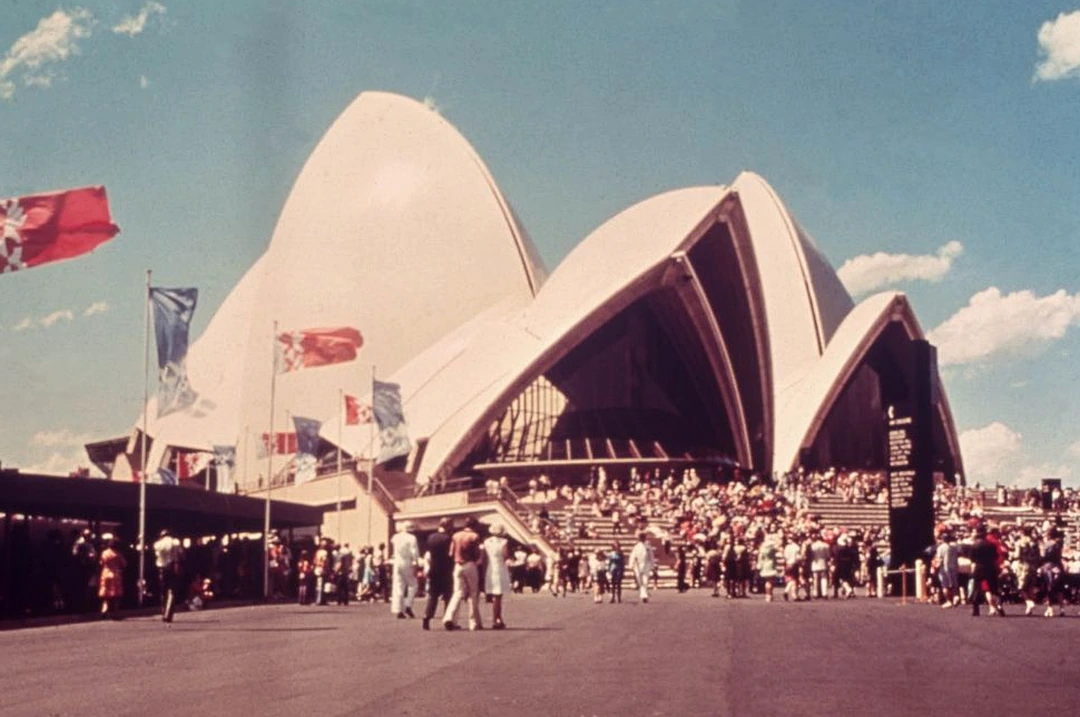
The pinnacle of spatial imagination and geometric engineering lies in the solution to the sail-like vaults that had stumped international mathematicians for years. The breakthrough came by standardizing the complex curved geometry: every sail is cut from the same imaginary sphere with a radius of 75 meters. This allowed precast concrete rib segments to be manufactured accurately on-site before being lifted into place and tensioned with post-tensioning cables. Cladding the concrete structure are 1,056,006 glazed ceramic tiles made by Höganäs in Sweden. In two primary tones—glossy white and matte cream—the tiles are designed to be self-cleaning in the rain and catch changing sunlight throughout the day, making the monument shift subtly from warm morning gold to bright midday white and soft rose-violet at dusk.
Seen from the waters of Port Jackson, the Sydney Opera House reads as a celebration of structural expressionism, where pure sculpture and modern engineering merge seamlessly. At the heart of this visual feat is the geometric breakthrough worked out by Jørn Utzon and engineers at Ove Arup over years of study. Rather than relying on complex free-form parabolas or ellipses that posed daunting construction challenges at the time, Utzon hit upon the insight of deriving the shell segments from a single sphere with a radius of 246 feet. This unified spherical geometry gave the roof its clean grace while enabling precast concrete ribs to be cast in series, forming self-supporting vaults that soar against the harbor sky without interior columns obstructing the view.
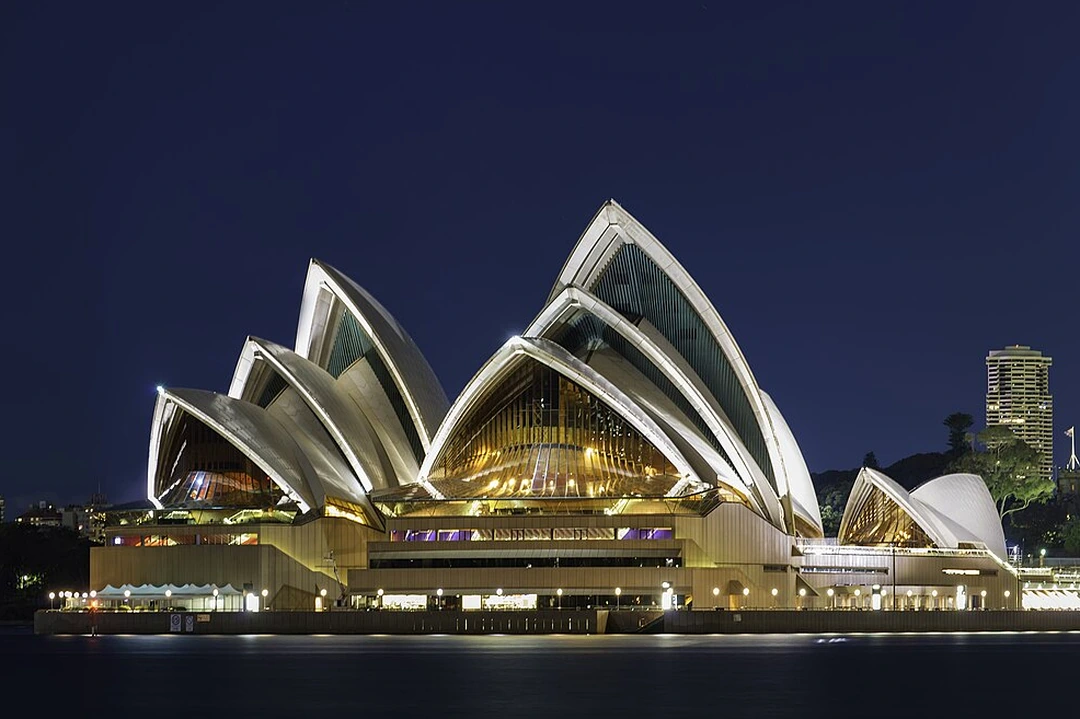
Up close, the craft of the exterior cladding reveals remarkable material detail. The sweeping vaults are covered in 1,056,006 custom-made glazed ceramic tiles produced by Höganäs in Sweden. Blending sensibilities inspired by Eastern ceramics with Nordic kiln craft, the Höganäs tiles are split between reflective glossy white and neutral matte cream. Their interplay with light lets the concrete sails shift moods as the day progresses—catching warm coral-gold at dawn, crisp white at midday, and deeper twilight hues by evening. Fired to a precise finish, the glazed surface also sheds dirt naturally whenever rain sweeps across Bennelong Point, helping keep the landmark looking clean across decades.
The scale of the complex is a clear testament to ambitious spatial design. Spanning a floor area of roughly 1.8 hectares on Bennelong Point, the building extends out toward the water almost like a sculpted peninsula. The highest vault over the Concert Hall reaches 67 meters above sea level—roughly the height of a twenty-two-story building standing in open harbor air. Set atop a heavy granite podium echoing ancient Mesoamerican stepped pyramids, the grounded base contrasts sharply with the buoyant sails above. Beneath the curving shells lies a layered interior of dedicated performance spaces—including a symphony concert hall, an opera theater, drama stages, studios, and dining venues—connected by angled glass curtain walls that frame harbor views.
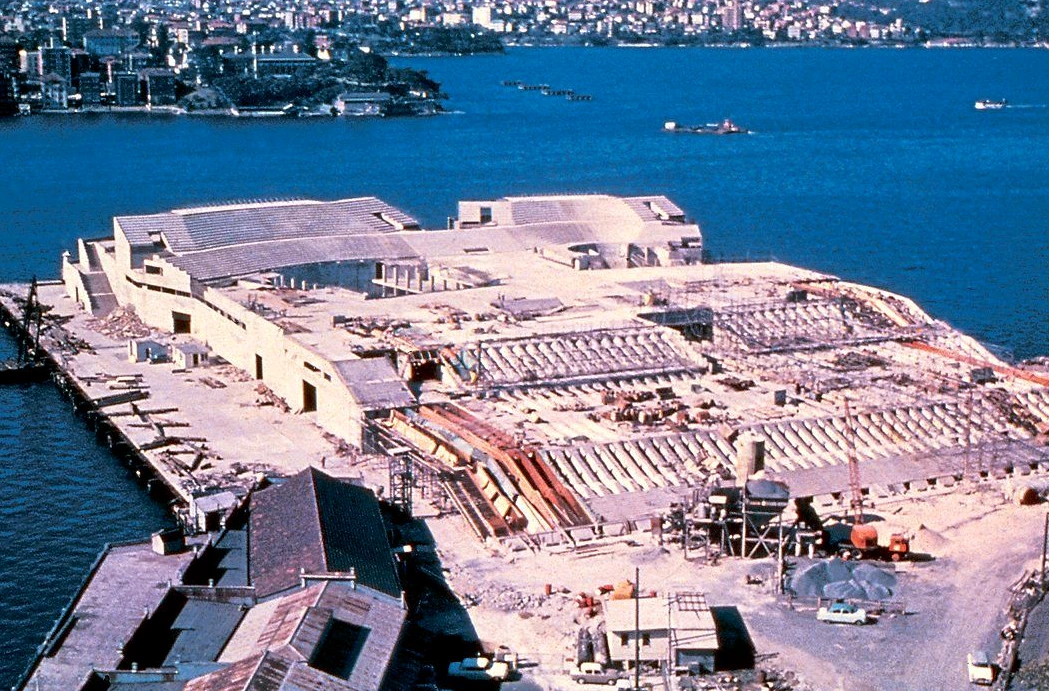
Delivering a landmark of such unprecedented engineering complexity required substantial time and money. Final construction costs reached AU$102 million, a figure that stirred major public debate as it far exceeded initial estimates. Facing budget strain and fierce discussion, the New South Wales government established a dedicated state lottery to help fund the project. Millions of lottery tickets sold over the years gave everyday residents a tangible stake in the landmark, turning each tile and concrete arch into a point of civic pride before the doors opened to the world.
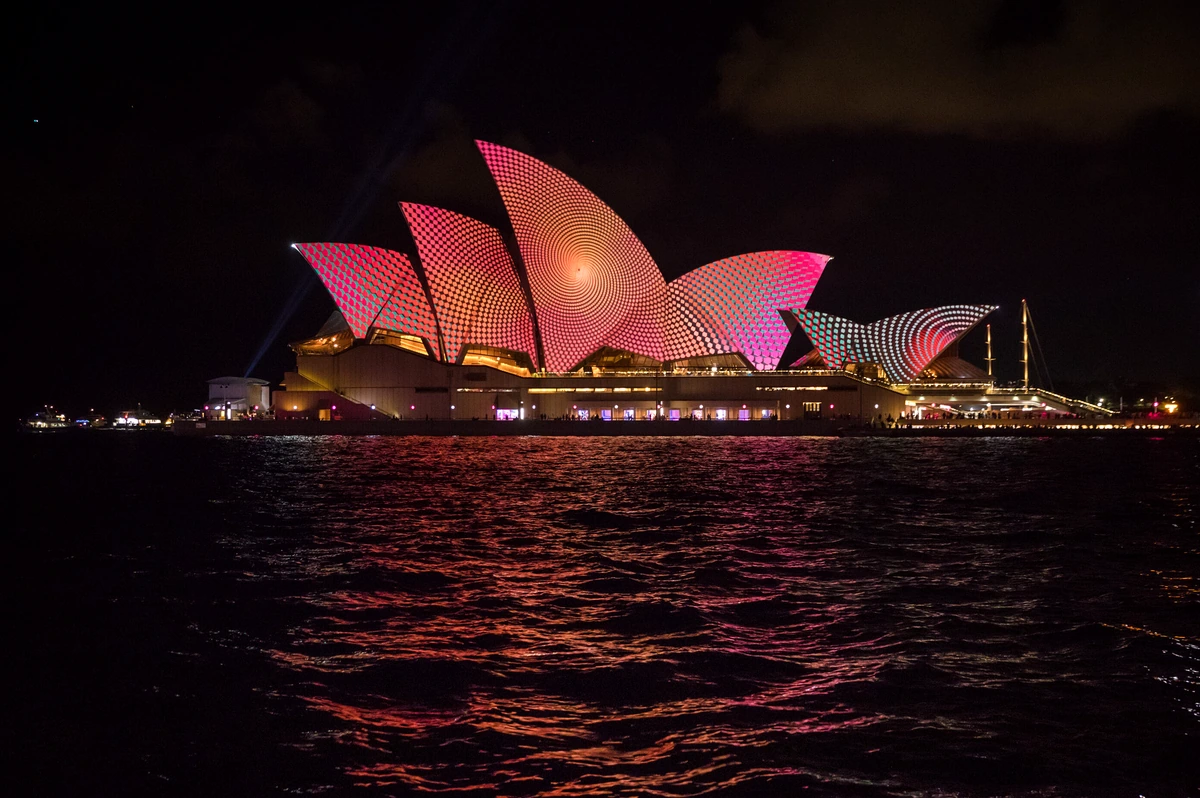
As evening settles over Port Jackson, the Sydney Opera House transitions from its daytime ivory poise into a vibrant evening showcase of light and sound in the Southern Hemisphere. On the granite headland of Bennelong Point—which the Gadigal people long called Tubowgule, a place of waves and gathering—nightfall brings a distinct creative energy. A highlight of twilight and evening visits is “Badu Gili,” meaning “Water Light” in the Gadigal language. After dark, the eastern sails become a large-scale projection canvas where digital projections share artwork, motifs, and Dreamtime stories by First Nations and Torres Strait Islander artists, moving in rhythm with traditional soundscapes across the Swedish tiles as harbor waters lap below.
Architectural LED lighting programmed along the curved ribs highlights the structural ribs supporting the sails against the night sky. Warm amber and crisp white light reflect off Sydney Harbour, contrasting with the silhouette of the Sydney Harbour Bridge across the water. Thoughtful lighting honors Jørn Utzon’s organic forms while turning the plaza below the Monumental Steps into an open-air gathering space where visitors feel the harbor breeze and hear waves rolling against the seawall.
Behind the bronze-tinted glass curtain walls imported from France, indoor performances come alive. Inside the Joan Sutherland Theatre, which seats over 1,500 guests, the curtain rises on repertoire classics such as La Bohème, Carmen, and Madama Butterfly staged by Opera Australia with orchestral accompaniment. A short walk along a curving concourse, the Concert Hall—seating more than 2,600 and home to the world’s largest mechanical tracker organ with 10,000 handcrafted pipes—fills with symphonic performances by the Sydney Symphony Orchestra. Following acoustic and structural upgrades, the hall delivers clear sound projection shaped by brushed white-birch acoustic panels.
Evening activity on the point continues beyond the auditorium doors along the Western Broadwalk. Beneath the soaring sails, waterfront spots like Opera Bar and Opera Kitchen draw locals and travelers for relaxed drinks and bites. Guests gather around timber tables with a glass of Hunter Valley wine, fresh Sydney Rock Oysters, or smoked Tasmanian salmon, accompanied by live music and harbor views. In those moments, the Sydney Opera House feels less like a static monument and more like a living cultural hub where architecture and everyday life meet.
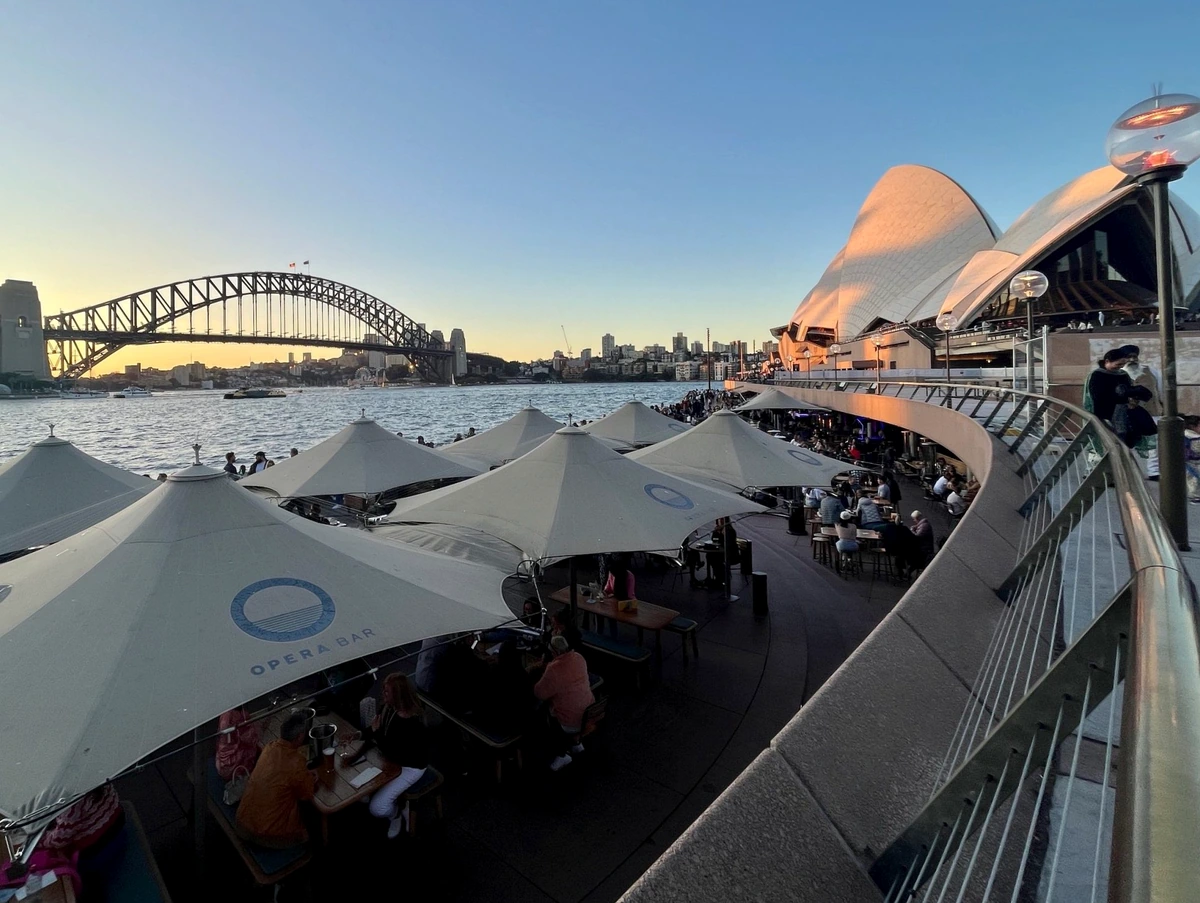
Nestled beneath the sculptural concrete shells of Bennelong Point, dining at the Sydney Opera House is a signature part of a visit to Sydney. Standing out within the complex is Bennelong restaurant, set beneath a prominent sail shell with views toward the Sydney Harbour Bridge and Port Jackson. Led by acclaimed Australian chefs, it showcases refined Modern Australian cuisine that pairs classic culinary technique with native Australian ingredients, offering memorable flavors for international visitors.
The character of Modern Australian cooking under the Bennelong sails draws on native botanicals long known to Indigenous Australians. Diners encounter finger lime, whose tiny citrus pearls burst with bright tartness and aromatic oils; saltbush from arid inland regions, lending savory crunch and a subtle mineral salinity; and Tasmanian leatherwood honey, gathered from native forest trees for a floral, lingering sweetness.
Bennelong Point also celebrates fresh seafood from southern waters. Sydney Rock Oysters, harvested from clean estuaries and coastal bays, offer a creamy texture and clean briny finish brightened with a squeeze of citrus. Alongside them, Moreton Bay bugs—prized crustaceans from warmer northeastern waters—deliver sweet, tender white meat that pairs well with flame-searing and fragrant herb butter.
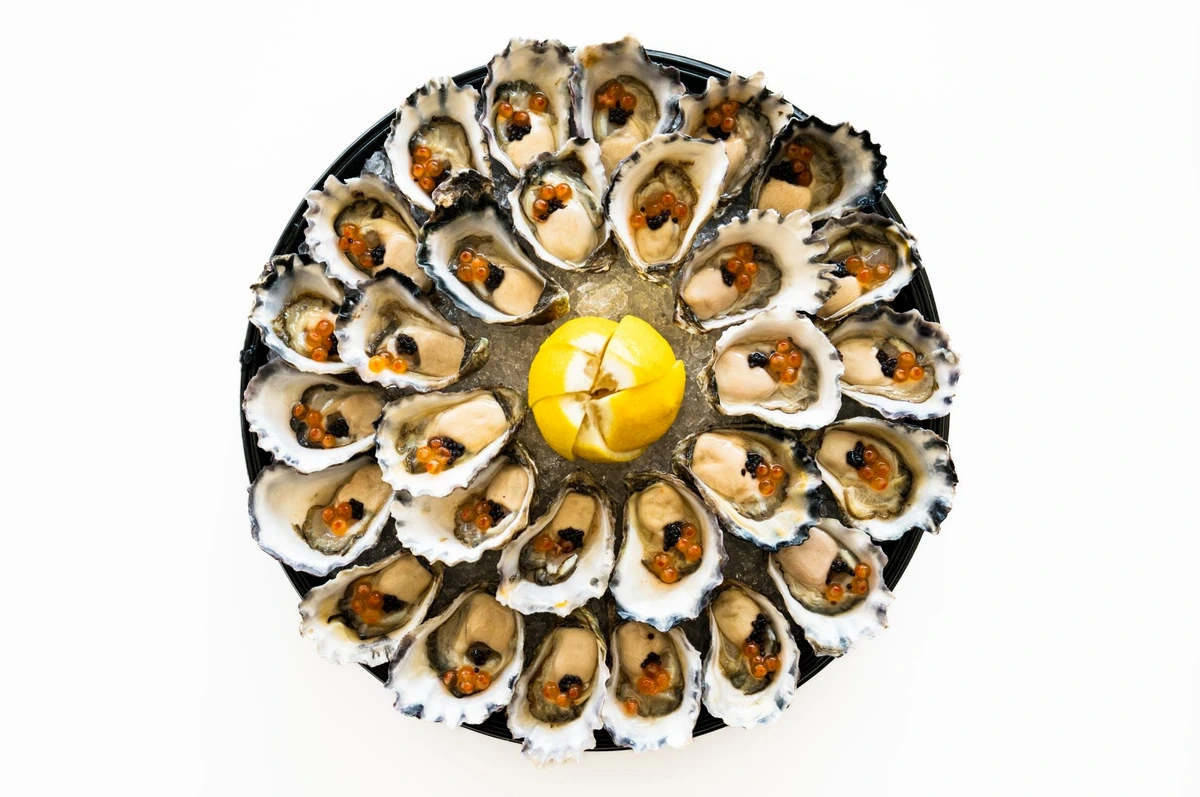
More than a meal, dining at the Opera House is closely tied to pre-theatre dining before curtain time. As sunset warms the white tiles and rippling water beyond the glass, guests enjoy a glass of Barossa Valley shiraz or Hunter Valley chardonnay in a relaxed, unhurried setting before heading inside for the evening’s performance.
The open spaces around Bennelong Point welcome visitors throughout the day. Strolling along the granite boardwalks to watch sunrise hit the tiled sails or listening to harbor waves at dusk is possible around the clock in the outdoor public areas. By contrast, indoor welcome foyers and box office counters typically operate from 9:00 AM to 8:30 PM daily for ticket assistance, performance information, and guided tour check-ins.
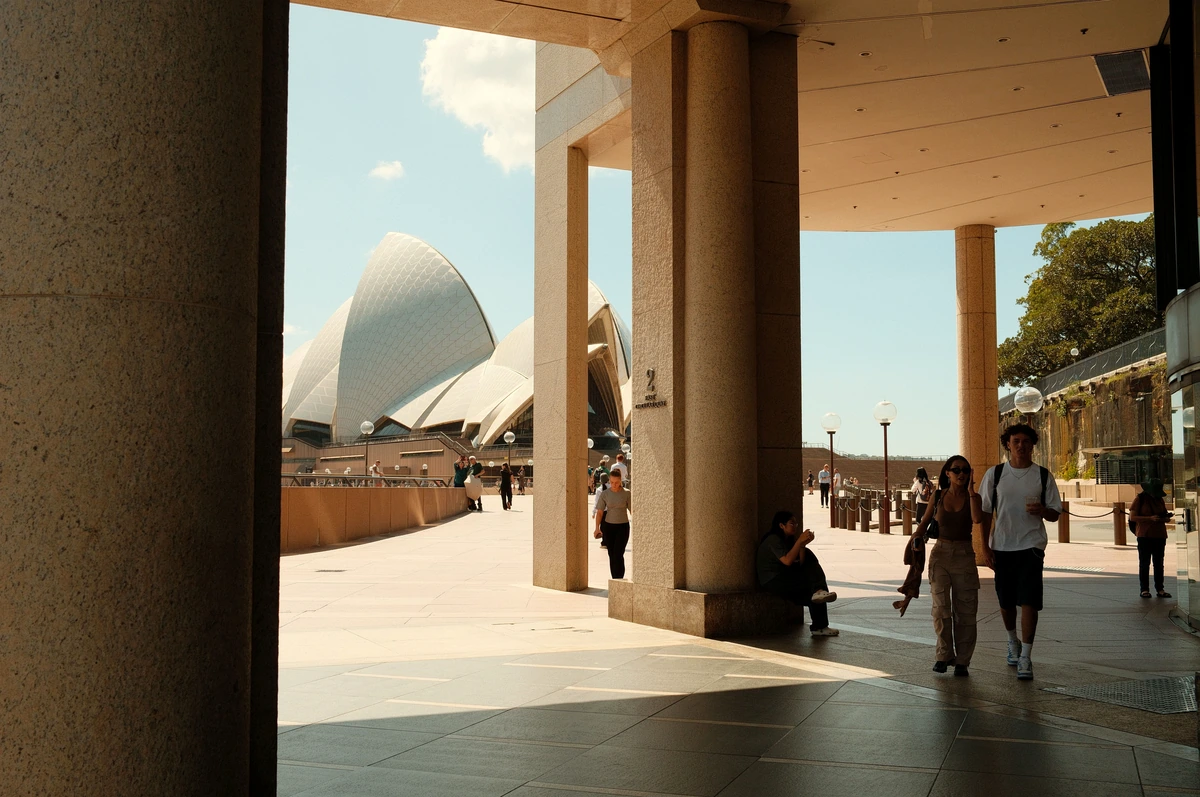
One of the most memorable ways to approach the landmark is aboard a Sydney Ferries vessel crossing Port Jackson. Approaching Circular Quay by water reveals the sails rising against the sky much as Jørn Utzon first envisioned them from the harbor. From the Circular Quay wharves, it is less than a ten-minute walk along the shaded eastern promenade to the complex. Sydney’s City Circle trains and local buses also provide convenient access, letting visitors walk down to the waterfront at a comfortable pace.
When planning a visit and budget, travelers can choose from several ways to experience the site. Standard guided architectural walking tours of the foyers and performance spaces generally run around sixty minutes, while morning backstage tours take a closer look behind the scenes and into technical areas. For opera, theater, or orchestral concerts, checking schedules and booking directly through the official box office website helps secure preferred seating, avoid third-party markups, and plan ahead during peak travel periods.
Stepping into an auditorium for a live performance calls for simple consideration for artists and fellow audience members. While strict formalwear is rarely required, smart casual attire is widely favored. Phones and other devices should be set to silent, and photography or recording is not permitted once the performance begins so performers and guests can stay focused. During intermission, stepping into a foyer overlooking the illuminated Sydney Harbour Bridge for a refreshing drink rounds out a classic night out in the city.
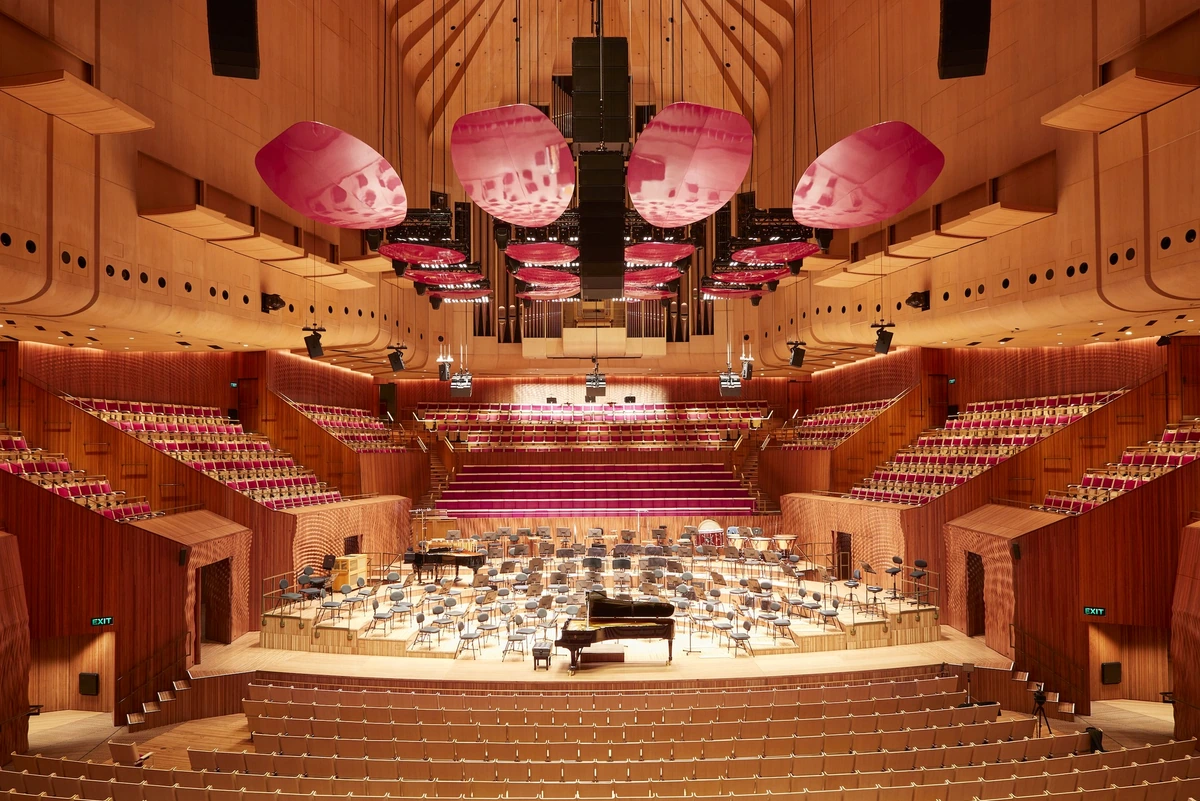
Its blend of distinctive architecture and active performing arts makes the Sydney Opera House a highlight of travel in the Southern Hemisphere, easily experienced as part of a curated Sydney–Melbourne Australia tour package that connects the culture and dining of two of Australia’s leading cities.