The origins of Owakudani Valley trace back to a violent geological cataclysm roughly three millennia ago. At that time, sacred Mount Kamiyama—the highest peak of the Hakone volcanic complex—underwent its final catastrophic phreatic eruption and massive landslide. The blast tore open the mountain’s northern flank, collapsing an enormous section of rock strata and leaving a permanent scar upon the earth: a smoking crater basin where superheated steam and sulfurous gases surge relentlessly from deep within the Earth’s crust. Throughout ancient and medieval Japan, the barren, treeless wasteland, boiling mud pools churning day and night, and pungent stench of sulfur struck sheer terror into local inhabitants. Believing this steaming chasm to be an earthly gateway straight to the underworld, people named the valley Ojigoku (大地獄, meaning “Great Hell”).
Viewed through the lens of Japanese folklore and Buddhism from the Heian period through the Kamakura and Edo shogunates, Ojigoku came to embody the earthly manifestation of Buddhist hells where sinful souls suffered torment. Although situated near the vital Tokaido highway linking the ancient capital of Kyoto with the Tokugawa shoguns’ stronghold of Edo, travelers crossing the rugged Hakone Pass dared only gaze at the billowing plumes from afar rather than set foot inside the cursed valley. Legends of ascetic monks ascending here to erect memorial altars and pacify malevolent spirits shrouded the valley in an aura of sacred dread for centuries.
The turning point that transformed this valley’s destiny arrived only when the sweeping modernization winds of the Meiji Restoration reached across Japan. In 1873, recognizing both the breathtaking scenic value and the priceless geothermal hot spring resources essential for modernizing the nation and cultivating tourism, local authorities petitioned to abolish the grim name Ojigoku. The valley was officially renamed Owakudani (大涌谷, meaning “Great Boiling Valley”). This renaming did far more than wash away a thousand years of dark superstition; it served as meticulous ceremonial preparation ahead of the historic imperial visit of Emperor Meiji and the Empress in 1876. The dignified presence of the sovereign amid towering plumes of white steam dispelled ancient supernatural fears once and for all, transforming Owakudani from a realm of dread into a proud symbol of Japan’s raw natural power.
Despite wearing a welcoming face as a marquee highlight of the Hakone sightseeing circuit, Owakudani remains a living, breathing geological entity constantly shifting to the pulse of the Earth. Its most recent major stir occurred in May 2015, when micro-earthquakes and intensified steam venting prompted the Japan Meteorological Agency to raise its volcanic alert level, forcing authorities to close the entire valley for nearly a year and a half to safeguard human life. Following rigorous infrastructure upgrades, Owakudani officially reopened to the world in July 2016. Today, behind the dramatic spectacle of white steam billowing skyward stands a network of reinforced concrete shelters, real-time toxic gas micro-sensors, and state-of-the-art automated seismic monitoring stations—a testament to the seamless harmony between primal geological memory and modern scientific vigilance.
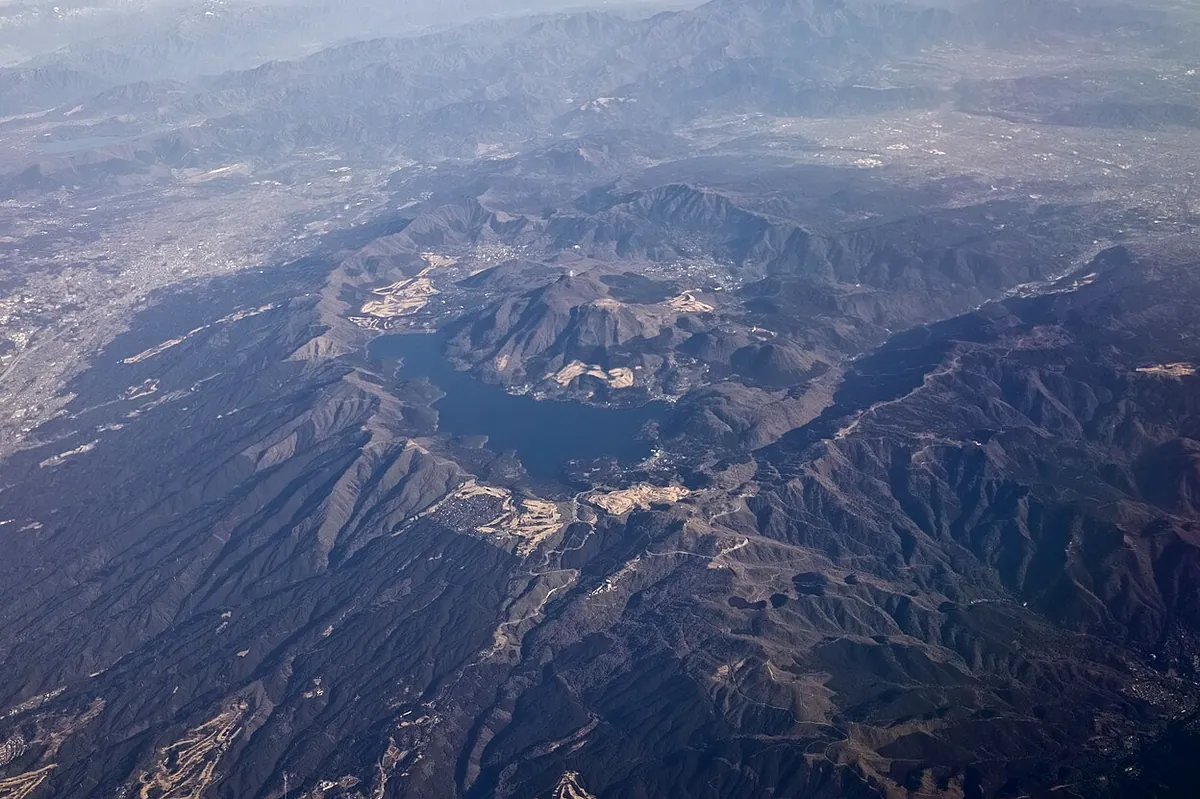
Perched on the northern slope of Mount Kamiyama—the commanding summit of the Hakone range in Kanagawa Prefecture—Owakudani Valley cuts a striking geological scar along the Pacific Ring of Fire. Tectonically, this basin was not carved by gradual erosion, but torn open by a sudden cataclysm roughly 3,000 years ago during the Late Jomon period. A massive steam-driven explosion on ancient Mount Hakone fractured the mountainside, triggering a colossal debris avalanche and leaving behind a horseshoe-shaped collapse caldera opening toward the north. Geomorphologically, this semicircular amphitheater acts as both a giant natural wind funnel and a perpetual geothermal pressure valve, where magma chambers smoldering kilometers beneath the Earth’s crust continuously vent energy to the surface.
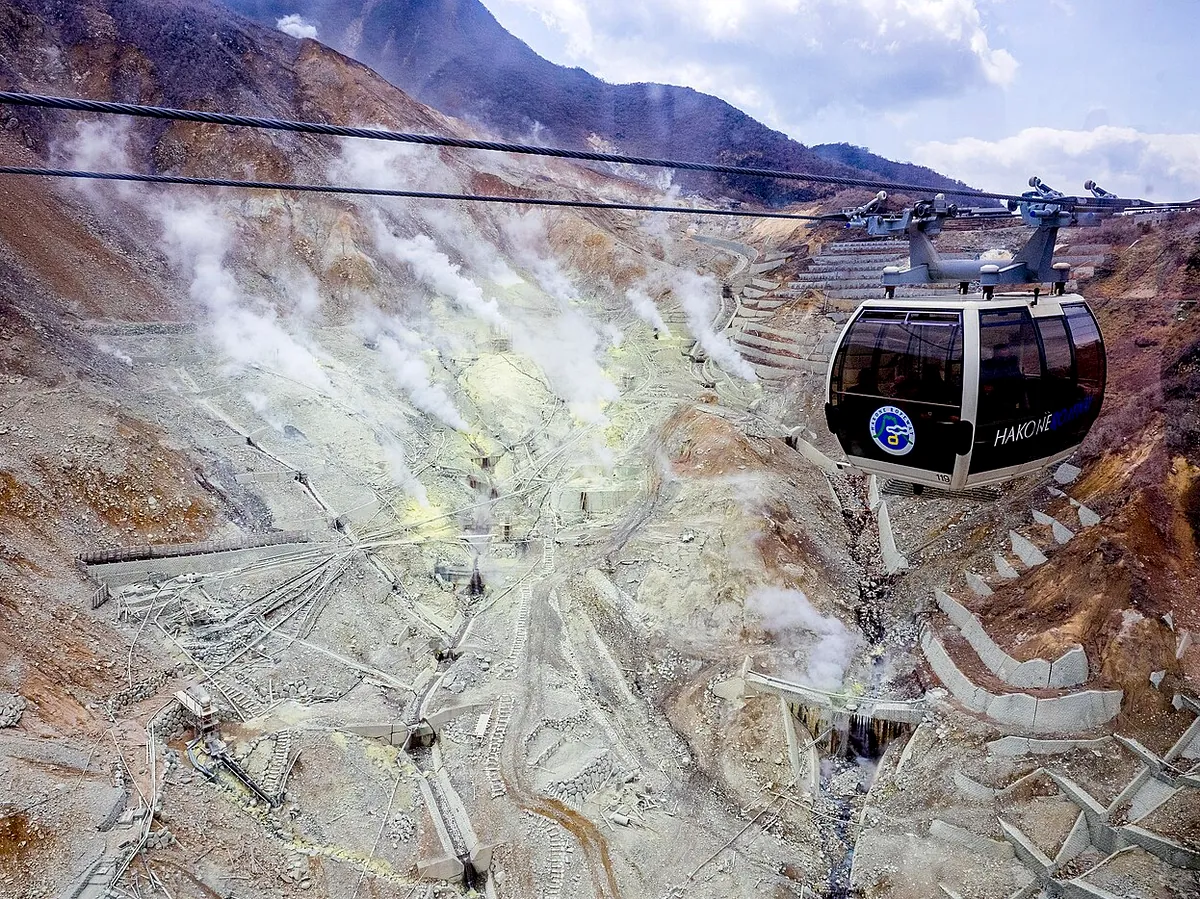
Owakudani’s landscape presents a startling visual contrast against the lush, verdant temperate forests carpeting the surrounding Hakone hills. Stepping across the threshold of the horseshoe basin, dense stands of cedar and fir vanish abruptly, giving way to a barren, primeval wasteland. Rock and soil here are heavily altered by acid and scalding mineral vapors, shifting into shades of ash gray, weathered brick red, and bone white. Hundreds of volcanic fumaroles blast dense plumes of white steam into the sky day and night, laden with concentrated hydrogen sulfide and sulfur dioxide. The sharp, unmistakable odor of sulfur fills the air alongside deep subterranean hissing and the rhythmic bubbling of mineral mud pools boiling at nearly 100°C. Around active vent rims, pure sulfur crystallizes into bright yellow sulfur flowers, accenting the stark stone with a haunting, formidable beauty.
Through the lens of traditional East Asian geomancy (feng shui) and earth-energy traditions, Owakudani holds the status of a major open-air focal point of intense Fire energy. It serves as a powerful release vent along the dragon vein extending from Mount Fuji through the Hakone range, where fierce subterranean Yang energy breaks through the surface to display its primal force. The horseshoe ridge cradling the epicenter prevents chaotic dispersion while directing thermal vitality toward the tranquil Sengokuhara plateau below. This geomantic balance becomes even more compelling when viewed alongside serene Lake Ashi just nearby: the fiery upward surge of the volcanic crater paired with the gentle Water energy of the ancient caldera lake creates a complete Yin–Yang equilibrium, making the region an extraordinary nexus of geological energy across the Japanese archipelago.
From Owakudani’s elevated vantage point, the scenery rises to surreal perfection on clear days when the towering silhouette of Mount Fuji appears to the northwest. The eternal, snow-crowned stillness of Japan’s sacred peak contrasts dramatically with the chaotic, endlessly steaming chasm below. Small wonder that ancient travelers trembled before this otherworldly terrain and named it Jigokudani (“Hell Valley”). Only in the early Meiji era, prior to the summer visit of Emperor Meiji and the Empress, was it gracefully renamed Owakudani (“Great Boiling Valley”)—a shift in name that transformed human perception from a dreaded realm of death into a geological masterpiece celebrating the boundless vitality of the Earth.
Standing more than 1,000 meters above sea level inside the Hakone volcanic caldera, the visitor complex at Owakudani exemplifies how thoughtful modern architecture can harmonize with raw, unforgiving nature. The entire layout is designed openly around the rugged crater terrain left by Mount Kamiyama’s eruptions thousands of years ago. Rather than imposing upon or taming the primeval landscape, Japanese architects embraced minimalist design principles, crafting visitor facilities as quiet observation outposts where guests can experience the Earth’s boiling energy firsthand in complete safety.
The visual and functional centerpiece of the welcome zone is the Owakudani Kuro-tamago-kan complex (“Great Boiling Valley Black Egg Pavilion”). Built in a clean, contemporary minimalist style, its crisp architectural lines blend smoothly with the wabi-sabi aesthetic celebrating raw, unpretentious beauty. Its exterior unites local gray andesite stone matching the surrounding volcanic rock, thermally treated timber louvers resistant to acidic vapor corrosion, and expansive tempered-glass curtain walls framing 360-degree panoramas of billowing sulfur vents and distant Mount Fuji. Inside, intelligently zoned spaces house both the production line for longevity black eggs (kuro-tamago)—boiled directly in iron- and sulfur-rich hot spring pools—and a climate-controlled rest pavilion that shields visitors from concentrated volcanic gases outside.
Stretching from the central service plaza up toward the deepest geothermal vents is the Owakudani Nature Trail, a triumph of outdoor civil engineering. The footpath winds carefully along steep crater slopes without disturbing boiling subterranean mineral channels. Its walkway surface and guardrails are constructed from specialized prestressed reinforced concrete engineered to withstand periodic seismic tremors and coated with a heavy-duty acid-resistant membrane to resist continuous exposure to hydrogen sulfide and sulfur dioxide vapors. Strategically placed rest bays double as miniature observation decks, guiding visitors step by step through a living geological showcase.
A standout safety feature across the valley’s infrastructure is its network of dome-shaped emergency shelters spaced scientifically along the sightseeing route. Cast from thick reinforced concrete in an optimal load-bearing arch geometry, these bunkers can immediately shelter hundreds of visitors from falling rock, volcanic ash, or sudden pressurized gas bursts. Each shelter is equipped with positive-pressure air filtration valves to block toxic fumes, emergency medical kits, and fiber-optic communication lines linked directly to the Hakone Geological Observation Center. Unobtrusive yet rock-solid, this shelter system reflects Japan’s world-leading safety engineering—turning modern construction into a protective shield along the fragile edge of one of Earth’s most active volcanic vents.
Unlike bustling resort towns illuminated by neon signs or theme parks staging elaborate multimedia shows, Owakudani Valley hosts no dazzling night festivals or after-dark entertainment. In this land once known as Jigokudani (“Hell Valley”)—before Emperor Meiji renamed it Owakudani in the ninth year of Meiji to dispel ominous associations ahead of an imperial tour—the sole and greatest “live performance” is written and directed by Mother Nature herself, running uninterrupted for over three millennia since Mount Kamiyama’s last major eruption.
This natural spectacle sets its stage against Hakone’s sky and jagged volcanic cliffs, relying purely on natural daylight from sunrise to sunset to illuminate a living geological canvas. Over a thousand meters above sea level, milky-white columns of sulfurous steam billow from subterranean vents beside golden mineral crystals and fractured red-basalt earth. As sunlight filters through shifting layers of vapor, optical refraction casts ethereal halos shifting from silvery white to deep gold—creating a haunting natural drama far beyond any human stagecraft.
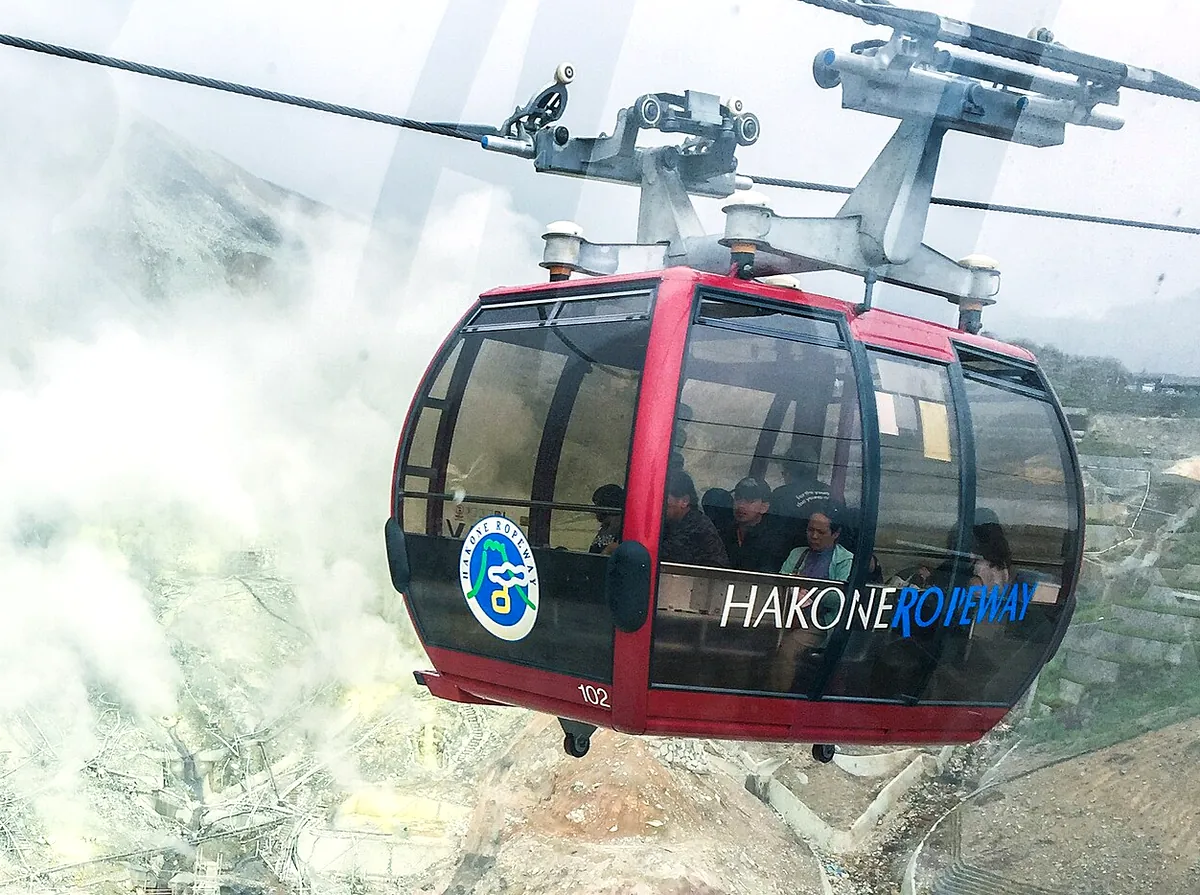
Daytime sightseeing reaches its visual peak aboard the Hakone Ropeway connecting Sounzan Station through Owakudani Station down to the shores of Lake Ashi. Suspended high in the sky inside sturdy glass gondolas, passengers gaze straight down into a steaming gorge hundreds of meters below. Under crisp daylight, the barren, gas-scorched crater floor contrasts starkly with lush maple and cedar forests ringing the rim—offering a razor-sharp visual cross-section between primal subterranean destruction and resilient life.
The moment twilight dips behind distant Mount Fuji, Owakudani Valley enters complete stillness under strict closure. Nature reserve authorities and the Kanagawa Prefectural Government enforce rigorous safety protocols, closing all walking trails, halting ropeway operations, and requiring all visitors to depart the crater before darkness falls. The absence of nocturnal lighting or nightlife stems directly from strict geological safety management: in the cold night air, rapidly dropping temperatures cause dense pockets of hydrogen sulfide and sulfur dioxide to settle low inside the basin, combining with steep terrain and rockfall hazards to make the valley perilous after dark.
Even as the crater itself falls silent beneath the night sky, Owakudani’s subterranean energy flows onward into neighboring hot spring towns. Sulfur-rich mineral water drawn from the valley floor travels through insulated pipelines to nourish renowned ryokan hot spring resorts in Gora and Sengokuhara. There, the warm glow of traditional washi paper lanterns, the refined flavors of a seasonal kaiseki dinner, and a restorative soak in milky-white thermal waters provide the ideal continuation to a day spent marveling at Owakudani’s raw geothermal majesty.
The cuisine of Owakudani Valley reads like a singular culinary signature distilled from the fiery breath of Hakone’s earth, where cooking techniques rely directly on natural geothermal heat and mineral-rich spring water. Amid drifting sulfur mist and the hiss of skyward steam plumes, hot spring gastronomy is far more than boiling food with natural energy—it embodies centuries of Japanese wellness wisdom and harmony with the elements.
Reigning supreme atop Owakudani’s culinary map are the legendary Kuro-tamago (“black eggs”), the famed longevity delicacy every visitor to the Great Boiling Valley is eager to taste. Crafting these jet-black eggs requires a precise interplay of natural chemistry: fresh chicken eggs are loaded into large iron wire baskets and lowered directly into natural mineral hot spring pools maintained at a steady 80°C for roughly one hour. Immersed in water saturated with iron ions and hydrogen sulfide gas, a rapid chemical reaction deposits a sleek coat of iron sulfide onto the porous calcium carbonate shell—turning ivory-white eggshells glossy obsidian black. After their mineral bath, the baskets are transferred to pure volcanic steam chambers at 100°C for an additional fifteen minutes to cook the centers thoroughly while concentrating a rich, savory depth and subtle mineral aroma impossible to replicate in a conventional kitchen.
Kuro-tamago is deeply intertwined with a Heian-period spiritual legend: the revered Buddhist saint Kobo Daishi (Kukai) climbed into this smoking valley and personally carved a stone statue of Enmei Jizo (the Life-Prolonging Bodhisattva) to pray for the safety of locals threatened by the wrathful mountain deity. Folklore promises that eating a single kuro-tamago boiled in the sacred springs at Jizo’s feet wards off misfortune and adds seven years to one’s life. In Buddhist cosmology, the number seven carries profound auspicious meaning—symbolizing the transformation of seven calamities into seven blessings, granting renewal and longevity. Cracking open the crisp black shell reveals a silky, snow-white albumen contrasting strikingly around a rich, creamy yolk imbued with a clean, earthy mineral finish.
Offering a playful chilled counterpoint to steaming geothermal eggs is Volcanic Ash Ice Cream—locally known as Black Soft-Serve (Kuro-aisu)—a poetic treat amid the misty valley. This specialty blends ultra-fine edible bamboo charcoal powder (takesumi) with rich, creamy fresh milk sourced from lush highland dairy farms around the foothills of Mount Fuji. Natural mineral salt harvested from deep geological strata is added in balanced measure to temper sweetness and elevate pure vanilla notes with a crisp mineral edge, giving the cone a mysterious charcoal-gray hue evoking ancient volcanic ash.
Slurping a steaming bowl of fiery red Lava Ramen is another signature Owakudani indulgence guaranteed to chase away the biting highland wind. Its rich broth is simmered from pork marrow bones and local red miso paste, spiked with premium togarashi chili powder to achieve a deep crimson hue reminiscent of molten magma surging through rock fissures. Thick, spicy broth coats springy golden wavy noodles crowned with thick-cut chashu pork belly torched to smoky perfection, crisp seasoned menma bamboo shoots, shredded green onions, and half a soy-marinated soft-boiled egg. One sip of the piping-hot broth awakens every sense against the stark volcanic scenery, refueling travelers with elemental warmth.
Visiting Owakudani rewards thoughtful timing aligned with Hakone’s changing seasons. Although the volcanic vents steam tirelessly year-round, the two finest windows to behold sacred Mount Fuji in crisp majesty are autumn from October to November and late spring from April to May. When autumn breezes sweep the valley, surrounding forests blaze with crimson maples and golden pampas grass, creating a breathtaking contrast between vibrant foliage and smoking yellow sulfur deposits. Conversely, late spring brings dry, crystal-clear mountain air that parts heavy mist to reveal Mount Fuji’s snow-capped cone framed by late-blooming mountain cherry blossoms.
Reaching the valley floor over 1,000 meters above sea level via Kanagawa Prefecture’s famed transit network is an adventure in itself. Travelers from Tokyo typically board the Odakyu Romancecar limited express from Shinjuku Station to Hakone-Yumoto, then transfer to the switchback Hakone Tozan Railway climbing steep mountain grades to Gora Station. The smartest, most economical option for the entire circuit is the Hakone Freepass, which grants unlimited rides across eight transport modes—including the Hakone Tozan Cable Car and the Hakone Ropeway. Gliding inside a ropeway cabin over Sounzan ridge and descending into the steaming crater delivers awe-inspiring, bird’s-eye views across the volcanic basin.
Because Owakudani remains an active volcanic vent field, personal health and safety come first for every visitor. Air within the core zone carries elevated concentrations of sulfur dioxide (SO₂) and hydrogen sulfide (H₂S), which can irritate mucous membranes and airways. Travelers with cardiovascular conditions, asthma, chronic bronchitis, or those who are pregnant are advised not to linger outdoors near active fumaroles. Local authorities operate automated real-time gas monitors linked to color-coded warning beacons; whenever gas concentrations exceed safe thresholds, walking trails close immediately to trigger protective protocols, so visitors must always follow posted safety signage.
Beyond geology, local commerce here is closely tied to authentic culinary heritage. To enjoy genuine iron-spring-boiled kuro-tamago and avoid inflated prices or low-grade detours pushed by cut-rate tours, head straight to the official Owakudani Kuro-tamago-kan visitor center. Not only does it display transparent prices regulated by the local tourism cooperative, but it also certifies the provenance of every batch hauled directly from the thermal wells via mechanical pulleys—preserving an authentic folk experience without unvetted shopping traps.
The union of subterranean mystery and Hakone’s serene mountain-and-lake beauty leaves a lasting mark on anyone who hears the deep hiss of volcanic steam rising from the earth. To make your journey through Japan completely seamless and worry-free without juggling complex mountain transit connections, joining a thoughtfully curated all-inclusive tour package lets you relax and immerse yourself fully in Owakudani’s dramatic landscapes and rich cultural heritage.