Amid the magnificent expanse of Shenzhen Bay, the legendary Sea World and Minghua Ship rise like a monument of steel commemorating pivotal turning points of modern history. Looking back to the celebrated Chantiers de l’Atlantique shipyard in Saint-Nazaire on France’s Atlantic coast, the vessel was launched in 1962 under her original name, Ancerville. Owned by the shipping line Compagnie de Navigation Paquet, the ocean liner was built to ply the high-seas route linking Marseille with Dakar, carrying statesmen, merchants, and artists across the waters between Europe and Africa. Measuring over 168 meters in length with a displacement exceeding 14,000 tons and featuring some of the most luxurious multi-deck accommodations of the 1960s, this flagship stood at the pinnacle of French maritime prestige before an extraordinary twist of history brought her to Eastern shores.
 n n
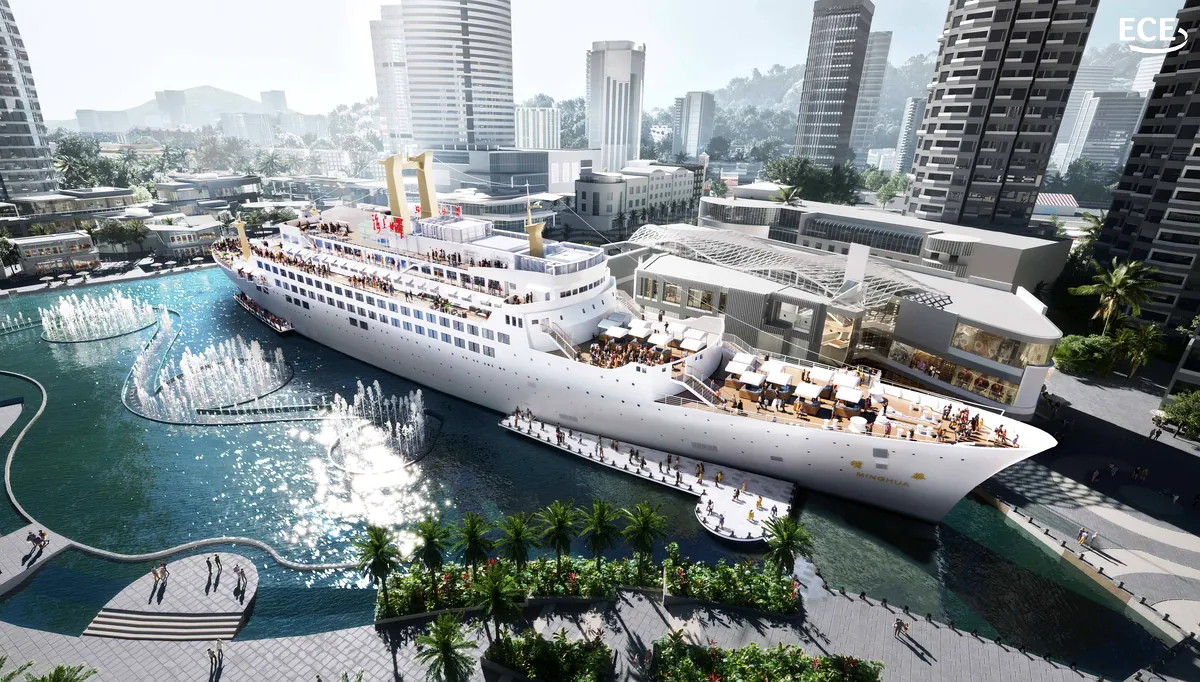
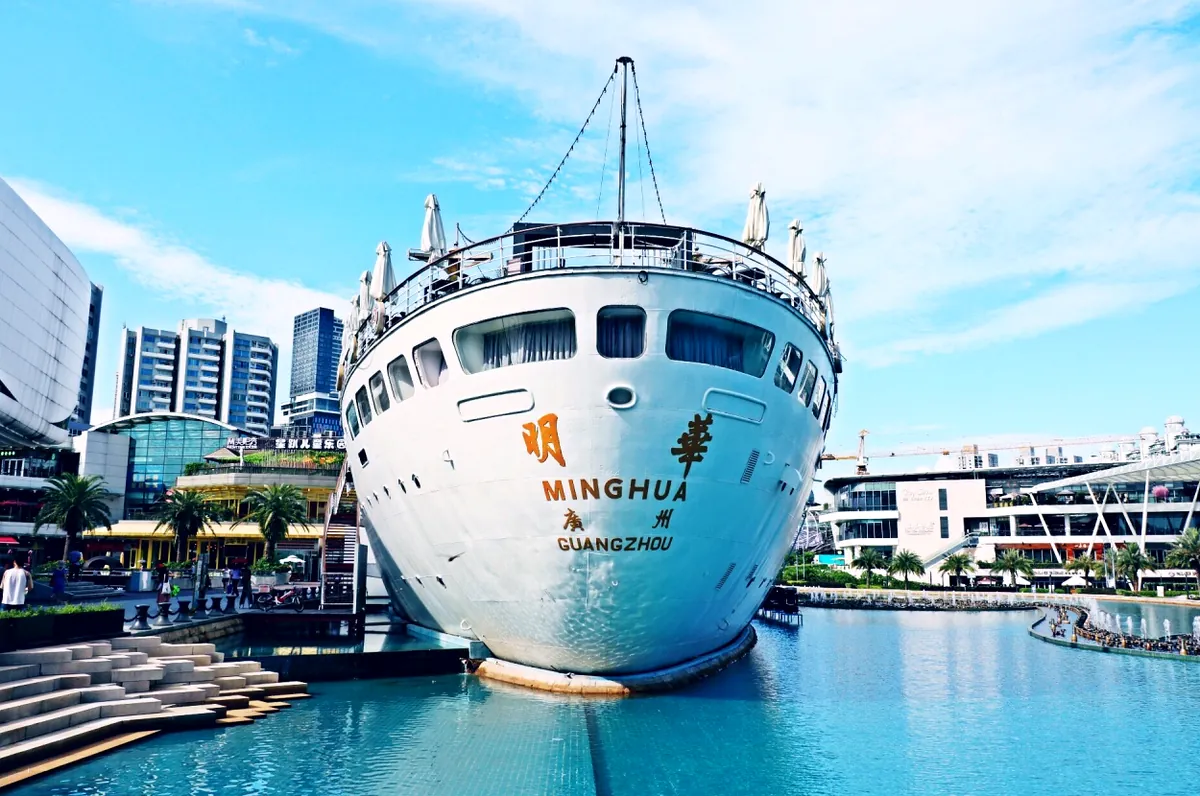
Taking in the landmark as a whole, visitors are immediately captivated by the stately silhouette of the gleaming white ocean liner resting proudly at the heart of a bustling waterfront plaza. Tiered decks rise gracefully upward, preserving classic aerodynamic lines alongside the masts, bridge, and funnel iconic of the golden age of ocean travel. Surrounding the massive hull is a crystal-clear reflecting basin paired with choreographed fountains and contemporary landscape architecture, striking a captivating balance between a stoic steel witness of history and the vibrant pulse of modern nightlife.
The vessel’s destiny turned a new page in 1973, when the China Ocean Shipping Company (COSCO) formally acquired her and christened her Minghua—literally “Spirit of China”—carrying an aspiration to bring honor to China across international waters. Over a decade sailing under her new flag, the Minghua performed far more than commercial transport and passenger voyages; she shouldered vital diplomatic and humanitarian missions. Braving Pacific storms, the ship carried out overseas Chinese evacuation voyages, delivered international aid, and served as a floating ambassador for a nation steadily opening its doors to the world after decades of isolation.
The defining turning point that gave birth to today’s enduring tourism icon took place in August 1983, when the ship dropped anchor permanently at Shekou Port in Shenzhen. Guided by the strategic vision of Yuan Geng—pioneering reformer and chief architect of the Shekou Industrial Zone—the vessel was spared the scrapyard and reborn as Southern China’s first floating entertainment and hospitality complex. Then, in January 1984, during his historic Southern Tour that reshaped the nation’s economic trajectory, Chinese leader Deng Xiaoping stepped aboard the Minghua. Gazing out across rapidly transforming construction sites, he brushed four bold Chinese characters—”海上世界” (Haishang Shijie, or “Sea World”)—officially inaugurating the name that has endured ever since.
Rapid land reclamation projects along the Shekou Peninsula soon turned the shallow waters surrounding the hull into solid ground, permanently anchoring the ocean liner within the urban core without floating moorings. Once an oceangoing vessel braving distant waves, the Minghua Ship at Sea World evolved into a living museum and indestructible monument to the dawn of China’s Reform and Opening-Up era, preserving the pioneering spirit of the South China Sea coast.
The panorama of Sea World unfolds like a modern coastal masterpiece as the Minghua rises majestically at the center of an expansive water plaza. Her snow-white hull and multi-tiered promenade decks stand tall against the open sky of Shenzhen Bay, showcasing timeless nautical proportions. Winding reflecting pools embrace her flanks alongside wooden boardwalks and tropical palms, creating a serene urban oasis where the boundary between an ocean voyage and a vibrant waterfront park dissolves completely.
Viewed through traditional Lingnan geomancy, the Shekou site where the Minghua rests occupies an exceptionally auspicious “backed by mountains, facing water” setting that harmonizes solid mountain energy with converging waters. Behind the complex rises 300-meter Mount Dananshan like a protective screen shielding the coast from inland winds and anchoring vital energy. Directly ahead opens the broad expanse of Shenzhen Bay and the Lingdingyang estuary, welcoming tidal currents flowing down from the Pearl River—symbolizing an open ceremonial hall where gathering waters nourish prosperity and flourishing trade.
 n n
The singular feat of landscape engineering here lies in transforming a mobile oceangoing vessel into a permanent landlocked centerpiece through ingenious hydraulic and earthwork design. In the early 1980s, engineers excavated an artificial basin right along the shoreline, using high tides to float the 14,000-ton ocean liner precisely into position. Immediately afterward, embankments were reinforced and earth was backfilled around the keel to lock the hull permanently into the land—turning a ship that once cleaved ocean waves into a dynamic architectural landmark anchoring the peninsula.
The surrounding microclimate is naturally moderated by a thoughtful interplay of lush coastal greenery and circulating water features. Brisk sea breezes blowing inland from the strait pass through the dense woodlands of Mount Nanshan and mingle with cool mist rising from the broad reflecting pools encircling the hull. Gently terraced plazas stepping down from the mountain slopes toward the bay open clear sightlines, weaving coconut palms, oil palms, and vibrant tropical blooms among contemporary pavilions to create a refreshing coastal sanctuary.
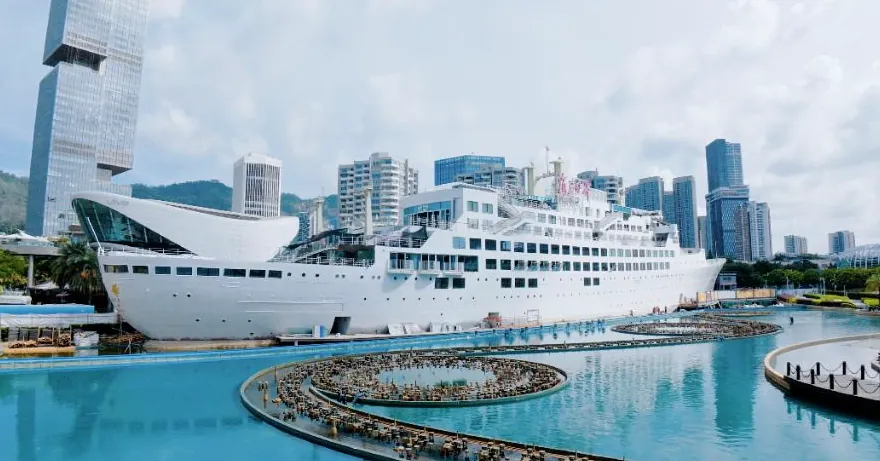
As sunset fades over Shenzhen Bay and salty sea breezes drift across the hills of Shekou, the plaza around the Minghua sheds its daytime poise to don the dazzling mantle of a city of light. Measuring over 160 meters long, the former French flagship Ancerville—built at Chantiers de l’Atlantique in the 1960s—becomes the centerpiece of a contemporary visual art spectacle. Synchronized architectural lighting washes across brass-rimmed portholes, towering flanks, and upper promenade decks, making the ship appear like a luminous crystal palace floating in the heart of the metropolis.
The dramatic climax of Shekou after dark unfolds across the expansive water plaza framing the Minghua’s bow, stage to one of the largest live musical fountain shows in the Greater Bay Area. Built with tens of millions of yuan in hydraulic and digital lighting technology, the water theater features hundreds of high-pressure multi-directional nozzles capable of launching water columns up to fifty meters into the night sky. As surround-sound symphonic scores swell, thousands of water jets dance in fluid choreography—twirling like silk ribbons before surging skyward in crisp synchronization with high-powered lasers, shifting spotlights, and fine artificial mist.
Three-dimensional projection mapping cast directly onto the Minghua’s steel hull elevates the visual storytelling to a crescendo. The ship’s flank transforms into a giant cinema screen chronicling historic milestones: mid-twentieth-century intercontinental voyages, her pivotal arrival in China during the 1970s, and the bold calligraphic strokes of “Sea World” brushed aboard her deck by Deng Xiaoping in the spring of 1984. Light becomes poetic narrative, turning tens of thousands of tons of steel into a living storyteller celebrating a pioneering Special Economic Zone’s bold leap toward the sea.
 n n
Framing this symphony of water and light is a vibrant, cosmopolitan nightlife unmatched elsewhere in Southern China. Along stone-paved promenades and satellite plazas encircling the ship, open-air bars, Bavarian-style craft microbreweries, classic jazz lounges, and international restaurants welcome lively crowds. Laughter in dozens of languages mingles with clinking glasses and sultry saxophone melodies drifting on the sea breeze. Seated beneath shaded oak tables with a chilled craft beer or fine glass of wine while watching luminous reflections dance off the historic hull, travelers experience the free-spirited energy of a port city that never sleeps.
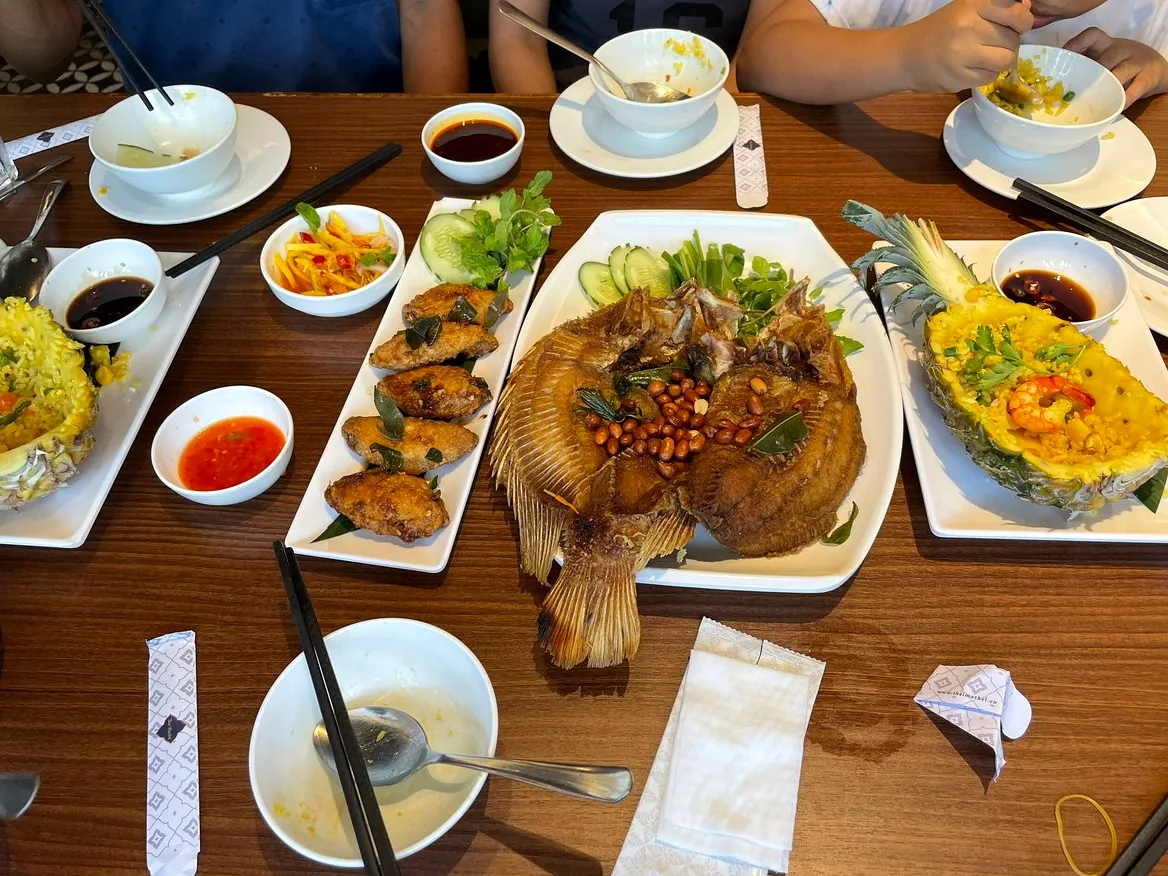
Right at the water’s edge of Shenzhen Bay, where the Minghua stands permanently anchored at the heart of Sea World Plaza, a distinctive culinary ecosystem has blossomed over decades of cultural exchange. Far more than a scenic stopover, the district serves as a renowned gastronomic crossroads where salty Pearl River estuary breezes mingle with fragrant steam rising from bamboo dim sum baskets and rich aromas from international kitchens—guiding palates from deep Cantonese roots to bold global flavors.
The open-air dining promenade wrapping around the Minghua comes alive at dusk. Al fresco tables line granite walkways where guests gather over platters of ultra-fresh seafood and frosty mugs of craft beer while admiring the snow-white liner glowing against the night sky. This breezy waterfront setting links seamlessly with shimmering reflecting pools, uniting culinary delights with the lively hum of a coastal harbor after dark.
At the heart of Shekou’s local food map lies pure Lingnan Cantonese cuisine rooted in the bountiful waters of historic Bao’an Bay. Famous garlic-steamed or charcoal-grilled oysters feature plump Shajing oysters prized for thick, sweet flesh paired with golden fried garlic and glass noodles soaked in savory juices. Local chefs honor pristine natural freshness in dishes such as steamed sea grouper with ginger, scallions, and light soy sauce or Shaoxing-wine-poached prawns. Refined tradition reaches its peak over pots of aged Pu-erh tea accompanied by classic Cantonese dim sum—paper-thin crystal shrimp dumplings bursting with crisp prawns, rich crab-roe siu mai, and fluffy barbecue pork buns glazed with wild honey.
Waves of migration have also enriched the culinary landscape with beloved Chaozhou and Hakka specialties. Master-stock braising pots simmering for decades with cassia bark, black cardamom, cloves, and licorice impart a glossy mahogany sheen to tender lion’s-head goose, braised offal, and silken tofu, served with tangy garlic-chili vinegar that awakens every taste bud. Equally celebrated are hand-pounded Chaozhou beef meatballs simmered in clear bone broth with fragrant Chinese celery, prized for a natural springy snap no machine-made product can match.
 n n
What truly sets Sea World and the Minghua Ship apart is an international dining mosaic born from the Special Economic Zone’s pioneering opening. Ever since foreign maritime specialists and engineers gathered on the Shekou Peninsula to build the modern port, authentic German Bavarian microbreweries, Mediterranean grills, and classic steakhouses have called this plaza home. Savoring charcoal-grilled sausages with tangy mustard and a tall stein of freshly brewed lager beneath the shadow of a 168-meter steel hull—or dining on East-meets-West fusion cuisine inside elegant aboard-ship banquet rooms—captures the open, welcoming spirit of modern Shenzhen.
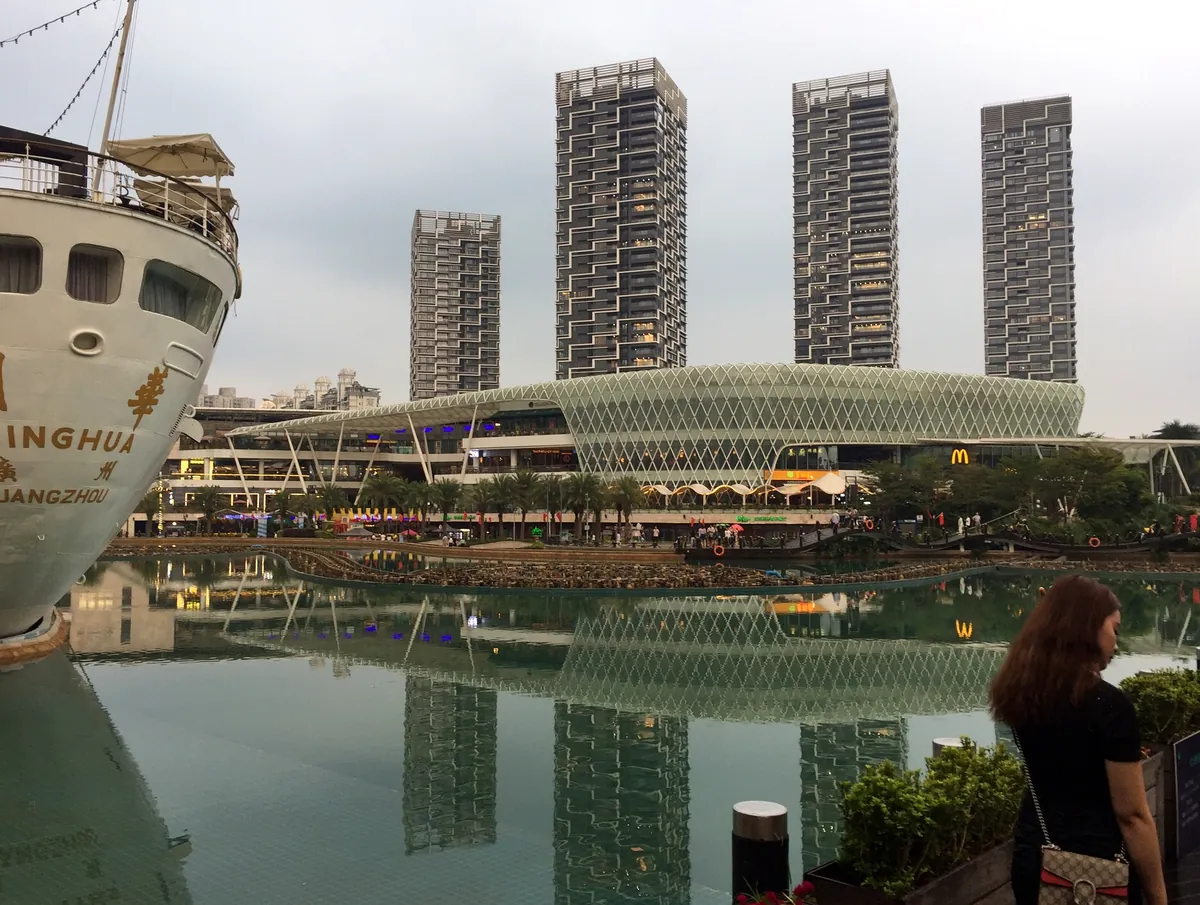
Making the most of a visit to Sea World and the Minghua Ship starts with understanding the layout and daily rhythm of Shenzhen’s Shekou Peninsula in Nanshan District. Commandingly positioned along Shenzhen Bay, the 168-meter vessel anchors a spacious waterfront plaza cooled by South China Sea breezes. The artistic contrast between her classic white French ocean-liner exterior and the sleek LED-lit financial towers surrounding her creates an unforgettable visual panorama, particularly after nightfall when multi-tiered fountains cast shimmering reflections across her historic hull.
The outdoor public plazas surrounding the Minghua remain open twenty-four hours a day, allowing visitors to stroll and admire the ship at any hour. Meanwhile, shops, international restaurants, boutique cafés, and aboard-ship bars generally welcome guests from 10:00 AM until midnight—and as late as 2:00 AM on lively weekends. Be sure not to miss the grand musical fountain show staged on the reflecting lake directly in front of the ship’s bow at scheduled intervals between 7:00 PM and 9:00 PM nightly, blending towering water jets, orchestral music, and laser projections recounting the vessel’s storied voyages.
Shenzhen’s modern public transit network makes reaching Sea World effortless. Simply take Shenzhen Metro Line 2 or Line 12 to Sea World Station (海上世界站) and exit via Exit A or Exit C to step straight into the central plaza. Travelers arriving from Shenzhen Bao’an International Airport can ride Metro Line 11 and transfer at Houhai Station to Line 2, reaching Sea World in under forty minutes. Those arriving by high-speed ferry from Hong Kong International Airport or Macao disembark at Shekou Cruise Homeport, just a five-minute shuttle ride or two short metro stops from the ship.
Regarding entry formalities and practical logistics, international visitors should ensure they hold a valid Chinese visa prior to travel or verify eligibility for Shenzhen’s five-day Special Economic Zone port visa at qualified land and ferry crossings. Across shops and restaurants aboard and around the ship, cashless payments via mobile wallets linked to international credit cards are standard, ensuring fast, seamless transactions. A top insider tip is to arrive on deck around sunset at 5:30 PM to watch twilight paint Shenzhen Bay crimson before the entire waterfront erupts in dazzling evening lights.
Pairing your visit to the Minghua Ship with neighboring cultural landmarks—such as the Shekou Reform and Opening-Up Museum and the Sea World Culture and Arts Center—offers rich insight into Shenzhen’s modern transformation. For a smooth, worry-free journey across the Greater Bay Area without language barriers or complex transit transfers, consider booking a thoughtfully curated all-inclusive China tour package designed for a truly seamless and enriching experience.
 n n