If the stream of Chinese civilization was carved into majestic fortresses of massive stone and fired brick, its most vivid earthly breath hides completely within the bustling street food alleys, which the Chinese language poetically and charmingly calls “Meishi Jie” (美食街). The origin of this vibrant public space model is deeply rooted in the Song Dynasty (960–1279), an era that marked a milestone urban revolution when the imperial court officially abolished the ancient ward system and lifted the nighttime curfew (yecheng). In the prosperous capital of Bianjing (modern-day Kaifeng) as depicted in Zhang Zeduan’s masterpiece, and later in picturesque Lin’an (Hangzhou) by the West Lake, nightfall was no longer a time to bolt doors and gates, but rather a miraculous awakening of the “Night Markets” (Yashi). The clear calls of street vendors selling tea soup, dim sum, and candied hawthorns intertwined with the glow of festive lanterns reflecting on the waterfront, creating a free and liberal urban lifestyle unprecedented in the history of the feudal East.
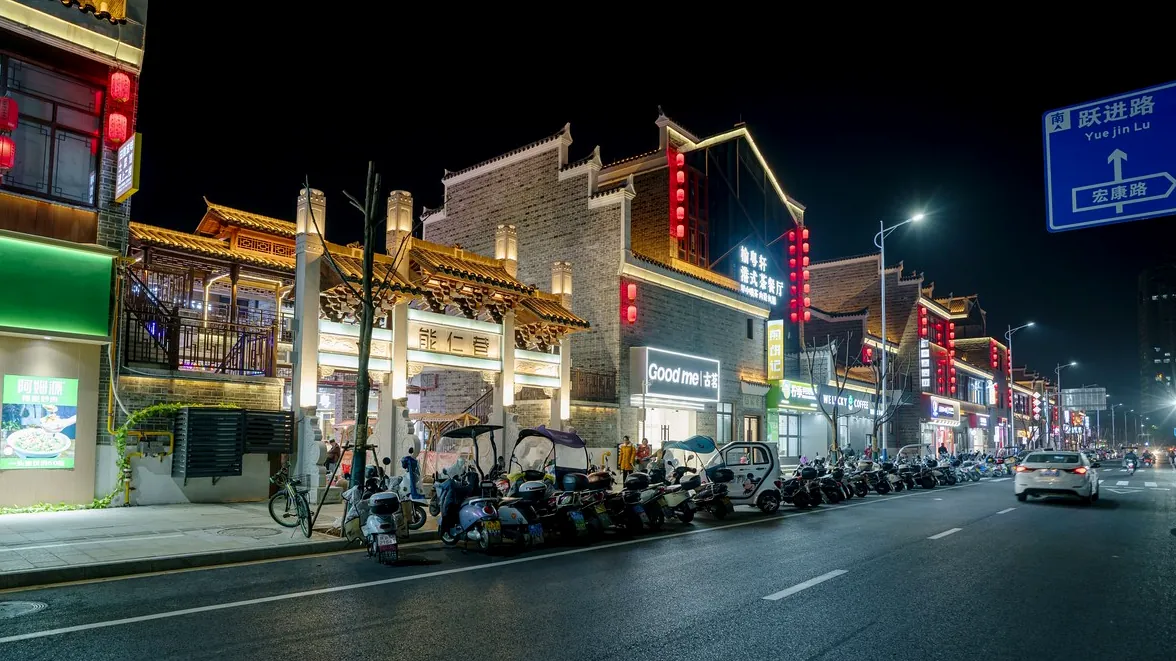
Looking at the realistic space of an old street corner when the lights turn on, the millennia-old cultural intersection appears vividly and sharply. The central highlight is a towering stone archway carved with classic Chinese patterns, majestically protecting the stone-paved road that guides travelers. Right at the foot of that ancient arched gate, contemporary life naturally weaves through the brightly lit signage of the modern milk tea brand Good Me, nestled closely among traditional stalls, blending with the Yuejin Lu street signpost. This multi-layered visual painting clearly portrays the spirit of cultural assimilation, where ancient architectural values shelter the vibrant heartbeat of the new-era street food flow.
Through many historical ups and downs and fierce geopolitical changes across the Yuan, Ming, and Qing dynasties up to the mid-twentieth century, the nocturnal culinary practice experienced periods of shrinkage due to social upheavals and strict centralized management policies. It was not until the early 1980s that the wind of Reform and Opening Up reignited the latent vitality of the private economy, laying the premise for the spectacular spontaneous rise of sidewalk dining spots. Homemade carts, coal stoves burning red throughout the night, and a few rustic wooden tables and chairs on the pavement quickly reconnected the millennia-old taste memories of the locals, turning every small alley into folk cultural exchange centers full of identity and human warmth.
Stepping into the modern era from the 2010s to the present, the evolution of street food avenues has turned a completely new page when the concept of the “night economy” (yejian jingji) was officially elevated into a national strategic development agenda. No longer made up of scattered spontaneous street vendors, today’s Meishi Jie streets are systematically planned with strict food safety and hygiene standards, harmoniously combining digital payment technology with heritage architecture preservation. Going far beyond mere commercial value, each culinary street now becomes a vivid open-air museum, representing a sophisticated soft diplomatic tool where Chinese culinary culture spreads its strong appeal, completely conquering the hearts and palates of millions of visitors from afar.
In traditional East Asian urban culture, the design of a culinary trading space does not merely stem from livelihood needs but is always deeply rooted in the Book of Changes (I Ching) and geomancy (feng shui). Renowned culinary streets from ancient times have always revered the principle of “concealing wind and gathering qi”—where the wind stops and vital energy converges—to harmonize the dragon veins of heaven and earth with the prosperous flow of human energy. The ideal terrain for dining avenues usually follows the embrace of rivers, sits beside sturdy hills, or welcomes the convergence of water and land trade arteries. Entering the modern era, this ancient philosophy is reborn under the lens of contemporary planning, where natural topographical structures are strictly respected to create a poetic backdrop for urban activities filled with earthly flavors.
The enchanting contrasting picture between ancient nostalgia and contemporary urban life is clearly visible at the street corner shimmering with night lights. Standing tall at the traffic turnoff with the Yuejin Lu street sign is a stone archway imbued with traditional Chinese architectural style, every curved roof ridge blending darkness with a solemn majesty. Yet, right beneath that mossy stone arch is the blossoming of fresh consumer life, where the Good Me storefront and modern shops glow with warm LED colors, creating an organic continuation between glorious historical imprints and the vibrant source of modern street food.
The spatial planning of the culinary hotspots in this vast nation also reflects a strategic vision for integrating natural terrain with a world-class transportation infrastructure network. Renowned culinary landmarks such as Jinli in Chengdu or Ciqikou along the Jialing River in Chongqing are cleverly positioned within a golden radius of 5 to 10km from central high-speed railway stations. This meticulous calculation allows these historic culinary towns to fully capitalize on the massive passenger traffic flowing through over 45,000km of high-speed rail across the territory. Travelers need only a few minutes to transfer from modern high-speed trains to instantly immerse themselves in winding, ancient spaces, where historic slate slopes along the waterfront create a natural tiered structure, preventing exhaust stagnation and channeling cool breezes from the river deep into every narrow alley.
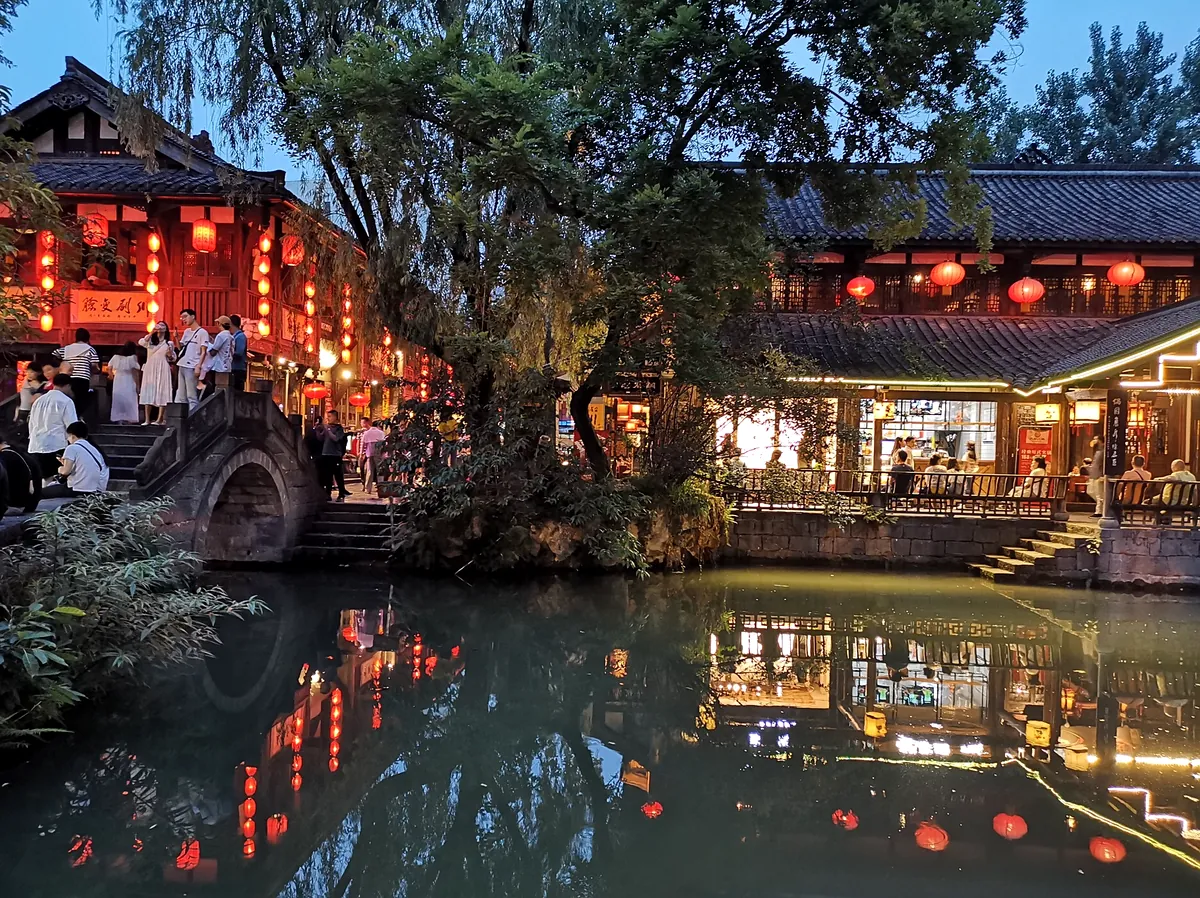
In terms of microclimate landscape, traditional culinary streets possess an ingenious approach to local terrain and weather. Following the Feng Shui principle of “winding paths evoke sentiment,” these ancient streets never run perfectly straight but always meander, intended to slow the movement of the wind and keep the warmth of cooking fires and rich aromas from dissipating too quickly. Paving with blue slate and the arrangement of ‘tianjing’ (skylights) in traditional gatehouse architecture not only facilitates rapid drainage during the rainy season in the Sichuan Basin but also creates a perfect heat convection mechanism. Hot air and pungent smoke from Sichuan chili oil woks or dim sum steamers are immediately drawn upward, making way for cool, refreshing air to circulate continuously at ground level.
The exquisite harmony between river and mountain landscapes and masterful urban planning has turned every stroll through these culinary streets into a journey of appreciating picturesque scenery. Whether nestled under the shade of ancient willow trees reflecting on the water or perched on the steep cliffs of mountain cities, each district preserves the elegant essence of nature. This rigorous respect for the laws of land and climate, combined with the seamless integration of high-speed transport arteries and the eternal spirit of the motherland, has created a sustainable culinary ecosystem where diners can enjoy worldly delicacies while immersing themselves in the peaceful energy of heaven and earth.
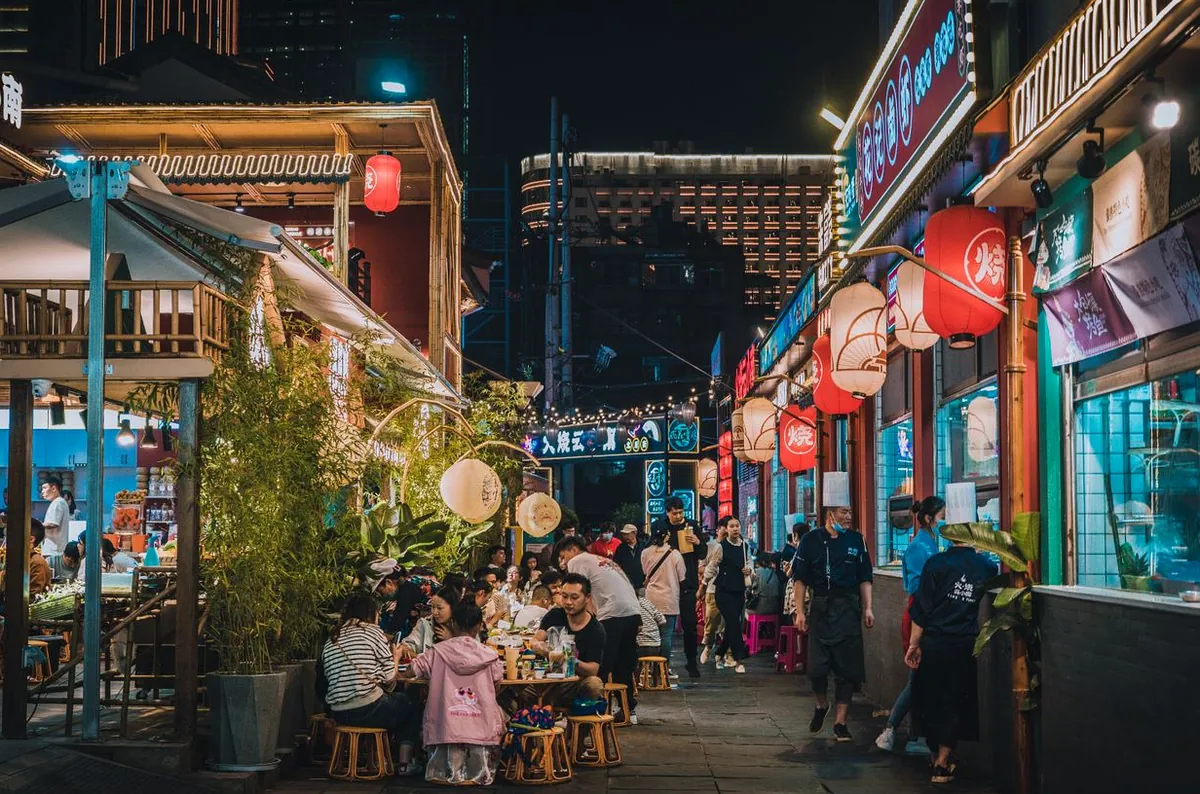
As night falls, the architectural landscape of these traditional culinary streets appears magnificently and vividly alive. In the brilliant night space, rows of curved tiled roofs bearing the marks of time are illuminated by hundreds of red lanterns hanging high, casting a warm glow over every dark brown wooden wall. Just beneath the ancient eaves, rows of outdoor tables and chairs are arranged closely yet orderly, where diners enthusiastically enjoy culinary delights amidst lively laughter. The silhouettes of servers moving swiftly through stone-paved paths, carrying steaming baskets, create a scene of folk life brimming with the breath of urban prosperity.
The foundation for the visual soul of these traditional culinary streets lies in the intricate blend of rustic local materials and ancient Feng Shui planning arts. The main thoroughfares are always paved with thick blue stone slabs, hand-carved to recreate the trade routes of the feudal era, providing natural slip resistance and cooling the intense heat radiating from hundreds of charcoal stoves. The structural frames of the stalls primarily use aged cypress or pine, built using traditional mortise-and-tenon techniques without a single iron nail, showcasing sturdy round columns supporting mossy yin-yang tiled roofs. Lighting in these culinary spaces is not merely functional but acts as an emotional catalyst; the system of bright red cinnabar lanterns—symbolizing joy, reunion, and prosperity—is arranged in layers from the rafters down to the low eaves, turning every corner into a path of light that guides travelers deep into a labyrinth of flavors.
Investment scale at these renowned culinary centers is always closely tied to efforts to restore the specific cultural layers of each historical period. For example, in Jinli in Chengdu, the spatial planning is designed to simulate the street architecture of the Shu Han period, linked to the Wuhou Shrine heritage commemorating Prime Minister Zhuge Liang. Every section of red-lacquered wooden corridors, Han-style patterned railings, and shop signs written in Clerical script reflects the nuances of a glorious yet solemn Three Kingdoms era. Traveling up the Yangtze River to the ancient port of Ciqikou on the banks of the Jialing River in Chongqing, the spatial structure shifts dramatically according to the steep hilly terrain. Here, the ‘diaojiaolou’ (stilt house) architecture extends wooden columns precariously over the cliffside, maximizing the view of the surging river while catching cool tidal breezes that dispel the pungent spice of red chili hot pot oil. The courtyards within the ‘siheyuan’ (quadrangle dwellings) interspersed between buildings form a natural microclimate convection system, ensuring that even in crowds, visitors always find a sense of openness.
Behind the moss-covered, nostalgic facade lies a revolution in underground technical infrastructure investment and smart technology applications, guaranteeing a perfect harmony between classical aesthetics and modern hygiene standards. Deep beneath the blue-stone paved streets lies a high-capacity wastewater collection and treatment system integrated with multi-layer grease trap membranes, completely eliminating the risk of mold or slipperiness on the pedestrian surfaces. All roadside kitchens are equipped with underground smoke exhaust ducts and concealed electrostatic air purifiers hidden inside faux-antique wooden pillars, keeping the atmosphere crystal clear without losing the hazy, poetic wisps of smoke characteristic of folk traditions. Meanwhile, comprehensive digital transformation has turned the ancient space into a smartly operated entity: from steaming steamed buns stalls to time-honored candied haws stands, all are equipped with instant QR code payment technology and multilingual digital menus. Interactive historical food guide screens, skillfully carved in the style of antique wooden signs, affirm a well-planned creative mindset: architecture is the shell that preserves memory, while underground technology is the launching pad that elevates folk culinary culture into an immortal heritage.
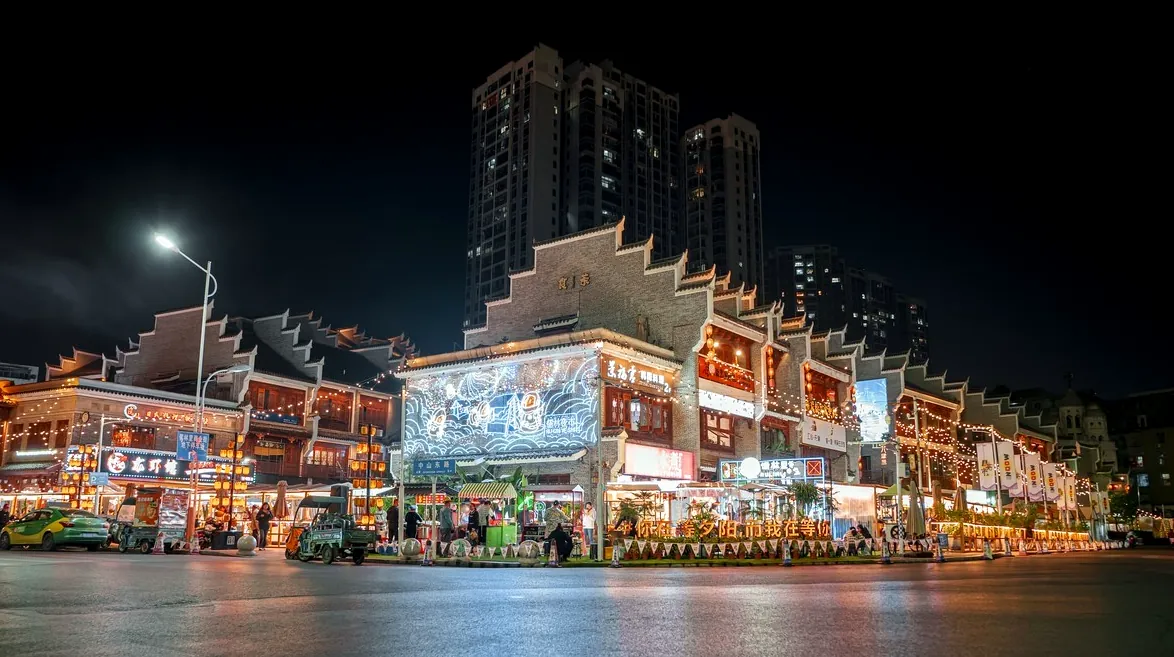
As night falls, the culinary quarter transforms into a breathtaking painting blending a millennium of the past with the rhythm of contemporary urban life. Under the shimmering light cast by bright red lanterns hanging along the eaves, the ancient streets with their layered, upturned tile roofs emerge in deep tranquility, embracing the bustling, stone-paved main road and steaming food stalls. Right in the background, modern high-rise apartment blocks soar straight into the nocturnal sky, creating a magical visual contrast between traditional Chinese solemnity and the vibrant, prosperous vitality of today’s city.
Designed as an open night museum, the entire food street space applies modern optical art centered on multi-point 3D Mapping projection technology. High-intensity laser beams, programmed precisely to the millimeter, project directly onto the grey brick walls, carved rafters, and yin-yang tile gable ends of the ancient architectural complex. Rather than overshadowing its historical beauty, this digital light stream honors every carved detail, skillfully recreating mythological tales, folkloric cultural legends, and the bustling trade scenes of bygone eras. The mossy lime walls suddenly transform into soft silk screens, where ribbons of water waves, swirling clouds, and dragons and phoenixes move rhythmically to every chord of sound, leading travelers astray into a magical dimension.
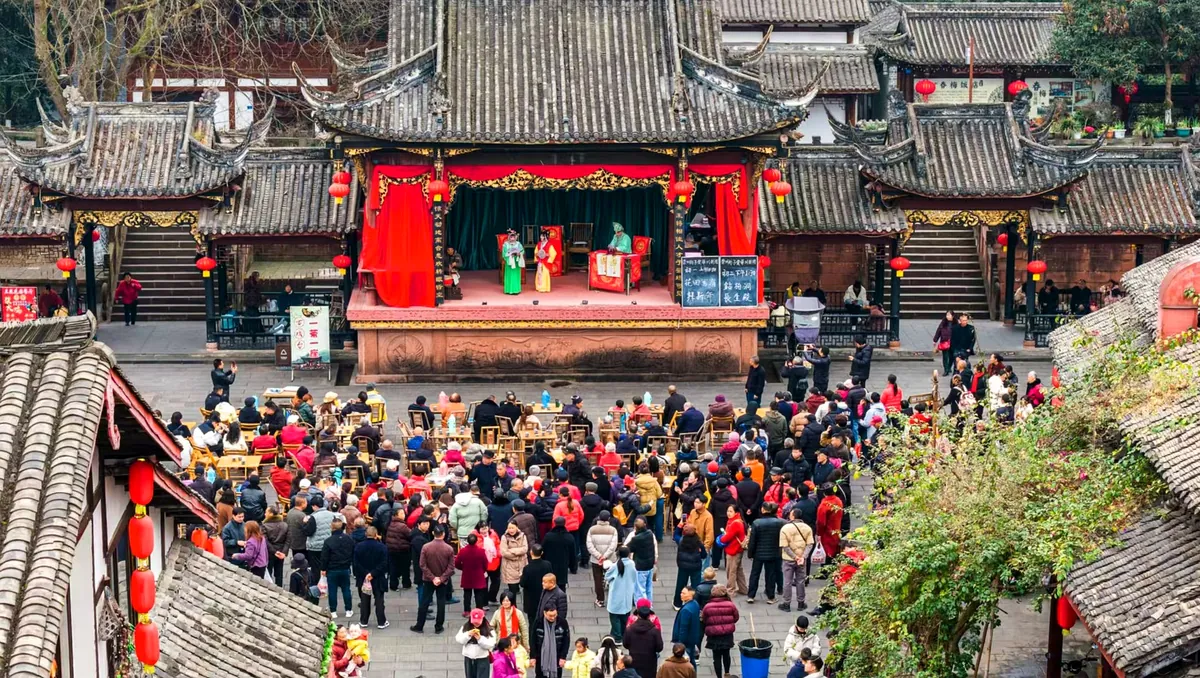
Blending with this visual feast is a series of live-action performing arts programs interspersed throughout the alleys of the district. Not confined within enclosed auditoriums, the stage here is the stone-paved street, the steps of a tea house, or the railing of an ancient stone bridge. In the central courtyards, local artisans recreate the famous face-changing art with mesmerizing, lightning-fast headshakes, alongside traditional acrobatics, fire-breathing, and lion-dragon dance performances to the lively beat of drums and gongs. Many actors dressed in flowing Hanfu gracefully parade through, performing ancient welcoming rituals and inviting viewers to join in lantern riddle games and pitch-pot arrow throwing, completely blurring the line between performers and appreciative audiences.
The seamless combination model of light projection art, live-action shows, and traditional cuisine has become a crucial catalyst in reviving the night-time economy for the entire area. The lively atmosphere becomes even more intoxicating as night deepens, when the rich aroma of charcoal-grilled dishes, the spicy kick of chili and pepper, and the hazy smoke from star anise broths mingle thickly in the night mist. Visitors come not only to satisfy their taste buds through every traditional flavor, but also to immerse themselves in a complete multi-sensory cultural experience space, where ancient echoes and contemporary breaths harmonize together under glowing lights that stretch endlessly past midnight.
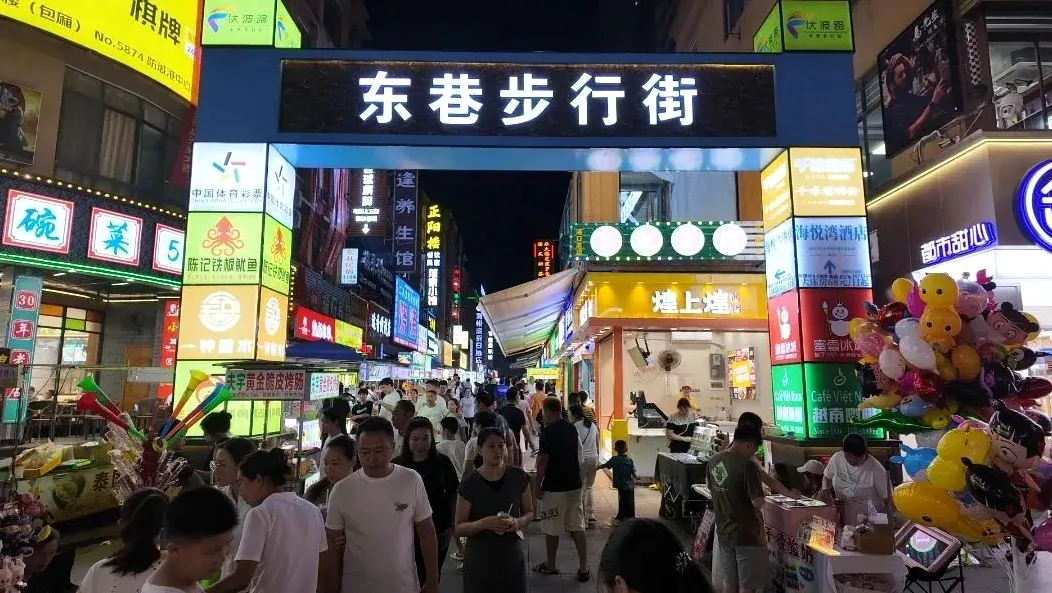
When night falls, street food alleys across Chinese cities take on a dazzling, enchanting appearance. Standing out amidst this space is the image of the Donggang pedestrian street archway in the evening, where shimmering light from brightly colored advertising signs of numerous shops and eateries compete to shine. Under the towering arch, streams of people leisurely stroll, immersing themselves in the billowing smoke and enticing aromas wafting from stir-fry pans and grilled skewers, creating a vibrant human scene that fully reflects the enduring vitality of urban culinary culture.
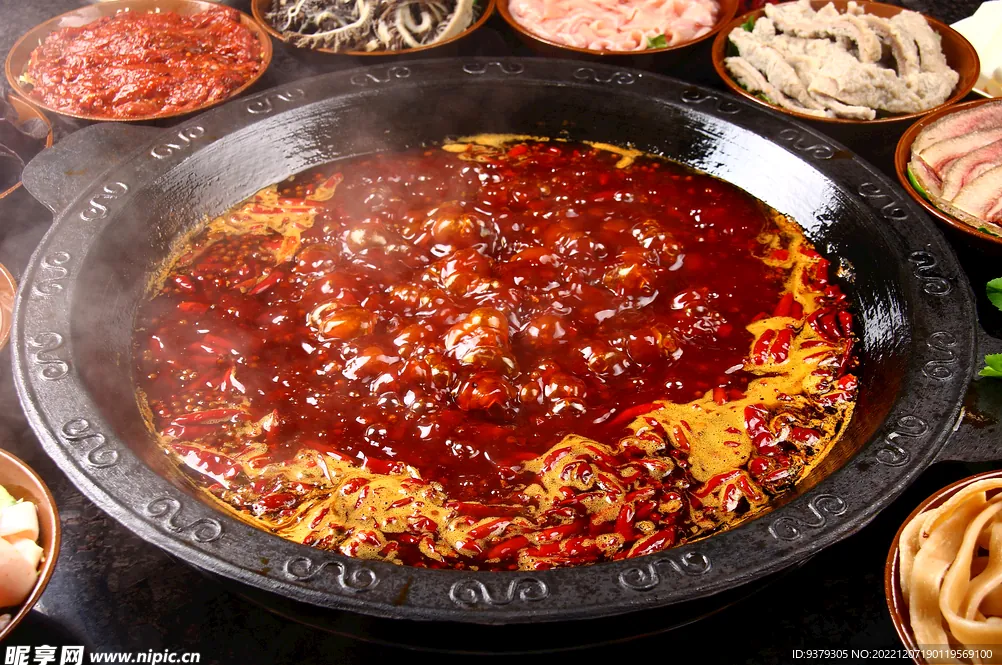
The local street food map unfolds like a rich epic, where each region preserves its renowned flavors crystallized from the soil and human soul. Leading this culinary journey is Sichuan spicy hot pot in the capital city of Chengdu, the cradle of a unique art of flavor balancing. Originating from the docks of the Yangtze River and Min River in the late Qing Dynasty, the bright red spicy hot pot is simmered from pure beef tallow, blended with Hanyuan Sichuan pepper and the famous Seven Star chilies. The piercing spicy kick rising straight to the olfactory senses, combined with the numbing sensation on the tip of the tongue from the Sichuan pepper, is not merely a dish, but also a wellness therapy to dispel dampness and cold used by the residents of the Sichuan basin over centuries.
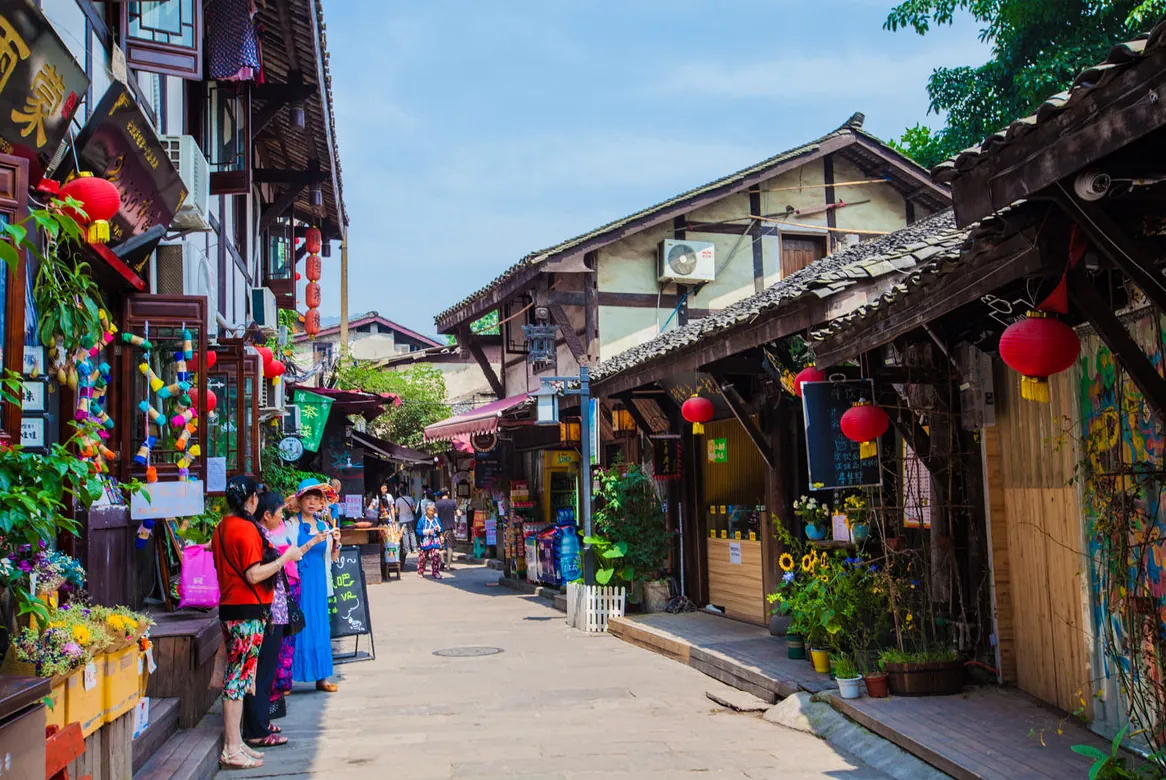
Flowing along the Bashu current toward the rugged mountain city, travelers will encounter the flavor of Chongqing spicy noodles, also known as Chongqing xiaomian, along the bluestone-paved paths of Ciqikou Ancient Town. Born during the Daoguang era of the Qing Dynasty to serve dock coolies, each bowl of golden, chewy, round noodles is defined by a painstakingly prepared secret sauce crafted from over eighteen spices, highlighted by a layer of bright red chili oil, aged Baoning vinegar, crushed garlic, toasted sesame seeds, and finely chopped scallions. The slurping sounds at small wooden tables placed right against the edge of sloping streets perfectly capture the bold, straightforward, and passionate character of the southwestern dockside people.
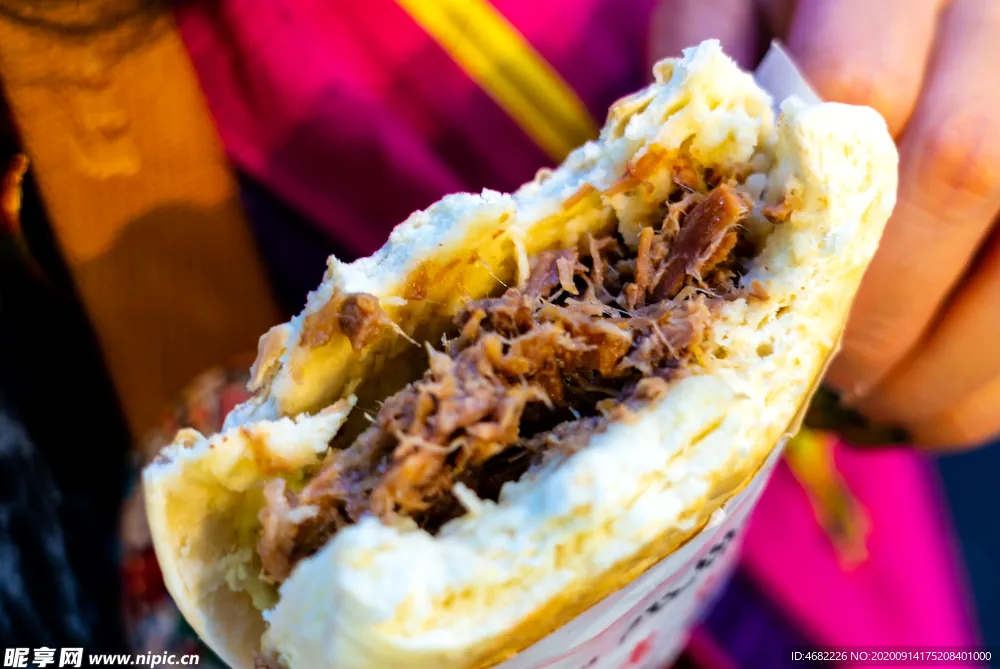
Leaving the treacherous mountains to travel upstream through history to the ancient imperial capital, the Xi’an Muslim Quarter brings diners in touch with the soul of the Silk Road through the famous Roujiamo. Revered as the world’s oldest meat sandwich with origins tracing back to the Warring States period, the authentic Xi’an Roujiamo uses a Baici crust baked to a crispy golden brown over a charcoal stove, wrapping around beef or lamb stewed to tenderness according to a stewed meat recipe passed down since the Qin Dynasty. The traditional broth, preserved through generations and simmered with dozens of traditional Chinese medicinal herbs such as black cardamom, cloves, and cinnamon bark, makes every fiber of the meat melt in the mouth as if absorbing the essence of a millennium of culture from the ancient capital.
In the contemporary context, street food districts are by no means confined to past nostalgia but are undergoing a powerful transformation toward digital culinary trends. Beneath mossy tiled roofs and classic lantern canopies, facial recognition payment technology and instant QR code scanning have become daily routines, blurring the line between modern convenience and folk delicacies. Alongside technological convenience is the boom of in-depth culinary experiential tours, where cultural researchers guide diners not only to taste each flavor, but also to listen to the stories behind each charcoal fire and each drop of earth-pot-fermented vinegar, thereby fully empathizing with the enduring lifeblood of traditional culinary culture.
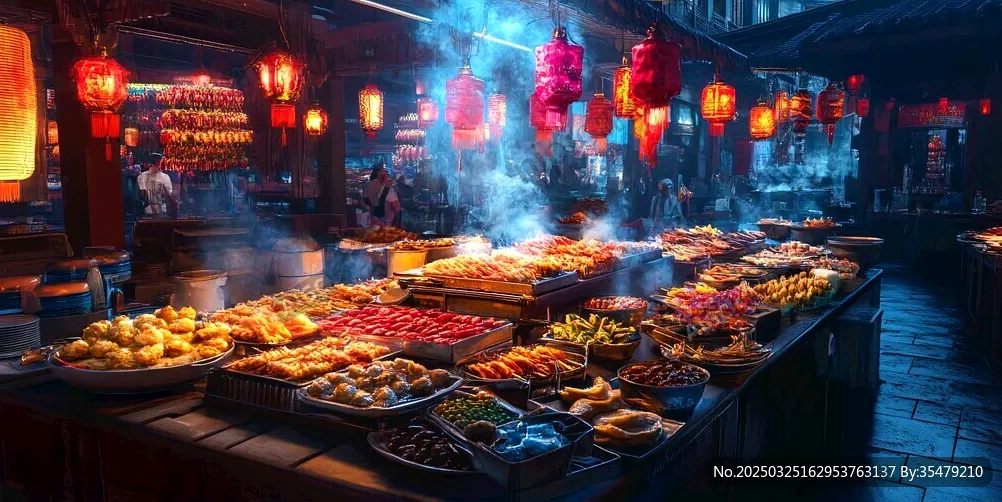
When dusk falls, the traditional night food market awakens in the brilliant red glow of hundreds of lanterns hanging along ancient eaves. Thick wisps of smoke rise from bubbling oil woks, steaming bamboo baskets of dumplings, and glowing charcoal grills, painting a space that is both cozy and magical, as if stepping out from the pages of ancient poetry. Stalls packed closely together display a multitude of piping hot dishes, inviting travelers’ footsteps with cheerful sizzling sounds and a complex, rich aroma of cinnamon, star anise, and spicy Sichuan chilies.
To touch the true soul of a food street, grasping the local rhythm of life is of utmost importance. Most street food stalls start lighting their fires around 5:30 PM and keep the lively atmosphere going until the third watch of the night, or even 2:00 AM the next morning. The golden hour to fully enjoy the delicacies without enduring suffocating crowds is around 6:00 PM, when the first batches of pastries have just come out of the oven, the broth in the simmering pots has reached its deepest, sweetest flavor, and fresh ingredients are just brought to the shelves. If visiting during the chilly days of late autumn or early winter, the warmth radiating from steaming rice porridge and spicy hot pot stalls will offer an emotionally profound experience far surpassing that of sweltering summer days.
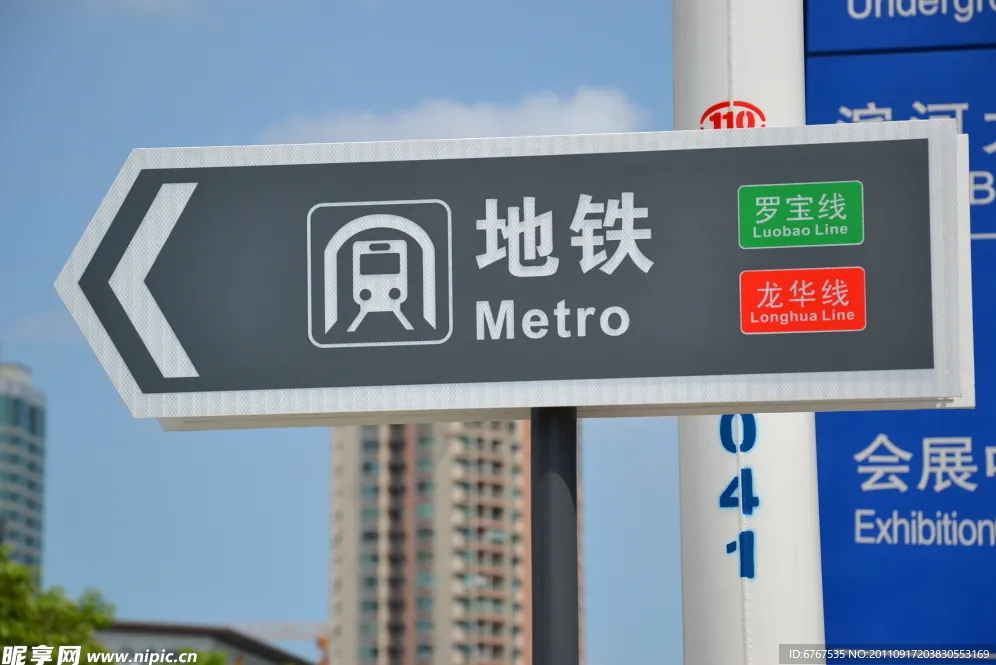
Regarding transportation, modern public transit networks are always the optimal choice to help travelers easily access renowned food streets nestled deep within ancient urban centers. Underground subway lines with bilingual signage typically feature exits or station gates just a few steps away from the food street entrances. Instead of leaving routes to expensive traditional transport, travelers should proactively install domestic map apps like Amap or Baidu Maps to precisely locate every single alley. In particular, checking reviews on local culinary rating platforms such as Dianping will help travelers clearly distinguish between multi-generational family eateries beloved by locals and flashy, superficial tourist traps meant only for foreigners.
}
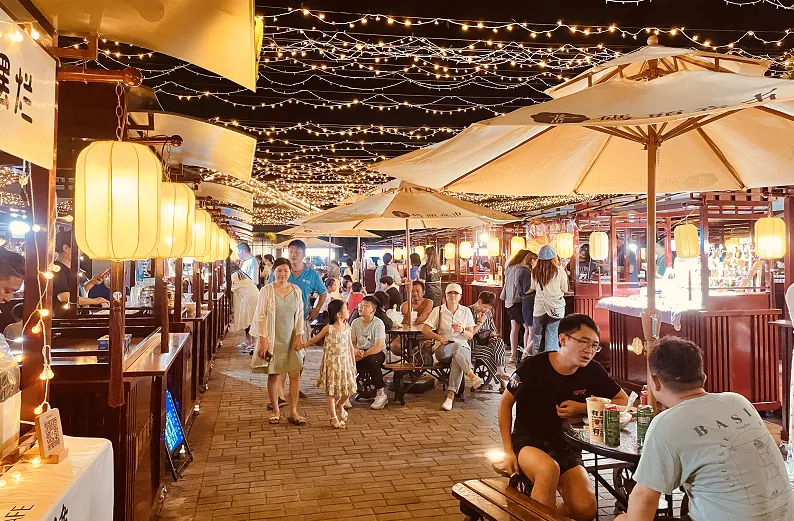
Stepping into the modern culinary scene, cashless payment methods have become almost universal, from roadside stalls to grand restaurants. International travelers can now easily link their credit cards to e-wallets like Alipay or WeChat Pay for seamless QR code payments, though it is still wise to carry a small amount of Chinese Yuan in cash for instances where internet connectivity might be unstable. Regarding procedures, the optimization of e-visa policies and convenient group visas has opened wide the doors to these culinary capitals. However, a golden rule that every savvy traveler should keep in mind is to firmly choose itineraries that are strictly “No Shopping.” This choice helps travelers avoid the traps of cheap tours disguised as sightseeing, preserving precious time to fully absorb the depth of culinary culture instead of being dragged into tedious shopping centers.
Your journey to explore the nooks and crannies of street food will be truly complete when you prepare with an open mind and a few practical tips, from carrying wet wipes and herbal digestive aids to listening to the guidance of experts well-versed in local flavors. To ensure your culinary expedition runs smoothly without worrying about language barriers or complex logistics, choosing an all-inclusive tour package specialized in culture and local flavor experiences will be the key to unlocking an elevated journey, where every sense is indulged amidst a myriad of traditional culinary essences.