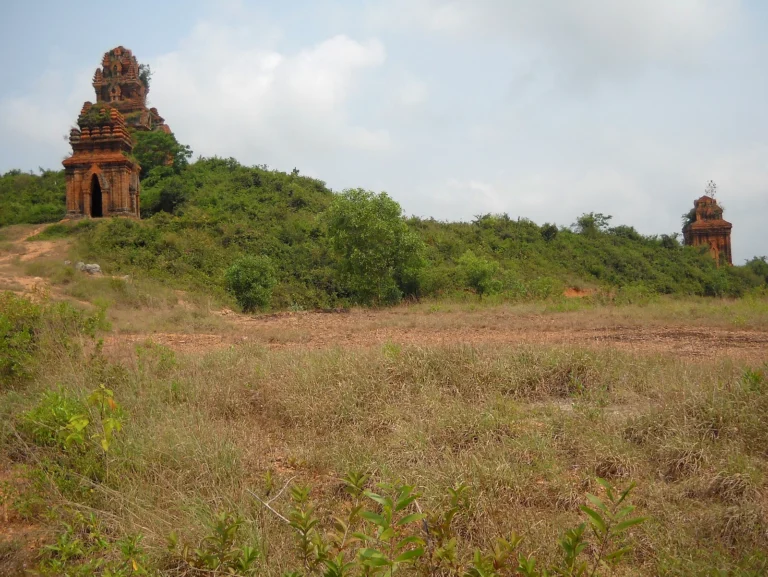
Nestled right along the eastern flank of the majestic Forbidden City, the ancient street of Wangfujing has long transcended the definition of an ordinary commercial artery to become an enduring witness to the dynastic ups and downs spanning hundreds of years in Beijing’s imperial history. Every inch of land and stone slab here is saturated with the aura of ancient nobles and aristocrats, blending regal prestige with the bustling pulse of metropolitan prosperity to create one of the most distinctive cultural spaces in China’s northern capital.
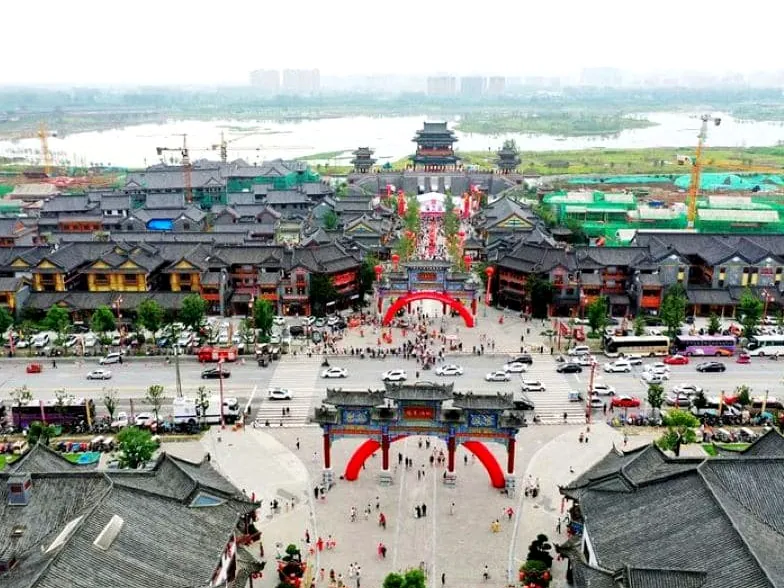
Vividly present from a close-up perspective, the ancient street axis opens up a unique spatial dimension where the past and present harmonize exquisitely. The expansive stone-paved roadway guides travelers past feudal Eastern architectural landmarks, highlighted by ceremonial gateways carved with swirling cloud motifs, moss-covered ancient glazed tile roofs, and vibrant red lanterns hanging loosely along the eaves. Every detailed wood carving on the Phoebe zhennan frames, the signature vermilion lacquer, and traditional gold-leaf family signboards create a subdued cultural backdrop, providing a striking contrast to the bustling crowds passing by every day.
Turning back the pages of ancient Yuan dynasty records, this area was originally just a humble residential alleyway named Dingzi Lane, planned within the capital city of Dadu. The truly grand historical turning point occurred during the Ming dynasty, specifically under the Yongle era when Emperor Yongle Zhu Di decided to move the capital northward from Nanjing. Recognizing its prime location adjacent to the eastern wall of the imperial palace, the court ordered the simultaneous construction of ten luxurious, magnificent mansions exclusively for revered princes, commandery princes, and princesses. Since then, the name “Shiwangfu Street” (Street of the Ten Princes’ Mansions) officially entered the capital’s annals, marking its transformation from a working-class alley into a residential enclave for the highest imperial relatives.
When exploring the foundational identity of this land, one cannot overlook the word “Jing” (meaning well), representing an ancient water well of profound spiritual and practical significance. The natural geology of ancient Beijing was historically renowned for groundwater with a bitter taste, making it extremely unpalatable and unsuitable for brewing tea or preparing imperial meals. However, right to the south of the row of royal mansions, an unexpected vein of sweet, crystal-clear groundwater as pure as morning dew emerged, flowing unceasingly year-round. This stone well quickly became a treasured asset of the imperial court, serving as the dedicated water source for the palaces and royal estates. Consequently, commoners grew accustomed to calling the area Wangfujing, meaning the jade well of the princes’ mansions—a rustic moniker that encapsulates both the geographical origin and the glory of the imperial court.
With the entry of the Manchu Qing dynasty, the area maintained its position as a center of power, becoming a gathering place for the estates of the Eight Banners aristocracy and top-ranking ministers. However, the shifting tides of the late Qing era brought a fateful turning point for this street. Following diplomatic upheavals and Western encroachment, the enclosed world of the nobility gradually broke down, making way for a powerful commercial current. Silk shops, traditional Chinese medicine pharmacies, bustling banks, and international merchant groups flocked to establish businesses, step by step transforming a solemn court street into the capital’s most prosperous commercial avenue, perfectly preserving historical strata through all of time’s ups and downs.
Situated at the core of ancient Beijing, Wangfujing Avenue possesses a crucial geographical and feng shui position within the northern metropolis planning structure. Nestled right against the eastern flank of the Forbidden City, close to the Donghuamen (Eastern Glory Gate), this tract of land has since ancient times been regarded by imperial feng shui masters as a convergence point of supreme auspicious energy. In the capital’s geomantic layout—backed by the towering Yanshan Mountains and facing the expansive North China Plain—the eastern sector of the imperial city acts as the left guardian, embodying the Azure Dragon stretching forth to shelter the prosperous life-force flowing from the forbidden palace into the civic realm.
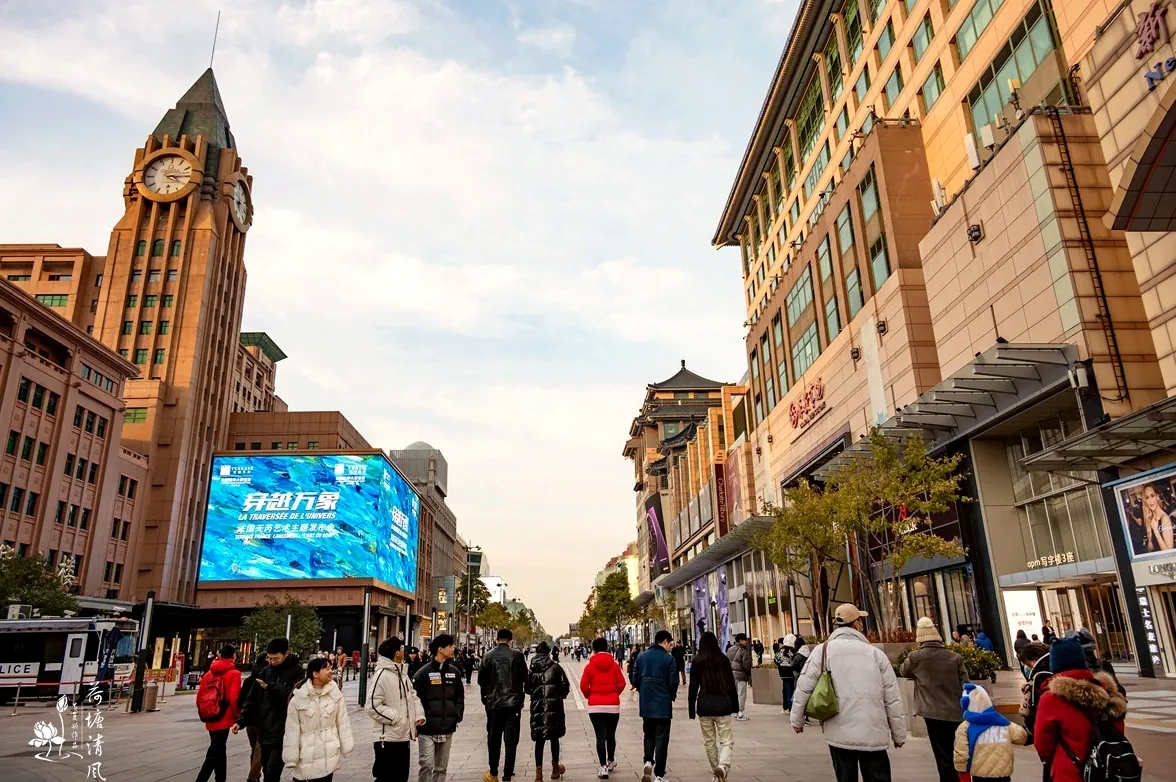
The overall panorama of Wangfujing emerges as a breathtaking dialogue between opulent historical landmarks and the spacious landscape planning of a renowned pedestrian street. The roadway is paved with large, flat granite slabs in a subdued grey hue, opening up a wide thoroughfare shaded by luxuriant scholar trees proudly extending their canopies. Flanking the avenue is a seamless blend of regal architecture hinting at ancient aesthetics with imposing modern commercial blocks, where gold-leaf-gilded signboards reflect onto the expansive pathways, guiding the gaze directly toward bronze statues and time-stained symbolic structures under a breezy sky.
Tracing back through history to the Yuan dynasty, this land was originally named Dingzi Alley. It was a fertile alluvial strip formed from the ancient silt of the Yongding River system, boasting flat terrain and exceptionally solid compacted soil. The geopolitical turning point occurred during the reign of the Yongle Emperor of the Ming dynasty when he decided to relocate the capital from Nanjing to Beijing. To strengthen the balance of power and establish a defensive perimeter protecting the east side of the Forbidden City, the imperial court ordered the land to be planned as residential estates for ten illustrious princes and high-ranking imperial sons, thereby shaping the name Wangfujing (Mansions of the Ten Princes). The symmetrical zoning plan, with a clear distinction between front structures and rear backing according to strict academic standards, transformed this area into the elite residential quarter for the empire’s highest nobility.
The defining element and most precious feng shui highlight of the entire area was its unique underground water vein. While most well water in Beijing at that time was heavily saline and mineral-rich—commonly known as bitter water—a completely sweet, refreshingly pure water spring was discovered right in the middle of this strip. The mouth of this jade well was built by imperial craftsmen with carved stone cloud patterns and covered with a meticulously handcrafted bronze lid to preserve the sacred water flow. This sweet, cooling water not only quenched the thirst of hundreds of noble families, but according to feng shui principles, the ancient well also served as a gatherer of wealth and vitality, accumulating the essence of heaven and earth to sustain life and an endless flow of prosperity for the entire capital.
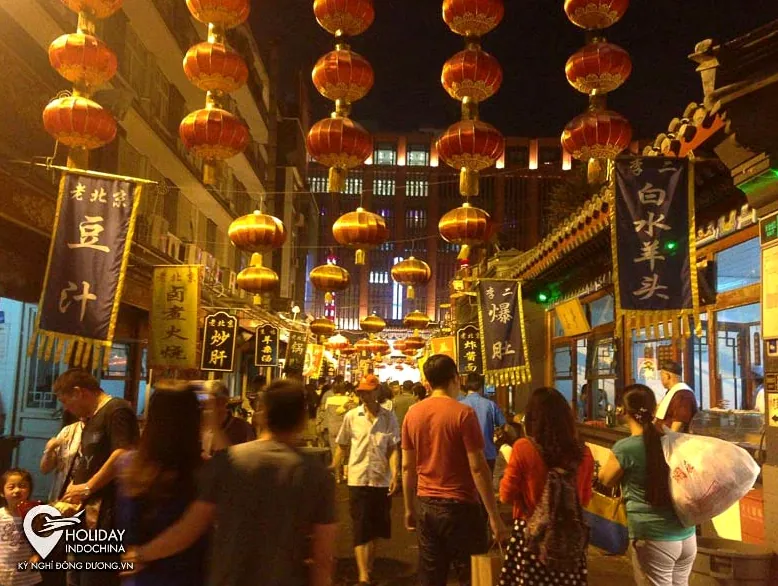
Through numerous historical ups and downs, the topographical structure of the street axis has resiliently preserved the standard grid planning spirit of the northern capital. The clever arrangement between the setbacks of ancient architectural structures, native trees shielding against the cold, sandy winds blowing from the Mongolian plateau in winter, and the cooling microclimate convection in summer has created an ecologically harmonious open space. Walking on this regal land, visitors can still distinctly feel the gentle support of a millennia-old stratum and the eternal heartbeat of the dragon vein enveloping the heart of the Forbidden City.
Spanning a north-south axis of approximately 1.8 kilometers—featuring a key pedestrianized segment over eight hundred meters long paved with smooth gray granite—Wangfujing emerges as a magnificent spatial fusion, connecting the dynastic past with the bustling rhythm of contemporary prosperity. The structure of this commercial avenue is not merely a linear shopping street, but a multi-layered spatial network where towering reinforced concrete architecture stands side by side with ancient glazed tile roofs and tranquil hutong alleys. Urban planning visions spanning various eras have transformed this axis into a flawless entity, where every step travelers take touches both the bustling breath of international crowds and the intricate, elaborately carved art details deeply imbued with the royal flavors of the Ming and Thanh dynasties.
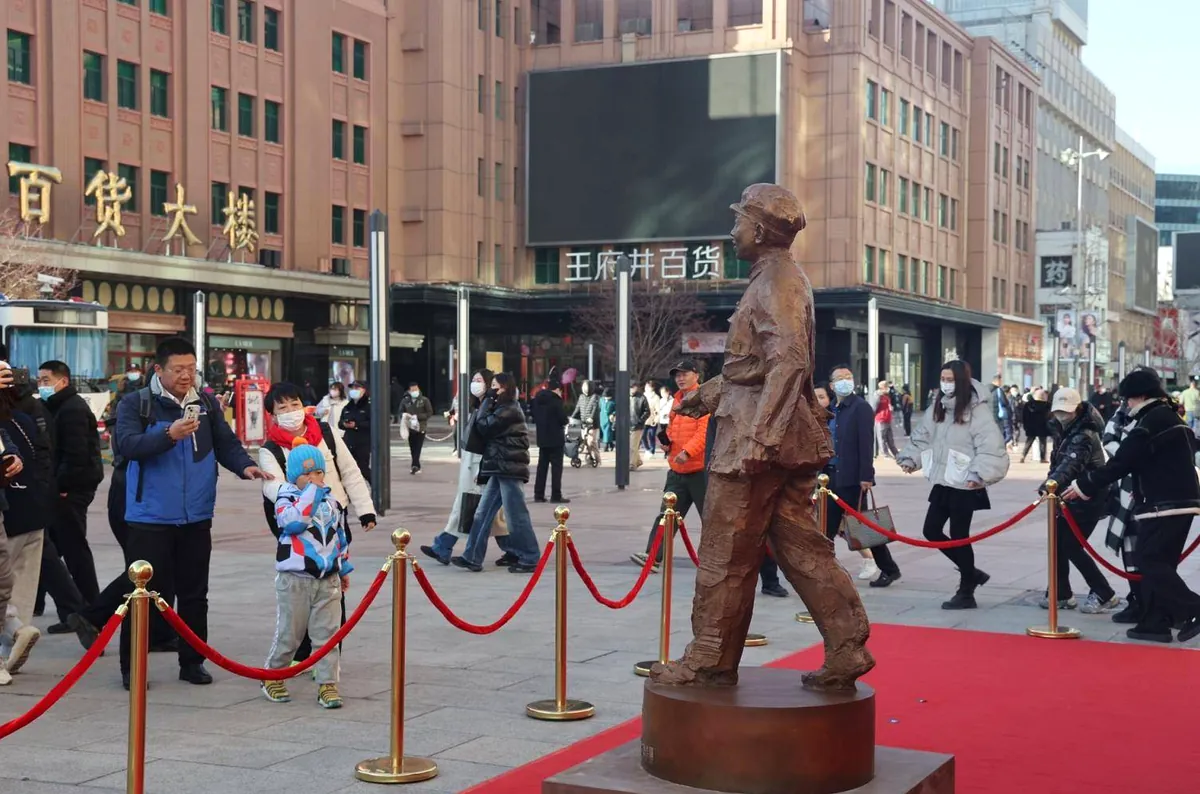
Along the expansive stone-paved avenue, iconic structures showcase their splendor through an aesthetic contrast between modern glass walls reflecting the northern sky and arches, verandas heavily influenced by neoclassical styles and traditional court architecture. The warm golden light from antique-style lantern strings blends harmoniously with the brilliant radiance emanating from giant digital screens on the facades of major commercial centers, creating an enchanting visual effect. Crowds stroll leisurely through the open square, where bronze sculptures depicting rickshaw pullers or ancient street vendors become vibrant cultural highlights amidst Beijing’s most prosperous urban landscape.
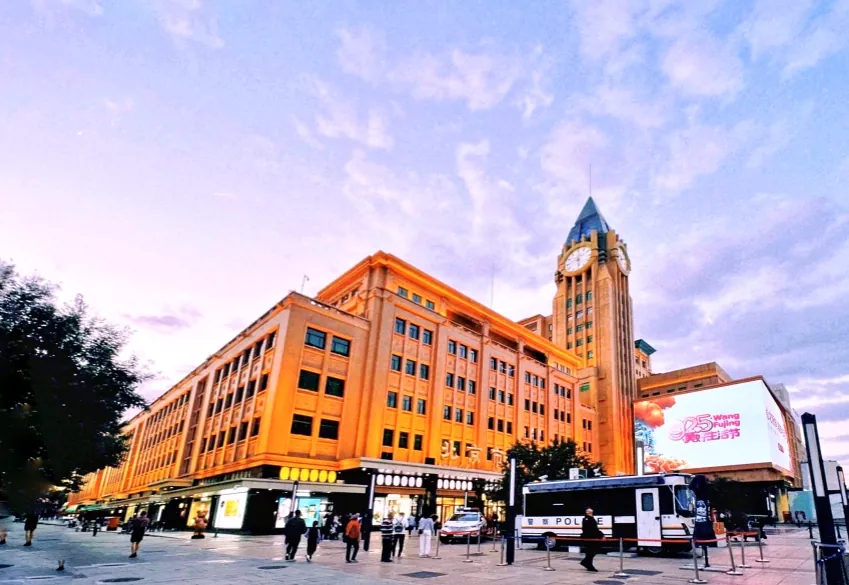
The architectural highlight defining the historical appearance of the street is the Beijing Department Store building. Completed in the mid-1950s, it bears strong marks of neoclassical architecture intertwined with functionalist style, once hailed as a model commercial project nationwide. Opposite this solid, nostalgic beauty is the Oriental Plaza complex, a commercial real estate megaproject with a gross floor area exceeding eight hundred thousand square meters, stretching across three city blocks with massive capital investment. The combination of the grand scale of underground interconnected shopping malls and glass-walled office towers creates the appearance of a world-class retail financial center. Nevertheless, trendy modern life respectfully yields to St. Joseph’s Church (East Church), a Romanesque Revival masterpiece founded during the Kangxi era featuring three tiers of bell towers and towering semi-circular stone archways, serving as a testament to the deep openness and integration of Eastern and Western cultures right in the heart of the imperial capital.
Beyond its surface space, Wangfujing also possesses a unique underground architectural wonder named Heping Guoju (Peace Apple Bureau), impressively situated beneath the basement of the Department Store building. Spanning over twenty-four hundred square meters, this space is meticulously recreated like a time machine transporting visitors back to Beijing in past decades. Every brick wall stained with the traces of time, rusty bicycles, sidewalk tea stalls with weathered wooden tables and chairs, to the miniature railway network and simulated hutong alley corners have been manually reconstructed with astonishing accuracy. This elaborate investment not only affirms the mindset of preserving traditional living spaces but also elevates the public experience, transforming a shopping mall into a vibrant museum of memories where history vividly envelops every sense of the visitor.
The sophistication in spatial structure is further reflected in the landscape art and public amenities. The entire technical infrastructure has been completely undergrounded, restoring clear sightlines to the rows of ancient pagoda trees that cast refreshing shade. Along the street, life-sized bronze statues depicting the daily lives of Old Capital citizens—such as a barber with a queue, a hawker selling candied hawthorn, or a knife-sharpening artisan—are organically arranged, turning the thoroughfare into an open stage that recreates the social life of the Qing Dynasty. Interspersed among the massive building blocks are paths leading to tranquil gardens, once the foundations of ten princely mansions, creating green pockets that help regulate the microclimate and disperse pedestrian flow scientifically. The architecture of Wangfujing is thus a powerful testament to top-tier urban planning: honoring a thousand-year legacy while paving a wide path for the prosperous flow of the future.
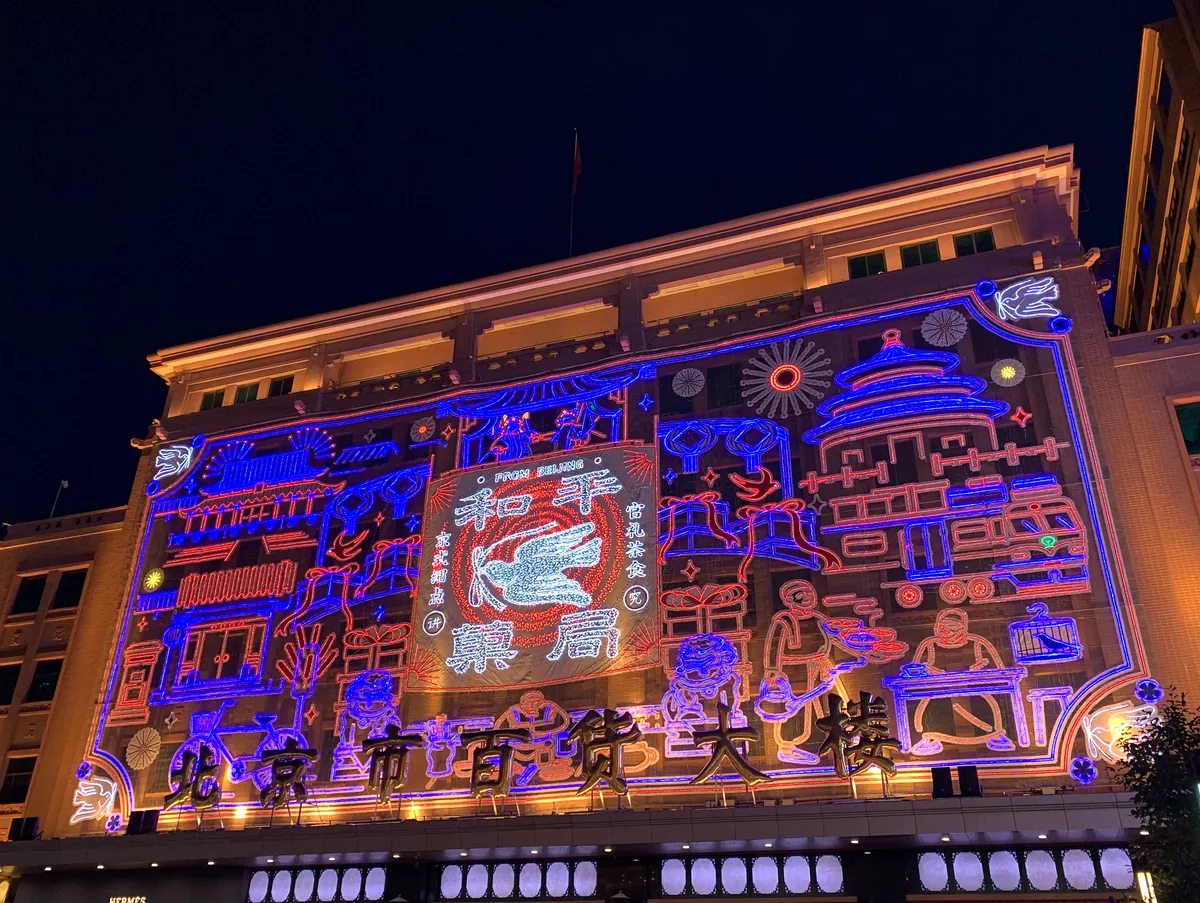
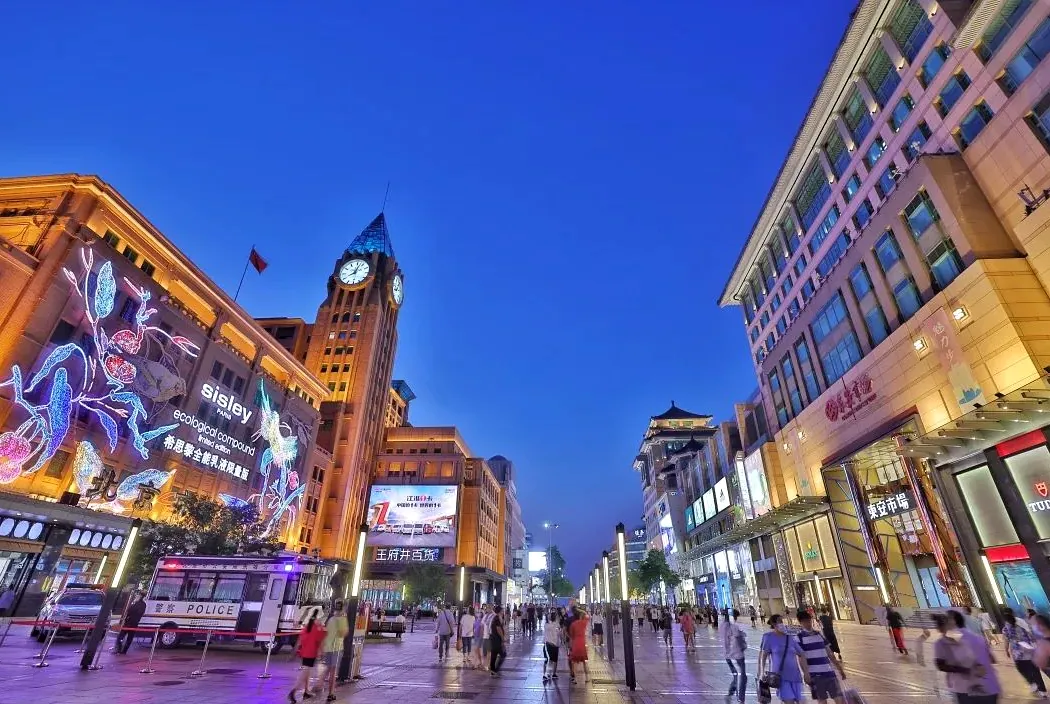
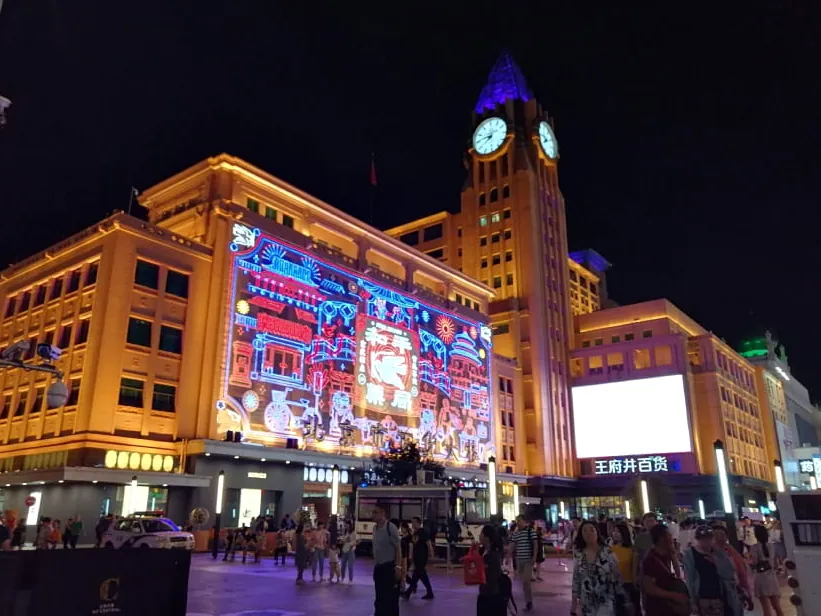
As twilight fully descends upon Dongcheng District, Wangfujing Avenue sheds its daytime haste to don a brilliant garment woven from artistic lighting and an endless nocturnal rhythm. The entire pedestrian street lights up like a river of multicolored light, where modern glass architectural blocks harmonize with majestic stone columns echoing neoclassical influences under sophisticated edge-lighting systems. Strings of crimson lanterns intertwine with ethereal neon signs, reflecting the bustling crowds strolling on polished granite, creating a magnificent urban scene that is both nostalgic for the imperial capital and vibrant with contemporary energy.
The lighting art in Wangfujing is not merely for commercial illumination, but a meticulously planned visual harmony designed to honor every layer of cultural strata. Heading toward the northern end of the main axis, the East Church, or St. Joseph’s Cathedral, built during the reign of Emperor Kangxi, appears enchanting under authentic uplighting. Every Romanesque arch, symmetrical bell tower, and gray stone relief is meticulously highlighted in a warm golden glow, creating a solemn silence that contrasts perfectly with the massive LED screens and vibrant digital projection technology of the bustling shopping centers opposite. This intersection between the static light of Western architectural heritage and the futuristic pulse of Eastern technology transforms this public space into an open visual stage, inviting pedestrians to pause and admire.
Stepping away from the brightly lit main axis into the performing arts spaces, the Wangfujing night leads viewers into the profound world of classic drama. Nestled peacefully right next to the street is the Beijing People’s Art Theatre, also known as the Capital Theatre—the sanctuary of Chinese realist spoken drama. Under the mesmerizing stage lights, literary masterpieces such as “Teahouse” by the great writer Lao She or “Thunderstorm” by Cao Yu are authentically recreated through the precise gestures and intonations of veteran artists, reviving the soul of an old Beijing full of historical turbulence. Simultaneously, in traditional teahouses hidden in elegant alleys, the shrill sounds of the erhu blend with the crisp clacking of wooden clappers during famous Peking Opera excerpts. Audiences can sip fragrant chrysanthemum tea while enjoying swift face-changing performances or acrobatic displays, fully sensing the elegant flavor of the feudal literati and nobility.
The nightlife of Wangfujing would not be complete without the lively sounds and emotionally rich folk culinary performances. Under the warm glow of hundreds of paper lanterns, street artisans showcase their skills in blowing sugar into intricate figurines, glazing candied hawthorns until they shine like rubies, or molding dough figures with hands expertly trained over generations. The clear cries of vendors echo, steam rises from bamboo baskets of buns, and the fragrant aroma of rustic delicacies blends into the chilly air, creating a vibrant cultural performance space full of vitality. Thus, the Wangfujing night is not just a visual stroll but has transformed into an unforgettable multi-sensory experience, etching the cultural identity of the capital into the passage of time.
Exploring Wangfujing is an experience of the capital’s culinary map, where the solemnity of feudal imperial cuisine intersects with the intense, earthly vitality of moss-covered Hutong alleys. Over hundreds of years of accumulation, the cuisine here is not merely about enjoying delicacies but has crystallized into a cultural ritual that fully reflects the face of Beijing society through the Ming and Qing dynasties to the modern era. Amidst the bustling urban life, the gold-leafed signs of the “lao zi hao”—century-old family brands—still stand proudly like historical witnesses, preserving the culinary secrets once reserved exclusively for emperors and the nobility.
The pinnacle of traditional culinary culture in Wangfujing is best exemplified by the Dong Lai Shun brand, the cradle of the famous Northern-style instant-boiled mutton hot pot. Founded in the 29th year of the Guangxu reign during the Qing Dynasty by merchant Ding Deshan, Dong Lai Shun evolved from a humble roadside mutton porridge stall into a symbol of imperial cuisine brought to the masses. The core of the restaurant’s enduring reputation lies in its traditional copper pot heated by charcoal, combined with a masterful manual meat-slicing technique: slices of Inner Mongolian lamb as thin as cicada wings, perfectly uniform, with vibrant red meat marbled with delicate white fat. When dipped into the clear, savory broth for just a few seconds, the meat becomes tender and succulent. The secret dipping sauce—a complex blend of nutty sesame paste, dark pickled chives, fermented red bean curd, and spicy chili oil—creates a rich flavor profile that wards off the biting cold of the Northern winter.
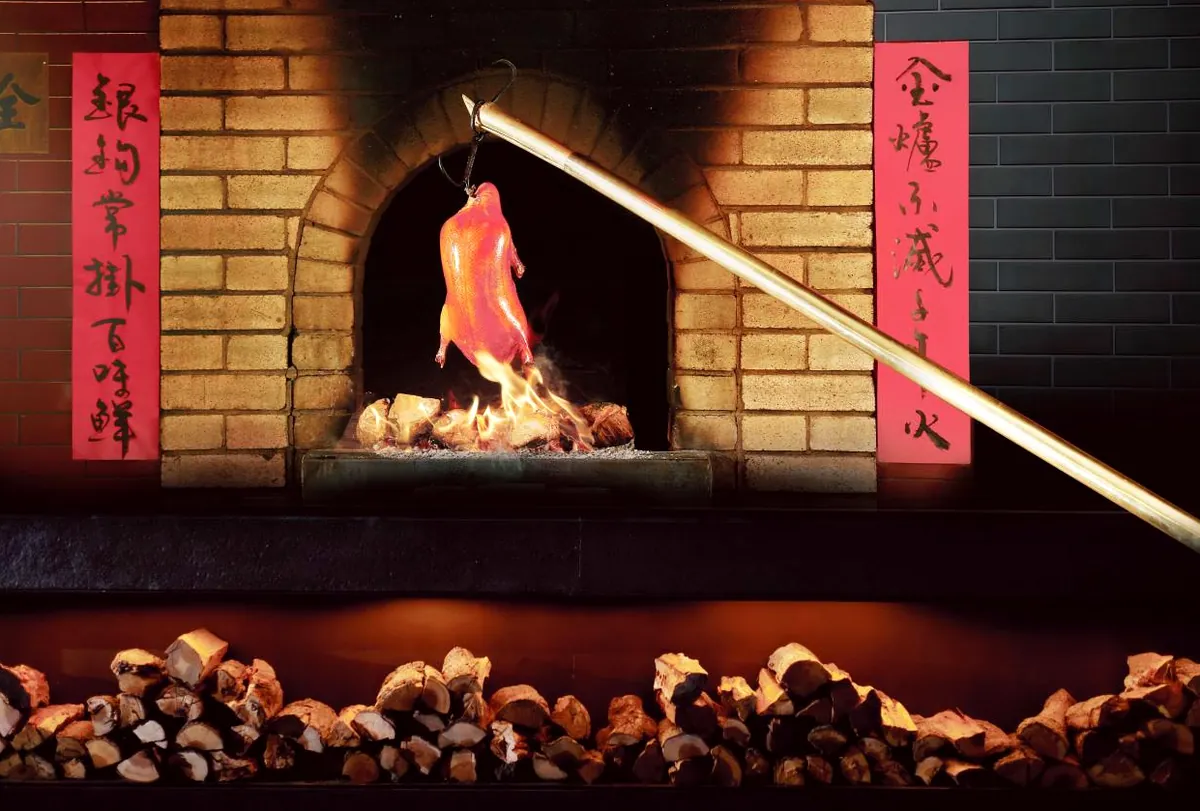
Alongside Dong Lai Shun in the neighborhood’s culinary chronicle is the renowned branch of Quanjude, the legendary roast duck brand founded by Yang Quanren in the third year of the Tongzhi reign. The dining space here preserves the authentic “hanging oven” technique, where ducks are roasted in open-fire ovens fueled entirely by wood from ancient apple and pear trees. The smoke from the natural fruit wood permeates the carefully selected, plump duck, resulting in a crispy, glossy, amber-colored skin and tender, juicy meat. Each slice is expertly carved by artisans right at the table according to strict standards, then wrapped in a paper-thin pancake with slivers of scallion, refreshing cucumber, and a generous dollop of thick, fermented sweet bean sauce, perfectly recreating the atmosphere of an imperial banquet from the Forbidden City of old.
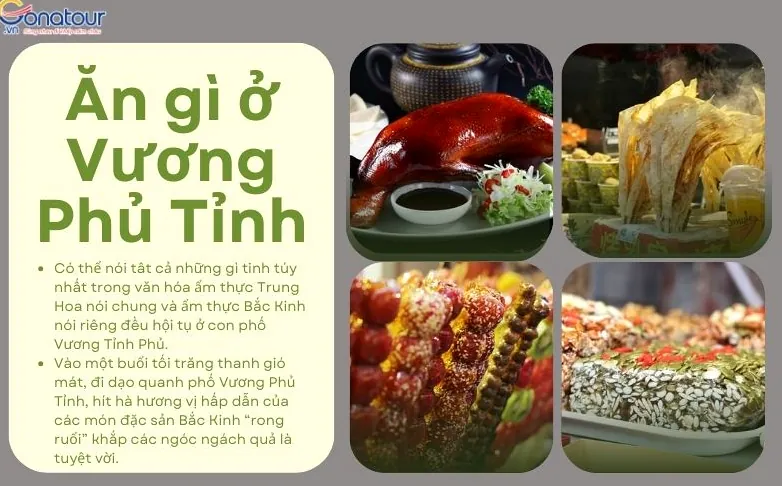
Stepping out of the formal atmosphere of these grand restaurants, Wangfujing immerses visitors in a mesmerizing culinary symphony within its traditional food alleys. Each skewer of Bingtang Hulu (candied hawthorn) features plump, fresh hawthorn berries coated in a layer of shimmering, crispy malt sugar that glows under the lanterns, offering a sweet and tangy flavor that has captivated generations. Next is “Lü Da Gun” (Rolling Donkey)—a chewy, fragrant glutinous rice cake filled with sweet red bean paste and coated in golden soybean flour, resembling a playful donkey rolling in the sandy soil of the suburbs. For travelers seeking an authentic local palate, a bowl of Douzhi (a pungent, fermented mung bean milk) served with crispy Jiaoquan (fried dough rings), or Baodu (blanched beef or lamb tripe dipped in sesame sauce), serves as a gateway into the refined yet rustic lifestyle of the ancient Northern capital’s residents.
As dusk falls over central Beijing, the Wangfujing avenue lights up, shimmering between modern neon signs and a quiet, nostalgic charm. Along the spacious stone-paved pedestrian street, travelers blend into the gentle rhythm of movement between massive shopping malls and buildings with traditional architectural features. Interwoven into the bustling commercial space are the warm red hues of high-hanging lanterns, bronze statues depicting Qing Dynasty folk life, and the relaxed flow of people enjoying a scene that perfectly harmonizes historical glory with the pulse of modern urban life.
The Wangfujing pedestrian avenue is open twenty-four hours a day for leisurely strolls, though the true commercial activity typically begins around 9:30 AM and lasts until 10:00 PM. Most large-scale shopping centers, the Beijing Foreign Languages Bookstore, and famous traditional specialty shops like Daoxiangcun (confectionery) or Neiliansheng (silk shoes) follow these hours. The ideal time to fully capture the soul of the neighborhood is from 4:30 PM until late evening. At this time, the Beijing weather turns cool, the artistic lighting system along the entire street illuminates, and the Peace Museum (Heping Guoju) in the basement of the Wangfujing Department Store recreates a nostalgic corner of the 1980s capital, perfect for those seeking the depth of local urban culture.
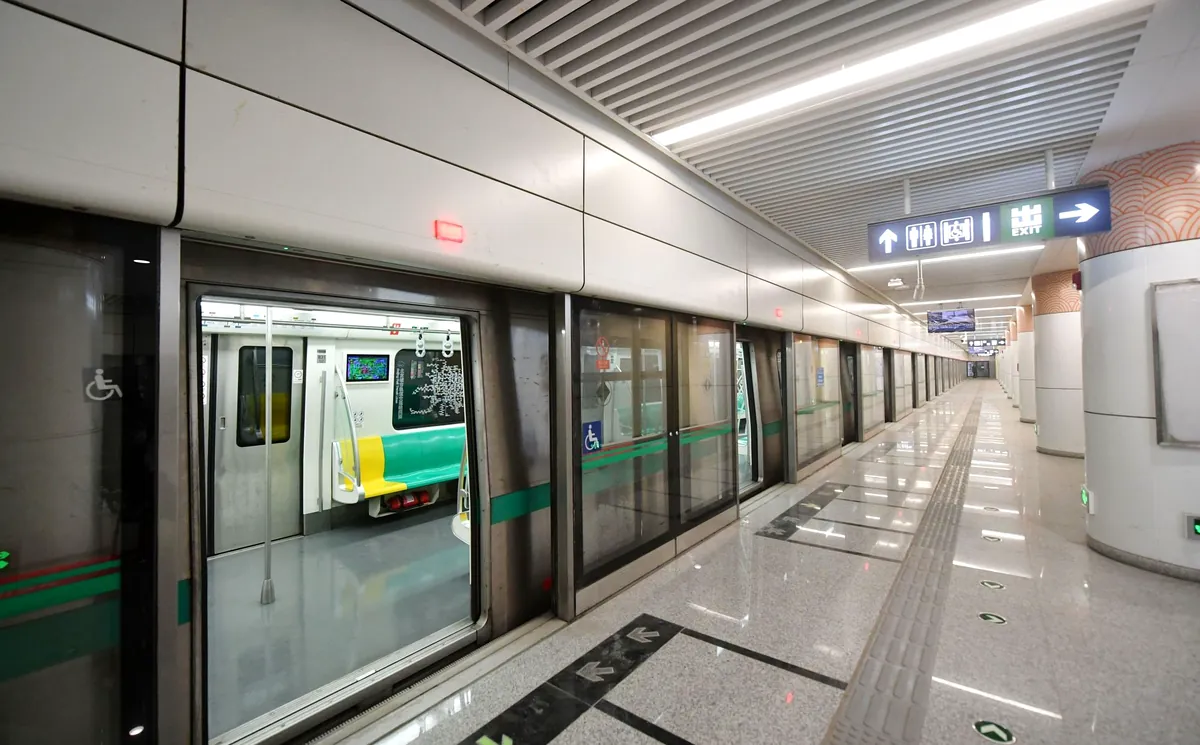
Regarding transportation, the capital’s modern public transit network makes accessing this famous street extremely easy. Wangfujing Subway Station is a vital intersection between Line 1, which runs along the East-West axis, and Line 8, which runs along the North-South axis. Visitors simply need to exit from Gate A or Gate E to step directly onto the pedestrian street or connect to the underground levels of the Oriental Plaza complex. Additionally, because it is delicately situated right next to the Forbidden City and the Donghuamen Gate, many travelers enjoy combining a leisurely walk from the Palace Museum to Wangfujing as the sun sets, or choosing public bus routes such as 1, 52, or 120, which stop right on the nearby Chang’an Avenue.
When preparing for your visit, travelers should keep a few practical guidelines in mind to ensure a smooth experience. The consumer environment in Beijing operates almost exclusively on digital payment platforms; therefore, installing and linking an international payment card to popular apps like Alipay or WeChat Pay before your trip is a prerequisite for paying for everything from street food to souvenirs. Due to its proximity to the high-security area of Tiananmen Square, authorities may conduct random identity checks, so travelers must always carry their original passport. Additionally, proactively equipping yourself with a data SIM card that includes international roaming will help you navigate using Baidu Maps and maintain seamless connectivity at all times.
Wangfujing is not merely a flashy shopping destination, but a vivid witness to Beijing’s magnificent transformation through the ups and downs of history, from the tranquil royal wells of the Ming Dynasty to one of the most prosperous commercial hubs in the East. To leisurely enjoy the full depth of history, architectural art, and the culinary flavors of the imperial capital without worrying about language barriers or travel logistics, choosing a professional all-inclusive tour package is the perfect choice to make your journey truly elevated and complete.