The historical formation of Jianshui Purple Pottery (建水紫陶) is a nearly millennia-long heritage voyage, where the soil of the Yunnan plateau crystallizes with the fires of successive dynasties. Going back in time to the Song and Yuan dynasties, local craftsmen began building kilns and lighting fires around Wanyao Village (碗窑村 – commonly known as Bat Village). At that time, the main products were not yet the famous purplish-red hue, but rather rustic celadon and blue-and-white porcelain for daily civilian life, fired in winding dragon kilns (Long Kilns – 龙窑) stretching along the hillsides. It was not until the Qing Dynasty, during the Daoguang era (1821–1850), that a true geological and technological breakthrough erupted. Local residents discovered a marvelous multi-colored mineral mud layer sedimented along the Lojiang River basin and adjacent hills, rich in iron oxide and smooth minerals. From then on, the craft shifted entirely to unglazed terracotta pottery, giving birth to medicinal pots, suction vases, and water jars with a solemn, robust purple color reminiscent of cast bronze.
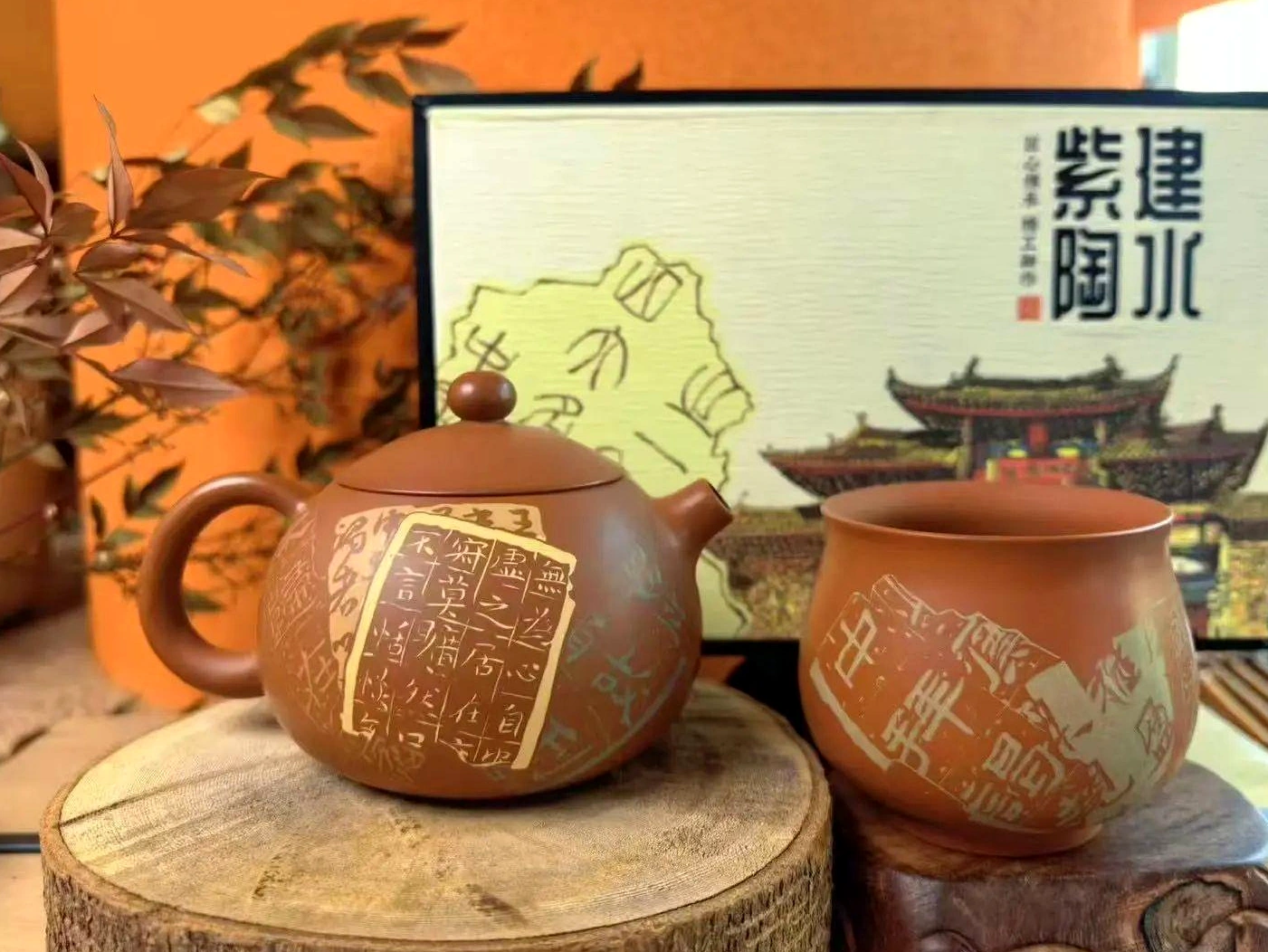
The artistic peak that brought Purple Pottery from a utilitarian peasant object into the refined realm of scholars took place during the reign of Emperor Guangxu (1875–1908). At that time, scholar-artist Pan Xinghuai (潘兴怀) and local pottery masters created a groundbreaking technique called “Intaglio and Relief Inlay” (阴刻阳填). When the clay body still retained the standard moisture of soft mud, the artist directly used a knife to carve calligraphy and wash-painting motifs into the soft pottery body, then meticulously filled the recessed grooves with mineral mud of a contrasting shade. After enduring thousands of degrees of red fire and a pebble-polishing technique under clear water, the pottery surface is completely unglazed yet as smooth as a mirror, highlighting elegant calligraphy and painting patterns. The combination of weathered clay and the soul of scholarly culture elevated Jianshui pottery into a precious “four treasures of the study” masterpiece, rivaling the treasures of the imperial study.
The status of Jianshui pottery continues to be proven by modern history through resounding milestones. In 1953, in a nationwide pottery selection hosted by the Ministry of Light Industry of China, Jianshui Purple Pottery was honored alongside Yixing Zisha, Qinzhou Nicheware, and Rongchang pottery to establish the proud title: the “Four Great Famous Potteries” (四大名陶) of Chinese civilization. The endless vitality of Wanyao Village’s kiln fire was reaffirmed once again in June 2008, when the Jianshui Purple Pottery manufacturing technique was officially inscribed in the National Intangible Cultural Heritage List under code Ⅷ-89, preserving the strict manual process intact including clay preparation, wheel throwing, carving, mud inlay, reduction firing, and cold polishing.
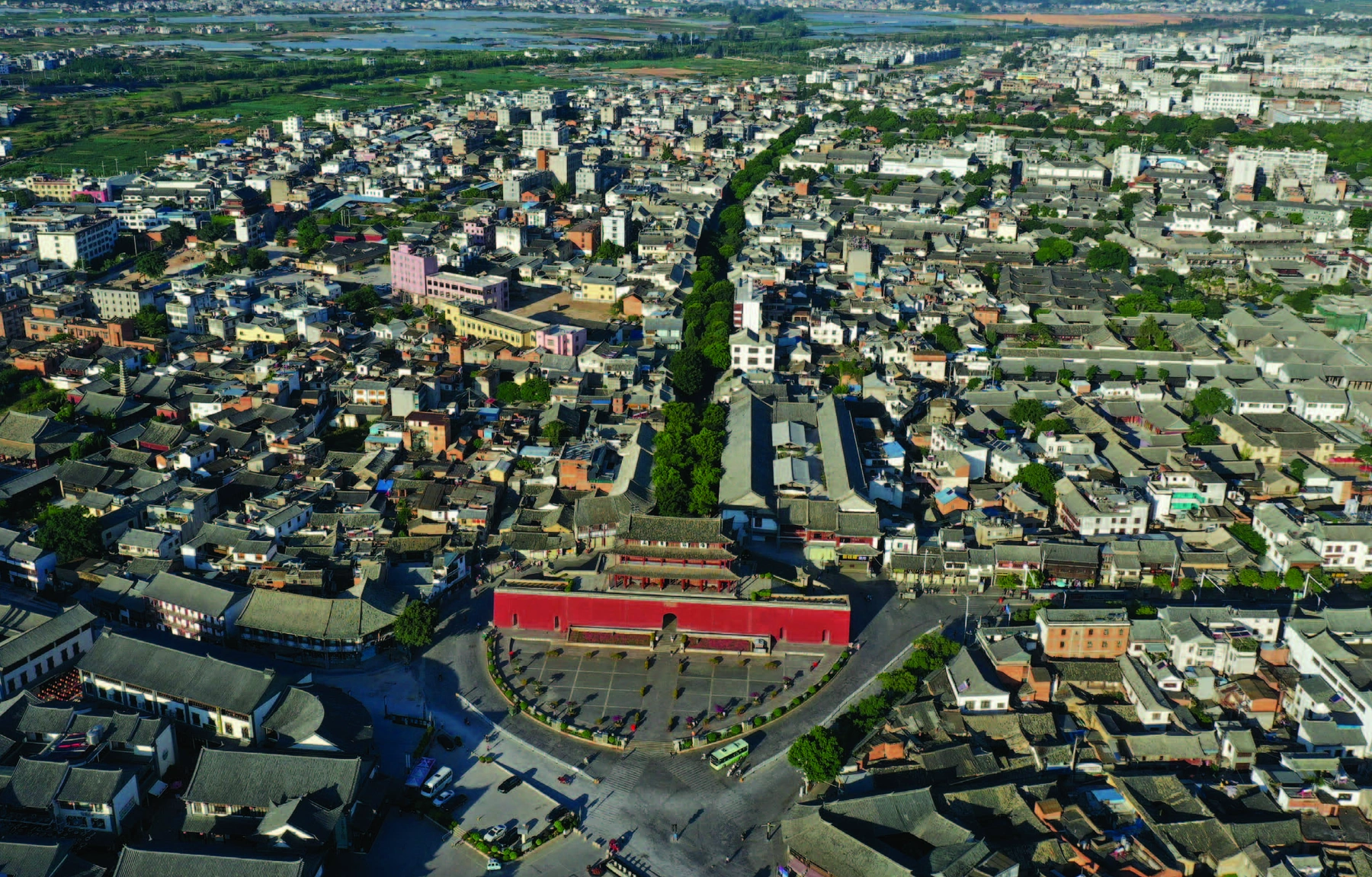
Inaugurated by the local government on September 26, 2015, on the site renovated from an old industrial art pottery factory, today’s Purple Pottery Street emerges as a magnificent bridge between kiln memories and contemporary breath. Viewed from above, the entire area opens up impressively with a focal point being a large-scale structure with a proud red hue presiding over the vast square courtyard. Surrounding it is a harmonious blend of curving traditional tile roofs and modern architectural blocks, connected by a lush tree-lined path stretching toward the peaceful countryside waterscape on the horizon.
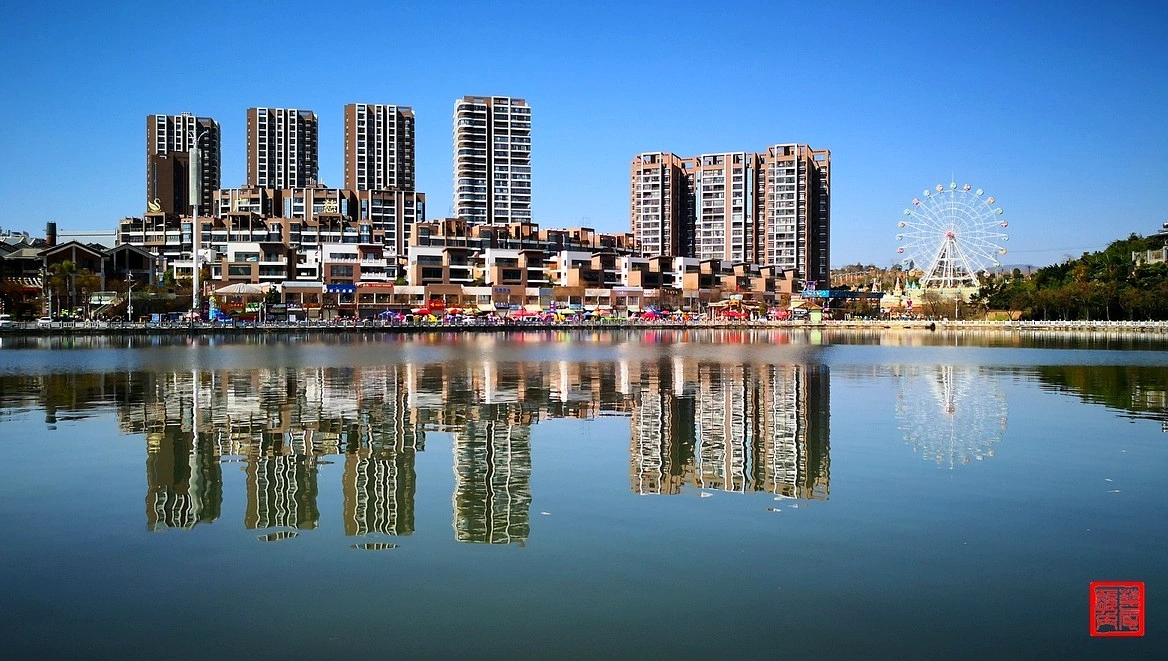
The spectacular rebirth of the old production space has turned the Lojiang riverbanks into a brilliantly prosperous cultural and night-economy center. This place not only preserves the millennia-old sediment of predecessors from ancient Bat Village, but also fully recreates the essence of red pottery through each artisan’s stall, each glowing charcoal stove, and the aroma of tea spreading in the Jianshui night mist. Travelers walking on the stone pavement of the ancient street today are touching layers of historical alluvial soil that have endured ups and downs through feudal dynasties into the radiant modern era.
Located in the affluent core region of Jianshui County, once famously known as Lin’an Prefecture in ancient times under the Honghe Hani and Yi Autonomous Prefecture, Purple Pottery Street possesses one of the most prime geographical coordinates in the southernmost part of Yunnan province. Surrounding the ancient town is a fertile basin, sheltered on all sides by rolling mountain ranges, creating a temperate and wind-sheltered microclimate. Thanks to its natural choke point terrain situated on the millennia-old trade corridor connecting Kunming via Hekou down to Hanoi and Haiphong seaport, this land early on absorbed commercial essence, gathering tens of thousands of talented craftsmen to flock and build a bustling inland trading port amidst the southwestern mountains.
According to traditional East Asian feng shui geomancy, the layout of the pottery street axis is closely linked to the open water surface of Guangci Lake, creating an extremely auspicious “bright hall gathering water” terrain. The lake surface, calm like a large mirror in front, not only welcomes the cool vital energy blowing from the valleys but also acts as a perfect microclimate regulator for the entire commercial space. Evaporating water softens the dryness of the plateau basin, while the streets running along the lake shore capture full shade and strong breezes. The skillful intertwining of natural water currents and the architectural character of the ancient street has turned this place into a peaceful place to live and work, generating wealth and prosperity for generations of pottery artisans.
However, the true soul that has nurtured Jianshui’s ceramic reputation for thousands of years stems from a unique mineral treasure deeply hidden within Mother Earth. The towering Bazhai Mountains in the north of the ancient Oanyao Village, along with alluvial sediment layers deposited along the banks of the Lujiang River, have gifted local residents a miraculous clay mine known as Five-Color Mud (Ngu Sac Ne). This natural mineral layer separates into five vibrant original colors including red, yellow, purple, white, and green, possessing an extremely high iron oxide content ranging from eighteen to twenty-four percent. With ultra-fine mineral particle sizes below 0.02 millimeters, the clay quality in the Jianshui basin boasts exceptional plasticity. When fired at high temperatures, it produces ceramic bodies as dense and hard as jade, emitting a crisp sound like a bronze bell that no other place in the world can replicate.
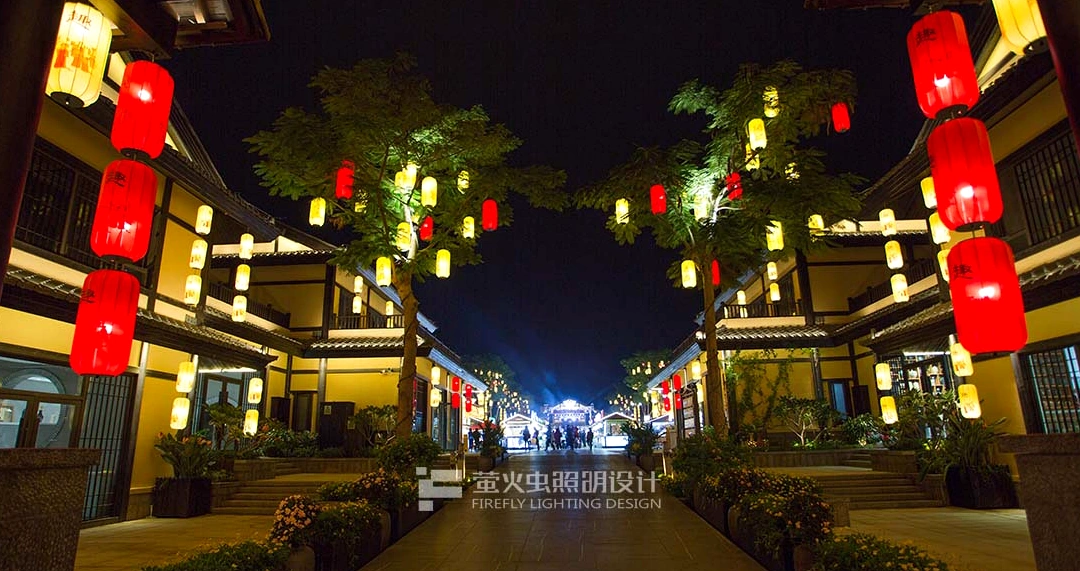
As night falls, the blend of basin feng shui and commercial vitality is brilliantly showcased along the bustling pottery street. Rows of warm red and orange round lanterns are hung densely overhead, illuminating a lively festive space filled with people shopping and sightseeing. Right in the foreground, a handicraft stall featuring a prominent neon sign 朗麟手作 (Lang Lin Handmade) catches the eye with exquisite glass cabinets displaying fine purple pottery teapots and smooth ceramic jewelry, poetically contrasting with modern buildings rising quietly beneath the deep blue night sky.
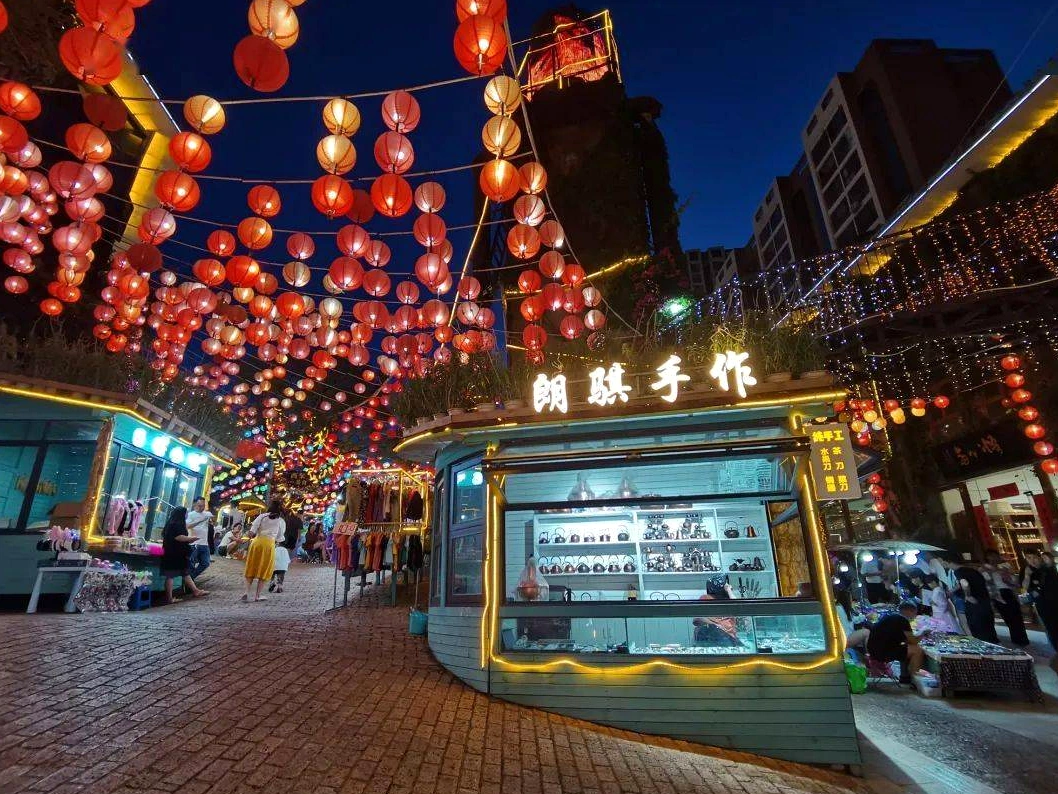
The lifeblood of Tu Dao Pottery Street today is a vivid testament to the harmonious integration of contemporary architectural planning and millennial geopolitical foundations. Strolling through the brilliantly illuminated space, visitors are not merely exploring an ordinary night market, but are actually walking upon the sacred lands of the former Lin’an Prefecture. Here, the cool breeze blowing from Guangci Lake, the alluvial earth scent from the Lujiang River, and the warm fire from countless traditional kilns blend as one, creating a timeless, enduring masterpiece of landscape and humanity.
Impressively spanning across a land area of approximately 30 mu (about 2 hectares) with a total floor construction area ranging from 20,000 to 26,000 square meters, Jianshui Tu Dao Pottery Street is planned as a comprehensive cultural and artistic complex rather than a purely commercial street. The backbone of the entire area is a central pedestrian axis about 400 meters long, skillfully connecting directly to the winding waterfront landscape of Guangci Lake stretching over 1,200 meters. The rhythmic interaction between the expansive water surface and the bustling streetscape creates an open visual corridor, gathering over 100 renowned ceramic brands, exquisite handicraft workshops, and a rich chain of local culinary spaces.
The architectural language of the district is a symphony blending the classic Ming-Qing Lin’an architectural soul with contemporary ecological Neo-Chinese spirit. Along the rows of houses, towering horse-head gable walls not only serve as traditional fire barriers but also create a poetic tiered rhythm against the sky. The load-bearing wooden framework fully adopts sturdy mortise-and-tenon structures, supporting mossy grey yin-yang tiled roofs. The subdued grey tone of raw blue bricks is standardly paired with the warm red hue of pottery kiln bricks, accented by large borderless glass panels that embrace natural light, opening a boundless dialogue between a thousand-year past and the present.
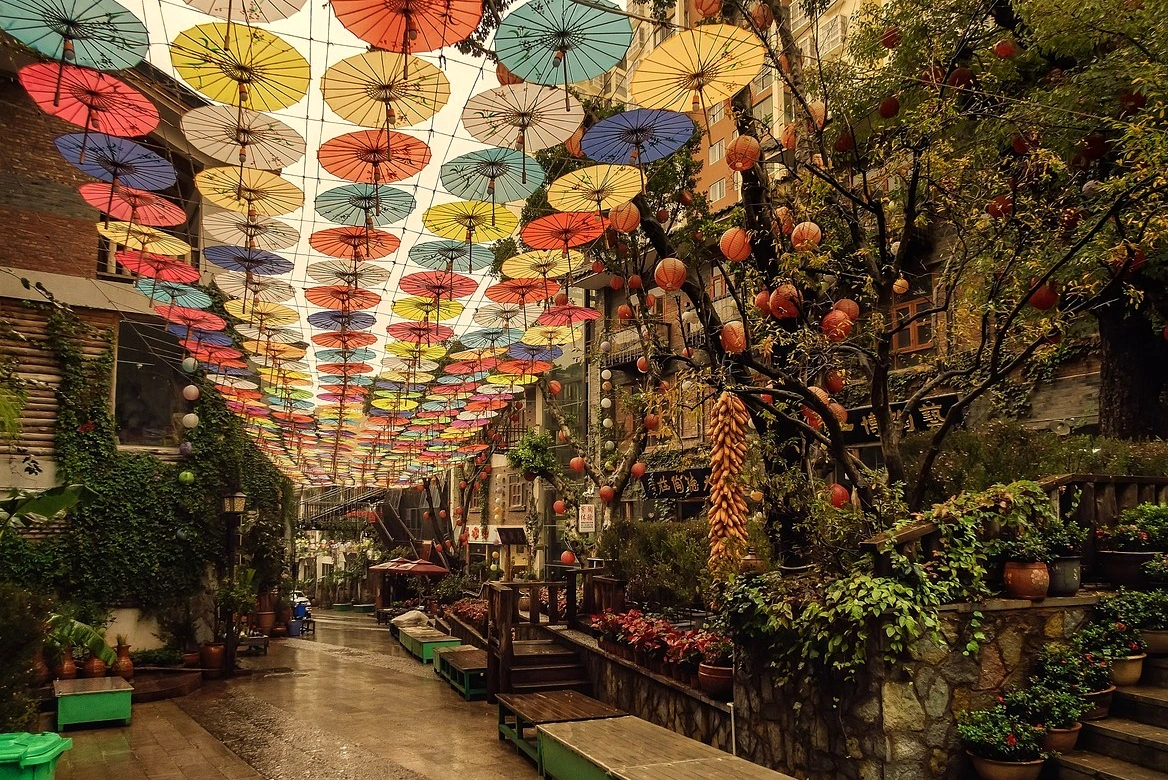
Along the walking paths, admirers can easily encounter magical intersections between industrial ruins and contemporary life, typically exemplified by the monolithic dark red brick archway—once an old kiln mouth—now covered by vibrant green vines and blooming pink roses. Opposite this mossy arch is a row of ancient balcony houses with exquisitely carved wooden balconies, glowing warmly under lantern light. The bluestone pavement, dampened by post-dusk rain, reflects the hazy pinkish-orange sky, where parked cars rest quietly beside neatly arranged bonsai trees, creating a serene perspective that is both nostalgic and imbued with a tranquil urban rhythm.
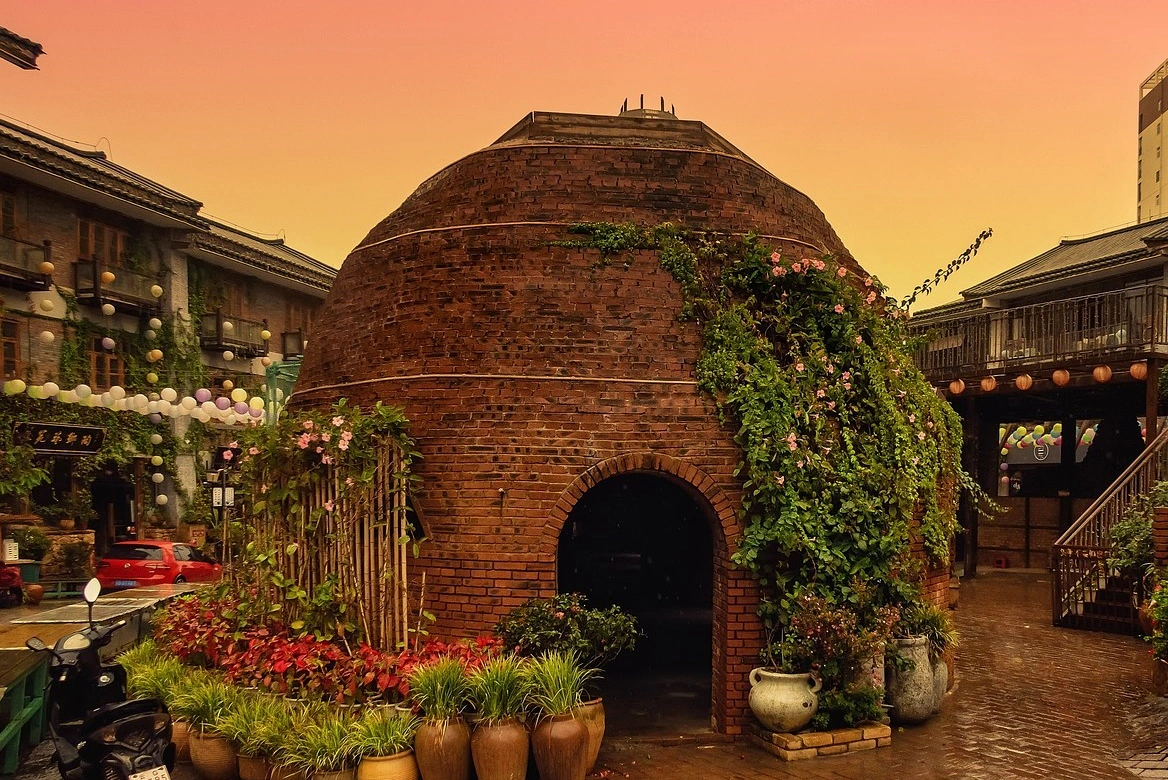
The core value giving depth to the space lies in the philosophy of respecting industrial heritage during the reconstruction process. The district was revived from the grounds of a former fine arts pottery factory, which used to be the region’s most bustling production cradle. Instead of leveling the site, planners meticulously preserved the traditional bluestone-paved pathways that bear the footprints of potters through generations, transforming industrial push-kilns into semi-open exhibition spaces and raising the towering vibrant red brick chimneys straight into the sky as a proud visual landmark for the entire lakeside.
The overall space is scientifically divided into three mutually supportive functional zones to optimize the traveler’s experience. The central axis is a peaceful haven nestled among master galleries, where national artisans gather to showcase masterpiece Zitao teapots and elegant tea meditation setups. The left bank along Guangci Lake prioritizes a slow-paced lifestyle with hands-on pottery workshops alongside breezy cafés; while the right bank is a vibrant world of night market cuisine integrated with a modern underground smoke extraction system to manage the environment, keeping the ancient atmosphere pristine and clean.
As dusk gradually falls and dyes a magical bluish-purple hue over the calm surface of Guangci Lake, life in Jianshui Zitao Pottery Street begins to enter its most brilliantly sublime phase of the day. During the golden hour from half past six to half past ten every night, the entire ancient town seems to shed its subdued daytime attire to don the magnificent appearance of a city of light. Thousands of red lanterns simultaneously light up along the curved glazed tile eaves and horse-head walls rich in Diannan architectural style. This warm, time-steeped light intertwines delicately with modern artistic lighting shining directly onto towering kiln chimneys and ancient red brick arches, transforming every mossy street corner into a vivid, breathtaking natural landscape amidst the night.
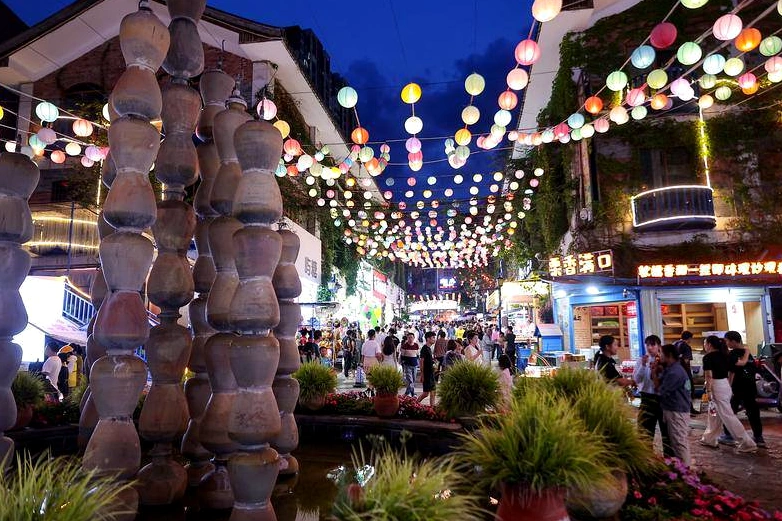
Strolling along the smooth green stone slabs reflecting shimmering beams of light, visitors feel as though they are stepping into an enchanting sensory feast. Amidst the tranquil yet bustling night space, crystal-clear sounds like jade chime bells continuously echo from roadside stalls. This is the traditional pottery-testing custom, where both buyers and sellers gently tap the lid against the body of the teapot to listen to the density and resonance of the Lojiang river mud clay after being tempered through a thousand-degree flame. Nearby, under the eaves of ancient teahouses, graceful tea masters smoothly pour steaming hot water into rustic Zitao cups, releasing the rich, fragrant aromas of Pu’er and Dianhong tea. A few steps away, local artisans patiently sit beside plain wooden tables, performing the renowned unglazed polishing technique using smooth round river pebbles; their decisive strokes make the ceramic surface shine with a magical mirror-like gloss under the warm lights.
The heartbeat of the nighttime economy here goes far beyond simple handicraft transactions, evolving powerfully with the breath of the modern era. Behind carved wooden ancient doors, century-old pottery workshops instantly transform into bustling live-streaming studios. On digital platforms like Douyin or Kuaishou, young pottery heirs confidently spin the throwing wheel, showcase the art of scrap-carving (trảm điền), and chat with millions of viewers across the mainland. The light from livestream ring lights blends with the traditional kiln fire, creating a spectacular continuation between the millennial intangible heritage and modern e-commerce, propelling the fame of Zitao pottery far beyond the borders of Yunnan’s landscapes.
In particular, the transformation of this new-generation nighttime economy project is gradually turning the Guangci Lake waterfront into a large-scale outdoor live-action stage. Utilizing Hologram 3D projection technology combined with water screens and 3D lighting effects, the night space vividly recreates the scene of Song and Ming dynasty potters diligently staying up all night to guard the fire inside the heart of the legendary Longyao dragon kiln. Illusory columns of fire billowed up into the night sky, casting reflections on the magical shimmering lake, blending with majestic classical music to make the boundary between reality and illusion, between a thousand-year past and a prosperous present, completely vanish into a top-tier visual experience.
Alongside the resounding fame of its terracotta craftsmanship, Zitao Pottery Street is also an authentic culinary paradise, where the millennial gastronomy of ancient Lin’an prefecture blends intimately with the local ceramic material itself. As night falls over the ancient quarter, the rich fragrance of pine wood smoke mingles with the rising steam from generations-old eateries, opening up a vivid culinary picture imbued with the distinct identity of the Honghe Autonomous Prefecture. The harmonization between the pottery kiln fire and the stove fire has forged a unique culinary culture, where each dish is not merely a combination of spices but also a testament to profound health-preserving dietary philosophies.
At the top of the heritage culinary list here is Qiwei Chicken (pot-steamed chicken), a delicacy intimately tied to the ingenious mechanical structure of the Zitao pottery pot. The dark purple terracotta pot features a conical steam conduit protruding right at the center of the bottom, acting as a natural throttle valve. The chef tightly arranges chopped young chicken meat along with ginseng, wolfberries, and nutritious herbs into the pot, sealing the lid tightly without adding even a single drop of plain water. When placing the pot onto a large pot of boiling water below, high-pressure steam travels up the hollow central tube, rises directly to the domed lid, then condenses and drips drop by drop into the pot for many hours. The resulting broth is an original sweet chicken essence free of grease residue, blending warm earthy aromas with delicate herbal flavors, offering a warm and soothing sensation for discerning foodies.
Along rows of low tables nestled closely beneath the glow of lanterns, Jianshui grilled tofu, also known as Banting roasted tofu, offers a rustic yet remarkably refined culinary experience. The soul of this dish originates from the underground water of the famous Banting ancient well dating back to the Ming Dynasty. This water source possesses the perfect natural alkalinity to curdle the soybean blocks without relying heavily on industrial gypsum. After pressing out the water, the tofu is cut into small cubes about the size of two fingers and naturally fermented until the surface tightens and emits a mild, aromatic yeast fragrance. On an iron wire mesh placed over glowing charcoal stoves, vendors swiftly flip each piece until they expand into plump, golden-brown spheres with a crispy exterior while retaining a moist, spongy, and milk-smooth texture inside. Sitting closely around the charcoal stove, picking up a piece of piping hot tofu, and dipping it generously into a bowl of spicy chili powder, tongue-tingling Sichuan peppercorns, or soy sauce sprinkled with roasted sesame seeds, diners feel as though they are touching the unadorned lifestyle passed down for hundreds of years by the people of this mountain town.
A distinctive feature of Jianshui’s culinary culture is closely tied to the water bamboo, a unique underground-stemmed aquatic vegetable that thrives exclusively in the fertile freshwater marshes of this region. The young shoots, pristine white like miniature elephant tusks, emit a crisp and pure sound when snapped in half. Under the skilled hands of local chefs, the water bamboo is quickly stir-fried over high heat with shredded pork to preserve its natural juiciness and sweet crunch, or sliced diagonally and dropped into steaming bowls of Caonamei Rice Noodles with water bamboo shoots. The rich broth simmered from pork bones and chicken fat, combined with the cool sweetness of the water bamboo, creates a supreme balance, completely dispelling any greasy feeling and leaving a lingering, refreshing aftertaste in the throat.
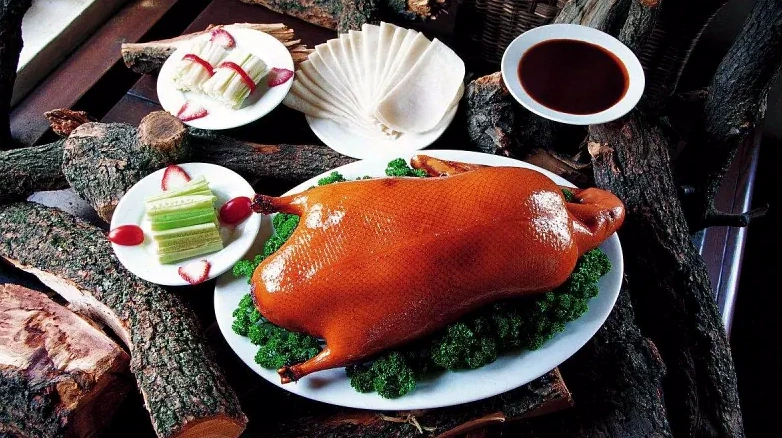
As night deepens, the night market atmosphere becomes even richer with the savory aroma of the famous Lin’an roasted duck. Plump ducks are carefully selected, evenly brushed with wild honey and a secret traditional marinade, and then hung upside down inside specialized wood-fired clay jars. Heat distributed evenly from the baked pottery walls gives the duck skin a golden-brown, glossy crispness while keeping the meat inside wonderfully juicy and flavorful. To conclude this culinary journey, travelers often choose to nibble on a piece of soft, lightly sweet lion-head pastry, sip on cups of roasted milk tea bubbling away in a purple clay pottery pot releasing billows of fragrant steam, or try a few skewers of spicy roasted meats heavily spiced with Honghe chili powder, fully experiencing the enduring vitality of an ancient land through every profound tasting note.
Traveling to Zitao Pottery Street today is very convenient thanks to the synchronized transport infrastructure network connecting the border region with heritage centers in southern Yunnan. From the Lao Cai – Hekou international border gate, bullet trains (C-trains or D-trains) departing from Hekou North station go straight to Jianshui station with travel times ranging from two hours and forty minutes to over three hours, and ticket prices fluctuating around 60 to 80 RMB per trip; if departing from Kunming South station, the travel time is shortened to less than two hours. By road, the G8511 Yin-Kun Expressway, approximately 230 kilometers long and connecting Hekou and Jianshui, provides a smooth three-and-a-half-hour journey amidst the undulating mountains of Honghe. Regarding immigration procedures, border passes are quickly issued within 24 to 48 hours for travel throughout the Honghe Prefecture area, or visitors can use regular visas (L-visas) or e-visas when venturing deeper into Kunming, Dali, and Lijiang.
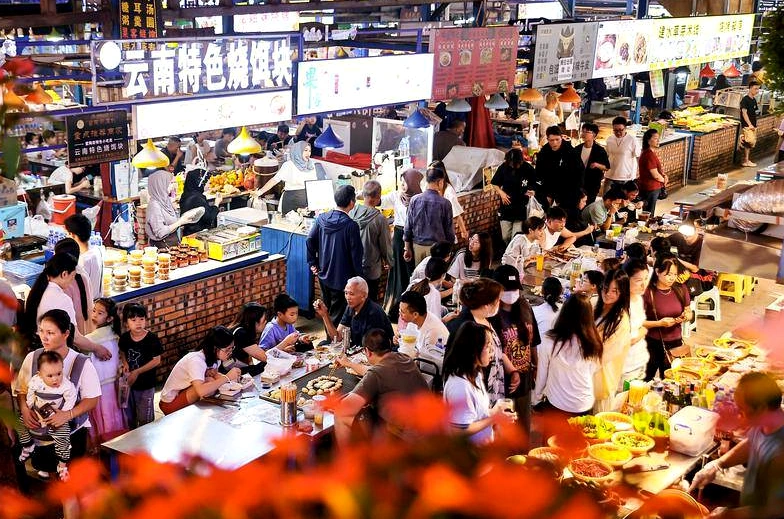
After a long journey, the ideal stop to recharge your energy is the bustling indoor food street located right next to the pottery axis, which preserves the rustic, smoky flavors of local cuisine. The market hall is brightly illuminated by warm lantern light, bustling with diners gathering to enjoy fragrant skewers along rows of rustic wooden tables and chairs. Standing out on the adjacent stalls are vibrant Chinese-character signs reading “云南特色烧烤” (Yunnan Specialty Barbecue) or “建水特色烧烤” (Jianshui Specialty Barbecue), emitting the irresistible aromas of charcoal-grilled tofu, spicy stewed pork tripe, and characteristic southwestern herb-marinated grilled meats.
Alongside its rich culinary world, Zitao Street is a gathering place for hundreds of famous artisan workshops, requiring connoisseurs to equip themselves with core knowledge to identify authentic traditional Zitao pottery amidst the wave of industrial molded ceramics. Standard Jianshui pottery is crafted from the five-colored clay of the Nanban River and strictly uses no colored glazes; the jade-like smoothness of the surface is entirely the result of the “Wudu Qiongguo” technique, using smooth pebbles to manually polish the piece continuously for many days to create a natural mirror finish with soft micro-textures. Conversely, counterfeit products of the “Guanxiangtao” type molded from liquid mud imported from Chaozhou or Dehua usually have to be coated with an artificial chemical glaze, creating a slippery, lifeless feel when touched. As for the Chinese calligraphy or ink wash painting motifs on the pottery bodies, the traditional “Yin-carving and Yang-filling” technique ensures that the engraved lines remain completely flat and smooth against the surface, without leaving any rough edges like heat-pressed decals or mass-produced laser engraving methods.
Another practical appraisal tip passed down by artisans is to listen to the resonance of the clay body: when gently tapping the lid against the shoulder or wall of a genuine Zitao teapot, the piece will emit a clear, lingering “clang” resembling the sound of bronze metal or precious jade colliding, proving the concentrated mineral density and a firing temperature exceeding one thousand degrees Celsius. To ensure a fulfilling cultural excursion, travelers should stay alert and avoid ultra-cheap tour offers that harbor traps forcing shopping stops at silk centers, jade workshops, or traditional Chinese medicine pharmacies. All legitimate businesses in Jianshui Pottery Street are currently synchronized with the QR code management and supervision system of the “Smart Yunnan” (一部手机游云南) ecosystem, allowing buyers to easily submit online complaints and apply an unconditional 30-day return policy if signs of commercial fraud are detected.
To fully enjoy every elegant moment amidst the ceramic art space and ancient town culinary flavors without worrying about customs procedures or travel risks, choosing an all-inclusive tour package focusing deeply on local culture will be the optimal solution, helping travelers peacefully immerse themselves in the millennia-old historical depth of Jianshui ancient town.