The imprint of the national treasure within the current of East Asian culture did not begin in modern conservation farms; it was recorded over a millennium ago in ancient diplomatic chronicles. The classic history of the Land of the Rising Sun entitled Shoku Nihongi (続日本纪) solemnly records the event in 685, the first year of the Chugong era during the reign of Empress Wu Zetian of the Tang Dynasty, when the Chinese imperial court sent two rare animals called White Bears along with seventy rare animal pelts as gifts to Emperor Tenmu. That diplomatic mission continued in 1972 when Premier Zhou Enlai presented a pair of pandas, Ling-Ling and Hsing-Hsing, to US President Richard Nixon, opening a historically warm era across the ocean. Since 1984, the gift-diplomacy approach officially concluded to shift toward a Paid International Scientific Research Cooperation model tied to conservation funding, while establishing strict regulations forcing every cub born overseas to be repatriated before reaching four years of age.
The rebirth journey of this iconic creature is tied to fierce ecological crises across the rugged mountains of the Southwest. Rescue efforts began to take root in 1953 when the first wild panda was brought in for medical care, but the true life-and-death challenge struck between 1974 and 1983. At that time, the phenomenon of arrow bamboo (Sinarundinaria fangiana) flowering and dying off en masse swept across the Qionglai, Qinling, and Minshan mountain ranges, depriving pandas of their vital food source and plunging hundreds of individuals into horrific starvation. Facing the extinction of this ancient beast, the Chengdu Research Base of Giant Panda Breeding (成都大熊猫繁育研究基地) was officially established in 1987. It began with an unwavering humanitarian spirit: taking in and caring for six severely sick and emaciated individuals rescued from the wild, strictly refusing to hunt or forcibly interfere with remaining wild populations.
The academic turning point shaping the foundation of conservation occurred in 1993 when the National Key Laboratory was established here, gathering brilliant minds dedicated entirely to ecology. Professor Hu Jinchu (1929–2023), revered by posterity as the pioneering founding father of China’s Panda Biology, founded the legendary Wolong research station network and invented the method of analyzing bite marks on bamboo residue in panda droppings. This revolutionary method allowed for the precise determination of age, jaw size, and individual identification of wild pandas without trapping them. Continuing the torch of knowledge, Dr. Zhang Zhihe and his team successfully decoded the mystery of artificial breeding, creating a medical miracle by raising the survival rate of newborn pandas from under 30% to over 98%, completely eliminating the fear of extinction.
Viewed from above, the entire conservation complex appears as a breathtaking masterpiece harmonizing contemporary architecture with the pristine breath of Ba-Shu nature, where buildings curve softly in C-shapes and concentric circles embrace the sloping terrain. Building roofs are covered in lush green turf or clad in rustic wooden slats, cleverly dissolving into multi-layered emerald bamboo canopy layers and enveloping cool, shaded courtyards. Winding pathways rhythmically connect functional zones, opening a serene lake right in the heart of the valley to create a unique landscape symbolizing efforts to rebuild a peaceful home for all creatures.
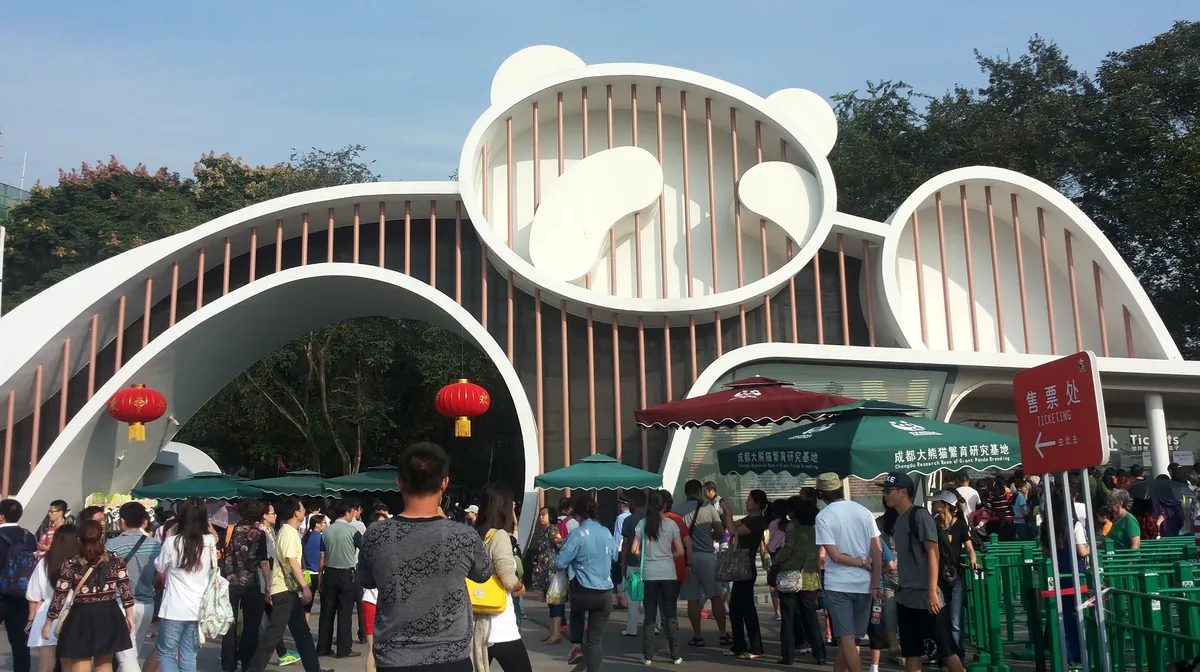
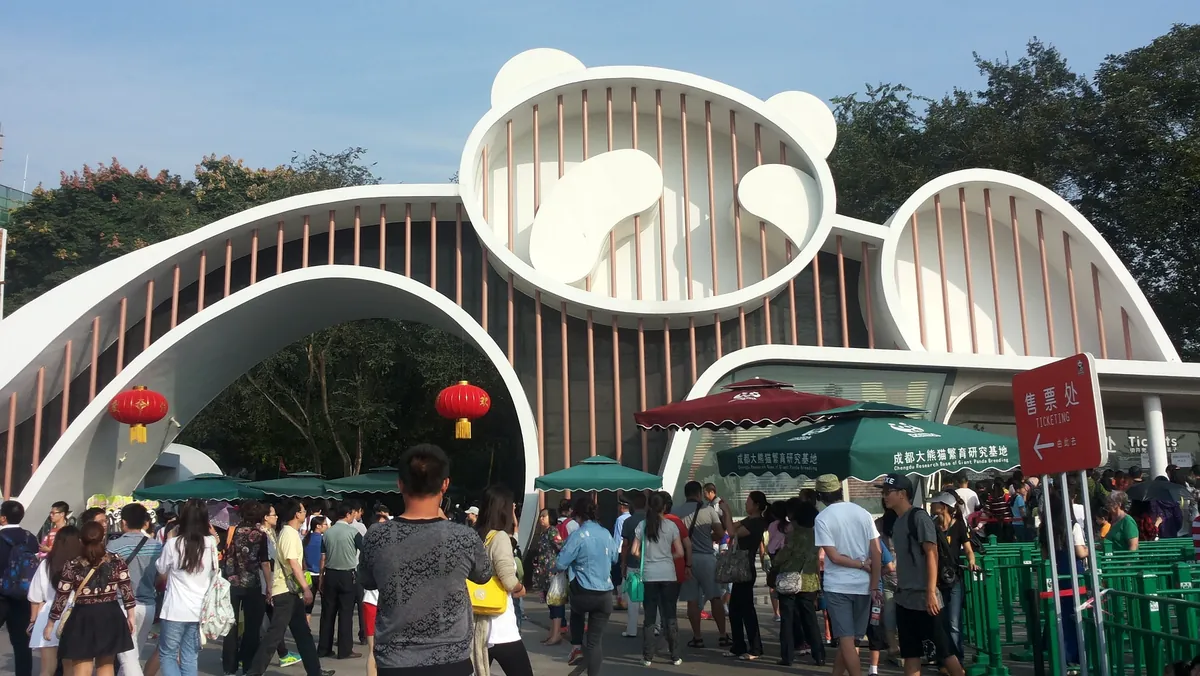
Right from the welcoming threshold, the facility makes a strong visual impression with its imposing main gate structure styled after a gigantic, pure-white giant panda head. Elegant bronze-colored metal slats arranged vertically along soft curves create a beauty that is both modern and warm, punctuated by traditional red from brilliantly hanging lanterns. Beneath that proud gateway, streams of visitors bustle past, eagerly preparing to cross the boundary from the bustling city into the green, semi-wild world of the planet’s rarest endangered animal.
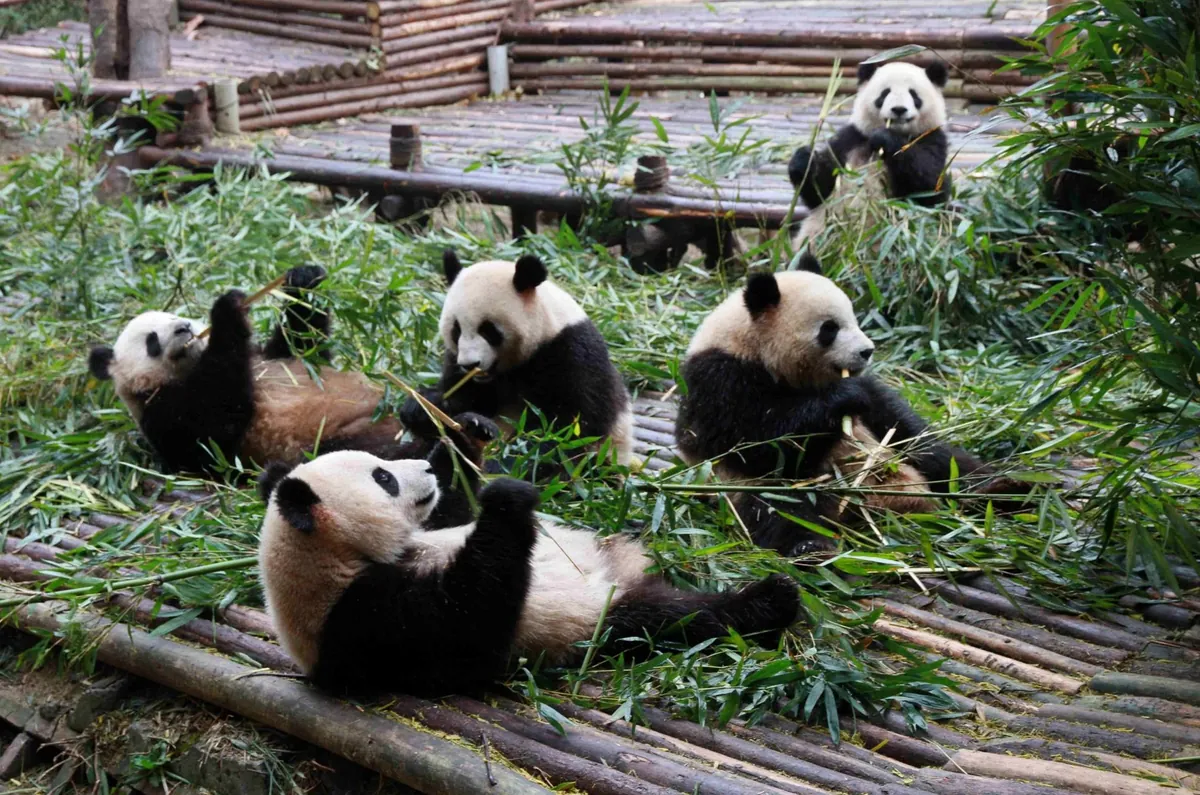
Stepping through the gate, the entire space unfolds like a picturesque ink-wash painting meticulously engineered. Forestry and botany planning teams painstakingly simulated the exact microclimate and topography of the majestic Hengduan and Qionglai mountain ranges—the pristine cradle where wild pandas range at altitudes between 1,500 and 3,000 meters above sea level. Through micro-topography adjustments, artificial hills, sloping valleys, and sheltered ravines were skillfully built to gather vital energy, maintain stable year-round humidity, and lower surface temperatures during scorching summers, creating ideal conditions for the habits of animals sensitive to high heat.
The decisive ecological element giving soul to this area is the spectacular vegetation coverage rate reaching 96%. Expansive native bamboo forests comprising specialized bamboo sub-species are planted intermingling with high-canopy evergreen broadleaf trees, forming dense canopies protecting understory vegetation. Interspersing among emerald greenery are subterranean streams, artificial lakes, and meandering ditches fed by natural flows, providing cool water for wildlife while acting as biological air-purifiers that eliminate urban dust and deliver pristine air with exceptionally high negative ion density.
On a macro conservation strategy level, the facility serves as a vital translocation conservation core connected intimately with the Giant Panda National Park spanning a massive 27,134 km² across Sichuan, Shaanxi, and Gansu provinces. The semi-wild space here is established as a perfect transitional buffer zone, where captive-born individuals are exposed to natural topography, train in survival skills, and gradually adapt to weather variations before participating in rigorous wild-training programs for reintroduction into primeval mountain forests.
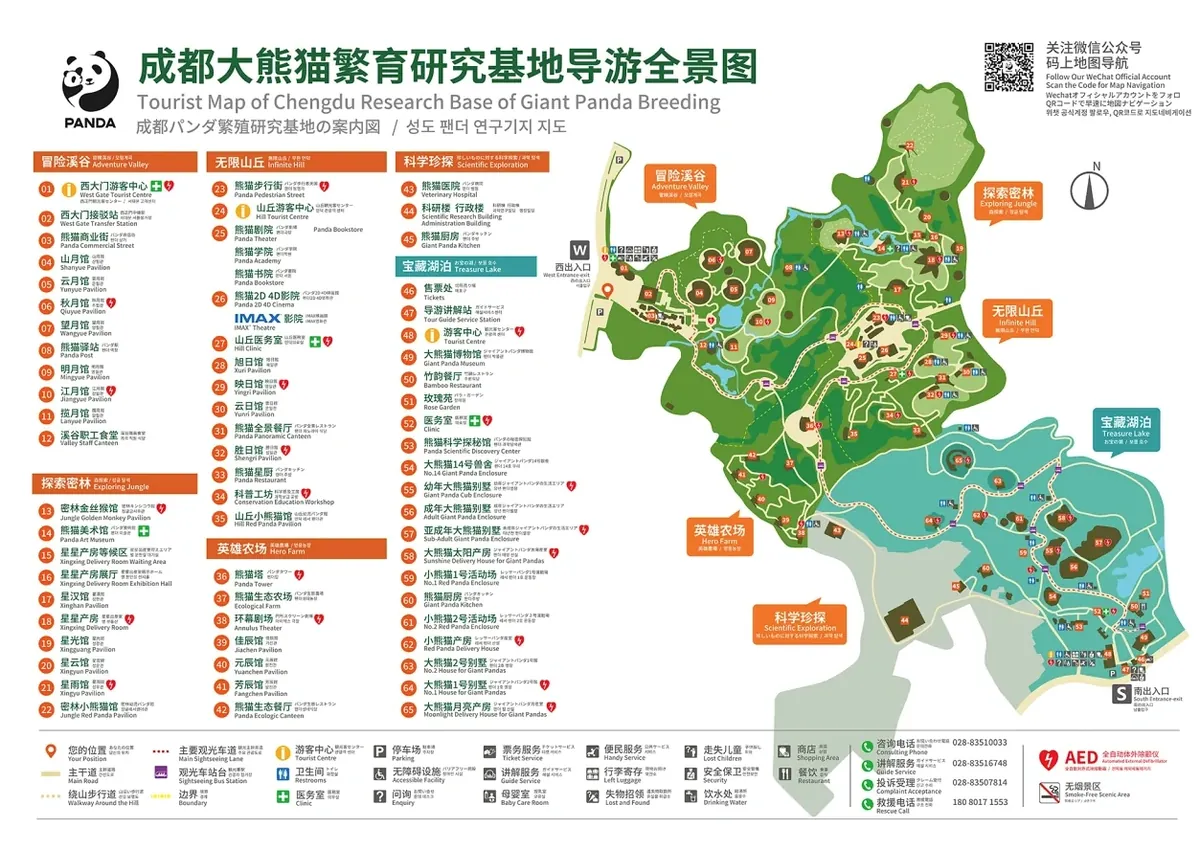
On a landscape planning and conservation landscape architecture level, the Chengdu Giant Panda Breeding Research Base is a masterwork harmonizing advanced ecological technology with Eastern natural aesthetics. Originating from a modest 106 hectares focused in the South District, the space underwent massive grand construction to expand rapidly to 3.07 square kilometers, or 307 hectares of lush greenery. The grand structure of the modern mega-park is coherently planned into two key functional zones named Infinity Hill Zone and Adventure Valley Zone. Every inch of land and slope is precisely calculated to perfectly simulate the pristine humid valley of the Kanas and Qionglai mountain ranges, creating an ideal habitat corridor for the national treasure in the heart of the bustling metropolis.
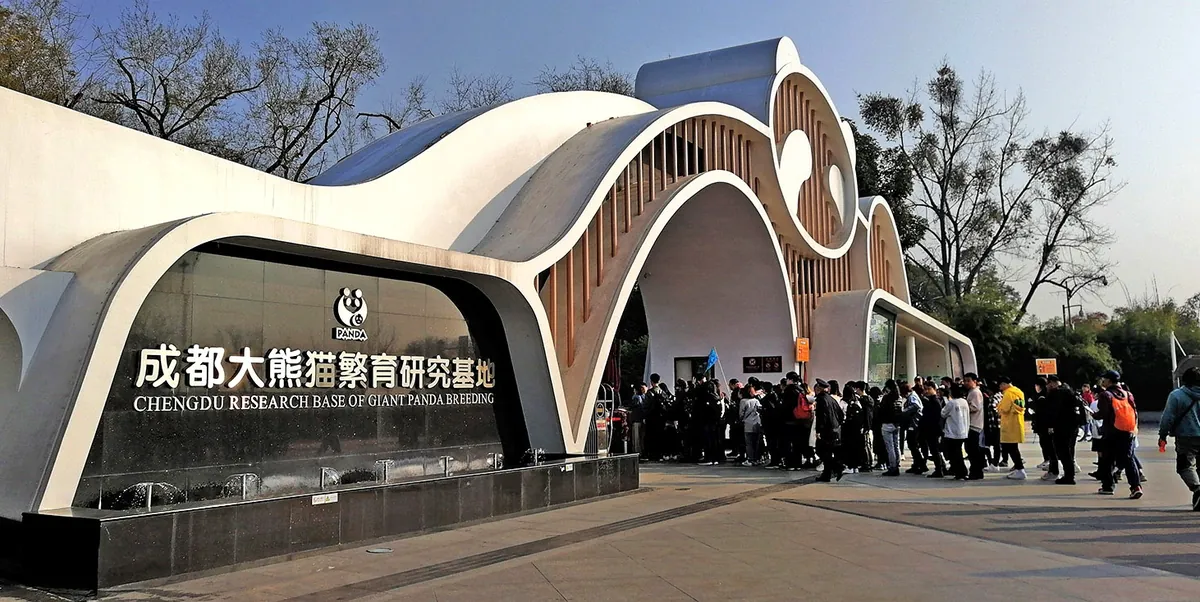
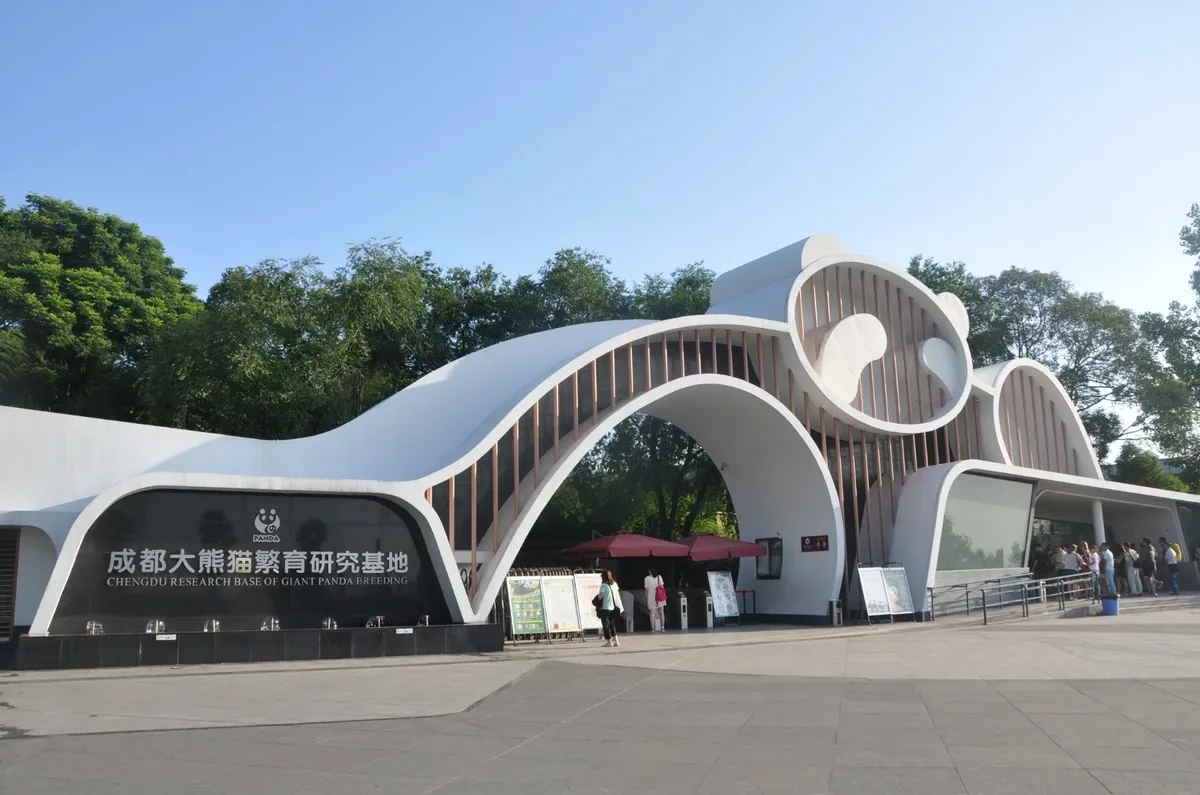
Right from the first touchpoint upon entering the park, the main reception gate building expresses contemporary design thinking and deep symbolic language. The arch is built with pure white curves winding softly like a Ba-Shu silk ribbon, cleverly shaping half of a giant giant panda face with high rounded ears reaching toward the upper right. Standing out against that elegant architectural background is a solemn black-letter plaque carved in metallic Chinese and English with the center’s name. Beneath the azure sky and rustling trees providing shade, this majestic structure acts as a harmonious transitional point, opening the vast ecological space of the natural world.
The proud visual centerpiece of the entire conservation park is the Chunmiao Tower, also affectionately known as the Panda Tower, soaring proudly to 69.8 meters amid endless bamboo. The structure comprises nine imposing tiers forged from sophisticated prefabricated steel structures, vividly simulating layers of tender bamboo shoots opening protective outer sheaths to greet early morning dawn. The tower top integrates a panoramic glass observation deck expanding a 360-degree view, allowing visitors to take in the rolling landscape of the valley and the misty horizon of Sichuan. This architectural creation sets records for scale while becoming a classic visual symbol for humanity’s efforts to restore the natural biosphere.
Beyond macro monuments, the soul of the research base lies in its cluster of long-standing, highly specialized legacy enclosures, notably the Sunshine Nursery and Moonlight Nursery. These are isolated maternity centers equipped with state-of-the-art biological incubators, witnessing the miraculous birth of hundreds of pink newborn cubs weighing only a few hundred grams. Adjacent to them is a kindergarten area exclusively for young cubs practicing climbing, connected with a multi-functional veterinary hospital meeting international standards, forming a closed-loop care ecosystem from birth to full adulthood.
All construction philosophies here consistently follow the biomimicry principle to minimize artificial captivity feelings. Outdoor exercise areas feature multi-layered vegetation, automated micro-mist sprinkler systems activated on scorching days, and water-circulating natural cooling rock systems. When weather exceeds adaptation thresholds, pandas are moved into enclosed houses operating absolute stable air conditioning systems from 20 to 22 degrees Celsius. Every interior corner from platforms and stairs to chewing toys prioritizes rough tree bark and natural forest wood, creating a stimulating living environment that eliminates psychological trauma for rare wildlife.
As evening twilight descends across green bamboo groves at the Chengdu Giant Panda Breeding Research Base, the space plunges into absolute silence rather than the dazzling lights typical of modern entertainment complexes. To strictly adhere to the natural biological rhythm of the national treasure, all ecological enclosures close before sunset, rejecting high-intensity artificial light to fully protect the pristine habitat for sensitive animals. Nonetheless, at the towering Panda Tower and West Gate reception square, a contemporary light art symphony is ignited during major festivals. Under visual engineers’ direction, the bamboo shoot architectural structure glowing against cloud-filled skies continuously transforms colors across wave-like light rhythms, creating a sci-fi horizon contrasting perfectly with the rustic charm of the daytime ecological valley.
Leaving the soothing sanctuary of giant pandas as night blankets the area, travelers are led straight into the bustling night economy and cultural heritage of Ba-Shu. The classic experience is enjoying renowned Sichuan opera at Shu Feng Ya Yun Teahouse—the cradle preserving Ba-Shu theatrical arts for over a century. Beneath moss-grown eaves and rising jasmine tea smoke, the marvelous art of Face-Changing (川剧变脸) unfolds like a mesmerizing visual magic trick; artists swiftly swap dozens of silk masks painted with heroic legends in the blink of an eye, combining artistic fire-spitting and magical fan dances to vividly recreate the martial spirit and magnanimous character of the millennial southern civilization.
The nocturnal life current expands with a cruise along the Jin Jiang River (锦江夜游), where boat hulls glide smoothly past ancient bridges glowing brilliantly in magical night mist and weeping willows casting reflective shadows across sparkling, picturesque waters. Docking ashore, visitors mingle with seas of red lanterns in Jinli Ancient Street (锦里) and the characteristic Qing-dynasty courtyard architecture of Kuanzhai Alley (宽窄巷子). Beneath warm yellow light cast from intricately carved wooden window frames, old town life shines vividly with vendor cries, the resonant pipa melodies drifting from teahouses, and enticing aromas of street food capturing passing travelers.
Amid the chilly evening air of Chengdu, nothing feels more complete than gathering around a traditional Sichuan spicy hot pot being painstakingly prepared. Close-up shots of metal pots laden with glossy red dried chili peppers intertwined with countless renowned Sichuan peppercorns compose a passionate color harmony, while solid golden beef tallow placed at the center gradually melts over a simmering flame. The chef gently tilts a shining metal pitcher, slowly pouring rich, simmering bone broth redolent of rising steam into the pot, igniting the characteristic spicy-numbing aroma that fully awakens the olfactory senses.
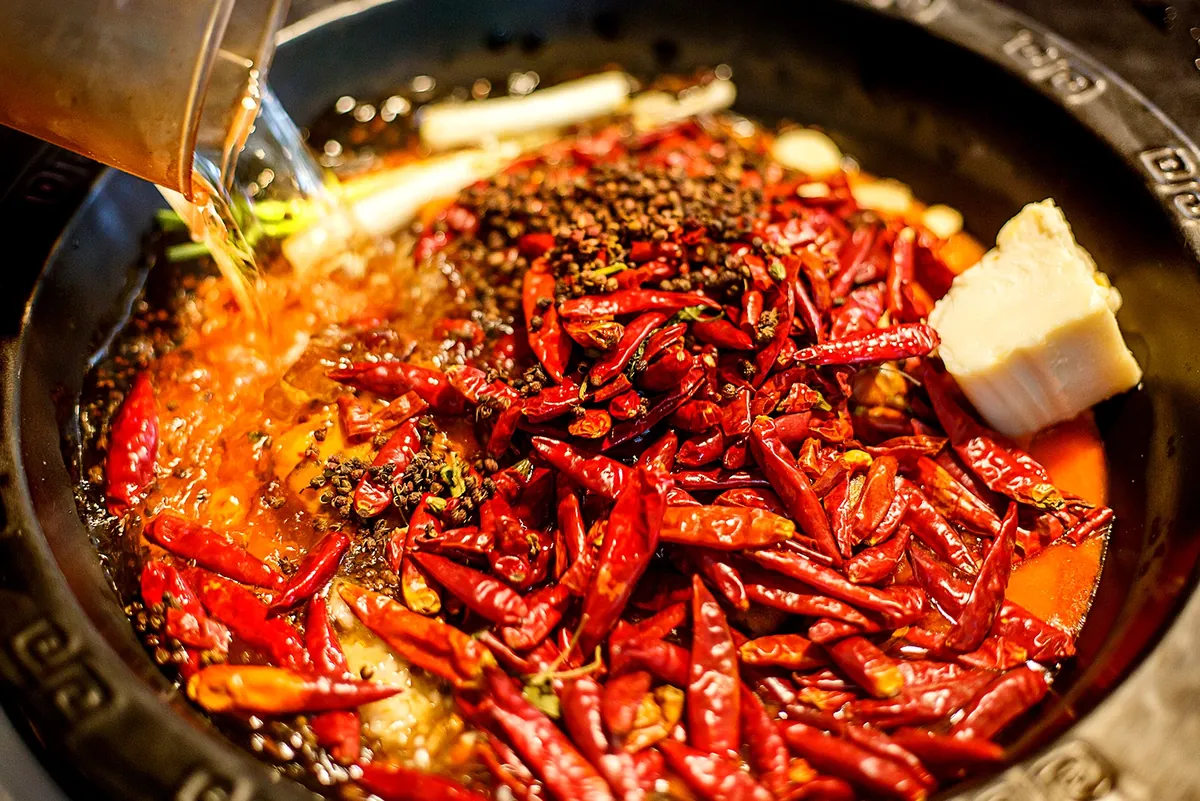
The spicy hot pot feast not only dispels fatigue after a day of strolling across bamboo-shaded hills viewing pandas, but also acts as a gateway into the culinary depth of the Land of Abundance (Tianfu Zhi Guo). The tingling numbness of Ba-Shu peppercorns blending with the intense spicy heat of chilies and rich beef tallow creates an intoxicating potion warming the traveler’s heart. The masterly harmony between the pure, serene wilderness of daytime biological conservation and the brilliant, poetic explosion of spicy evening cuisine defines Chengdu as a rare heritage city where humans and nature share a vibrant heartbeat that never rests.
Hailed by UNESCO as Asia’s first “City of Gastronomy,” Chengdu opens a profound world of flavor where the magical fusion of spicy heat and numbing tingle crafts the unique identity of Ba-Shu. Exploring the homeland of the national treasure remains incomplete unless travelers immerse themselves in the rich aromas of traditional Sichuan Hot Pot (川味火锅). Unlike southern mild hot pot schools, authentic base broth here is painstakingly stir-cooked from rich solid beef tallow, harmonizing with fiery red chilis and renowned Hanyuan Peppercorns (汉源花椒)—a historical imperial tribute prized for abundant essential oils that delivers a mesmerizing mouth-numbing sensation. Local gourmets flock to renowned brands like Shujiuxiang or Dalongyi to gather around a “Nine-Grid Hot Pot” (九宫格). The round iron pot is divided into nine square grids by interlocking metal bars, each cell holding distinct temperatures and boiling speeds: the central grid boils furiously, ideal for split-second dipping of duck intestine and beef tripe, while outer grid cells maintain gentle simmering for beef slices, tendon, and lotus root absorbing crimson oil.
Alongside the fiery hot pot cauldron, Chengdu’s culinary heritage is enriched by heirloom dishes reaching peaks of seasoning artistry, notably Mapo Tofu (陈麻婆豆腐). Born in the first year of Tongzhi (1862) during the Qing Dynasty under the skilled hands of Mrs. Chen Liushi in the northern suburbs, this dish condenses tasting standards into strict eight-character rules: Numb (peppercorns), Spicy (chilis), Hot (steaming), Crisp (texture), Fresh (ingredient sweetness), Tender (tofu melting in the mouth), Fragrant (rich aroma), and Flaky (crispy minced beef). Alongside the legendary tofu, Dan Dan Noodles (担担面) dating back to 1841 evoke peddlers balancing wooden buckets across ancient alleys. The modest bowl holds perfect balance between springy noodles, rich sesame paste, crimson chili oil, crispy minced meat, and distinctively flavored Yibin preserved mustard greens (yibin yacai). Meanwhile, the classic cold dish Husband and Wife Lung Slice (夫妻肺片), invented by couple Guo Zhaohua in the 1930s, represents the pinnacle of offal preparation artistry. Thinly sliced beef tongue, tendon, and tripe are dressed in secret spicy chili oil, aromatic pepper powder, crushed peanuts, and fresh herbs, fully awakening all traveler senses.
Beyond millennial tradition, culinary culture at the Chengdu Giant Panda Breeding Research Base breathes modern life through unique F&B creations bearing the lovely national treasure’s imprint. Strolling through green bamboo forests, visitors easily encounter meticulously crafted dim sum. Most prominent is the panda-face bamboo charcoal baozi (Panda Baozi) featuring white fluffy dough dotted with black ears and eye rings from plant bamboo charcoal, revealing sweet, nutty, flowing black sesame filling when pulled apart. Continuing this poetic food current, Panda Bamboo-tube Rice simulates pandas’ favorite food, using sticky upland rice cooked with savory Sichuan cured meat inside young fresh bamboo joints, imbued with pure bamboo membrane flavor. To cool down after exploration walks, 3D panda-face ice cream bars coated with premium Mengding green tea powder paired with an artisanal Panda Latte featuring fine latte art bring a multi-sensory culinary experience, harmoniously bridging Sichuan culinary heritage with the land’s immortal natural icon.
To ensure your journey meeting the national treasure unfolds perfectly in the land of Shu, transport routing requires deep familiarity with Chengdu’s urban layout. Starting from Tianfu International Airport (TFU) or Chengdu East Railway Station, modern subway networks connect conveniently onto Line 3. Here, visitors face two strategic choices: alight at Panda Avenue Station (熊猫大道站) and exit via Gate A to catch dedicated shuttle bus D025 straight to the traditional South Gate; or stop at Chengdu Military Area General Hospital Station (军区总医院站) to access the newly opened imposing West Gate. Admission tickets are strictly managed via electronic identity systems linked to passports at a standard fee of 50 RMB, accompanied by an optional 30 RMB internal electric cart ticket to optimize stamina across expansive bamboo-shaded hills.
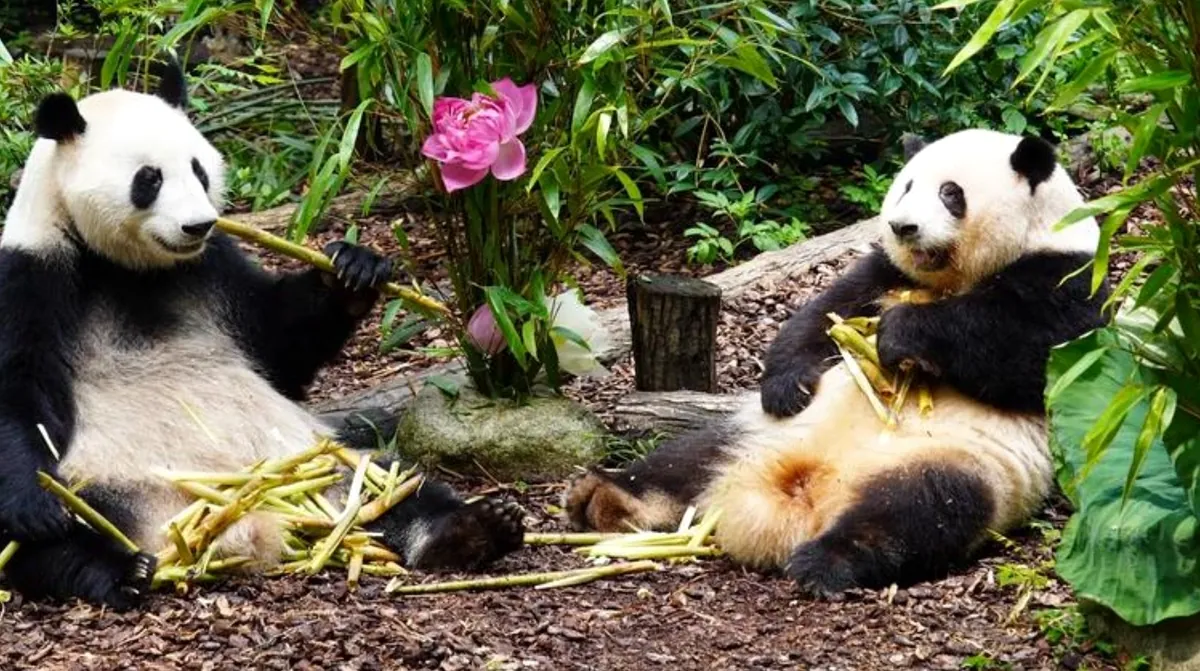
The survival factor determining observation quality stems from the natural biological rhythm of this endemic creature. Visitors must arrive at control gates between 7:15 AM and 7:30 AM to catch opening moments. The golden window from 8:00 AM to 9:30 AM is the only time of day when pandas step onto lawns, play, and eagerly munch on dewy, succulent bamboo shoots. When the clock strikes 10:00 AM and ambient temperature exceeds 24°C, their specialized metabolism immediately urges them to retreat completely into enclosed air-conditioned chambers for deep rest, turning late visits into quiet viewings through glass panes.
Gate selection strategy also creates two contrasting viewing experiences. The route starting from the South Gate is top priority for anyone craving to meet the “top traffic star” He Hua (和花)—the panda possessing a famous rice-ball triangular body and gentle manners; though the trade-off is 2 to 3 hours of patient queuing among dense crowds just for 3 fleeting minutes of viewing. This route also leads into Moonlight Nursery, where visitors can witness pink newborns nestled like tender buds inside specialized incubators. Conversely, the West Gate welcomes travelers with serene, expansive rhythms, letting visitors stroll leisurely through pristine nature and capture magnificent photos beside the Chunmiao Tower—a proud architectural masterpiece rising amid lush green wilderness.
Across the travel market, recognizing “Zero-Dollar Tour” traps disguised with suspiciously attractive prices from 8 to 11 million VND is an essential survival lesson. These cheap tours strip away traveler rights by cutting park time below 90 minutes—insufficient time to move around or watch pandas eat breakfast—to funnel participants into retail spots selling Tibetan medicine, jade, Shu brocade, or latex mattresses with commissions from 30% to 55%. Wise choices always favor pure “No Shopping” itineraries priced from 18 to 28 million VND, guaranteeing research base time from 3.5 to 5 unhurried hours to fully immerse in wildlife rhythms.
Finally, solemn attitudes regarding wildlife biosafety demand strict self-discipline from every traveler. Flash photography is strictly prohibited because high-intensity light causes burns and permanently damages cubs’ delicate corneas; similarly, feeding animals unauthorized food triggers severe penalties. Violators are immediately deported and blacklisted, permanently banned from entering any conservation area or panda park across China. To fully experience this majestic southwestern heritage in a standardized, civilized itinerary, travelers can explore practical experiences via the Chengdu – Jiuzhaigou – Leshan Giant Buddha 6D5N tour, where nature journeys are protected by deep understanding and meticulous service.