Guilin Li River Cruise Guide: Exploring the World’s Foremost Mountain-and-River Scenery Amid the ongoing flow of time and travel, some places feel less like simple stops and more like an experience and lasting memory. The Li River in Guilin, China, is one such landmark—where karst peaks and clear water form scenes that feel like living ink-wash art, with every bend and hill holding story and charm. With VDS Travel, we share an overview of this celebrated river corridor known around the world for its dramatic limestone scenery.
1. The Li River in Guilin: Where Scenery and Legend Meet
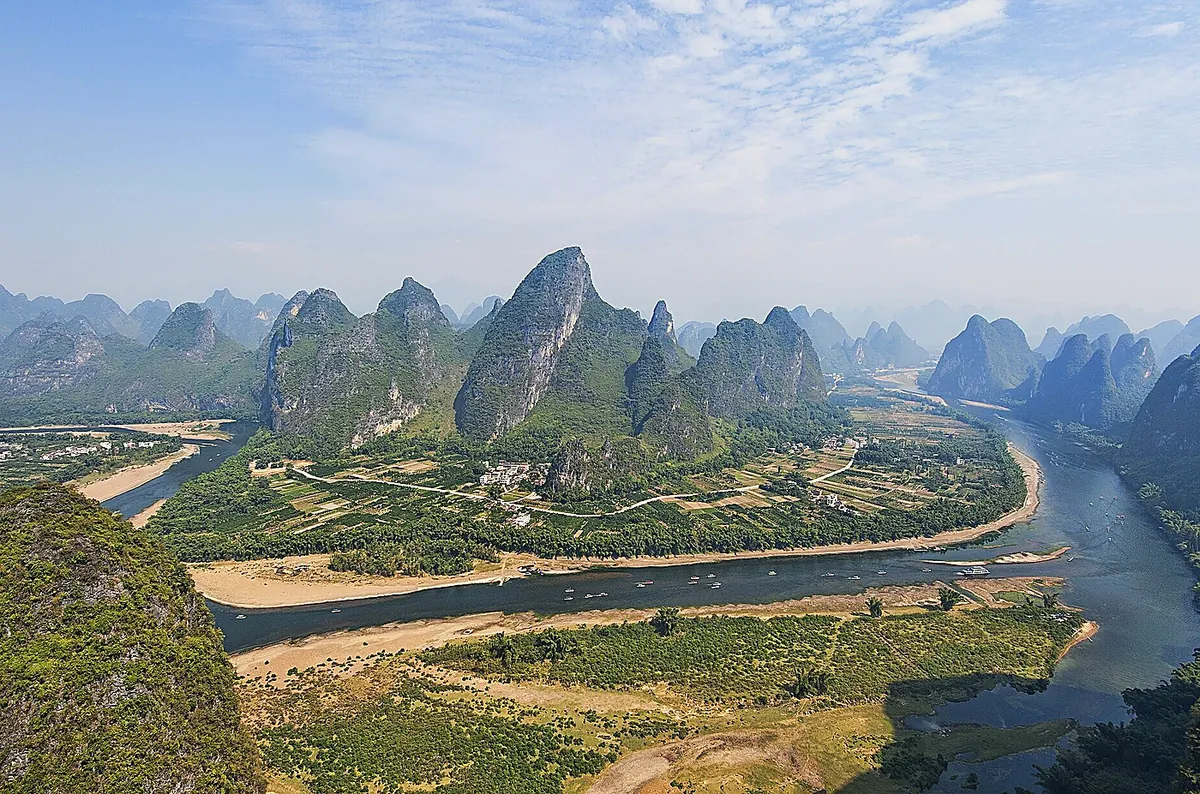
The Li River is the signature waterway of Guilin, celebrated across poetry and painting as a hallmark of southern Chinese scenery. Rising in Mao’er Mountain, flowing past Guilin City, and winding down toward Yangshuo, its most scenic stretch spans roughly 83 kilometers—curving like a green ribbon past pointed limestone hills in the classic landscape famed as “Guilin’s mountains and waters rank first under heaven.”
• Landscape Character and Karst Formation
The Li River’s appeal comes not only from water and hills together, but also from millions of years of geology. Guilin is one of the world’s best-known areas of tower and peak karst, shaped over ages as rainwater and groundwater dissolved limestone along fractures—carving steep cliffs, caves, and winding channels into a distinctive landscape. In traditional East Asian geomancy, layered peaks framing clear river water are often viewed as a balanced, restful setting connecting people with natural surroundings.
• History and Cultural Ties Along the River
The Li River’s history is closely tied to Guilin and Guangxi. Since the Qin Dynasty, the Lingqu Canal linked the Li River with the Xiang River system—creating an important north–south waterway for trade and troop movement. Across dynasties, writers and painters including Han Yu, Liu Zongyuan, and Su Shi visited and wrote about the scenery, cementing the phrase “Guilin’s mountains and waters rank first under heaven” as part of shared cultural heritage alongside local folklore and riverside customs.
2. Cruising the Li River: Classic Scenic Highlights
Riding a boat along the Li River is one of the best ways to take in its changing views. Full cruises commonly run about four to five hours between Guilin and Yangshuo, passing well-known bends and limestone formations along the way.
• Yellow Cloth Shoal – Mirror-Like Calm
One memorable stretch is Yellow Cloth Shoal, known for clear, still water reflecting green limestone hills across the surface. According to local lore, its name comes from a golden silk cloth dropped by a celestial maiden; whether legend or fancy, its quiet reflections stand out along the route.
• Nine Horse Fresco Hill – Stone Patterns and Folklore
Farther along rises Nine Horse Fresco Hill, a sheer cliff face whose natural rock patterns and shading look to many viewers like horses prancing through mist. Local legend says nine celestial horses came down and turned to stone, with visitors often trying to spot and count them as the boat glides past.

• Xingping Scenic Area – The 20-RMB Banknote View
Near Yangshuo lies Xingping Scenic Area, famous as the landscape inspiration behind the reverse of China’s 20-yuan banknote. Here, karst hills curve beside quiet water and old riverside villages—a spot where travelers can step ashore to walk old lanes, try local dishes, or enjoy views from the bank.
• Traditional Cormorant Fishing – Riverside Heritage
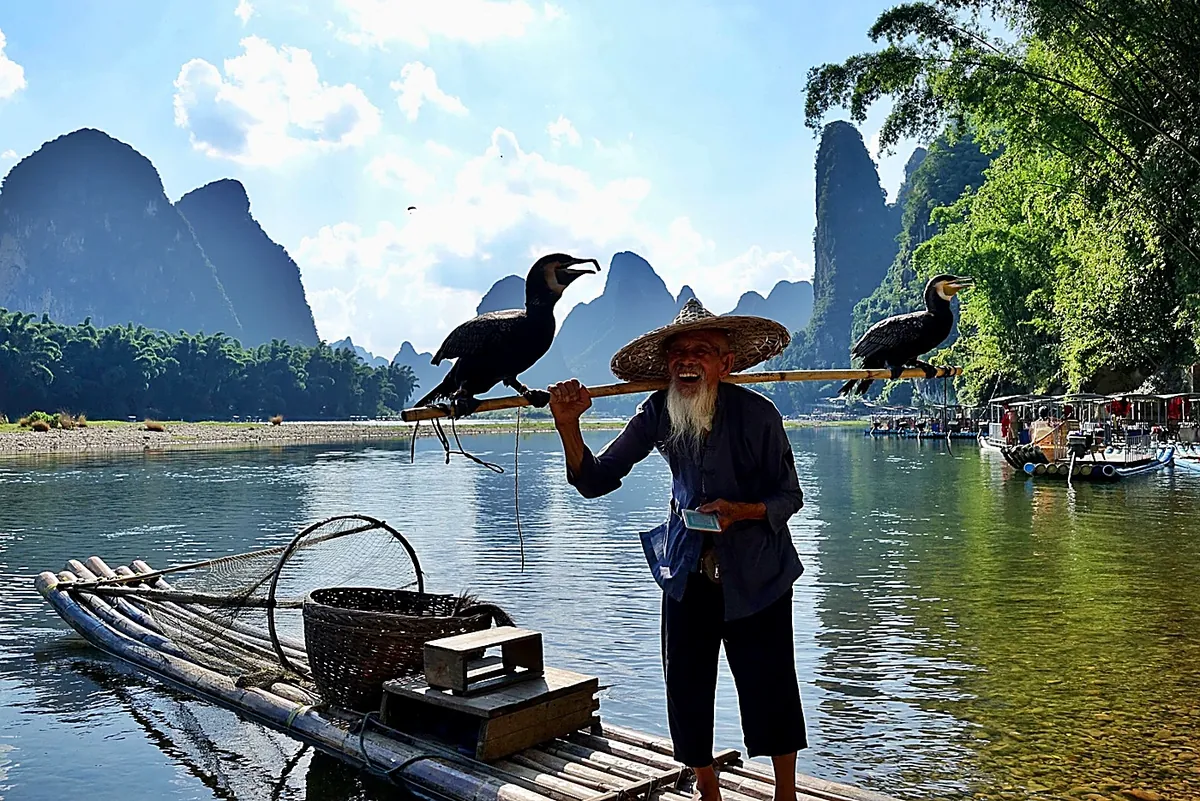
Along parts of the river, you may also spot fishermen on bamboo rafts working with trained cormorants—an old regional fishing practice kept alive as part of local heritage and riverside demonstrations.
3. The Li River in History and Culture
Beyond natural scenery, the Li River has long linked regions across southern China through travel, trade, and creative expression.
• An Ancient Waterway Link
Since the Lingqu Canal was built in the 3rd century BC, the Li River helped connect the Yangtze basin in the north with the Pearl River basin in the south—supporting trade, movement of goods, and cultural exchange through Guilin.
• Lasting Inspiration in Poetry and Art
Misty karst hills, green water, and bamboo rafts have inspired Chinese landscape painting and poetry for centuries, capturing quiet harmony between hills, mist, and flowing water.
• Fishing Villages and Life Beside the Water
Villages along the Li River preserve everyday rhythms of fishing, riverside farming, timber-and-tile houses, and stone footbridges—offering an unhurried look at life around Xingping and neighboring stops.
4. Practical Li River Travel Guide: Tips from VDS Travel
To help plan a smooth trip along the Li River, VDS Travel shares practical notes on timing, boats, packing, and food.
• Best Seasons to Visit
The Li River looks different across the year:
• Spring (March–May): Mild weather and fresh greenery, often with light mist or drizzle for a soft, atmospheric look.
• Summer (June–August): Warm sun and clear skies for crisp views, though warmer temperatures and peak travel crowds are common.
• Autumn (September–November): Often favored for clear skies, cooler air, and clear water for wide views.
• Winter (December–February): Cooler air and occasional mist bring a quieter, more understated mood. VDS Travel tip: Autumn often offers especially clear conditions if your schedule is flexible.
• Choosing How to Ride the River
Two main boat options are common:
• Sightseeing cruise boats: Multi-deck boats with seating, viewing decks, restrooms, and onboard meals/snacks—typically running about four to five hours from Guilin (such as Zhujiang or Mopanshan piers) to Yangshuo with steady comfort.
• Bamboo rafts: Smaller rafts poled by local operators along selected stretches—commonly around Xingping to Yangshuo for about 1.5 to 2 hours—offering a closer water-level feel, though less suited for very young children or frail elders due to simpler facilities and safety rules. VDS Travel tip: Pairing a main cruise section with a shorter bamboo-raft stretch lets you experience both perspectives.
• What to Pack
• Clothing: Comfortable, breathable clothes for warm months; warm layers, jacket, and scarf for cooler weather.
• Footwear: Comfortable walking shoes or sturdy sandals for boarding boats and exploring village paths.
• Camera gear: Bring a camera or phone with full battery and spare storage for scenic bends.
• Sun and bug care: Sunscreen, sunglasses, hat, and insect repellent help on sunny or warm days.
• Cash and payments: Mobile payments are widely used, though keeping a little RMB cash handy helps for small local stalls or tips.
• Food in Guilin and Yangshuo
Local dishes add memorable flavor to a river trip:
• Guilin Rice Noodles: A local staple featuring springy rice noodles, savory herbal-and-bone sauce or broth, roast pork, peanuts, and herbs.
• Yangshuo Beer Fish: Fresh river fish braised with local beer, tomatoes, and chilies for a rich, savory-tangy dish.
• Braised Pork with Taro: Slow-cooked pork belly and taro with savory-sweet seasoning.
• Ciba Rice Cakes: Chewy pounded glutinous rice cakes often served with brown sugar or peanut toppings.
• Where to Stay in Guilin and Yangshuo
• Guilin: Offers wide hotel choices from budget to upscale, often convenient near central areas, Elephant Trunk Hill, or Two Rivers and Four Lakes.
• Yangshuo: Smaller and livelier in the evenings, especially around Yangshuo West Street, with guesthouses and boutique stays close to karst scenery and night strolls.
• Nearby Highlights to Pair with Your Trip
Alongside the Li River, consider stops such as:
• Elephant Trunk Hill: A Guilin landmark shaped like an elephant drinking by the river.
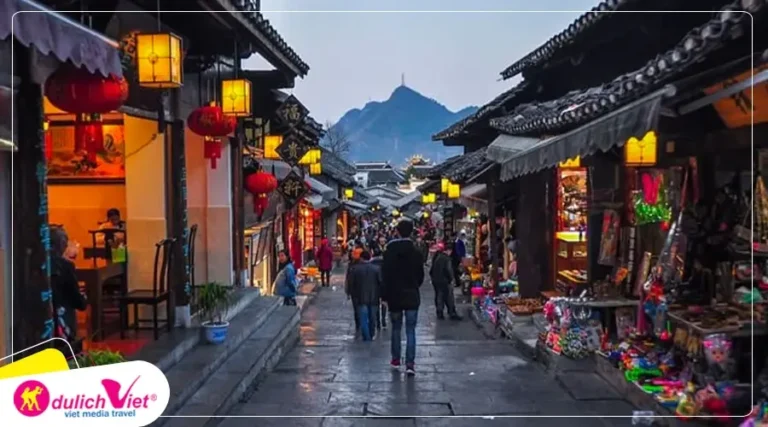
• West Street Yangshuo: A lively pedestrian street lined with shops, cafes, eateries, and evening activity.
• Reed Flute Cave: A limestone cave known for illuminated stalactites and stalagmites.
• Silver Cave: A large multi-level karst cave system with mineral formations.
• Longji Terraces: Scenic hillside rice terraces farther out that shine in spring water-filling or autumn harvest season.
• Impression Liu Sanjie: An outdoor river-and-mountain performance in Yangshuo blending lights, music, and local folklore.
• Tips from VDS Travel
• Book ahead in busy seasons: Reserving a Guilin – Yangshuo tour package or river boat tickets early helps during peak travel periods.
• Learn a few basic Chinese phrases: Simple greetings and numbers make everyday interactions smoother alongside English signage or apps.
• Bargain politely: Negotiate calmly at small markets or craft stalls when prices are not fixed.
• Leave no trace: Keep trash with you to protect clean waters and banks along the Li River.
• Combine nearby stops: Pairing Guilin and Yangshuo with cities like Nanning via high-speed rail makes an easy multi-stop Guangxi route. A Li River trip offers unhurried time with karst scenery, local history, and regional food—and our team at VDS Travel is glad to help plan a smooth, enjoyable journey.