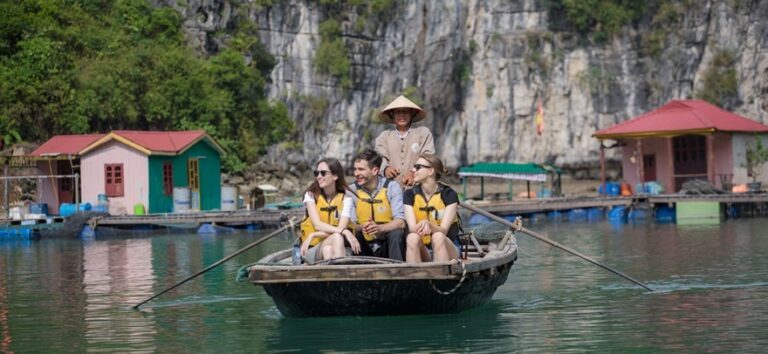
Quang Ninh is blessed with scenic landscapes that put it on the world travel map. Alongside well-known names like Ha Long Bay, Bai Tu Long Bay, and Co To lie less crowded, dramatic spots—including Vung Vieng Fishing Village, one of four historic floating fishing villages in Quang Ninh Province that still remain today. Visiting Vung Vieng brings both dramatic bay scenery and warm local hospitality. Explore this distinctive village to add to your upcoming trip in Quang Ninh!
See also: Fishing Villages on Ha Long Bay
Introduction to Vung Vieng Fishing Village
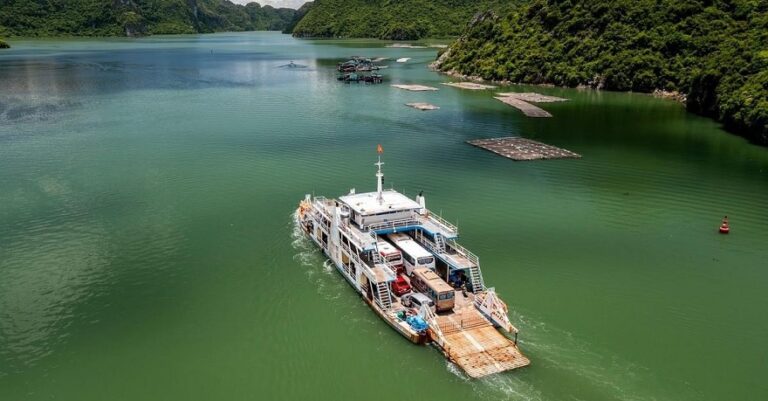
Vung Vieng (or Vong Vieng) Fishing Village sits within Bai Tu Long Bay, roughly 20 km northeast of Tuan Chau Port—about a two-hour boat ride—and forms part of Route 4 on Ha Long Bay, a route suited to overnight cruises that appeals especially to international visitors for pairing karst scenery with traditions of longtime floating-village life. Below are key sights and activities around Vung Vieng Fishing Village.
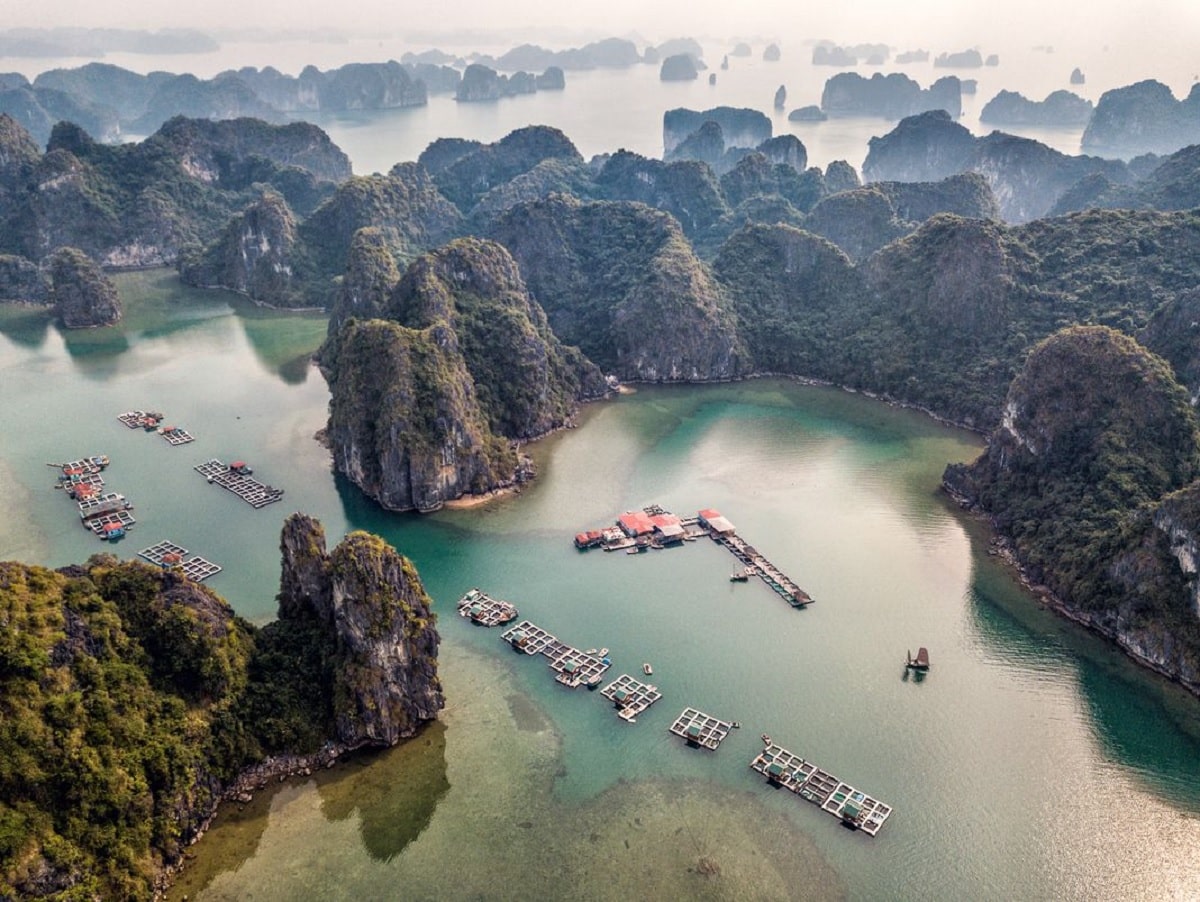
A corner of Vung Vieng
Still quiet and lightly settled, the area feels peaceful and open. As one of four heritage-area fishing villages, Vung Vieng has long been admired for its scenery, people, and maritime traditions. Archaeologists note origins dating to the nineteenth century—with stone foundation traces visible on the bay floor at low tide and pottery shards echoing motifs like Tho Ha ceramics, reflecting how boats sheltered and traded near Van Don trading port .
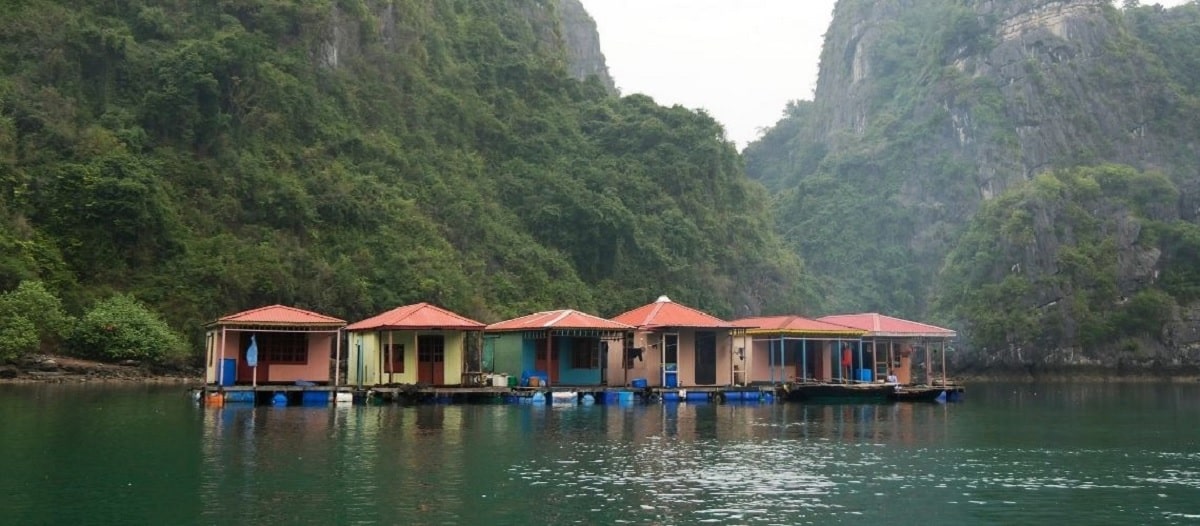
Historically home to around 300 fishermen across generations facing tough living conditions with few livelihoods outside the sea, some residents once relied on restricted gear or overharvesting marine life in pursuit of larger catches.
In 2012, the Ha Long Bay Management Board directed floating-village residents to relocate ashore to the Ha Phong fishing-village resettlement area (Zone 8, Ha Phong Ward, Ha Long City)—a neighborhood of roughly 350 households and 1,700 residents that saw early adjustment frictions and occasional violations of bay fishing restrictions as policies aimed to protect marine resources and support tourism.
Recognizing that shifting long-standing habits takes steady outreach, the Quang Ninh Sub-Department of Fisheries worked with ward leaders and neighborhood heads on community education and enforcement—helping curb banned gear while training younger residents in aquaculture or boat-rowing tourism on Ha Long Bay and offering preferential bank loans to older fishermen to upgrade vessels for authorized offshore fishing.
Costs and How to Reach Vung Vieng Fishing Village
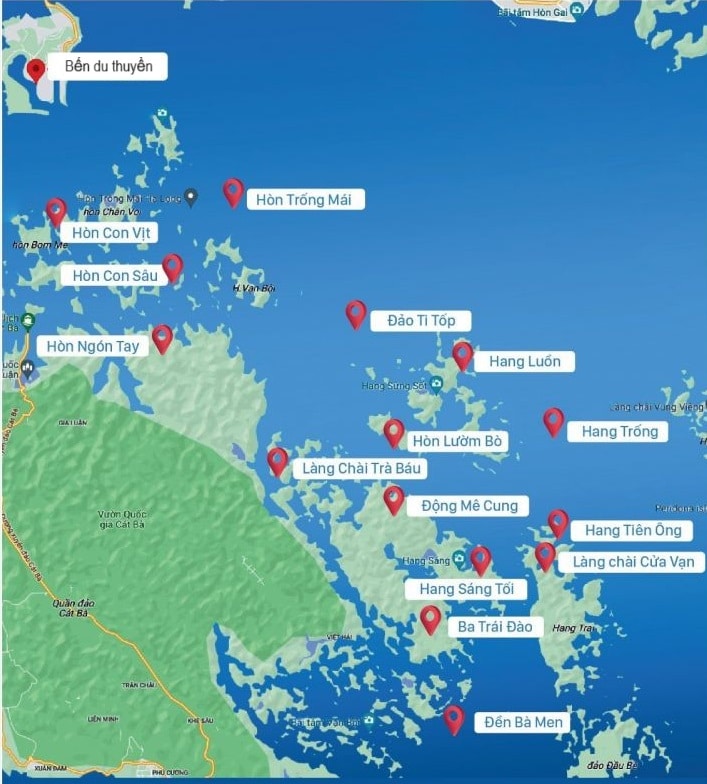
Vung Vieng Fishing Village sits along Route 4 in Ha Long Bay boat itineraries (passing or visiting areas such as Hang Co, Cong Do Island, Cap La Cave, Tung–Ang Cong Do, Hon Xep, and Vung Vieng). Because Route 4 is geared toward overnight cruises rather than standard shared day boats—and large vessels are restricted near the village—visitors transfer to small bamboo boats (*thuyen nan*) or kayaks to explore. Ways and typical costs to visit Vung Vieng include:
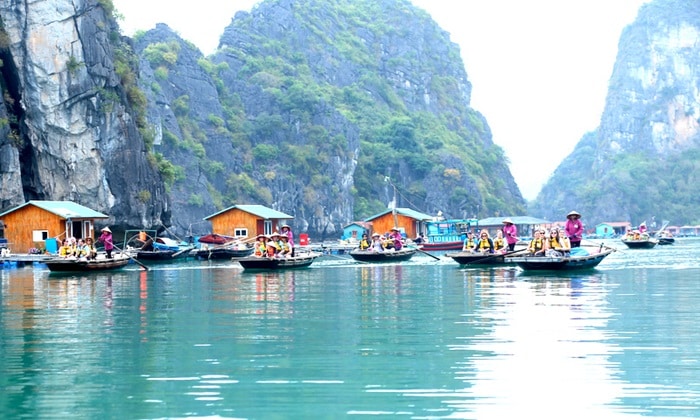
Visitors exploring Vung Vieng
- Overnight cruise on Ha Long Bay: A popular choice for Route 4’s multiple stops, offering an unhurried pace and experienced guides—typically starting around 2,000,000 VND per person and up depending on 3- to 6-star tier.
- Private boat charter: For a day trip without a shared Route 4 boat, chartering a private boat (typically at least 6 hours given the distance) generally starts around 2,700,000 VND per 48-seat vessel and up by season, plus a 240,000 VND/person sightseeing ticket.
- Kayak / bamboo-boat ride at Vung Vieng: Around 50,000 VND per person per hour.
Experiences at Vung Vieng Fishing Village
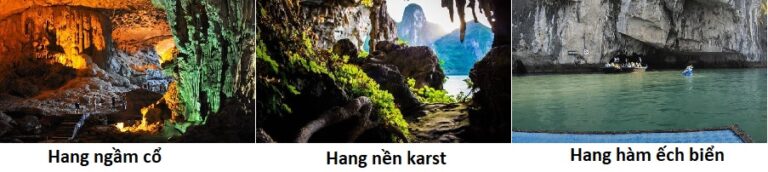
Set about 20 km offshore within protected bay waters, Vung Vieng’s natural “gate” is Hang Cao—a water-level limestone arch/tunnel in Bai Tu Long Bay. Passing through opens onto a simple floating village ringed by sheer limestone karsts shaped over millennia and draped in green vegetation like emerald islets, with occasional birds or monkeys around nearby rocky islands.
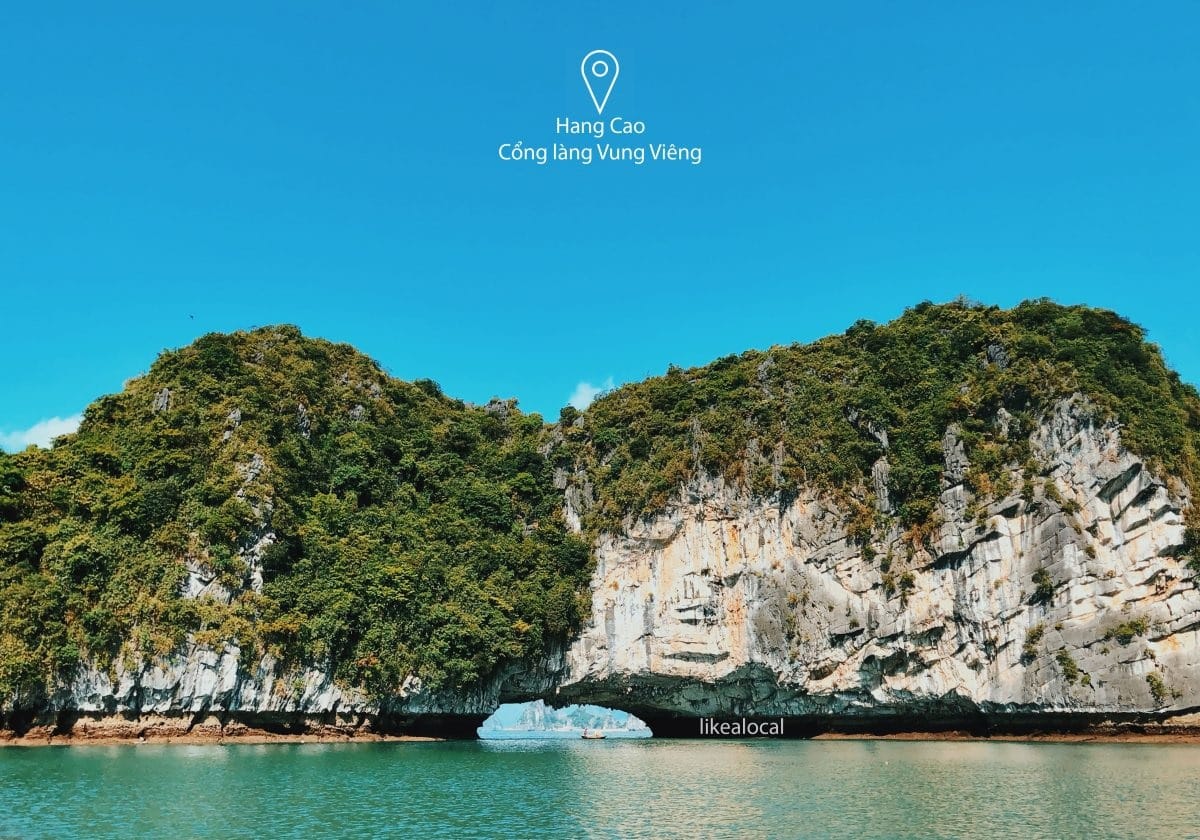
Hang Cao village entrance and dramatic scenery
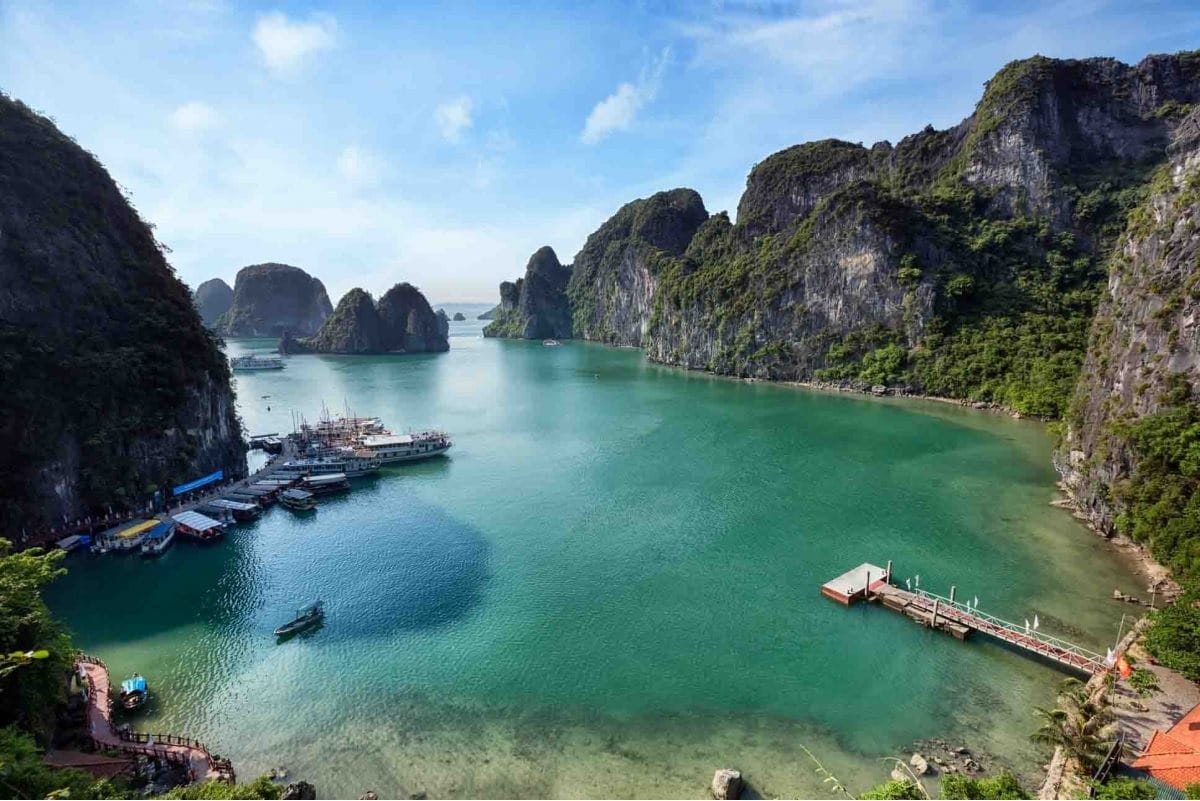
Limestone peaks surrounding the fishing village
At Vung Vieng, visitors take in bay waters while learning about preserved northeastern fishing-village culture, with local boat rowers sharing stories along the way—especially busy during peak travel months from September to April.
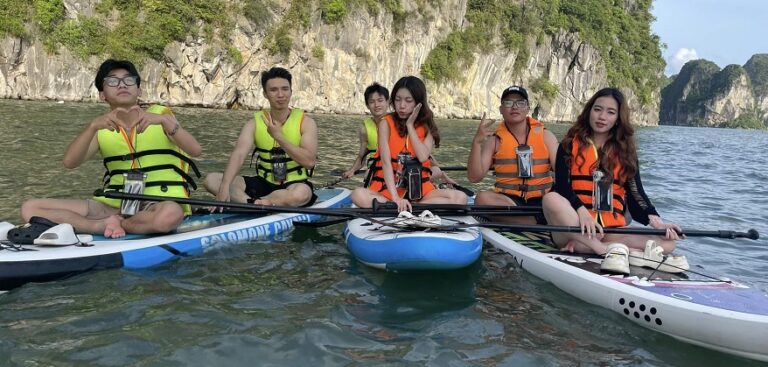
Visitors can glide through Vung Vieng on hand-rowed bamboo boats or paddle kayaks along flexible one-way or loop routes to observe scenery and former floating-village customs.
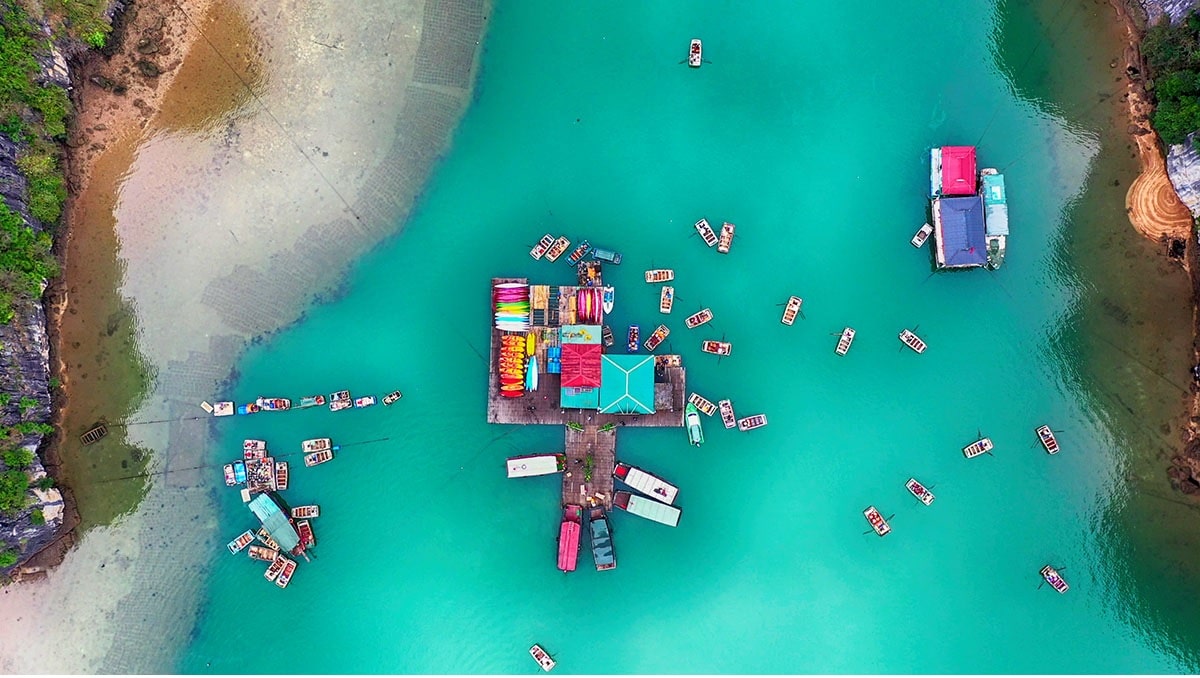
Peaceful atmosphere at Vung Vieng Fishing Village
1. Explore Sustainable Aquaculture Rafts
Past rows of small floating houses, a first stop is the sustainable aquaculture raft zone—a pilot livelihood and responsible-tourism project where visitors see regulated, eco-conscious fish cages, feed fish, and watch different species swim below.
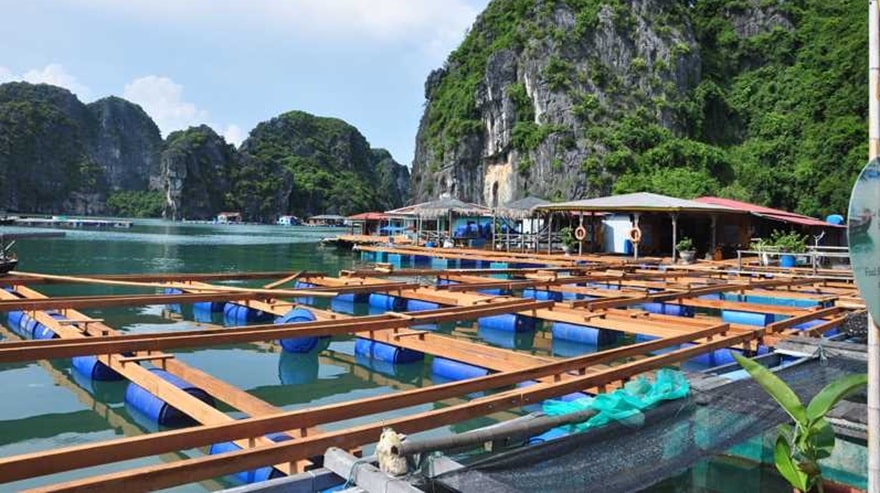
Aquaculture raft zone at Vung Vieng
2. Floating Classroom
Next is the floating classroom preservation raft—a two-room timber structure buoyed by drums that once served children from Vung Vieng and Cua Van before onshore resettlement, preserving chalkboards, desks, books, and student wall newspapers from earlier years.
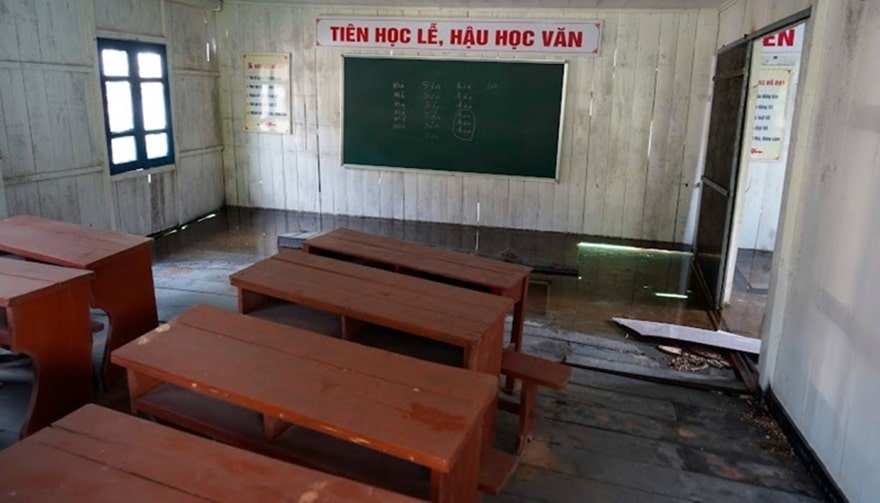
Floating classroom preservation raft at Vung Vieng showing wear and deterioration
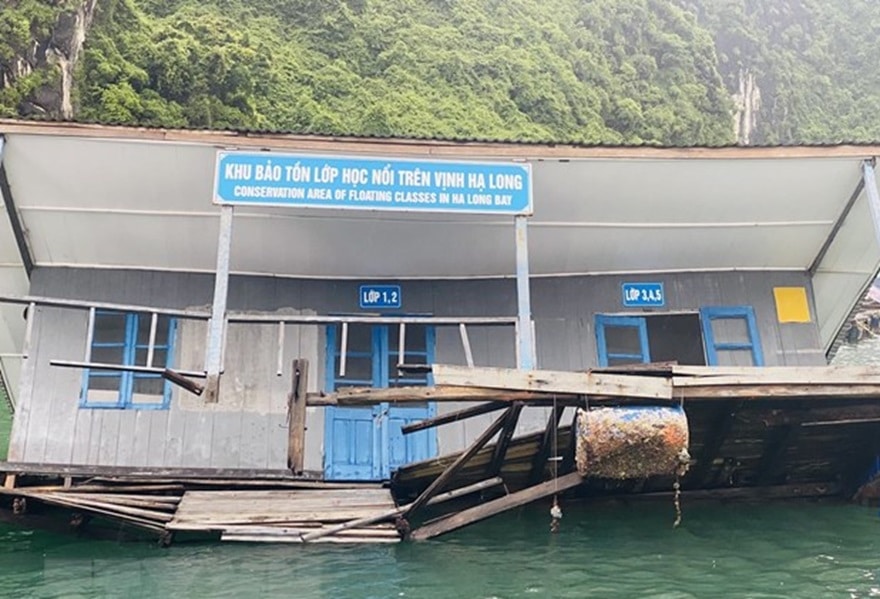
Weathered floating classroom raft at Vung Vieng
Since around 2018, however, the floating classroom raft has shown weather wear with rusting drum floats, and while the Ha Long Bay Management Board has requested repairs, funding approvals have faced budget constraints.
3. Community House
Nearby sits the community house—the largest former floating hall at Vung Vieng, around 100 m²—displaying regional souvenirs crafted from pearl, shell, wood, and woven textiles for gifts.
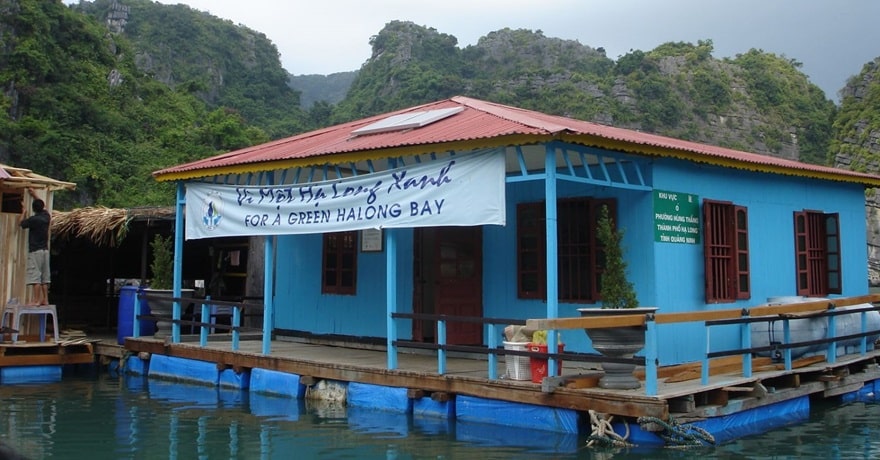
Community house raft
Right beside it, an exhibition and demonstration space recreates past fishing and aquaculture life through photos, fishing gear, household items, and craft displays.
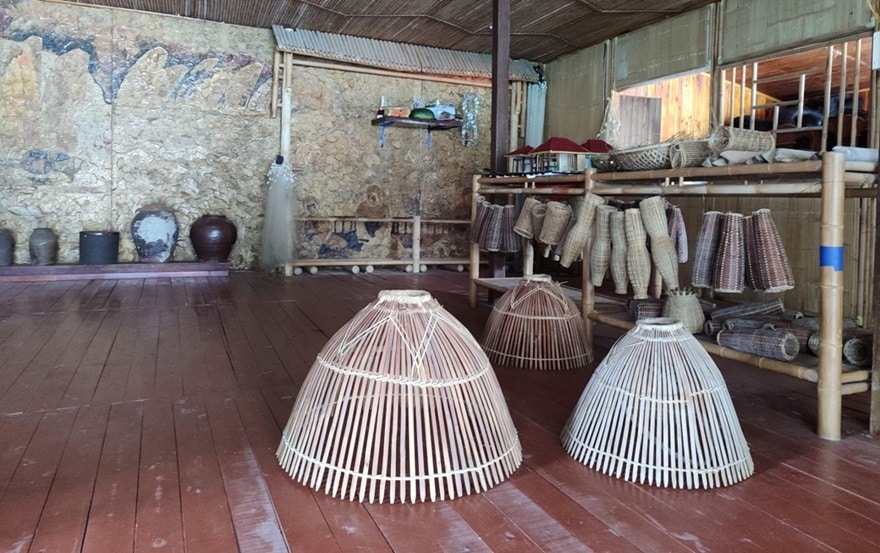
Traditional fishing gear of Vung Vieng fishermen
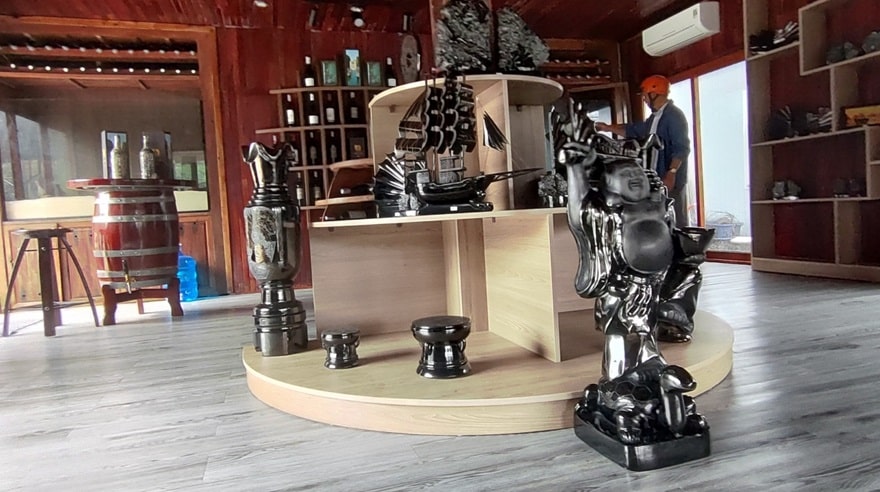
Display of coal carvings and coal souvenirs
4. Pearl Cultivation Area
A final stop around Vung Vieng is the Ha Long Pearl Joint Stock Company cultivation area, where guides explain pearl seeding, harvesting, and varieties alongside pearl jewelry options as keepsakes.
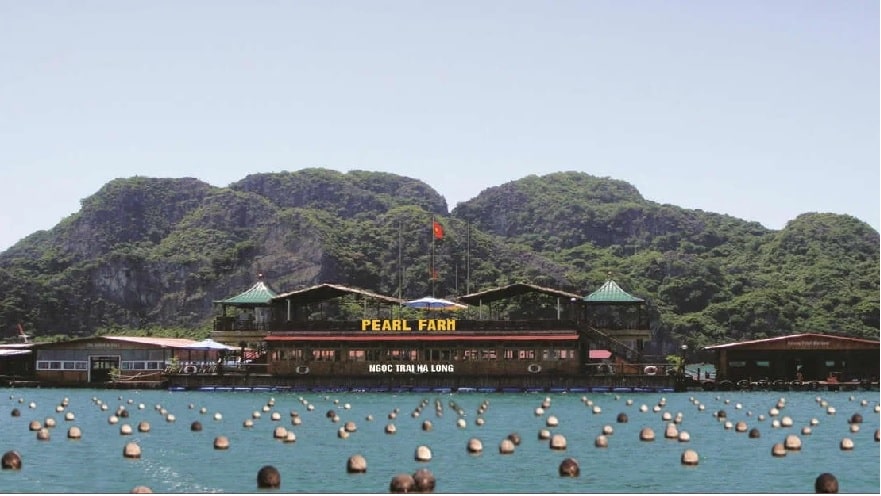
Pearl cultivation area on the bay
5. Other Activities
Visitors can also join traditional boat outings, bamboo-boat rides, kayaking, dragon-boat races, fresh seafood meals, or pearl-craft viewing, and branch out toward spots like Mat Quy, Bay Gieng, or small beaches on Van Gio or Ngoc Vung islands.
Tips for Visiting Vung Vieng Fishing Village
As one of the historic floating villages in Bai Tu Long Bay, Vung Vieng pairs limestone scenery with kayaking and cultural stops—keep these tips in mind for a smooth trip:
- Reach Vung Vieng by boat from Tuan Chau Port or Bai Tu Long stops, then transfer to a small boat or kayak through the Hang Cao entrance and continue about 20 minutes into the village area on a well-paced itinerary.
- Be considerate of local workers and surroundings—keep noise down, respect privacy, and ask permission before taking photos or videos of people.
- Enjoy fresh seafood through local arrangements or cruise dining, and browse pearl farms or souvenir displays for keepsakes.
- For an overnight stay on the bay, overnight cruises offer sunset and sunrise views, deck relaxation, and onboard dining and activities.
Other Spots Near Vung Vieng Fishing Village
Nearby highlights around Ha Long Bay to pair with your trip include:
- Sung Sot Cave: One of Ha Long Bay’s largest caves on Bo Hon Island, reached via a stepped climb and known for two spacious chambers roughly 30 meters high with varied limestone formations.
- Ti Top Island: A compact island known for a sandy beach, clear water, swimming, water activities, and a hillside climb overlooking Ha Long Bay.
- Thien Cung Cave: A spacious cave near Dau Go Island featuring stalactites and stalagmites likened to dragons, phoenixes, and elephants, paired with local folk lore.