Ha Long Bay is one of the famous world natural heritage sites renowned for thousands of majestic islands and caves. Besides its magnificent natural scenery, Ha Long Bay also features another distinctive highlight: floating fishing villages on the sea, home to many marine residents and an attractive destination for visitors wanting to experience local life. Let’s explore the beauty and culture of the fishing villages on Ha Long Bay through the following article.
Introduction to Ha Long Bay Fishing Village Residents
When mentioning Ha Long Bay, the World Natural Heritage honored by UNESCO, people often immediately think of the stunning, magnificent natural landscape with thousands of limestone islands of various shapes reflecting upon jade-green waters. Yet, hidden deep within that unique geological beauty lies another layer of heritage, a captivating “living heritage” – namely, the traditional fishing villages. Once the drifting homes of countless generations of fishermen, these communities not only demonstrate human ingenuity in adapting to the sea but have also nurtured a distinctive island culture, likened to the “soul” of Ha Long Bay. However, the picture of Ha Long fishing villages today has undergone profound and fundamental changes. A historical turning point took place in 2014 when the population relocation policy was implemented to improve residents’ lives and protect the heritage environment. Since then, the majority of the fishing community has moved ashore to live, beginning a new chapter filled with opportunities and challenges. The ancient fishing villages, once bustling with daily life on the water, now primarily exist as preserved heritage attractions. To fully understand the value of these fishing villages, we need to look back at both their glorious past and turbulent present – a journey from vibrant fishing communities to cultural symbols that must be preserved and protected in the heart of the wonder.
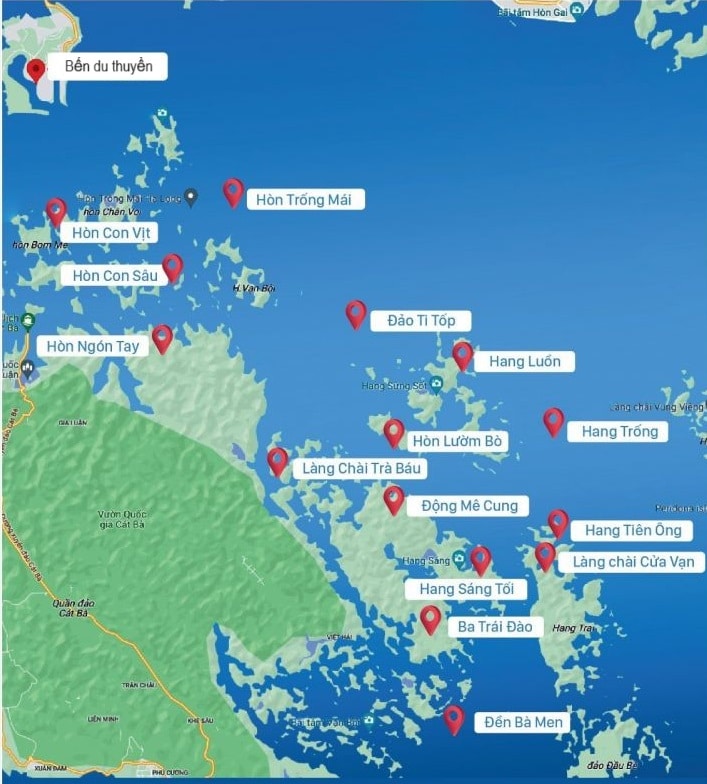
Following the relocation in 2014, the fishing villages that once served as dense gatherings for Ha Long Bay’s fishing community transformed into sightseeing spots bearing historical and cultural imprints. Though lacking the bustling water-based daily life of the past, each old fishing village area retains distinct traits that entice travelers to explore. Cua Van fishing village, nestled deep in the core zone of Ha Long Bay about 20km from the shore, was once the largest and most bustling fishing village, dubbed the “capital” of fishing villages with over 300 resident households previously. This ancient village has repeatedly been honored by international magazines as one of the world’s most beautiful ancient villages. Today, Cua Van is a conservation area with several preserved raft houses and a Floating Cultural Center (currently temporarily closed for repairs). Visitors coming here via Sightseeing Route No. 3 typically experience kayaking or bamboo boat rowing to feel its peaceful atmosphere. Vung Vieng fishing village hides within the quiet Bai Tu Long Bay, lying farther from the mainland (about 24-25km) and formerly home to roughly 50-60 households. It is renowned for its pristine, tranquil scenery and unique pearl cultivation craft. Currently, the Vung Vieng area remains an attractive destination along Sightseeing Route No. 4 or overnight cruise itineraries, where visitors can tour the pearl cultivation presentation facility and kayak to explore the landscape. Ba Hang fishing village sits quite close to the shore, located only about 3km south of Tuan Chau island and near famous caves like Thien Cung and Dau Go. Ba Hang used to be a small fishing village with about 50 households, impressing visitors with its rustic beauty nestled against cliff faces. Today, travelers on Sightseeing Route No. 1 or No. 5 frequently stop here to experience bamboo boating or kayaking, weaving through water caves (at low tide) and admiring the remaining raft houses. Cong Dam fishing village, located quite far from the mainland in Bai Tu Long Bay, is known as an ancient fishing village formerly home to about 120 people/households, famed for retaining nearly pristine wilderness and traditional culture. This area is also likened to an “open-air geological museum” with many beautiful coral reefs. Presently, Cong Dam is mainly accessed through long-day overnight cruise tours, serving as an ideal spot for nature-discovering kayaking and learning about marine ecosystem preservation efforts. Alongside the floating fishing villages in Quang Ninh, visitors are also frequently introduced to Viet Hai Village. Although belonging to Hai Phong (Cat Ba Island) and serving as a mainland settlement village, Viet Hai is often combined into Lan Ha Bay exploration itineraries (adjacent to Ha Long Bay), offering a different perspective on life close to nature yet in a distinct manner compared to traditional floating fishing villages.
Cruise Itineraries Allowing Visits to Ha Long Bay Fishing Village Areas
| Routes | Price | Sightseeing Stops |
|---|---|---|
| VHL1 | 310,000 VND/person | Thien Cung Cave – Dau Go Cave – Cho Da Islet – Ba Hang Cave – Dinh Huong Islet – Trong Mai Islet (Fighting Cocks) |
| VHL2 | 310,000 VND/person | Soi Sim Beach – Titov Island – Sung Sot Cave – Tung Sau Lagoon – Me Cung Cave – Bo Nau Cave – Luon Cave – Trong Cave – Trinh Nu Cave – Dong Tien Lake |
| VHL3 | 260,000 VND/person | Cua Vang Floating Cultural Center – Tien Ong Cave – Ba Ham Lake – Ba Men Temple – Ang Du – Bamboo Forest |
| VHL4 | 260,000 VND/person | Co Cave (Thien Canh Son) – Thay Cave – Cap La Cave – Vong Vieng – Tung Ang ecological area – Cong Do Island – Hon Xep Park |
| VHL5 | 310,000 VND/person | Thien Cung Cave – Dau Go Cave – Cho Da Islet – Ba Hang – Dinh Huong Islet – Trong Mai Islet – Gia Luan Pier (Cat Ba – Hai Phong) |
| VHL6 | 150,000 VND/person/trip | Chan Voi Islet – Ba Cua Lagoon – Tung Lam Island – Cap Bai Islet (final point bordering Gia Luan, Lan Ha Bay – Hai Phong) |
| VHL7 | 600,000 VND/person | Visiting Ha Long Bay following VHL1-2-3-4 itineraries (applicable only to exploratory cruises) |
| VHL8 | 70,000 VND/person/trip | Tuan Chau International Passenger Port – Ha Long International Passenger Port – Nam Cau Trang Port |
see more: Ha Long Bay Cruise Ticket Price List and Charter Rates 2025
Human settlement history on Ha Long Bay is not confined to the past few centuries but has deep roots extending thousands of years into history. Archaeological evidence has demonstrated continuous human presence through famous prehistoric cultures such as Soi Nhu (dating back at least 25,000 years), Cai Beo, and Ha Long. The fishing communities of modern fishing villages are considered direct heirs to this unique survival and adaptation tradition in this special island and marine environment across millennia. However, the formation of the famous fishing villages we know today—such as Cua Van, Vung Vieng, Ba Hang…—is primarily determined to have begun around the early 19th century. Research and records show that during this time, fishermen from neighboring areas like Giang Vong (now Ha Khanh ward), Truc Vong (now Cai Lan area), and parts of Ha Nam region (now Quang Yen town, Quang Ninh) moved out to Ha Long Bay to exploit marine resources and find safe shelter. Up to over 90% of the initial residents of the fishing villages originated from these regions. Additionally, a small portion (about 7%) were people from other Northern Delta provinces such as Thai Binh, Nam Dinh, Thanh Hoa, and Hai Duong who came here to make a living. The village formation process took place naturally. Initially, sheltered coves and bays on the Bay were merely temporary stopping points where fishing boats gathered to take refuge from storms. Gradually, for convenience and safety, fisherman families began clustering together, erecting rudimentary floating houses from available materials like bamboo, wood, and leaves. From initial small clusters of residents, the fishing villages gradually took shape and developed across generations, creating unique communities with a century-old history of drifting upon Ha Long Bay.
To understand the heritage value left behind by the fishing villages, it is essential to look back at the vivid picture of the unique lifestyle and culture that once existed and flourished on the water, especially during the period before the 2014 relocation turning point. That was a separate world where life was intimately attached and harmonized with the open ocean. The most basic feature was floating houses, or raft houses, erected on floating systems or traditional materials. From temporary bamboo, wood, and leaf houses in the early days, residents gradually upgraded to sturdier raft houses with flat or sloping roofs, even covered with corrugated iron and carefully shielded. To fishermen, boats are not merely tools of livelihood but also means of transportation and the cherished homes of entire families. All daily activities took place on this specialized aquatic space. Net fishing and catching marine products was the core livelihood, with a drifting rhythm of “here today, gone tomorrow.” Additionally, aquaculture in net cages developed strongly, once bringing very high economic efficiency. Particularly, pearl cultivation in the Vung Vieng and Tung Sau areas created unique products. To face the harshness of the sea, fishermen often clustered into boat hamlets, upholding the spirit of solidarity and mutual support. Aquatic residential villages also possessed their own governance structures with unique Ky Muc, Ly Dich, and Boat Register systems. Drifting life nurtured a distinctive spiritual culture featuring smooth folk tunes like love exchanges, sea chants, and traditional festivals like the Cau Ngu festival. Spiritual life improved progressively with the appearance of internal combustion engine generators, televisions, and radios… Despite hardships, children’s education remained emphasized through floating classrooms and efforts to universalize education. This entire vivid picture of lifestyle and culture primarily reflects the historical period before 2014, prior to the community experiencing the greatest change in its history.
The year 2014 became a historical landmark, a turning point fundamentally altering the lives of the fishing community and the appearance of the fishing villages on Ha Long Bay. Amid concerns over the still difficult living conditions of people on the water and mounting pressure to protect the ecological environment for the Ha Long Bay World Natural Heritage site—especially under UNESCO’s oversight regarding pollution risks—Quang Ninh province’s authorities decided to implement the Project on Relocating All Fishing Village Households Living on the Bay Ashore for Settlement. This policy carried a dual objective: on one hand, fundamentally improving living conditions for fishermen, helping them better access essential social services with more stable, safer housing; on the other hand, minimizing negative impacts from daily life activities and spontaneous aquaculture on the Heritage’s water environment. To execute the project, a concentrated resettlement area spanning over 8 hectares was planned and built in Ha Phong ward, Ha Long city (Cai Xa Cong resettlement area). Hundreds of families, totaling approximately 1,700 individuals from the fishing villages, were moved ashore, largely completed by mid-2014. Eligible households received land allocations, housing construction support, and career transition assistance policies. This historical relocation yielded undeniable positive outcomes such as more stable living conditions, spacious houses, and convenient schooling for children. However, the “land-based dream” was not always flawless. Residents faced difficulties adapting, finding suitable employment, maintaining community cohesion, and preserving cultural identity in their new living environment. The relocation policy, despite noble goals, placed the fishing community before a massive change intertwining both achievements and challenges.
The Fishing Villages on Ha Long Bay Today
There were once 07 fishing villages on Ha Long Bay, but currently, only 4 fishing villages remain preserved: Ba Hang, Cong Dam, Vung Vieng, and Cua Van. Meanwhile, fishing villages like Hoa Cuong, Ba Ham, and Cong Tau no longer exist. They are fishermen originating from different backgrounds who share customs, habits, and cultural lifestyles characteristic of aquatic fishing villagers with similarities; they all share common life needs and the same traditional fishing profession.
1. Cua Van Fishing Village: The Most Ancient and Famous Fishing Village in Ha Long
Cua Van fishing village is located within Hung Thang commune in the center of Ha Long city, Quang Ninh province, about 20km from the mainland. This fishing village was voted among the world’s 16 most beautiful villages. It offers many interesting activities such as fishing, boating, viewing performances, singing folk songs, and exploring Tien Ong Cave, fishing lagoons, Ba Ham Lake area, etc.
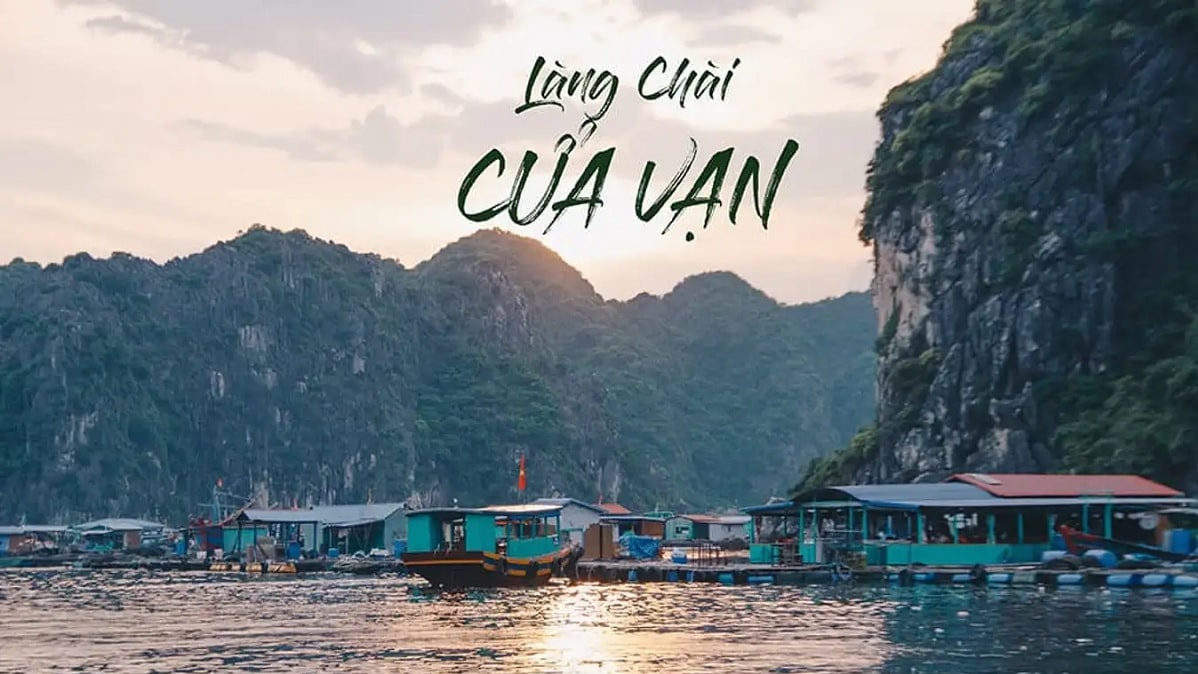
Cua Van Fishing Village
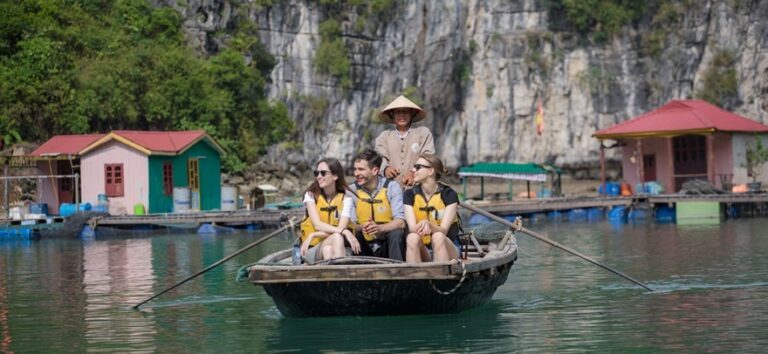
Cua Van fishing village is a descendant of two historical fishing villages, Truc Vong and Giang Vong. It is home to 176 fishing households. Floating raft houses on the water create an ancient and peaceful scene. To tour Cua Van fishing village, visitors can charter an overnight boat, then freely explore by rowing bamboo boats or kayaking.
Visitors coming to Cua Van fishing village will go fishing, boating, squid fishing at night, and hauling nets. These are interesting activities you should not miss when visiting Cua Van fishing village. If fortunate enough to arrive at Cua Van fishing village at the right occasion, visitors can also watch performances, folk singing, cheo singing, gheo singing, etc. Additionally, this place offers numerous extremely interesting things like mountain climbing, exploring Tien Ong Cave, fishing lagoons, Ba Ham Lake area, etc.
See more: Cua Van Fishing Village
2. Ba Hang Fishing Village: A Fishing Village with Stunning and Pristine Scenery
Ba Hang fishing village lies at the foot of Dau Go Island mountain, close to the Thien Cung Cave area. Ba Hang fishing village possesses stunning scenery and is home to over 50 households engaged in fishing and seafood raft farming. Visitors coming to Ba Hang fishing village will experience feeling like true fishermen through boating, net-casting, and enjoying fresh seafood.
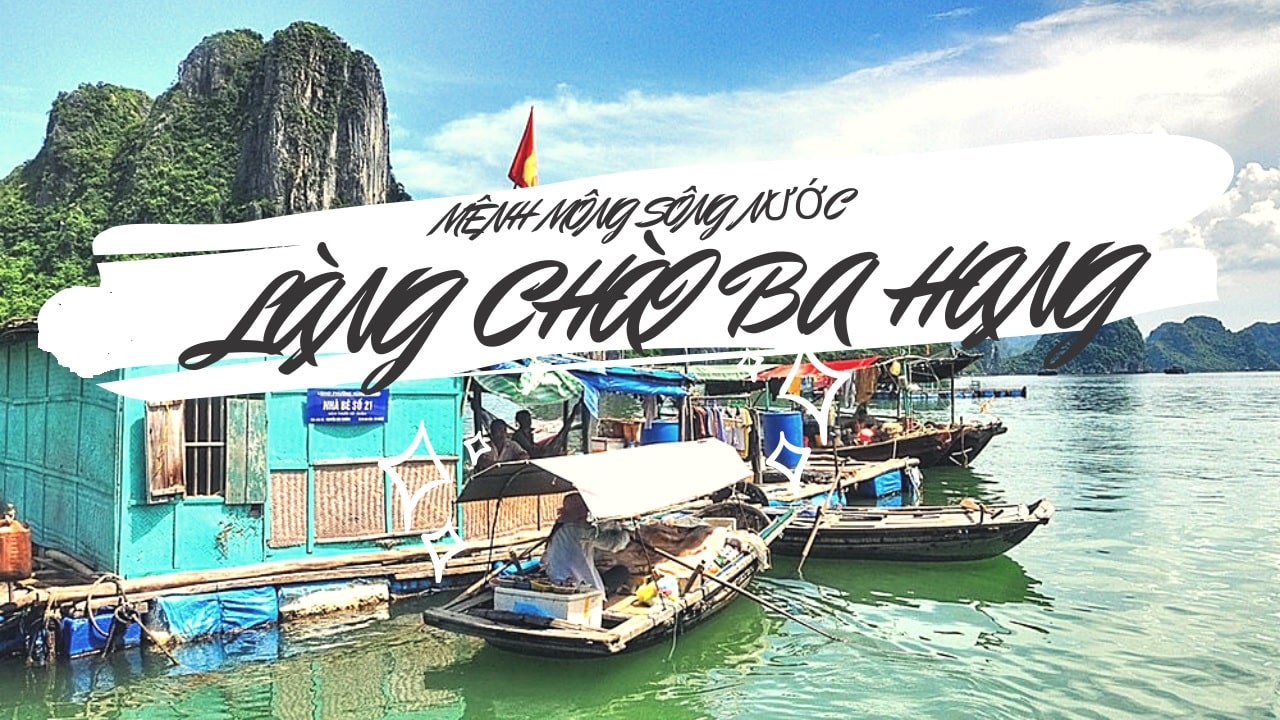
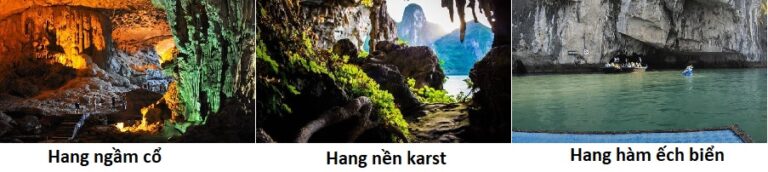
It is called Ba Hang fishing village because when the tide rises, water inside the caves fills up, allowing boats to pass through easily. When the tide recedes, the three cave chambers inside emerge for visitors to begin touring. At Ba Hang fishing village, visitors not only admire picturesque natural scenery but also boat through islands. Furthermore, visitors experience feeling like true fishermen through boating, net-casting, and enjoying fresh seafood caught by their own hands.
See more: Ba Hang Fishing Village
3. Vung Vieng Fishing Village: A Fishing Village with Quiet and Romantic Scenery
Vung Vieng fishing village is located in the heart of Bai Tu Long Bay, about 24km from the mainland. With a quiet location and stunning scenery, this fishing village is a favorite spot for many visitors exploring the Ha Long world heritage. This fishing village was once a trading route for Vietnamese and Chinese people. Visitors coming to Vung Vieng fishing village will explore Devil Mountain Island (Đảo Mặt Quỷ), the Bay Gieng area, primary forests on Van Don island, and numerous other small caves in Ha Long Bay.
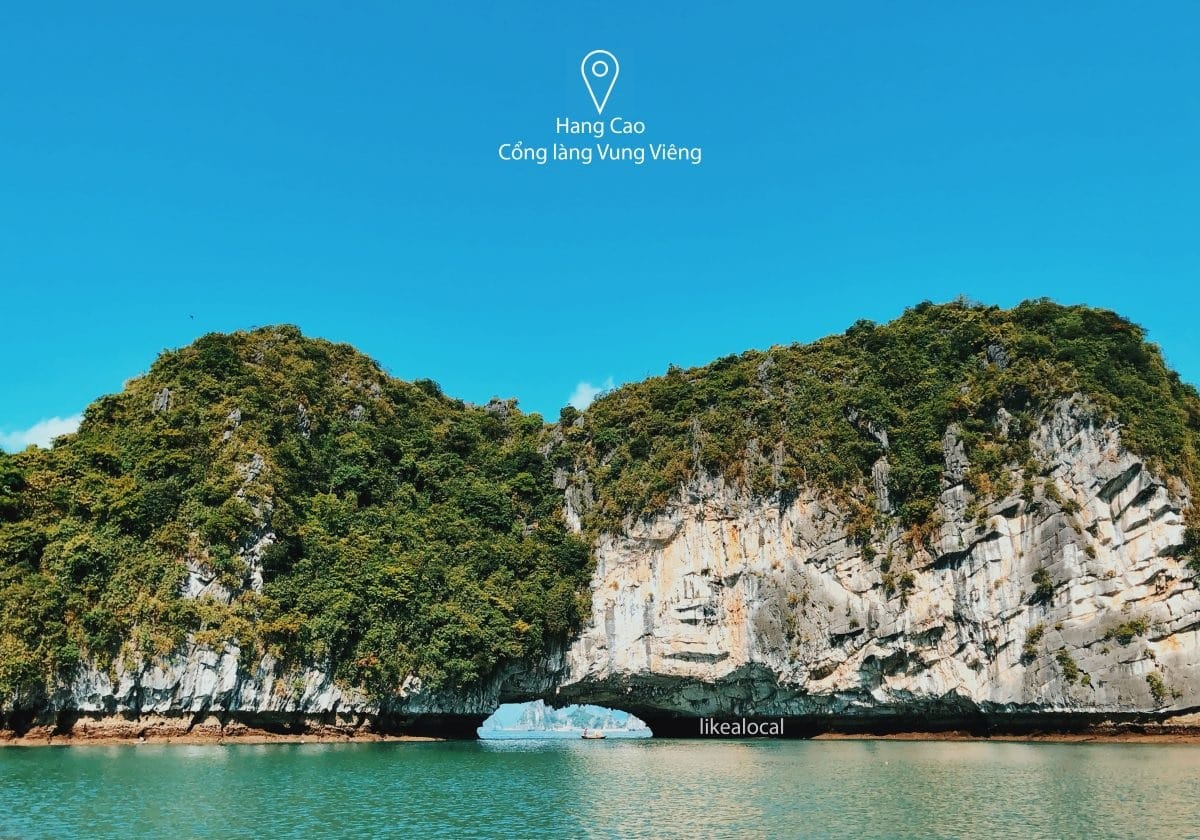
Hang Cao symbolizing the village gate and majestic beauty
Vung Vieng fishing village has about 50 households living by aquaculture and eco-tourism. It features a small school for the fishing village’s children. Visitors can participate in activities such as fishing, swimming, kayaking, and enjoying fresh seafood dishes. Moreover, visitors can visit the coral and marine conservation center to better understand this sea region’s biodiversity.
See more: Vung Vieng Fishing Village
4. Cong Dam Fishing Village: A Fishing Village Surrounded by Numerous Small Islands
Cong Dam fishing village lies in the southwest of Bai Tu Long Bay, about 40km from the mainland. This fishing village is home to over 120 households with more than 600 people. The fishing village features many surrounding small islands, creating a picturesque scene. Visitors coming to Cong Dam fishing village will participate in activities such as fishing, swimming, kayaking, and enjoying fresh seafood dishes.
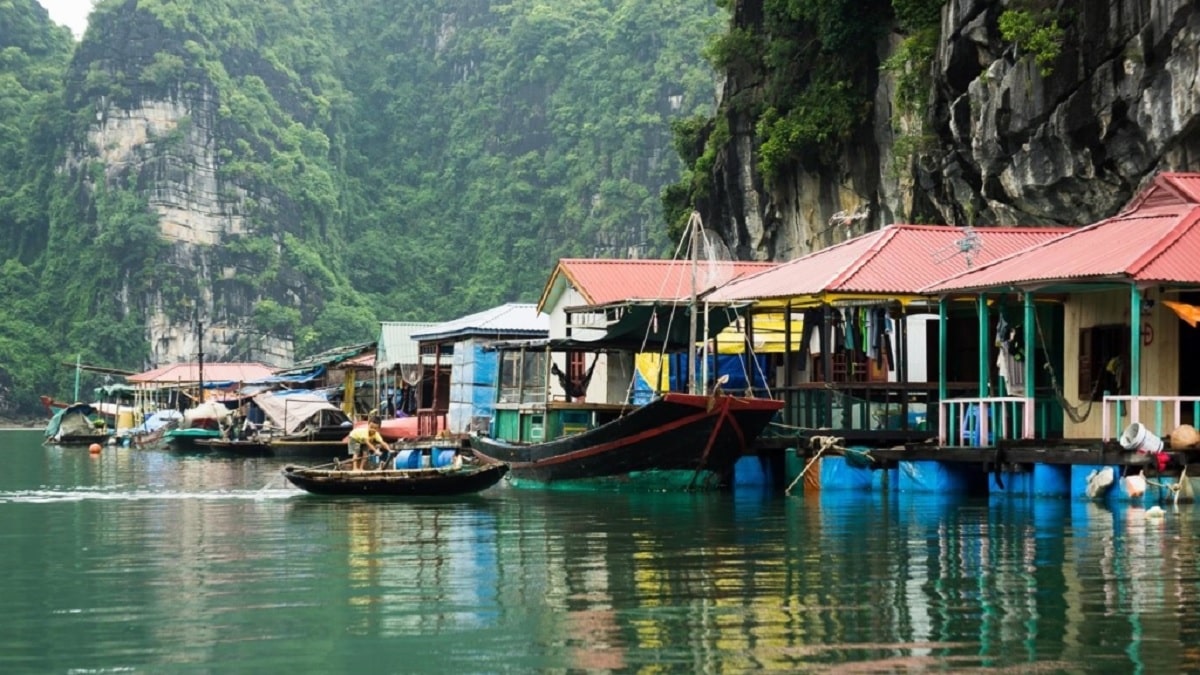
Cong Dam Fishing Village
Cong Dam fishing village possesses many rare seafood species such as jellyfish, groupers, tunas… Additionally, there are many precious tree species like oil trees and ironwood trees… Visitors can explore mangrove forests and coastal forests to admire nature’s abundance.
See more: Cong Dam Fishing Village
Additionally, Viet Hai Village, though situated on Cat Ba Island within Hai Phong’s territory and near Lan Ha Bay, is also frequently combined into Ha Long Bay sightseeing cruises. This is a mainland settlement village, offering a distinct experience of rural life close to the sea.
The fishing villages on Ha Long Bay are unmissable destinations when traveling in Quang Ninh. They not only possess majestic natural scenery but also feature the distinctive culture and history of sea-faring people. Coming to the fishing villages on Ha Long Bay, visitors will experience interesting and meaningful things, connecting with nature and the people here. If you have a demand to charter a boat to Ha Long Bay to visit this tourist spot, please contact us for more details