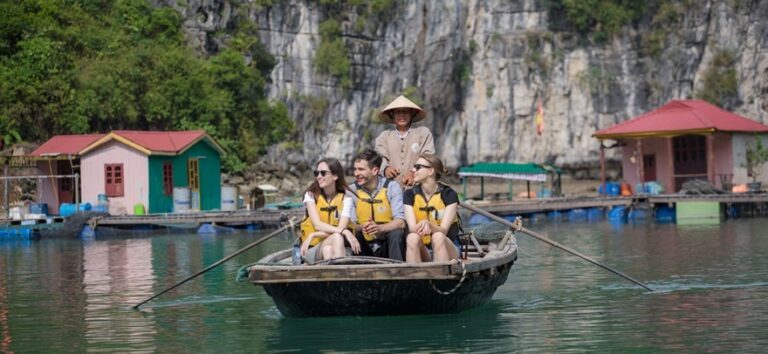
Whenever Ha Long Bay comes to mind, the first image that springs to travelers’ minds is a majestic cave system and striking islands. Among all the caves on Ha Long Bay, the best-known one every visitor should put on their itinerary is Sung Sot Cave. Wondering what sets this cave apart from others on Ha Long Bay? To help you find your own answer, VDS Travel shares key details to know about Sung Sot Cave so you can plan your trip well.
Introduction to Sung Sot Cave
Sung Sot Cave (“Surprise Cave”), located on Bo Hon Island along Ha Long Bay sightseeing Route 2, is one of the largest caves on the bay with a total area of up to 12,200 m². Sitting 25 meters above sea level, it measures roughly 800 m long and around 30 m high—and alongside Luon Cave and Trinh Nu Cave, ranks among the three best-known caves on Bo Hon Island, drawing many visitors each year.
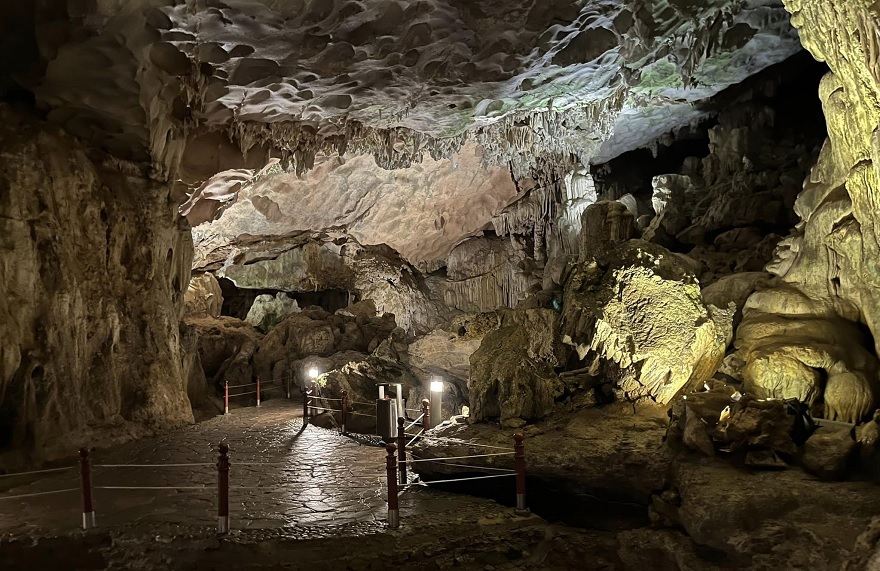
Sung Sot Cave is one of the largest caves in the Ha Long Bay cave system
First recorded in 1901 by French explorers who marveled at the varied formations inside, the site was named “Grotte des Surprises” (“Cave of Surprises”). Although noted early on, it opened to visitors in 1993 following bay management development; in early 2023, CNN featured Sung Sot Cave and Luon Cave among seven notable caves in Vietnam.
How to Get to Sung Sot Cave
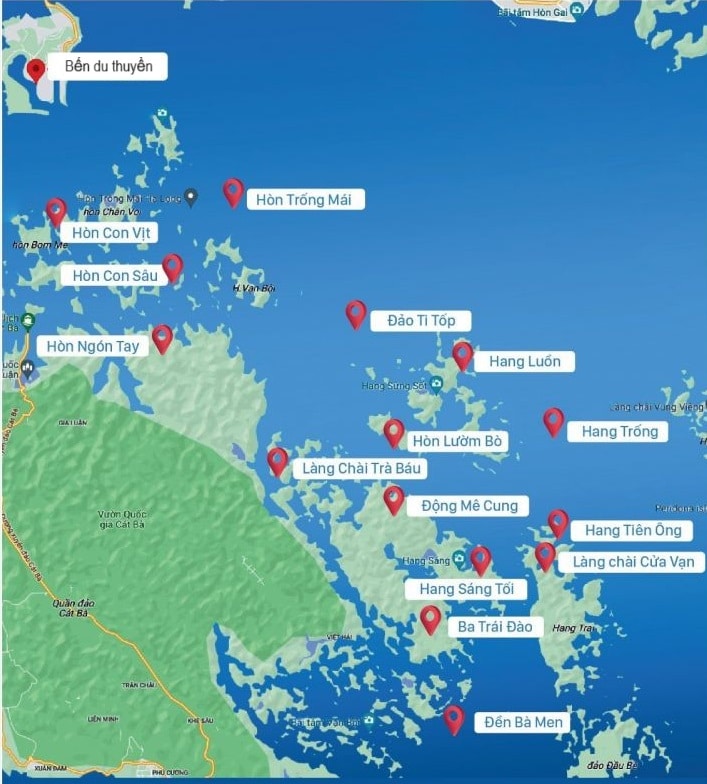
Sung Sot Cave lies along Route 2 of Ha Long Bay sightseeing tours alongside stops and sights such as Ti Top Island, Luon Cave, Trong Cave, Finger Islet, and Fighting Cock Islet, with a listed route fee of 510,000 VND per person (including Ha Long Bay admission and boat fare), departing from Ha Long International Cruise Port or Tuan Chau International Tourist Port.
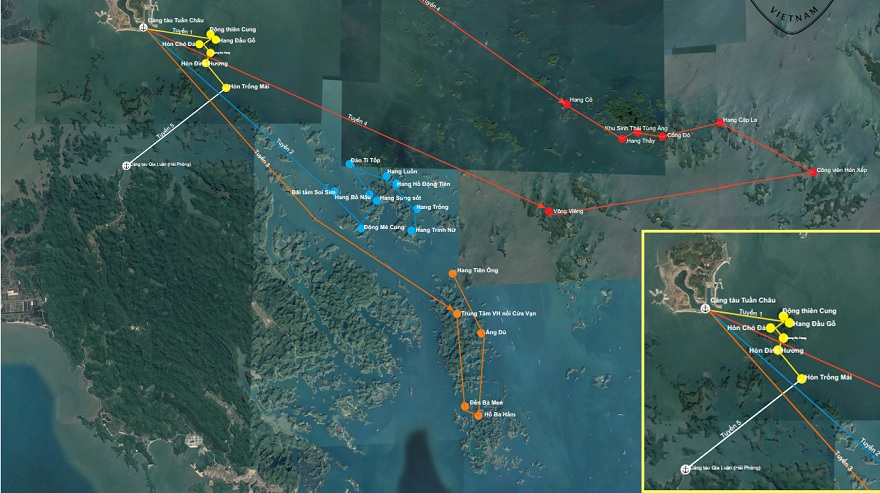
Ha Long Bay sightseeing route map
Spring, early summer, and late autumn are generally favored for visiting Ha Long Bay and Sung Sot Cave when temperatures and rainfall are favorable for sightseeing—though checking weather forecasts ahead of time helps you prepare best.
See details: Ha Long Bay Sightseeing Boat Prices
Exploring Sung Sot Cave
Once boats dock, because the cave entrance sits about 25 meters above sea level, visitors climb roughly 50 winding stone steps up to the mouth of the cave. The path is fairly manageable, though there is no dedicated accessible ramp yet, so wheelchair users need assistance getting inside; from the entrance, another 10 steps or so lead into the main chamber, which surprises visitors with its spacious scale.
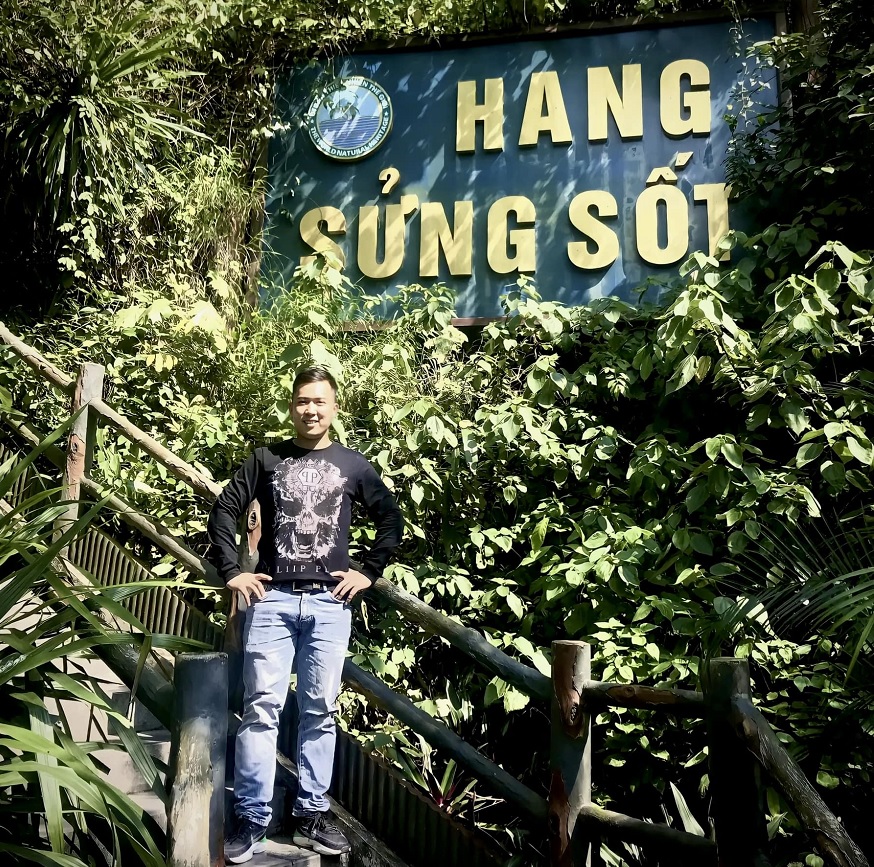
Entrance to Sung Sot Cave
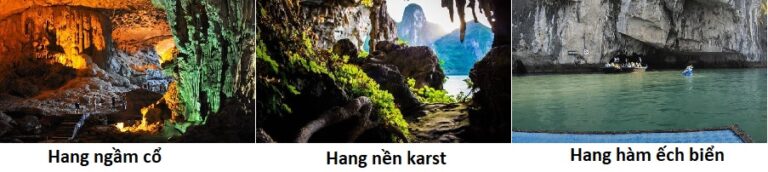
Researchers note that Ha Long Bay’s geology reflects at least 500 million years of shifting environments, tectonic uplifts, and sea-level changes, with full karst evolution spanning around 20 million years across thick limestone, warm humid climate, and gradual uplift. Most caves on Ha Long Bay formed roughly 2 million years ago across three main groups—ancient phreatic/subterranean caves, level caves, and marine notches—with Sung Sot Cave belonging to a relatively young subterranean cave group formed in the Early–Middle Pleistocene with a drainage funnel around 50–60 m elevation, divided into two main chambers of different scale and character.
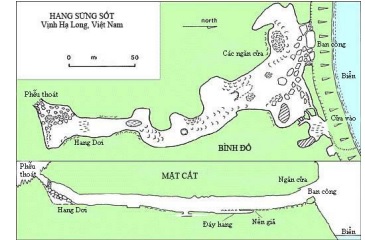
Cross-section diagram of Sung Sot Cave
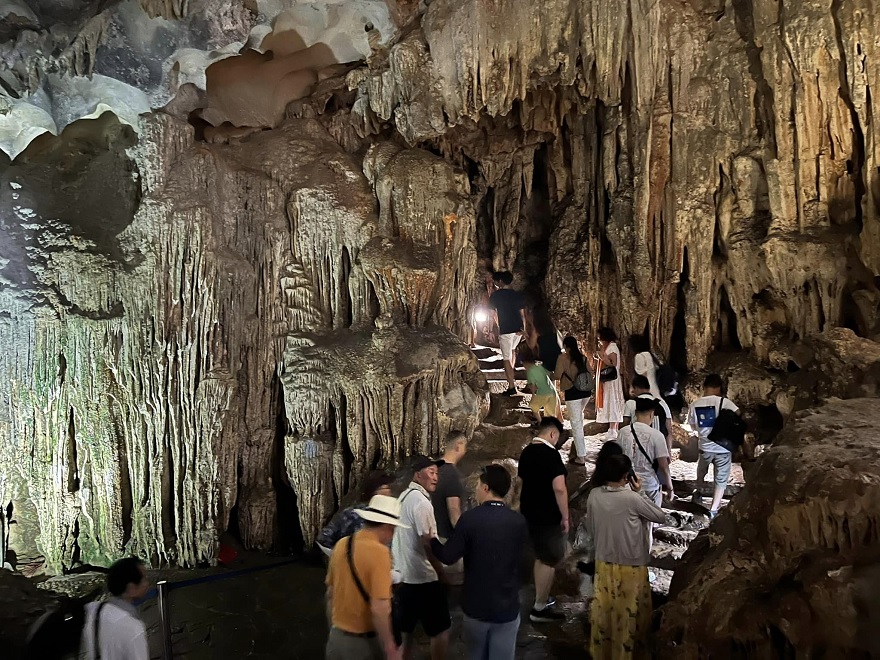
Pathway inside Sung Sot Cave
Inside runs a stone-paved walkway stretching around 800 m from entrance to exit. Near the entry of the first chamber sits a freshwater pool that holds water year-round—once used by local boat dwellers for drinking and daily water before tourism management restricted informal entry.
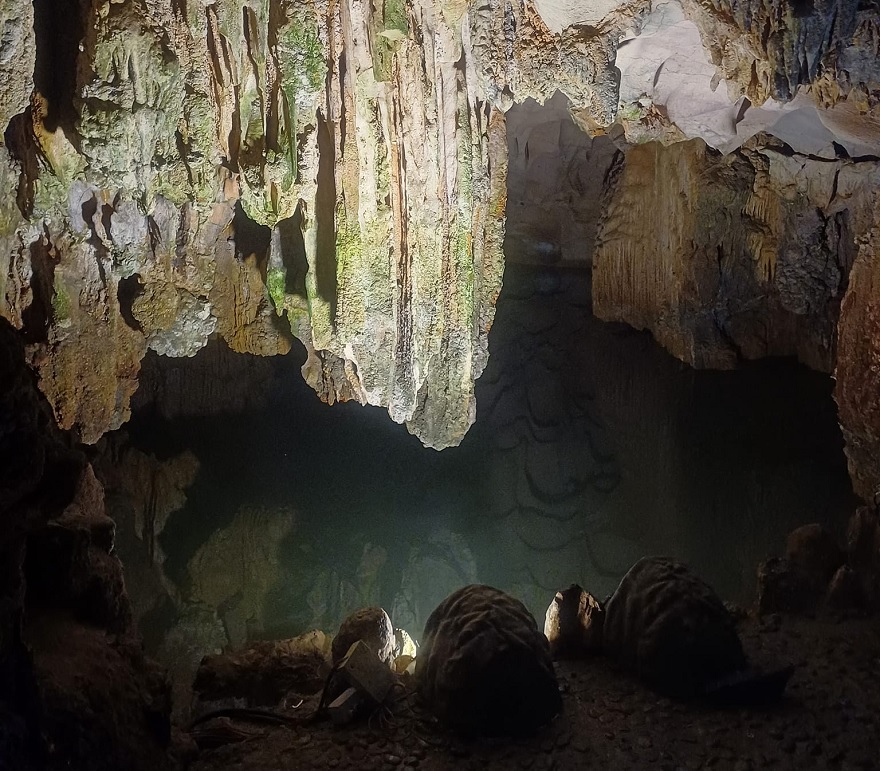
Year-round freshwater pool inside Sung Sot Cave
Inside, Sung Sot Cave evokes a grand hall with a vaulted ceiling marked by smooth, even scallops and clusters of stalactites, while thick columns spanning ceiling to floor look like taut strings waiting to sound a natural melody.
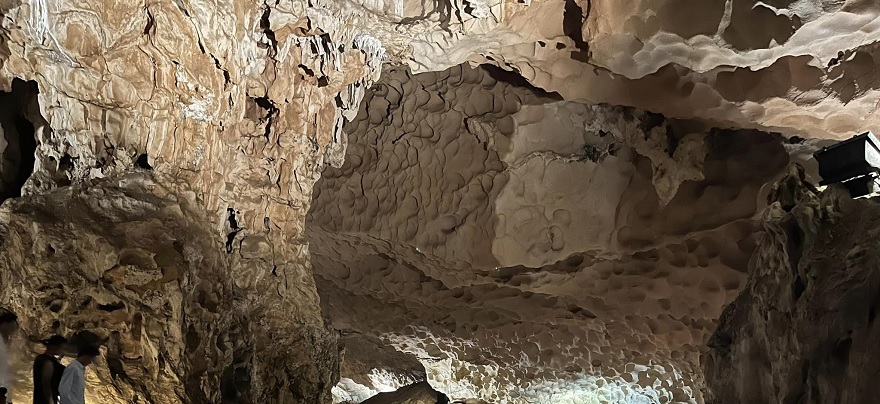
Ceiling of Sung Sot Cave with smooth, even scallops
Passing from the first chamber through a narrow passage opens into the second chamber—larger and especially scenic—filled with stalagmites and stalactites, including formations likened by locals to a horse and a long sword tied to Saint Giong legend after defeating the An invaders and leaving behind a horse and sword to reassure local people.
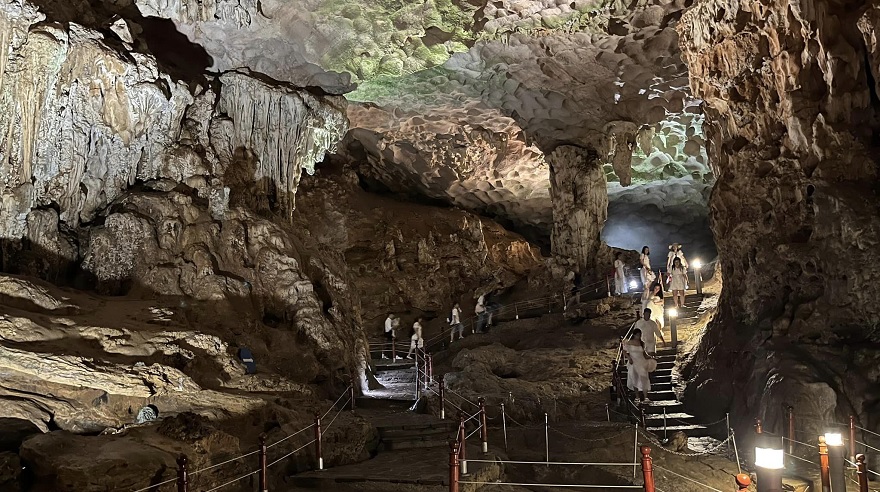
Chamber 2 is the widest chamber in Sung Sot Cave with room for up to 1,000 people
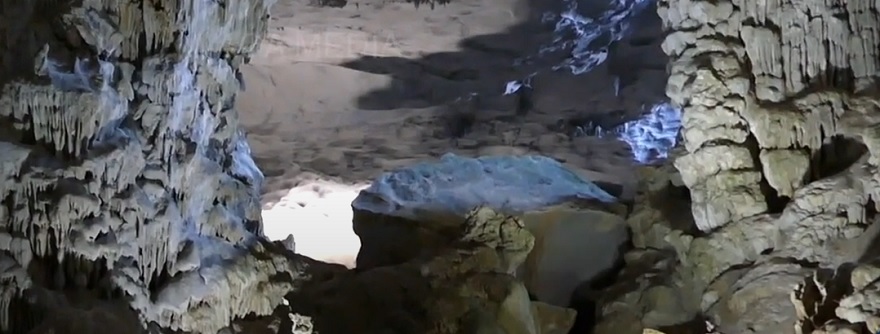
Horse-shaped rock formation in Sung Sot Cave linked to Saint Giong legend
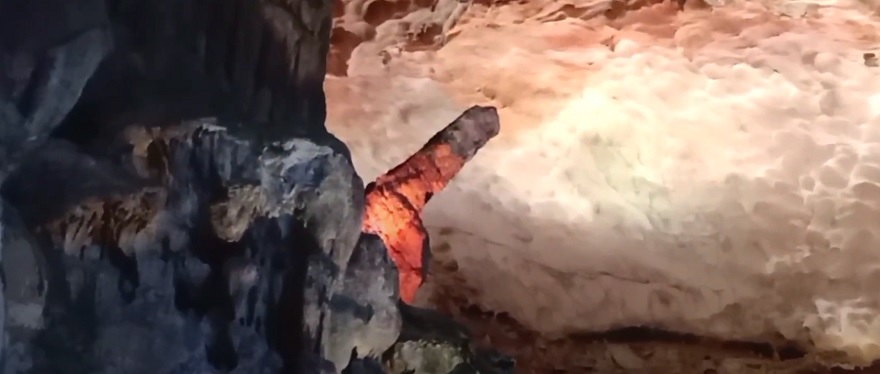
Rock formation likened to Saint Giong’s sword
Links to Saint Giong lore feel vivid to visitors alongside small pools and broken rock blocks inside the chamber.
Near the far end of Sung Sot Cave, fallen speleothems lie piled in layers. Because dripstone formations grow from calcium precipitation and eventually exceed their bond strength as they gain weight, pieces fall naturally over time while slow mineral regrowth forms new formations from the same spots.
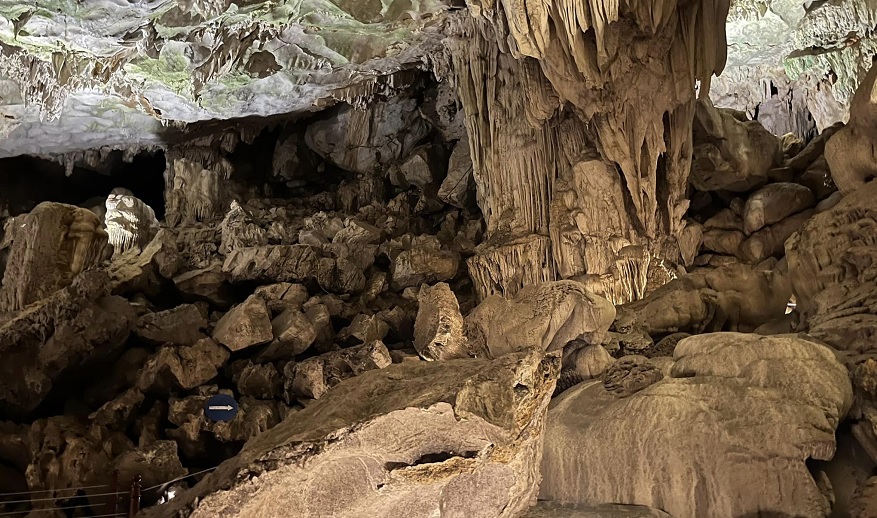
Fallen dripstone formations piled atop one another in Sung Sot Cave
At the exit of Sung Sot Cave, visitors stand about 30 meters above sea level looking out across coastal hills and Ha Long Bay waters below.
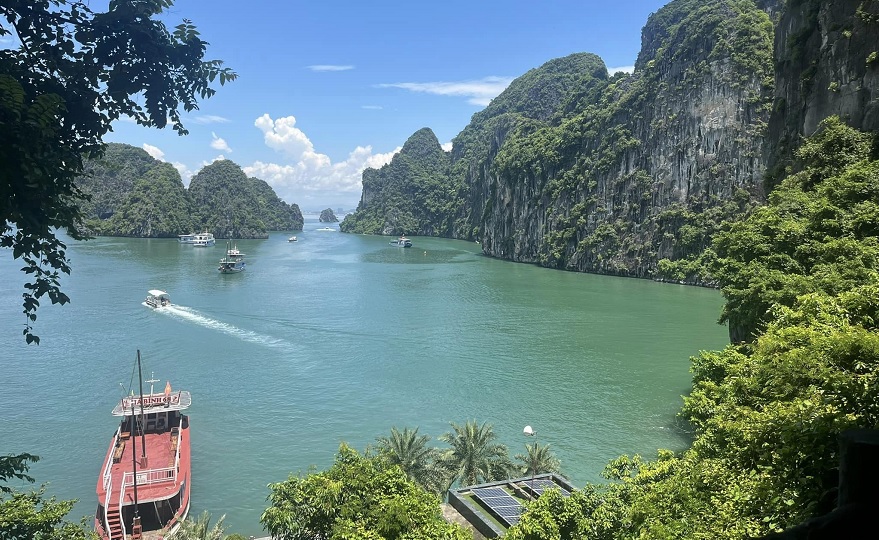 View of Ha Long Bay from the exit of Sung Sot Cave[/caption>