Binh Huong Peak has been one of the most attractive trekking spots in Quang Ninh in recent years. With its scenic landscapes and cool weather, Binh Huong is often likened to a mini Da Lat. The article below will give you a clearer insight into Binh Huong Peak, so be sure to follow along!
Binh Huong Peak is an emerging tourist destination in Quang Ninh, captivating many visitors with the pristine and rustic beauty of its forests and mountains. It is a 470-meter-high, 3-kilometer-long mountain range located in Vang Danh ward, Uong Bi city, 10 km from downtown Uong Bi, 50 km from Ha Long city, and 135 km from Hanoi. Binh Huong Peak is situated right behind the famous Ba Vang Pagoda.
Upon arriving at Binh Huong Peak, visitors will be greeted by vast, rolling grassland fields whose colors change with the seasons—from lush green in summer to golden yellow in autumn and winter. The cool green pine forests, interspersed among the withered grass patches, create an unusually peaceful and poetic scenery that is hard to find in today’s bustling urban life. From here, visitors can cast their gaze to admire the overlapping mountain ranges, the cityscape of Uong Bi, and the meandering Bach Dang River.
Each season brings its own unique charm to Binh Huong, while the fresh and airy atmosphere here helps soothe the tropical heat. Many people refer to Binh Huong as the “mini Da Lat” of Quang Ninh. The best time for photography is early in the morning or late in the afternoon, as the beautiful sunlight during these hours promises breathtaking, glowing photos. Additionally, Binh Huong is a popular spot for visitors choosing to organize camping and picnics to fully enjoy the wonderful natural space here, with an entrance fee of 100,000 VND/day.
How to get to Binh Huong
To conquer Binh Huong Peak, you have two options: hiking or riding a motorbike. Whichever way you choose to go up, you will have the opportunity to admire the stunning scenery of the mountains, grasslands, and pine forests. To access Binh Huong Peak, you will also need to pay a small ticket fee as follows:
Adults: 50,000 VND (includes parking and waste collection fees).
Children: 20,000 VND (free for children 1.1m and under, and under 6 years old).
Students: 30,000 VND
If you choose to hike, you will experience a gentle trek, taking in the pristine mountain scenery along the trail for about an hour and a half. The hiking trail passes through Thanh Dang peak behind Ba Vang Pagoda. Since you will be moving extensively in a hilly area, you should wear shoes with good traction due to the steep paths and to avoid slippery grass. If you decide to walk, make sure to eat well beforehand and carry some snacks and drinking water to prevent dizziness or fatigue along the way.
Path to Binh Huong Peak
The trail up to Binh Huong peak is quite narrow and steep
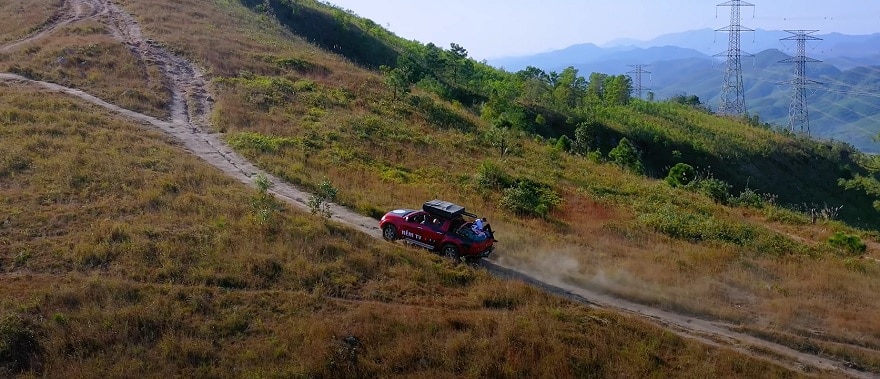
If you choose a motorbike or car, you will follow the Vang Danh route past the Lan Thap iron bridge for about 100 meters, then turn towards Dong Chanh. This road is also the same path you would take if you chose to hike. However, from the foot of the mountain to the summit, the off-road path is rough, narrow, and steeply inclined. It only takes about 20 to 30 minutes to travel by motorbike (or car), but keep in mind that the road features steep sections and slippery grass, so it is safer to use a semi-automatic or manual clutch motorbike. If you are not confident in your driving skills, you can hire a motorbike taxi (xe om) at the foot of the mountain for 100,000 VND.
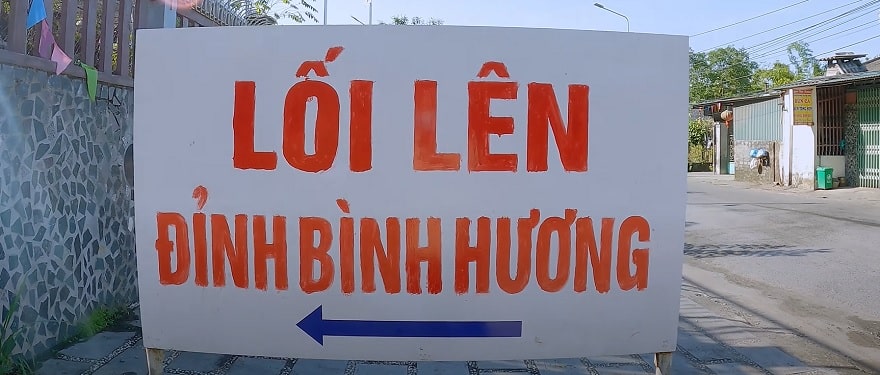
Please note: When searching on Google for the route to Binh Huong, look up “khu 1 Vang Danh”. Searching simply for “Đỉnh Bình Hương” might mistakenly lead you to the Lung Xanh tourist area near Ba Vang Pagoda (as they share the same mountain base). This will help you avoid paying unnecessary entrance and parking fees, even though the guards there might claim you can reach Binh Huong from there…
Additionally, according to experienced backpackers, you should visit Binh Huong Peak in the autumn, from September to November. During this time, the weather in Northern Vietnam is quite dry and cool, making the journey up to Binh Huong safer and easier to navigate. It is best to go in the morning to avoid the heat, or choose weekdays to avoid the crowds. You will be able to admire the golden withered grass fields, lush green pine forests, and fluffy floating clouds.