Quang Ninh, a land of magnificent natural beauty and a rich cultural history, is increasingly asserting its position as one of Vietnam’s top travel destinations. It is not only famous for Ha Long Bay – a world natural wonder, but also attracts visitors with its diverse range of tourism offerings. From island and beach tourism with stunning coastlines, spiritual and cultural tourism with ancient pagodas, to community-based ecotourism with unique ethnic villages, Quang Ninh offers travelers countless exciting and memorable experiences.
See more: Quang Ninh Tours
1. Entertainment Tourism
Quang Ninh is gradually becoming the most vibrant entertainment hub in Northern Vietnam, thanks to significant investments in modern and diverse amusement parks and entertainment complexes. Below are the must-visit destinations for travelers who love excitement and novel experiences:
Ha Long Bay
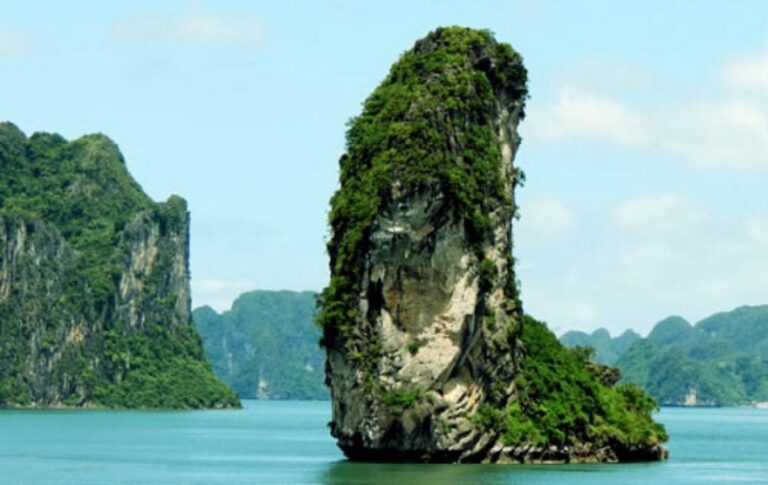
Ha Long Bay, a UNESCO-recognized world natural wonder, is an unmissable destination when visiting Quang Ninh. With thousands of limestone islands rising from the emerald waters, Ha Long Bay possesses a majestic and poetic beauty that captivates the heart. One of the best ways to fully experience the beauty of Ha Long Bay is by joining a cruise tour. Cruising on Ha Long Bay offers visitors a variety of memorable experiences:
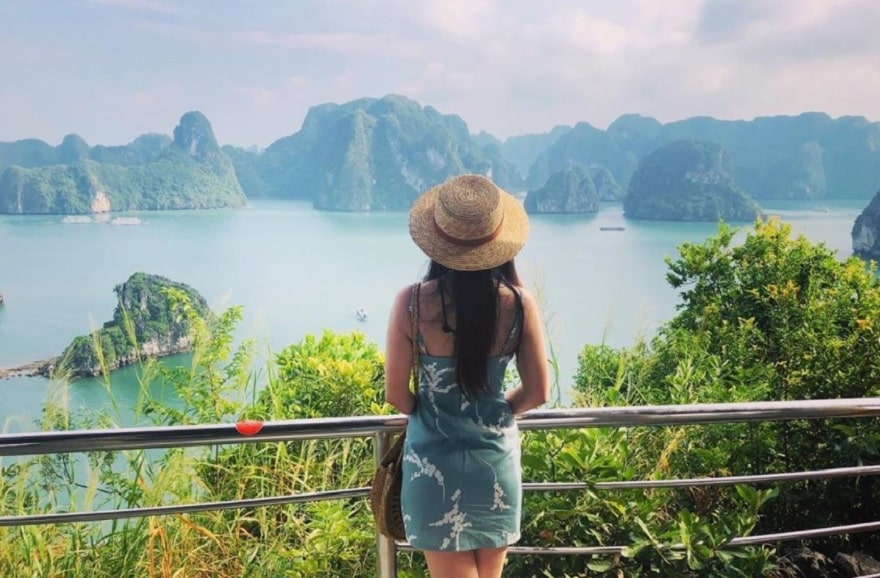
The majestic scenery of Ha Long Bay from the peak of Titop Island
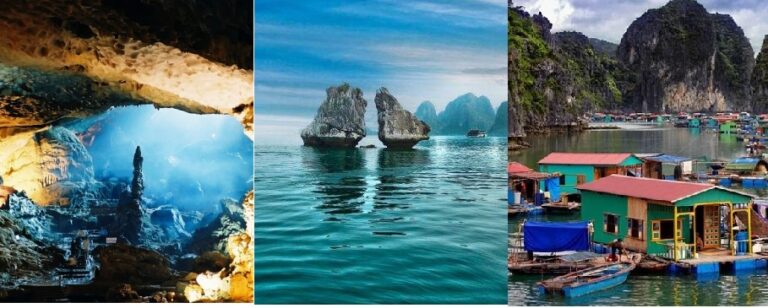
To fully explore and experience Ha Long Bay, visitors can choose between day trips or overnight cruises. Day trips are suitable for travelers with limited time and offer an affordable way to see famous landmarks like Fighting Cock Islet (Hon Ga Choi) and Thien Cung Cave. Conversely, overnight cruises are perfect for those who want to immerse themselves in a peaceful, romantic atmosphere and have more time to enjoy the sunset, sunrise, and activities such as night squid fishing or kayaking.
Sun World Halong Complex
Sun World Ha Long is an entertainment complex located in Bai Chay Ward, Ha Long City, Quang Ninh Province. Spanning over 200 hectares, it is divided into three main areas: Dragon Park, Typhoon Water Park, and Mystic Mountain. Built by Sun Group in 2016, it stands as one of the leading theme parks in Vietnam and the region.
The highlight of Sun World Ha Long is its trio of entertainment parks: Dragon Park, featuring 21 thrilling rides for all ages, from roller coasters to dragon trains and crazy carts; Typhoon Water Park, offering 12 exciting European-style water attractions such as wave pools, lazy rivers, and slides; and finally, the Queen Cable Car, which holds two Guinness World Records for the longest cable car and the highest distance between two pillars. It is also Asia’s first reversible cable car system with double-decker cabins that can hold up to 230 people, allowing visitors to admire the stunning panoramic view of Ha Long Bay from above.
Tuan Chau Park
Tuan Chau Park, also known as Tuan Chau Entertainment Complex, is the largest theme park on Tuan Chau Island and the second largest in Quang Ninh. The park was expanded with many new entertainment areas that began operations in 2022. Visitors here can enjoy various activities such as thrilling rides, a dinosaur park, and more.
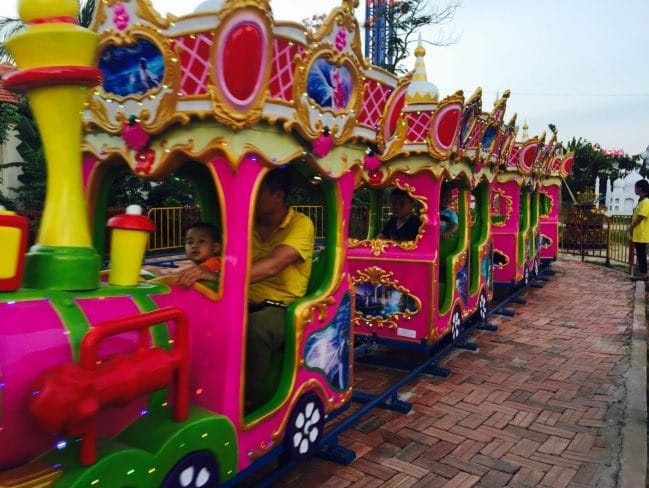
Among the attractions at Tuan Chau Park, the dolphin performance area is a must-see. This is the only place in Northern Vietnam featuring dolphin and seal shows. The stage, designed with a unique dome structure, can accommodate thousands of spectators. Here, visitors will be treated to impressive and adorable performances by dolphins, seals, and sea lions. The dolphins showcase skills like jumping through hoops, spinning, shooting balls, and kissing their trainers. The seals and sea lions are equally charming as they perform tricks like riding bicycles, playing basketball, and juggling.
See more: The Ultimate A-Z Ha Long Travel Guide
2. Cultural and Spiritual Tourism
Quang Ninh not only boasts stunning natural landscapes but is also a land rich in cultural and historical traditions. Cultural and spiritual tourism here offers visitors the chance to discover unique spiritual values and learn about the rich inner lives of the local people. Some prominent spiritual destinations include:
Yen Tu Pagoda:
Yen Tu Pagoda, or Yen Tu Temple, is the common shorthand used by locals for the Dong Yen Tu scenic complex, located in Nam Mau village, Thuong Yen Cong commune, Uong Bi city, Quang Ninh province. This is a vast complex comprising numerous pagodas, hermitages, and towers stretching from the foot of the mountain to the sacred Yen Tu peak. Notable structures include Trinh Pagoda, Giai Oan Pagoda, Mot Mai Pagoda, Hoa Yen Pagoda, Lan Pagoda, Bao Sai Pagoda, Van Tieu Pagoda, and the Dong (Bronze) Pagoda at the summit. Unlike Bai Dinh Pagoda (Ninh Binh) or Tam Truc Pagoda (Ha Nam)—which are massive structures known for their record-breaking statues—Yen Tu Pagoda offers a beauty defined by antiquity, heritage, and the fresh mountain air, all harmonized with the sacred atmosphere of a Buddhist sanctuary.
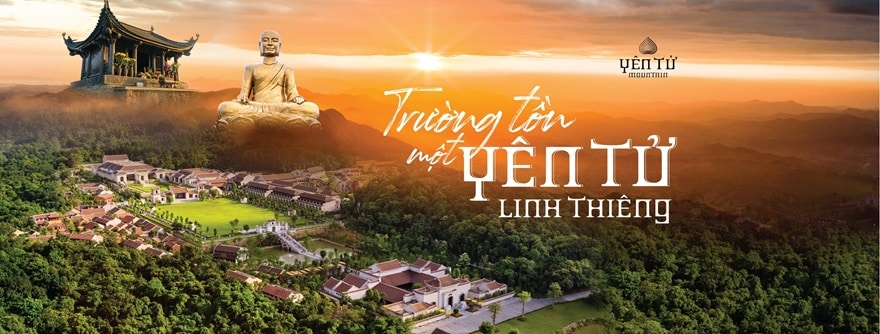
Yen Tu Pagoda
Yen Tu Pagoda is revered as a sacred site in the hearts of generations of Vietnamese people, often regarded as the capital of Vietnamese Buddhism. This is where the Buddhist King Tran Nhan Tong practiced, attained enlightenment, and founded the Truc Lam Zen sect, which carries a distinct Vietnamese identity and has laid the foundation for the flourishing of national Buddhism and national spirit to this day.
Cua Ong Temple
Cua Ong Temple, also known as Cua Suot Temple due to its location next to the Cua Suot sea gate, is situated on Hill 9A, Cua Ong ward, Cam Pha city, Quang Ninh province. The temple is located 40 km northeast of Ha Long city center. Cua Ong Temple features a “mountain-backed, sea-facing” position, embodying ideal feng shui principles: the Green Dragon to the left, the White Tiger to the right, the Bright Hall in front, and the Black Tortoise behind (a fertile valley where a large population resides, with a mountain range extending toward Mong Duong providing a solid foundation).
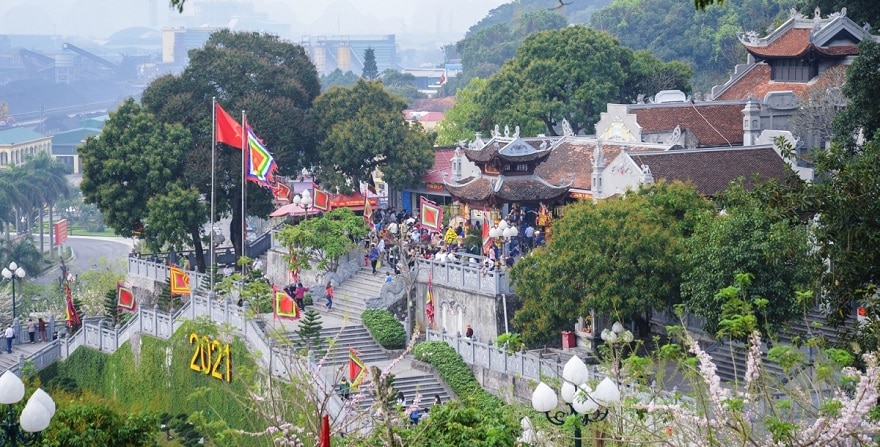
Cua Ong Temple was first constructed approximately 700 years ago during the Tran Dynasty. Initially, it was only the Hoang Tiet Che Shrine, built to honor the national hero Hoang Can, who was credited with defeating sea invaders during the Tran era. Hoang Can was bestowed the title of Kham Sai Dong Dao Tiet Che by the kings, an important position in both domestic and foreign affairs. At the beginning of the 20th century, the Hoang Tiet Che Shrine was upgraded to Cua Ong Temple, and since then, it has served as the main place of worship for the Third Duke, Hung Nhuong Dai Vuong Tran Quoc Tang.
Ba Vang Pagoda
Majestically situated on Thanh Dang Mountain amidst magnificent natural scenery, Ba Vang Pagoda stands out as one of the largest and most famous pagodas in Vietnam. Built on a grand scale, Ba Vang Pagoda boasts unique architecture, most notably its main hall—the largest of its kind in the country, with a capacity of up to 10,000 people. Beyond its magnificent architectural beauty, the pagoda also leaves visitors in awe of the vast and picturesque natural landscape.
From the heights, you can gaze out over the panoramic view of Uong Bi city, the winding Bach Dang River, and the deep blue Do Son sea. Ba Vang Pagoda is not only a spiritual destination that attracts a large number of Buddhists for worship and prayers for peace, but also a place where visitors can find a serene space to seek inner tranquility.
See more: Top 9 most sacred pagodas in Quang Ninh
3. Community-based Ecotourism
Quang Ninh is not just about blue seas, white sands, and golden sunshine; it also boasts vast primeval forests and peaceful ethnic villages, making it an ideal destination for community-based ecotourism. Let’s explore the pristine beauty, immerse ourselves in nature, and experience rustic life at these unique destinations:
Dong Son – Ky Thuong Nature Reserve
Located in Hoanh Bo district, Quang Ninh province, the Dong Son – Ky Thuong Nature Reserve is one of the specialized forests with high biodiversity. It is a typical area of the closed forest ecosystem, featuring the largest concentrated natural forest area in the Northeast region, home to many rare animal and plant species. This is also an attractive destination for travelers who love exploration and conquering natural challenges.
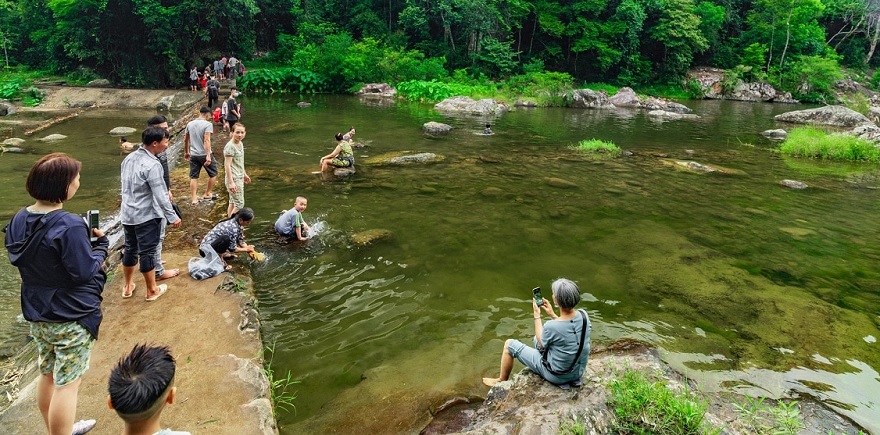
Dong Son Ky Thuong Nature Reserve
The Dong Son – Ky Thuong Nature Reserve possesses rich and unique biodiversity, with many rare and endemic animal and plant species, including many listed in the Vietnam and International Red Data Books. According to scientific surveys, the reserve currently hosts 56 mammal species, 16 of which are in the International Union for Conservation of Nature (IUCN) Red List; 135 bird species, with 12 in the IUCN Red List; 31 reptile species, with 8 in the IUCN Red List; and 22 other amphibian species. Notably, among its rich fauna, the reserve is home to two endemic species: the Chinese crocodile lizard (Shinisaurus crocodilurus) and the Vietnamese salamander (Paramesotriton deloustali).
Regarding woody plants, the reserve contains 546 species belonging to 332 genera and 97 different families. The herbaceous plant group is also very diverse, with a total of 617 species belonging to 380 genera and 119 families. Additionally, the Dong Son – Ky Thuong Nature Reserve has 64 rare plant species across 52 genera and 38 families, of which 43 are listed in the Vietnam Red Data Book and 31 in the IUCN Red List. Furthermore, the reserve is home to many medicinal plants, with 428 naturally occurring species belonging to 330 genera and 125 different families.
Binh Lieu: A Hub for Community-based Ecotourism
To leverage the potential of tourism for community benefit, Quang Ninh province has been focusing on directing the development of community-based tourism in recent years. This is considered a new direction for Quang Ninh in sustainable tourism development, with a target of welcoming 1.7 million domestic and 1.1 million international visitors by 2025, and 3 million domestic and 1.8 million international visitors by 2030 participating in community tourism activities. With the advantage of having beautiful natural landscapes and unique cultural values, Binh Lieu has chosen a distinct path for developing community tourism. From a locality rarely visited, Binh Lieu has now become an indispensable destination on the Quang Ninh tourism map.
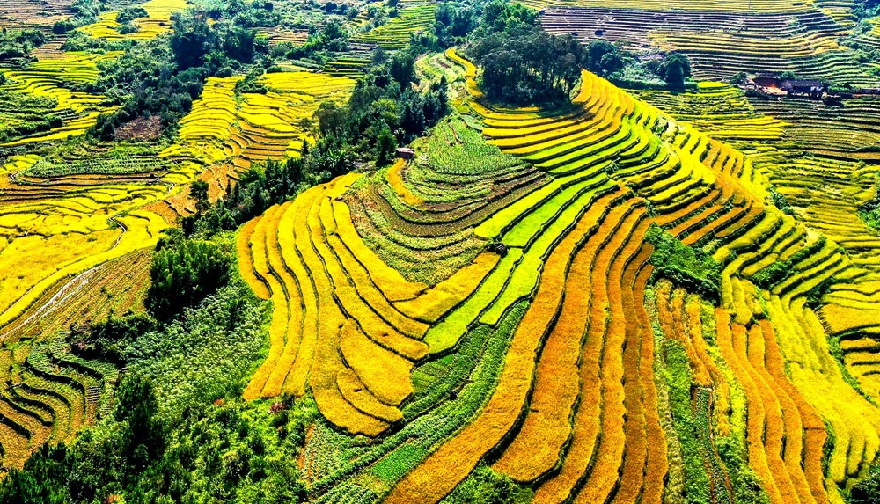
Binh Lieu Terraced Fields
With cool weather year-round and harmonious terrain, nature has gifted this place with wonderful attributes, from scenery and climate to its people. Visiting Binh Lieu in late autumn and early winter, you will find not only majestic trekking routes but also a romantic beauty as fields of reed flowers bloom, turning the hills, mountain slopes, and border patrol roads into a sea of white. This border region is formed by a harmonious combination of the majestic, powerful beauty of overlapping mountains and adventurous trekking routes, along with the poetic romance of blooming reed hills when the season arrives.
With a population of over 30,000, 96% of whom are ethnic minorities, Binh Lieu has the highest proportion of ethnic minorities in Quang Ninh province and is among the highest in the country. The Tay, Dao, and San Chay are the three main ethnic groups in Binh Lieu. The traditional cultural heritage of these groups has been preserved quite intact, forming a diverse and unique culture for this land. This is reflected in traditional festivals such as the Xom Co festival, the Kieng Gio festival of the Dao Thanh Phan people, and the Luc Na communal house festival of the Binh Lieu community; as well as folk performing arts like Then singing, Dan Tinh music, Xom Co singing, and Soong Co singing… which are preserved and practiced by the locals, creating a rich spiritual life.
See more: Discover Binh Lieu Tourism
Quang Ninh Gate:
Quang Ninh Gate is an ideal destination for visitors to immerse themselves in a space of deeply traditional Vietnamese culture. Spanning 12 hectares, this tourist area is a diverse entertainment complex, including: a Welcome Gate, an Ecotourism Area, an Experience Zone, and Rural Tourism.
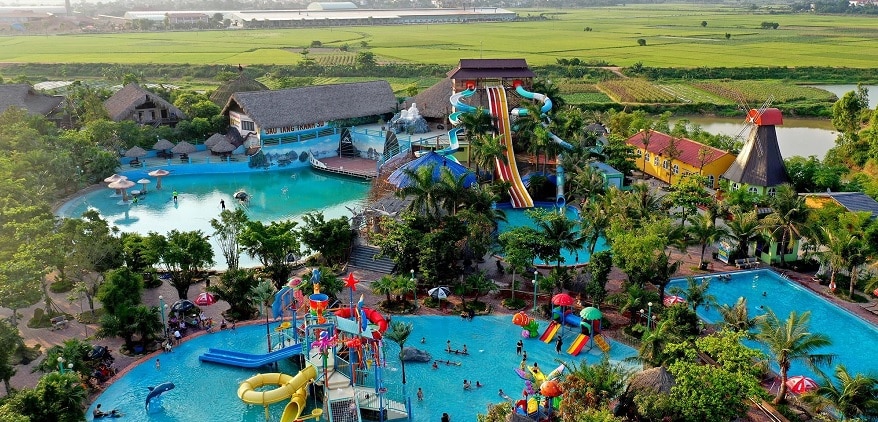
Quang Ninh Gate Tourist Area
Here, visitors will be guided through many fascinating stages by enthusiastic and knowledgeable tour guides. The journey to discover the origins and values of Vietnamese national culture will provide interesting and useful experiences for all ages, especially students. Additionally, Quang Ninh Gate offers a diverse system of services such as: restaurants, 4-star standard resort hotels, water parks, theme parks, aquariums, ancient house areas with the characteristic style of Northern Vietnamese villages, agricultural farming areas, fishing village zones, and more.
Tien Yen Walking Street
Tien Yen is an ancient town dating back to the early 20th century. It features a harmonious blend of Chinese and French architectural styles. The two-story tube houses are arranged closely together, characterized by red yin-yang tiled roofs and lime-brick walls with skylights for natural light and ventilation. The town, which lacks sidewalks, is laid out in a grid pattern. Today, about 40 ancient houses remain in Tien Yen, serving as highlights for this peaceful, historic town and attracting many visitors. It is precisely this unique character that creates the charm of the Tien Yen walking street.
One of the main attractions for visitors to the Tien Yen walking street is the diversity and richness of its cultural and artistic activities. The walking street is divided into three main zones: the Culinary Zone, the Folk Culture Zone, and the Market Zone. Notably, on the main stage of the walking street, visitors can enjoy unique and captivating performances every Saturday evening. These programs feature not only famous artists from within and outside the province but also amateur performers from the district’s 11 communes and towns, offering visitors a glimpse into the vibrant cultural identity of the ethnic groups living here.
4. Island and Coastal Tourism
Quang Ninh, with its coastline stretching over 250km and thousands of islands large and small, is a paradise for island and coastal tourism. From the majestic Ha Long Bay and the poetic Tra Co beach to pristine islands like Co To and Quan Lan, Quang Ninh’s coastal tourism offers diverse and appealing experiences for travelers looking to escape the city’s hustle and bustle to find peace and tranquility.
Co To Island
Co To, formerly known as Chang Son or Cau Dau, is an archipelago consisting of 71 islands located in the Northeast of Quang Ninh province. Comprising four major islands—Big Co To, Small Co To, Thanh Lan, and Tran Island—it boasts stunning pristine beaches, rich natural landscapes, and numerous exciting exploration activities. In recent years, “Co To tourism” has become a popular Google search term, yielding 40.3 million results in just 0.43 seconds. Co To was ranked in the top 50 destinations in Vietnam by a reputable French travel site. Lonely Planet lists Co To Island as one of the top 8 travel destinations in Northern Vietnam. In its July international press release, the Vietnam National Administration of Tourism introduced Co To as one of the 3 most beautiful new beaches in Vietnam…
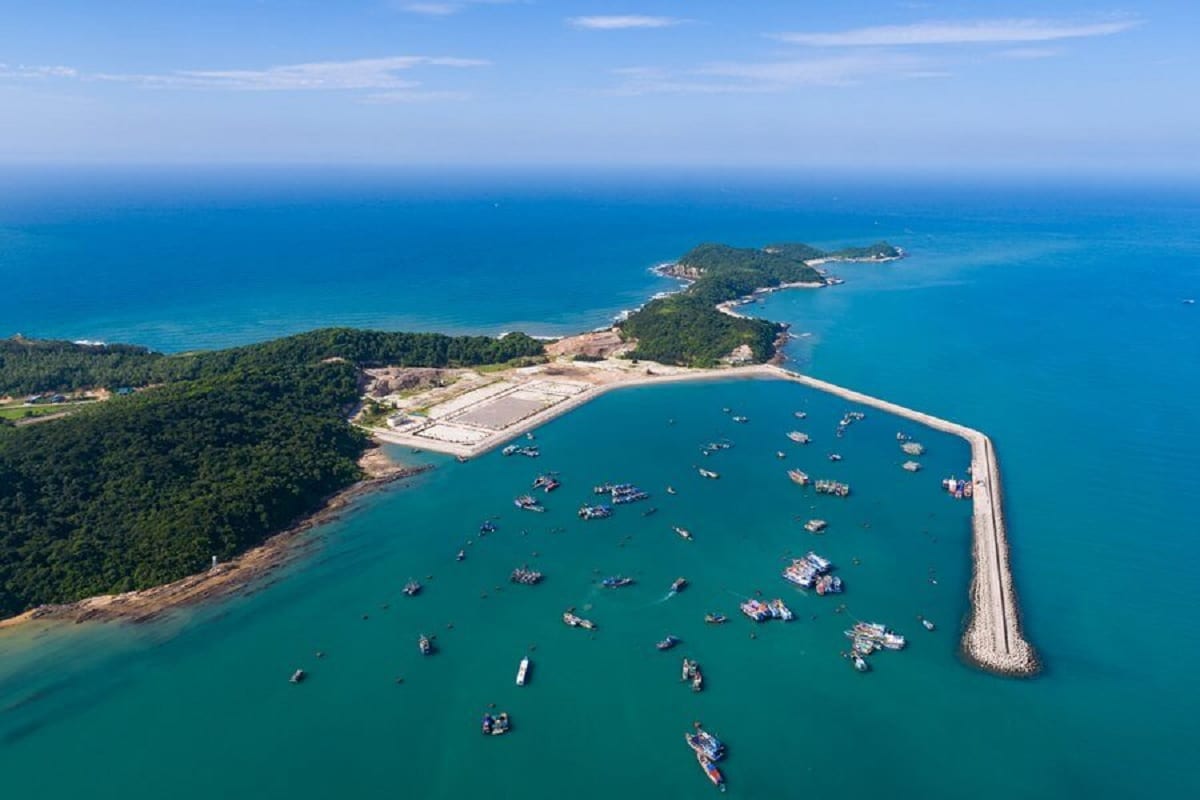
Co To
Visiting Co To today, travelers can not only swim and enjoy local cuisine but also participate in various activities such as kayaking, fishing, jet skiing, parasailing, or engaging in eco-tourism experiences like hiking, trekking through forests, exploring natural forest ecosystems, camping, and learning about the local culture.
Quan Lan Island
Quan Lan is a small island located in the poetic Bai Tu Long Bay. It is a relatively new name that has been frequently mentioned by Northern travelers when choosing summer destinations in recent years. The island consists of two communes within Van Don district, Quang Ninh province: Quan Lan and Minh Chau. Covering an area of about 11km2, the island exudes the majesty of towering mountain ranges stretching from Van Don to Nui Got, acting as a solid “shield” that protects the peaceful lives of its more than 70,000 residents. Visitors to the island will surely be captivated by the white sandy beaches, crystal-clear water, and charming nature. Additionally, you have the opportunity to enjoy delicious seafood, visit historical and cultural relics, and participate in many exciting activities. Although inhabited by locals, the island’s landscape remains largely pristine, featuring three long white sandy beaches and beautiful forests. Quan Lan Island is also a great place to taste local seafood, as the surrounding waters are abundant in squid, flounder, mackerel, and shrimp.
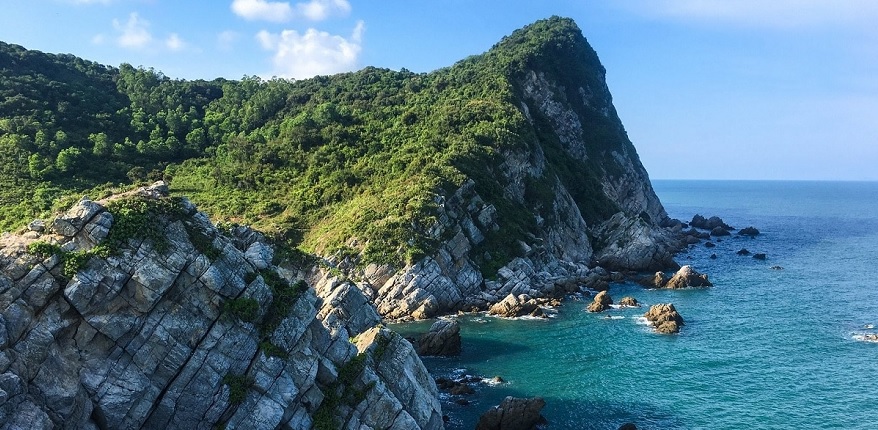
Quan Lan Island
Quan Lan Island not only boasts beautiful natural scenery but also a heroic history and rich traditions. It is home to the Van Don trading port—one of Vietnam’s most important seaports in ancient times, serving as a hub for cultural and commercial exchange with countries in the region and around the world. To this day, the island still retains many historical and architectural relics that testify to the role and development of Van Don in the past.
Ngoc Vung Island
Ngoc Vung Island, also known as Pearl Island, is a beautiful and pristine island located on the Van Hai island route in Van Don district, Quang Ninh province. Covering about 12km2 and situated between Phuong Hoang and Hon Net islands, it holds great potential for eco-tourism and cultural tourism. The island features unique, rich, and diverse natural landscapes, ranging from blue seas, white sands, and primeval forests to areas for cultivation and aquaculture. Ngoc Vung Island is also home to many valuable historical, cultural, and archaeological sites, proving the commercial and cultural exchanges between local people and neighboring countries since ancient times.
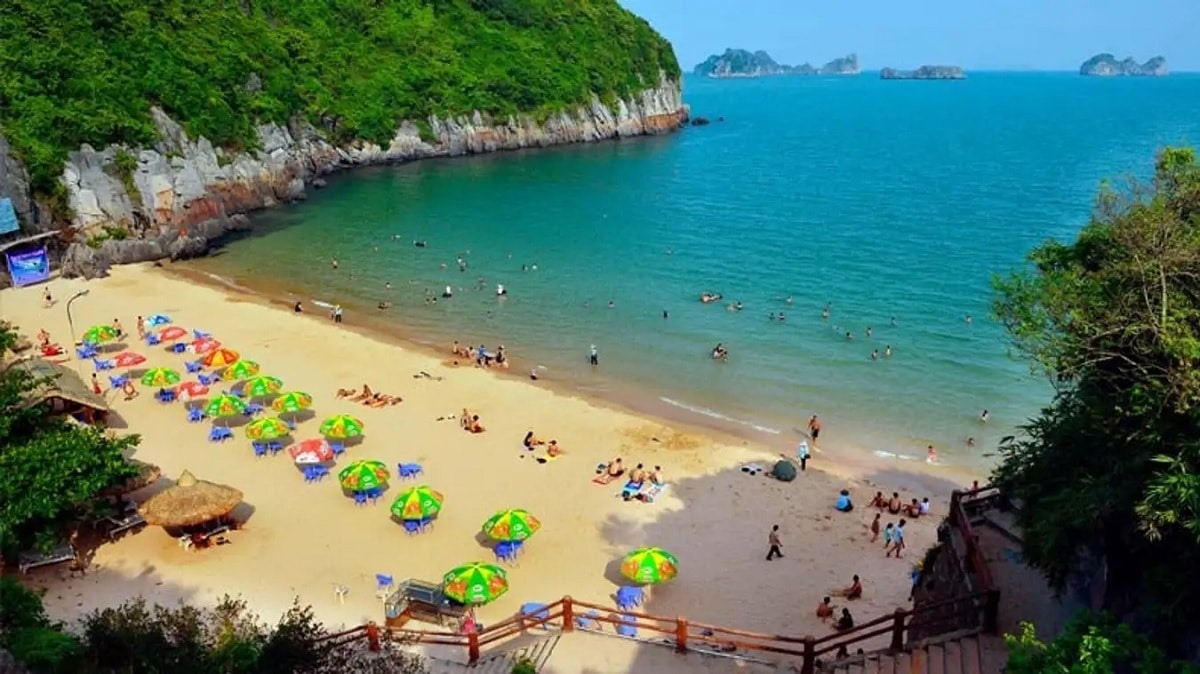
Ngoc Vung Island gets its name from a legend that, in the past, the island was home to many rare pearls that glowed brilliantly at night. Ships at sea would often see a bright light like a flame in the sky emanating from the island. Thus, it was named Ngoc Vung (Glowing Pearl). This is also the site of the Cong Yen wharf relic—part of the ancient Van Don trading port, which facilitated trade with regional countries such as China, Japan, and India. During the resistance war against the US, Ngoc Vung Island was a strategic point for protecting the eastern sky of the Fatherland. It was where our Vietnamese soldiers were stationed, fighting heroically against invaders. Also, on the eastern sandy beach of the island in 1937, stone tools belonging to the Ha Long culture and the late Neolithic period were discovered for the first time, marking the beginning of archaeological excavation and research.
5. Border Tourism
Quang Ninh is not only known for its long coastline and beautiful islands but also attracts visitors with the unique charm of border tourism. With a long border adjacent to China, it offers novel experiences, allowing travelers to explore the northernmost frontier of the country and learn about the history, culture, and daily life of the border communities.
Sa Vi Cape
Located at the northeasternmost point of Vietnam, Sa Vi Cape is a famous historical and tourist landmark that attracts thousands of visitors for check-ins every year. It is not only the starting point of Vietnam’s 3,000 km coastline but also a place that marks the heroic historical chapters of the Vietnamese nation. Also known as Got Cape, Sa Vi Cape is situated in Tra Co Ward, Mong Cai City, Quang Ninh Province, and is marked by landmark 1378. To the north of Sa Vi Cape lies the mouth of the Bac Luan River, where the river meets the sea, creating a majestic and captivating landscape. At Sa Vi Cape, there is a relief sculpture featuring three pine trees reaching toward the sky, inscribed with a verse by the poet To Huu:
From the casuarina forests of Tra Co
to the mangrove forests of Ca Mau
This relief is one of the unique architectural works at Sa Vi Cape. Built in 2006, it stands 12 meters high and 9 meters wide, crafted from natural stone. The relief not only honors the talent of poet To Huu but also symbolizes the unity and solidarity of the Vietnamese people from North to South.
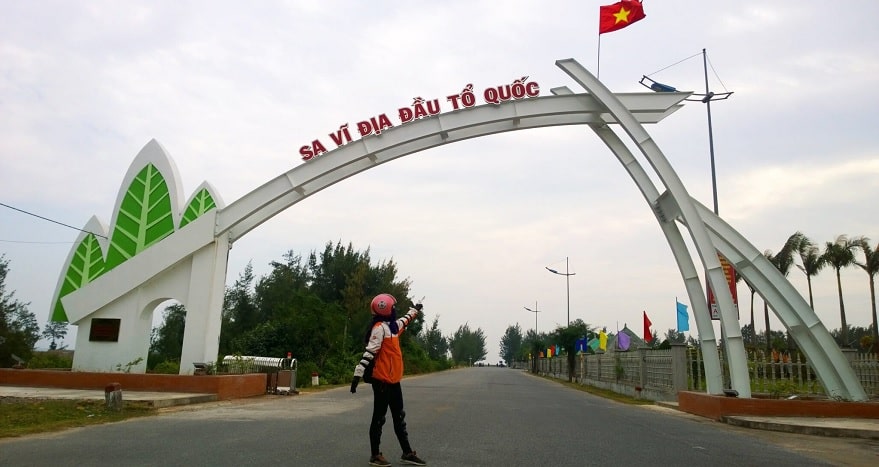
Sa Vi Cape
Tra Co Church
Tra Co Church is a beautiful and historic religious site located in Tra Co Ward, Mong Cai City, Quang Ninh Province. The church has a history spanning over 80 years and was built in the Gothic architectural style, featuring pointed arches, soaring bell towers, and intricate wood carvings. Along with Tra Co Beach and Sa Vi Cape, Tra Co Church has become an essential destination for travelers visiting the country’s northern frontier.