Beneath the windswept skies of Catalonia in the latter half of the nineteenth century, amid the social upheaval and rapid industrialization of Spain’s Bourbon Restoration, a profound religious vision planted the seed for one of humanity’s greatest architectural achievements. The origins of the Basilica de la Sagrada Família are intimately tied to a modest Barcelona bookshop run by Josep Maria Bocabella i Verdaguer. A devout Catholic and founder of the Spiritual Association of Devotees of Saint Joseph (Asociación Espiritual de Devotos de San José) in 1866, Bocabella was deeply troubled by the spreading tide of secularism and materialism. Following a pilgrimage to the Vatican and the Shrine of Loreto in Italy, he nurtured a dream of building an expiatory temple (Templo Expiatorio) funded entirely by voluntary donations from the faithful—a sanctuary where prayers dedicated to the Holy Family could heal the spiritual wounds of the modern age.
Initially, the architectural commission was entrusted to Francisco de Paula del Villar y Lozano, a prominent diocesan architect of the era. Under Villar’s pen, the church was drafted in a strictly orthodox Neo-Gothic style, featuring conventional pointed arches, rose windows, and standard load-bearing buttresses. On March 19, 1882—the Feast of Saint Joseph—the cornerstone was ceremoniously laid on a barren plot in the working-class outskirts of the Eixample district. However, historical destiny swiftly changed course after just one year of excavating the crypt. Fierce disagreements over structural engineering, vault construction, and costly materials between Villar and the board of promoters—most notably architectural advisor Joan Martorell—led Francisco de Paula del Villar to tender his resignation in 1883.
It was architect Joan Martorell who made a decision that would forever alter the face of world architecture: recommending his brilliant 31-year-old protégé, Antoni Gaudí i Cornet. Taking over the construction site in late 1883, the young visionary from Reus did not merely inherit an unfinished blueprint; he boldly upended the rigid conventions of Neo-Gothic design to infuse the project with the soul of Catalan Modernism (Modernisme). Gaudí devoted more than four decades of his life to the basilica, transforming raw stone into a living organism that synthesized natural philosophy, Christian theology, and non-Euclidean geometry. During his final years, he renounced all worldly comforts and moved directly into his on-site workshop amid clutter of plaster models to dedicate himself wholly to the church.
Tragedy struck on an afternoon in June 1926, when Gaudí was fatally struck by a tram along Gran Via de les Corts Catalanes and passed away days later, leaving behind an unfinished symphony in stone. He was solemnly laid to rest in the Chapel of Our Lady of Mount Carmel within the basilica’s crypt. Responsibility for carrying forward his legacy passed to his close disciple Domènec Sugrañes i Gras and a loyal team of collaborators. Yet historical turmoil continued to test human resolve when the brutal Spanish Civil War erupted in July 1936. Anarchist militants stormed the basilica, setting fire to the crypt and workshops while smashing most of the precision-scale plaster models and original manuscripts Gaudí had left behind—threatening to sever the creative thread of the masterpiece forever.
Through extraordinary perseverance, successive generations of chief architects—most notably during the tenure of Jordi Bonet i Armengol and currently under Jordi Faulí i Oller—painstakingly gathered shattered plaster fragments, employing advanced parametric modeling software and digital technology to decode the complex geometric structures Gaudí had envisioned. Rising above the dust of war and twentieth-century political upheaval, the basilica reached a pinnacle of spiritual glory on November 7, 2010, when Pope Benedict XVI consecrated the high altar and elevated the church to the rank of Minor Basilica (Basílica Menor). Every chisel strike and stone block rising toward the heavens today represents the unbroken continuation of a journey of faith spanning three centuries, pressing steadily toward the final completion of its soaring spires.
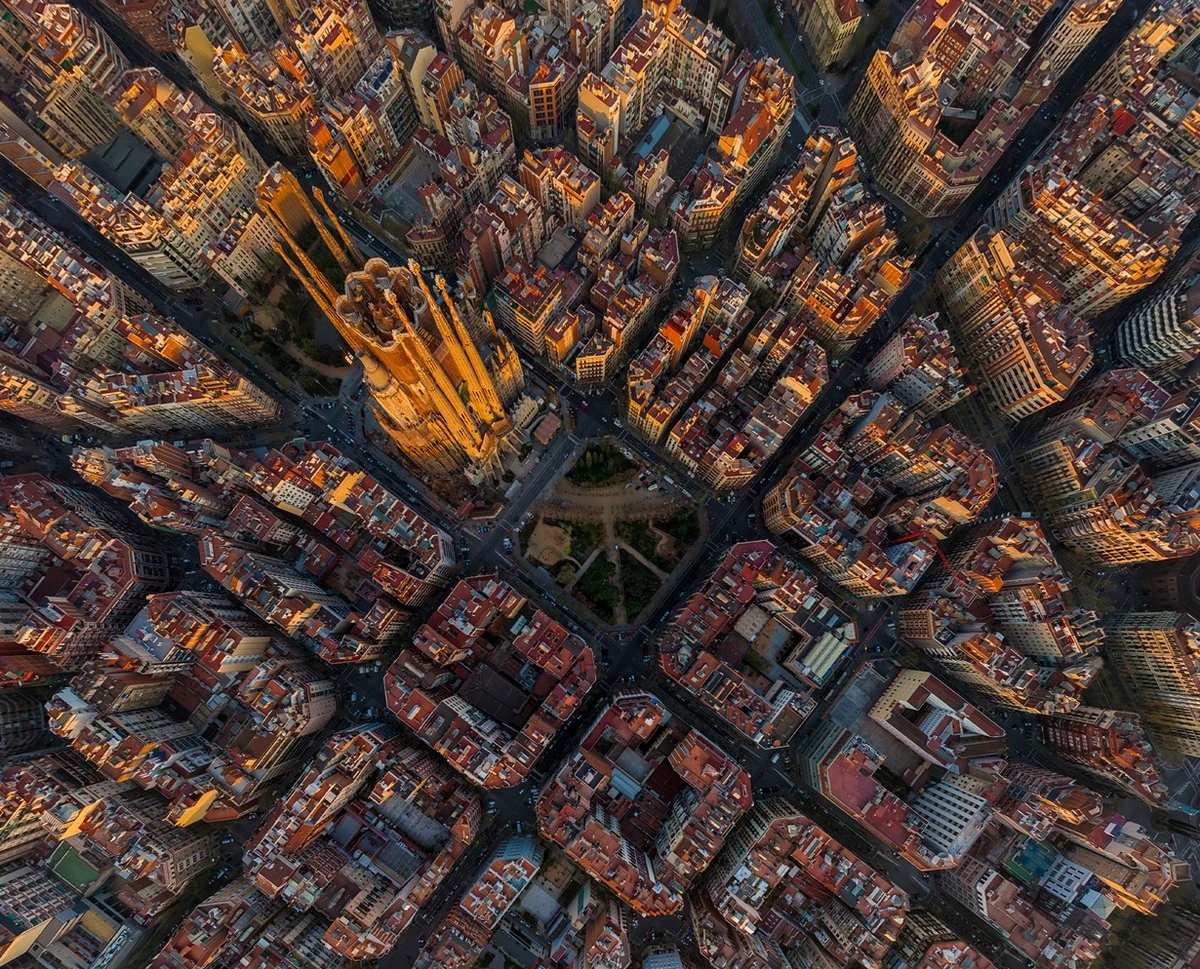
Situated at the heart of the Eixample district—an icon of Catalonia’s celebrated nineteenth-century urban renewal—the Sagrada Família occupies an entire isolated city block bounded by four major arteries: Mallorca, Marina, Provença, and Sardenya. This flat plain formed part of the pioneering master plan devised by engineer Ildefons Cerdà, who laid the foundations of modern urbanism with a strict octagonal grid of chamfered street corners engineered to maximize sunlight, channel refreshing Mediterranean breezes, and open sightlines at intersections. Set within an urban fabric steeped in rationalism, geometry, and strict order, the Sagrada Família emerges as a magnificent visual paradox: a colossal organic mass undulating and surging skyward like a sacred mountain range thrusting up from flat earth, turning a standard city block into an extraordinary spiritual launchpad at the center of a bustling industrial metropolis.
The grand dialogue between Cerdà’s gridded geometry and Antoni Gaudí’s sacred naturalism creates an artificial topography virtually unmatched in architectural history. Rather than disrupting the surrounding street network, Gaudí deftly turned the block’s boundaries into a focal point of perfect symmetry where urban energy converges and ascends vertically. To establish spatial balance and microclimatic harmony for a monument designed to reach staggering heights, the surrounding urban landscape reserves two vital green buffer zones flanking its main facades—serving both as urban lungs filtering city dust and as expansive vantage points for admirers from around the globe.
Immediately to the southwest, directly facing the stark, angular Cubist geometry of the Passion Facade, lies the tranquil expanse of Plaça de la Sagrada Família. Shaded by mature trees, this square provides essential visual breathing room, allowing visitors to tilt their heads back and take in the sinewy contours depicting Christ’s suffering and sacrifice without feeling hemmed in by surrounding buildings. Conversely, to the northeast, opening out before the exuberant, relief-laden Nativity Facade is Plaça de Gaudí. Here, a serene, mirror-like reflecting pond framed by eucalyptus, cypress, and lush Mediterranean flora captures shimmering reflections of the soaring spires at dawn and dusk—conjuring a surreal mirage that blurs the boundary between earthly ground and the heavens above.
Gaudí’s site engineering also embodies deep reverence for Barcelona’s natural geography. In his elevation plans and structural calculations, the master architect deliberately capped the height of the central Tower of Jesus Christ at 172.5 meters. This figure was calculated precisely so that the pinnacle would stand half a meter lower than the summit of Montjuïc, the city’s natural peak. To Gaudí, no human creation, however grand or intricate, should ever surpass the natural topography bestowed by the Creator upon this Mediterranean land. That geographical humility, paired with the surrounding octagonal grid, transforms the basilica into a harmonious landmark where human urban order merges seamlessly with eternal nature.
Stepping across the threshold of the Sagrada Família, visitors do far more than admire a religious monument—they enter a biological universe rendered in stone and light. Standing at the supreme pinnacle of Catalan Art Nouveau (Modernisme) fused with organic naturalism, Gaudí conceived the basilica as an endless hymn celebrating the union of faith and nature. Breaking decisively away from traditional Gothic cathedrals reliant on bulky exterior flying buttresses, Gaudí dispensed with medieval conventions by applying ruled geometric surfaces with mathematical precision. Hyperboloids, hyperbolic paraboloids, conoids, and helicoids not only produce surreal visual fluidity but also distribute structural loads with extraordinary efficiency, enabling the building to stand self-supported from within through its own internal equilibrium.
This architectural concept comes to life in the unique branching column system known as tree-like columns (columnas arbóreas). Rising straight from the granite floor, massive stone trunks soar upward before suddenly splitting into slender, radiating branches that mirror the canopy of a primeval forest. Gazing up toward the towering vaults, star-shaped intersections resemble gaps between leaves filtering sunlight through stained glass, creating an optical illusion that renders thousands of tons of heavy stone weightless and ethereal. Tilted precisely along inverted catenary curves, these columns neutralize lateral thrust, channeling gravity straight down into deep foundations like ancient tree roots gripping the earth.
The craftsmanship and material selection behind this masterpiece further attest to Gaudí’s unmatched ingenuity. He carefully combined diverse natural stones of varying hardness and hue to stratify structural loads—from Barcelona’s renowned Montjuïc granite and high-compression basalt to softer sedimentary sandstone for fluid sculptural detailing. Contrasting with the sober masonry is an explosion of trencadís mosaic art—Gaudí’s signature technique of piecing together glazed ceramic shards, broken tiles, and scrap glass across the spire pinnacles. Beneath the bright Mediterranean sun, these trencadís-clad finials sparkle like blossoming buds against the azure sky, complemented by wrought-iron ornamentation curling like living vines around doorways.
In terms of sheer scale, the basilica follows a classic Latin cross floor plan with five spacious naves and three transept aisles capable of accommodating over thirteen thousand worshippers simultaneously. The original master design unites eighteen monumental towers: twelve lower towers distributed across the three facades representing the Twelve Apostles; four taller towers symbolizing the Four Evangelists; one tower dedicated to the Virgin Mary; and the supreme central spire honoring Jesus Christ at a nominal height of 172.5 meters. Once again, this elevation was never arbitrary, reflecting Gaudí’s steadfast conviction that human handiwork must remain subordinate to God’s natural creation on Montjuïc hill.
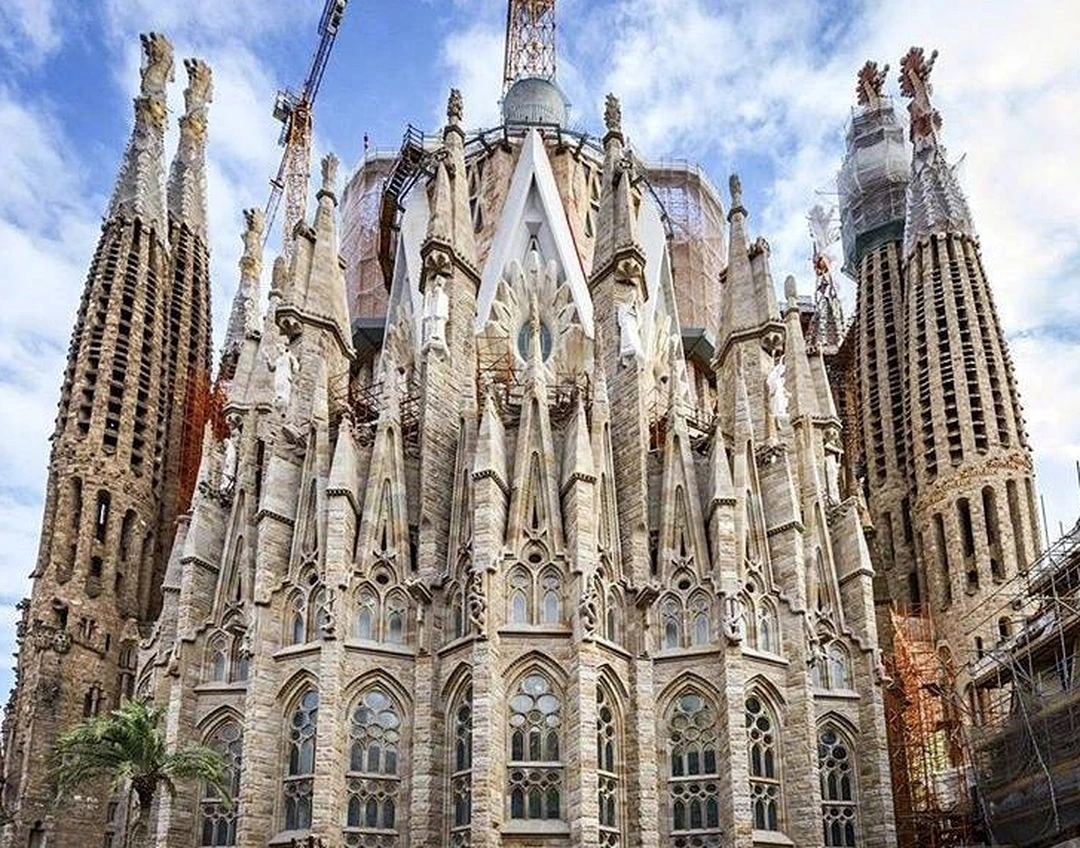
Enclosing the vast sanctuary are three facades representing three distinct theological chapters and contrasting artistic styles. Completed largely during Gaudí’s lifetime, the Nativity Facade radiates exuberance and life, overflowing with dense carvings of flora, fauna, and foliage that appear to sprout organically from living rock. In stark contrast, the Passion Facade—sculpted later by Josep Maria Subirachs—speaks an angular, gaunt, and raw expressionist language, capturing the stark agony and tragic sacrifice leading toward the Resurrection. Finally, the Glory Facade currently under construction on the southern side will depict the Last Judgment and the path to eternal life, completing a centuries-spanning synthesis of stone, light, and enduring faith.
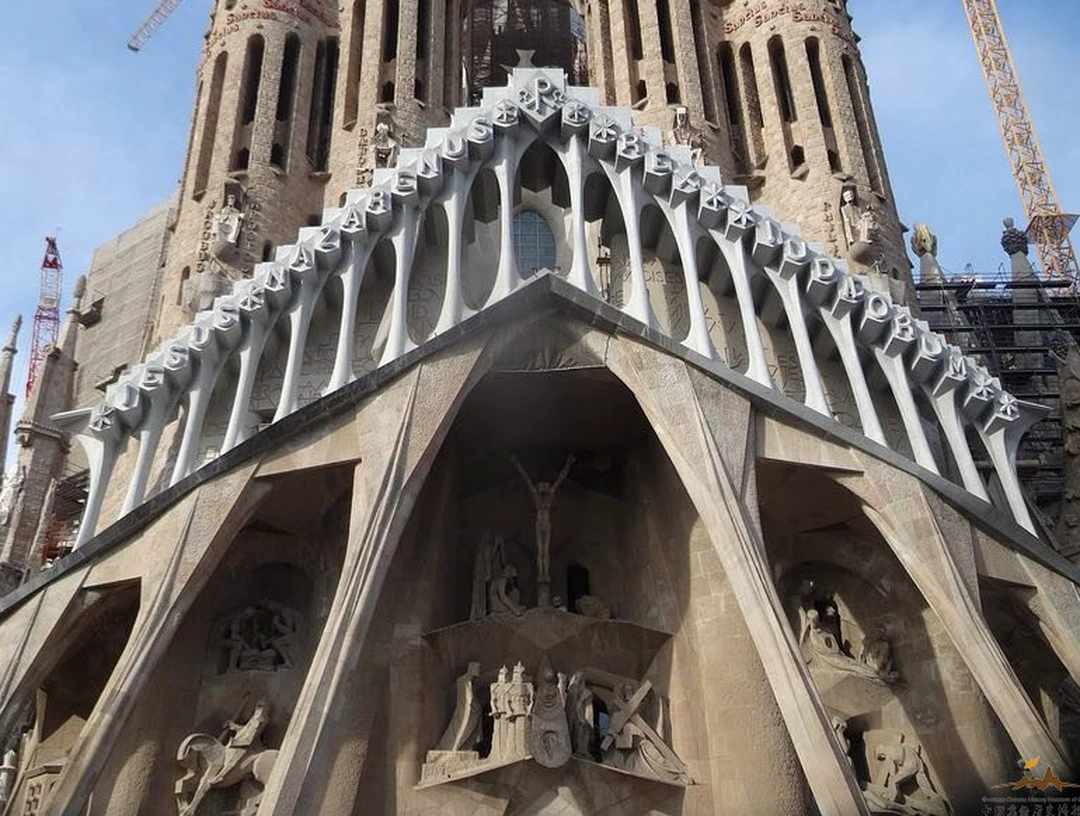
As twilight settles over the Eixample grid, Barcelona seems to hush, yielding center stage to an enchanting nocturnal spectacle at the Sagrada Família. Distinct from its daytime splendor—when dazzling bands of spectral light stream through Joan Vila-Grau’s stained-glass windows—the basilica’s nighttime persona becomes a deeply philosophical ode in light and shadow. High-powered exterior optical projectors calibrated to exacting color temperatures transform the colossal structure into a three-dimensional relief glowing against the Catalan night. Masterful chiaroscuro lighting creates dramatic interplay between pure illumination and deep shadow: under carefully angled beams, the Nativity Facade appears warm and supple, its organic reliefs seeming to stir within the stone, while the Passion Facade casts stark, jagged silhouettes that heighten the tragic intensity of Josep Maria Subirachs’s expressionist sculptures.
Inside the soaring vaults, sensory appreciation transcends sight to become a transcendent acoustic experience thanks to the building’s singular geometry. Gaudí envisioned the church as a giant musical instrument of God, a concept fully realized through hyperboloid ceilings and branching columns that disperse sound evenly throughout the sanctuary. The basilica houses a magnificent pipe organ crafted by the renowned workshop Blancafort Organers de Montserrat, featuring thousands of metal pipes arranged along the interior’s aerodynamic axes. When sacred choral works or polyphonic hymns resound, sound waves bounce off the curved hyperboloid surfaces, eliminating localized echo and generating a crystal-clear acoustic field that seems to pour directly from the heavens into the listener’s soul. Periodic sacred music concerts held on major feast days draw classical music devotees from around the world to experience this sublime fusion of geometry and sacred sound.
Far from slumbering as a silent museum, the Sagrada Família pulses with the vitality of one of Europe’s most active basilicas. Beyond daytime sightseeing crowds, evening liturgies and international Masses held every Sunday morning gather thousands of worshippers from across the globe, celebrated in multiple languages including Catalan, Spanish, English, French, and Italian. The solemnity of liturgical ritual blends seamlessly with the otherworldly beauty of the sanctuary, fostering an atmosphere of pure spiritual renewal in the heart of a bustling tourist capital. On major commemorative occasions, candlelight vigils and prayer services turn the nave into a shimmering sea of light where supreme architectural art and religious devotion become indistinguishable.
Descending beneath the apse, the historic crypt opens an entirely different realm of contemplation and scholarship. Serving not only as the final resting place of Antoni Gaudí and founder Josep Maria Bocabella, the space also functions as an in-depth museum dedicated to Gaudí’s architectural legacy. The crypt preserves original plaster models shattered during the Spanish Civil War and painstakingly restored over decades, alongside Gaudí’s famous upside-down hanging chain-and-sandbag models used to calculate catenary vault stresses. Closely affiliated with the Gaudí Chair at the Polytechnic University of Catalonia, this subterranean space operates as a living research institute where contemporary architects, mathematicians, and scholars decode the pioneering fractal geometry of the Catalan master. At night, as visitors’ footsteps fade away, the quiet crypt continues to whisper legends of a genius who devoted his entire life to building a bridge between earth and eternity.
Stepping out from beneath Gaudí’s rainbow-lit stone vaults, travelers step directly onto the grid-lined avenues of Eixample, where another cultural heritage quietly fills the air with enticing aromas: traditional Catalan gastronomy. The dining scene surrounding the basilica is far more than a convenient place to rest; it is a living culinary map of the ancient Mediterranean, where centuries-old family recipes are preserved in neighborhood kitchens and time-worn bodegas. The seamless marriage of fertile inland produce and abundant seafood from the nearby Costa Brava has shaped a distinctive culinary identity where rustic simplicity reaches the height of gastronomic refinement.
Any authentic local meal begins with Pa amb tomàquet—a deceptively simple dish that stands as an eternal icon of Barcelona’s culinary soul. Slices of crusty toasted bread are rubbed directly with pungent garlic cloves and ripe local tomatoes before being generously drizzled with golden extra-virgin olive oil and sprinkled with flaky sea salt. Humble as it is, this bread accompanies nearly every Catalan feast, acting as a rustic overture to far more elaborate slow-cooked specialties. During cooler months, Escudella i Carn d’Olla—a traditional meat-and-vegetable stew dating back to the fourteenth century—warms travelers with rich bone broth served alongside a giant herb-seasoned meatball (pilota) and signature snail-shaped galets pasta.
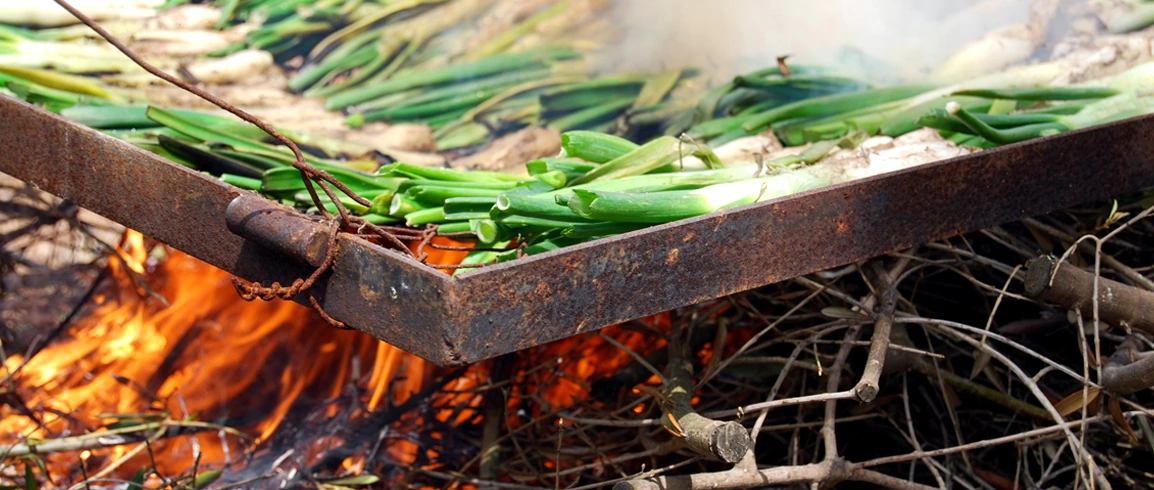
Catalan cuisine around the Sagrada Família also features deeply festive culinary rituals, exemplified by Calçots amb salsa romesco. Bundles of sweet spring onions (calçots) are charred directly over open flames of dried grapevine cuttings until their outer skins blacken, revealing tender, sweet white hearts inside, which are dipped generously into velvety romesco sauce pounded from roasted hazelnuts, almonds, charred garlic, and sun-dried nyora peppers. Flavor complexity reaches further heights with Fricandó, thin slices of beef braised until melt-in-your-mouth tender with wild moixernons mushrooms in a sauce thickened with picada—a traditional paste of toasted nuts, saffron, and crisp biscuits. Equally celebrated, Suquet de Peix captures the briny essence of the sea in a hearty fishermen’s stew of white fish, fresh clams, and potatoes infused with garlic and paprika.
A culinary tour around Gaudí’s masterpiece would be incomplete without indulging in iconic Catalan desserts. Classic Crema Catalana captivates diners with a brittle, slightly bitter caramelized sugar crust that cracks open to reveal silky custard infused with cinnamon and fresh lemon zest. Around traditional festivals such as La Castanyada, neighborhood bakeries bustle with trays of Panellets—golden marzipan confections studded with toasted pine nuts—alongside crisp slices of sweet flatbread (Coca de Forner) delicately scented with anise liqueur.
Each of these regional dishes reaches its full potential when paired with Catalonia’s celebrated wines. A crisp glass of white Macabeo or Xarel·lo from the Penedès valley, brimming with orchard fruit aromas, effortlessly balances rich seafood stews, while bold, mineral-driven reds from the slate soils of Priorat make an ideal companion for slow-braised Fricandó. And to cap off a day spent admiring the Sagrada Família as evening shadows lengthen across its spires, a chilled glass of traditional-method sparkling Cava with lively dancing bubbles provides the ultimate toast to the enduring art of living and thousand-year culinary heritage of Catalonia.
Visiting Antoni Gaudí’s greatest masterpiece requires thoughtful preparation to savor every transcendent visual moment. The Sagrada Família welcomes visitors nearly every day of the year, with seasonal operating hours shifting alongside daylight patterns: peak spring and summer months generally run from 9:00 AM until 8:00 PM, whereas quieter autumn and winter months close at 6:00 PM, aside from special liturgical schedules during Easter and Christmas. The single most vital golden rule for every traveler is to book timed-entry tickets online through the official portal weeks in advance, as heritage authorities enforce strict capacity quotas per time slot to protect the monument; attempting to buy same-day tickets at the door is virtually impossible amid daily crowds.
For travelers eager to capture sweeping panoramic views across Catalonia, purchasing a ticket that includes tower access unlocks two remarkable options: the Nativity Tower, sculpted under Gaudí’s direct supervision and overlooking the eastern Mediterranean coastline, or the Passion Tower, showcasing Josep Maria Subirachs’s angular sculpture while gazing out over the bustling geometric grid of Eixample. While modern elevators whisk visitors swiftly up into the heights, the descent presents a genuine physical challenge via an extremely narrow stone spiral staircase winding downward like a hollow nautilus shell. This steep descent is strictly unsuitable for anyone suffering from vertigo, heart conditions, pregnancy, or limited mobility.
Despite its stature as a global artistic wonder, the Sagrada Família remains first and foremost a consecrated Roman Catholic church, requiring visitors to observe a respectful dress code before entering. Security staff reserve the right to deny entry to anyone wearing plunging necklines, strapless or spaghetti-strap tops exposing bare shoulders, shorts or skirts above the knee, sheer garments, or clothing displaying offensive slogans. Hats and sunglasses must be removed upon entering the nave, and mobile phones must be silenced to preserve the reverent atmosphere of prayer. Balancing these strict standards is exemplary universal accessibility: the main nave, sanctuary area, and subterranean museum displaying architectural drawings and inverted catenary models are fully equipped with dedicated ramps and elevators for wheelchair users.
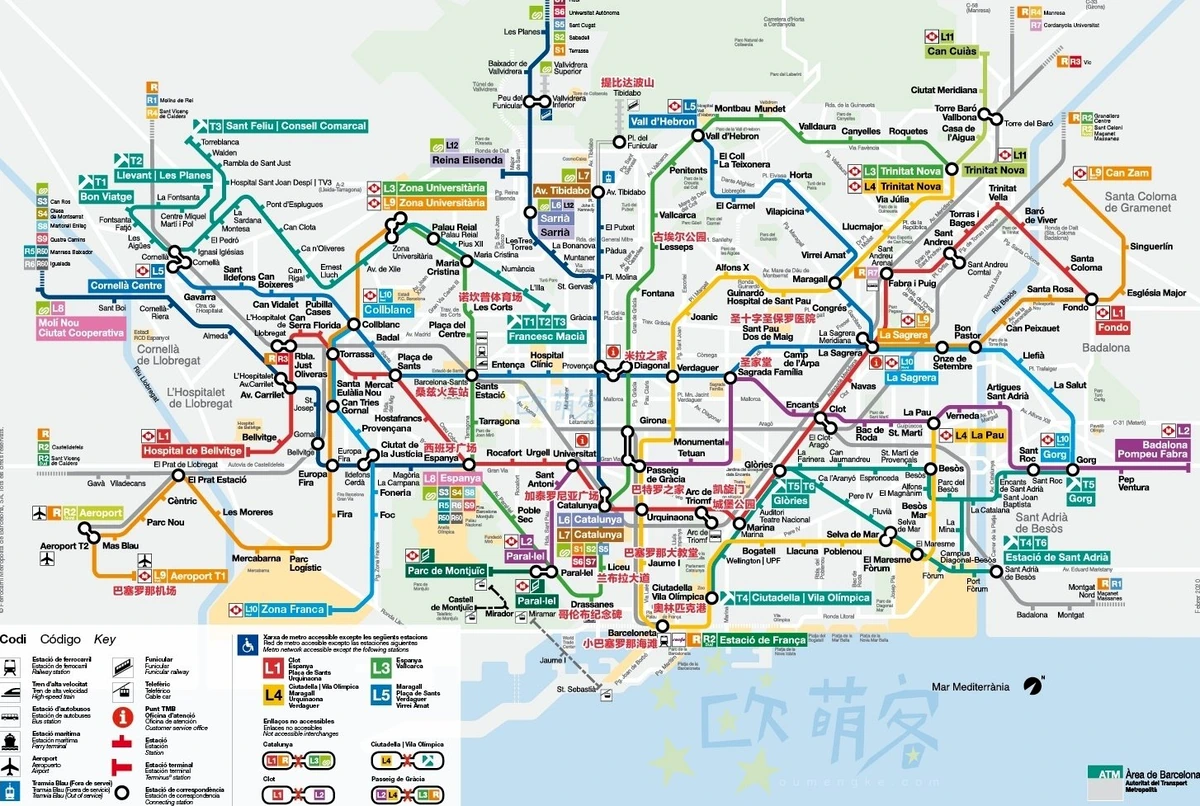
Reaching this architectural icon is effortless thanks to Barcelona’s efficient public transit network. Travelers can simply board the Metro on Line 2 (Purple) or Line 5 (Blue) and exit at the Sagrada Família station, whose subterranean exits open directly at the foot of the towering columns. Additionally, city bus routes including D50, H10, 19, 33, 34, and B24 stop right beside the basilica perimeter. However, visitors must remain highly vigilant against skilled pickpockets who frequently target crowded tourist zones—especially around Plaça de Gaudí and Plaça de la Sagrada Família, where travelers often become distracted while framing photos of the spires reflected in the pond.
Capping off your visit to the basilica by lingering over a rich cortado at a quiet corner café in Eixample lets the awe of this monumental human achievement truly sink in. To ensure your journey across Spain unfolds seamlessly—from flights and premium transfers to iconic landmarks—travelers can entrust their holiday to thoughtfully curated, all-inclusive European tour packages crafted for comfort and cultural depth.