Nestled in the southwestern reaches of the Korean Peninsula, the region of Damyang (潭阳) is blessed by nature with fertile alluvial sediment deposited by two bountiful river basins: the Seomjin River and the Yeongsan River. Dating back to its earliest historical dawn under the Mahan Confederacy in the first century BC, the soil and climate here demonstrated a remarkable affinity for tall woody grasses, paving the way for the first bamboo shoots to sink their roots deep into the earth. Over millennia of dynastic transitions, Damyang’s bamboo evolved far beyond mere wild greenery, weaving itself deeply into both the daily livelihoods and the spiritual culture of local residents.
During the Goryeo Dynasty (918–1392), the renown of Damyang’s bamboo forests officially transcended village borders to enter the solemn halls of the royal court. Historical records note that in 1115, the tenth year of King Yejong’s reign, royal workshops of the Goryeo court began selecting exceptionally resilient bamboo culms from Damyang to craft royal articles, stationery, and ceremonial court instruments. This royal endorsement elevated Damyang into one of the kingdom’s premier centers for raw materials, laying a firm foundation for fine bamboo weaving and woodworking crafts that flourished for centuries to come.
In the Joseon era (1392–1910), Damyang experienced a profound cultural turning point, emerging as a favored retreat and gathering place for reclusive Confucian scholars embodying the noble *Seonbi* spirit. To these literati, bamboo’s upright posture, hollow yet unyielding culms, and evergreen foliage through all four seasons personified an ideal of moral integrity and steadfastness in the face of life’s storms. That symbolism was intimately bound to the Confucian virtues of Loyalty and Filial Piety (*Chung Hyo*). Prominent scholars, most notably Song Si-yeol, sought refuge in this land to wash away worldly dust, listening to the wind whispering through bamboo groves as they contemplated statecraft and composed classical treatises. Amid fierce factional strife at court, Damyang’s bamboo hills served as a tranquil sanctuary sheltering the souls of upright gentlemen determined to preserve their dignity.
The wheel of history continued to turn through turbulent shifts of fortune. In 1903, the seventh year of the Gwangmu era under Emperor Gojong, growing awareness of genetic conservation and community economic development inspired local Confucian scholars and residents to join forces in establishing the Damyang Chwimul Association. This organization proactively collected, mapped, and cultivated numerous rare native bamboo varieties on a wide scale. However, the dark period from 1920 to 1945 under Japanese colonial rule left deep scars across the region’s groves, as bamboo resources were subjected to coercive over-harvesting to supply foreign industrial machinery and military logistics, leaving many ancient bamboo hills depleted and barren.
A true renaissance blossomed only during the 1970s through the 1990s, when the wave of the Saemaul Undong (New Community Movement) breathed fresh vitality into rural South Korea. Damyang seized this golden opportunity to restore its ancient bamboo groves, specialize its traditional handicraft villages, and firmly cement its status as the nation’s premier bamboo capital. In May 2003, local authorities made a visionary decision to comprehensively redevelop the expansive bamboo hills into Juknokwon Ecological Park, officially opening its gates to the public on May 1, 2003.
Following its grand opening, Juknokwon swiftly reaped landmark accolades. In 2005, the complex was honored by the national government as an exemplary eco-tourism destination thanks to its model of conservation paired with sustainable travel. Global recognition reached its zenith in 2015 when Juknokwon served as the centerpiece venue for the Damyang World Bamboo Exposition, attracting more than 1.37 million domestic and international visitors. From a utilitarian timber forest in antiquity, Juknokwon has transformed into a living ecological and humanistic icon where a thousand years of local history rustles day and night in harmony with the pulse of the modern world.
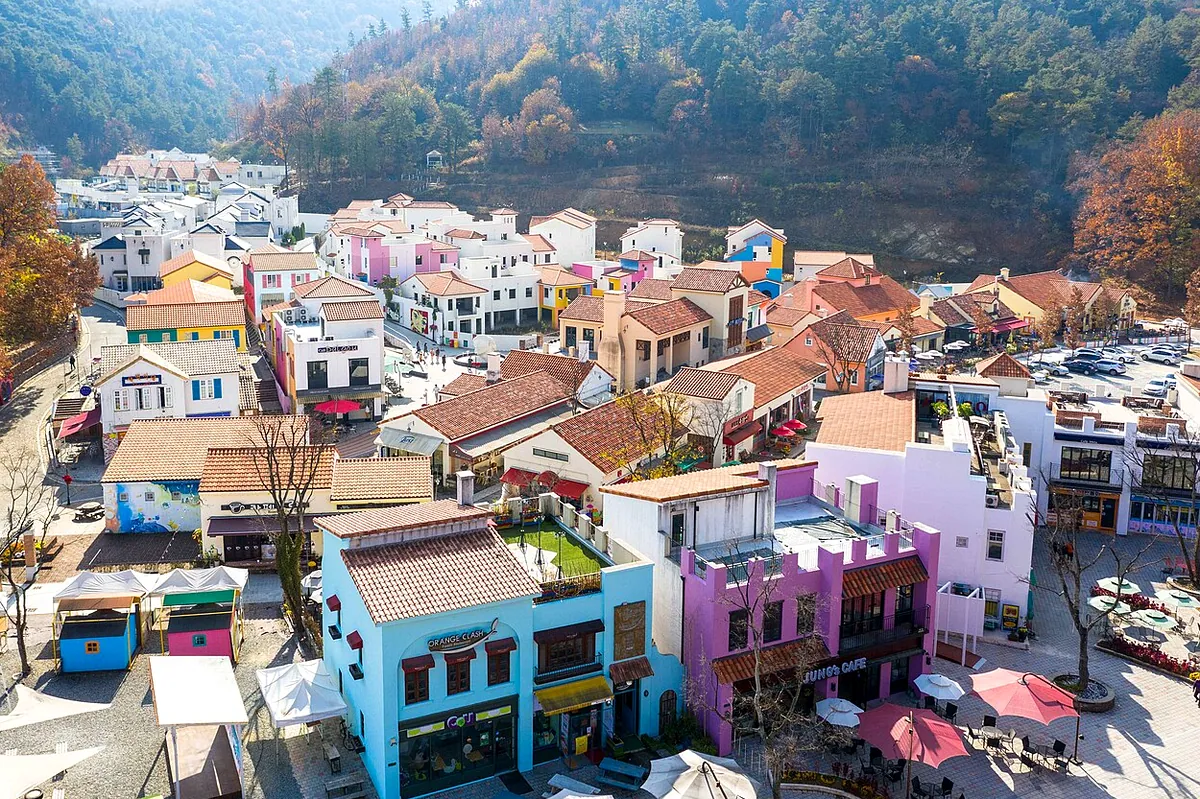
Located in the gentle countryside of Damyang County in Jeollanam-do Province, Juknokwon Bamboo Garden occupies an auspicious geomantic setting atop naturally undulating, bowl-shaped hills. In traditional East Asian geomancy (*pungsu*), the site embodies the classic principle of “water in front, mountains behind,” drawing vital energy from the tranquil Yeongsan River as it deposits layers of fertile, perennially moist ancient alluvium. Beneath nutrient-rich red basaltic loam mixed with forest humus, pure underground springs seep through to nourish deeply anchored bamboo rhizomes, sustaining a lush botanical canopy resilient against every shift in weather. The gentle slope of the hillsides not only ensures effortless natural drainage during monsoon rains, but also creates a distinctive cool microclimate where ambient temperatures remain two to three degrees Celsius lower than surrounding urban areas, thanks to dense foliage cover and the continuous release of crisp negative ions.
Within a broader regional master plan, Juknokwon serves as the central nucleus linking the renowned ecological heritage sites and cultural landmarks of southern South Korea. From the northern boundary of the bamboo garden, visitors need only travel a short two-and-a-half kilometers to immerse themselves in the breathtaking beauty of Metasequoia Lane, shaded by towering rows of dawn redwoods reaching straight into the blue sky. Right at the foot of the hill, the ancient Gwanbangjerim protective forest stretches along the embankments of the Yeongsan River like an emerald silk ribbon shielding the entire plain; cultivated in the seventeenth century during the Joseon Dynasty to reinforce levees against flooding, this living green heritage now stands alongside the millennial breath of the bamboo forest. Roughly ten kilometers to the southeast, historic Soswaewon Garden nestles quietly within a valley, forming a serene Confucian cultural corridor connecting the lofty reclusive ideals of ancient scholars with the open expanse of Damyang’s bamboo hills.
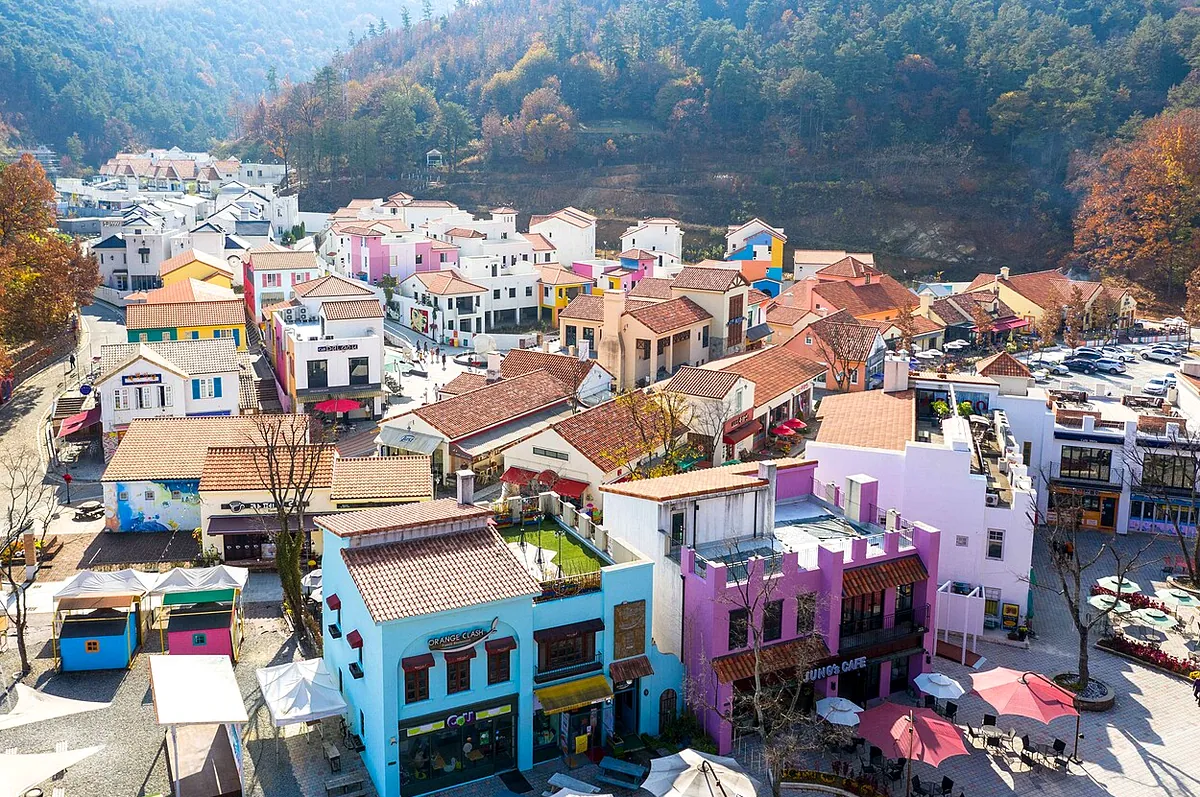
Making full use of the natural slopes and undulating contours of the terrain, Juknokwon’s internal landscape design is a masterly symphony uniting human artistry with untamed nature. Rather than leveling the hillsides, landscape architects wound a network of eight thematic walking trails totaling roughly two-and-a-half kilometers beneath multi-tiered canopies of towering bamboo. Each pathway is named after a profound emotion or philosophical ideal: from the sweet Lovers’ Trail, the contemplative Philosophers’ Trail, the nostalgic Memory Trail, and the babbling Love Stream Trail, to the dignified Celebrities’ Trail, the poetic New Moon Trail, the scholarly Study Trail, and the lush Green Bamboo Trail. Path surfaces layered with packed earth, river pebbles, and a thick carpet of fallen bamboo leaves cushion every footstep to the rustle of forest breezes, unveiling multi-layered perspectives—whether gazing upward from hillside slopes toward slivers of deep blue sky or looking out from hilltop crests over distant rural villages.
Natural scenery here moves to an enchanting seasonal rhythm throughout the year. The finest window to experience the hills bursting with vitality arrives in warm spring from April to May, when plump young bamboo shoots push through the damp earth in abundance, releasing the rich, earthy fragrance of reawakening soil. By October and November in autumn, the landscape dons a poetic contrast as golden ginkgo and crimson maple leaves from native broadleaf trees intermingle with the eternal deep emerald of the bamboo groves. In particular, the golden hour between 8:30 AM and 10:30 AM each morning marks Juknokwon’s most sacred natural moment; slanting early sunbeams pierce lingering veils of morning mist, casting ethereal silver shafts across mossy ground and creating an absolute meditative sanctuary where travelers can breathe deeply of phytoncide-rich forest air to cleanse the spirit.
Viewed from above, Juknokwon Bamboo Garden resembles a colossal jade folding screen unfurled across the natural hills of Damyang. Without disrupting the existing geomorphology, the master plan honors the East Asian philosophy of yielding to nature, transforming rolling ridges into a multi-layered ecological tapestry. The backbone of the entire park crystallizes in its eight interconnected yet distinct thematic trails spanning 2.4 kilometers. Each branch carries its own mood and philosophical intention—from paths of stillness and memory to trails of fortitude—guiding visitors through shaded biospheres of green bamboo where sunlight filters through dense leaves as slender golden threads illuminating damp moss below.
Partially veiled amidst the emerald woodland stand architectural pavilions bearing the unmistakable imprint of Joseon-era Confucianism, achieving a seamless dialogue between expansive nature and lofty scholarly spirit. Foremost among them is Jukro-jeong (Bamboo Dew Pavilion), a square timber pavilion crafted entirely from prized hardwoods that preserves the soul of classical poetry societies. Here, sages of old once gathered to discuss the affairs of the world, sip cups of bamboo-dew tea, and compose verses celebrating the upright virtue of the noble gentleman. Jukro-jeong serves not merely as a scenic rest stop, but as an architectural bridge connecting modern visitors with the contemplative depth of their forebears, where the whisper of thousands of bamboo stalks harmonizes with weathered rafters and beams.
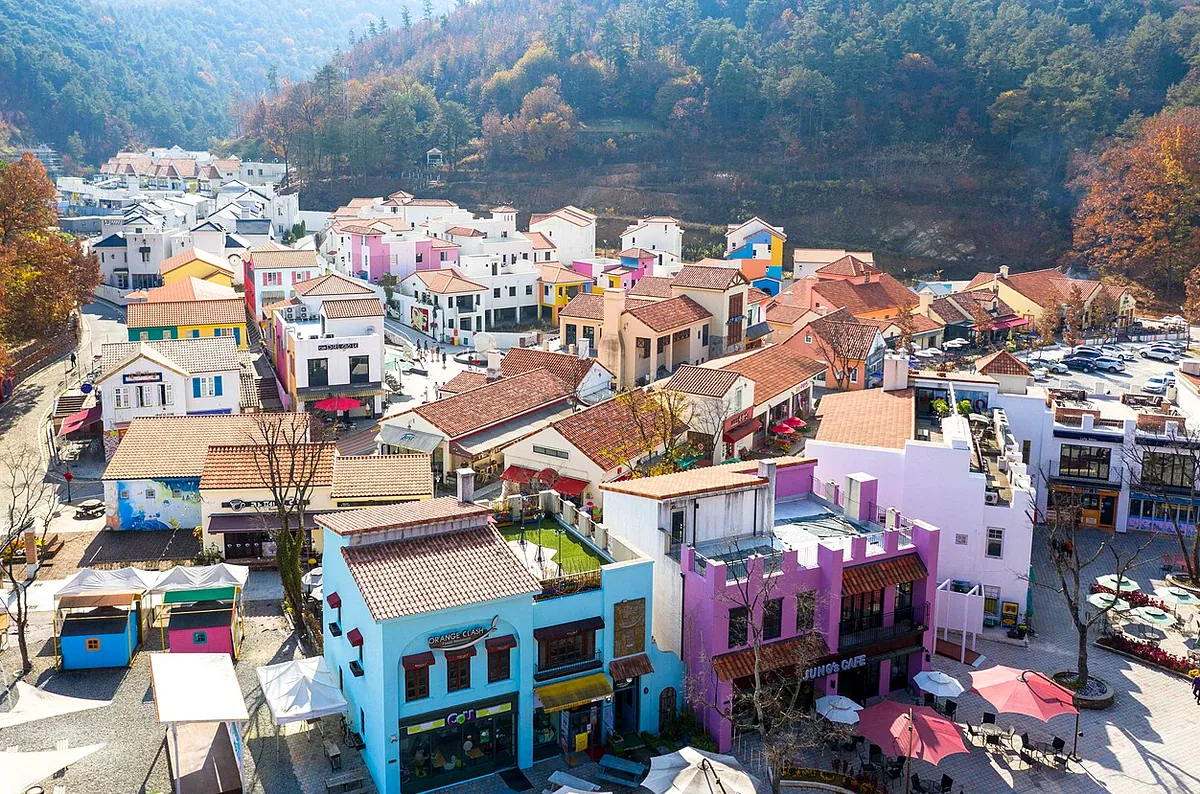
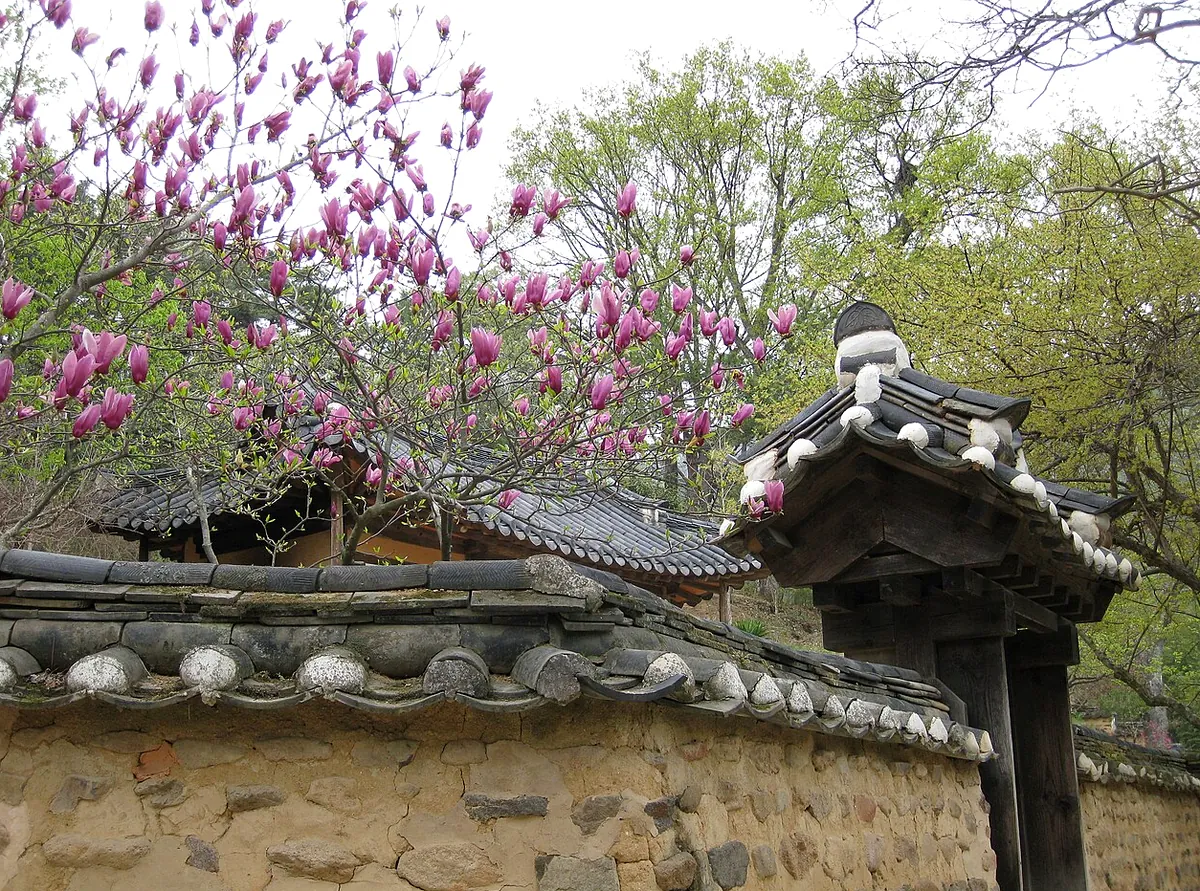
Venturing deeper into the cultural zone, the park’s immersive curation shines further through the Traditional Hanok Village and the Bamboo Culture Experience Center. The Hanok residences here are authentically reconstructed using time-honored Korean architectural techniques, pairing thick walls of golden loess mud (*hwangto*) with solid pine timber frames joined without metal nails. This natural earthen material naturally regulates indoor humidity and purifies the air, creating an exceptionally soothing microclimate. Adjacent to the heritage quarters sits a living recreation of the Hwangham Craft Village, preserving traditional techniques of splitting bamboo, shaving fine strips, and weaving household wares—transforming the heritage site into a vibrant, living workshop rather than a static museum display.
Every corner of Juknokwon is purposefully designed to optimize holistic healing through walking meditation and a signature auditory experience known as Bamboo Sound Meditation. Along a standard route lasting 2.5 to 3 hours, visitors are guided through a comprehensive journey of stress release. Deep within tranquil forest clearings, concentrations of negative ions and bamboo-emitted phytoncides reach peak levels, harmonizing with the melodic rustle of mountain breezes swaying tens of thousands of bamboo culms in gentle rhythm. Careful calibration of everything from intervals between rest pavilions and gentle stone-paved gradients to wind-catching viewpoints turns this garden into a landscape masterpiece where Confucian architecture and untamed nature fuse into an indivisible whole.
Worlds apart from colorful mega-concerts or noisy artificial stage productions common in modern tourist cities, the living spectacle at Juknokwon Bamboo Garden (潭阳竹绿苑) is directed by the effortless hand of nature itself. There are no massive mechanical backdrops or high-wattage loudspeakers here; instead, the entire sweeping bamboo valley of Damyang County acts as a natural cathedral of art where dances of light, shadow, sound, and forest breath intertwine from dawn until late night. The prime golden window to witness this living artwork begins between 8:30 AM and 10:30 AM, when delicate wisps of morning mist still cling to slender bamboo leaves. As early sunlight pierces the dense canopy, millions of slender silver rays cascade onto damp earth, creating a magical, otherworldly visual effect of breathtaking purity.
This immersive sensory journey unfolds along eight thematic trails winding gracefully across gentle hillside contours. Beneath green bamboo arches interwoven like the vaulted ceiling of a natural Gothic cathedral, Juknokwon’s symphony awakens on mountain winds: leaves rustling like gentle ocean waves, hollow bamboo stalks clicking softly together in crisp cadence, and birdsong trilling high in the open air. In thoughtfully designed quiet clearings deep within the grove, Bamboo Sound Meditation draws visitors into deep inward clarity. Resonant tones chiming from aged natural bamboo, paired with the primordial vibrational frequencies of the forest, restore physical vitality while dissolving lingering worries—acting as a spiritual purification ritual amidst the woods.
Closely intertwined with this serene auditory and visual experience is the traditional tea ceremony preserved inside rustic teahouses tucked beneath cool bamboo shade. Unadorned wooden tearooms with sliding doors thrown wide open to mountain breezes bring visitors closer to the refined poise of scholars of yore. Here, guests can pause to savor Bamboo Dew Tea (*Juknocha*)—a celebrated infusion crafted from wild tea buds growing naturally beneath bamboo roots, nourished by morning dewdrops dripping from emerald leaves overhead. Each sip opens with a gentle astringency on the tip of the tongue before blooming into a crisp, lingering sweetness at the back of the throat, complemented by warm woody notes that complete the holistic body-mind-spirit healing ritual generously bestowed by Damyang’s nature.
When twilight descends and gives way to night, Juknokwon does not lose its vitality; instead, it transforms into a poetic, philosophical realm of nocturnal light art. Rather than overusing industrial laser displays, park stewards opted for minimalist artistic illumination using handcrafted bamboo lanterns casting a warm golden glow along moss-covered stone steps. Gentle pools of light graze towering bamboo culms from below, highlighting vibrant emerald silhouettes against the deep night sky like living ink-wash paintings. Strolling through the grove in the absolute hush of evening, listening to breezes slip through foliage and inhaling cool, mist-laden air, visitors experience the profound beauty of authentic nocturnal calm—where stillness, shadow, and light merge into a deeply moving visual and spiritual encounter.
The cuisine of Damyang’s bamboo country is far more than a simple combination of local ingredients; it embodies a thousand-year-old East Asian philosophy of nourishing life, where every flavor is infused with the vital energy of the Honam land. Across generations living beneath the rolling canopy of Juknokwon, lush bamboo has woven itself naturally and gracefully into everyday life, reigning as the soul of traditional family tables. Unlike the elaborate ostentation of royal court banquets in the capital, Damyang’s culinary identity is rustic yet refined, preserving cooling properties that clear internal heat, balance yin and yang, and awaken the palate with pure, unadorned flavors rarely found elsewhere.
The crowning glory of bamboo-centered gastronomy is Bamboo Tube Rice (*Daetongbap*), a dish hailed as the crystallization of earth and sky’s pure essence. Local chefs select only three-year-old *Wangdae* bamboo culms—at their prime maturity with thick walls and an inner silky membrane brimming with fresh natural oils. Premium glutinous rice, washed thoroughly in pure mineral spring water, is mixed with nutty chestnuts, plump red jujubes, black beans, and ginkgo nuts before being packed neatly into cut sections of hollow bamboo. The open end is sealed carefully with layers of traditional *Hanji* mulberry paper to lock in fragrance prior to hours of gentle steaming. As the bamboo husk darkens over glowing charcoal heat, the rice cooks evenly into plump, tender grains infused with the delicate inner bamboo film, imparting a pure, subtle sweetness, a whisper of warm woodsmoke, and remarkable cooling, calming, and detoxifying benefits.
Sharing the traditional table alongside bamboo tube rice is the celebrated grilled short rib patty *Ddeokgalbi*, a delicacy with roots in the royal kitchens of the Joseon Dynasty. Legend holds that royal chefs devised a method of trimming and finely mincing beef and pork rib meat so monarchs could dine with regal dignity without having to gnaw directly on bones. Adopted into the fertile Damyang valley, the dish was elevated into a signature folk culinary art. Fresh prime beef and pork are hand-minced to a cohesive, velvety consistency and marinated with aged fermented soy sauce, pure wildflower honey, scallions, and crushed garlic. This savory mixture is molded deftly around flat, hand-whittled bamboo skewers and grilled over glowing hardwood charcoal as flavorful juices sizzle. Charcoal heat mingles with subtle aromatic essences released by the bamboo skewers, searing the exterior to a glossy caramelized finish while keeping the interior melt-in-your-mouth juicy and leaving a deep, sweet finish on the palate.
A feast of Damyang flavors remains incomplete without a cup of poetic Bamboo Leaf Liquor (*Jukyeopju*). Carefully brewed from tender green bamboo leaves combined with local glutinous rice and more than a dozen prized traditional medicinal herbs, this golden-amber spirit carries a smooth, approachable strength of thirteen to fifteen percent ABV. Sipping *Jukyeopju* reveals a refined sweetness and delicate herbal bouquet spreading across the palate like breathing in morning mist deep inside a bamboo forest. Just outside the main gate of Juknokwon, a chilled jade-green bamboo ice cream cone—crafted from finely milled young bamboo leaf powder blended with rich fresh milk—offers a refreshing final note that melts away any lingering fatigue.
To leave behind the fast pace of metropolitan Seoul and embark on an eco-cultural journey to Damyang, the most efficient travel option is the KTX high-speed train on the Honam Line departing from central stations such as Yongsan or Seoul Station. After a smooth 1-hour-35-minute to 1-hour-50-minute ride gliding past fertile southwestern plains, the train arrives at Gwangju-Songjeong Station. From there, or from the major Gwangju U-Square Bus Terminal, travelers can easily board frequent intercity bus routes 311 or 311-1—costing only around 2,000 KRW for the 40-to-50-minute ride directly to the stop in front of Juknokwon’s main entrance. Alternatively, travelers who prefer a single direct ride without transfers can catch an express bus from Seoul Central City Terminal straight to Damyang Bus Terminal in roughly 3 hours and 30 minutes, enjoying a leisurely transition from modern cityscapes to pastoral countryside.
Juknokwon Scenic Park welcomes visitors year-round, seven days a week, including traditional holidays. The best time to begin your stroll is early in the morning while dewdrops still glisten on young bamboo shoots, or in late afternoon when slanting sunset rays filter through dense canopies. Adult admission is maintained at a modest fee of approximately 3,000 KRW, supporting local community efforts in park maintenance, forest restoration, and ecological preservation of Seonginsan Hill. International visitors should ensure all South Korean entry requirements—including a passport valid for at least six months and an approved K-ETA electronic travel authorization or appropriate visa—are arranged smoothly prior to departure for seamless onward domestic travel to Jeollanam-do Province.
One crucial tip for a fulfilling visit is to steer clear of cut-rate commercial tours that slash sightseeing time in order to herd travelers into closed suburban shopping outlets. Appreciating a natural and cultural treasure like Juknokwon cannot be rushed in a fleeting thirty minutes; plan for a realistic minimum of 2.5 to 3 hours. This unhurried timeframe lets you walk mindfully through all eight philosophical trails, explore the traditional Hanok village tucked behind the hill, and speak directly with local artisans to purchase authentic, transparently sourced handwoven bamboo crafts rather than mass-produced souvenirs.
Because the bamboo forest trails wind across gentle slopes interspersed with wooden stairways and gravel paths, wearing soft-soled walking shoes with reliable traction is essential for comfort throughout your exploration. For attire, minimalist outfits in earthy, understated tones such as beige, white, or natural linen create an elegant visual contrast against the endless deep emerald of the bamboo grove. Visitors can also rent traditional Korean attire at the foot of the hill to capture timeless, period-inspired portraits. After completing your walk, pausing to savor a steaming serving of fragrant *Daetongbap* bamboo tube rice alongside a cup of sweet *Jukro* bamboo-dew tea brings the sensory experience to a deeply satisfying close. To ensure your journey to this historic region is seamlessly organized without worrying about transit logistics, booking an in-depth all-inclusive South Korea tour package is an ideal way to immerse yourself effortlessly in the cultural depth of Korea.