Nestled at the foot of the majestic Tianshou Mountains on the northern outskirts of Beijing, the Ming Thirteen Tombs (明十三陵) stand like a monumental stone epic chronicling the rise and fall of the Great Ming Dynasty across nearly three centuries, from 1368 to 1644. The genesis of this imperial necropolis is inextricably linked to the strategic vision and iron will of the Yongle Emperor, Zhu Di. After seizing the throne through the bloody Jingnan Campaign, the Yongle Emperor made a decision that reshaped East Asia’s geopolitical axis: relocating the capital from Yingtian Prefecture (Nanjing) to Beiping, renaming it Beijing in 1421. To establish an eternal foundation for the Zhu imperial lineage, as early as the seventh year of his reign (1409), he personally dispatched renowned geomancers to locate an auspicious dragon vein, selecting the fertile Huangtushan basin—sheltered by an ideal flanking formation of Azure Dragon and White Tiger peaks—to break ground on Changling Tomb, inaugurating a grand construction saga spanning more than two centuries.
This magnificent complex gathers the eternal resting places of thirteen Ming emperors, yet the notable absences from its roster tell some of the most dramatic tales in imperial palace history. The dynasty’s founder, Emperor Hongwu (Zhu Yuanzhang), was interred upon his passing at Ming Xiaoling Mausoleum on Purple Mountain in Nanjing, while his grandson and successor, the Jianwen Emperor (Zhu Yunwen), vanished without a trace in the flames that engulfed the imperial palace in 1402, leaving behind an unsolved millennium-old mystery. Meanwhile, the Jingtai Emperor (Zhu Qiyu), who steered the empire through the Tumu Crisis as regent, was deposed on his deathbed by his elder brother Emperor Yingzong and buried only with princely honors in the western hills. Finally, when the sixteenth monarch, the Chongzhen Emperor (Zhu Youjian), hanged himself atop Jingshan Hill as rebels breached the capital in 1644, his remains alongside those of Empress Zhou were hastily interred in the converted tomb of Consort Tian, forming Siling Tomb—a poignant monument closing the fate of the dynasty.
Spanning 235 years of continuous construction from 1409 until the dynasty’s collapse in 1644, the Thirteen Tombs bore witness to sweeping historical upheavals. The cavalry of rebel leader Li Zicheng trampled across the sacred valley, burning numerous guardhouses and sacrificial halls shortly before the Ming Dynasty fell. When the Manchus entered the pass to establish the Great Qing Dynasty, Emperors Kangxi and Qianlong repeatedly allocated imperial funds to restore the Ming imperial mausoleums—most notably conducting major renovations at Mingling—to win the hearts of Han subjects and affirm legitimate succession of the Mandate of Heaven.
Entering the turbulent twentieth century, the Thirteen Tombs endured further scars of modern history. The valley became a frontline battleground during the Second Sino-Japanese War, and later captured global archaeological headlines during the landmark excavation of Dingling—tomb of the Wanli Emperor—in the late 1950s. Although subterranean artifacts suffered severe losses during the tumultuous Cultural Revolution, the universal value of the complex’s mausoleum architecture and its philosophy of harmony between heaven and earth remained undiminished. In 2003, UNESCO officially inscribed the Ming Imperial Tombs onto the World Heritage List, securing eternal preservation for the sacred resting place of the thirteen Ming emperors.
Cradled beneath the imposing Tianshou Mountain range—a rugged spur of the Western Hills and Jundu Mountains shielding the northern edge of the North China Plain—the Thirteen Tombs shine as a masterwork of ancient Chinese feng shui landscape planning. When the Yongle Emperor resolved to move the capital from Nanjing to Beijing in the early fifteenth century, securing an eternal imperial sanctuary became a paramount matter of state. Renowned Form School geomancer Liao Junqing of Xingguo, Jiangxi, spent years traversing mountains and rivers before selecting this secluded, bowl-shaped valley. Originally named Huangtushan (“Yellow Earth Mountain”), the backing range was renamed Tianshou Mountain (“Mountain of Heavenly Longevity”) by imperial decree—embodying aspirations for a dynasty enduring alongside heaven and earth and boundless blessings passed down across countless generations.
Judged by the rigorous Yin-dwelling feng shui standards of the Ming court, the Thirteen Tombs valley unites every auspicious element of a supreme imperial burial site. Spanning over forty square kilometers, the basin is enclosed by a natural mountain arc forming a “Coiling Dragon” embrace protecting the eternal slumber of thirteen emperors. Towering Tianshou Peak to the north serves as the Black Tortoise, anchoring the imperial throne like a sturdy backrest; flanking ranges to the east and west extend via mighty Mangshan Mountain on the left as the sinuous Azure Dragon, balanced harmoniously by Huyu Mountain on the right as the crouched White Tiger. Directly in front of the necropolis, twin knolls—Dragon Hill and Tiger Hill—guard the valley entrance like sentinel beasts, aligning with distant southern hills serving as the Vermilion Bird overlooking a bright ceremonial forecourt that gathers vital energy for the realm.
The spatial layout of the mausoleum ensemble embodies the core Eastern philosophy of “Unity of Heaven and Humanity,” where human architecture never dominates or disrupts nature, but blends seamlessly into the terrain. Anchoring the entire orientation is Changling Tomb of the Yongle Emperor, positioned directly at the focal heart of the valley beneath the main peak as the geomantic nucleus governing everything around it. The twelve tombs of succeeding emperors radiate outward along the left and right flanks in strict hierarchical reverence, nestled against gentle foothills in a majestic fan-shaped array. Mountain streams flow southward to merge with winding tributaries of the Wenyu River across the front of the valley, forming an auspicious “water belt” that prevents imperial vitality from dispersing and reinforces the sacred legitimacy of hereditary rule.
Refined planning is equally evident in the valley’s strategic natural boundaries. Encircled by a defensive perimeter wall stretching tens of miles along steep ridges, the entire necropolis opens through a single southern approach at Nankou Pass. Here begins the monumental Sacred Way stretching over seven kilometers, serving as the ceremonial spine linking the mortal world with the solemn realm of eternity. Preserving ancient groves of thousand-year-old pines and cypresses not only provides an ecological shield against northern desert dust storms, but deepens the serene, sacred aura surrounding the emperors’ resting places.
Today, this once-forbidden imperial precinct integrates smoothly into the modern transit network of Beijing, allowing effortless visitor access while preserving its tranquil seclusion. Departing the lively downtown core takes just fifty to seventy-five minutes via the modern G6 Badaling Expressway or Beijing’s Sixth Ring Road, as glittering skyscrapers swiftly give way to undulating green mountains. For travelers who prefer watching suburban landscapes unfold at a relaxed pace, the Changping Subway Line paired with local feeder buses offers a seamless transition from contemporary urban energy straight into a thousand-year-old valley of quiet geomantic grandeur.
Admiring the Thirteen Tombs from above, architectural historians marvel at how every hill and stream serves as a protective screen for imperial eternity. Leading into this sacred realm is the stately Sacred Way (Shendao), extending nearly seven kilometers from the towering Great Red Gate standing sentinel on the plain. Lined with centuries-old pines and cypresses, this ceremonial avenue features thirty-six monolithic stone sculptures arranged in eighteen symmetrical pairs facing each other across the central axis. Carved by master artisans of the Yongle era, massive granite blocks take shape as mythic guardian beasts—mighty lions, benevolent qilin, sturdy camels, and kneeling elephants—followed by dignified civil officials in court robes, armor-clad generals grasping swords, and meritorious ministers standing eternal watch, each chiseled line radiating the poised majesty of an empire at its zenith.
Venturing deeper into the Tianshou valley, Changling Tomb rises as a timeless monument honoring the Yongle Emperor, Zhu Di—founder of imperial Beijing. At its heart stands the Hall of Eminent Favor (Ling’en Dian), acclaimed as one of China’s grandest wooden halls, second only to the Hall of Supreme Harmony inside the Forbidden City. Stepping across its threshold, visitors stand awestruck beneath a soaring double-eaved roof supported by sixty monolithic columns of rare golden-thread nanmu timber. Each colossal tree trunk—measuring over one meter in diameter and rising more than twelve meters high—endured an arduous journey of thousands of miles by waterway from primeval forests in distant Sichuan and Guizhou to reach the capital. Remarkably, every pillar remains bare and unpainted, free of lacquer or gilding so its natural grain shines through, emitting a delicate, enduring woody fragrance undiminished by centuries of weather.
In dramatic contrast to Changling’s open-air splendor, Dingling Tomb—eternal resting place of the Wanli Emperor—leads visitors into an unrivaled subterranean engineering marvel. Buried twenty-seven meters underground, the Dingling Underground Palace is the sole imperial tomb in the Thirteen Tombs to undergo full archaeological excavation. This subterranean complex comprises five interconnected vaulted halls built entirely of pale gray stone blocks, utilizing self-supporting stone barrel vaults without a single wooden pillar or beam. Precision stone dressing and interlocking masonry have withstood immense earth pressure for centuries, sealed behind massive marble doors locked by an ingenious self-closing stone mechanism (“zilaishi”) that long baffled archaeologists. Within these silent chambers, excavators uncovered thousands of priceless funerary treasures—including the Emperor’s flawless filigree gold crown woven from hair-thin gold threads, dragon robes embroidered in gold thread and pearls, and the Empress’s intricate Nine-Dragon Nine-Phoenix Crown, attesting to the pinnacle of Ming court craftsmanship.
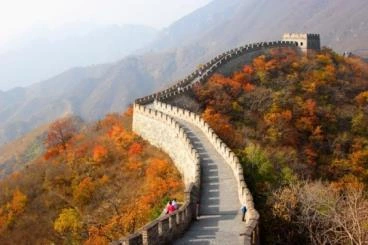
The scale of investment across each mausoleum in the Thirteen Tombs reflects far more than imperial wealth—it showcases the industrial capacity, logistics, and architectural mastery of an entire dynasty. From mirror-smooth “gold bricks” fired through secret kiln techniques to pave palace halls, to gleaming imperial-yellow glazed roof tiles crowning multi-tiered bracket eaves, every detail adhered strictly to imperial sumptuary codes. Harmonizing natural mountain topography with human ingenuity transformed thirteen royal tombs not into lonely graves, but into a living open-air architectural museum cradled amid cloud-draped peaks.
As crimson sunset hues sink behind the Tianshou Mountains and dusk blankets the Changping valley, the Thirteen Tombs shed daytime crowds to reclaim the profound stillness befitting eternity. Far removed from the neon nightlife of downtown Beijing hotspots like Sanlitun or Houhai, the Ming imperial necropolis embraces solemn, contemplative quiet. Spanning more than forty square kilometers, the World Heritage landscape appears frozen in time—weathered brick enclosure walls, muted yellow glazed roof tiles, and centuries-old pines standing sentinel beneath starry skies to guard the eternal slumber of thirteen emperors.
Guided by strict heritage conservation principles and the sacred nature of an imperial burial ground, the Thirteen Tombs intentionally avoid noisy commercial nightlife or flashy light festivals. Instead, its nocturnal beauty lies in the sublime interplay of nature and classical geomancy. Along the seven-kilometer Sacred Way, thirty-six monumental stone statues of guardian beasts and court officials stand poised in silvery moonlight, evoking the eternal honor guard established during the Yongle Emperor’s reign. Near-total silence—broken only by wind sighing through ancient pines and evening crickets—offers a deeply meditative experience for travelers seeking to hear the quiet echoes of history.
To balance cultural enrichment with rigorous monument preservation, heritage researchers and site managers are advancing forward-looking strategies integrating subtle lighting and digital visualization. Rather than physically altering centuries-old masonry at Changling or Dingling, future initiatives focus on Virtual Reality (VR) and Augmented Reality (AR) experiences paired with low-impact concealed uplighting along the Sacred Way. Through digital reconstruction, the tranquil night backdrop comes alive to recreate authentic Ming imperial funerary processions—complete with ceremonial bells and drums, brocade-clad honor guards, and classical eulogies floating gracefully in midair without disturbing the valley’s serene ecology.
Evening atmosphere around the Thirteen Tombs also extends to the ecological belt bordering the Ming Tombs Reservoir, where expansive waters mirror moonlight and surrounding peaks like a giant looking glass cradling auspicious energy. Leisurely travelers often stay at tranquil eco-resorts tucked beneath ancient oaks or visit historic villages nestled at the foot of the tombs. In Kangling Village—adjacent to the tomb of the Zhengde Emperor—cozy evening air fills with fragrant steam from the heirloom Spring Pancake Banquet (Chunbing Yan). Thin griddled pancakes rolled tightly around soy-braised pork, crisp bean sprouts, and fresh local herbs—once an imperial campaign dish favored by the emperor—warm the crisp Changping night, blending rustic village hospitality with memories of a golden dynasty.
Nestled beneath the verdant Tianshou Mountains, the culinary traditions of Changping around the Thirteen Tombs form a resonant bridge linking abundant rural life with echoes of Ming imperial court cuisine dating back to the Yongle Emperor’s northern capital. Across centuries of change, local kitchens have quietly preserved authentic regional recipes, turning every meal into an edible exploration of Ming-era gastronomy shaped by local terroir and generations of artisanal skill.
Topping the roster of celebrated local delicacies around the imperial tombs is Thirteen Tombs Roast Chicken, a rustic specialty governed by exacting preparation standards. Cooks select exclusively native free-range hill chickens raised on the rocky slopes of Tianshou Mountain, foraging daily on wild insects and mountain herbs for firm, lean meat with rich natural aroma. Cleaned birds are marinated thoroughly in a secret spice blend of star anise, black cardamom, dried tangerine peel, and wild Sichuan peppercorns before roasting inside sealed earthen ovens. The secret behind its legendary flavor lies in the fuel: chefs burn only seasoned dry wood split from aged persimmon trees gathered from orchards at the mountain base. Steady, long-burning embers infused with subtle fruity wood oils slowly roast the chicken to a shatteringly crisp amber skin sealing in tender, deeply flavorful meat.
Savoring Thirteen Tombs roast chicken pairs naturally with flaky thousand-layer fried dough twists and traditional Beijing fermented stinky tofu inside Ming-style manor restaurants. Crafted from high-grade wheat flour folded and rolled dozens of times into gossamer layers, the dough puffs into golden, aromatic crispness when fried in bubbling sesame oil. Beside it sits heirloom Beijing-style fermented tofu cured for months in sealed earthenware crocks—sporting a rustic dark exterior concealing a creamy, silky interior. The bold, complex aroma of aged fermented tofu balanced against light, crisp pastry delivers a captivating contrast of flavors reflecting centuries of Changping culinary tradition.
No culinary journey through the Thirteen Tombs is complete without the famed imperial dessert known as Wandouhuang (Imperial Pea Cake). Originating as a humble spring street snack in Ming-era Beijing, this delicate confection soon captivated emperors, earned a place on imperial menus, and remained beloved throughout the Qing Dynasty. Crafted solely from carefully selected yellow peas soaked, peeled, steamed until tender, and pressed through fine silk sieves into a velvety puree, the paste is simmered gently with pure cane sugar before setting in wooden molds into blocks resembling golden imperial jade topped with dried osmanthus blossoms. Upon tasting, Wandouhuang melts effortlessly on the tongue, leaving a clean, subtle sweetness befitting a timeless heritage sanctuary.
The solemn beauty of the Tianshou Mountain valley shifts distinctly with the seasons, with autumn—from September through November—widely hailed by ancients and modern travelers alike as the golden window to visit the Thirteen Tombs. Crisp Beijing autumn air and deep cobalt skies accentuate golden-yellow ginkgo avenues and crimson maples framing weathered vermilion walls and moss-kissed yellow glazed tiles. Spring from April to May offers an equally enchanting alternative as wild apricot, pear, and peach blossoms blanket the foothills in white, softening the ancient necropolis with fresh vitality. Travelers are strongly advised to avoid China’s National Day Golden Week in early October and Lunar New Year holidays, when massive domestic crowds diminish the site’s contemplative atmosphere. Monuments open from 8:30 AM to 5:30 PM during peak season and close one hour earlier in winter, with final entry to tomb precincts and the Dingling Underground Palace ending thirty minutes prior to closing.
Located roughly fifty kilometers northwest of central Beijing in Changping District, the Thirteen Tombs connect smoothly via public transit with simple transfers. Take the suburban Changping Subway Line to Changping Dongguan or Ming Tombs Scenic Area Station, then transfer to local Bus 314 linking the three primary open sites: the Sacred Way, Changling Tomb, and Dingling Tomb. Another popular direct option is Bus 872 departing historic Deshengmen Bus Terminal, traveling along the Badaling Expressway straight to Changling’s entrance. For groups or travelers valuing flexible pacing, hailing a ride via Didi from downtown Beijing minimizes transit time while offering a scenic drive into the northern mountains.
For international travelers, Beijing’s 144-hour visa-free transit policy at major gateways including Beijing Capital International Airport and Beijing Daxing International Airport makes short heritage stopovers remarkably convenient. To qualify, simply present a confirmed onward ticket to a third country or region alongside a passport valid for at least six months upon arrival. When visiting the Thirteen Tombs, carry your original passport to scan at integrated electronic ticket gates. Exploring the sprawling grounds requires extensive walking across uneven stone flagstones, making supportive, cushioned walking shoes indispensable. When descending twenty-seven meters underground into the Dingling Underground Palace, year-round temperatures hover below 15°C with high humidity—so bring a light windbreaker to stay comfortable against the sudden chill.
One vital precaution for first-time visitors to the Yanshan foothills is staying vigilant against shopping scams along combined Ming Tombs and Great Wall day-tour routes. Cut-rate operators frequently slash monument sightseeing time to herd tourists into simulated jade workshops disguised as “feng shui research institutes,” marking up synthetic stone trinkets tenfold as “Ming imperial talismans.” Steering clear of aggressive jade or herbal sales pitches in favor of authentic regional culture yields a far richer experience—such as visiting historic Kangling Village to enjoy heirloom “Kafan Tofu” banquets once served to imperial tomb guards under the Zhengde Emperor, complete with soy-braised pork rolled in warm spring pancakes. To immerse yourself in centuries of imperial history free of commercial distractions, consider booking a curated, pure-sightseeing all-inclusive China tour package backed by knowledgeable guides and seamless private transfers.