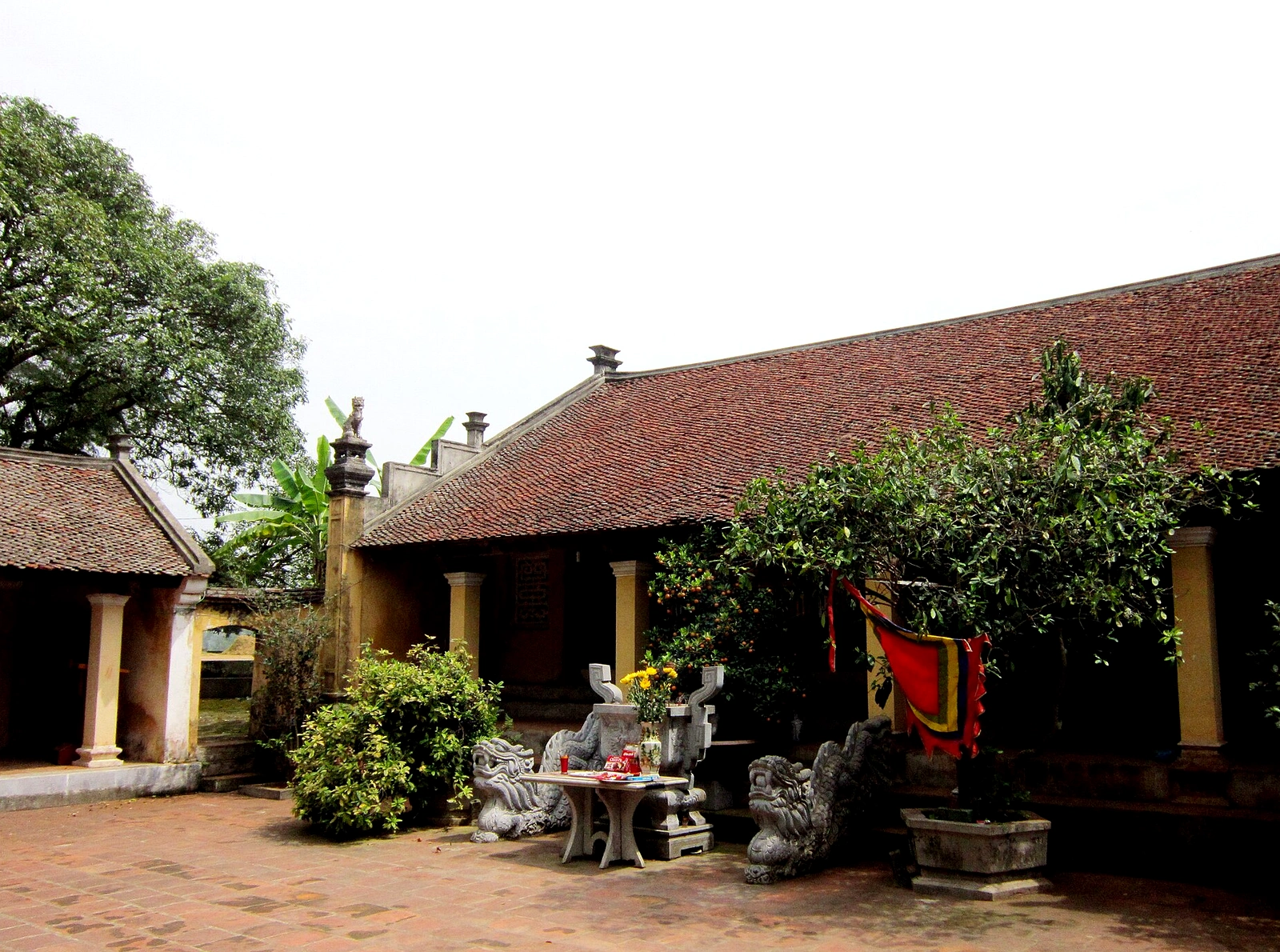
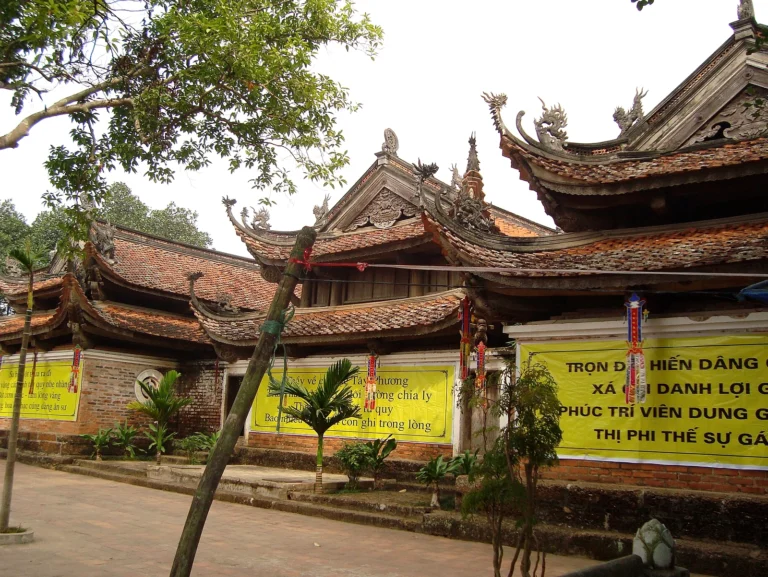
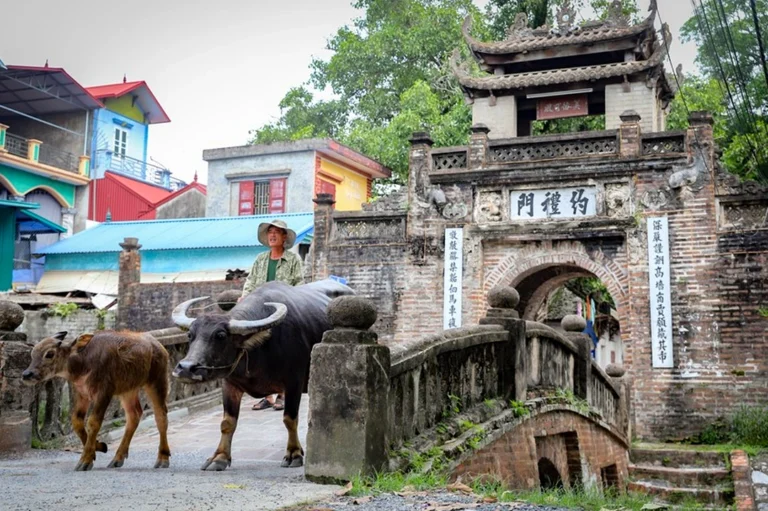
For millennia, the cloud-draped Xu Doai region has cradled a legend crafted in laterite—Son Tay Ancient Citadel, standing majestically right in the heart of Son Tay Town, Hanoi. Positioned at a strategic crossroads between the Red River Delta and the midland hills, the citadel rises as a steadfast symbol of sovereignty, bearing witness to the central feudal court’s strategic vision in guarding the western gateway to Thang Long. Its setting is a masterpiece of feng shui, embodying the classic “backed by mountains, facing water” formation, embraced by the converging waters of the Red River and Tich River while channeling sacred energy flowing down from the Ba Vi mountain range—creating a defensive stronghold blessed with favorable timing, terrain, and human harmony. Before its present laterite form took shape, this land served as a line of earthen ramparts during the Le–Trinh era, fulfilling its mission as a vital bulwark shielding the royal capital from northern highland upheavals and peasant uprisings. It was not until the 3rd year of Emperor Minh Mang’s reign (1822) that the monarch approved the construction of a fortified provincial citadel to control the entire Northwest region and the Red River basin. Under the skilled hands of master artisans, the project was largely completed in the 10th year of Minh Mang’s reign (1829), becoming one of the largest-scale military complexes in northern Vietnam under the Nguyen dynasty. The uniqueness of Son Tay Ancient Citadel lies not only in its historical age, but also in the signature geological treasure of Xu Doai—laterite stone. Unlike the traditional clay bricks or bluestone used in other royal citadels, the entire rampart system was constructed from dark brown, rough-hewn laterite blocks that grow ever more resilient with the passage of time. Over centuries of exposure, this material has acquired a solemn, weathered patina steeped in the breath of nature and history. These grounds once bore the footsteps of eminent mandarins such as Nguyen Cong Tru during his land reclamation and water-management campaigns, and later served as a staunch bastion for scholarly patriots and insurgents of the Can Vuong movement led by Provincial Education Commissioner Ta Quang Buu during the heroic resistance against French colonialism (1883–1884). Today, having weathered the trials of war and time, Son Tay Ancient Citadel stands tall as a living museum of military architecture blending Western Vauban defensive engineering with Eastern feng shui philosophy. Both domestic and international heritage authorities and travel media regard it as a sacred bridge linking the heroic past with the peaceful present of greater Hanoi. Stepping onto these grounds, visitors not only run their hands over legendary moss-covered laterite blocks, but also hear the echoes of a thousand years of civilization whispering through weathered embrasures, tranquil moats, and the shade of centuries-old trees standing sentinel beside this heritage landmark.
Leaving the bustle of the city behind and arriving in cloud-draped Xu Doai, Son Tay Ancient Citadel rises prominently as a living witness to time, holding within its walls the solemn imprints of Vietnam’s feudal dynasties. This architectural masterpiece makes an immediate impression through its rare, distinctive building technique. The entire fortified wall system is constructed exclusively from laterite—a stone signature to the Son Tay region, prized for its weathered reddish-orange hue and naturally porous, honeycomb texture that exudes rustic charm while defying harsh weather across centuries. Shaped by the skilled hands of ancient craftsmen, meticulously hewn laterite blocks fit seamlessly together to form sturdy 4.5-meter-high ramparts laid out in a textbook square plan modeled on Western Vauban fortification principles. The subtle fusion of European military architecture and Eastern feng shui artistry is further reflected in its four protruding corner bastions and the wide, deep moat encircling the complex, creating a stronghold that is both formidable and dignified.
Passing through the ancient, moss-covered citadel gates, visitors step into a serene world completely removed from modern life outside. Inside the citadel, the scenery unfolds like a picturesque landscape painting graced by rows of centuries-old trees casting cool shade, their roots clinging deeply to the stone walls to form dramatic, deeply nostalgic vignettes. During the blooming season of sua blossoms or the autumn leaf fall, the grounds take on distinct poetic moods that captivate photography lovers and heritage explorers alike. The calm, clear waters of the moat mirror the drifting clouds and ancient walls, while architectural landmarks such as Vong Cung Pavilion and the Flag Tower emerge faintly through the signature mist of Xu Doai, lending remarkable spatial depth to every frame.
To capture the most memorable shots at this historic monument, professional photographers and travel journalists frequently recommend several “million-view” vantage points. The first unmissable stop is the Front Gate area (also known as the Southern Main Gate). Standing just outside the moat and looking inward, you can frame the majestic, moss-covered laterite archway reflected across the expansive water, creating a composition of striking symmetry and grandeur. The ideal time to shoot here is at dawn, when the first rays of morning sunlight filter through the leaves and illuminate the textured laterite, igniting its warm, earthy reddish-orange tones.
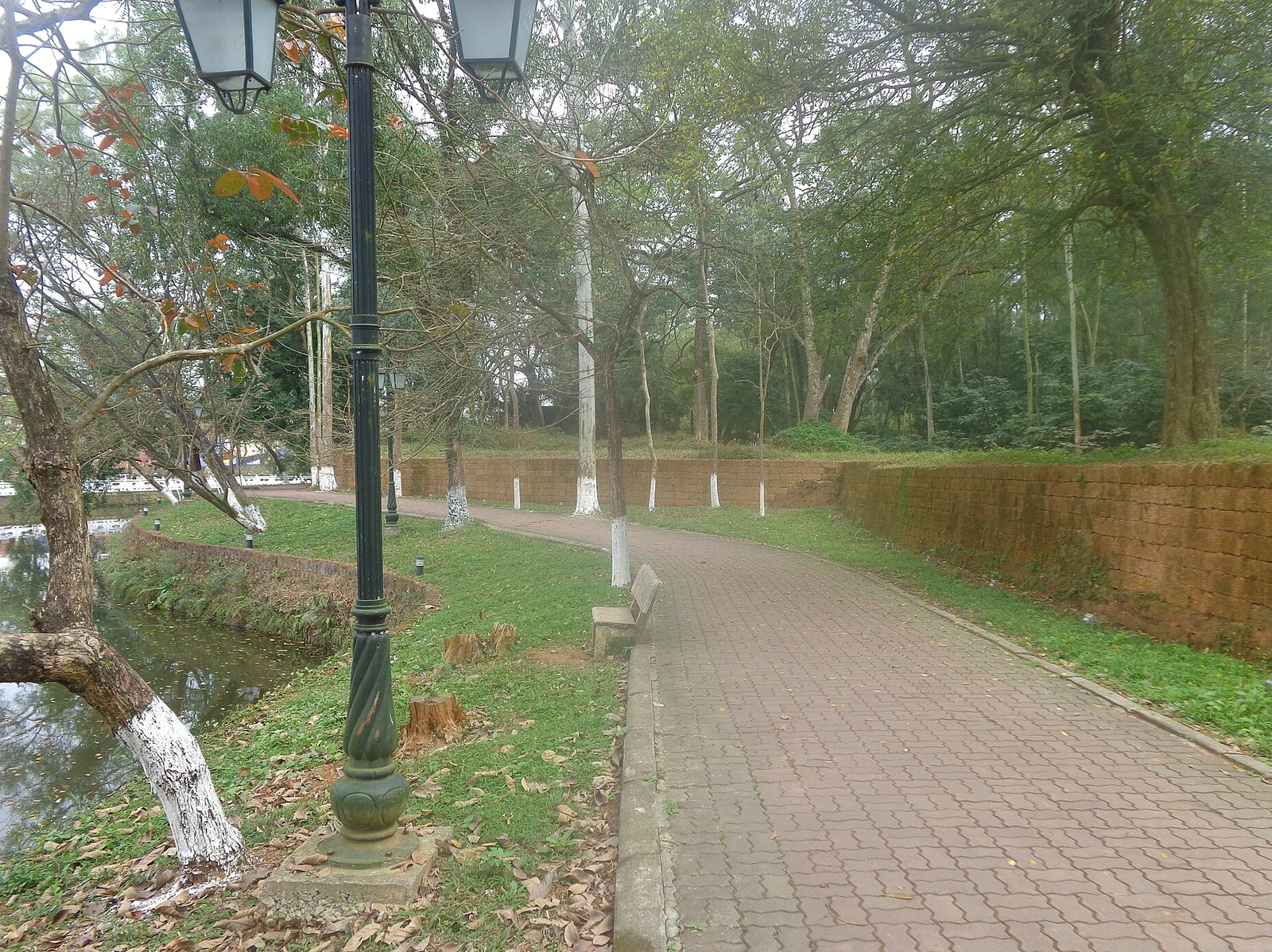
A second photo spot prized for its artistic atmosphere is the pathway tracing the moat beneath the long shadows of ancient Indian almond and wild mango trees. Between 3:00 PM and 5:00 PM, as the late afternoon sun begins to dip, soft golden light slants through the canopy and grazes the rugged laterite blocks, producing a captivating, almost ethereal play of light and shadow. Standing beside a moss-draped rampart or upon one of the stone bridges spanning the moat, you can effortlessly capture cinematic photographs that feel both timeless and deeply evocative in the heart of a thousand-year heritage site.
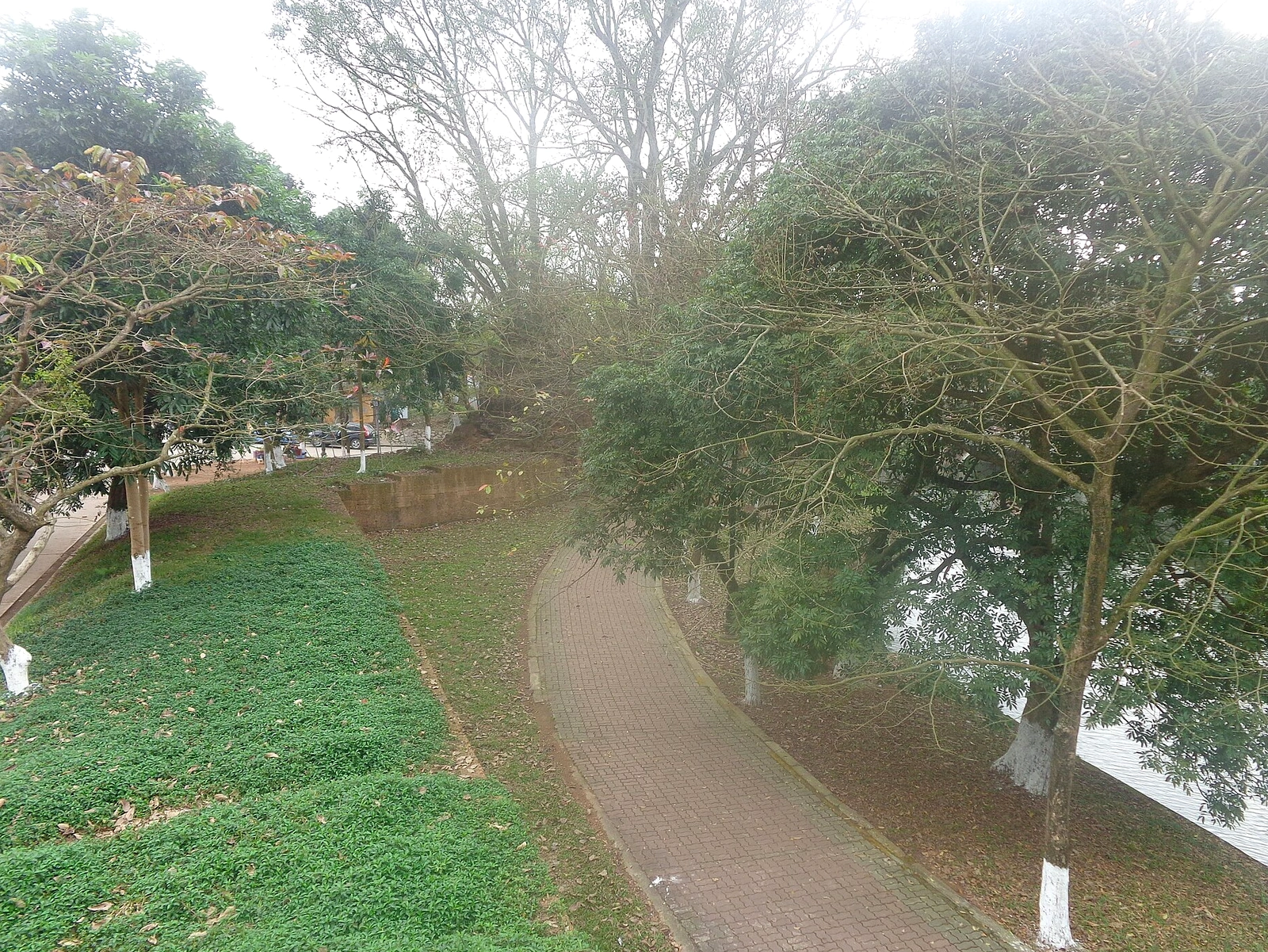
Upon arriving at Son Tay Ancient Citadel, the very first sight to captivate visitors is the deep, dignified red of the original laterite walls standing tall in defiance of time. Crossing the historic stone bridge over the wide moat, the quiet, contemplative atmosphere of a former frontier garrison immediately envelops the traveler’s spirit. Strolling beneath the cool canopies of centuries-old trees, listening to the breeze rustling through the leaves and the distant echoes of history rising from the emerald moat, the noise and rush of modern urban life seem to fade away, giving way to a remarkably serene stillness.
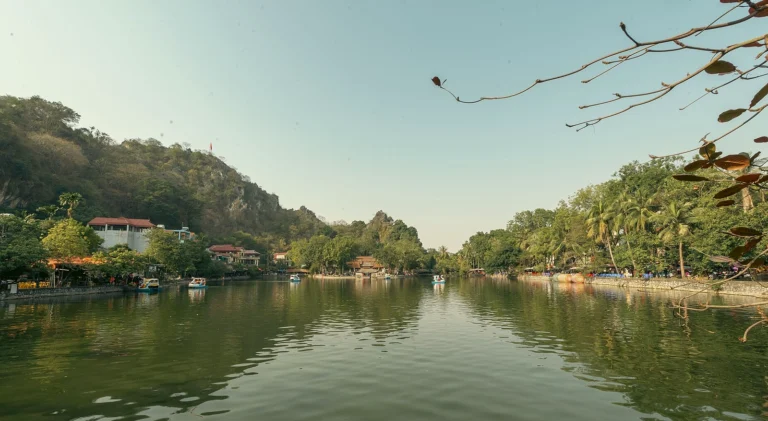
Your exploration of Xu Doai becomes even more rewarding when you take a leisurely boat ride along the cool waters encircling the base of the citadel. Gazing upward from the calm surface, the monumental honeycomb-textured laterite walls loom majestically, reflecting drifting clouds and ancient moss. Seated aboard the boat, breathing in the crisp air and admiring blooming summer lotuses and water lilies or the golden foliage of autumn, travelers feel transported into another dimension where time stands still, making room for heroic reflections on a storied frontier stronghold.
Beyond its scenic beauty, the sacred spiritual spaces within the citadel grounds also leave a lasting emotional impression. Visiting the shrines and lighting a stick of incense in tribute to national heroes, eminent mandarins who once governed Xu Doai, and the courageous Can Vuong fighters fills the heart with quiet pride in the resilient nation-building traditions of Vietnam’s forebears. The harmony between solemn historic architecture and local spiritual devotion creates a deeply reverent ambiance that compels every visitor to bow in respect before a millennium of heroic heritage.
Stepping outside the ancient walls, your hands-on experience in Son Tay would not be complete without sampling the celebrated regional specialties of Xu Doai. Pulling up a seat at a modest roadside eatery, travelers can satisfy their appetite after a long walk with rustic yet refined flavors: crispy, piping-hot West Lake shrimp cakes, chewy sweet che lam sticky rice bars infused with a warm kick of ginger, or fragrant Son Tay spit-roasted pork seasoned with mac mat leaves and wild doi seeds. Every dish carries the soul of the countryside and the warm hospitality of the locals, bringing your journey through Son Tay Ancient Citadel to a close with lingering flavors you will not soon forget.
To help ensure your visit to the historic Son Tay Ancient Citadel goes smoothly and effortlessly, the pocket guide below gathers the most practical details on opening hours, admission fees, routes, and key etiquette tips for exploring this culturally rich corner of Xu Doai.
Regarding opening hours, Son Tay Ancient Citadel welcomes visitors every day of the week, from early morning until late afternoon, allowing you to plan your itinerary at your convenience. However, the best time of year to visit is from autumn through spring, when Hanoi’s weather is dry, cool, and bathed in gentle golden sunshine—ideal for leisurely walks, photography, and admiring the shady avenues of centuries-old trees.
Good news for history and culture enthusiasts is that the monument management board currently offers free admission, charging no entrance fee for visitors exploring the citadel grounds. You are free to stroll along the weathered laterite ramparts, admire the lush green moat year-round, and discover the historic structures inside without worrying about ticket costs.
Getting from central Hanoi to Son Tay Ancient Citadel is remarkably convenient thanks to well-developed road links. The fastest and most direct routes follow Thang Long Boulevard or National Highway 32. If you enjoy scenic drives, traveling by private motorbike or car takes roughly an hour. For those who prefer public transit, several city bus routes serving Son Tay Town offer a safe, budget-friendly alternative.
When visiting a historic monument of deep cultural and spiritual significance like Son Tay Ancient Citadel, guests should dress modestly, neatly, and respectfully to suit its solemn atmosphere. Furthermore, because the citadel grounds are expansive and feature numerous steps, dirt paths, and uneven natural laterite surfaces, wearing sneakers or comfortable flat shoes will keep your feet well-supported throughout your exploration.
To enjoy a fulfilling getaway and fully admire the beauty of Son Tay Ancient Citadel without worrying about arranging transportation, booking entrance tickets, or planning itineraries, travelers can choose VDS Travel’s premium all-inclusive Son Tay tour packages. Every tour is thoughtfully designed to optimize photo opportunities when the scenery is at its most vibrant, accompanied by knowledgeable guides well-versed in local culture alongside top-tier hotel and dining standards.