The origins of Osaka’s liveliest commercial and entertainment district lie in dramatic historical shifts at the dawn of the Edo period. In 1612 (the 17th year of Keicho), wealthy merchant Yasui Doton and his relative Yasui Doku funded a strategic canal connecting the East–West Yokobori waterway with the western Dotonbori channel. Fighting during the Summer Campaign of the Siege of Osaka in 1615 cost Yasui Doton his life. Recognizing the canal’s value for regional trade, daimyo Matsudaira Tadamaki ordered Yasui Doku to complete the waterway and formally named it “Dotonbori” in honor of the late founder. A few years later, during the Kanei era (1622), money-changer Okada Shinsai funded a wooden bridge across the Nagahori River—laying the foundation for the name “Shinsaibashi” and opening a busy north–south commercial axis.
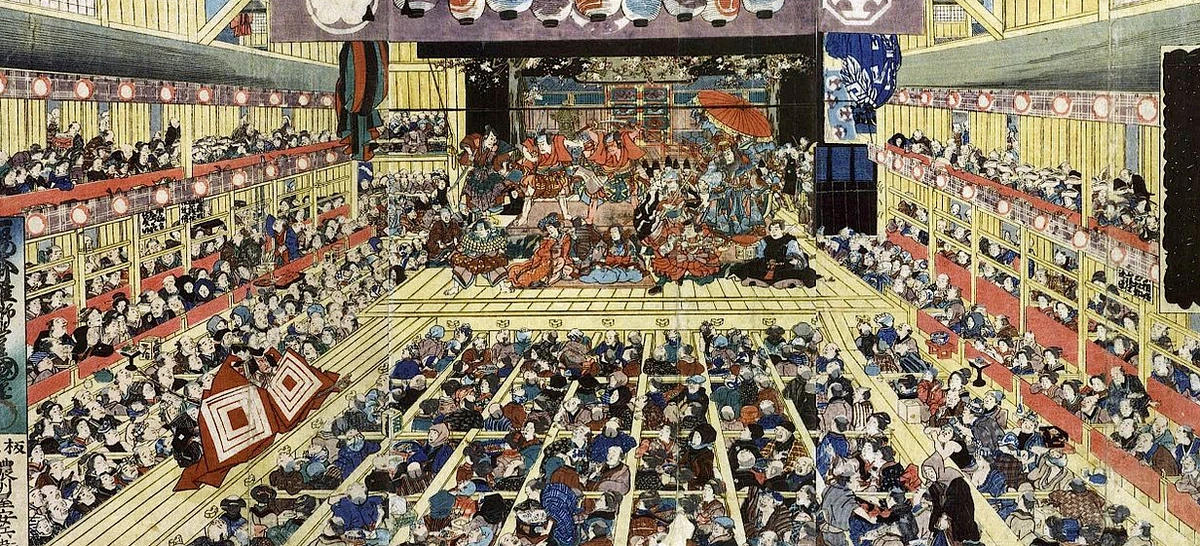
Shinsaibashi and Dotonbori’s shift from waterway hubs into a cultural heart of the Kansai region blossomed vividly during the Genroku era (1688–1704). With official Tokugawa shogunate authorization, land along Dotonbori became a major performing-arts center. In 1684, chanter Takemoto Gidayu founded the Takemoto-za theater, giving rise to Gidayu-bushi narrative style in puppet theater (“Ningyo Joruri”). Collaborations between Takemoto and playwright Chikamatsu Monzaemon elevated townspeople (“chonin”) drama to artistic heights, turning the area into a lively theater quarter (“shibai-machi”) with famous playhouses drawing crowds for Kabuki and Bunraku.
As “civilization and enlightenment” (“bunmei-kaika”) swept across Japan during the Meiji era, Shinsaibashi’s appearance took a notable modern turn. In 1873, the old wooden Shinsaibashi bridge was replaced by a cast-iron arch bridge imported from the Netherlands. Known locally as “Kurogane-bashi” (Iron Bridge), it reflected foreign engineering influence while helping Shinsaibashi grow as a fashionable shopping hub with Western-style shops and modern retail.
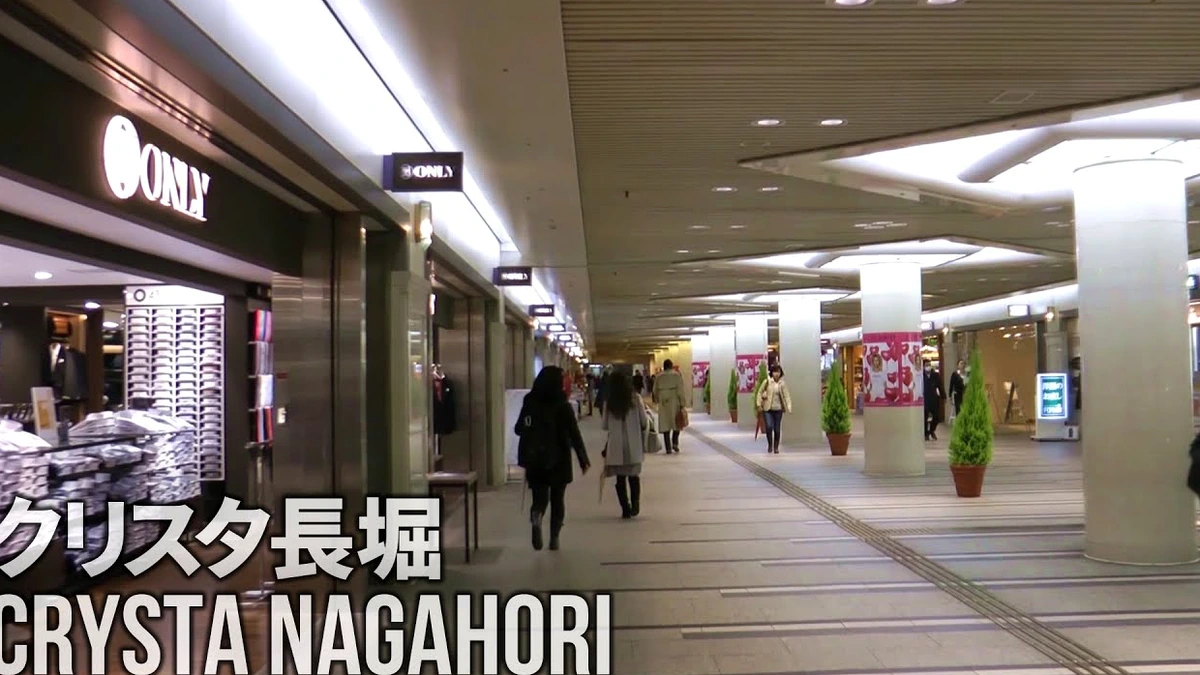
Entering the twentieth century—especially during post-World War II reconstruction—urban layout across both districts adapted to changing city life. In 1964, the Nagahori canal was filled in to create a surface avenue alongside the Crysta Nagahori underground mall. Meanwhile, Dotonbori evolved from traditional theaters toward cinemas, restaurants, and evening entertainment. Waterfront improvements in 1965 lined Dotonbori’s banks with pedestrian walkways where bright signs reflect across water alongside sightseeing boats, linking Edo-era history with modern Osaka energy.
Viewed through geomorphology and traditional East Asian geomantic layout, Osaka sits on a fertile plain shaped over millennia by the Yodo River system. Flat, low-lying terrain along waterways echoed traditional ideas of water arteries nourishing a thriving settlement. During the Edo period, Osaka earned fame as a “city of water” (“suito”) across Japan thanks to a dense canal grid. Intersecting canals—anchored by the Nagahori canal to the north and Dotonbori canal to the south—aided drainage while serving as practical transport arteries moving goods and supplies from domains nationwide into Osaka’s markets.
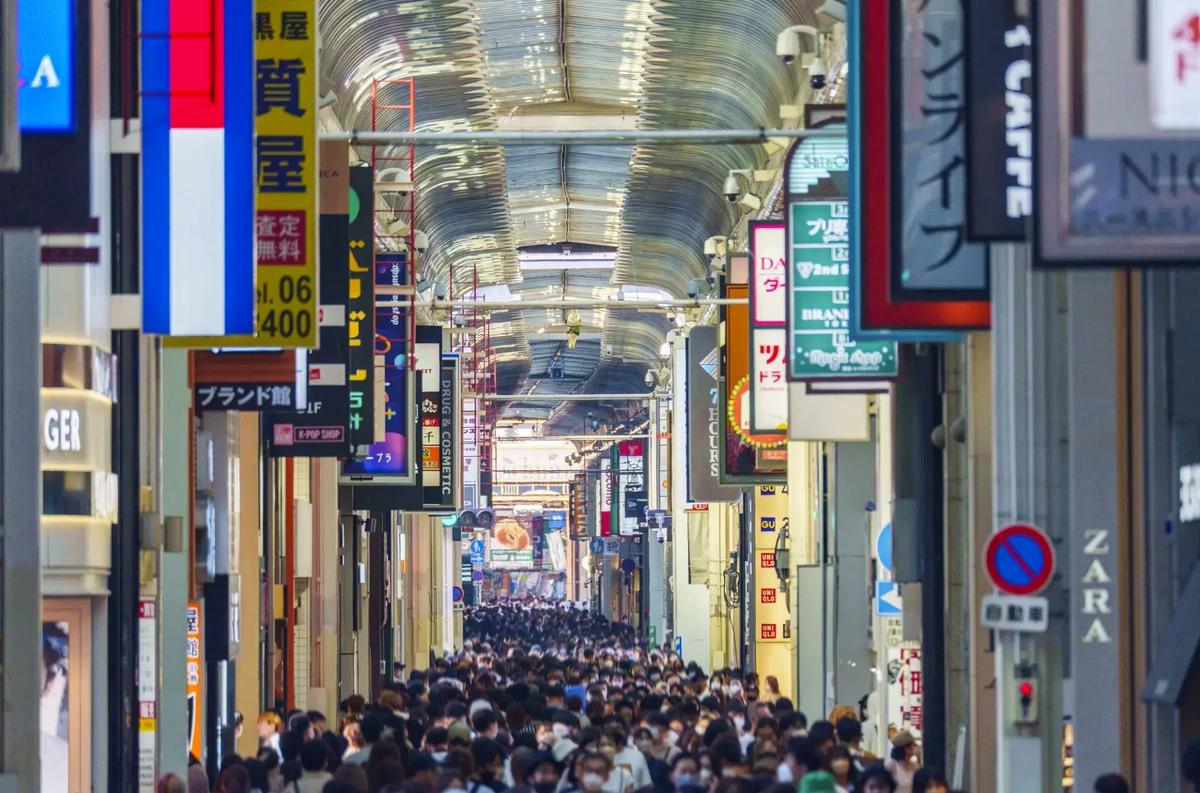
Along this central corridor, Shinsaibashi-suji shopping street runs north–south linking the space between the two historic canals (with Nagahori now a wide boulevard). Its north–south alignment grew organically from paths leading to ferries and river crossings, connecting water traffic below with merchant rows above across historic bridges such as Shinsaibashi and Ebisubashi.
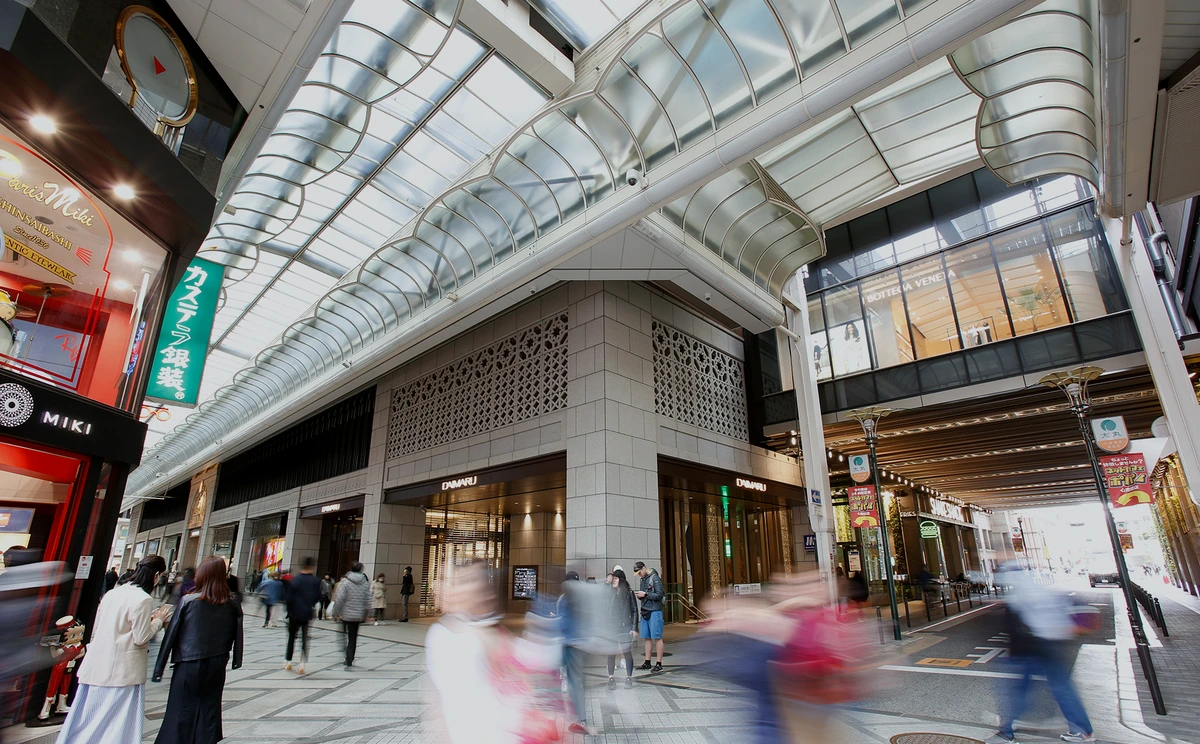
Beyond layout and history, Shinsaibashi-suji’s arcade also reflects practical climate adaptation. Because the Kansai basin sees warm, humid summers and weeks of “tsuyu” (rainy season) showers, covering the pedestrian street with a translucent arcade shelters walkers from sun and rain while letting air move cleanly along the street corridor.
Ventilation vents along the upper roof allow warm air to rise while drawing cooler air through open ends, keeping the walkway comfortable regardless of outside weather and blending sheltered street life with open city surroundings.
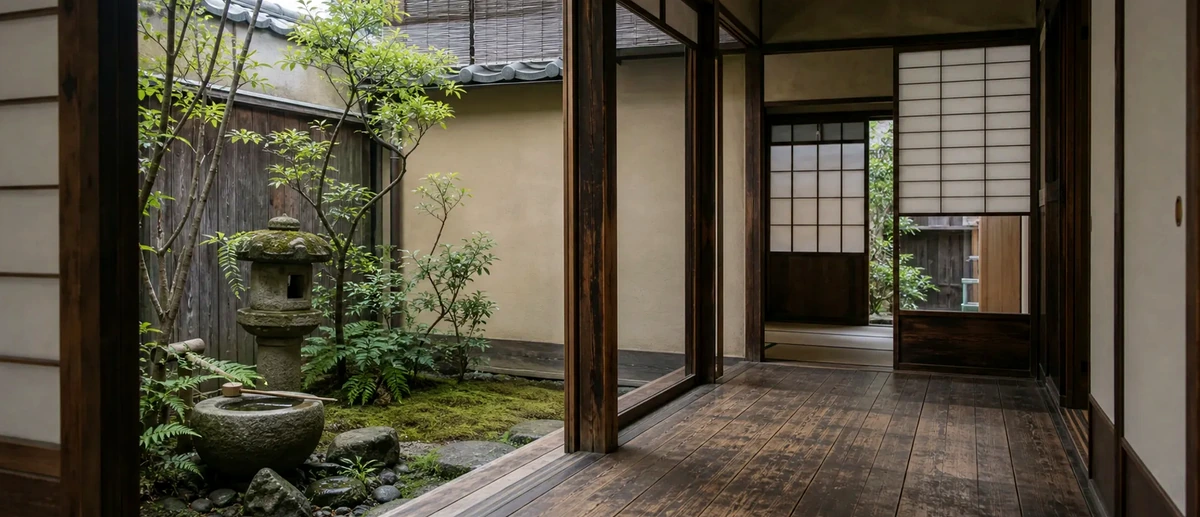
Architectural evolution across Shinsaibashi and Dotonbori traces a journey from traditional town planning to modern building engineering. From the Edo period into Meiji times, streets featured two-story wooden merchant townhouses (“machiya”) following a shop-in-front, residence-in-back layout on narrow, deep lots (“unagi no nedoko” / “eel’s bed”) with modest street frontage. Traditional joinery (“kigumi”) used fitted timber framing without iron nails, paired with white plaster fire-resistant walls (“shiro-shikkui”) and wooden lattice windows (“koshi”) that gave a neat, adaptable commercial look.
Moving from late Taisho into early Showa, “Taisho modern” influences brought bold architectural shifts. A prime example is Daimaru Shinsaibashi, designed by American architect William Merrell Vories, blending Gothic Revival and Art Deco motifs with reinforced concrete construction and terracotta and stone ornamentation—marking a modern commercial landmark in Osaka.
Modern completion is clear in the roughly 600-meter commercial arcade roof stretching along Shinsaibashi-suji. Long-span steel trusses create a wide, column-free canopy topped with translucent polycarbonate panels that let daylight in while blocking strong sun and rain, integrated with sprinkler fire protection, climate systems, and programmable LED lighting for year-round pedestrian comfort.
Paired with the open waterside promenade along Dotonbori, the area forms a lively twin-zone commercial district. Covered arcade shopping in Shinsaibashi meets open-air canal views, high-rise facades, and bold illuminated signs in Dotonbori, showing how Osaka layers historic streets and modern retail across a compact central core.
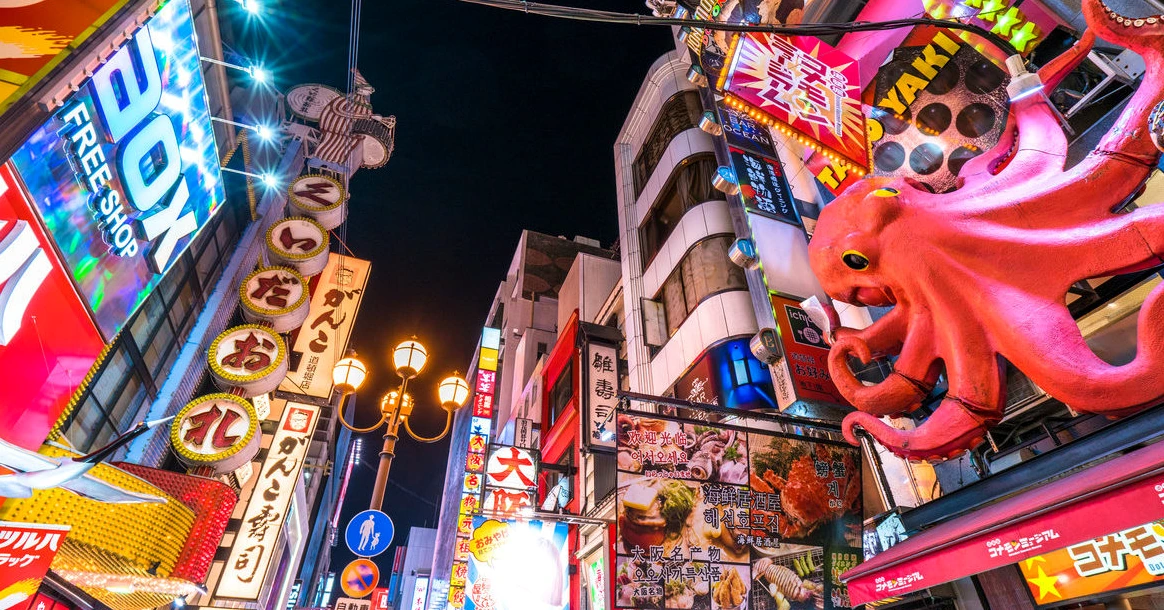
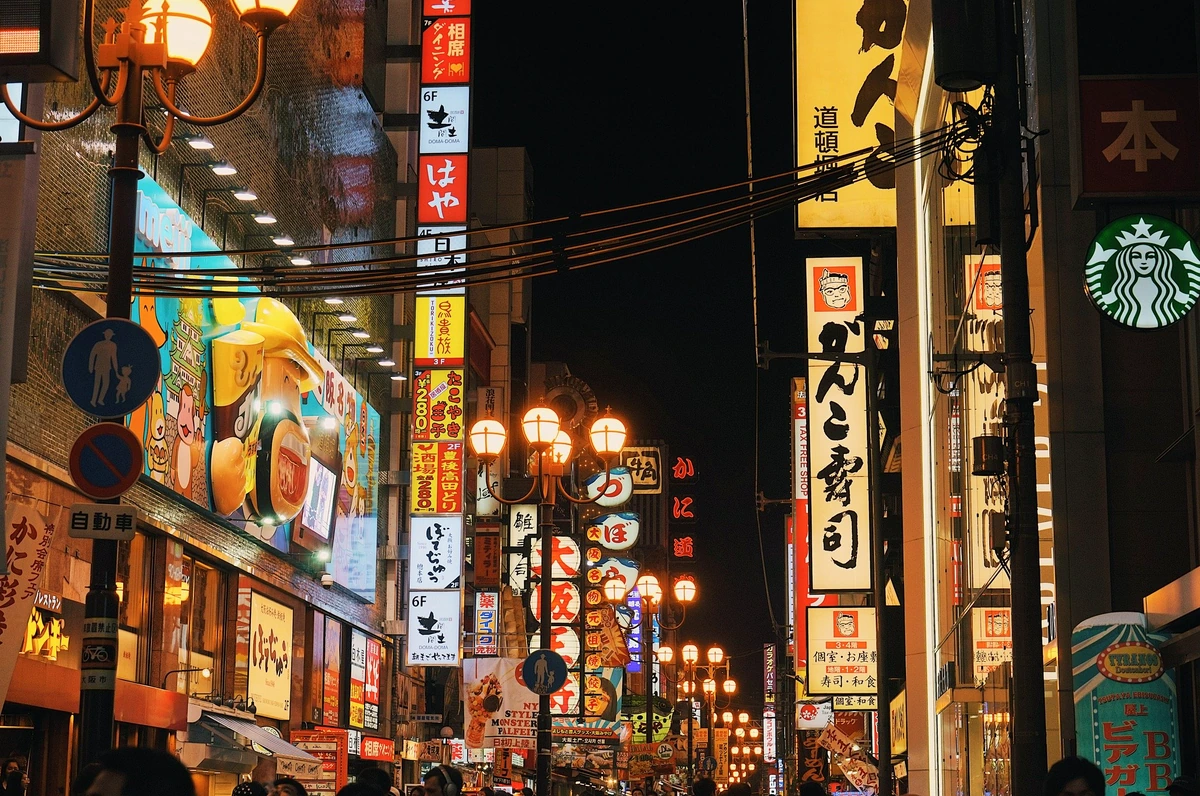
When night falls over the Dotonbori canal, Osaka takes on a bright evening personality shaped by dense illuminated signs and reflections on water. Best known is the “Glico Running Man” sign—first introduced in 1935 during the Showa era and now in its sixth generation using over 140,000 LEDs—serving as a familiar photo spot and visual anchor for the district.
Nighttime scenery along Dotonbori feels vivid and energetic. The narrow canal flanked by vertical walls reflects bright signs, dimensional food displays, and bridge lights across moving water, giving visitors strolling past Ebisubashi Bridge a lively, unmistakable evening scene.
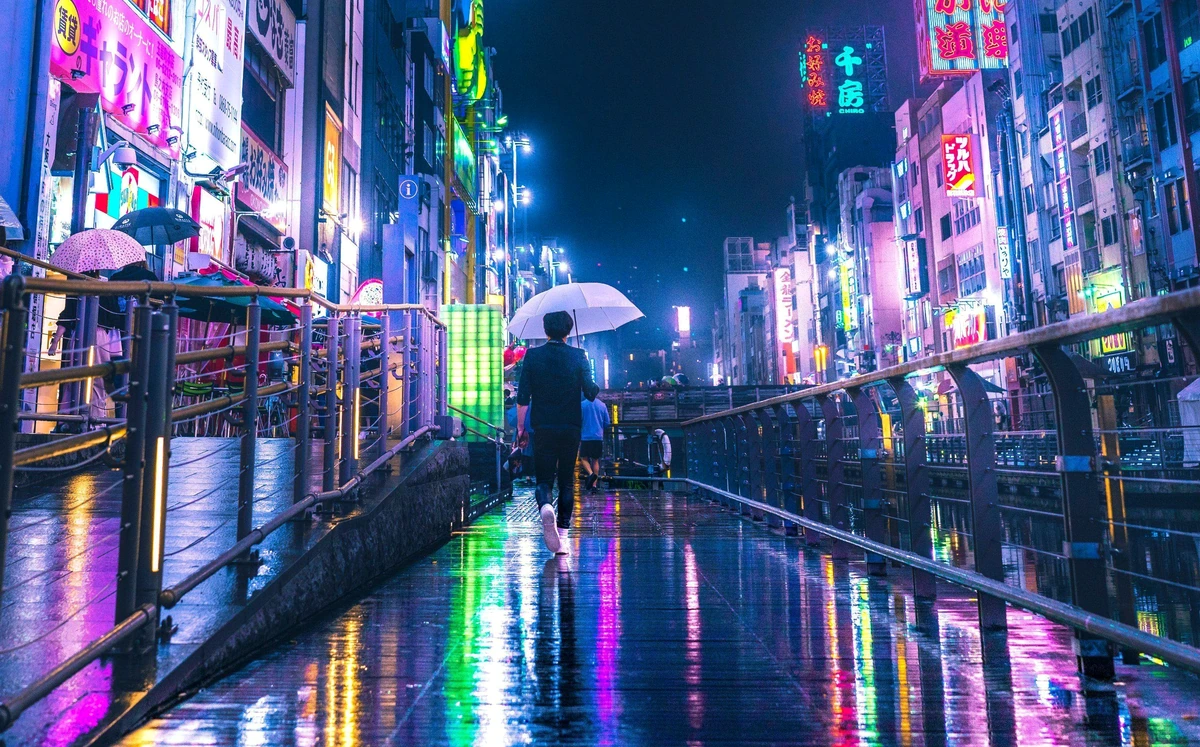
A popular way to see the canal lights at night is riding the “Tonbori River Cruise.” A roughly 20-minute boat loop along the canal offers low-angle views up at illuminated facades and bridges while street musicians and lively crowds keep banks active after dark.
That lively evening spirit echoes Dotonbori’s Edo-era theater roots, when Kabuki and Bunraku playhouses drew crowds for entertainment. Today, lights, music, and bustling dining along the canal keep that energetic neighborhood character alive.
Food culture in Kansai is often linked with the spirit of “kuidaore” (enjoying good food to one’s heart’s content), with Dotonbori and Shinsaibashi serving as a prime showcase. Compared with heavier dark-soy flavors common in parts of eastern Japan, Kansai cooking highlights savory “umami” built around “dashi” broth made from kombu kelp and bonito flakes (“katsuobushi”).
Among street specialties along Dotonbori, “takoyaki” (octopus balls) stands out as an Osaka staple. Popularized starting in the 1930s through innovators like Endo Tomekichi of Aizuya—adapting savory batter rounds with diced octopus—takoyaki is cooked in molded cast-iron pans turned swiftly to form a crisp outer shell around a hot, creamy interior, finished with savory sauce, green seaweed (“aonori”), and fluttering bonito flakes.
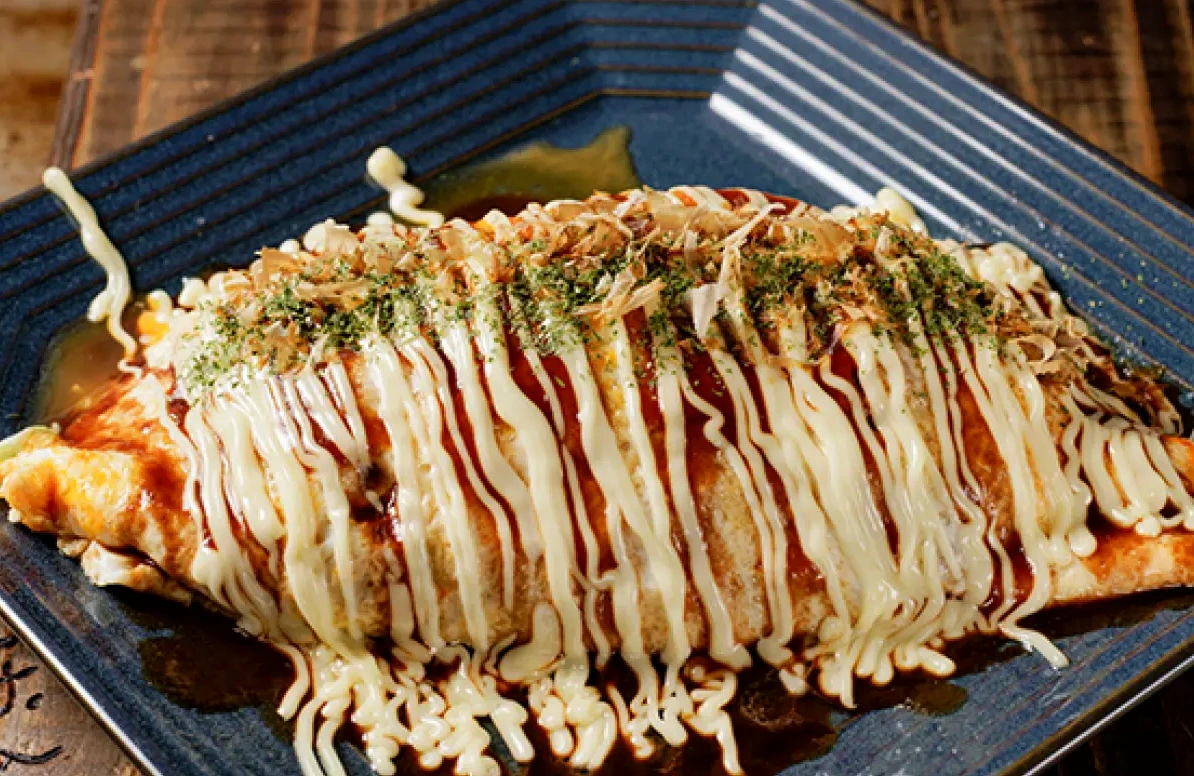
Alongside takoyaki is Kansai-style “okonomiyaki” (savory pancake). Kansai okonomiyaki mixes finely shredded cabbage, batter, pork belly, seafood, and grated mountain yam (“yamaimo”) before cooking on a hot iron griddle—giving the cooked pancake a light, airy texture with crisp edges and savory richness.
Ramen and specialty seafood dining also anchor Dotonbori’s food scene. While Kyushu is famous for rich pork-bone tonkotsu, local favorites such as Kinryu or Kamukura offer distinct styles—Kamukura, for instance, is known for a light, sweet-savory broth simmered with plenty of cabbage—bringing lively cooking aromas and bustling counters to the district.
To make the most of Shinsaibashi and Dotonbori, keep typical hours and crowd patterns in mind. Outdoor streets and canal paths stay open around the clock, while retail shops and duty-free stores generally open from around 10:00 AM to 9:00 PM and restaurants, izakayas, and eateries stay busy until around 11:00 PM or later. A classic route starts near Ebisubashi Bridge to see the Glico sign, walks north through Shinsaibashi-suji toward Nagahori-dori, and returns south toward Dotonbori as evening lights come on—aiming outside late-afternoon rush hours when possible.
Reaching the area by Osaka Metro is convenient via the Midosuji Line or Nagahori Tsurumi-ryokuchi Line to Shinsaibashi Station, or via the Midosuji, Sennichimae, or Yotsubashi lines to Namba Station—just a few minutes’ walk from the main shopping and dining streets.
Walking through Shinsaibashi and Dotonbori is free, while riding the Dotonbori River Cruise typically costs around 1,200 JPY per ticket. Booking a late-afternoon or early-evening slot a day ahead can help secure preferred times during busy periods.
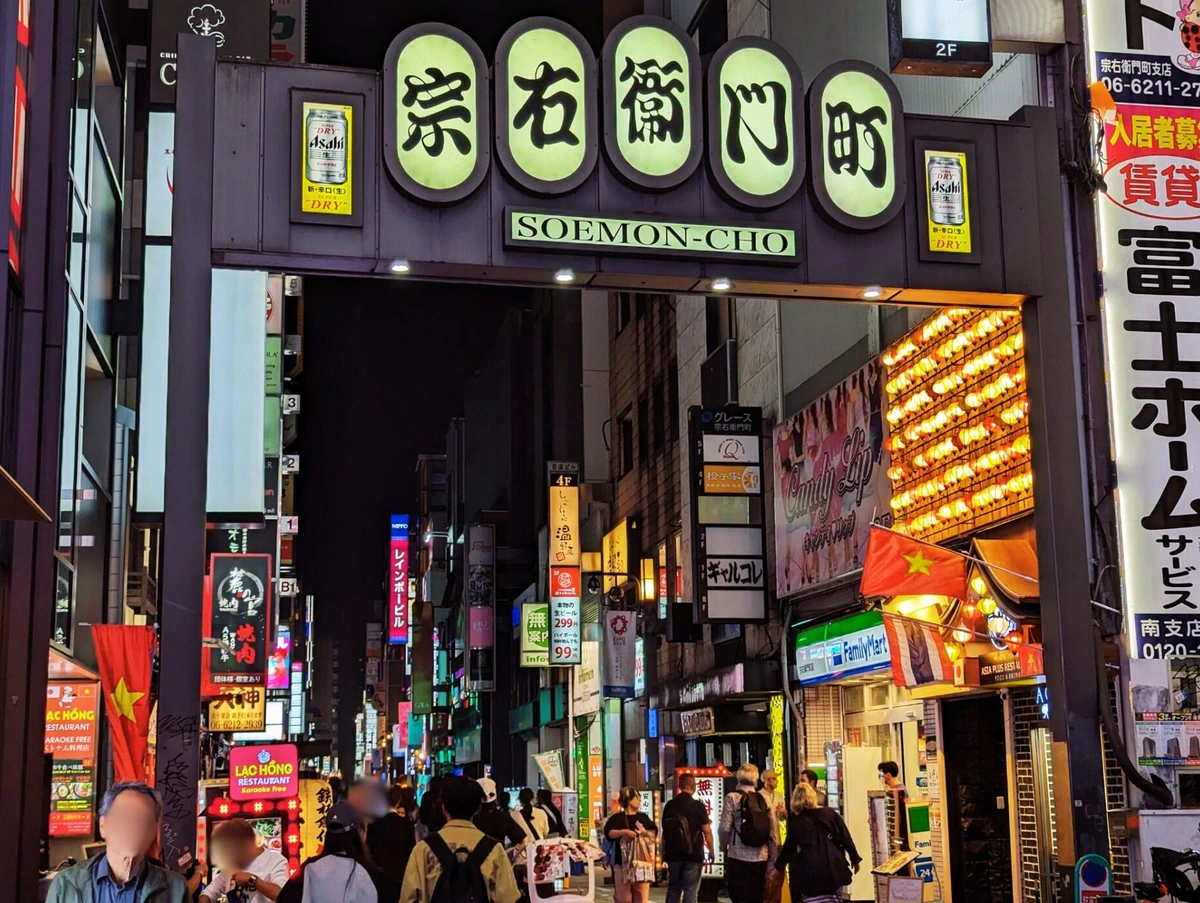
Practical tips for a smooth visit include wearing comfortable, grippy walking shoes for long stretches on foot, skipping unsolicited street touts around nightlife lanes like Soemon-cho or venues without clear posted pricing, and avoiding lingering on crowded spots like Ebisubashi Bridge during major holidays or big crowd gatherings.
Blending centuries of merchant history with lively modern streets, Shinsaibashi and Dotonbori remain central stops in Osaka. For an organized trip with planned routes and local support, you can explore our all-inclusive Japan tour packages for a smooth, well-paced itinerary.