Located in the heart of historic Moscow, Arbat Street is far more than a mere urban thoroughfare; it is a priceless historical monument where every footstep feels as though you are touching layers of alluvial time from the Russian Empire. The history of this renowned street was first recorded in chronicles around the late 15th century—specifically in 1493, during the reign of Grand Prince Ivan III. To this day, the origin of the name “Arbat” remains a fascinating linguistic enigma for local cultural researchers. The most widely accepted hypothesis suggests that the word derives from the Arabic term “Rabat,” meaning a suburb or outer defensive perimeter beyond city walls, accurately reflecting the street’s original location outside the fortifications of the Kremlin. Another philological school of thought leans toward the native Russian root “Gorbat,” meaning crooked or hunched, describing the undulating, hilly terrain of the area in its earliest days. In addition, ancient records mention ties to the jurisdiction of the Metropolitan’s court, creating a cultural and toponymic ensemble rich in mystery and historical depth.
Moving into the 16th and 17th centuries, Arbat transformed dramatically from a sparsely populated outlying district into a bustling settlement for the Streltsy guards—the royal court’s loyal arquebusier infantry—alongside imperial artisans and wealthy merchants. During this era, the neighborhood was a hub of goldsmith workshops, potteries, and foundries dedicated to serving the opulent needs of the Tsar’s palace. Today, the narrow side lanes intersecting Arbat Street still preserve the names of the trade guilds of that period, offering a vivid sketch of a thriving manufacturing and commercial center that encircled the heart of the Kremlin throughout the medieval feudal era.
The most devastating historical upheaval to strike Arbat occurred in 1812, when Napoleon Bonaparte’s Grande Armée marched into Moscow and the historic Great Fire reduced most of the street’s wooden structures to ashes. Yet from those very ruins, Arbat rose again with a completely transformed appearance. During the capital’s reconstruction, Russian authorities embraced the Empire Neoclassical style, turning Arbat into a grand avenue of stately aristocratic mansions adorned with graceful colonnades and intricate plaster bas-reliefs. By the mid-19th century, Arbat had officially become a “sanctuary” for Moscow’s intelligentsia, artists, writers, and nobility, hosting literary salons, private musical evenings, and the most spirited intellectual debates of the era.
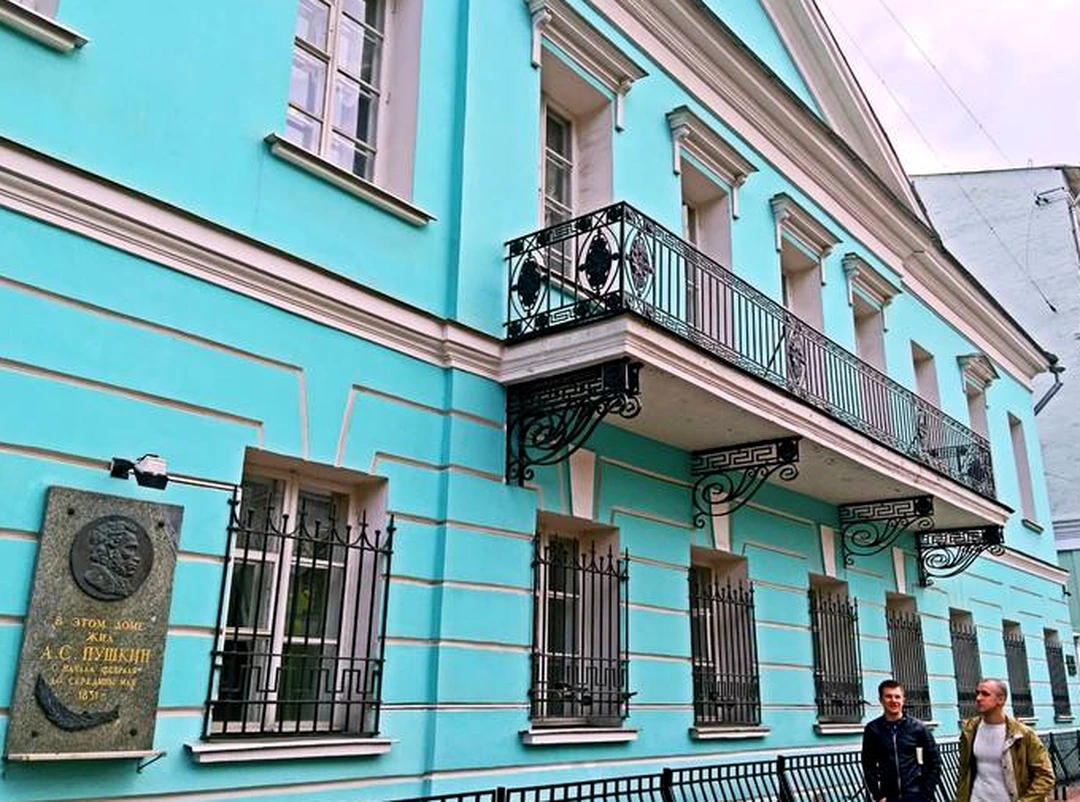
Arbat’s name is inextricably linked to humanistic masterpieces and towering figures of Russian culture, most notably the great poet Alexander Pushkin. In 1831, following his lavish wedding to the celebrated beauty Natalya Goncharova, the “Sun of Russian Poetry” chose House No. 53 on Arbat Street as the couple’s first happy home. Today, this apartment has become the Pushkin Memorial Apartment Museum, preserving its original living quarters and priceless keepsakes of their love. Following the 1917 Revolution, Arbat’s spatial layout underwent numerous changes along Soviet lines, yet its spirit of artistic freedom never faded. This was vividly embodied by Bulat Okudzhava—the legendary “poet with a guitar”—who dedicated his life to singing heartfelt ballads about Arbat. Through Okudzhava’s immortal verses, the street was breathed an eternal, romantic soul.
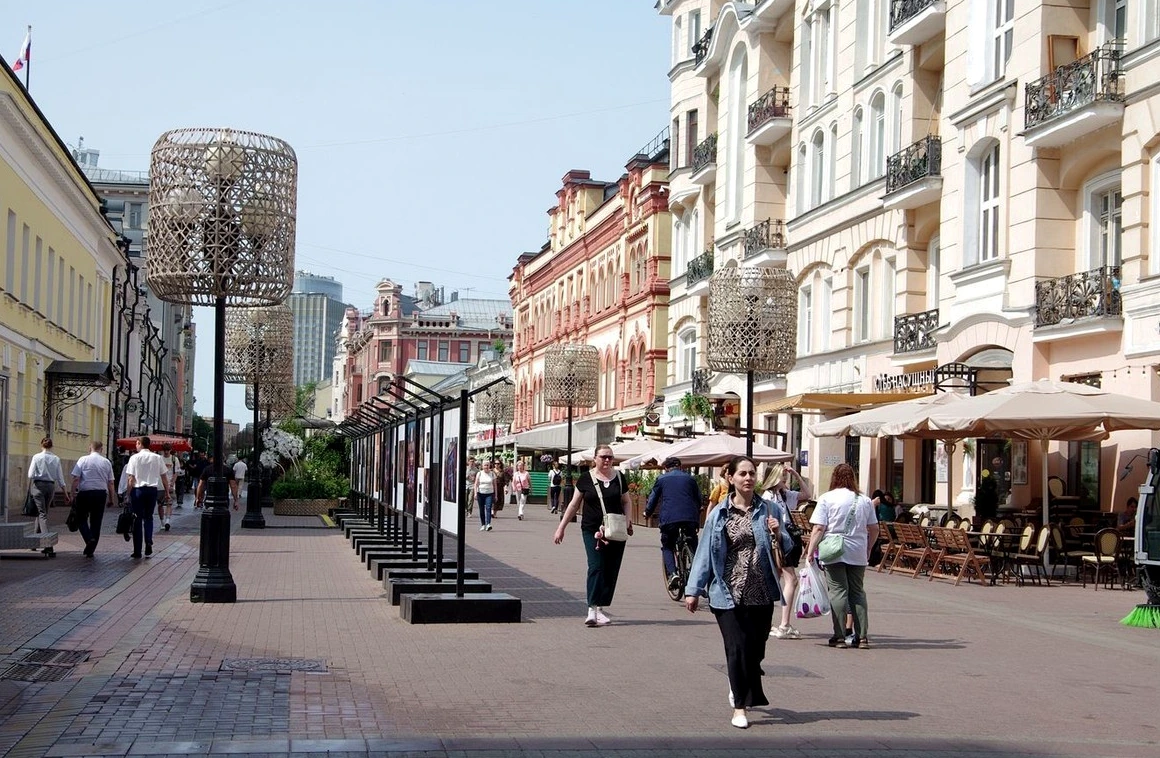
The most significant modernization milestone took place in 1986, when authorities launched a comprehensive renovation project that officially transformed Arbat into Moscow’s very first completely closed pedestrian street. This major restoration not only eliminated all motorized traffic, but also reinstated antique-style streetlamps, paved the roadway with stone, and expanded public gathering spaces. The 1986 transformation seamlessly bridged its proud past—from the era of Ivan III and the 19th-century literary golden age—with today’s living heritage space, securing Arbat’s status as the immortal cultural heart of the Russian capital.
From the perspective of urban landscape geography, Old Arbat Street is not merely a lively pedestrian thoroughfare; it serves as an archetypal westward spine of Moscow. Situated entirely on elevated terrain along the left bank of the Moskva River, the street’s elevation ranges from 140 to 155 meters above sea level. The topography here forms a distinctive micro-landform, slightly elevated at both ends with a level, gentle middle stretch. This gradual slope running from east to west not only lends a natural cadence to visitors’ footsteps as they take in the sights, but also reflects the terrain-sensitive urban planning philosophy of master architects across successive eras of Russian history.
Ancient hydrology played a pivotal role in shaping the geomantic layout of this heritage street. Historically, the Chertory River rushed along the northern side of Arbat—though it has long since been channeled underground beneath the city—while the entire southern flank borders the fertile floodplain of the Moskva River. Arbat’s spatial positioning and topographical alignment reflect profound geomantic foresight, establishing a harmonious geometric symmetry with the Kremlin’s primary western axis. The street acts like an underground artery linking the epicenter of imperial power with bustling commercial quarters, gracefully uniting solemn political gravitas with abundant mercantile vitality to foster centuries of enduring prosperity.
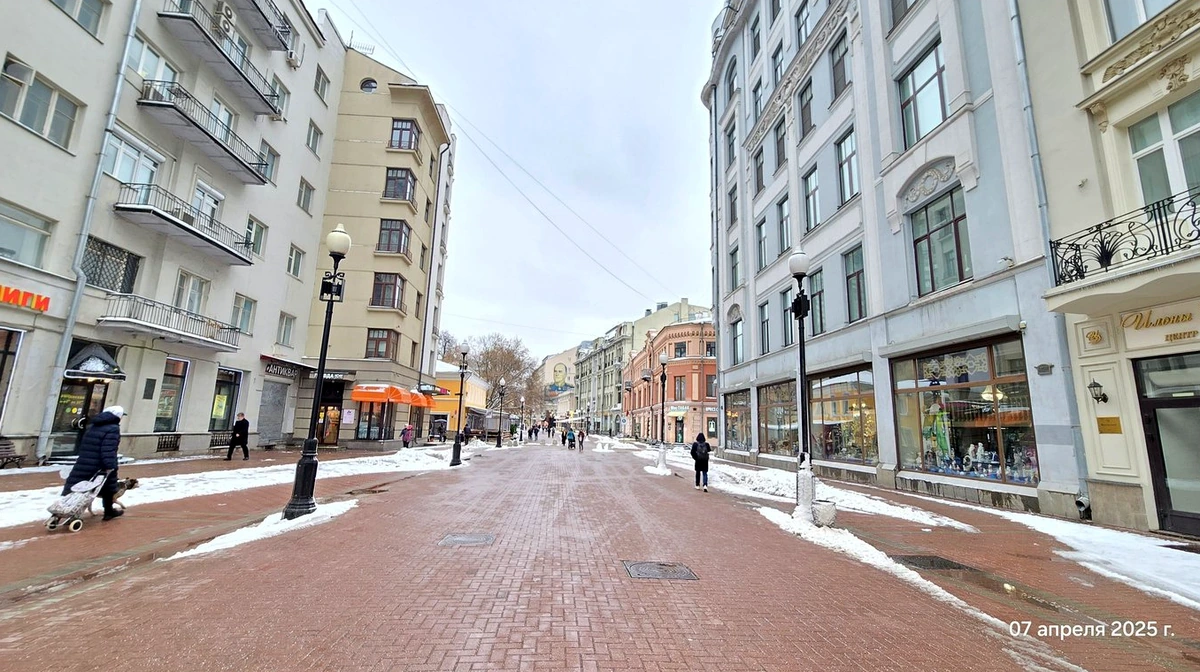
In terms of technical specifications and landscape design, the street spans a total length of approximately 1.2 kilometers with an ideal average width of 20 to 25 meters. These spatial proportions are the product of careful calculation balancing two objectives: ensuring sufficient defensive depth in historical times while creating an optimal corridor to capture natural sunlight for modern pedestrians. At this width, the flanking buildings do not completely obstruct the sky, allowing northern sunlight to angle down onto the pavement throughout the day. The spacing between architectural facades achieves a visual golden ratio—intimate enough to preserve the cozy enclosure of an old-world lane, yet open enough for visitors to pause and admire street art and historical landmarks.
This synergy of topographical parameters, hydrology, and thoughtful urban planning has turned Arbat into a masterpiece of urban landscape architecture. From a spatial experience standpoint, every meter of stone pavement along Arbat reflects a harmonious balance between the rugged texture of centuries-old brick walls and the softness of greenery and light. Thanks to its elevated terrain and natural wind corridors channeling breezes from the Moskva River, the street maintains pleasant air circulation, dispelling the gloom of freezing winters and welcoming refreshing breezes in summer—making it a vibrant, enduring heritage space that stands the test of time.
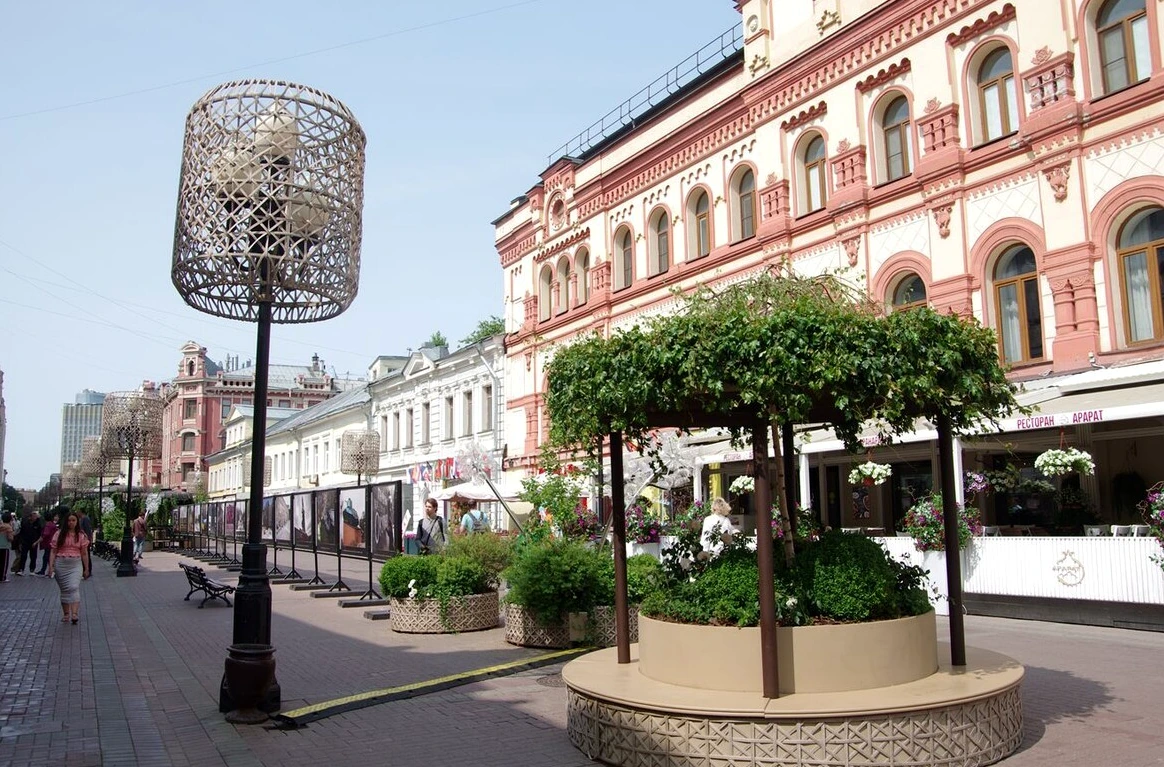
Every step along Arbat Pedestrian Street is a journey across space and time, where visitors can witness firsthand an extraordinary architectural spectrum spanning several centuries. The ensemble of buildings here serves as a living panorama, seamlessly preserving historical continuity from the Late Baroque period of the late 18th century, evolving through 19th-century Classicism and Historicism, to the flourishing of Art Nouveau in the early 20th century and the distinctive accents of Soviet-era Constructivism. This convergence of movements representing each pivotal historical transition has transformed Arbat into a vast repository of urban heritage, where every building facade speaks its own sculptural language and carries a distinct aesthetic soul.
Examined from the perspective of engineering and the evolution of building materials, the 18th and 19th centuries saw the dominance of load-bearing masonry structures paired with hybrid brick-and-timber frames. The exterior surfaces of aristocratic mansions from this era were typically coated in smooth stucco plaster, celebrating classical proportions through traditional column orders, crisply carved corner quoins, cornices, and intricate molded floral friezes. A prime example of the craftsmanship and spatial philosophy of this period is House No. 53 on Arbat—the residence that once chronicled the happiest days of the great poet Alexander Pushkin. Built in the late-18th-century Empire style from a harmonious blend of wood and stone, the mansion features slender Ionic pilasters accented with refined bas-reliefs, exuding the aristocratic grace of old Moscow high society.
At the turn of the 20th century, spatial design on Arbat took a bold leap forward with the rise of the Art Nouveau movement. Contemporary architects daringly cast aside rigid symmetry to experiment with progressive materials and organic, flowing lines. Cast-iron balconies curving like silk ribbons, resplendent stained-glass skylights drawing in natural light, and expansive, column-free plate-glass windows created striking visual perspectives. Among them, the mansion at No. 34 Arbat exemplifies the pinnacle of Art Nouveau with its rhythmic, sinuous contours. At a bustling corner intersection, the famed “Prague” Restaurant at No. 2 Arbat stands as a masterful fusion of Art Nouveau and the Russian Revival style. Its facade is draped in elaborate, intricate sculptural carvings that harmonize modern lines with traditional decorative motifs, elevating the structure into a supreme work of handcrafted architectural art.
The interplay between intimate classical structures and sturdy multi-story buildings not only reflects the street’s organic growth across different eras, but also creates a dynamic spatial rhythm. The street width was thoughtfully calibrated to showcase the height of colonnades and decorative moldings, allowing sunlight to filter all the way down to the historic cobblestones. From hand-forged wrought-iron details on entrance gates to massive load-bearing brick walls, Arbat Street is more than a keeper of memories—it is a compelling testament to the pinnacle of architectural artistry and sustainable spatial planning in the Russian capital.
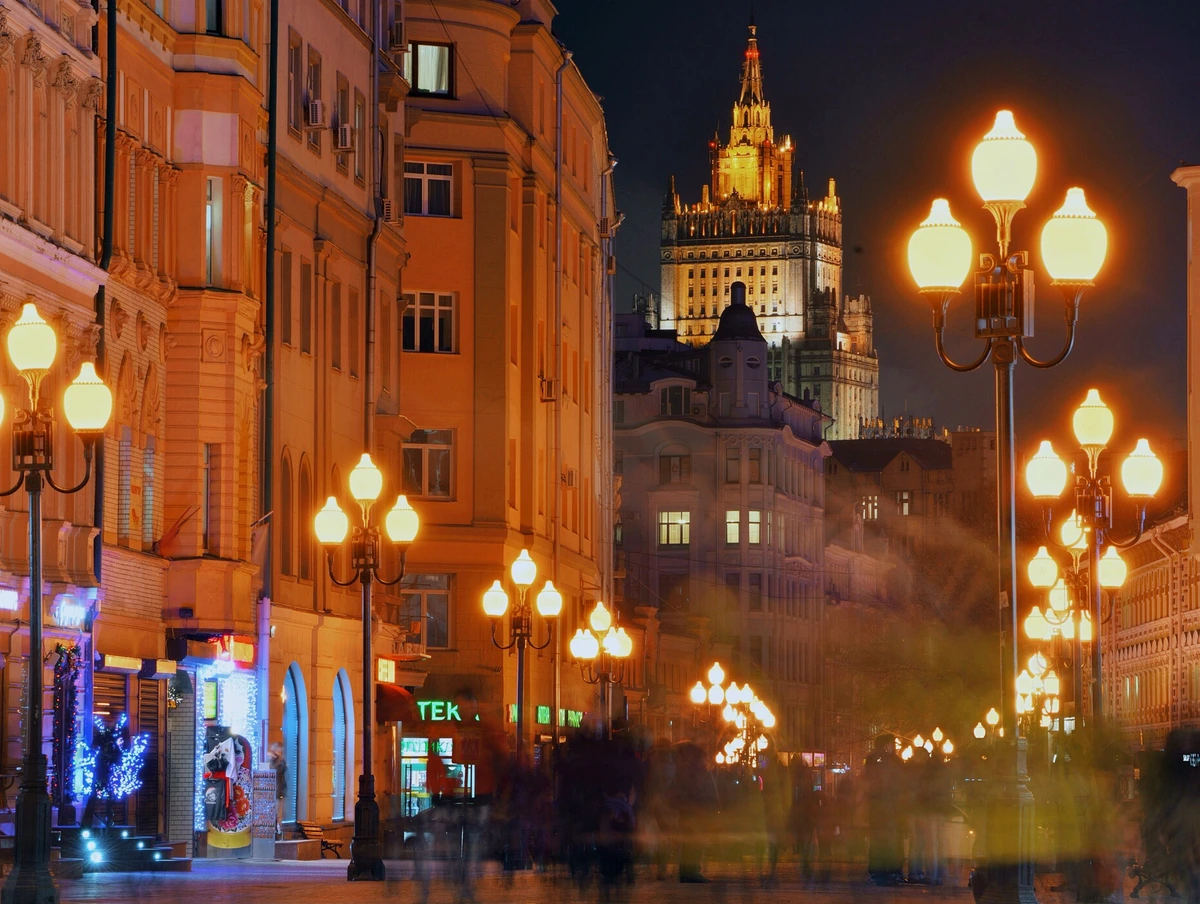
When night falls over Arbat Avenue, the space does not descend into the chaotic bustle of a modern metropolis; instead, it undergoes an artistic architectural transformation, turning the entire street into a magnificent open-air stage bathed in enchanting light. What gives Arbat’s nightlife its soul is an illumination system designed strictly in accordance with historic architectural preservation standards. Lighting engineers and artists have employed a precise color temperature range of 2700K to 3000K using warm golden LED technology, faithfully and nostalgically recreating the soft, mellow glow once cast by 19th-century gas lamps. Concealed wall-washing fixtures tucked beneath arches and cornices cast subtle shadows that highlight every neoclassical bas-relief carving and stately colonnade. Especially during major holidays, the airspace above the street is draped in a colossal canopy of light, with dazzling optical arches composed of thousands of shimmering star- and sphere-shaped lights that make visitors feel as though they are strolling beneath a magical Milky Way in the heart of Moscow.
Beyond visual artistry, Arbat by night is a vibrant ecosystem of live street performance, serving as a premier showcase for intangible cultural heritage. To optimize the acoustic experience for strollers, performance spaces along this nearly one-kilometer stretch are thoughtfully organized into acoustic zones running from east to west. Right at the eastern section—flanked by buildings of solemn architectural grandeur—the evening air resonates with the melodious strains of classical instruments such as violins and cellos, cultivating a contemplative, aristocratic ambiance. Continuing toward the middle section of the avenue, the soundscape shifts to the nostalgic, rustic warmth of folk acoustic guitars intertwined with the lilting notes of Slavic pipes—sounds steeped in the spirit of Russia’s vast countryside. Toward the western end, the tempo grows younger and more electric with contemporary pop music, energetic indie bands, and imaginative performance artists.
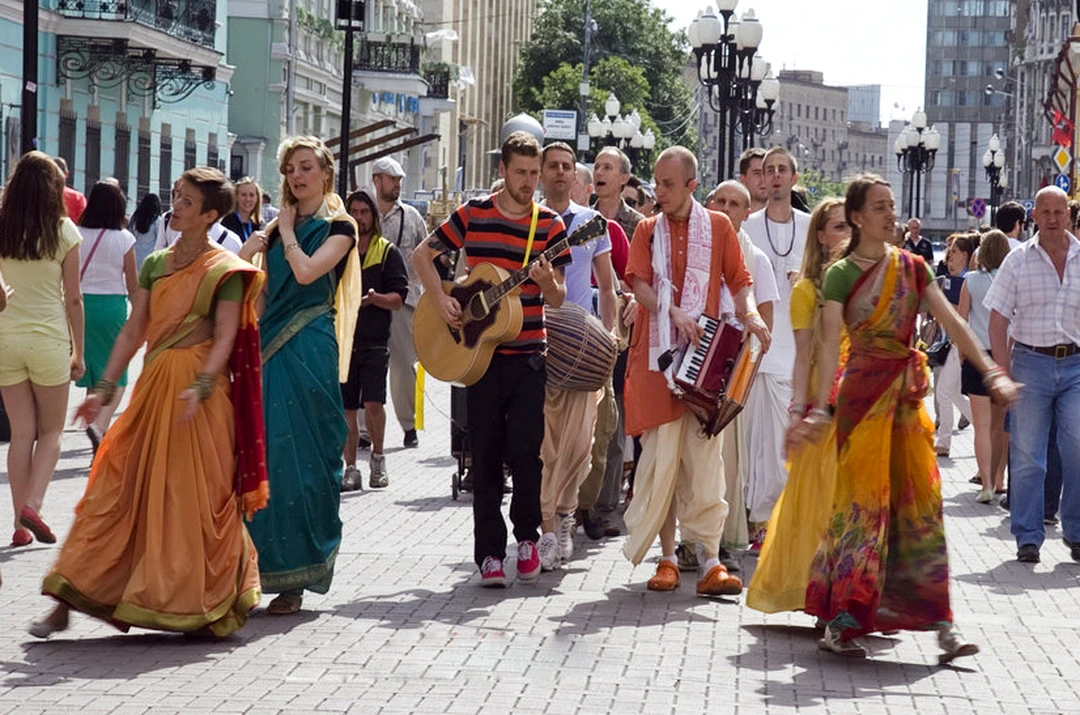
On balmy summer evenings or lively weekends, Arbat comes alive with colorful, spontaneous flashmob-style performances by folk ensembles. Clad in meticulously recreated Tsarist-era traditional costumes glittering with gold-thread embroidery, or the signature tunics and fur hats of proud Cossack warriors, performers belt out stirring polyphonic folk songs and execute powerful, high-energy traditional dances. The rhythmic stomping of boots against granite paving stones, the whirl of vibrant flared skirts, and the cheers of travelers singing along turn this pedestrian boulevard into a borderless cultural festival.
Experiencing Arbat at night is far more than a simple sightseeing stroll—it is an immersion into a multisensory cultural celebration. Visitors can pause at sidewalk cafes, sip a steaming mug of traditional spiced honey drink (sbiten) or fragrant tea brewed in an antique brass Samovar, and listen to the gentle strumming of guitars mingled with passing footsteps. Poised on the delicate threshold between a resplendent past and a proud modernity, Arbat at night is truly a triumphal hymn to the art of illumination and the Russian soul, where every street corner and sculpted relief seems to tell a timeless story.
Not only a gathering place for poetry and architecture, Arbat Avenue has long been celebrated as a “living museum” preserving the culinary essence of Russia, from the splendor of the Imperial court to the nostalgic simplicity of the Soviet era. The most iconic culinary landmark here is undoubtedly the Praga Restaurant—a heritage institution standing right at the entrance to the pedestrian street. Founded in the 19th century and having weathered numerous historical chapters, it once served as the cradle of Moscow’s haute cuisine standards, drawing artists, writers, and aristocrats of the day. Visiting Arbat today, diners embark on a gastronomic journey across space and time, where time-honored family recipes have been faithfully preserved across generations of master chefs.
The first stop on Arbat’s flavor map is the iconic red soup—Borscht (Борщ), the indispensable culinary soul of the Slavic people. To achieve its alluring, shimmering ruby-red hue, cooks select the freshest beetroots and slow-simmer them for hours in a rich beef broth, delicately paired with shredded cabbage, potatoes, and traditional herbs and spices. The crowning touch that elevates a steaming bowl of Borscht is a dollop of rich Smetana (Сметана) sour cream; when stirred in, its refreshing tang melds seamlessly with the deep earthiness of the beet broth, creating a symphony of flavors that is both comforting and refined. Equally unmissable is Chicken Kiev (Котлета по-киевски), a true culinary masterpiece. Its golden, crispy breaded exterior encases tender chicken breast meat. The moment a diner makes the first gentle cut with a knife, a stream of fragrant melted butter infused with fresh garlic and herbs gushes forth, releasing an irresistible aroma that awakens every sense.
The culinary rhythm of Arbat Pedestrian Street is carried forward by traditional pastry stalls brimming with Soviet-era nostalgia. Charming little kiosks dotting the street send up plumes of fragrant steam, serving legendary baked Pirozhki (Пирожки)—a beloved street snack etched into the memories of generations of Muscovites. Soft, leavened dough baked to a rustic honey-gold encloses an array of generous fillings: from richly spiced minced beef, creamy mashed potatoes, and sweet sautéed cabbage to tart-sweet wild bilberry jam. Holding a piping-hot Pirozhok in Moscow’s crisp air and savoring each fragrant bite is the finest way to experience the unpretentious yet deeply heartwarming rhythm of everyday local life.

A culinary tour of Arbat would be incomplete without the ritual of drinking tea beside a metal Samovar (Самовар)—a deeply cherished spiritual and cultural heritage of the Russian people. Within the quiet ambiance of historic teahouses, a gleaming brass Samovar rises with steam puffing from its spout, brewing rich, full-bodied black tea (Чай). Local tea culture goes hand in hand with jars of Varenye (Варенье)—a traditional fruit preserve that keeps whole berries such as wild strawberries, cherries, or raspberries intact. Muscovites love to spoon a bit of sweet jam to savor directly or stir it gently into their hot tea so the fruit flavors dissolve naturally. Taking a sip of robust tea alongside an intricately patterned Tula gingerbread cookie (Пряник) filled with chewy fruit jam lets diners not only taste authentic flavors, but directly experience the unhurried, graceful, and warm-hearted way of life of the generous Russian soul.
To fully appreciate the blend of old-world nostalgia and modern vitality along this heritage avenue, travelers should familiarize themselves with how Moscow’s urban spaces operate. Technically, the entire Arbat Pedestrian Street is open free of charge 24 hours a day, welcoming romantic wanderers to stroll beneath its glowing streetlamps at any hour of the week. However, core cultural venues—including memorial museums, art galleries, and family-run antique shops—follow set operating hours, typically welcoming visitors from 10:00 AM to 9:00 PM. The ideal itinerary recommended by local cultural experts is the “East-to-West Traverse”—a continuous walk moving along the east-west axis. Visitors should begin at Arbat Square on the eastern end, strolling leisurely past stone-paved corners brimming with artistic spirit, and conclude their walk at Smolenskaya Square on the western end, where the towering Ministry of Foreign Affairs building rises—one of the seven proud pointed spires belonging to Stalin’s “Seven Sisters” architectural ensemble. This unhurried journey of observation and immersion typically takes 2 to 3 hours.
Moscow’s world-renowned Metro system provides the fastest and most convenient link to reach Arbat. If taking Metro Line 1 (the red Sokolnicheskaya Line), you can alight at “Biblioteka Imeni Lenina” (Lenin Library Station) and take a 5-minute stroll through historic intersections to reach the eastern entrance of the street. Alternatively, if traveling on Metro Line 4 (the light-blue Filyovskaya Line), exiting at either “Arbatskaya” or “Smolenskaya” station places you directly at the two gateways of the pedestrian zone. Emerging from the palatial underground halls of the Metro onto cobblestone streets filled with impromptu violin melodies and the aroma of freshly roasted coffee creates a truly unforgettable sensory transition.
In terms of costs, strolling along the street and soaking up its lively cultural atmosphere is completely free. However, for travelers looking to delve deeper into its humanistic heritage, it is wise to budget a modest sum for admission tickets to iconic landmarks. For instance, at the Alexander Pushkin Memorial Apartment Museum—the pale-blue house that preserves the blissful honeymoon days he shared with Natalya Goncharova—admission currently ranges from 400 to 600 Rubles. Visitors are advised to book tickets in advance via the museum’s official website to avoid queues at the ticket counter during peak tourist seasons. Carrying a small amount of cash in Rubles is also handy for on-the-spot portrait sketches, vintage Soviet-era books, or classic Russian souvenirs such as wooden Matryoshka nesting dolls and Baltic amber jewelry.
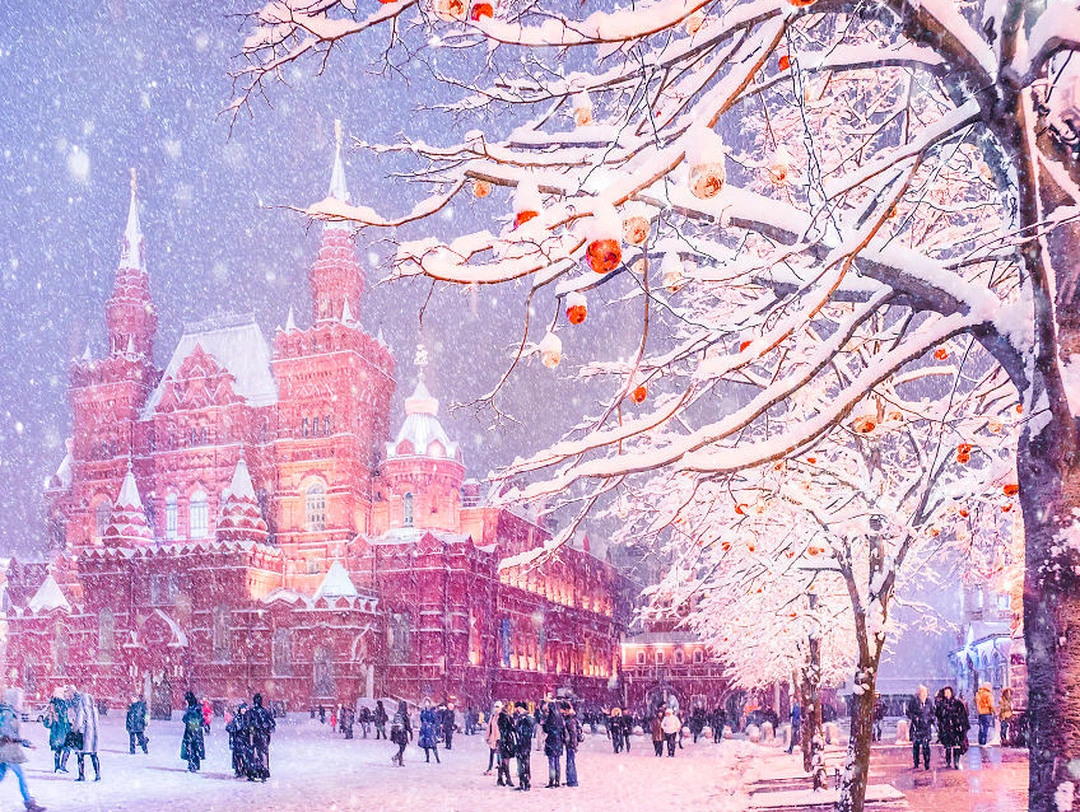
Weather conditions and cultural etiquette also call for thoughtful preparation. If visiting Arbat in winter, when crisp white snow blankets the cast-iron benches, wearing windproof thermal layers, specialized snow boots with non-slip rubber soles, and a fur-lined Ushanka ear-flap hat is essential to stay warm and safe. When stepping from the open street into Russian Orthodox churches or intimate indoor galleries, visitors should strictly observe local customs: men must remove their hats, while women are advised to carry a lightweight silk scarf to drape over their heads as a sign of respect for sacred and artistic spaces.
Finally, personal safety is always the compass for a fulfilling journey. Although Arbat is one of the safest streets in the capital, dense crowds during peak hours can carry the risk of pickpocketing, so keeping a close eye on personal belongings, wallets, and camera gear is always prudent. After dark, Arbat takes on an enchanting allure beneath its golden lights, though travelers should stick together in groups and avoid venturing deep into poorly lit side alleys (known as *Pereulki* – Переулки) branching off the main avenue. To experience the rhythm of Moscow safely, seamlessly, and with rich historical insight, booking a high-quality all-inclusive Russia tour will let you explore the legendary beauty of historic Arbat Street with complete peace of mind.