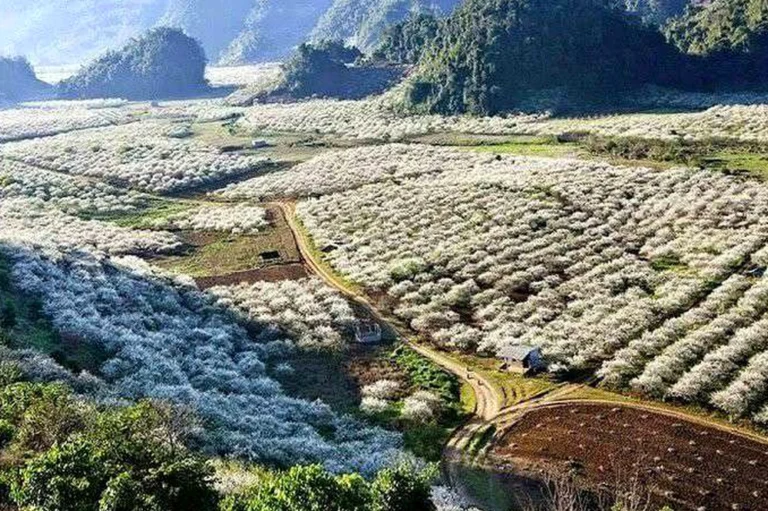
Tucked away in the rolling valleys of Guzhang County, in the Xiangxi Tujia and Miao Autonomous Prefecture, Dehang Miao Village stands as a living chronicle of the Red Miao people’s resilient survival over millennia. In the native Miao lexicon, the sound “Dehang” carries the sacred meaning of “the land where dragons dwell,” symbolizing the convergence of vital spiritual energy among the rugged, multi-layered mountains of western Hunan. Tracing the river of the past back to antiquity, the origins of the local inhabitants are intertwined with the epic and tragic great migrations of the Jiuli tribe led by Chiyou after their defeat at the Battle of Zhuolu against the Yan-Huang alliance. Through countless journeys along both banks of the Yangtze River, a branch of the ancient Miao people settled by the steep gorges of the Xiangxi region, clearing thorns and splitting rocks to establish an isolated village, relying on nature’s shelter to preserve their ancestral customs and proud bloodline intact.
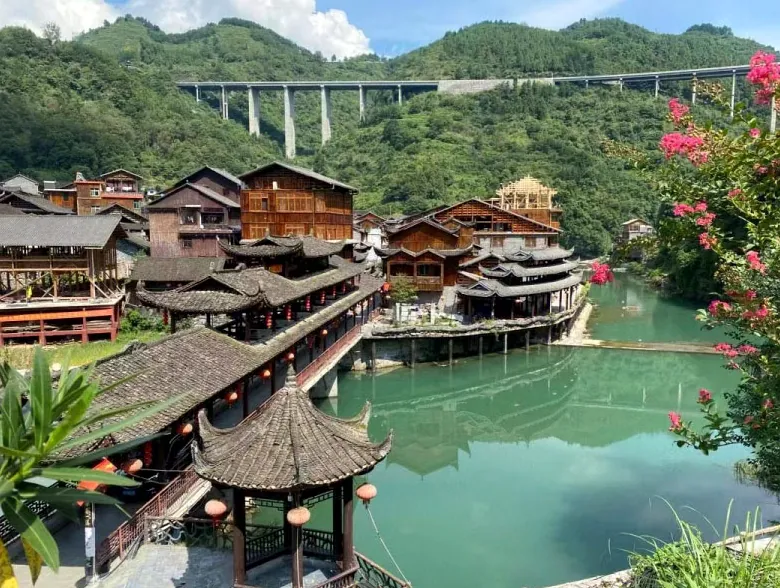
Viewed from above, Dehang Miao Village emerges like a breathtaking, tranquil natural landscape featuring clusters of dark-wood Diaojiaolou stilt houses cascading along the steep limestone slopes. Each moss-covered, bluish-grey yin-yang tile roof undulates rhythmically with the basin’s terrain, interwoven with the wispy mist blanketing the surrounding green mountains. The village layout is tightly fortified with winding slate-paved alleys, creating a unique interconnected defense system that both blocks the biting cold winds of the wild frontier and showcases indigenous architectural mastery in absolute harmony with the pristine primeval ecosystem.
Entering the medieval feudal era under the Song and Yuan dynasties, the central court implemented the Jimi (loose rein) system to appease local chieftains, before the hereditary Tusi (chieftain) institution took clear shape. At that time, Dehang land was under the loose administration of Miao Tusi, maintaining a semi-autonomous status for centuries. However, the vicissitudes of the times truly descended during the Ming dynasty and peaked under the Qing dynasty, particularly during the reigns of Emperors Qianlong and Jiaqing. To eradicate local separatism and impose absolute control over the southwestern frontier, the Manchu court ruthlessly implemented the “Gaitu Guiliu” (replacing native chieftains with appointed officials) policy, abolishing the hereditary power of the Tusi in order to dispatch Han officials to govern and exact harsh taxes.
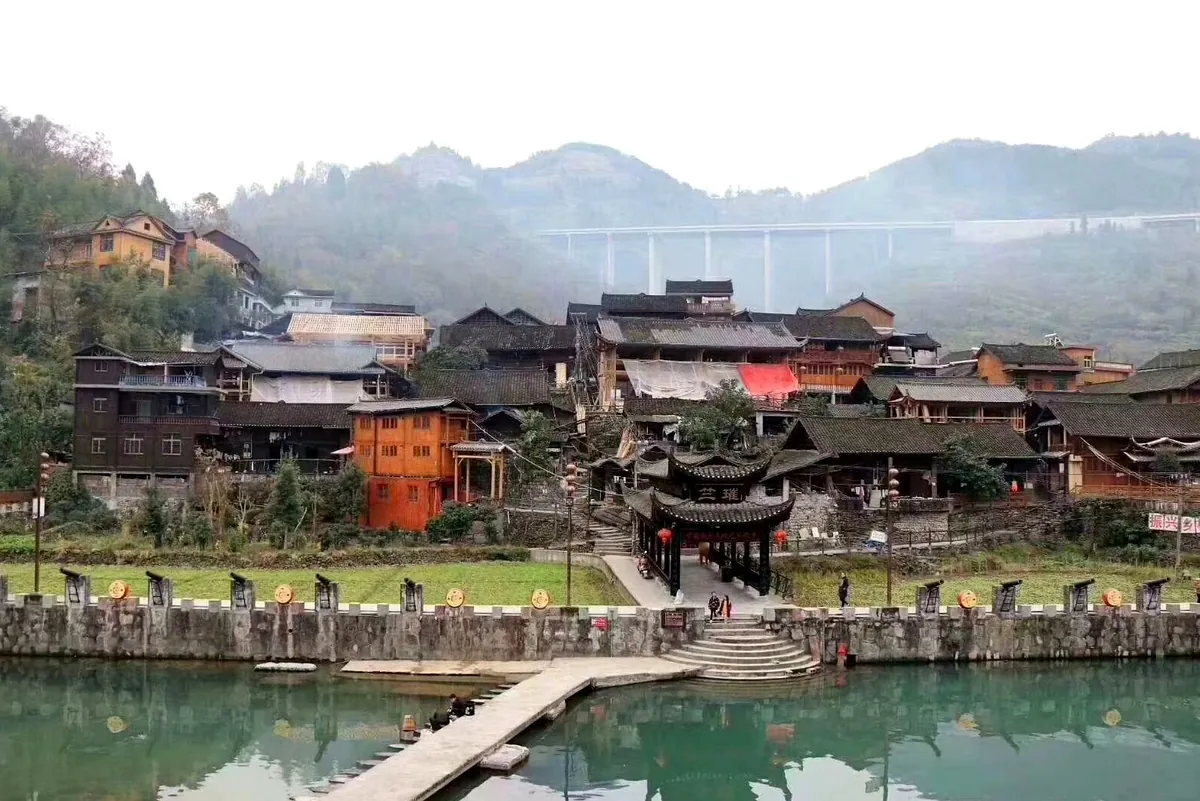
Forced assimilation and the exploitation of feudal officials and soldiers fanned the smoldering embers of resistance deep within the hearts of the Miao people. During the illustrious Xiangxi Miao uprising that lasted from the late Qianlong era to the early Jiaqing years, outstanding sons of the great mountains such as Wu Bayue, Shi Liudeng, and Shi BaKun raised the banner of rebellion, calling upon tens of thousands of volunteer soldiers to stand against the oppression of the Eight Banners court. Thanks to its rugged basin terrain where “one man guards the pass, ten thousand cannot breach it,” Dehang Miao Village became a strategic logistical stronghold, shielding the rebel resistance fighters while serving as an impregnable fortress against the sweeping campaigns of the northern imperial army.
Having endured fiery and smoke-stained battles, the Manchu court ultimately had to establish a dense garrison system along with the solid Miaojiang Bianqiang (Miao Border Wall) fortifications to separate the submissive Miao from the rebellious Miao. Even so, the resilient spirit of Dehang’s inhabitants remained unbroken. They transformed historical traumas into the willpower to preserve their roots, step by step rebuilding their village from the ashes of war, and passing down epic ballads through sacred bronze drumbeats, exquisite silver-smithing arts, and solemn ancestral worship rituals. Though the traces of dynastic turmoil have receded into history, the heroic and tragic soul of the village’s founding and defending days remains deeply etched into every single stone slab and wooden plank of Dehang Miao Village to this day.
Nestled in the undulating karst valleys of the majestic Wuling Mountains in Guzhang County, Xiangxi Autonomous Prefecture, Dehang Miao Village was cleverly designed by the ancients upon a feng shui terrain deeply imbued with indigenous survival philosophy. According to the native Miao lexicon, the name “Dehang” carries the sacred meaning of “the land where dragons dwell,” denoting the abundant source of vital energy converging where mountain and water dragon veins meet. The local topography unfolds into a flawless “mountains embracing water” formation, as thousands-foot-high sheer limestone cliffs shield all sides like protective arms, while the crystal-clear Longjiao River winds like a soft silk ribbon embracing the village territory. The harmonious blending of converging mountains and waters not only offers ethereal scenery akin to a utopian paradise but also creates a sturdy natural screen, protecting the Miao people through countless historical vicissitudes over hundreds of years.
Viewed from above, Mo Rong Miao Village reveals a magnificent natural landscape, with dark brown fir-wood Diaojiaolou stilt houses clustered together, firmly anchored to the limestone slopes. The moss-covered blue-gray yin-yang tiled roofs rise amidst layers of drifting mist, casting a solemn reflection onto the jade-green stream flowing peacefully at the valley floor. Ancient stone bridges and lush bamboo groves dot both banks, crafting the antique, serene, yet expansive beauty of a mountain village.
The spatial planning of Mo Rong reflects the pinnacle of the Miao people’s wisdom in adapting to steep, rugged terrain. Unlike the grid-based planning of flat plains, the village is distributed in an organic, terraced pattern that descends gracefully from the valley floor to the cliffside. The residential clusters do not level the terrain; instead, they use a system of stilts driven deep into the bedrock. This preserves the vegetation cover to prevent landslides during the rainy season while creating natural ventilation that draws in cool breezes from the gorge during summer. The fishbone-patterned traffic system, paved with winding blue stone slabs, follows the slopes and connects courtyards and stone fences into a tight, natural defensive labyrinth, allowing the village to easily protect itself against bandits in turbulent times.
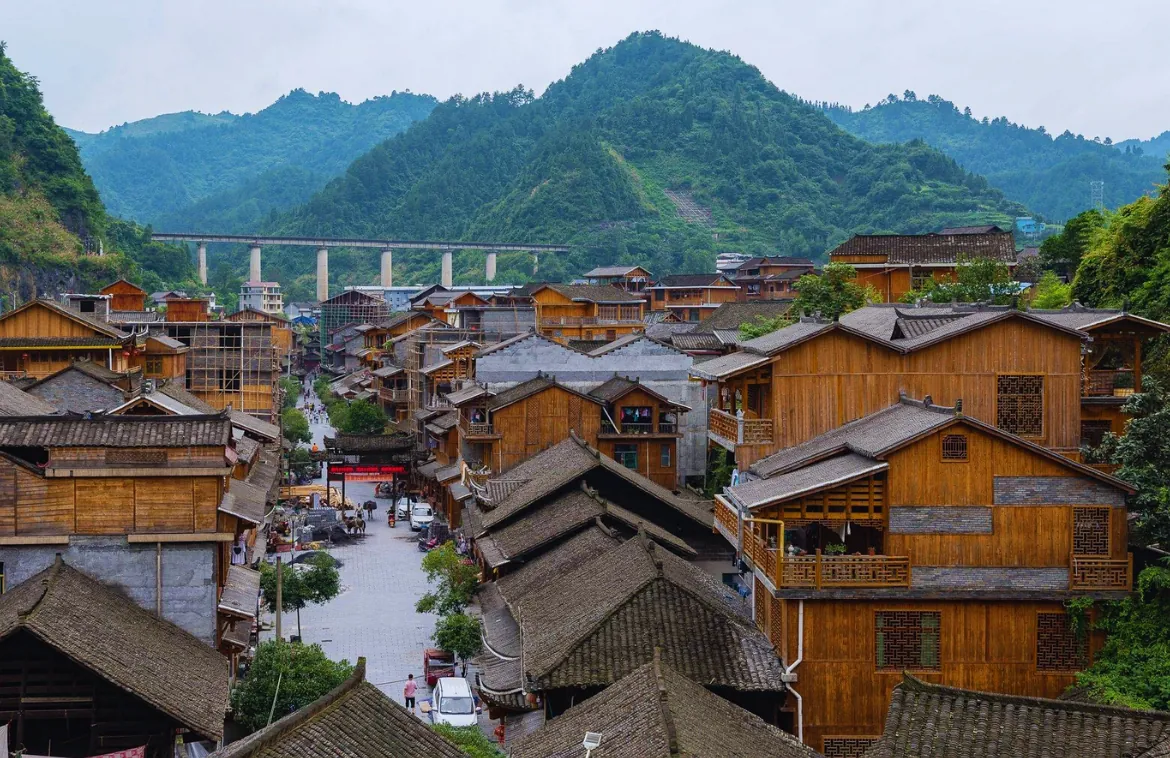
The natural landscape surrounding the village is nurtured by the unique microclimate of the Western Hunan karst region, where abundant rainfall and year-round thick fog create ideal conditions for diverse vegetation to thrive. The primary protection forest belt behind the mountain slopes acts as armor against cold northern winds in winter, while storing pure groundwater that trickles through limestone layers to sustain the community. Adjacent to the residential area are famous, lush green tea hills, cultivated along contour lines, creating soft, flowing ribbons woven into the sky. This seamless harmony between human craftsmanship and pristine scenery has turned Mo Rong into a complete ecological entity, where the boundary between village and wilderness seems to vanish.
In terms of spirituality and cultural geography, the terrain of Mo Rong is deeply linked to the animistic beliefs of the local people. Every towering mountain peak, every bend of the river, and every thousand-year-old tree at the village entrance is revered as a guardian deity. The ancients established unwritten rules prohibiting logging in the feng shui forests on sacred peaks, ensuring the land’s vital energy remains unharmed. It is this reverence for nature, combined with a planning philosophy of working with rather than aggressively altering the land, that has preserved Mo Rong Miao Village’s pristine, secluded, and pure appearance through the vicissitudes of time.
Located amidst the overlapping folds of the Western Hunan mountains, Mo Rong Miao Village unveils a magnificent picture of traditional settlement, where steep mountainous terrain is not an obstacle but a cradle for unique indigenous architecture. The entire village is planned to follow the ‘dragon’s back’ of the mountain, with its facade facing the crystal-clear stream winding at the valley floor and its back leaning against cliffs covered in primeval forest, strictly adhering to primitive feng shui concepts of yin-yang balance and the protection of heaven and earth.
Observing the village from the gentle slopes, travelers are immediately overwhelmed by the density of hundreds of Diaojiaolou stilt houses rising in layers along the natural incline. The moss-covered blue-gray yin-yang tiled roofs ripple like dragon scales, accented by the gracefully curved wooden railings of the ‘beauty balconies,’ where the sunset casts shadows on window frames carved with legendary butterflies and birds, creating an architectural composition that is both solemn and expansive amidst the clouds.
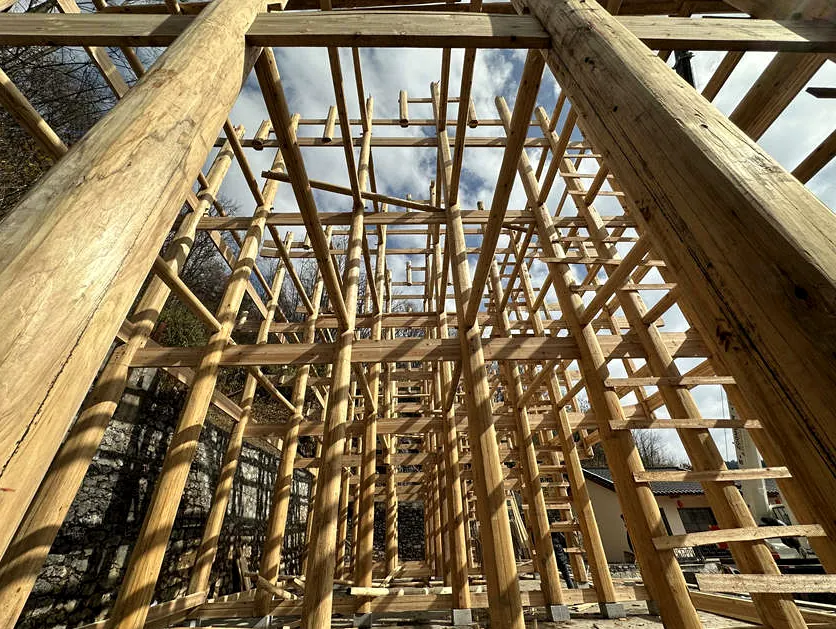
The pinnacle of Miao architectural art here is the traditional ‘chuan dou’ (column-and-beam) framing technique, which uses absolutely no iron nails. The entire weight of the massive, hundreds-of-square-meter structures is distributed rhythmically through a system of sturdy old fir-wood columns, tightly connected by exquisitely carved mortise-and-tenon joints and crossbeams. The steep terrain requires the stilt columns to have flexible, varying lengths; the inner parts leaning against the cliff are supported by solid stone foundations, while the outer parts are held up by tall, round wooden columns driven deep into the rocky earth, turning the house into a resilient entity capable of extraordinary seismic resistance and landslide protection through centuries of weathering.
In terms of spatial functionality, each stilt house (Diaojiaolou) in MoRong functions as a miniature ecosystem divided into three distinct levels, closely tied to the survival philosophy and long-standing family traditions of the locals. The damp, semi-open ground floor, once used for storing farm tools, firewood, and livestock, has now been neatly and cleanly renovated. The second floor serves as the center of daily life, featuring a main hall with a solemn ancestral altar, bedrooms for each generation, and a warm charcoal kitchen fire that never goes out. Here, the veranda extending into open space features curved backrests known as "beauty benches"—a place where young maidens sit to embroider brocade clothing or catch the cool breeze. The topmost floor, the driest and airiest area thanks to natural ventilation through the tile gaps, is used as a granary to store dry food, golden corns, and precious herbal medicines foraged from deep forests.
The internal transport infrastructure of the village is a dense network of alleys paved with native bluestone, polished smooth by the footsteps of countless generations of residents. Beneath these alleys lies an underground drainage system that channels spring water from high mountains into a shared community reservoir and distributes it evenly throughout the village, effectively meeting daily needs and serving as a reliable fire-prevention system. Real conservation investments over recent years have successfully restored the ancient appearance of centuries-old houses, combined with the renovation of large stone plazas for drum-dancing rituals. This keeps the living space of the Miao people both authentically ancient and fully ready to embrace the breath of the modern era.

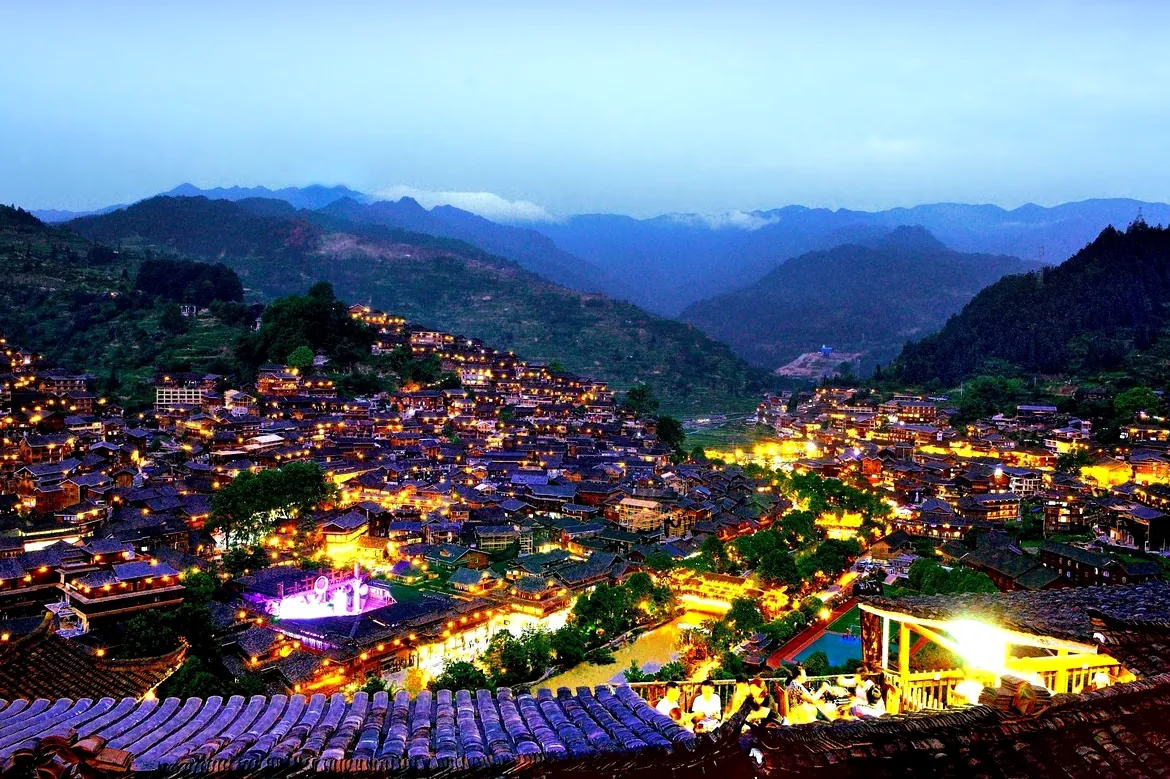
As the twilight slowly fades behind the undulating limestone ranges of the Xiangxi region, MoRong Miao Village sheds its daytime tranquility to don a completely different look. The entire valley transforms into a giant natural stage, where nightfall acts as a velvety backdrop, highlighting an artistic lighting system tastefully arranged along the yin-yang tiled roofs and the winding bends of the Longquan stream. The space undergoes a spectacular shift from a poetic landscape painting into a vibrant symphony of sound, light, and the eternal heartbeat of the indigenous people.
The night view in MoRong opens up an overwhelming visual feast as thousands of warm golden lights simultaneously illuminate, outlining the upturned eaves of the tiered Diaojiaolou complex leaning against the cliff. The shimmering light reflects on the crystal-clear water surface, creating shimmering bands of color intertwined with the red of traditional lanterns and the faint blue glow blanketing the ancient blue stone slabs. At the central plaza, flickering bonfires and contemporary lighting sharply illuminate every intricate detail of the brocade costumes and sparkling silver headwear worn by Miao youths, creating a magical visual realm straight out of an ancient fairy tale.
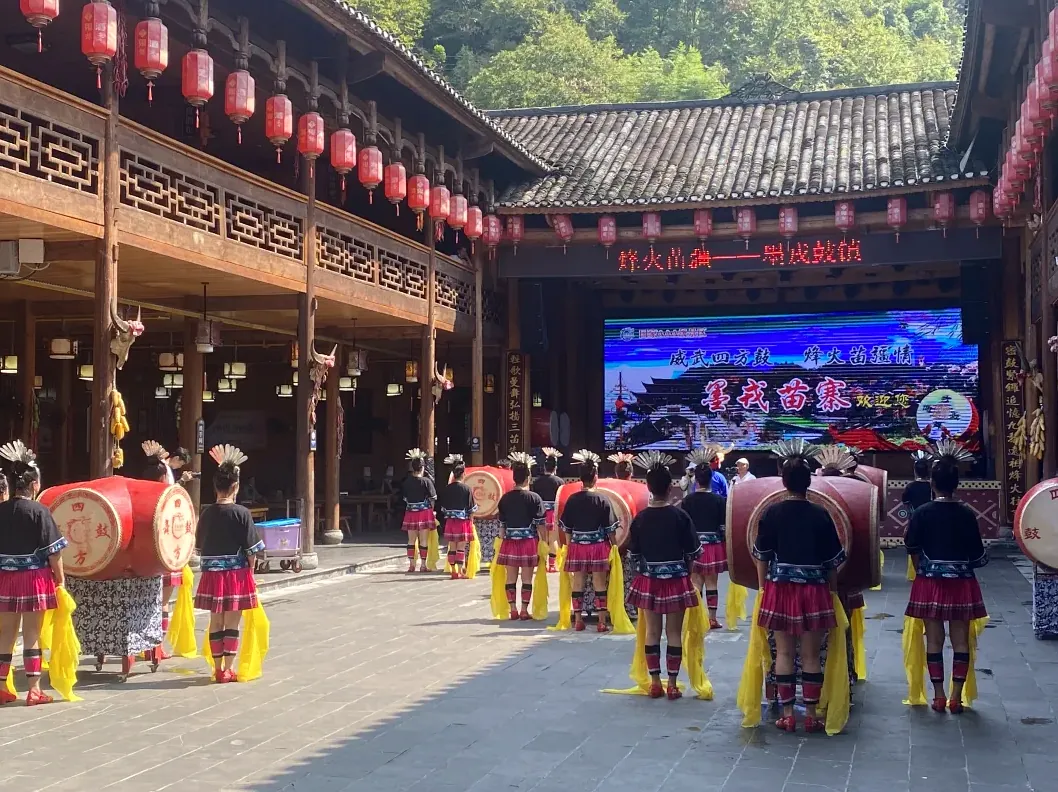
The centerpiece of nightlife is the live-action performances vividly recreating the historical legends and spiritual culture of the Red Miao people. The thundering beats of the grand MoRong drum kick off the renowned Flower Drum dance, a thousand-year-old intangible cultural heritage. Each sharp, resonant drumbeat combined with the powerful and graceful choreography of senior artists not only re-enacts the arduous migration stages across thousands of rivers and mountains by the ancestor Chiyou, but also serves as a prayer to the deities for abundant harvests. The stage lighting shifts colors with every beat of the drum—sometimes glowing red like an indomitable will against the storms of history, sometimes deep blue like a sheltering primeval forest, drawing viewers into a tragic yet epic space.
Alongside the battle drums, the MoRong night festival is also mesmerized by the gentle melodies of the Lusheng (reed pipe) and mountain folk songs echoing across the misty valley. When the giant bonfire in the middle of the plaza bursts into bright red flames, travelers and villagers hold hands tightly to form an endless circle. The jingling of bells and intricately carved silver jewelry blending with crystal-clear romantic songs create a wild yet intoxicating melody. The "Gao Shan Liu Shui" (High Mountain and Flowing Water) wine-toasting ritual continues by the campfire, where streams of potent corn wine are poured from above into stacked layers of earthenware bowls, symbolizing boundless friendship and sincere, unending hospitality.
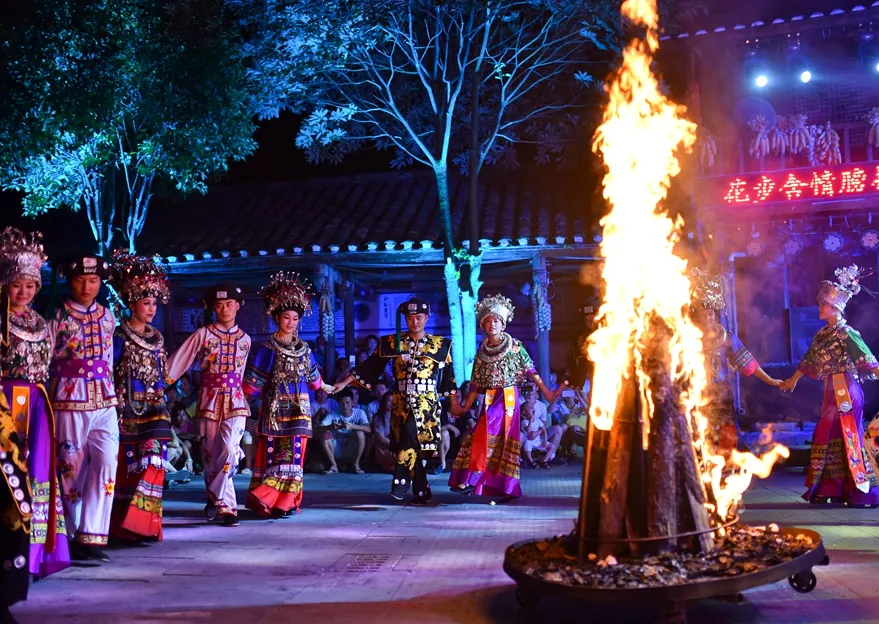
As the night deepens, with dance steps slowing down and the fire receding into warm, glowing embers, the village atmosphere settles into a state of pristine tranquility. Strolling along the narrow stone-paved alleys, still lingering with the scent of pine smoke and the faint aroma of Guzhang tea drifting from half-opened wooden windows, travelers can fully feel the simple rhythm of local life. The harmonious blend of modern lighting technology and the soul of traditional culture does not diminish the character of Mo Rong; on the contrary, it transforms the mountain village’s evening banquet into a profound aesthetic memory, touching the emotional depths of anyone who has ever stopped here.
Nestled within the deep folds of the Xiangxi mountains, the culinary art of Mo Rong Miao Village is not merely a combination of flavors, but an epic poem of adaptation to the rugged terrain of a people who have migrated for thousands of years. The historical salt blockade during feudal times and the year-round humid mountain climate have shaped a unique culinary philosophy that takes sour and spicy as its soul. In the consciousness of the Miao people here, a famous Xiangxi proverb still circulates: “If you don’t eat sour for three days, your steps will falter,” meaning that without the sour taste, one would struggle to climb slopes and cross mountain passes. The sourness of Mo Rong does not come from industrial vinegar but is distilled from natural probiotics, the result of a traditional fermentation process in earthenware jars using upland sticky rice, wild forest tomatoes, and high-mountain herbs.
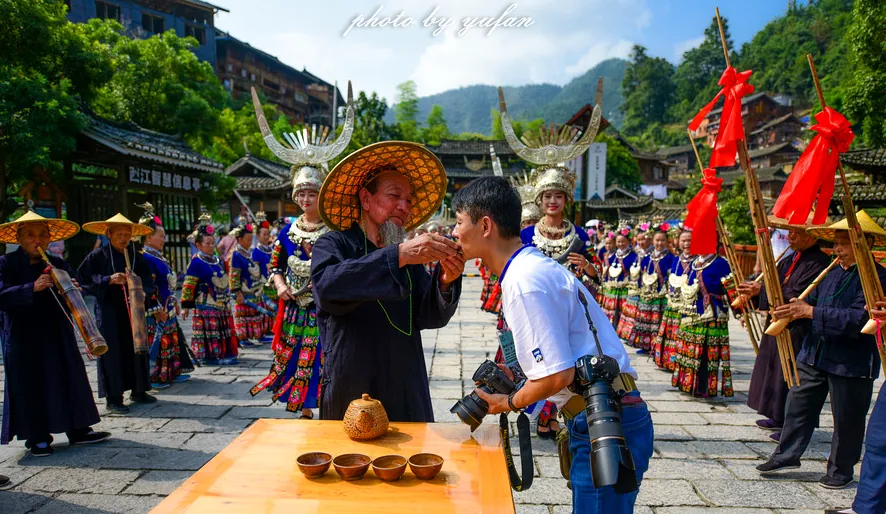
The pinnacle of communal culinary culture in Mo Rong is fully crystallized in the Long Table Banquet (Chang Lang Yan) ritual, which has a history spanning hundreds of years. When the sounds of bronze gongs and buffalo-hide drums resonate rhythmically beside the stilt houses, hundreds of oak tables are seamlessly joined along the stone-paved corridor, creating an endless ribbon of cuisine stretching through the valley. Sitting at the Long Table Banquet, visitors not only enjoy local delicacies but also participate in the most sacred wine-serving ritual called “High Mountains and Flowing Water.” Miao maidens in magnificent silver-embroidered costumes line up in descending order, tilting rough-glazed earthenware bowls so that the sweet, potent sticky rice wine flows down like a continuous, babbling waterfall, symbolizing deep affection and the eternal source of their ancestors’ heritage.
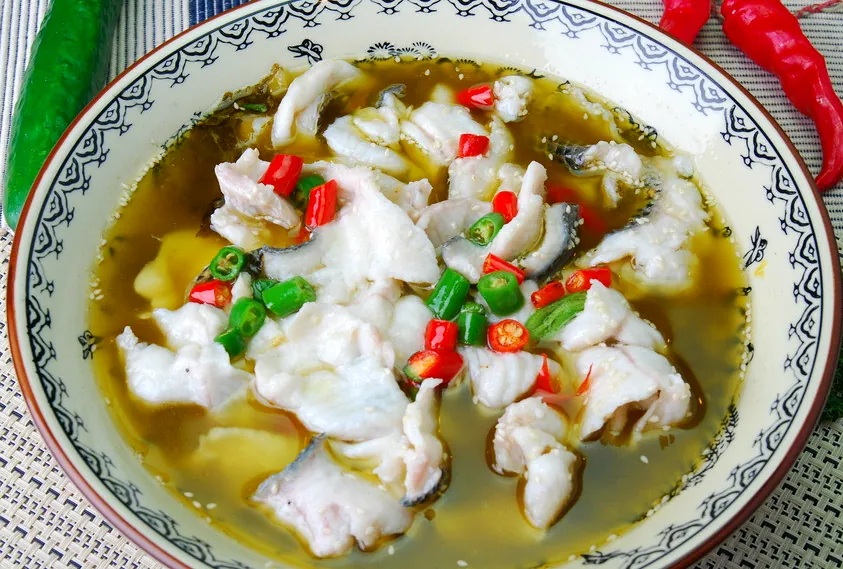
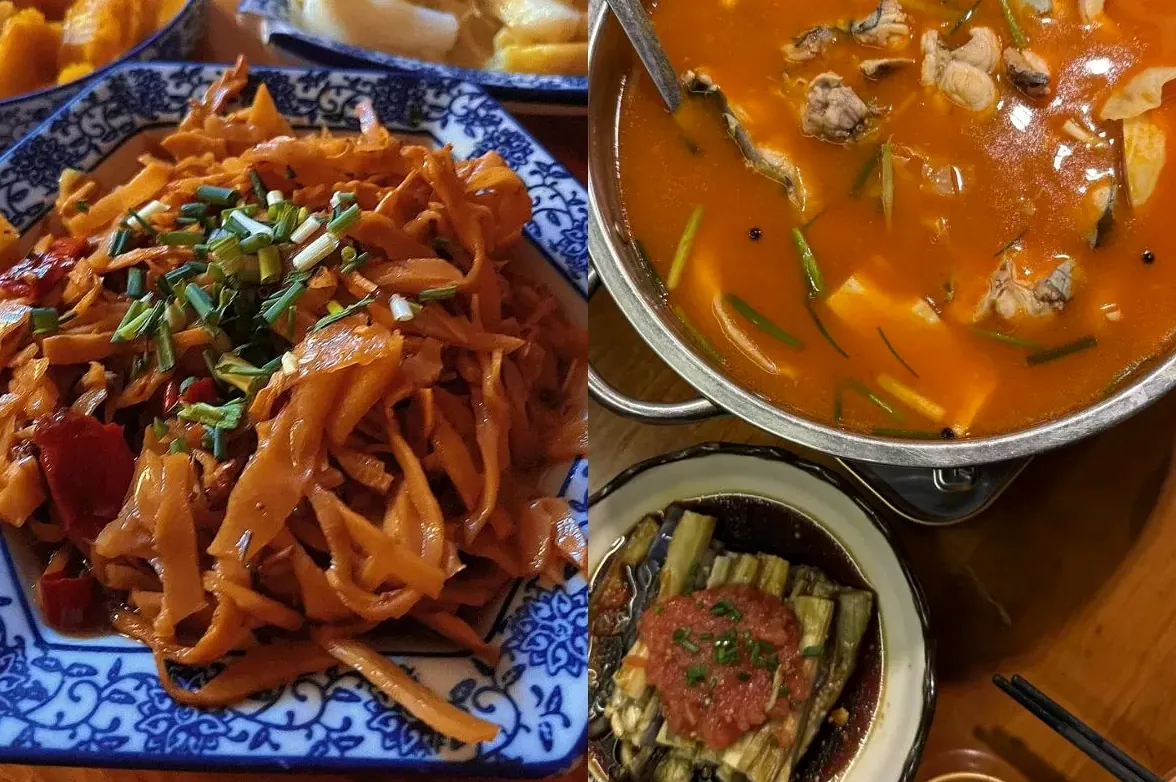
The centerpiece of every Miao feast is the famous sour fish soup, known as “Suan Tang Yu.” This dish uses fresh carp or grass carp caught directly from natural mountain streams or raised naturally in terraced fields after the rice harvest. The sour broth glows with the natural red hue of wild cherry tomatoes fermented with local red chilies in earthenware jars for three to six months. When the soup boils over the charcoal stove, the chef adds pieces of tender white fish, garnished with basil leaves and, crucially, a few drops of Litsea cubeba essential oil (known locally as “mountain pepper”). This oil provides a refreshing, pungent aroma reminiscent of lemongrass and wild citrus, which both eliminates the earthy fishy odor and awakens the palate with a multi-dimensional layer of flavor—tangy, sweet, and warmly lingering.
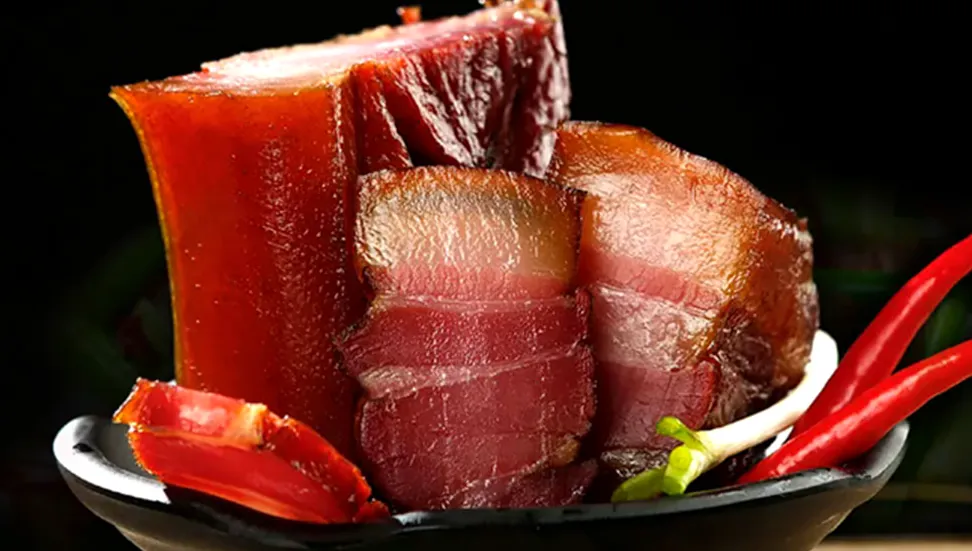
Alongside the sour soup is the traditional smoked pork, a flavor that has been tied to the survival of the great clans in Mo Rong village for generations. The pork belly from the Xiangxi black pig, raised naturally on rocky hillsides, is rubbed thoroughly with coarse sea salt, star anise, cardamom, and wild peppercorns before being hung on the kitchen rafters for three to five long months. Smoke from pine wood, cypress branches, and citrus peels cures the meat day and night, turning the fat into a translucent amber color, while the lean meat becomes as dark red as agate. When prepared, the smoked pork is sliced paper-thin and stir-fried with crispy dried bamboo shoots or green bell peppers; the rendered fat exudes the fragrant, woody scent of ancient pine, yet it is never greasy.
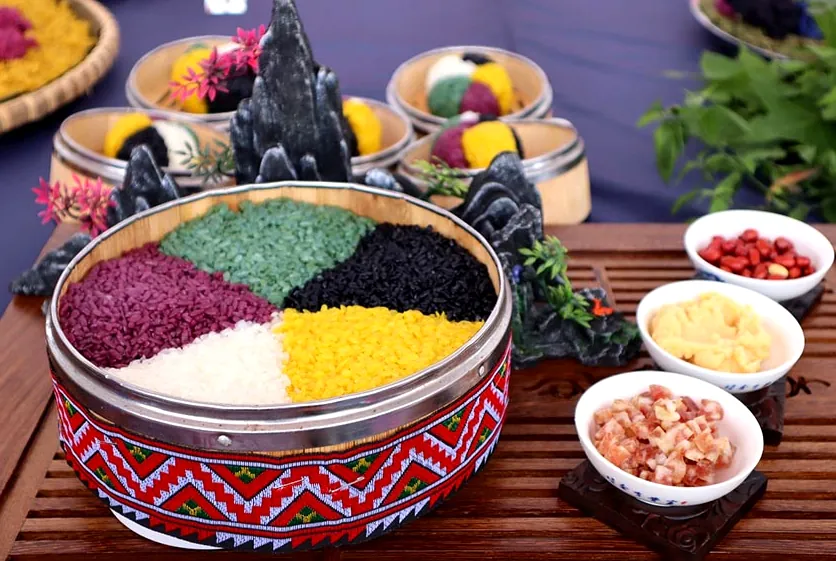
The ancestral culinary map of Mo Rong is further enriched by the elegant colors of five-colored sticky rice steamed in pine wood baskets, dyed entirely with extracts from forest herbs such as Strobilanthes cusia, Buddleja officinalis flowers, and maple bark. Additionally, “Zha Yu” (fish fermented with cornmeal in bamboo tubes) and straw-grilled smoked tofu are ever-present, serving as reminders of the industrious, thrifty lifestyle of the mountain dwellers. Each rustic dish, prepared with the simple touch of the Mo Rong people, is not just nourishment for the body, but a vessel preserving a thousand-year memory of their roots and the sincere hospitality found in the deep mountains.
Exploring an ancient village hidden in the limestone valleys of Xiangxi requires travelers to bring not only a passion for culture but also a thorough understanding of local customs. Located at a strategic gateway connecting the two major landmarks of Zhangjiajie and Fenghuang Ancient Town, Mo Rong Miao Village opens up an isolated living space where the rhythm of life beside the stilt houses has quietly continued through hundreds of years of historical ups and downs.
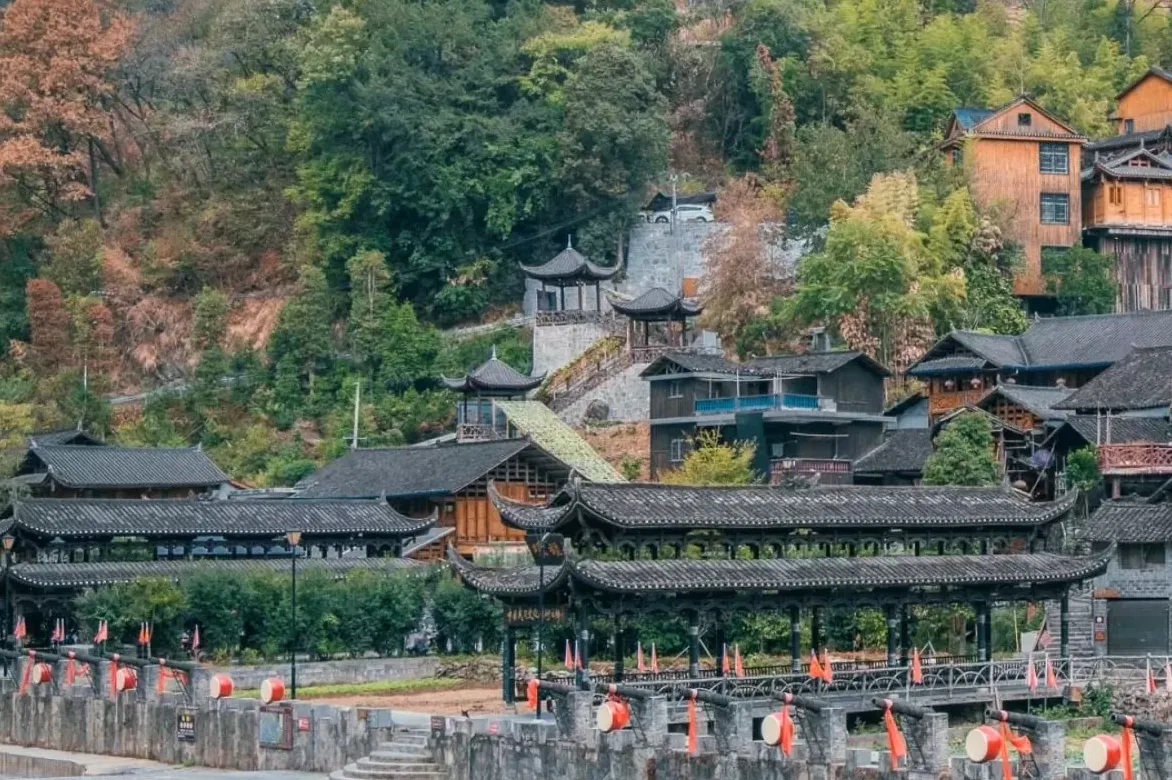
Right at the entrance of the village, visitors will encounter the serene covered wind-and-rain bridge with yin-yang tiled roofs spanning the jade-green stream, enveloping the multi-tiered wooden architecture perched against the sheer cliffside. A winding bluestone path hugs the base of the slope, leading to the majestic village gate where bright red silk ribbons and sacred bronze drum symbols welcome distant travelers amidst the swirling mountain mists. This sprawling yet pristine scenery creates an impressive visual backdrop, marking the boundary between the bustling modern life and the millennium-old legendary world of the Miao people.
Modong Miao Village scenic area typically opens to visitors from 08:00 AM to 05:30 PM daily, providing ample time to leisurely enjoy all the festive rituals and silver-smithing arts. Impressively situated in Modong Town, Guzhang County, Xiangxi Tujia and Miao Autonomous Prefecture, the village lies right next to the vital National Highway G209 artery. If traveling by high-speed rail on the Zhang-Jia-Huai line, visitors can get off at West Guzhang Station and take a local bus or taxi for a journey of just about fifteen kilometers to reach the village gate. For multi-destination itineraries starting from Phoenix Ancient Town or the center of Jishou prefecture-level city, inter-county buses operating continuously throughout the day also offer maximum convenience.
For a smooth journey, immigration procedures should be given top priority with an ordinary passport valid for at least six months and a valid Chinese tourist visa. Although major attractions in Xiangxi currently apply digital payment methods via Alipay or WeChat Pay linked to international bank cards, travelers should still prepare some small-denomination Chinese Yuan cash. At handicraft stalls deep inside the alleys of Modong village, mobile signals sometimes fluctuate among the rugged limestone gorges, making traditional paper currency extremely useful when you want to buy a hand-woven brocade or a fragrant Guzhang tea set.
In addition to mastering the itinerary, visitors must pay special attention to taboos deeply rooted in the spiritual core of the indigenous community. When stepping over the threshold of a stilt house (Diaojiaolou), absolutely do not step on the wooden threshold, as this is considered the dwelling place of the household guardian deity and ancestors protecting the family. When receiving the “Lanmen Jiu” (door-blocking wine) ritual served in a buffalo horn, if your alcohol tolerance is limited, you should only clasp your hands behind your back, bow slightly, and take a gentle sip; do not foolishly touch the buffalo horn with your hands because, according to custom, that action implies you voluntarily wish to drink down the entire horn of potent sticky rice wine. Furthermore, whistling at night, touching the silver jewelry on the attire of Miao maidens without consent, or pointing directly at the shrines of the Rock God or Ancient Tree are all strict taboos to be avoided.
Lightweight travel clothing, sneakers with good traction on mossy stone steps, and a thin windbreaker will help you easily cope with sudden temperature changes in the highlands. If you want to fully enjoy the serene beauty without worrying about transportation connections or language barriers, choosing to travel with the all-inclusive tour package dedicated to the Xiangxi route will be the ideal solution to make your visit to the Modong heritage land even more relaxing and complete.