Stepping back in time to the tumultuous eras of Japan’s history, where the Harima region once echoed with the battle drums of great feudal lords and heroes, Himeji Castle emerges as an enduring symbol of military architecture and the spirit of Bushido. Located in present-day Hyogo Prefecture, the name Himeji carries deep cultural and legendary roots, originating from the majestic Hime-yama hill and a sacred site once dedicated to the goddess Iwanagahime-no-Mikoto—the deity of longevity and eternity. More than just a defensive structure, the castle’s origins are intertwined with the shifting tides of Japan’s feudal dynasties, bearing witness to the transformations of eras from the Nanboku-cho period to the turbulent modern age.
The first turning point in this wonder’s chronicle was marked in 1346 during the Nanboku-cho period, when the warlord Akamatsu Sadanori first chose Hime-yama hill as a fortified base to erect the earliest crude ramparts. Although it did not yet possess the grand silhouette of the magnificent castle seen later, the Akamatsu clan’s fortifications laid the very first stones defining military strategy in this vital region. However, it was not until the Sengoku (Warring States) period—rife with bloody conflicts as the realm entered an era of restoring order—that Himeji truly transformed under the strategic vision of some of Japan’s most prominent historical figures.
When the hegemon Oda Nobunaga proceeded to pacify the Harima region, he entrusted the exploration and governance of these lands to one of his most brilliant generals, Toyotomi Hideyoshi. Recognizing Himeji’s peerless strategic location, Hideyoshi ordered his trusted right-hand man, Kuroda Yoshitaka (also known as Kuroda Kanbei), to surrender his own clan’s castle to serve as the foundation for a grand new project. In 1580, a sturdy three-story keep rose into the sky, marking the first major scale-up and turning Himeji into an impregnable military stronghold in Western Japan.
The castle’s subsequent change of ownership is tied to the battle that decided the nation’s destiny—the Battle of Sekigahara in 1600. After emerging victorious and taking complete control of the realm, Shogun Tokugawa Ieyasu entrusted this strategic region to his son-in-law, Ikeda Terumasa. From 1601 to 1609, under Ikeda Terumasa’s skilled hands, an unprecedented overhaul and large-scale expansion took place. This very period shaped the massive, complex, and flawless structure of Himeji Castle that we admire today, featuring a sophisticated multi-layered defense system, towering multi-tiered keeps (tenshu), and masterful earthquake-resistant stone wall construction techniques.
Having survived through times of peace under the successive rule of the Honda clan (led by the prominent Honda Tadatoki) and the Sakai clan, the castle continued to stand resilient against all of time’s vicissitudes until the collapse of the feudal era. In 1871, when the Meiji government issued the abolition of the han system and establishment of prefectures (haihan chiken), Himeji Castle stood on the brink of destruction when the new government put it up for auction at a paltry price of just 23 yen to scrap its iron and steel materials. Yet, amidst that life-or-death moment, Colonel Nakamura Shigeto bravely submitted a petition, asserting the priceless historical and artistic value of the citadel, thus saving the city’s symbol from the scythe of the era’s ignorance.
Entering the 20th century, Himeji’s destiny was sealed once more when the structure was officially designated as a National Treasure by the Japanese state in 1931. Miraculously, despite enduring the terrifying smoke and fire of World War II—particularly the air raids that flattened the city of Himeji—the castle proudly withstood bombs and gunfire, with only a single unexploded bomb penetrating the main keep yet fortuitously failing to detonate, as if fated to protect a treasure of humanity. To preserve the heritage for future generations, the government and people of Japan undertook two century-defining restorations: the Showa major overhaul starting in 1964 and the Heisei major overhaul lasting from 2009 to 2015. Thanks to these rigorous preservation efforts, in 1993, Himeji Castle was proudly honored as one of UNESCO’s first World Heritage sites in Japan, forever engraving the epic tale of a proud “White Heron Castle” soaring across the skies of the Land of the Rising Sun.
Stepping into the cultural and historical space of Himeji Castle, also known by its graceful moniker the White Heron (Himeji-jō), one cannot help but be awestruck by a masterpiece of military architecture that reached the peak of perfection in feudal Japan. In terms of terrain planning and feng shui land positioning, this grand structure is the vivid embodiment of ancient Eastern philosophy regarding the art of “embracing yin and backing yang, harboring wind and gathering Qi” (phụ âm bão dương, tàng phong tụ khí). From the perspective of historical geography researchers, the castle’s location was crafted based on absolute harmony with nature: to the north, it relies firmly on the Hime mountain range (姬山 – Himeyama) as its principal support, while to the south, it opens expansively toward the Ichikawa River and the sprawling Himeji plains. This positioning against the mountain range not only creates a sturdy natural wall shielding against cold northern winds, but the wide open space in front also acts as a bright hall that gathers water (minh đường tụ thủy), helping to regulate the microclimate, attract vital energy (sheng qi), and establish a commanding strategic view over the vast surrounding territory.
}
Under the masterful hands and sharp strategic vision of Lord Ikeda Terumasa—the figure who shaped much of the castle’s appearance during the Edo period—the natural hydrological system of this land was reformed and elevated into an exceptionally advanced water defense system. Ikeda Terumasa skillfully channeled water from the Ichikawa River to build a closed three-concentric-ring moat system, comprising the outer moat (chibo), middle moat (nakabo), and inner moat (uchibo). This water system served not merely as a spatial boundary or a tool to cut off enemy cavalry and infantry advances, but also possessed high versatility as a natural air-conditioning machine for the entire architectural complex, while serving as an invaluable strategic water reserve whenever the castle faced prolonged sieges or fire from enemy siege weapons.
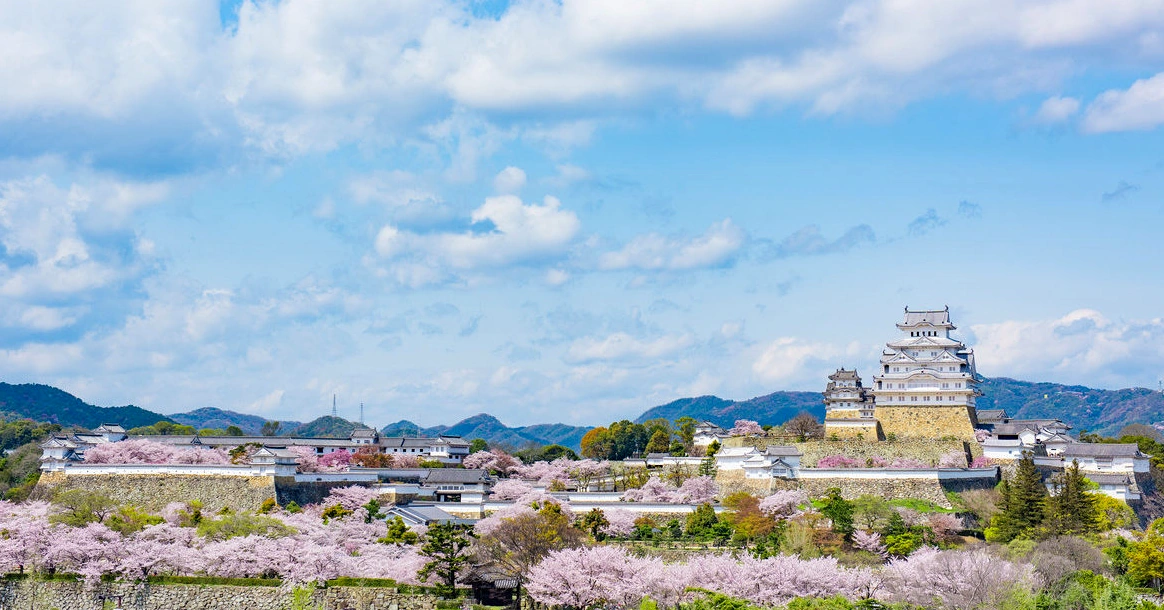
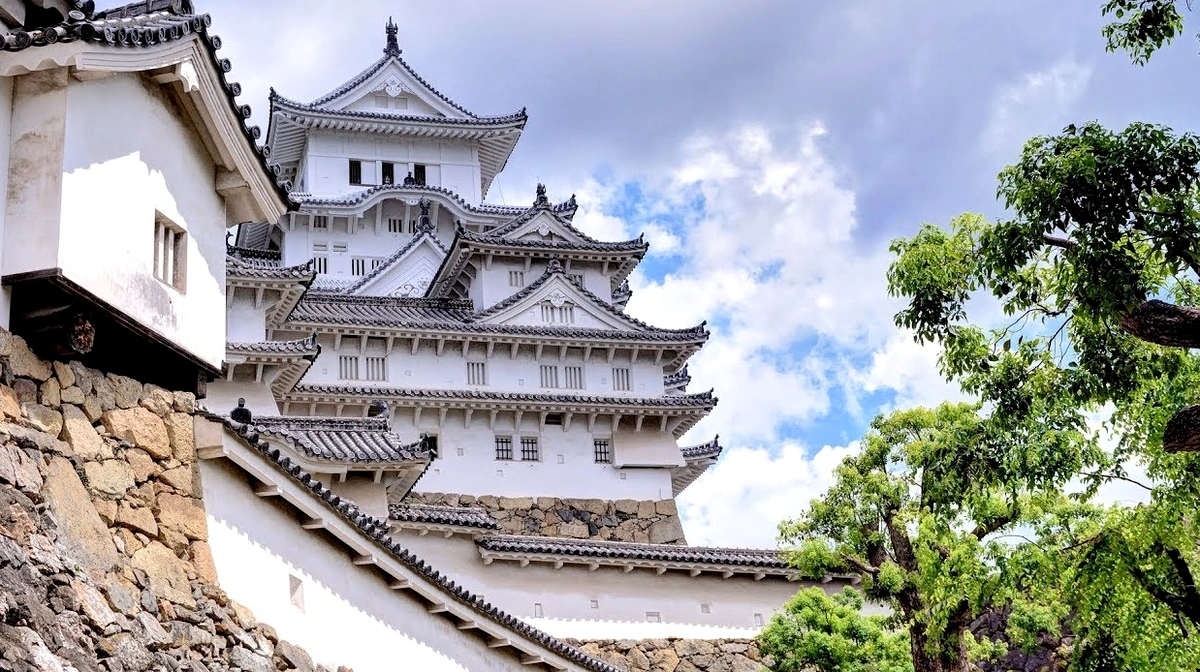
Venturing deeper past the water defense line lies a military architectural matrix planned with absolute precision, highlighted by an extremely vicious approach route system designed to misdirect and deplete enemy forces, commonly referred to by researchers as the Spiral Defense System. The path leading from the main gate up to the central keep (Tenshukaku) does not follow a straight line; instead, it forces travelers to constantly change direction, weaving through narrow slopes, sharp turns, and defensive corridors arranged like a crushing machine grinding down the invaders’ morale. Himeji’s stone wall system is a living museum of ancient Japanese stonemasonry techniques, representing the ultimate fusion of two schools: “Kirikomi-zumi” (closely fitted, polished stones) and “Nozura-zumi” (rough, natural stacked stones). Notably, the base of the castle walls is designed to flare outward in the characteristic curved shape of a Japanese paper fan, known as “Seno-zaka” or the fan-shaped plane. This ingenious mechanical design not only helps distribute pressure perfectly to withstand the violent earthquakes that frequently occur in the land of cherry blossoms, but also creates an absolute vertical slope that is impregnable, rendering any enemy attempts to climb or close in utterly hopeless.
Surrounding these pathways and critical spaces is a dense system of fortifications featuring nearly a thousand loopholes of various geometric shapes, including triangles, rectangles, and circles, collectively termed “Hazama”. These tiny windows conceal devastating firepower, meticulously calculated to provide optimal firing angles for archers and arquebusiers, allowing them to shoot down the enemy from multiple directions while maintaining absolute personal cover. The complexity and airtight nature of the defensive structure are pushed to their peak through the intricate intertwining of long armories that double as defensive corridors called “Tamamonoyagura”, along with numerous sturdy iron and wooden gates bearing evocative names such as the Water Gate (Mizunomon), Nu Gate (Nunomon), and Ro Gate (Ronomon). These gates are arranged sequentially across narrow courtyards and dead ends, turning the entire interior of Himeji into a dense grid of intersecting fire, ready to bury any army daring enough to disrupt the meticulously planned geomantic and architectural layout of the White Heron keep.
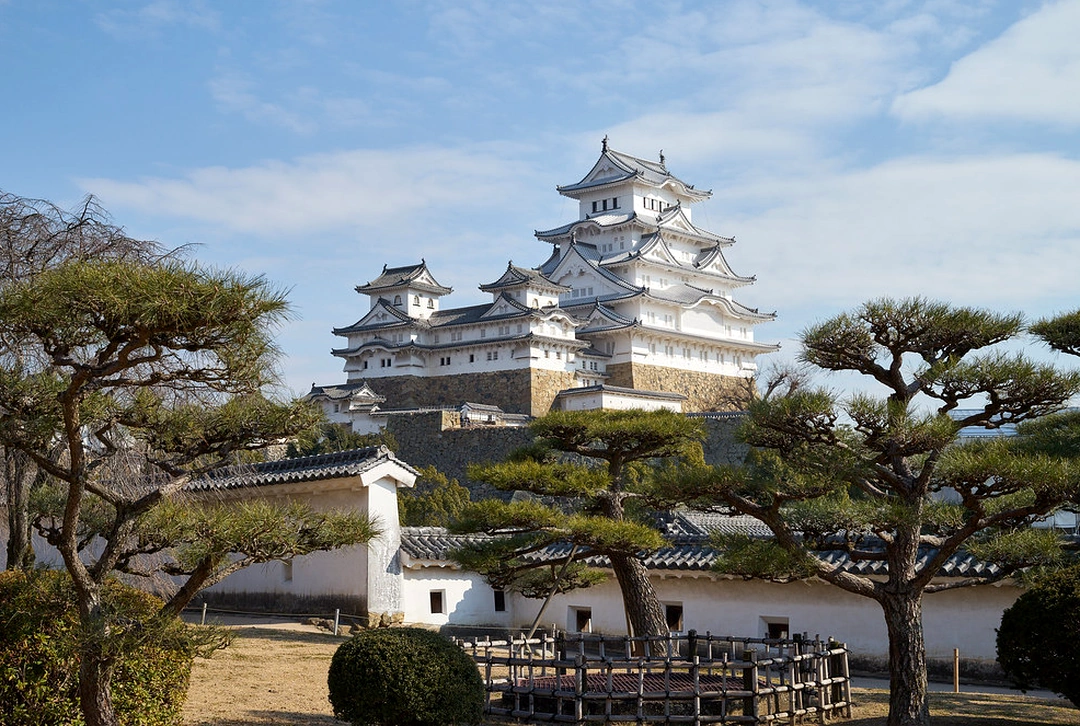
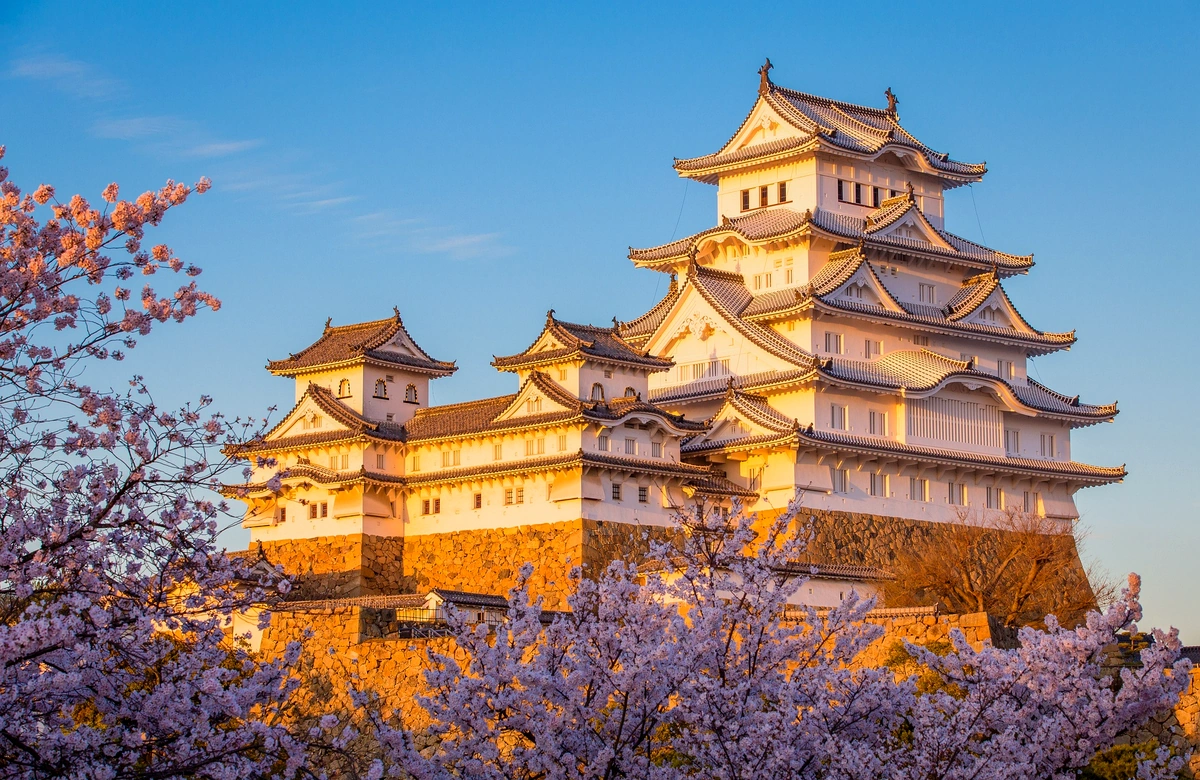
Stepping into the inner grounds of Himeji Castle, honored by the world with the beautiful epithet White Heron Castle (Himeji-jō), any architectural researcher or sentimental traveler cannot help but be stunned by a masterpiece of feudal urban planning, where Japanese military art and aesthetics reach absolute perfection. The central architectural complex of this heritage site is not merely a sturdy defensive structure, but a giant living organism structured in the “Renritsushiki” form (linked turret style), a tightly integrated complex system consisting of a towering main keep combined with three smaller keeps facing East, West, and Northwest, all connected by sturdy defensive corridors known as “Watariyugura”. Viewed from afar, this structure creates an undulating, highly graceful skyline, reminiscent of a pair of platinum crane wings spreading wide to take flight deep into the skies of the Land of the Rising Sun.
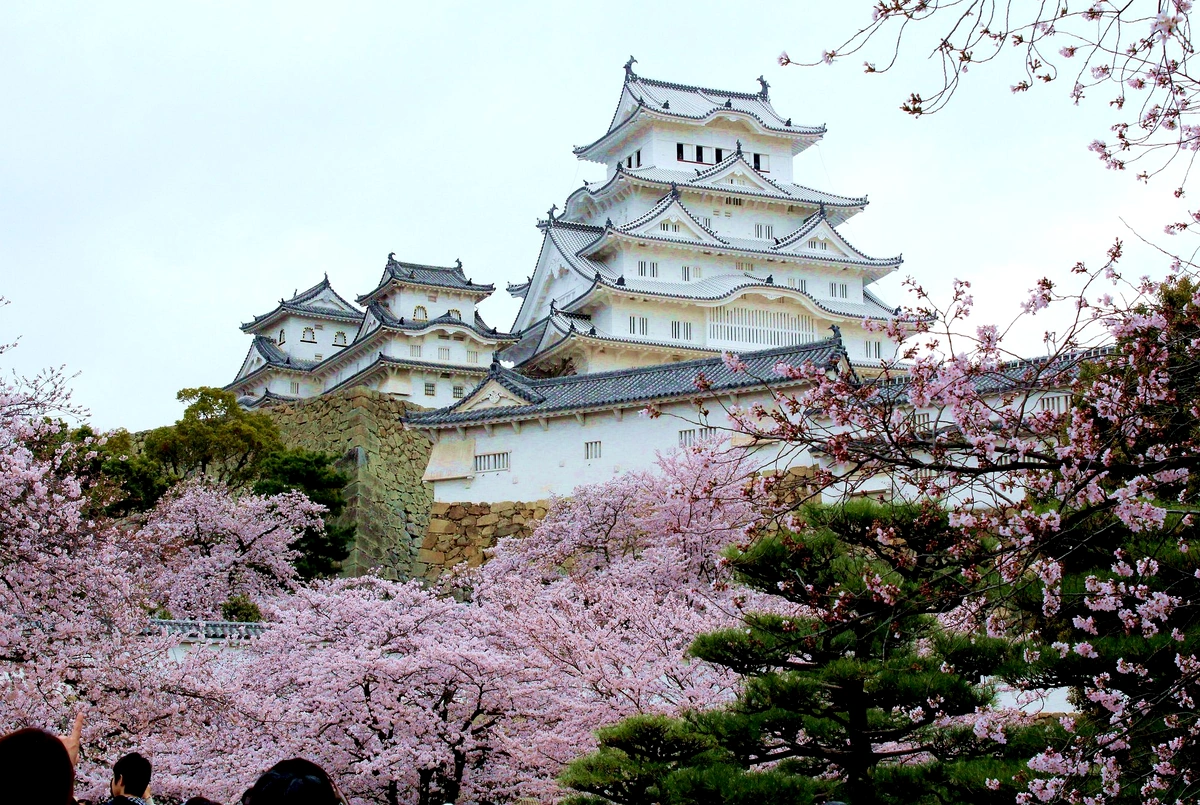
Examining deep into the heart of the main keep—which stands five visible stories tall, structured into six floor spans, and conceals a sturdy basement—one can fully appreciate the depth of supreme carpentry wisdom from the Sengoku and Edo periods. The load-bearing heart of this massive tower lies in its two gigantic central pillars exceeding one meter in diameter, stretching straight from the stone foundation all the way to the roof to shoulder the thousand-ton weight of the structure entirely. During the large-scale Showa restoration last century, to preserve the soul of the structure intact, Japanese engineers and master carpenters brilliantly combined traditional wood-joining techniques with modern steel beam technology to reinforce the load-bearing core without harming the original silhouette. More miraculously, the entire framework of the castle relies entirely on traditional Wood Joinery techniques, strictly without using a single iron nail. The flexibility in this wooden joint connection system acts as a natural damping system, allowing the structure to expand and contract smoothly to absorb and completely dissipate the destructive energy of the horrific earthquakes that have frequently torn through the Japanese archipelago over the centuries.
Covering that rustic skeleton is a uniquely aesthetic armor that combines the “Honkawara-buki” (本瓦葺) tile-roofing art with the “Shiro Shikkui sōnurikomizō” (白漆喰総塗込造) white plastering technique. To optimize durability against harsh climates and fires, ancient artisans thickly applied white plaster across all the gaps of the tile roof, walls, and wooden beams. This created a perfect waterproof and fireproof membrane while also imparting the pure, immaculate white shade that forms the immortal trademark of the White Heron. Standing under the sunlight, the white of the plastered walls blends with the subdued gray of the yin-yang tiles, creating a vibrant, magnificent natural scenery that illuminates the entire Harima region. Accenting the soaring curved ridge roofs are majestic solid cast-bronze “Shachihoko” (鸂鶒 or 鯱) fish-dragon statues, acting as water-鎮 protective mascots to ward off evil spirits and protect the castle from fires. Furthermore, upon closely observing each figurative “Kawara” (瓦当) tile, one encounters historical imprints across dynasties as successive lords carved their family crests into them—from the authoritative butterfly pattern of the Ikeda clan to the noble paulownia flower motif of the Toyotomi family, turning every corner of Himeji’s roof into a vivid museum of memories recounting the heroic pages of Japan’s samurai history.
When night falls and drapes a magical velvet veil over the complex of wooden architecture and pure white plaster walls, Himeji Castle does not fall into the quiet slumber of a nostalgic relic; instead, it dons a completely different, mystical, and enchanting appearance. Unlike historical structures that often choose to fade away with the sunset, Himeji at night transforms into a pinnacle visual arts stage where contemporary lighting techniques blend seamlessly with the essence of Japanese feudal architecture. Thanks to a world-class lighting system utilizing low color temperature LED strips calculated and positioned with absolute precision, every architectural line of the Tenjuskaku keep cluster is skillfully chiseled, fully celebrating its complex structural layers. The gentle golden light—faithfully and delicately simulating the bright late-night moon drifting lazily across the Harima sky—shines softly down on the white-plastered walls mixed with gray powder, highlighting the traditional material’s characteristic elegant and pure nuance. Every angle of the curved eaves stretching out into space like the wings of a crane about to take flight, or the fish-scale decorative molding ridges and lacquered motifs on the gable ends, are all sharply and vividly etched amidst the solemnity of the night, creating a breathtaking, majestic, three-dimensional natural scene.
Not stopping at still lighting art, in recent years Himeji has also become the focal point of some of the Land of the Rising Sun’s grandest live-action shows, especially during the blooming cherry blossom season, the vibrant red maple leaf season, or the sacred New Year’s Eve moment. At the spacious Sanomaru plaza, large-scale interactive lighting art programs utilizing cutting-edge 3D mapping projection technology have transformed the entire massive facade of the millennial castle wall into a vivid historical scroll, where the boundaries between reality and the past completely blur. These magical light films guide viewers backward through time into the turbulent Sengoku warring states period, authentically recreating epic-imbued images such as ninja shadows stealthily hiding through layers of treacherous stone walls, the renowned great battles of famous warlords with the clashing sound of steel echoing in the viewer’s mind, down to the sacred symbolic image of the castle itself—a proud white crane spreading its immaculate white wings and soaring into the free sky. All of this is portrayed through the language of light, vivid surround sound, and peak visual effects, giving spectators spatial and temporal-transcending visual and emotional experiences.
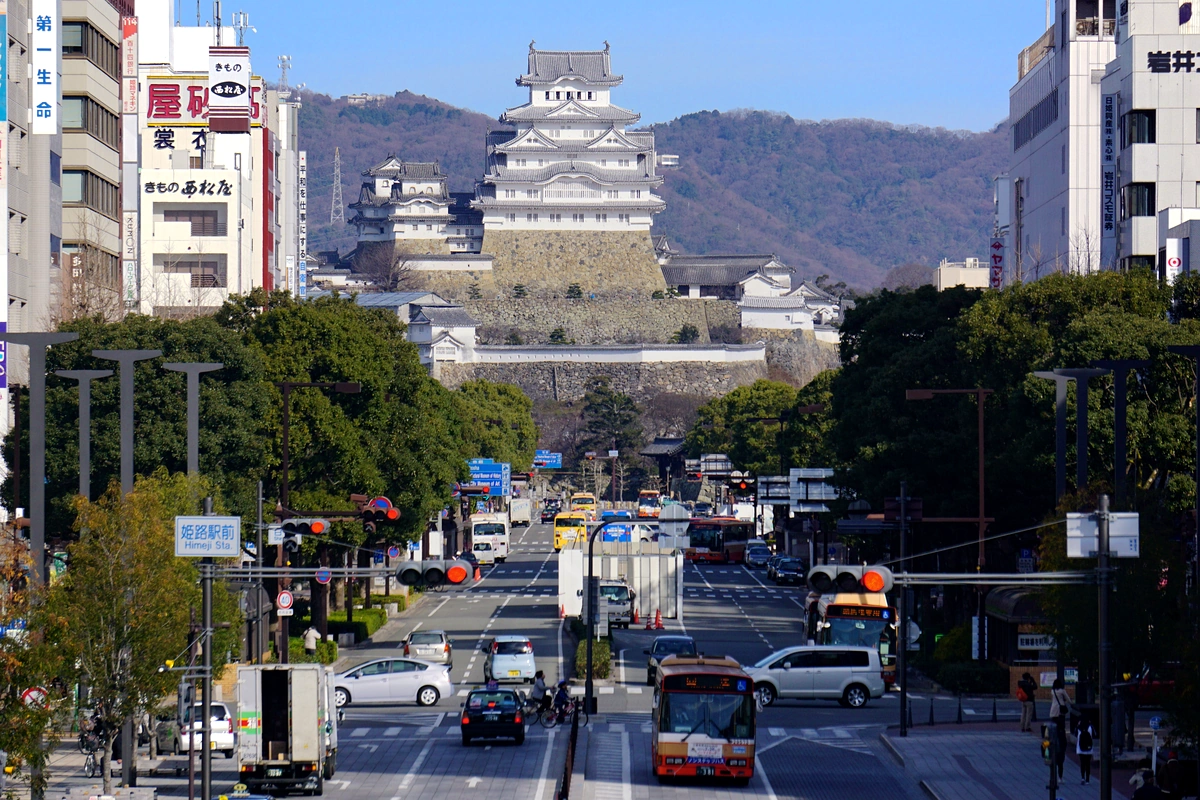
The nocturnal life surrounding Himeji also spreads strongly along the straight Otemae-dori boulevard leading directly to the castle’s main gate, where local-flavored community cultural events regularly take place, such as the Himeji Tsukimi-kai moon-viewing festival or colorful annual festivals. Here, the traditional cultural space extends late into the night through bustling night markets, recreating an Edo-period townscape with shimmering red lanterns casting reflections down on intricate handicraft stalls. Visitors mingle with the bustling crowds, leisurely admiring the proud silhouette of Himeji Castle looming in the distance under the night sky, while also taking the opportunity to stop by traditional food stalls to savor the famous specialties of the Harima region. These include the aromatic local Himeji Oden pancake rich with ginger flavor and long-seasoned soy sauce, or steaming charcoal-grilled skewers, paired with a bit of sake brewed from the pure water sources of the surrounding mountain village rivers. The perfect combination of sacred heritage space, dazzling lighting art, and rustic culinary culture creates a complete nighttime experience, transforming Himeji not merely into an architectural symbol to be admired from afar, but into a vibrant, intimate, and captivating space for anyone setting foot in this land.
Exploring Himeji Castle becomes even more complete and multi-sensory when stepping into the local culinary world of the Harima region, where nature graciously bestows a miraculous terrain with the south facing the mirror-flat Seto Inland Sea, and the north nestled against the majestic Chugoku mountain range. The delicate harmony between ocean produce and mountain food resources has molded a rich culinary map, bearing deep imprints of the intersection between long-standing tradition and the relentless creativity of the people of the Land of the Rising Sun. In the chilly weather of the highlands or the strong sea breezes blowing into the ancient citadel, seeking out traditional eateries tucked away in winding alleys at the foot of the castle walls helps one better appreciate the legendary flavors that have captivated generations of diners.
Kicking off this culinary journey is Himeji Oden, a unique twist on the familiar one-pot hot pot that carries an unmistakable local identity. Unlike other regions that typically use yellow mustard for dipping, the people of Himeji remain loyal to enjoying it with a meticulously prepared soy-ginger sauce (Syoga-juyou) designed to chase away the biting winter cold. The spicy, warm notes of fresh ginger blend perfectly with the salty, elegant depth of concentrated soy sauce, soaking into every ingredient simmered in a dashi broth sweetened with kelp and bonito flakes, creating a sensory symphony that awakens every single taste bud. In addition, the essence of Harima’s coastal cuisine is fully captured in dishes made from conger eel (known locally as Anago). Thanks to the nutrient-rich currents from the Akashi Strait in the Seto Inland Sea, the conger eels here boast exceptionally firm, sweet flesh and a moderate, non-greasy layer of rich fat. Long-standing brands like Yamaryo and Yamayoshi have long been famous for their refined preparation art: the fish is gently steamed and then grilled over glowing charcoal to retain its moisture, serving diners through the supreme Anago-ju (grilled eel rice bowl) or Anago sushi that melts right on the first bite.
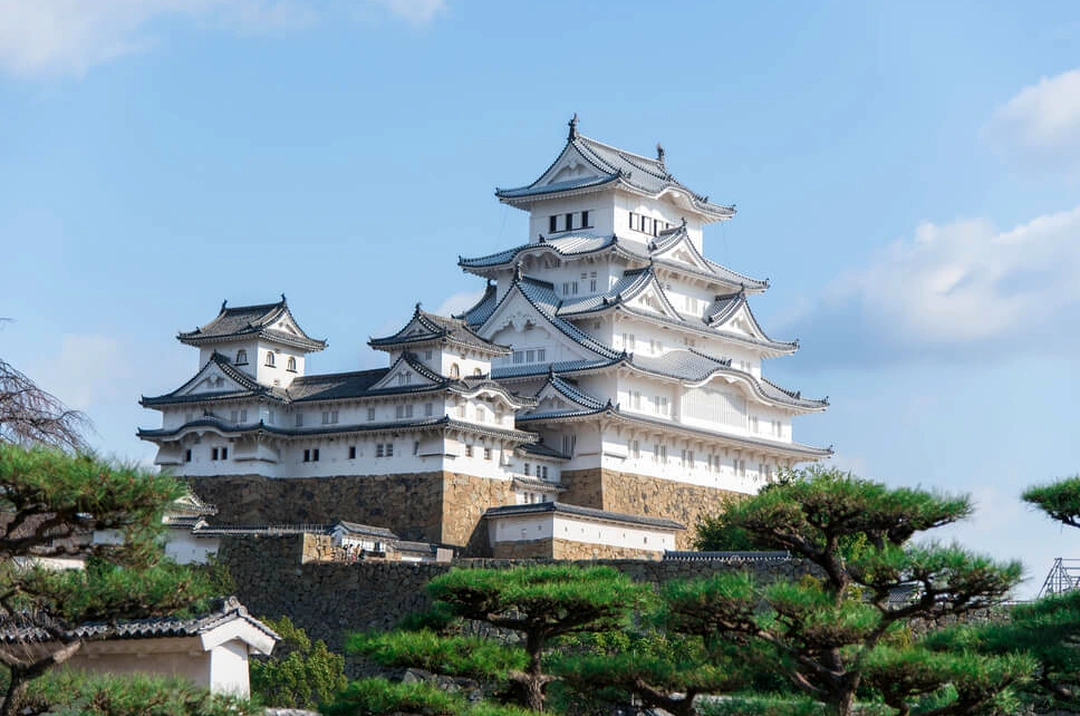
One cannot discuss Harima’s cuisine without mentioning the culture of enjoying sake, the soul of every gathering in this land. Nourished by the pure underground water of Tatsuno City combined with Yamada Nishiki, the top-tier rice variety famous throughout Japan, renowned sake brands like Tatsuriki and the long-standing Tsubosaka brewery have risen as symbols of traditional brewing artistry. The rich flavor of the sake, with a lingering sweet aftertaste reminiscent of new rice, encapsulates the essence of Harima’s earth and sky, captivating countless poets and travelers for centuries. Bringing this rich culinary feast to a close is Akashiyaki, the ancestor of modern Takoyaki octopus balls, yet boasting a texture as soft as autumn clouds. Unlike its famous sibling from Osaka, Akashiyaki uses a very special ratio of batter and eggs to create a paper-thin skin encasing a delightfully chewy octopus filling. The most crucial highlight is that diners must submerge the piping-hot ball into a bowl of clear, hot dashi broth before eating to fully experience the explosion of umami flavor in their chest.
Exploring this masterpiece of military architecture and symbol of traditional Japanese wooden architecture becomes much smoother when you grasp practical information regarding opening hours, transportation methods, and codes of conduct at this world heritage site. Regarding opening hours, Himeji Castle welcomes visitors from 09:00 AM to 17:00 PM daily, with the important note that the final entry time is at 16:00 PM. During peak summer season specifically—from April 27 to August 31—visiting hours are extended by an hour, allowing visitors to admire the evening glow blanketing the pristine white walls until 18:00 PM, with official closing time at 17:00 PM. This historical site closes its doors to visitors on only two days out of the year: December 29 and 30, making it convenient to plan a discovery trip across all four seasons without worrying about unexpected disruptions.
In terms of costs, the standard adult admission ticket is priced at 1,000 Japanese yen—a very modest fee for the privilege of stepping into the pristine space of one of the few ancient castles untouched by war or fire for centuries. However, heritage managers strongly advise that during peak tourist seasons, when crowds flock to witness cherry blossoms blanketing the grounds or maple leaves turning vibrant shades of red, travelers should proactively book their visiting time slots through the official website to avoid exhausting long lines or missing the chance to step inside the main keep. This advance preparation not only saves precious time but also ensures the highest quality experience within a space that limits the number of people present at any given time to protect the ancient wooden structure.
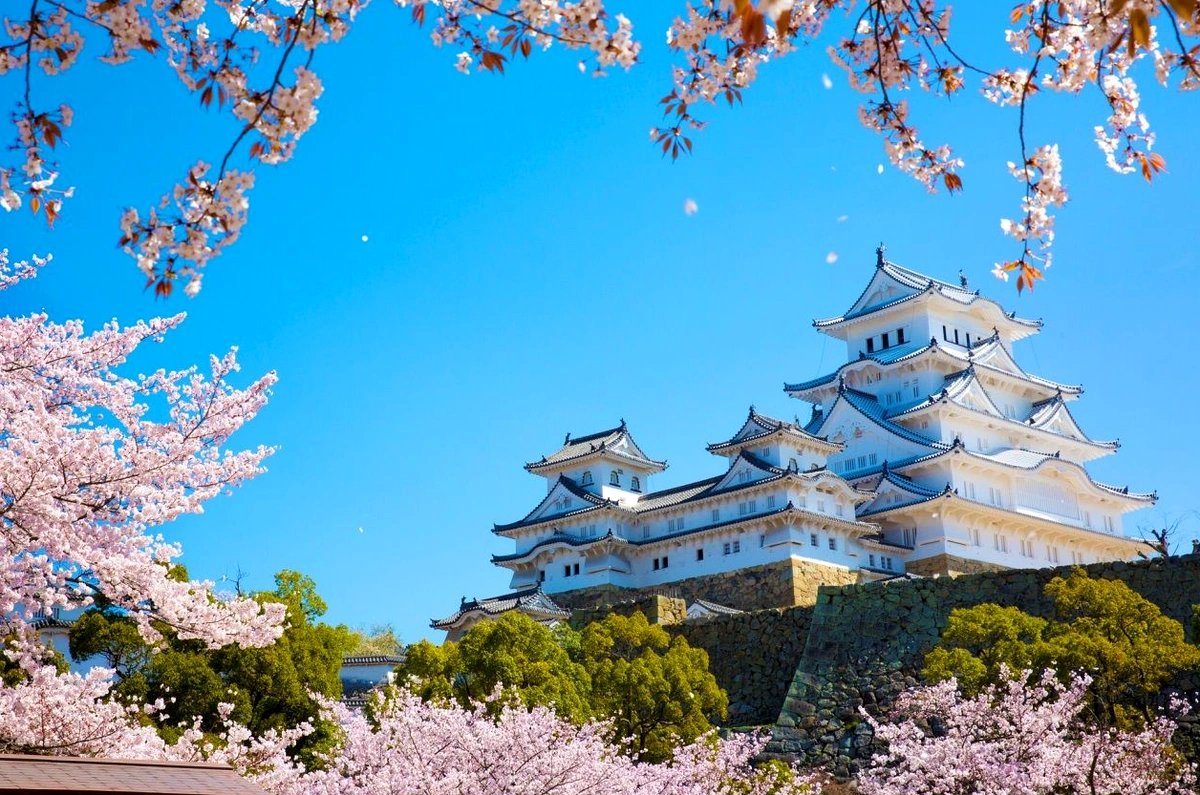
Getting to Himeji Castle from major urban centers in the Kansai region is extremely convenient thanks to Japan’s modern and impeccably punctual public transportation system. For travelers departing from Shin-Osaka Station, choosing the Sanyo Shinkansen bullet train will bring the group to Himeji Station in just about 30 minutes. In case of departing from central Osaka or Kobe, the JR Special Rapid Service (Shin-kaisoku) train is the optimal choice, whisking visitors to their destination after a 40- to 60-minute journey. As soon as you step off at Himeji Station, simply head toward the North Exit and leisurely stroll down the straight, tree-lined Otemae Avenue. After about 15 minutes of relaxed walking, the majestic image of the White Heron will gradually loom before your eyes, standing tall against the Harima sky like a grand welcome from the past.
Stepping inside the inner enclosure, and especially the five-story main keep, visitors must strictly adhere to heritage conservation regulations to keep the centuries-old wooden flooring and pillars completely intact. Right at the entrance, everyone must take off their shoes, place them in the provided plastic bags to carry along, and walk in pre-brought socks or barefoot on the cool wooden floors. To ensure absolute safety for the delicate architecture and the heavy crowds, management strictly prohibits the use of tripods, selfie sticks, and large backpacks inside. The interior structure of the main keep is famous for its astonishing steepness, with some staircases tilting up to 61 degrees, demanding extreme caution with every single step. Therefore, equipping oneself with thick, comfortable socks is crucial for warmth and slip resistance. Additionally, female travelers should completely avoid wearing short skirts or high heels to ensure flexibility, safety, and modesty while climbing and exploring every nook and cranny of this magnificent architectural marvel.
To make your journey to discover the pinnacle of military architectural heritage from Japan’s feudal era complete, smooth, and rich in cultural experiences, travelers can refer to our all-inclusive tour packages, specially designed with optimized itineraries and accompanied by guides well-versed in local history.