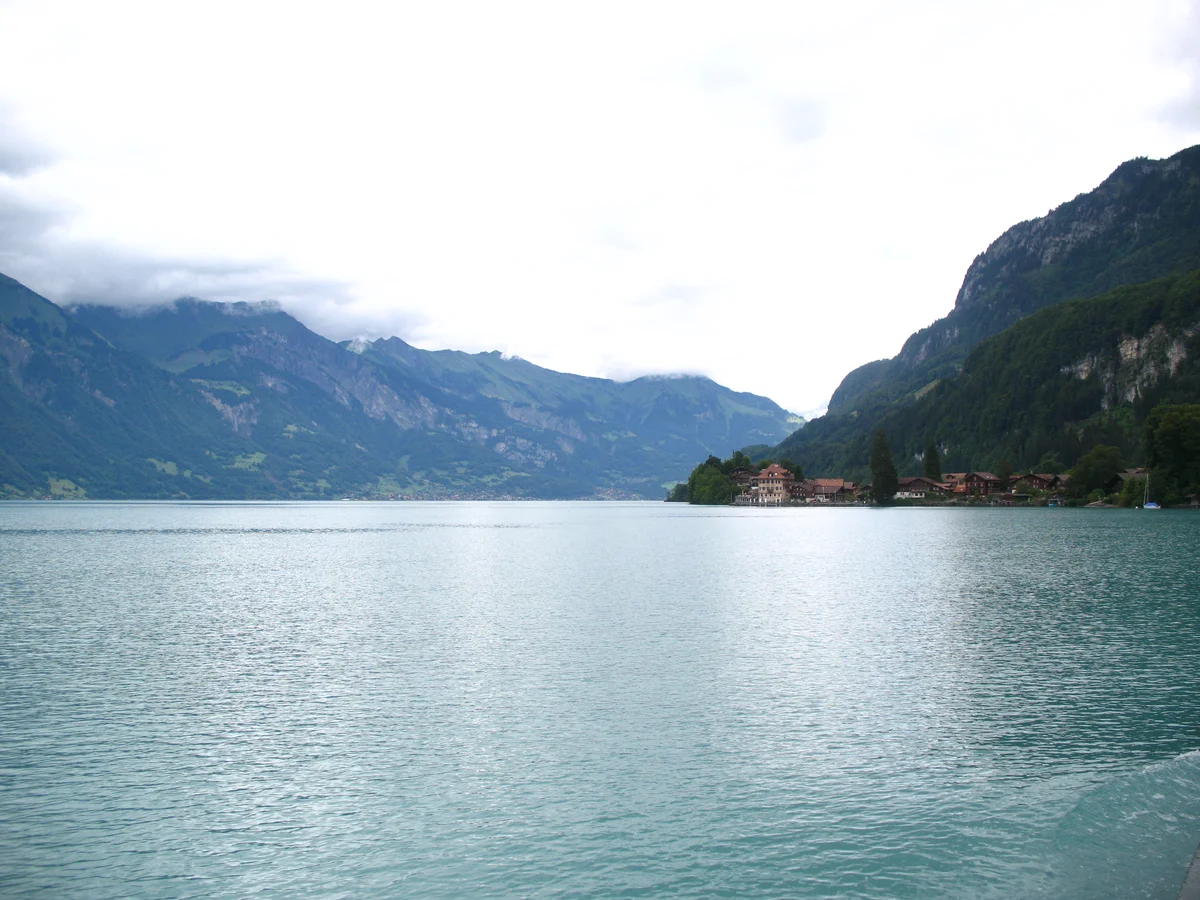
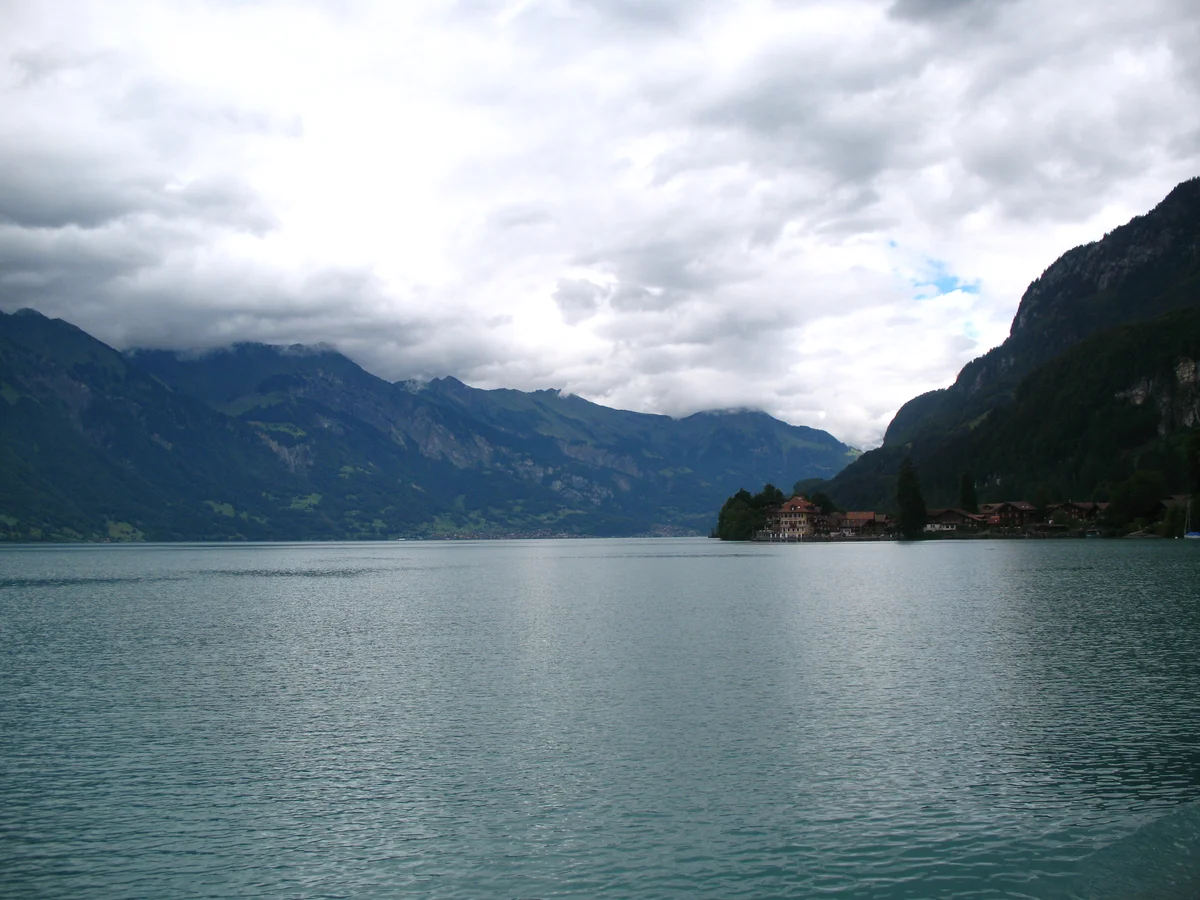
Iseltwald occupies a narrow strip of alluvial land along the southern shore of Lake Brienz in Switzerland’s Canton of Bern, wedged between turquoise glacial waters and the towering Faulhorn massif of the Bernese Alps. The geological processes that sculpted this terrain were driven by Pleistocene glacial advances and retreats, which carved steep-sided valleys and alluvial terraces suited to human habitation since prehistoric times. Geographically, the village remained isolated from major overland trade routes for centuries due to its rugged topography, where sheer cliffs plunge directly into the deep lake basin. This natural seclusion shaped a distinctive socioeconomic trajectory for the local community, compelling residents to adapt to a demanding alpine environment by harvesting resources from the lake and steep mountain forests rather than integrating into the broader continental trade networks of the Swiss Plateau.
Archaeological traces indicate human presence around Lake Brienz dating back to the Bronze Age, while the earliest written records confirming a settled community named Iseltwald date to the Middle Ages, tied to the feudal lordships of Brienz and the growing influence of the Interlaken Monastery. For centuries, the village’s economic life revolved around subsistence agriculture, livestock grazing on high alpine pastures, and small-scale freshwater fishing. Lake Brienz served as the primary lifeline for transportation, with traditional wooden boats ferrying goods and people between Iseltwald and neighboring lakeside settlements long before modern roads were engineered and constructed in the 19th and 20th centuries. The transition from a self-sufficient subsistence economy to a monetary and service-based one unfolded gradually, heavily shaped by rugged terrain and the strict land-management regulations of the Bernese authorities.
A decisive turning point in Iseltwald’s spatial and social fabric arrived in the 19th century, as Europe’s Industrial Revolution gave rise to a new bourgeoisie and the Romantic-era fascination with exploring the Alps. Romantic painters, writers, and British explorers began documenting and sketching the untamed beauty of Lake Brienz, placing Iseltwald onto the continental map of upscale travel. The introduction of steamship services on Lake Brienz in 1839 ended centuries of geographic isolation, transforming the lake into a lively tourist thoroughfare. Iseltwald’s vernacular architecture—characterized by traditional Bernese timber houses with broad eaves, centuries-old carved beams, and flower-draped balconies—began attracting dedicated architectural preservation efforts, reflecting the distinctive heritage of the Bernese Oberland.
The village’s most notable architectural landmark is Seeburg Castle, a monument with recorded medieval origins that underwent multiple renovations and stylistic transformations across successive historical eras. Seeburg once functioned as a local administrative and judicial seat under the authority of the Interlaken Monastery before passing into the hands of various noble families during and after the Protestant Reformation. Jutting dramatically out to the water’s edge of Lake Brienz, the castle serves not only as an iconic visual centerpiece, but also as a tangible witness to the shift from feudal rule to early modern private ownership. Preserving Seeburg alongside the old harbor and village church has created a cohesive heritage axis seamlessly integrated with the surrounding landscape, safeguarding an authentic rural living space amid global modernization.
In the 20th century, the expansion of road infrastructure—culminating in a highway link connecting Iseltwald to Switzerland’s national road network—brought fundamental changes to local settlement and economic patterns. The village gradually transitioned from a purely agrarian and fishing community into a carefully managed tourism economy designed to protect the fragile ecological balance of the Lake Brienz basin. Strict local zoning codes were enacted to preserve historic timber facades and prevent modern construction materials from disrupting the village’s visual harmony. As a result, Iseltwald has retained its original historical atmosphere, standing among the few Swiss lakeside settlements to preserve its human scale and traditional architectural morphology nearly intact across centuries of change.
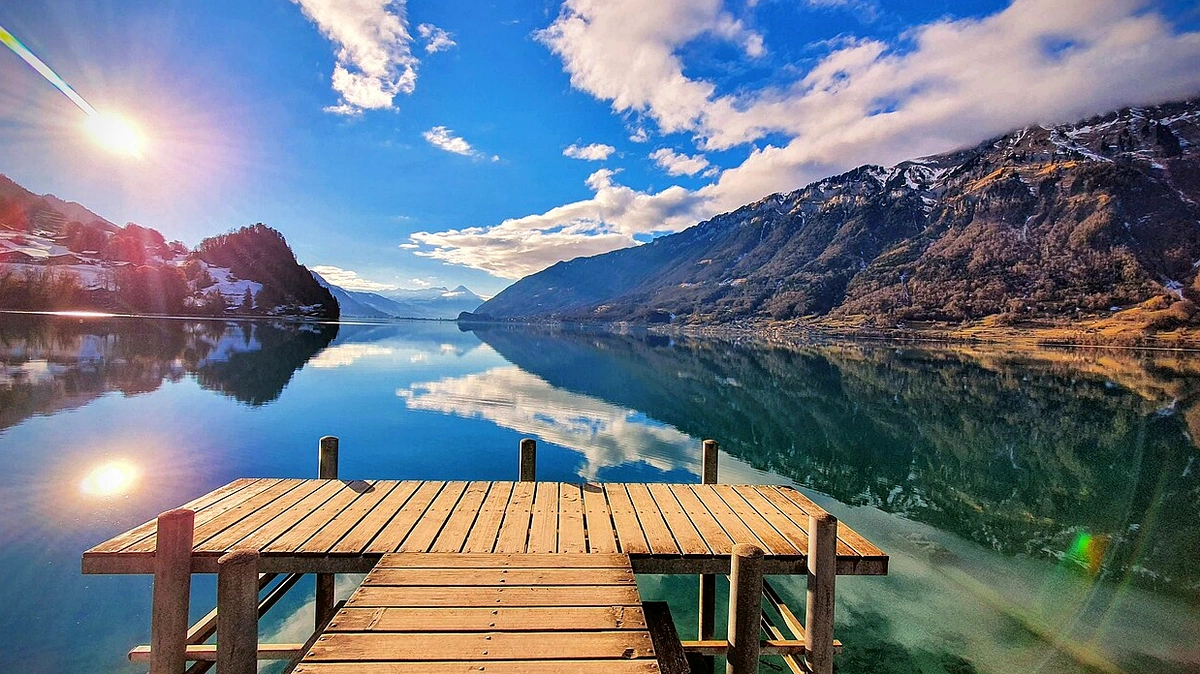
By the 21st century, Iseltwald’s symbolic stature underwent a global transformation propelled by mass media and digital cinema. Being chosen as a key filming location for a hit international television drama turned its wooden pier stretching into Lake Brienz into an instantly recognizable visual icon worldwide. The resulting surge in international visitors has posed significant challenges for heritage conservation, lake ecology protection, and maintaining social harmony within a small local population. Municipal authorities and the Canton of Bern have subsequently implemented visitor flow management, traffic regulations, and sustainable infrastructure measures to safeguard the core integrity of this cultural landscape against overtourism.
Iseltwald’s symbolic significance within modern Swiss tourism lies at the complex intersection of tangible historical heritage and global pop-culture imagery. The village embodies the quintessential Alpine ideal, where majestic glacial nature blends seamlessly with generations of human craftsmanship and stewardship. Global fascination with Iseltwald reflects a broader yearning for nostalgic travel experiences—opportunities to reconnect with enduring traditions and unspoiled landscapes in an increasingly urbanized world. Ultimately, Iseltwald’s evolution from a secluded lakeside hamlet into a global cultural icon illustrates the remarkable adaptability of local heritage amid the sweeping currents of modern history and economics.
Spatially, Iseltwald stretches along the southern shore of Lake Brienz in Switzerland’s Canton of Bern, nestled inside a geological basin framed by the sheer slopes of the Bernese Alps. Geomorphologically, the settlement occupies a narrow alluvial plain formed over millennia by sediment deposited from glacial streams descending the flanks of Mount Faulhorn. Local topography is defined by extreme vertical relief, as towering limestone cliffs drop abruptly into the deep waters of Lake Brienz at an elevation of roughly 560 meters above sea level. This natural boundary forced the village’s built environment to expand horizontally along the shoreline rather than spreading inland or climbing hazardous slopes. Past geographic isolation fostered an inward-looking spatial organization in which every element—from street networks to building placement—adapted to steep terrain and the rigorous climate of an alpine valley.
Iseltwald’s master layout clearly reflects the traditional agrarian settlement model of the Bernese Oberland, where a primary thoroughfare runs parallel to the shoreline, serving as the spine linking all civic and social infrastructure. Structures are arranged in distinct terraced tiers: starting right at the water’s edge with small boat docks and boathouses supporting historic fishing practices, and rising step by step up the slope to residential homes and communal landmarks such as the parish church. This main lane functions not merely as a transit route, but as a transitional threshold between public life and private family compounds. Narrow secondary alleys and transverse footpaths intersect the main road at right angles, channeling movement from the lakeside straight up toward the southern hillsides in an organic grid tailored to glacial terraces.
Spatial division within individual land plots in Iseltwald adheres strictly to centuries-old Swiss rural planning principles, wherein the placement of main residences, granaries, and livestock barns was calculated for energy efficiency and resource management. Each homestead typically features a main house oriented south or southeast to maximize solar heat gain during freezing winters. Behind or beside the main dwelling sit outbuildings such as small workshops, woodsheds, and livestock stables, spaced thoughtfully to maintain sanitation while supporting a self-contained household economy. Open yards around these structures were never designed as ornate decorative gardens; instead, cobblestone courtyards served practical purposes such as drying harvests, processing timber, or providing shared access—a testament to the pragmatism of mountain communities.
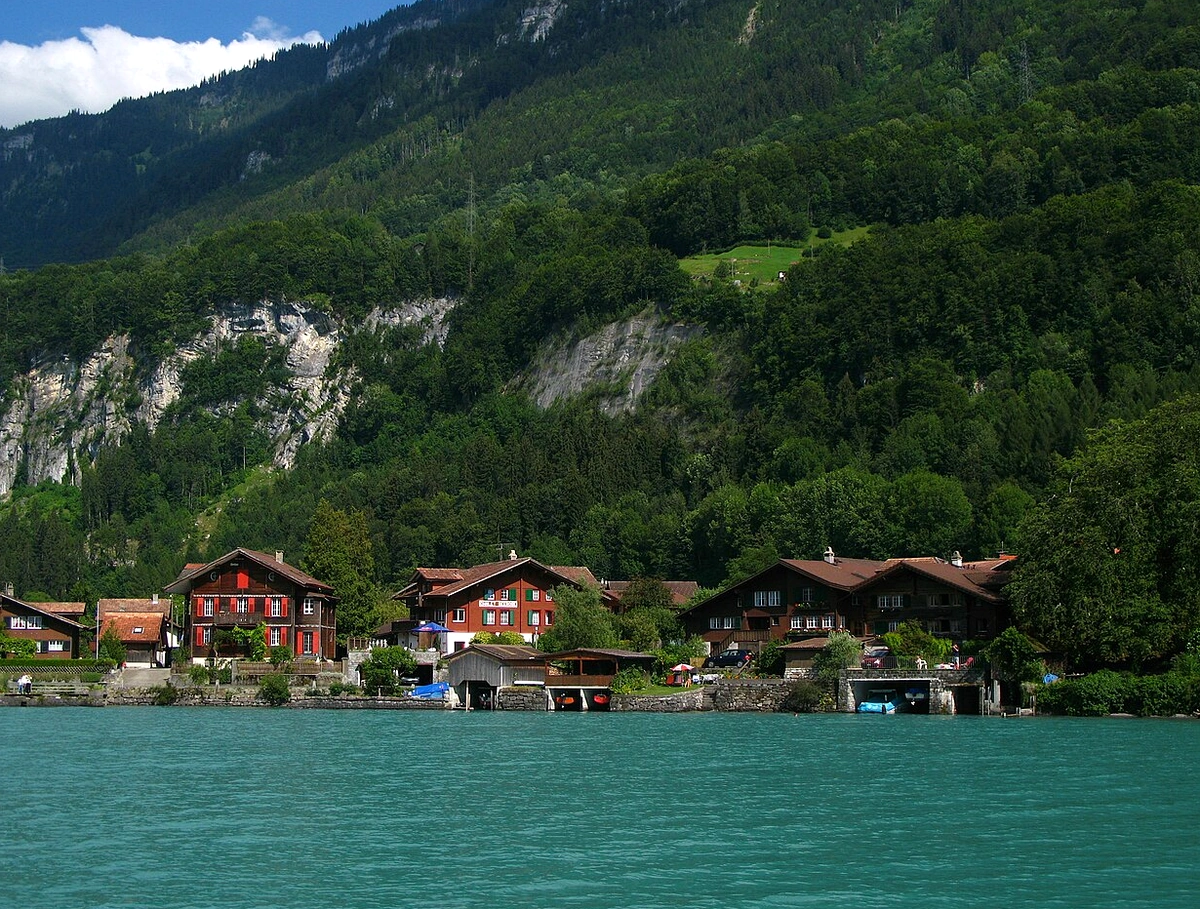
Traditional residential architecture—exemplifying the classic Bernese chalet style—forms the visual core of the entire settlement. Houses are built using heavy timber framing paired with thick squared logs resting atop rubble-stone foundations that prevent ground moisture seepage and protect against seasonal lake flooding. Moderately pitched roofs feature deeply overhanging eaves specifically engineered to shield wooden walls from driving rain and snow while creating sheltered perimeter walkways. Intricate wood carvings along horizontal beams, window frames, and balcony railings showcase the virtuosity of 18th- and 19th-century local carpenters while proclaiming household status and prosperity through carved construction dates and Old German biblical inscriptions.
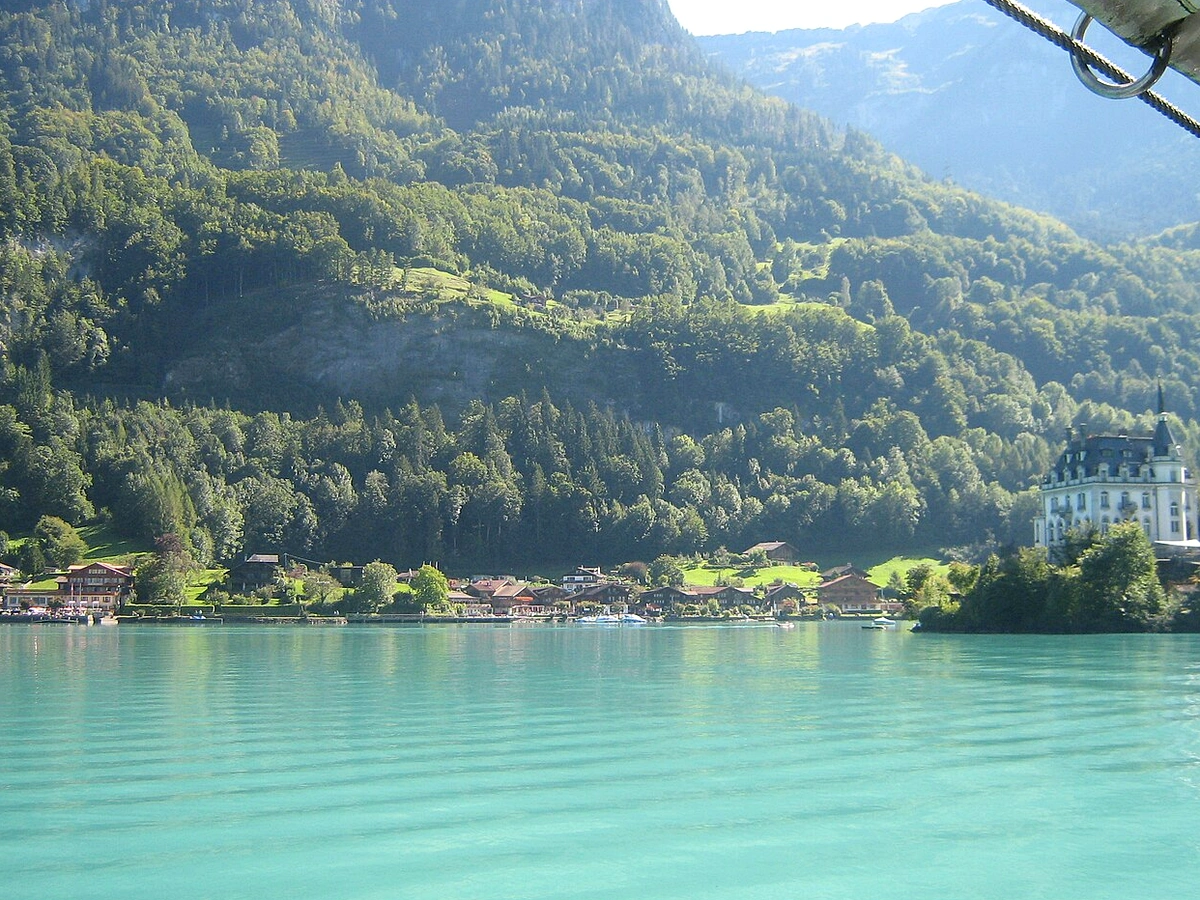
The landscape surrounding Iseltwald presents a striking yet harmonious contrast between human-crafted heritage and the untamed grandeur of Switzerland’s high-alpine ecosystem. To the north stretches the mirror-like expanse of Lake Brienz, whose signature turquoise hue comes from fine glacial rock flour carried down from upstream glaciers. For centuries prior to modern roads, these waters functioned as the community’s vital transport artery. Conversely, to the south and west, sheer rock faces and dense spruce forests enclose the village within a protective ecological amphitheater that shields homes from winter avalanches and gale-force mountain winds.
Human intervention in the natural terrain has always been exercised with restraint, evident in dry-stone retaining walls built to carve narrow agricultural terraces into the hillside without destabilizing the underlying geology of Mount Faulhorn. Historic footpaths ascending toward high-altitude summer pastures trace natural contour lines carefully to minimize soil erosion from surface runoff. This balance between long-term human settlement and deep respect for nature’s laws has allowed Iseltwald to maintain remarkable urban-morphological continuity across centuries, offering an invaluable case study in spatial adaptation within an extreme alpine environment.
Extending onto a small peninsula jutting into the southern shore of Lake Brienz, Iseltwald forms a highly emblematic ensemble of rural Alpine architecture in the Bernese Oberland. Its spatial layout was never a product of geographic chance, but rather the culmination of centuries of ecological adaptation in which local carpenters and master builders mastered harsh mountain weather, steep terrain, and abundant surrounding timber resources. The village’s historic dwellings reflect time-honored woodworking techniques passed down across generations, testifying to a building culture that prized durability, balanced proportions, and seamless harmony with the surrounding glacial landscape.
The primary materials defining Iseltwald’s architectural character are Swiss pine and spruce paired with limestone quarried from nearby slopes. House foundations are typically constructed of mortared or dry-laid fieldstone to create a sturdy plinth that isolates the timber superstructure from damp soil and seasonal rises in Lake Brienz’s water level. Above the stonework, load-bearing walls employ traditional Blockbau log-construction techniques, in which squared timbers are notched and stacked horizontally with tight interlocking joints. This method not only maximizes compressive strength, but also provides natural thermal insulation highly effective at retaining indoor warmth throughout long sub-zero winters.
Roof structures throughout Iseltwald feature broad gabled pitches with generously projecting eaves that protect exterior timber walls from rain and snowmelt. Roof angles are calculated with scientific precision so heavy snow loads neither collapse the rafters nor remain trapped indefinitely, allowing snow to slide off safely once a critical threshold is reached. Beneath these deep eaves, artisans typically built continuous wraparound balconies running the length of the facade. Beyond serving daily household tasks and drying crops, these balconies act as an insulating air buffer that reduces heat loss from living quarters to the crisp mountain air.
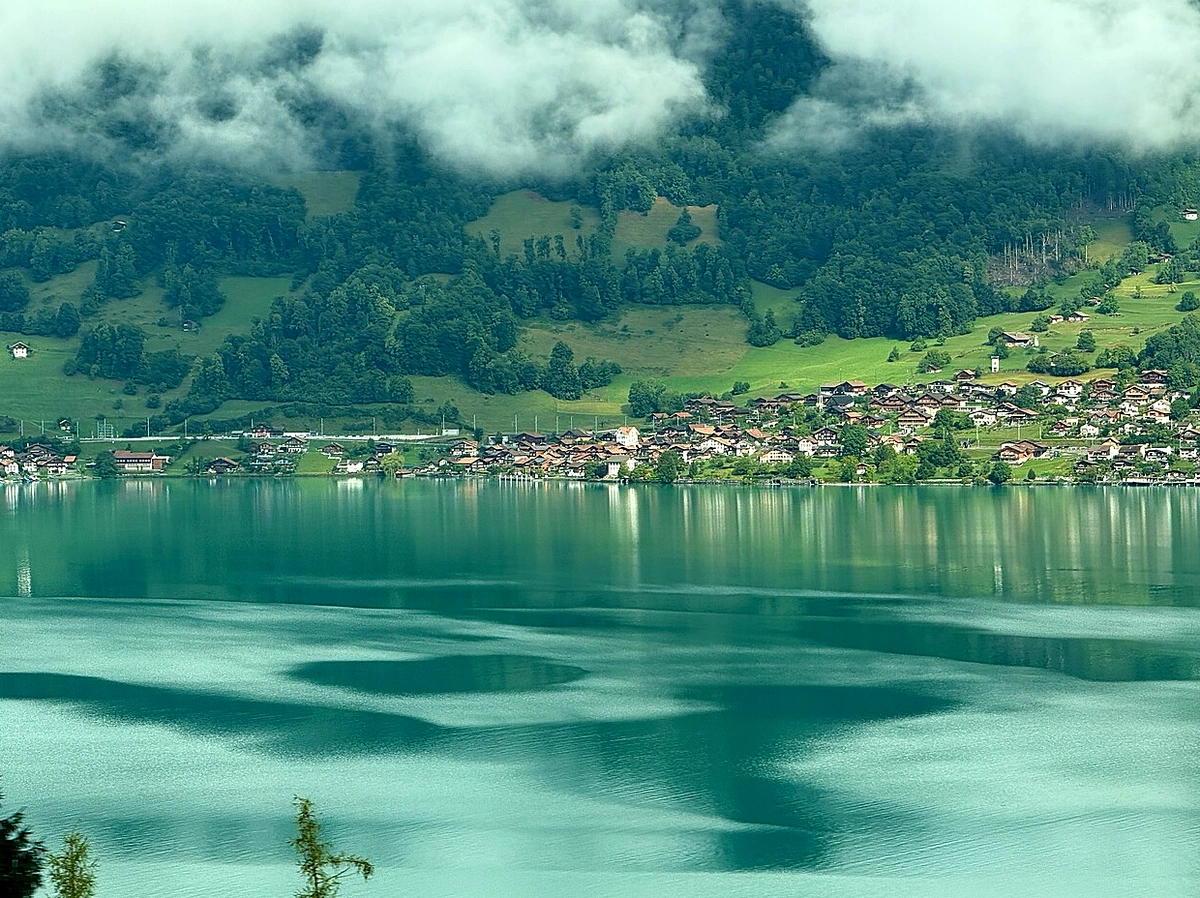
Exterior wood carvings across Iseltwald’s homes express deep layers of cultural memory and family standing within an older agrarian society. Decorative motifs never appear haphazardly; instead, they follow strict geometric principles and folk traditions. Crossbeams, window surrounds, and balcony balustrades are frequently relief-carved with repeating geometric patterns, stylized snowflakes, and incised inscriptions in archaic Swiss German. These inscriptions commonly record the master carpenter’s name, the year of construction, and biblical blessings invoking peace and protection against fire or natural calamity. Executed entirely by hand with specialized chisels, such craftsmanship turns each dwelling into a one-of-a-kind work of folk art.
Iseltwald’s aesthetic philosophy unites supreme functionality with golden-ratio spatial proportion. Unlike courtly architectural styles built for ostentation, Bernese Oberland aesthetics celebrate honest materials and structural logic. Over decades of exposure to alpine sunlight and lake moisture, untreated timber weathers into rich shades of deep warm brown and antique silver-gray, harmonizing effortlessly with the sheer limestone cliffs of the Alps rising behind the village. Orienting homes toward the lake not only maximizes scarce natural sunlight within a deep valley, but also reflects the vital, enduring bond between residents and the local hydrological ecosystem.
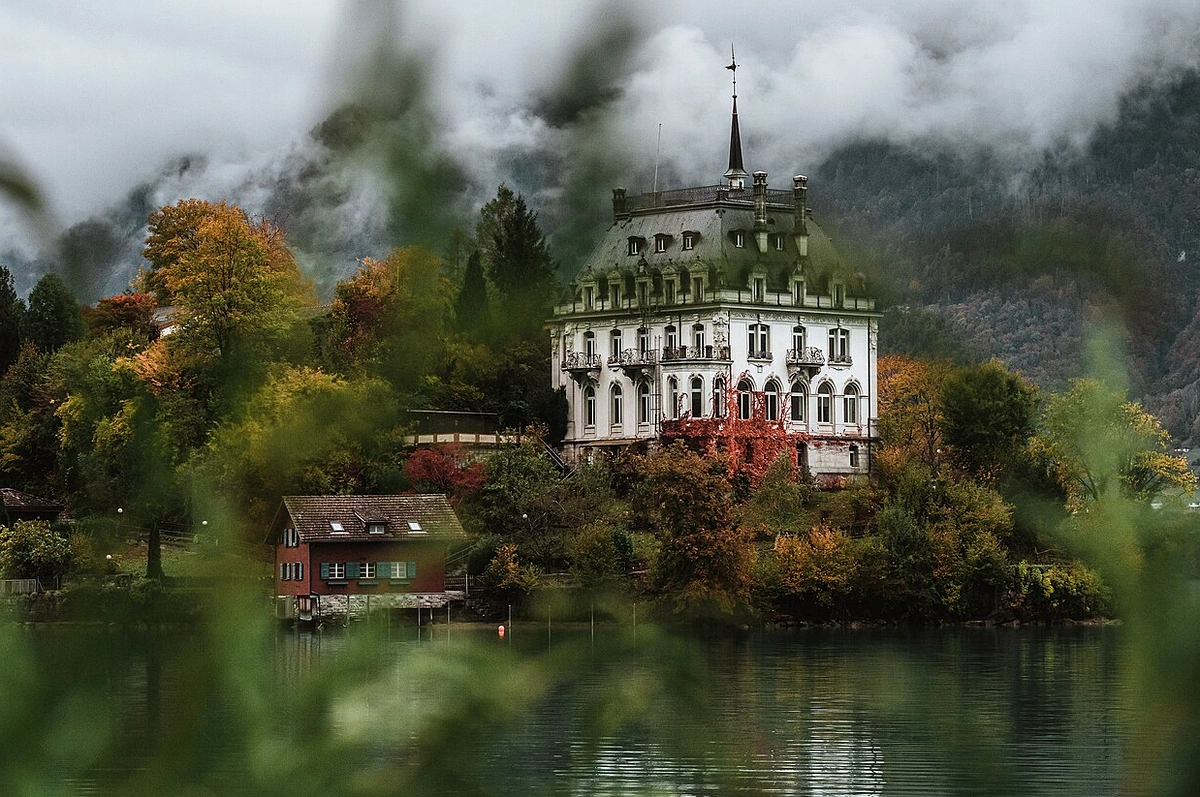
The single most prominent structural landmark in the village’s historic skyline is Seeburg Castle, perched atop a rocky promontory jutting directly into Lake Brienz. Distinct from the surrounding vernacular chalets, Seeburg represents a rare example of seigneurial architecture, featuring stout stone masonry walls, tall arched windows, and corner turrets blending Renaissance influences with regional traditions. Its imposing silhouette creates a compelling volumetric counterpoint to the modest scale of neighboring timber houses, illustrating historical social stratification within the settlement. Built primarily of local stone crowned with steep dark-tiled roofs, the castle reflects architectural exchanges linking Switzerland’s major centers of power with its high-alpine valleys.
Public spaces in Iseltwald—from cobblestone lanes winding along the shoreline to historic boat landings—were laid out according to principles of communal sharing and landscape preservation. Outbuildings such as livestock barns, haylofts, and craft workshops were detached from main residences to reduce fire hazards while streamlining agricultural workflows. Spacing between dwellings was calibrated to allow fresh lake breezes to circulate freely while preserving the tight-knit cohesion of a self-reliant mountain community enclosed by rugged peaks.
Iseltwald’s cultural depth is equally sustained by contemporary commitment to traditional restoration methods. Repairing historic wooden chalets requires master carpenters deeply versed in historic Blockbau joinery—from selecting slow-grown timber felled in winter to applying natural resin treatments against wood-boring insects rather than synthetic industrial chemicals. This rigorous approach preserves the authentic fabric of the built heritage, ensuring Iseltwald remains not a static open-air museum, but a living community where past and present converge seamlessly in every timber beam and along the emerald-turquoise waters of Lake Brienz.
Stretching across a narrow peninsula extending into Lake Brienz in Switzerland’s Canton of Bern, Iseltwald presents a distinctive spatial layout shaped by ancient glaciation and sediment-laden streams descending from the Alps. Exploring this lakeside village in depth rewards an understanding of its geographic zones, historic transit links, and the interplay between traditional agrarian community life and modern global tourism. The village naturally divides into three primary zones: the western ferry pier and waterfront promenade, the historic central core lined with traditional Bernese timber architecture, and the eastern headland anchored by Schloss Iseltwald and its iconic wooden pier reaching into the lake. Each zone carries its own ecological rhythm, historical stratum, and spatial character, inviting travelers to move at an unhurried pace to appreciate local anthropology and alpine geography.
The most rewarding approach for travelers seeking depth begins by water aboard the historic passenger boats operating on Lake Brienz, docking at the Iseltwald pier on the village’s western edge. Arriving from the lake offers the clearest vantage point for seeing how the settlement relates to the precipitous slopes of the Faulhorn rising behind it. The ferry landing serves both as a transit hub and a threshold between the glassy turquoise waters—tinted by suspended glacial limestone flour—and the lakeside footpath winding east through the village. From the pier, walking eastward leads past folk dwellings constructed between the 16th and 19th centuries, where structural beams bearing Old German religious inscriptions and construction dates remain remarkably intact. Here, spatial design clearly reflects traditional Bernese highland livelihoods, including granaries raised on stone pillars to deter dampness and rodents alongside combination barn-dwellings sheltered beneath steep wooden-shingled roofs.
Moving deeper into the historic core, the walk opens into the village’s emblematic civic spaces, anchored architecturally and spiritually by the Iseltwald Reformed Church. Featuring a simple yet sturdy bell tower, the church stands on slightly elevated ground above the lake, commanding sweeping views across the northern basin of Lake Brienz. Narrow cobblestone lanes weave between temperate fruit orchards and compact hillside terraces, demonstrating human ingenuity in adapting to steep pre-Alpine terrain. Notably, tall boundary walls between properties are largely absent; instead, low hedges and shared footpaths link neighboring homes, reflecting the close solidarity of a community once isolated by geography until road links to Interlaken were completed in the mid-20th century.
The journey reaches its visual climax on the eastern tip of the peninsula, where the village’s most photographed landmarks meet the greatest spatial management pressures from surging international tourism. Schloss Iseltwald—a historic castle with medieval roots remodeled across successive feudal eras—stands sentinel at the water’s edge as if guarding the lake passage. While the castle grounds remain privately owned with restricted public access, the adjacent public shoreline features the famous wooden jetty extending over Lake Brienz, featured prominently in contemporary Asian television drama and drawing crowds eager to match real-world scenery with on-screen imagery. From a cultural perspective, this corner vividly illustrates the intersection of local heritage and global pop-culture tourism, prompting municipal authorities to establish structured pedestrian pathways to protect the fragile lakeside ecology.
To complete a full circuit of Iseltwald’s landscape, step off the main waterfront lane and climb the stone stairways ascending the southern hillside, where long-distance hiking trails toward Giessbach Falls and the Faulhorn begin. Gaining elevation reveals a sweeping topographical panorama in which the Iseltwald peninsula resembles a giant anchor moored in Lake Brienz, parting currents into subtle hydrological bands. Up here, all traces of modern traffic vanish, replaced by the distant chime of cowbells drifting down from alpine meadows and wind rustling through dense spruce forests. Experiencing Iseltwald on foot thus goes far beyond admiring picturesque facades—it becomes an encounter with a living cultural-natural ecosystem striving to preserve its soul amid modern tourism.
Along its small peninsula jutting into the turquoise waters of Lake Brienz, Iseltwald sustains a network of hospitality services, local amenities, and community traditions deeply rooted in Bernese Oberland history. These services evolved organically out of the village’s long-term economic transition from subsistence farming, lakeside fishing, and forestry into a globally admired cultural and eco-tourism destination. Shaped by historic footpaths, 16th- to 19th-century timber chalets, and careful stewardship, local hospitality balances everyday village routines with international visitor flows across accommodations, regional gastronomy, lake-and-land transit, and community life.
Local accommodations showcase a thoughtful adaptation of traditional residential architecture into boutique hospitality that preserves authentic Bernese Oberland character. Timber chalets with broad eaves and intricately inscribed beams have been sensitively converted into family-run inns, historic guesthouses, and short-term holiday apartments. Retaining natural timber and time-honored craftsmanship keeps these buildings in complete visual harmony with their surroundings without intruding upon the lakeside environment. Inside, rooms are upgraded to modern Swiss standards of comfort while preserving the understated simplicity, privacy, and peacefulness cherished in German-speaking alpine communities.
Iseltwald’s culinary scene intertwines local agricultural bounty with gastronomic traditions centered on Lake Brienz. Traditional lakeside restaurants and family taverns serve Bernese Oberland specialties including freshly caught Lake Brienz whitefish and trout, artisanal alpine cheeses crafted on surrounding high pastures, and crusty wood-fired bread. Small-scale commercial fishing continues to be practiced by a handful of local fishermen, supplying village kitchens with fresh daily catches and keeping generational recipes alive. This tight farm-and-lake-to-table chain lets visitors savor authentic highland flavors while gaining insight into how local communities sustained themselves across shifting climates and economies.
Transportation and visitor infrastructure reflect Switzerland’s seamlessly integrated water-and-land public transit planning. The village’s historic ferry pier serves as a vital link connecting Iseltwald with lakeside towns and landmarks such as Interlaken and the Giessbach Falls. Classic paddle steamers and modern passenger vessels dock regularly, carrying sightseers while serving essential local mobility needs. Meanwhile, road access into the village is traffic-calmed, with visitor parking concentrated along the outer perimeter to protect pedestrian lanes from noise and exhaust. Prioritizing walkers and cyclists fosters a tranquil atmosphere that encourages unhurried appreciation of historic architecture and lake vistas.
Civic spaces and daily community life in Iseltwald remain anchored in traditional social institutions and the close bonds of a small population. The local parish church, small lakeside squares, and village school serve as focal points for cultural events, seasonal festivals, and community gatherings. Despite pressures from heightened tourism in recent years, residents steadfastly maintain cherished customs—from tending vibrant geranium window boxes to preserving their distinctive Alemannic Swiss-German dialect. Community gatherings, periodic farmers’ markets, and folk music events offer visitors genuine glimpses into Swiss alpine culture, where ancestral heritage harmonizes gracefully with contemporary life.
Visitor amenities in Iseltwald are managed with strong environmental stewardship to protect the delicate freshwater ecosystem of Lake Brienz. Information points provide detailed maps of lakeside promenades and mountain hiking trails alongside clear etiquette guidelines encouraging respect for residents’ private homes and gardens. Waste management, wastewater treatment, and clean energy systems adhere to strict Swiss ecological standards. Rentals for non-motorized water sports such as kayaking and stand-up paddleboarding are carefully regulated in number and operating zones to protect aquatic habitats, ensuring tourism supports rather than degrades the village’s natural foundation.
This balance between living traditions and well-managed hospitality makes Iseltwald a textbook example of sustainable destination stewardship in the Alps. Rather than serving as passive bystanders, local residents actively shape visitor experiences by running artisan craft shops, traditional woodworking studios, and locally guided excursions. Tourism revenues are reinvested directly into maintaining historic timber buildings, public infrastructure, and small-scale mountain farming—safeguarding Iseltwald’s social fabric against over-commercialization and preserving its timeless Swiss lakeside charm.
Overall, the hospitality ecosystem, public amenities, and living heritage of Iseltwald on Lake Brienz stand as a testament to a mountain community’s resilience and stewardship amid modern change. Every cobblestone lane, timber inn, lakeside tavern, ferry landing, and village square reflects deep respect for nature and history. Visiting Iseltwald transcends ordinary sightseeing, offering travelers an intimate portrait of the social, economic, and cultural harmony found in one of Switzerland’s most enchanting alpine corners.
Planning a smooth, rewarding visit to Iseltwald on Lake Brienz benefits from understanding local seasonal rhythms, Switzerland’s integrated transit connections, and long-standing village etiquette. Perched on a narrow peninsula jutting into the southern shore of this famously turquoise lake, the village is strongly influenced by its surrounding high-alpine topography. Choosing the right season plays a decisive role in shaping your experience. From May through September, optical conditions and daytime temperatures are at their finest: melting alpine glaciers feed mineral-rich glacial water into Lake Brienz, creating striking light refraction that shifts the water’s hue continuously from deep sapphire to brilliant turquoise under changing sunlight. Conversely, travelers seeking quiet contemplation and an intimate look at traditional highland village life will appreciate October through April, when crowds thin dramatically and delicate morning mist drifts across historic wooden chalets.
In terms of daily timing, arriving before 9:00 AM or staying past 5:00 PM offers the golden windows for photography and peaceful exploration free of peak midday crowds. International visitor arrivals surge between mid-morning and late afternoon as tour buses and scheduled lake ferries dock. Departing early from nearby transport hubs like Interlaken allows you to catch crisp morning sunlight illuminating the sheer limestone cliffs of the Faulhorn and the historic facade of Seeburg Castle. Because alpine weather shifts rapidly—even in midsummer, evening temperatures can drop sharply and sudden valley rain showers can roll in with little warning—checking local forecasts via the Swiss Federal Office of Meteorology and Climatology (MeteoSwiss) is essential before setting out.
To experience this journey seamlessly with an experienced local guide, explore our 9-Day 8-Night Germany – Austria – Hungary – Czech Republic Tour featuring a thoughtfully arranged itinerary.