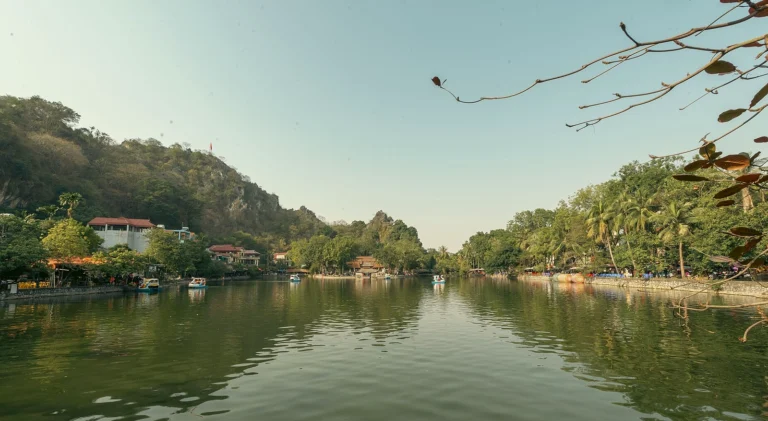
Nestled on the western fringe of the capital, more than fifty kilometers from downtown Hanoi, Duong Lam Ancient Village (now part of Son Tay Town) stands as a living museum of traditional Vietnamese culture, where time seems to linger on every layer of moss clinging to its weathered laterite walls. From a geographical and feng shui perspective, Duong Lam occupies a strategic “gateway” position along the transitional boundary between the semi-mountainous midlands and the fertile alluvial plain of the Red River Delta. Its landscape gathers both water and mountains, cradled by the gentle Tich River and backed by the majestic Ba Vi mountain range, forming an auspicious setting where vital energy converges—a land that has nurtured national heroes who defended and pacified the country throughout Vietnamese history.
According to archaeological records and ancient chronicles preserved in scholarly archives, this land is far more than an ordinary farming village; it is an indigenous settlement with a history spanning thousands of years. Material artifacts from the Bronze Age through the Iron Age belonging to the Dong Son culture reveal that early inhabitants settled here millennia ago, putting down deep roots through countless historical upheavals. Across successive feudal dynasties, Duong Lam’s present spatial layout took its clearest form during the Later Le Dynasty (17th–18th centuries) and the Nguyen Dynasty (19th century). Yet its foundational roots trace back to an interconnected network of temples, communal houses, and hamlets clustered around sacred sites tied to illustrious figures from the era of Northern domination and Vietnam’s independent dynasties.
Duong Lam’s enduring vitality and singular prestige are further immortalized by a rare distinction in official history: “The Land of Two Kings.” This village served as the birthplace and cradle of two towering national heroes: Bo Cai Dai Vuong Phung Hung, who led a heroic uprising against Tang Dynasty rule around 791, and Ngo Quyen—the founding patriarch of national restoration, whose resounding victory on the Bach Dang River in 938 ended over a millennium of Northern domination and ushered in a long era of independence and sovereignty for Dai Viet. Beyond these two monarchs, Duong Lam is also the hometown of Imperial Envoy Giang Van Minh—who heroically sacrificed his life during the Le Dynasty to uphold national dignity before the Ming court—alongside numerous esteemed scholars and cultural luminaries.
From the perspective of heritage researchers and cultural commentators, Duong Lam is remarkable not only for its architectural ensemble—anchored by the Mong Phu Communal House and centuries-old homes constructed from native midland laterite—but also for its vast collection of artifacts, antiquities, and historical inscriptions. Royal decrees dating from the Le Dynasty through the reigns of Nguyen emperors such as Gia Long, Minh Mang, Tu Duc, and Khai Dinh, together with ancient stone stelae, stand as living testimony to an unbroken historical continuum, shaping a deeply distinctive Xu Doai cultural soul that endures across the ages.
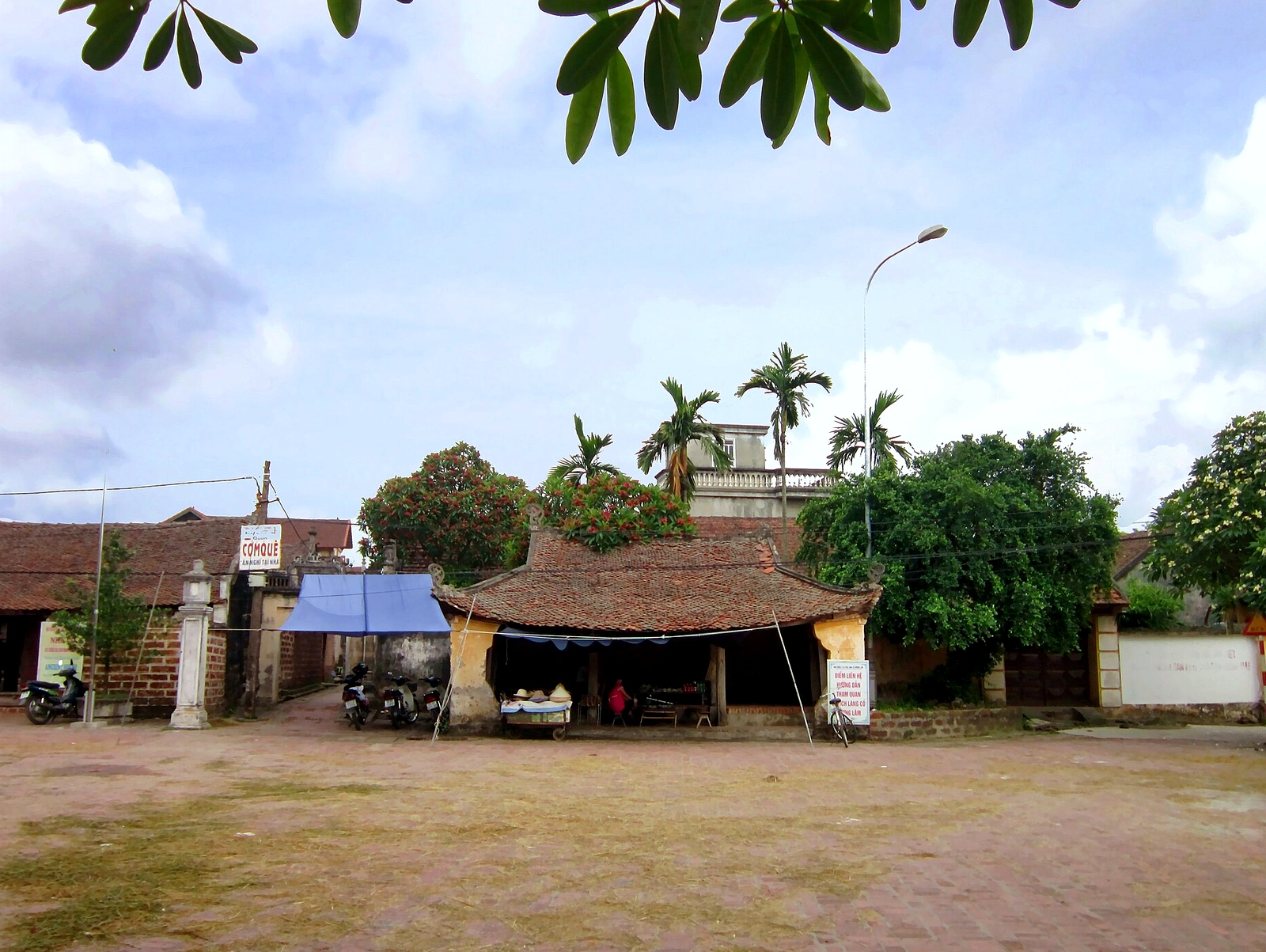
Tucked beneath the canopy of centuries-old banyan trees, Duong Lam Ancient Village unfolds like a living ink-wash painting where time seems suspended beneath blankets of moss. The village’s topography resembles a broad basin that gathers auspicious energy and prosperity, backed by the towering Ba Vi mountain range and facing the fertile Tich River. Here, the scenery embodies a seamless harmony between midland nature and the skilled craftsmanship of generations of Vietnamese artisans. Every winding, narrow lane shaded by lush trees is paved with slanted bricks laid in a herringbone pattern, forming a backbone network of pathways that is both airy and artfully integrated into the landscape. Seen from above, the village layout strictly follows traditional feng shui principles, radiating outward from the central communal house like a cultural heart branching into peaceful residential hamlets.
The defining highlight of Duong Lam’s extraordinary architectural heritage is its collection of centuries-old houses built entirely from distinctive local materials. Crafted from sturdy ironwood and jackfruit wood with intricately carved rafters in the traditional style of the Le–Nguyen dynasties, these homes incorporate hand-cut blocks of warm reddish-brown laterite—a hallmark stone of the Xu Doai region. Each laterite block is squared and fitted tightly together without mortar, lending the walls a rugged, rustic character while naturally keeping interiors cool in summer and warm in winter. In front of each home stretches a spacious courtyard paved with dark-red fired bricks, lined with rows of earthenware jars holding rainwater and fermenting soybean paste (tuong ban), creating an idyllic, soulful rural scene steeped in Vietnamese tradition.
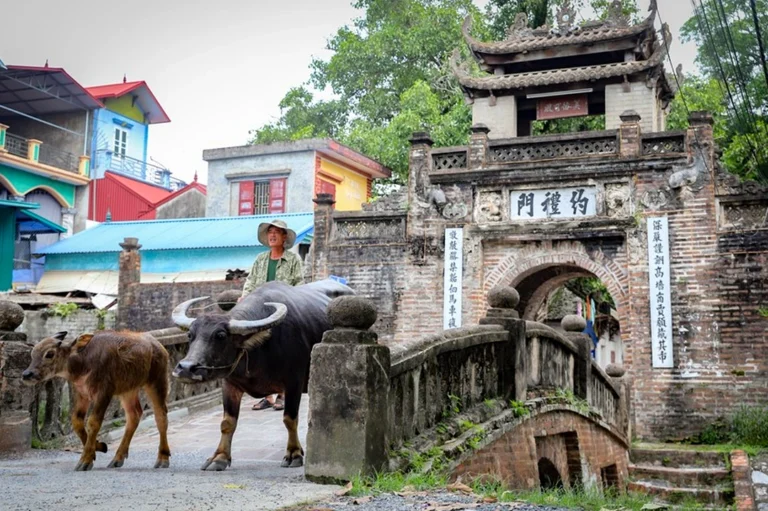
For photographers and seasoned travel writers, Duong Lam offers iconic vantage points that capture the quintessential spirit of northern Vietnam’s countryside. The first unmissable “million-view” photo spot is the Mong Phu Village Gate—the only surviving intact ancient village gate in the area, dating back hundreds of years. The ideal lighting window here is at dawn (roughly 5:30 AM – 6:30 AM), when early morning sunbeams filter through the ancient banyan canopy and glint off the lotus pond in front of the gate, casting enchanting patterns of light and shadow across the weathered laterite.
The second prized camera angle lies deep within the winding laterite alleyways at dusk (from 4:30 PM to 5:30 PM). As late-afternoon golden-orange light slants across the rough laterite walls, every mossy texture and natural grain comes vividly to life, evoking a profound sense of nostalgia. Standing at the bend of an ancient lane and framing time-worn wooden panel doors lets you capture an enduring emblem of the Vietnamese countryside—where past and present merge into one.
As the ancient jackfruit-wood gate of Mong Phu Village closes behind you, you step across a threshold in time into the tranquil rhythm of an authentic, unspoiled Vietnamese village. The first experience that awakens all the senses is strolling unhurriedly along narrow lanes paved with weathered dark-red bricks. Warm sunlight filters through leafy canopies heavy with pomelos, illuminating rough, moss-draped laterite walls. Touching the cool stone and breathing in the faint scent of dried straw carried on the midland breeze evokes a quiet sense of wonder—an appreciation for the enduring vitality of a living heritage space that still pulses with everyday life rather than existing merely in history books.
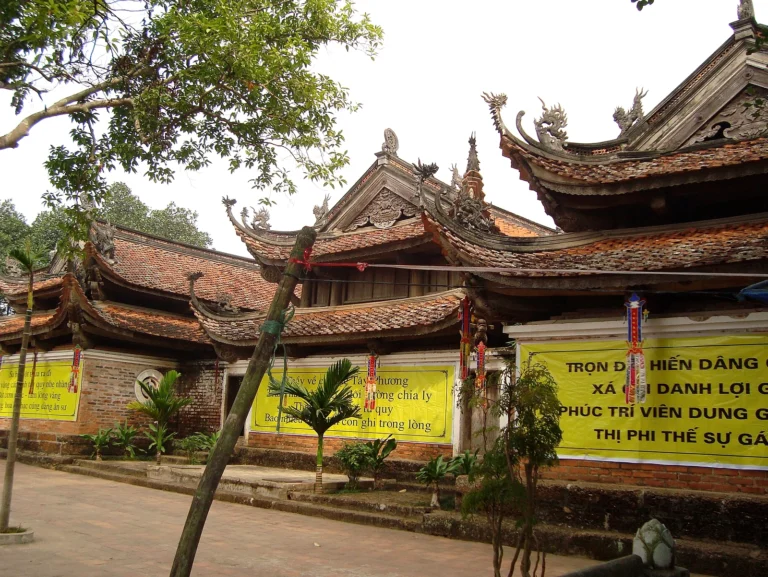
Beyond the winding alleyways, the journey offers deeply moving spiritual and historical encounters. Stepping inside the hushed 17th-century Mong Phu Communal House or paying respects at the Temple of Bo Cai Dai Vuong Phung Hung and the Mausoleum of King Ngo Quyen brings a profound sense of reverence. Amid drifting incense smoke and the resonant toll of temple bells, visitors feel a tangible bond between a heroic past and a peaceful present. Looking out from the temple grounds, the panorama of Duong Lam stretches before you—moss-covered yin-yang tiled roofs framed by lush green bamboo groves cradling this storied “land of illustrious figures.”
Just as memorable is the culinary journey through Duong Lam’s celebrated local specialties. Resting on the veranda of a centuries-old house, visitors can sip a cup of green tea with a lingering bittersweet finish, nibble on crisp traditional rice and sesame candies (keo doi and keo me xung), or sample fragrant fermented soybean paste. Above all, a traditional country meal featuring golden, crispy-skinned roasted pork, chicken soup simmered with lotus root, or rich mung bean pudding (che kho) is sure to delight even the most discerning palate. Together, these sights, flavors, and encounters weave a vivid tapestry of memories that lingers long after you leave this sacred land.
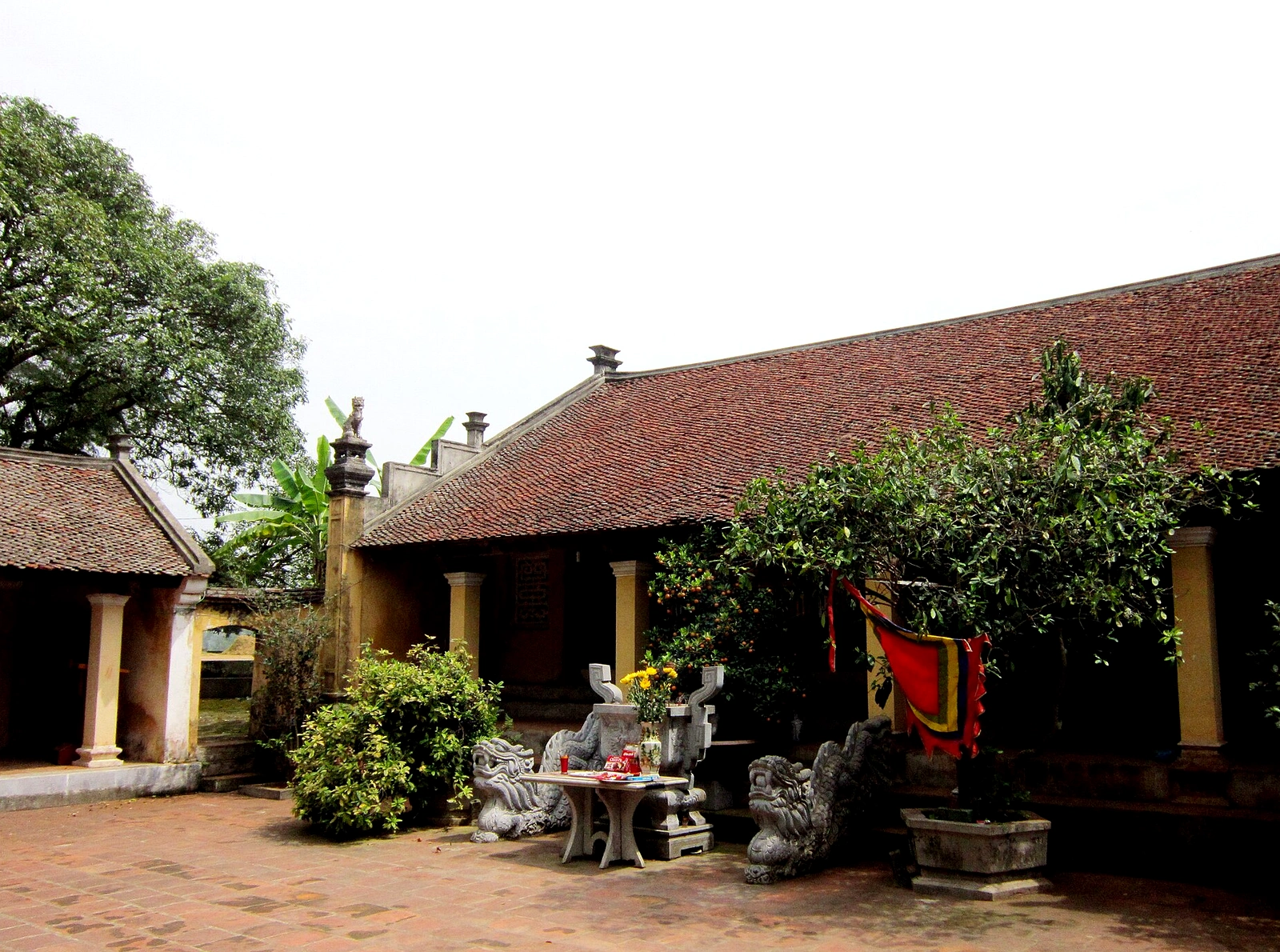
Duong Lam is not only a living museum of traditional Vietnamese architecture, but also a cherished cultural and spiritual destination drawing domestic and international travelers alike in search of Vietnam’s roots. To make your visit to the “Village of Two Kings” smooth and rewarding, keep these practical tips on timing, admission, transportation, and local etiquette in mind.
Regarding opening hours, the Duong Lam Ancient Village heritage complex welcomes visitors daily from early morning until late afternoon. The best seasons to visit are autumn and spring, when the weather is cool, dry, and ideal for strolling through the village lanes. Visiting around the Lunar New Year or during traditional festivals—such as the Mong Phu Communal House Festival—brings the added reward of experiencing vibrant folk rituals and community celebrations.
As for admission fees, a single general entrance ticket covers access to the main heritage cluster. Ticket prices are very affordable and go directly toward preserving and restoring the village’s original architecture and historical artifacts. Upon purchasing your ticket, you will also receive a handy visitor map guiding you to key landmarks, including Mong Phu Communal House, Phung Hung Temple, Ngo Quyen Temple, and representative ancient houses.
The most convenient route from central Hanoi to Duong Lam follows Thang Long Boulevard or National Highway 32, covering just over 50 kilometers. You can travel by private car or motorbike for flexibility to stop for photos along the way, or take a public bus to Son Tay and transfer via taxi or motorbike taxi directly to the village gate. Roads are well-paved and straightforward, with clear directional signage throughout.
When visiting this living heritage community and its sacred temples and communal houses, dress modestly and respectfully in keeping with local traditions. Because the village lanes consist mainly of uneven brick and laterite paths, wearing comfortable sneakers or flat walking shoes is the best choice for exploring on foot.
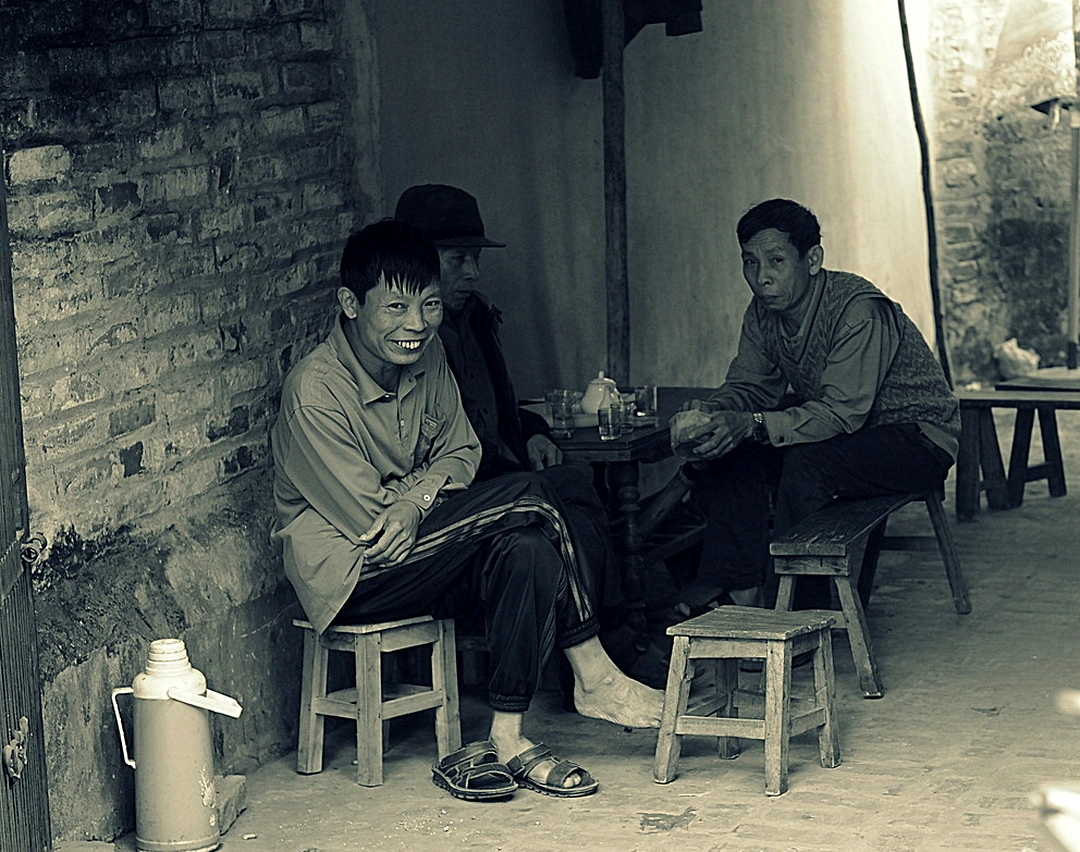
To enjoy a seamless getaway and experience the full charm of Duong Lam Ancient Village without worrying about transportation, ticket arrangements, or itinerary planning, travelers can choose VDS Travel’s premium all-inclusive Son Tay tour packages. Each itinerary is thoughtfully timed for peak scenic beauty and led by knowledgeable local guides well-versed in regional culture, paired with top-tier hotel and dining standards.