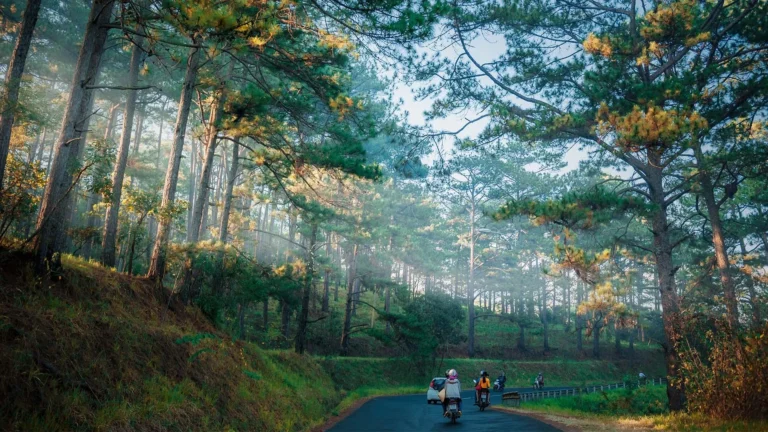
Nestled amidst rolling mountain ranges and pristine valleys, the Kim Sa Creek (金沙溪) carries over two millennia of historical sediment, dating back to the era when Qin Shi Huang plotted his grand ambition to pacify the Baiyue tribes. At that time, to overcome the treacherous terrain separating the Lingnan region from the Central Plains, the Qin imperial court ordered the carving of mountains and rocks, establishing a strategic military waterway system centered on the monumental Lingqu Canal (灵渠). The Kim Sa Creek served as a vital tributary, acting both as a secret supply route winding through deep canyons and as a forward outpost controlling the gateway for military maneuvers. The towering cliffs along the rushing waters today once witnessed the thousands-of-miles-long marches of Northern soldiers, bearing the indelible marks of the conquests that reshaped the borders of an entire era.
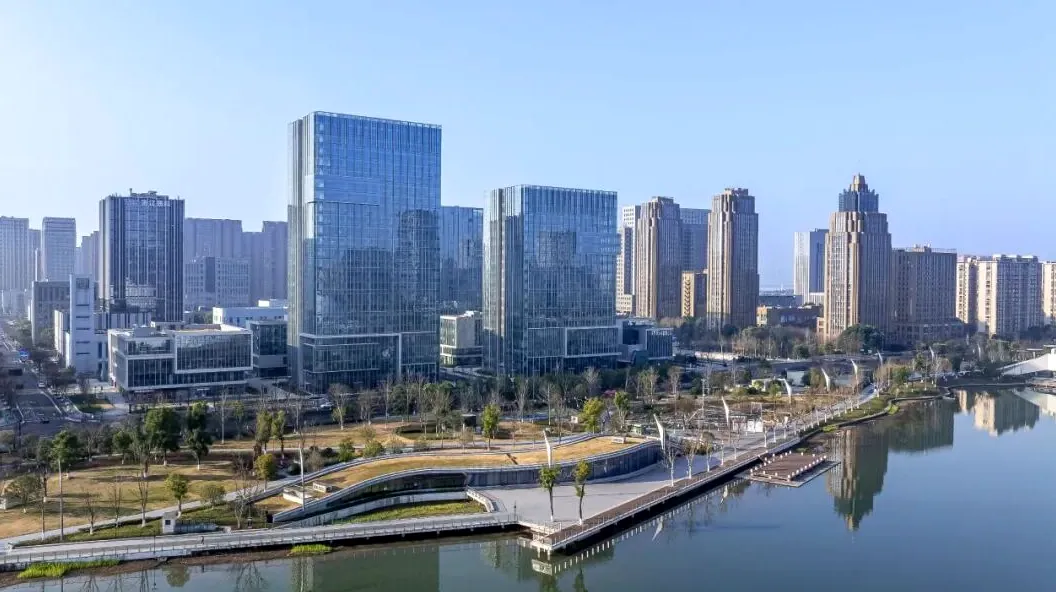
In contrast to the wild, thousand-year-old forests of the upper reaches, the adjacent modern urban space unfolds with a complete and vibrant master plan. The panoramic view reveals a complex of high-rise glass office buildings reflecting the azure sky, standing proudly beside the calm waters of a lakeside ecological park. Winding, meticulously paved stone walkways meander between lush green lawns, exquisitely trimmed trees, and gentle embankments that mirror the innovative architecture. This brilliant urban landscape acts as a bridge of civilization, connecting contemporary prosperity with the magnificent natural beauty that lies ahead.
Through the Han, Tang, Song, Ming, and Qing dynasties, as the smoke of war faded into the past and the Southern territories were integrated into a unified realm, the Kim Sa Creek shed its strict military armor. The fierce waters rushing from the high peaks were skillfully tamed by local inhabitants through pebble-dam systems and manual irrigation channels, turning the area into a fertile source of life for the lush valleys. Local villages have nestled along the banks for generations, preserving a lifestyle in harmony with nature and maintaining the unique geological structure, where millennia of erosion have carved granite layers into spectacular whirlpools and rapids.
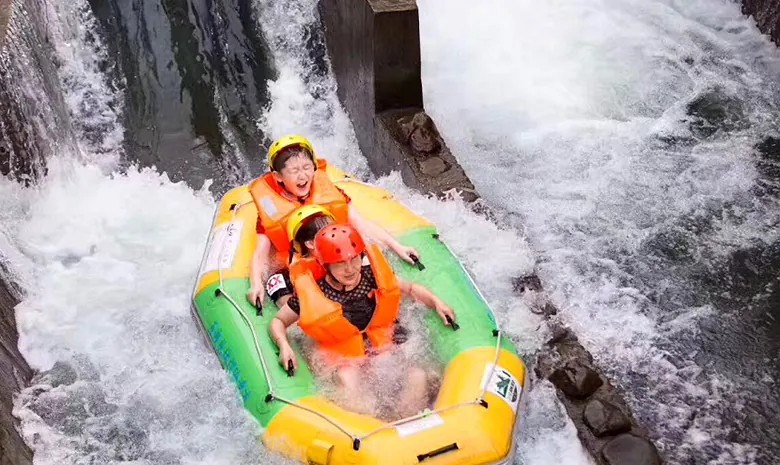
The contemporary historical turning point for this land began when the extraordinary geomorphological potential of Kim Sa Creek was awakened for eco-tourism and adventure sports. A master plan transformed the traditional agricultural stream into a spectacular 3km-long whitewater rafting course, maximizing the natural gradient and rapid flow without harming the protected forest ecosystem. Subsequently, the entire facility was comprehensively upgraded to international safety standards, including reinforcing the channels, installing automated hydrological warning systems, and training professional rescue teams. This miraculous transformation has turned a waterway once heavy with the memories of Qin-era military supplies into a renowned adventure tourism paradise, where people can freely challenge the surging waters amidst the deep green wilderness.
Hidden at the border between Guangxi and Hunan, the Kim Sa Creek in Guanyang County, Guilin City, sits upon a magnificent geological structure carved by Mother Nature over millions of years. The solid foundation of the entire region is the Yuecheng Range, a towering mountain chain that holds the premier position in the ancient Five Ridges (Wuling) system of the South. Here, geological tectonic forces created karst valleys interspersed with metamorphic granite, forming a deep, narrow trough with a treacherous slope—once likened by ancestors to a giant funnel capturing the essence of heaven and earth, along with pure water from high peaks shrouded in mist year-round.
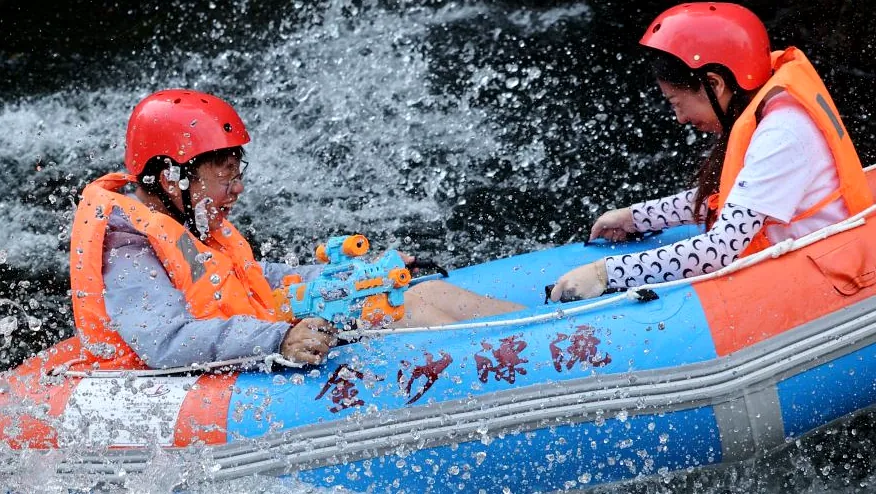
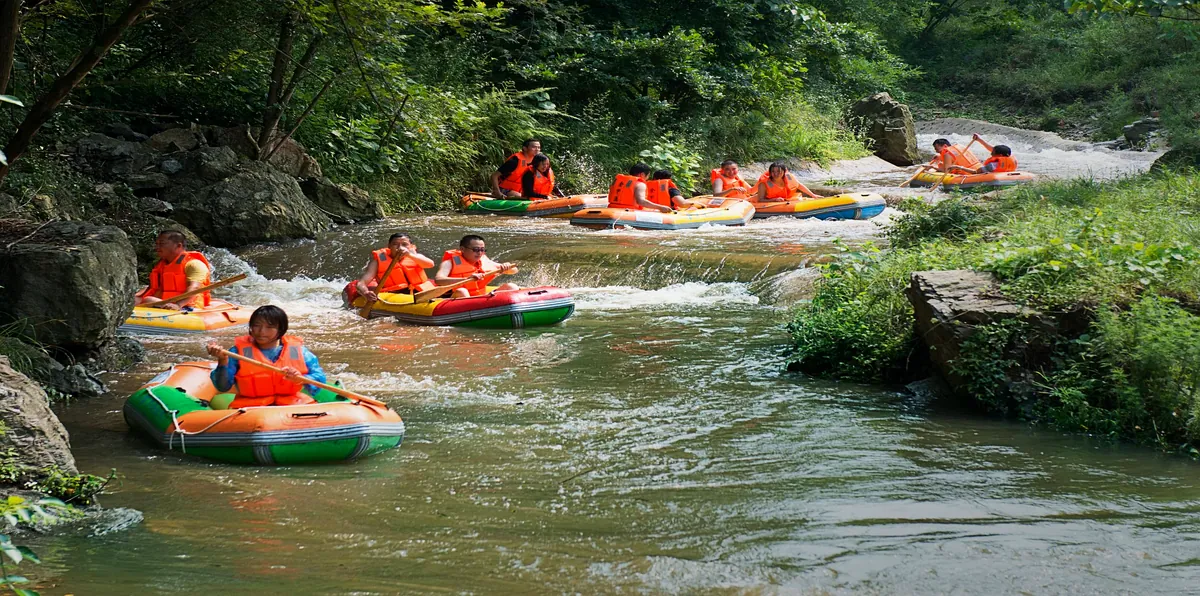
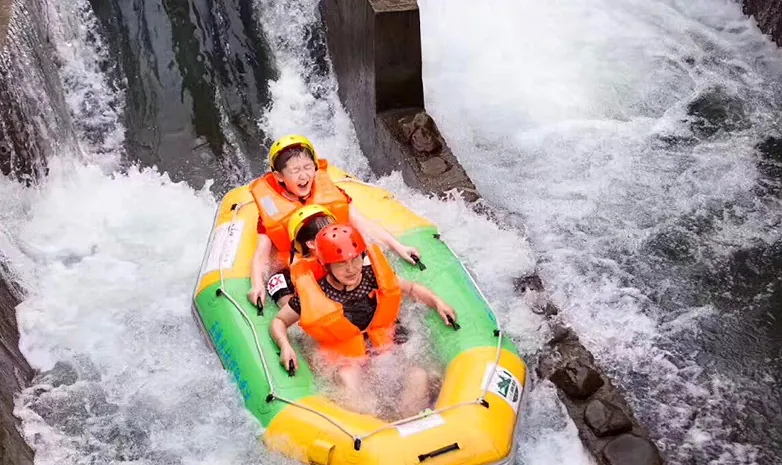
Deep within the pristine canyon, the adventure rafting experience is truly impressive as rubber rafts dash through rapids churning with white foam. Equipped with life jackets and specialized helmets, the group of visitors coordinates rhythmically, gripping the side straps tightly to maintain balance against the immense force of the rushing water. Waves of white spray erupt into the air, contrasting sharply with the deep green of the vast vegetation hugging the towering cliffs on both sides, perfectly capturing the courageous spirit of humanity facing the magnificent fury of mountain nature.
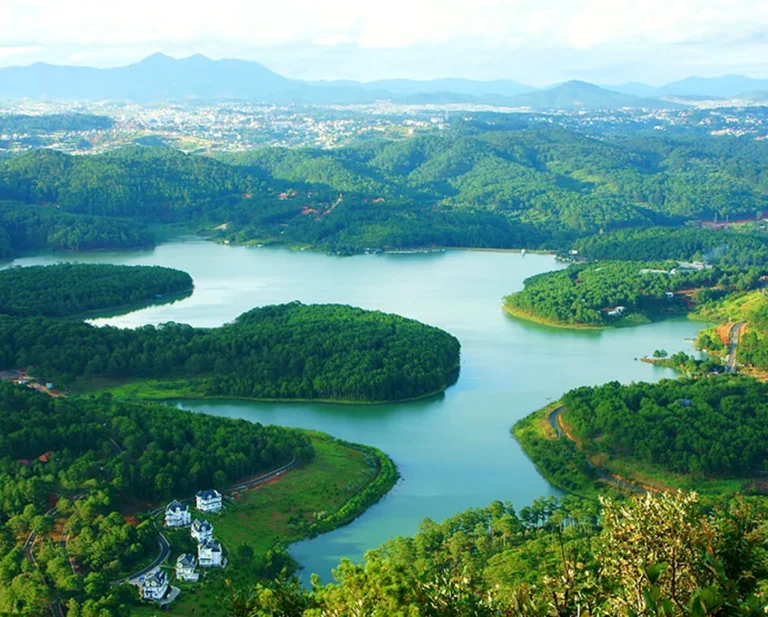
The three-kilometer natural flow layout of Jinsha Stream is a topographical masterpiece with a vertical drop of up to several hundred meters between its upstream departure point and downstream receiving lake. The water meanders through natural stone terraces, with a constantly changing riverbed structure featuring dozens of large and small rapids interspersed with breathtaking zig-zag and U-shaped bends. At the bottom of the stream, the mechanical erosion of the surging water over countless epochs has polished massive boulders, clearing away sharp obstacles while creating numerous challenging whirlpools and vertical drop steps. The flow rate is naturally regulated by the dense upstream protection forests, ensuring that the water remains crystal clear to the bottom and maintains the characteristic cool temperature of the subtropical high mountains.
The hydrological space here also fully inherits the feng shui concept of “mountains embracing water”, meaning that the mountains shelter the area while aquatic energy condenses abundantly, bringing vigorous vitality to the entire Guanyang ecosystem. Regarding landscape ecology, the Viet Thanh Linh mountain range corridor where the Kimsa Stream originates serves as a natural continuation extending to the famous Longji terraced fields of the Guilin region. The dense evergreen broad-leaved forest canopy covering the sloping hillsides not only retains soil to prevent erosion but also creates an exceptional temperate microclimate, turning the rugged rafting journey into a deep excursion into the heart of a pristine geological heritage, where the breath of the green mountains blends harmoniously with the endless roaring sound of the rapids.
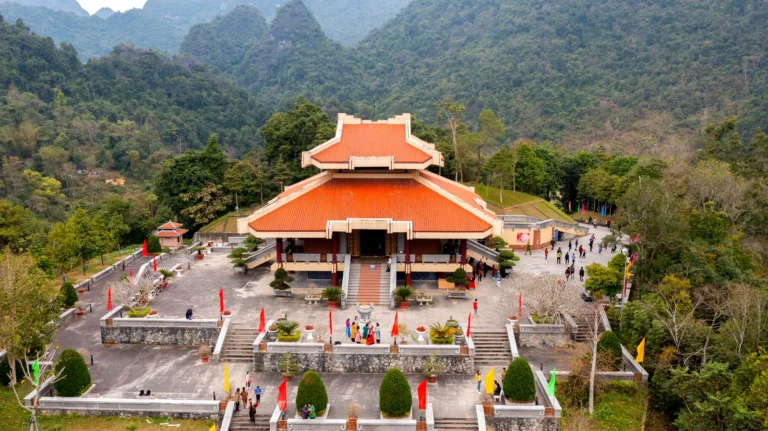
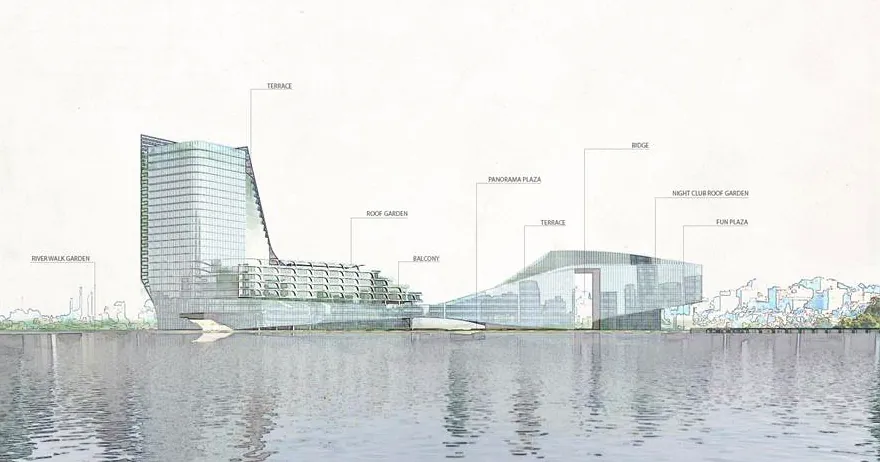
Along the winding canyon slopes embracing the rolling Kimsa Stream, the architectural space of the scenic area emerges as an organic highlight amidst the pristine wilderness. The most valuable visual highlights lie in the reception complexes and rest stations along the rushing water, which faithfully replicate the traditional stilt house architecture of the local Zhuang ethnic minority. Dark oak timber intertwined with seasoned mountain bamboo and rough-hewn blue stones from the stream bed are skillfully arranged, creating a complex of gently sloping eaves stretching out to the edge of the cliff. Rustic balustrade corridors reflecting on the white-foaming water serve both as magnificent outposts before visitors embark on the three-kilometer rafting voyage, and as providers of a strange sense of tranquility amidst the ferocity of nature.
Hidden behind the rustic beauty carrying the breath of the mountains is a design philosophy of absolute respect for natural geological forms. Instead of leveling the ground or imposing rigid concrete blocks, the architects inherited the traditional wood-mortise techniques of the local residents to build sturdy stilt houses that flexibly adapt to the flood amplitudes of the forest. The bases of the structures are reinforced with natural rubble combined with herbal-infused ironwood columns, deeply embedded into the bedrock of the valley to withstand the constant erosion of moisture and rushing currents. The gently sloping roofs are thatched with ferns and covered with handmade tiles, layered hierarchically to optimize the dispersion of highland rainstorms while guiding cold wind currents from the canyon through each room, keeping the space airy and cool without disrupting the overall landscape.
The scale of investment at the Kimsa waterfall sliding area does not boast superficial grandeur but focuses all efforts on a hydrological safety infrastructure system that meets ISO international testing standards. Along the rugged three-kilometer sliding route, the team of engineers surveyed every rapid, submerged cliff, and whirlpool to establish a sophisticated water flow regulation network. At drop points with steep gradients, the stream bed is artificially widened in a controlled manner using bio-pad reinforcement methods, which both eliminates dangerous impacts for rubber rafts and preserves the ultimate thrilling rocking sensation for visitors. Rescue control stations are evenly spaced every three to five hundred meters along the bank corridor, cleverly hidden beneath bamboo gazebos, and directly connected to the central observation station via tide-sensing cables to be ready to respond in the harshest weather scenarios.
Alongside the adventurous driving axis of the rapid-crossing voyage, the overall spatial structure of the scenic area is also delicately positioned according to the healing and physical energy regeneration tourism model. Leaving behind the roar of the main waterfall, a network of rustic wooden bridges guides visitors’ steps into tranquil tributary streams, where open-air meditation platforms are nestled beneath lush ancient trees. The resort space in this subdivision thoroughly applies natural sound therapy from the babbling water, rustling leaves, and valley winds to cleanse the mind. Each tea pavilion, streamside resting hut, or sunbathing deck is distributed with an extremely low building density, creating an absolute private buffer zone for meditation sessions, bringing the experiential model from the peak excitement of thrill games back to a deep inner balance amidst magnificent nature.
As the sunset gradually fades and the shadows of thousand-year-old limestone ranges blanket the Kim Sa Khe valley, the roaring, vibrant rhythm of daytime rafting gives way to a mystical transformation. The mountainous landscape of Guanyang now enters a period of profound stillness, where the boundary between raw nature and contemporary vitality is seamlessly connected. After a long day of battling the rapids, travelers often retreat to the open cultural spaces in the surrounding central area, where modern architecture and visual arts harmonize with the pulse of this Lingnan-rich river confluence.
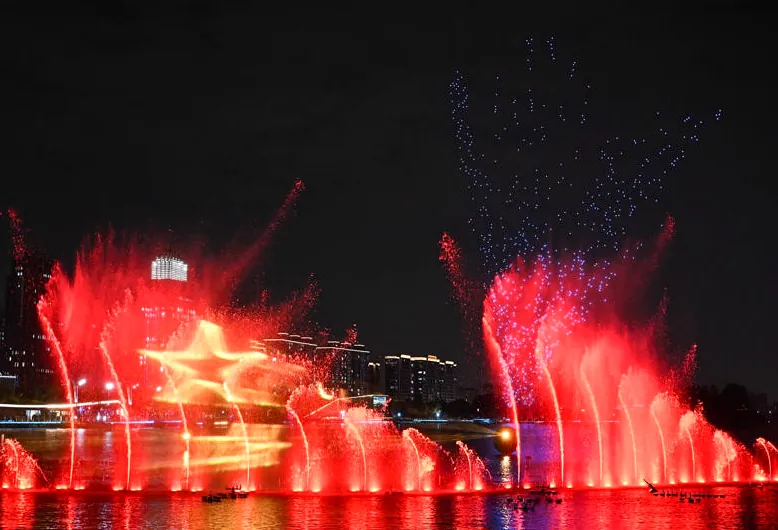
At the central square connecting the area, the nightly artistic water music show unfolds as a mesmerizing visual feast in the heart of the urbanized valley. Hundreds of high-pressure water jets soar into the air simultaneously, swaying rhythmically to the melodic highs and lows against the quiet night sky. Standing out in the space is a high-tech fountain system combined with multi-colored lighting, shooting out brilliant red water jets that coalesce into a proud, shimmering golden star symbol on the lake’s surface. In the distance, modern high-rise buildings glow with vibrant lights, reflecting on the shimmering water, creating an impressive contrast between the prosperous modernity and the inherent tranquility of the surrounding mountains and forests.
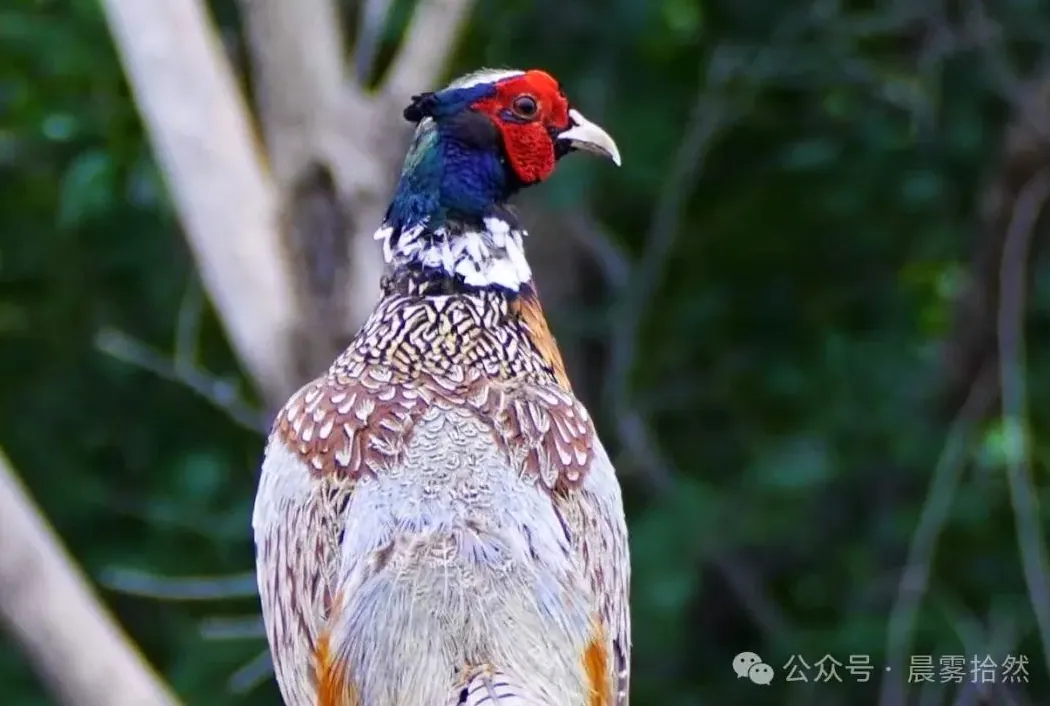
In contrast to the splendor and overwhelming nature of the light shows in the center, the core area of Kim Sa Khe is planned with a principle of maximum respect for the originality of pristine nature. At night, the resort avoids using glaring high-pressure floodlights or loud industrial sounds to preserve the ecological habits of wildlife and tropical vegetation. Instead, the lighting art here is minimized to subtle hidden strips along the cobblestone paths, casting light onto mossy ancient trees and reflecting off the crystal-clear stream water. The skillful combination of primitive darkness and warm light provides a meditative visual field, opening up a corridor of absolute contemplation for those seeking peace.
Nightlife in Kim Sa Khe is thus gradually shaping a unique style of enjoyment: inward-focused through meditation, tea ceremonies, and traditional wellness practices. Under the thin mist drifting over wooden huts nestled against the cliffs, travelers can listen to the chirping of insects blending with the gurgling sound of shallow streams, completely washing away the stress of city life. Enjoying ancient tea by a glowing charcoal stove with Guanyang Ku-ding tea, paired with macrobiotic dishes made from young bamboo shoots, forest mushrooms, and local snow lotus seeds, brings a pure culinary experience that regenerates the body after hours of intense physical activity.
Late night in the Kim Sa Khe valley is a perfect blend of two emotional extremes: on one side, the magnificence and glamour of the vibrant water music shows in the town, and on the other, the stillness and serenity of the deep mountains and forests. This rhythmic transition not only enriches the traveler’s experience but also demonstrates a sustainable planning philosophy, where the wild beauty of nature and the heartbeat of contemporary cultural life walk hand in hand through the years.
After fully exhausting one’s energy amidst the bumpy bends and white foam on the three-kilometer waterway, the experience at Kim Sa Khe shifts from the extreme stimulation of the senses to the quiet depth of local culinary flavors. The Guanyang region, where the Kim Sa river winds through the overlapping limestone valleys of northeastern Guangxi, has long preserved a rustic yet sophisticated culinary philosophy, clearly reflecting the harmonious adaptation between humans and the mountainous nature. The cuisine here does not showcase the elaborate processing techniques of bustling cities, but absolutely honors the originality and freshness of local produce and traditional cooking methods passed down through generations of indigenous residents.
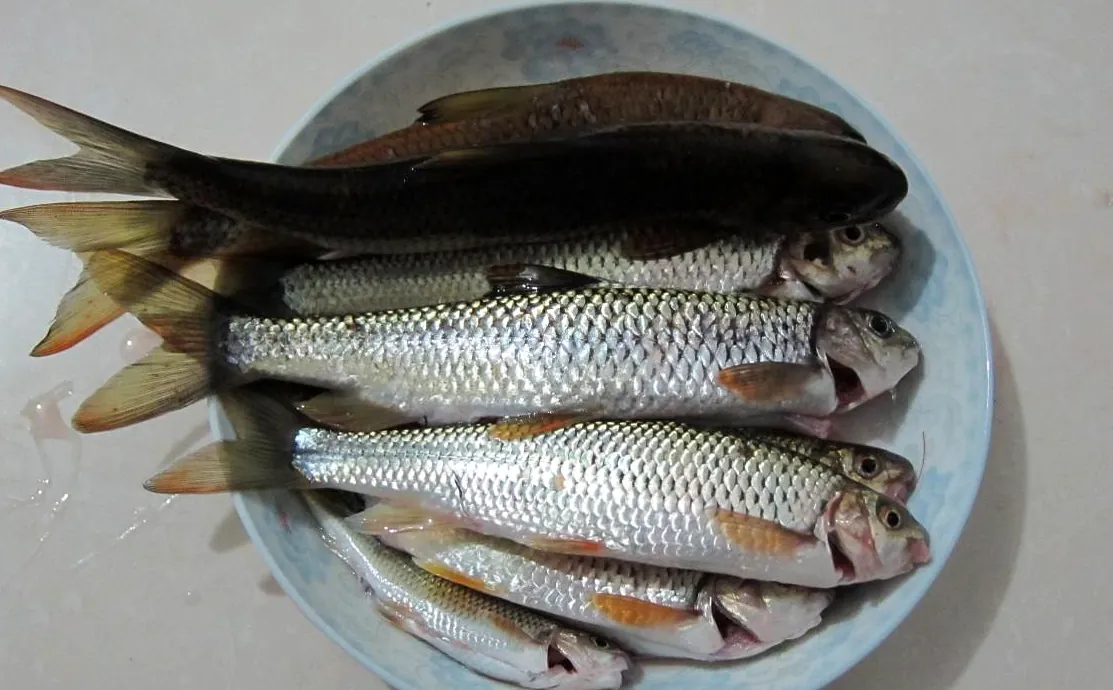
Reigning in the most honorable position on the dining table after the journey over the rapids is the Kim Sa lotus-leaf steamed stream fish, a delicacy deeply imbued with the flavors of the water. The stream fish, which grow naturally in oxygen-rich rushing water and swim upstream through the layers of pebbles at the bottom of the Kim Sa gorge all year round, possess exceptionally firm, snow-white flesh that is completely free of any muddy odor. The rustic chef skillfully cleans the fish with pure spring water, seasoning it lightly with crushed old ginger, highland shallots, and coarse sea salt to honor its pure sweetness. Each piece of fish is carefully wrapped in fresh lotus leaves picked from natural ponds along the valley, then placed in a bamboo steamer over a wood fire. The rising steam carries the elegant, earthy scent of chlorophyll and lotus essential oil, soaking deep into every succulent piece of fish, creating a culinary symphony that is both refined and rich with the flavors of the river and stream.
Accompanying the refreshing gifts from the cool waters is the Quan Duong hill chicken braised with local herbs, a symbol of vitality restoration after hours of adventurous activity. The native hill chicken breed is free-range, roaming the rugged limestone slopes, foraging for forest seeds and insects, and drinking from mountain streams year-round, resulting in firm, reddish-pink meat and crispy, low-fat skin. The uniqueness of the dish lies in the secret herbal broth harvested from the primeval forests of Quan Duong, including wild ginseng root, astragalus, and Szechuan lovage, combined with bright red goji berries. The chicken is chopped into square pieces, seared in a cast-iron skillet, and then transferred to an earthenware pot to simmer with the herbs for several hours. The broth shimmers with an amber hue, releasing a warm, fragrant aroma that fills the kitchen; upon touching the tongue, it leaves a deep, sweet aftertaste that warms every fiber of the meat, completely dispelling the chill of the stream water.
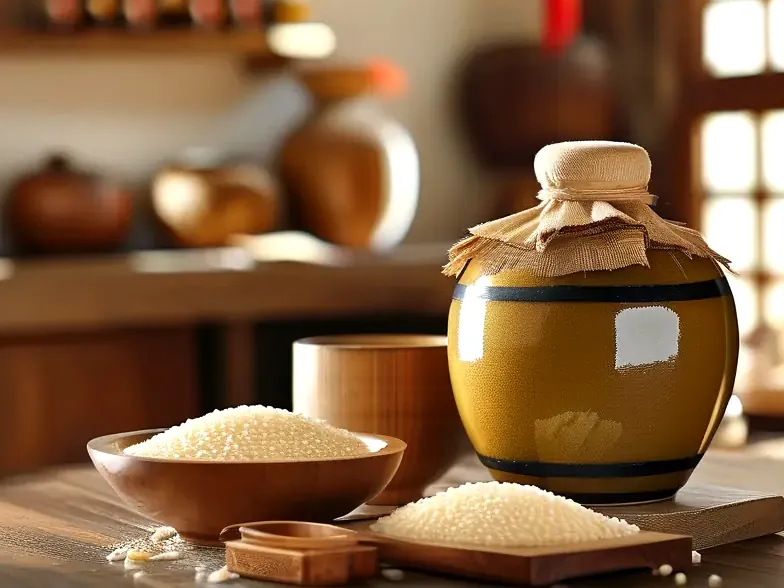
To perfectly complete the Lingnan mountain flavor, a traveler’s meal would be incomplete without a cup of naturally fermented Guilin sticky rice wine, the soul that connects every story by the fireside. Distilled from plump sticky rice harvested from the terraced fields of highland youth, combined with traditional medicinal yeast made from dozens of forest leaves, this exquisite liquor is sealed in earthenware jars and buried underground at the foot of the cool mountain through many seasons. Unlike the harsh, strong spirits of the city, the sticky rice wine here is as clear as morning dew, with a subtle fragrance of ripe rice grains blended with the earthy scent of fermented herbs. Taking a small sip, the initial spicy kick quickly gives way to a lingering, mellow sweetness that spreads through the throat, sparking a sense of warmth and refreshment, perfectly concluding a beautiful harmony of physical endurance, nature, and the thousand-year culinary culture of the Guangxi highlands.
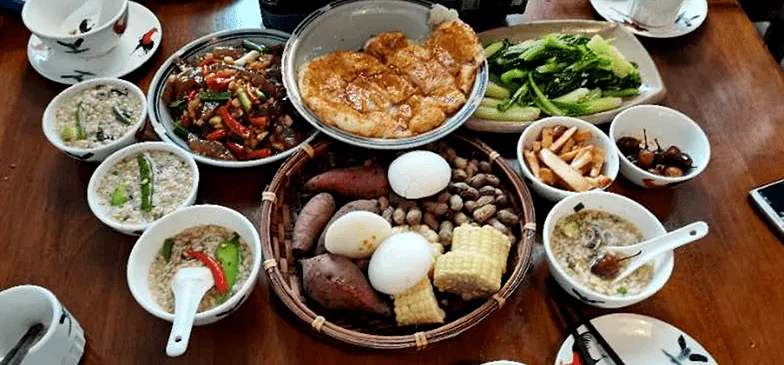
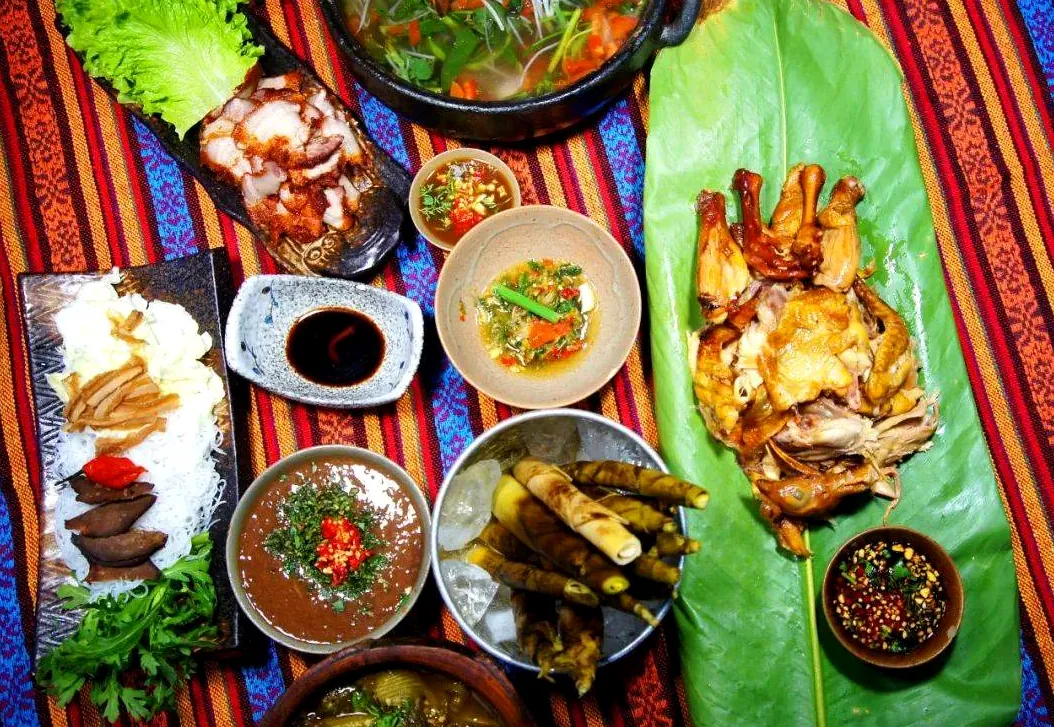
After conquering the surging rapids and expending all your energy in the heart of the Kim Sa canyon, there is nothing better than being treated to a mountain culinary feast rich in local identity. Amidst the breezy stilt house, the traditional feast of the Guilin mountain people is served fully and neatly, elaborately displayed on a tablecloth woven with vibrant brocade patterns. Standing out in the center is a plate of charcoal-grilled hill chicken spread over fresh green banana leaves, paired with crispy-skinned roasted pork. Surrounding it are elegant, snow-white rice noodles, sweet young forest bamboo shoots dipped in signature spicy herbal sauces, and a bowl of cooling soup to instantly soothe any fatigue after the intense waterfall race.
To fully enjoy the excitement of this challenging 3-kilometer waterfall rafting journey, choosing the right time to depart is crucial. The period from early May to the end of September each year is considered the unique golden season to experience Kim Sa waterfall rafting. This is the beginning of the rainy season, when generous headwater rains energize the underground streams, causing the flow to rise and surge, turning the Kim Sa stream into a perfect water racecourse with white foaming whirlpools under the brilliant summer sun. The tourist area is usually open from 8:30 AM to about 4:30 PM daily; however, the best rafting times are usually in the early afternoon when water levels are optimally controlled and sunlight shines through the primeval forest canopy, creating a magnificent scene.
The journey from Vietnam to the Kim Sa valley is now extremely convenient thanks to the modern transport infrastructure of the Guangxi Zhuang Autonomous Region. After completing customs procedures at international land border gates like Friendship Pass, travelers can quickly reach Nanning to catch modern high-speed trains that glide smoothly north toward the scenic Guilin in just 2 hours. From Guilin central station, specialized shuttle buses will pick up travelers for a 1.5-hour drive, winding along lush green hills shaded by bamboo and majestic limestone ranges to arrive directly at the reception area of the Kim Sa Khe scenic spot.
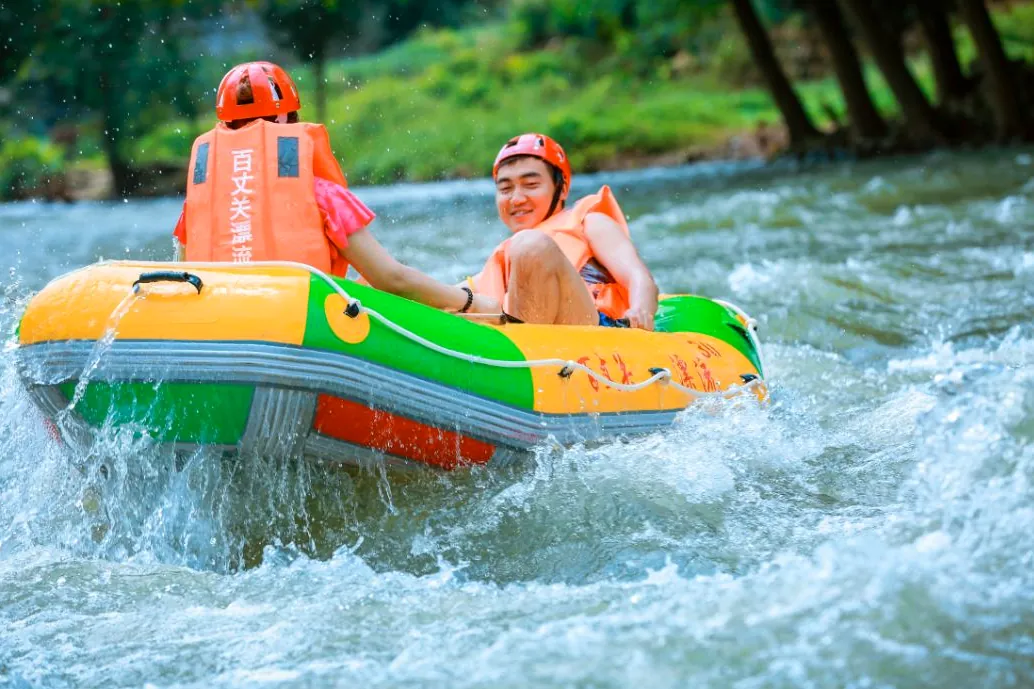
Preparing your gear carefully is the key to ensuring a water adventure that is both safe and comfortable. Travelers should wear specialized form-fitting swimwear or quick-dry sportswear made of high-stretch material, and absolutely avoid thick cotton clothing as it absorbs water easily and becomes heavy during activity. A pair of sturdy sandals with back straps and deep-grooved rubber soles for grip is an essential accessory to avoid slipping when stepping over sharp rocky rapids and mossy stream beds. Valuable personal items such as phones and cameras should be sealed in standard waterproof bags before boarding the raft, and you should leave all precious metal jewelry in the smart lockers at the central reception area.
Regarding service security, the local authority has implemented extremely rigorous standards for tourism reception and management. Low-cost, substandard travel models and forced shopping stops that once caused inconveniences in the past have been thoroughly eliminated through inspections, raising the overall tourist satisfaction rate (CSAT) to a record 92%. To ensure maximum benefits and enjoy exclusive services—from private transfers and priority lines without waiting to high-quality local culinary feasts—independent travelers or family groups should carefully consider traveling with a comprehensive tour package that is professionally designed and optimized for the itinerary.