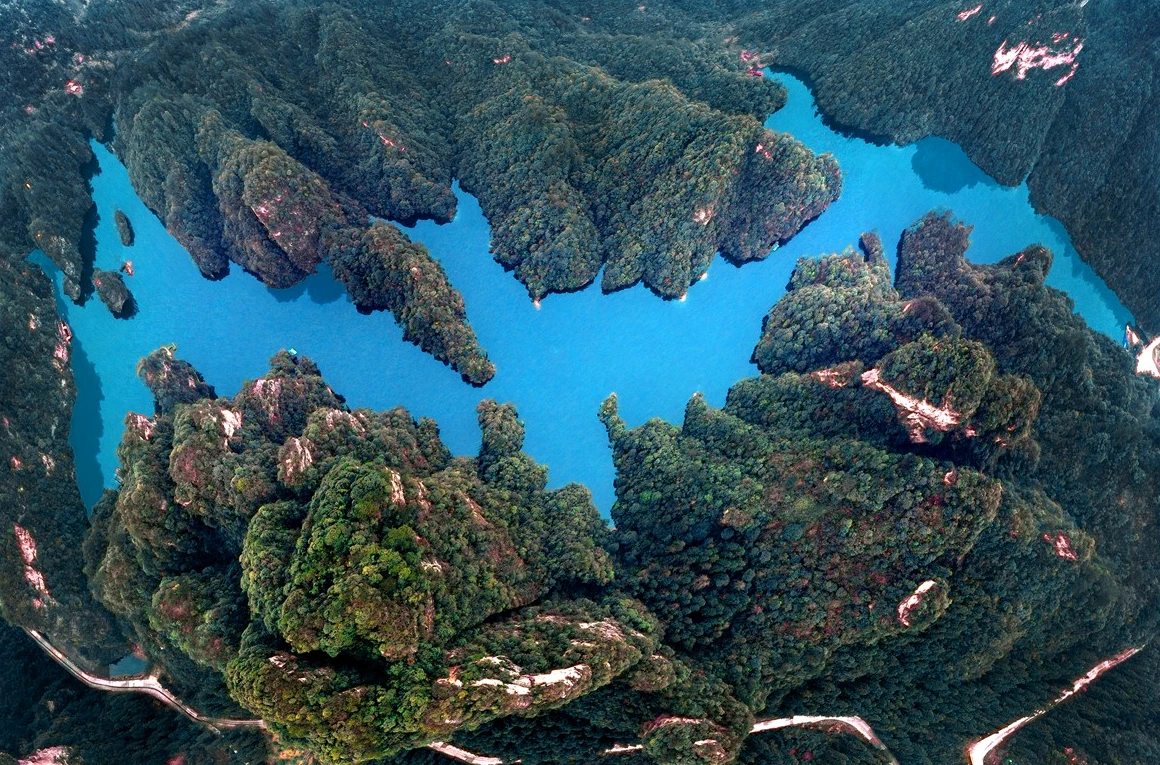
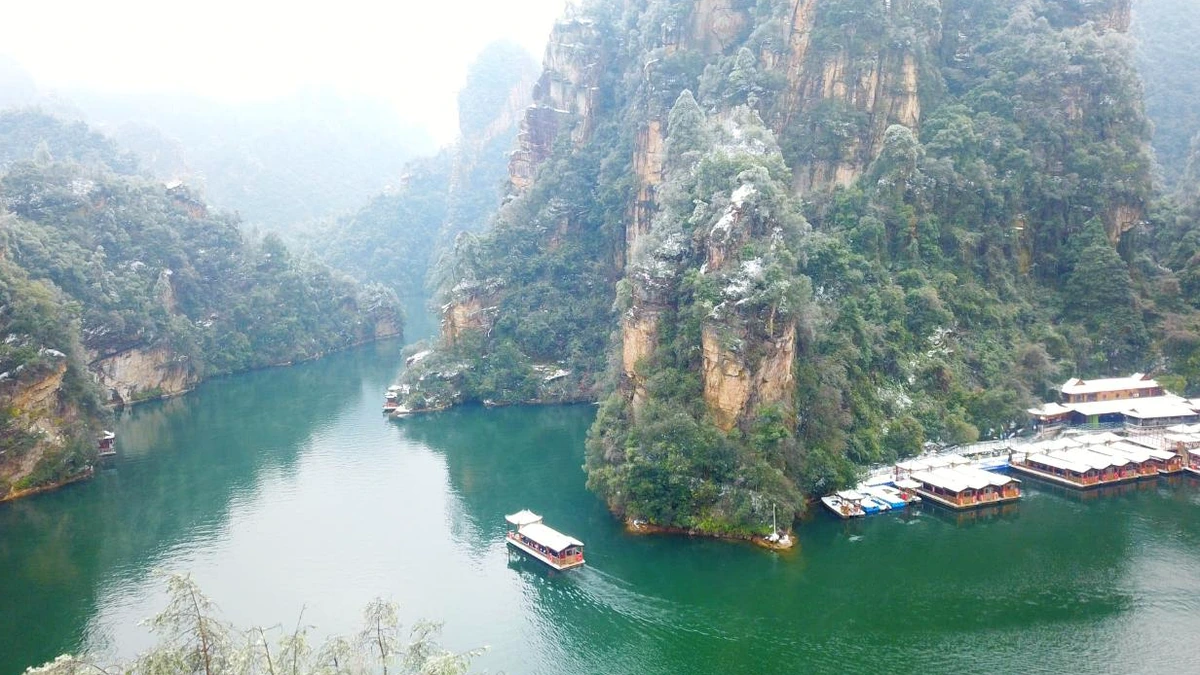
Deep within the heart of the Wulingyuan World Natural Heritage Site in Hunan Province, China, Baofeng Lake (Chinese: 宝峰湖) gleams like a jade jewel nestled amidst towering peaks rising toward the clouds. Originally named “Baofeng Reservoir,” the scenic spot takes its name from sacred Mount Baofeng, standing at 1,214 meters above sea level. More than a natural masterpiece or a grand water-conservancy project, these calm waters hold centuries of historical sediment tied to the pulse and shifting eras of Zhangjiajie.
Baofeng Lake’s history reaches back to the Ming and Qing dynasties, when this mountain region lay under the local *Tusi* (chieftain) governance system. During the Hongzhi reign (1488–1505) of the Ming dynasty, a Tusi chieftain of the Xiang clan—a prominent Tujia leader—built fortified passes and garrisons along strategic ridges of Mount Baofeng to guard the frontier. The area once served as a vital military stronghold where war drums echoed alongside millennia-old waterfalls. Its grandeur was recorded early in local gazetteers: both the *Cil County Gazetteer* and the *Hunan Provincial Gazetteer* across dynasties depicted “Baofeng Temple” tucked along cliffs and “Baofeng Flying Cascade” draping like white silk mid-air, praising the site as a premier scenic gem of Wuling.
Entering the twentieth century, Baofeng’s history saw a major turning point. Between 1974 and 1976, driven by urgent needs for water control and local development, authorities and residents in Zhangjiajie accomplished a feat of manual construction: damming Suoxikou Stream to turn a narrow rocky gorge into a large freshwater reservoir. Initiated for irrigation, flood control, and hydroelectric power to support daily life, the project gradually filled with jade-green water around ancient stone peaks—creating a highland lake blending human engineering with natural scenery and paving the way for its later transformation.
A brighter milestone arrived in 1992 when the entire Wulingyuan ensemble was inscribed as a UNESCO World Natural Heritage Site. That recognition lifted Baofeng Lake from a local reservoir onto the international travel map as a global natural and cultural destination. Also in the early 1990s, celebrated calligrapher Qi Gong—one of China’s foremost masters of calligraphy—visited and inscribed the three characters “Baofeng Lake” (宝峰湖) with flowing brushwork still carved on-site. This peaceful setting has also inspired literature and painting by renowned Hunan figures such as Shen Congwen and artist Huang Yongyu.
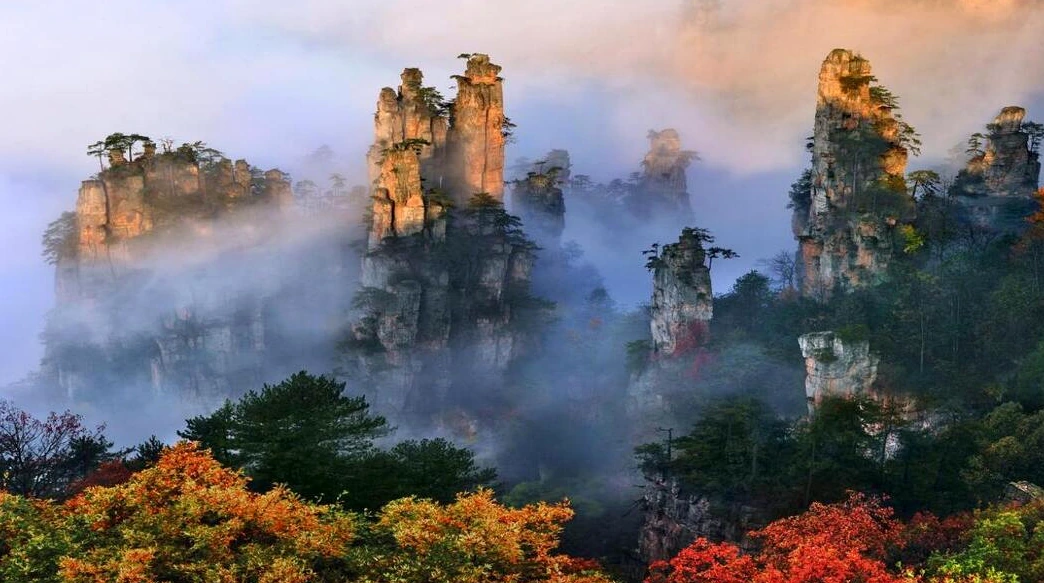
Tucked inside Zhangjiajie’s world heritage landscape, Baofeng Lake (*Baofeng Hu*) rests within a dramatic quartz-sandstone peak-and-canyon formation. Geologically, the region originated in a marine sedimentary environment around 380 million years ago. Across hundreds of millions of years of tectonic uplift, weathering, and erosion, the ancient seabed rose and was sculpted into sheer sandstone canyons. Within that rugged terrain, the lake appears as a “high-gorge flat lake”—a calm freshwater basin nestled high above steep cliffs along a gently curving U-shaped valley.
In topographic layout and natural scale, Baofeng Lake sits at roughly 430 meters above sea level, forming a distinctive, enclosed water-retaining basin. It reaches an average depth of around 72 meters and holds over six million cubic meters of clear freshwater. This large body of water high among hills reflects both groundwater and rainfall accumulation over time and natural microclimate dynamics. Geological fractures and surrounding quartz-sandstone cliffs form a sturdy natural enclosure that protects the valley ecosystem while giving the lake notable depth compared with typical mountain lakes.
Viewed through traditional feng shui and Eastern landscape ecology, Baofeng Lake meets classic criteria for a sheltered, energy-gathering setting. Sharp peaks act like natural screens tempering harsh winds so air circulates gently within the valley. In feng shui thought, towering quartz-sandstone peaks paired with jade-green water reflect complementary yin and yang forces and the balance of mountain and water—upright stone pillars evoking stability and endurance alongside still, deep water evoking wealth, clarity, and renewal.
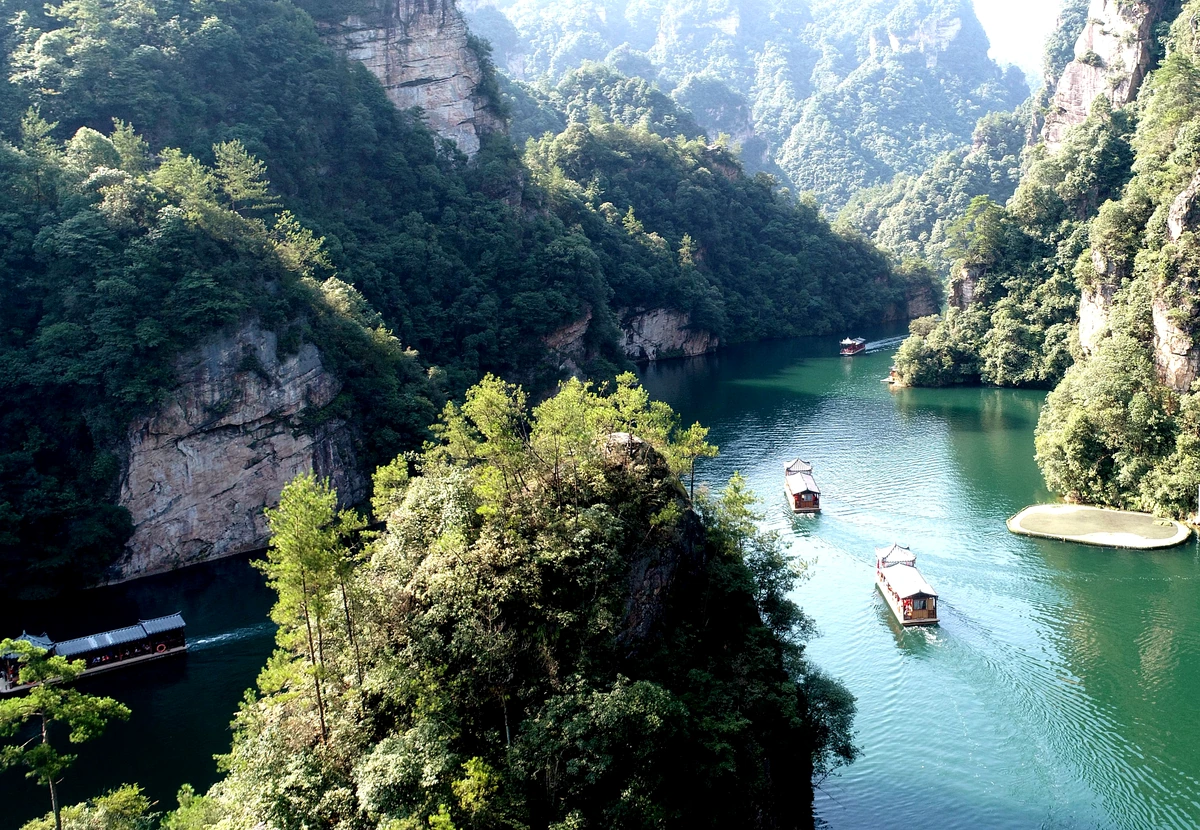
As a result, Baofeng Lake’s scenery carries an otherworldly grace that feels both grand and serene. Year-round, its water holds a clear emerald-emerald/jade hue reflecting cliff-clinging trees and mist-veiled sandstone peaks. Beyond visual appeal, the enclosed U-shaped valley, gentle evaporation mist, and high cliffs create a distinct micro-habitat supporting native flora and aquatic life in natural balance.
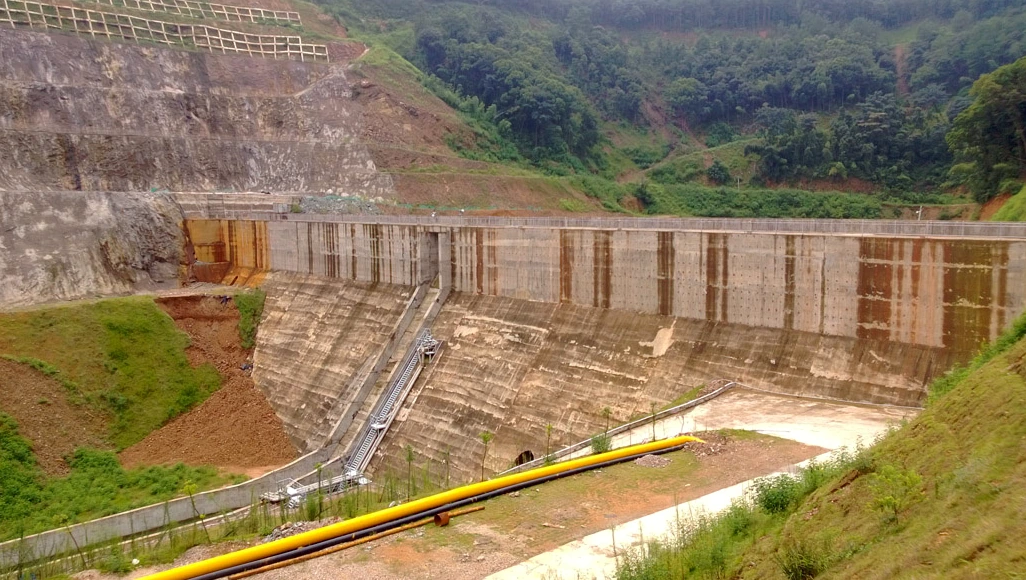
Baofeng Lake is not only a natural ink-and-wash scene, but also an example of pairing modern water engineering with mountain topography. Right at the narrow gorge mouth—where steep cliffs close in like a natural gateway—builders constructed a reinforced-concrete gravity dam over 30 meters tall. Engineered with underground release outlets and ecological flow controls, the dam keeps lake levels steady year-round like a jade mirror reflecting the Zhangjiajie mountains while respecting the western Hunan valley setting.
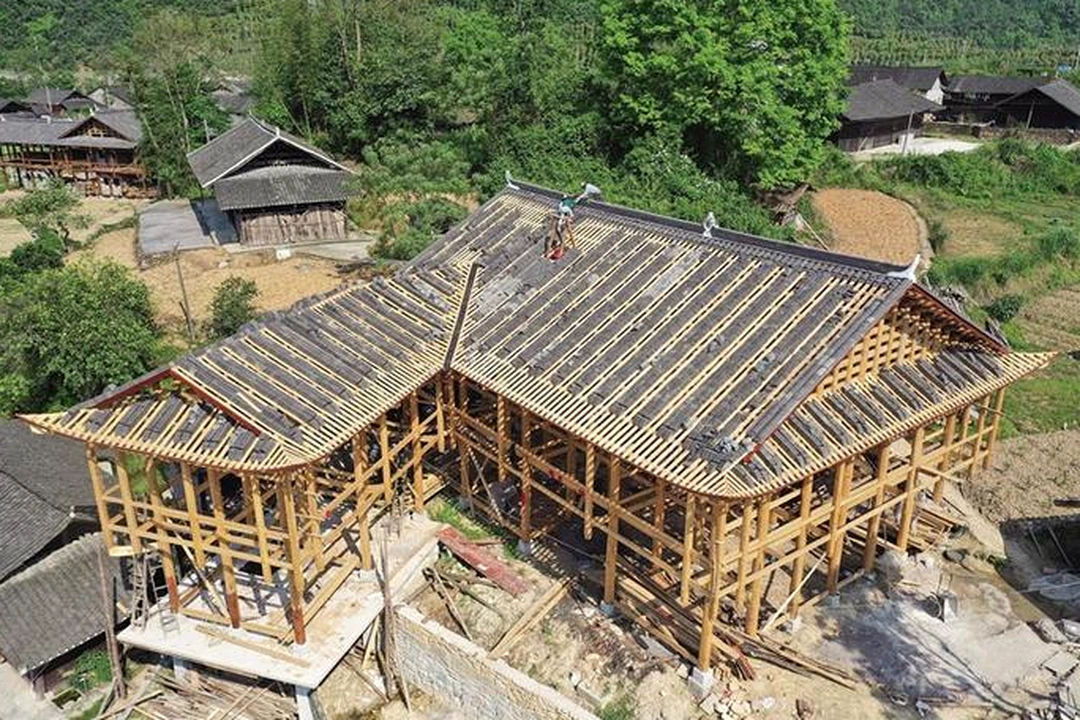
Scattered around the shoreline and along rocky ledges are buildings rooted in western Hunan Tujia folk tradition. From boat landings and lakeside pavilions to Eagle Nest Camp (*Yingwozhai*) higher up, structures follow stilt-house (*Diaojiaolou*) craft—a distinctive regional variation of traditional stilted timber dwellings. Rather than spreading horizontally, Eagle Nest Camp and ancillary structures hug vertical rock faces and rise along the slope, saving ground space while blending with mist and forest canopies on timber posts with wide eaves resembling soaring wings.
A core strength of the timber structures around Baofeng Lake lies in traditional carpentry. Frames favor durable southern mountain woods such as fir and nanmu, prized for natural resistance and subtle aroma. Tujia carpenters rely on mortise-and-tenon joinery—including dovetail and interlocking joints—rather than metal nails or brackets. Precision-fitted beams, crossbeams, and posts create a flexible frame that absorbs vibration and adds earthquake resilience in mountainous terrain.
Carved details across beams, lintels, and eaves showcase western Hunan Tujia folk sculpture. Artisans infuse timber with motifs tied to ethnic heritage—most notably ox-horn spirals symbolizing labor strength and animist reverence, paired with flowing water waves evoking Baofeng Lake’s waters. Eight-treasure motifs alongside magpies, sika deer, and peonies appear in relief and openwork carving, turning lakeside pavilions into compact showcases of western Hunan woodcraft.
As sunset fades across Zhangjiajie’s deep valleys, Baofeng Lake takes on an atmospheric evening look through live folk performances and lighting. Quiet daytime waters become a natural amphitheater where sheer cliffs bounce sound across the gorge. Wrapped in evening mist, nightlife at Baofeng stays unhurried and poetic rather than noisy, blending local heritage with subtle stage and lighting design.
Evening highlights center on waterside performances where performers, audience, and nature feel closely connected. Storylines draw from Tujia folklore and beliefs—such as legends of mountain spirits and fairies—staged on floating platforms or small natural islets, alongside everyday traditions like Tujia copper-ladle percussion (*daliuzi*) and lively antiphonal mountain songs.
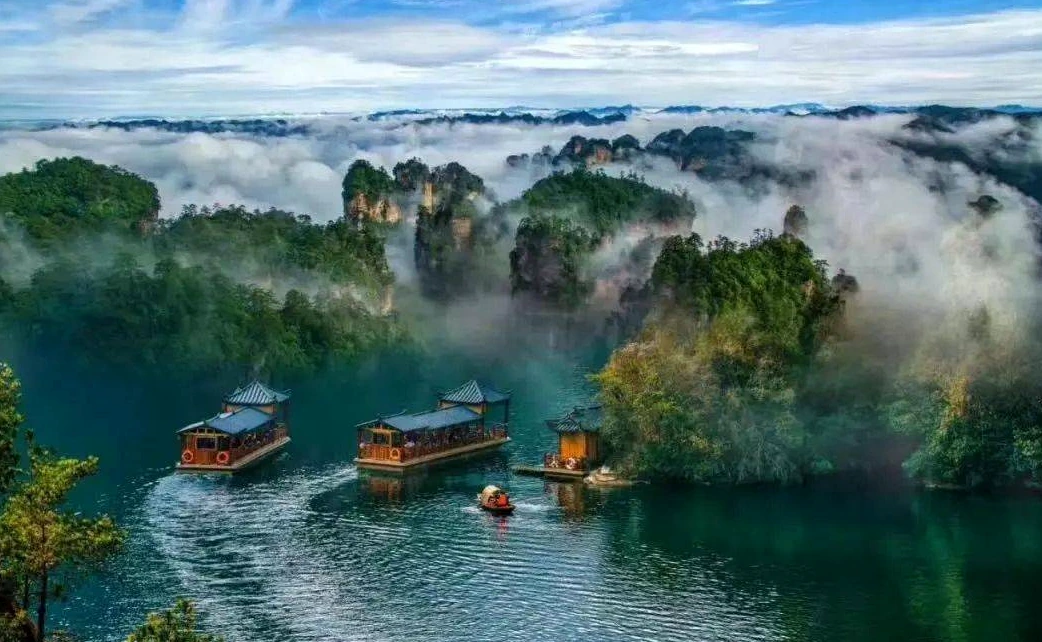
Boat rides deepen the mood as wooden vessels glide across dark water while clear voices singing Zhangjiajie folk tunes and river boat-rowing chants echo off cliffs. Carried naturally by canyon acoustics, unamplified singing resonates like gentle waves or wind through leaves, immersing listeners in local song traditions.
Lighting around the lake follows ecological restraint—aiming to highlight scenery without cluttering the night with exposed fixtures. Low-power LEDs and energy-saving projection keep fixtures tucked among rocks and trees, casting warm tones across ancient stone walls and cooler tones across rippling water to evoke a quiet highland night scene.
Evening visits to Baofeng Lake thus feel more contemplative than commercial. Riding a boat in cool mountain air, sipping local tea, and listening to traditional songs turns a night on the water into a memorable cultural and scenic experience in Zhangjiajie.
Nestled within Wulingyuan, the area around Baofeng Lake also preserves a distinctive western Hunan food culture. Tujia and Miao cooking blends mountain-forest ingredients with local wisdom around four signature notes: sour, spicy, smoked, and wild. For mountain communities here, dishes carry stories of history, highland survival, and family customs passed down across generations.
A standout Tujia specialty is *Sanxiaoguo* (“three-pot” or mixed dry-pot/stew), linked in local lore to Ming-era coastal defense campaigns when Tujia troops prepared for departure around New Year by tossing available meats—such as pork offal, beef, and ribs—with wild forest mushrooms into a wok with chilies and fermented bean paste, then simmering over charcoal. Today beside Baofeng Lake, a steaming pot of *Sanxiaoguo* offers a hearty taste of western Hunan.
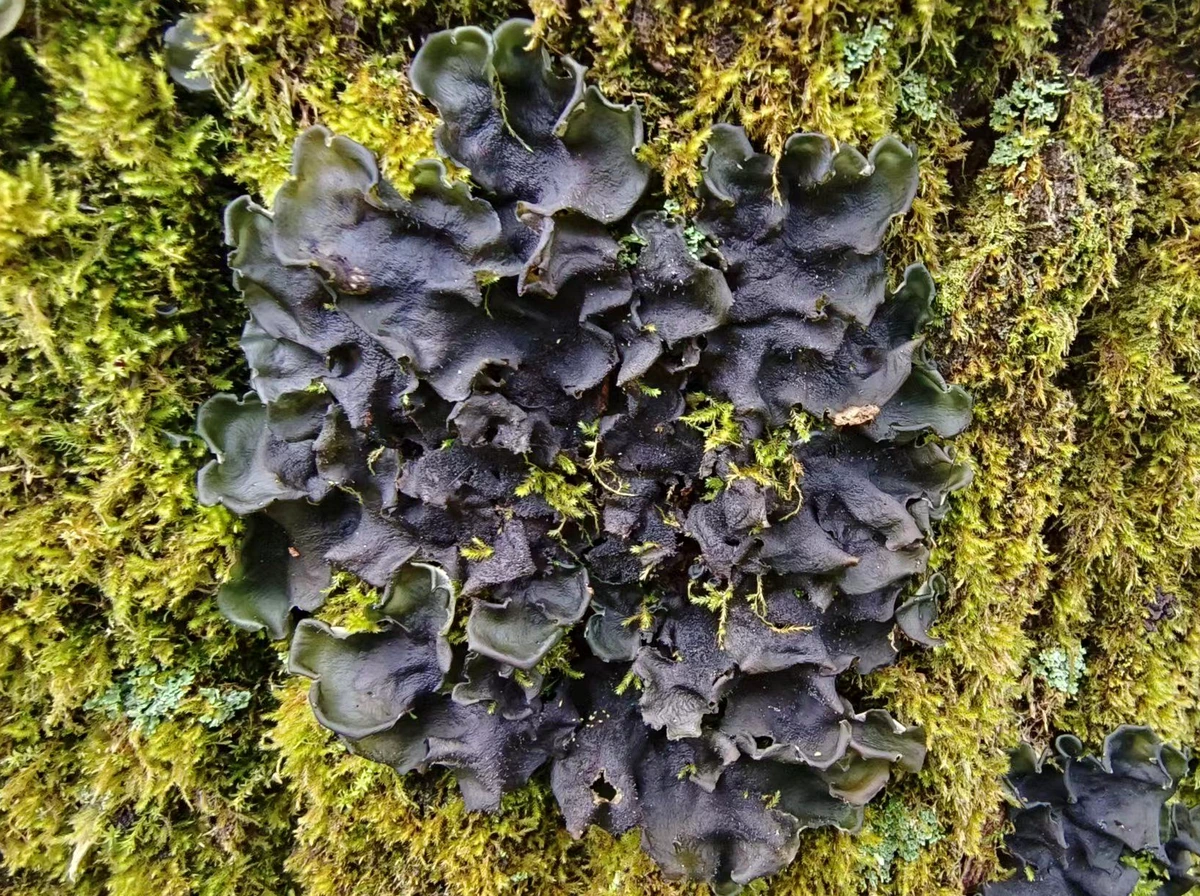
Refined mountain fare also pairs rock tripe (*yanshi* / *yanh’er*) with Zhangjiajie stream snails. Rock tripe is a rare lichen growing on damp, mist-shrouded quartz cliffs in Wulingyuan, harvested carefully from steep rock faces and simmered in soup with stream snails for a light, earthy broth. Meanwhile, Miao *Xueban* (duck-blood glutinous rice dish) showcases traditional craft—mixing fresh duck blood with glutinous rice, seasoning with local spices, and steaming or pan-frying into a chewy, savory specialty.
Alongside hearty mains, snacks around Baofeng Lake include *Hezha* (ground-soybean vegetable tofu) and *Shefan* (spring mugwort/herbal sticky rice). *Hezha* is made by grinding soybeans with greens and simmering into a comforting, rustic porridge/tofu dish, while *Shefan* blends sticky rice, diced cured/smoked pork, and wild mugwort steamed in wooden vessels for traditional spring observances—offering a warm taste of rural hospitality.
For planning a visit to Baofeng Lake, hours generally run from 07:30 AM to 05:30 PM daily, making morning or early-afternoon scheduling straightforward. Spring (April to June) brings post-rain mist drifting across peaks for poetic views, while autumn (September to November) offers crisp weather, clear skies, and colorful foliage reflected on calm water. Peak summer months (July–August) and the early-October Golden Week holiday can draw heavy domestic crowds and longer boat queues.
Getting there is convenient from regional transport hubs. From Zhangjiajie Hehua International Airport or Zhangjiajie West Railway Station, scheduled buses head toward Wulingyuan Town (Suoxi area), followed by a short shuttle or local taxi ride to the Baofeng Lake visitor entrance.
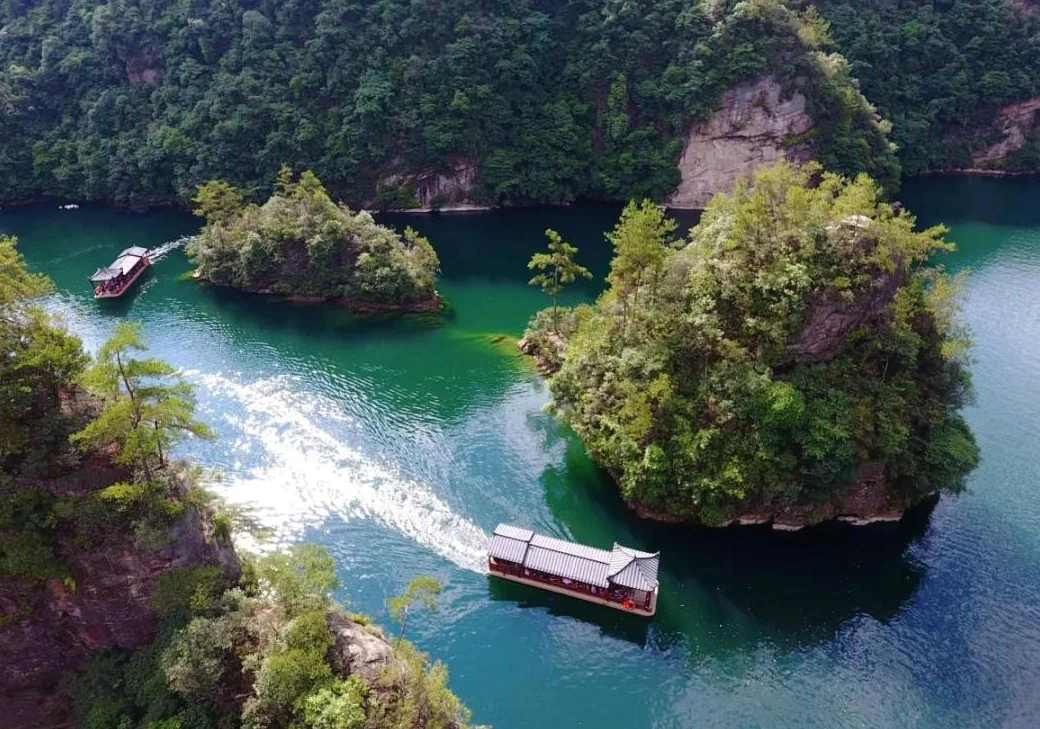
A typical 2-to-3-hour visit starts after ticket check with a park shuttle up the mountain road to the gate, followed by a scenic boat ride across the lake past features such as Baofeng Waterfall, welcoming rock formations, mirror-like cliffs, and “Golden Toad Holding Treasure” rock, before stopping at a small lake island for folk songs and returning to the pier.
During busy periods, advance online or WeChat booking with ID/passport details is often required under visitor-flow rules. Wear supportive, non-slip walking or hiking shoes for damp stone steps, and consider a compact raincoat rather than an umbrella on open boats so breezes do not catch it or block views for nearby passengers.
Finally, respect local Tujia customs when visiting nearby villages: avoid stepping on house thresholds—regarded in local tradition as sacred—and refrain from opening or moving household items without permission. For a smoothly coordinated trip connecting Zhangjiajie’s highlights and transport, browse all-inclusive China tour packages to plan your journey with ease.