Hon Dau Lighthouse is located on Hon Dau Island, a small island southeast of Hai Phong City in Do Son District. It is an appealing destination renowned as Vietnam’s oldest lighthouse—often regarded as a “jade eye” of the homeland for helping safeguard maritime sovereignty and guide vessels safely past the Bach Dang channel, a strategically important site in Vietnamese history. To reach the island, head to Nghien Pier and catch a boat to Hon Dau Island, with fares around 100,000 VND per person.
Architecture of Hon Dau Lighthouse
Hon Dau Lighthouse is a distinctive, attractive structure built by the French starting in 1892 and completed in 1898 as part of a South China Sea lighthouse network designed to guide ships through the historic Bach Dang channel.
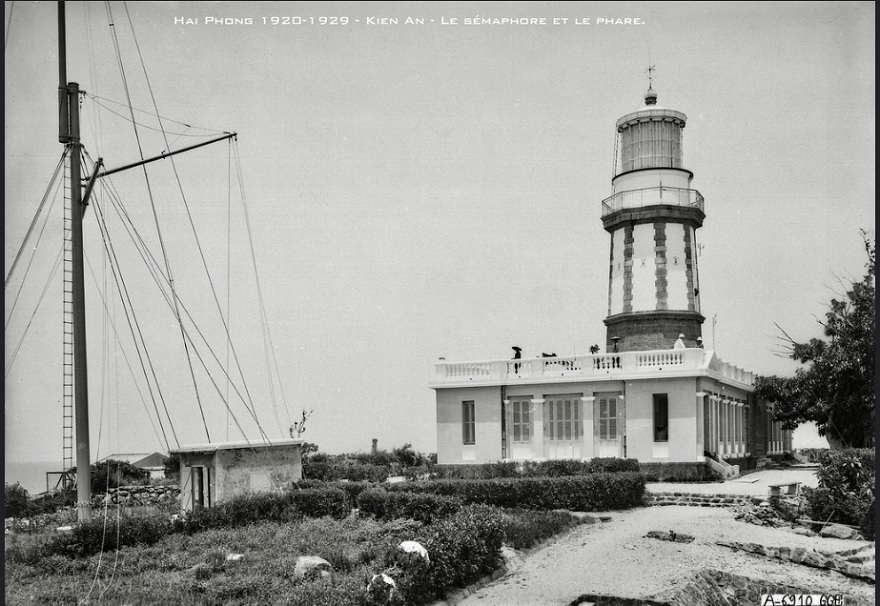
Original French-era design of Hon Dau Lighthouse
Originally, the tower was built of dressed stone blocks with decorative motifs, though it suffered heavy bomb damage during the American war before later restoration preserved much of its classical character.
Today, the lighthouse complex comprises a two-story display and service building alongside a five-story lamp tower designed in Neoclassical style—a European architectural tradition of the late eighteenth and early nineteenth centuries drawing on classical Greek and Roman forms for an elegant, balanced, and dignified presence.
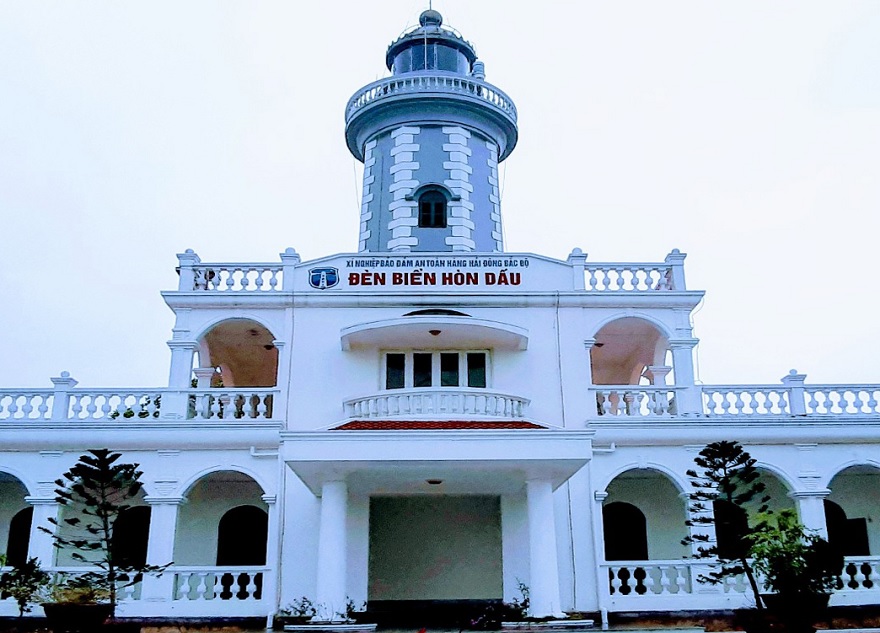
Hon Dau Lighthouse today
The two-story building covers roughly 200 m² in stone masonry with decorative carvings and serves as quarters and workspace for lighthouse staff. It features front and rear main doorways: a rectangular front entrance engraved with “ĐÈN BIỂN HÒN DẤU” framed by taller Greek-inspired columns, and an arched rear entrance inscribed “Phare de l’île de Hon Dau” (Hon Dau Island Lighthouse) in French framed by shorter Roman-style columns, topped by a square glass skylight admitting light and air.
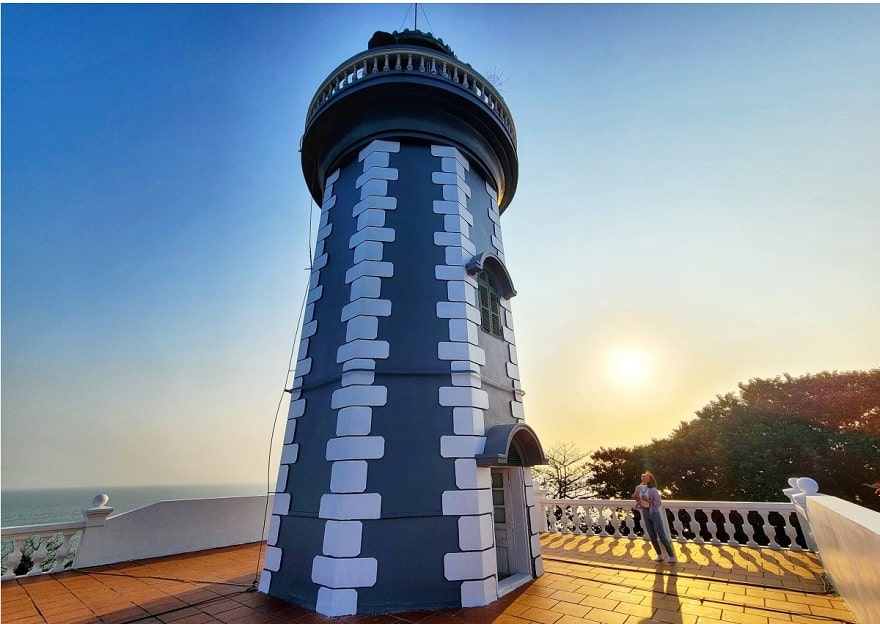
The lighthouse has a luminous range of 20.7 nautical miles (roughly 40 km) in clear weather, and visitors climb 125 spiral steps to reach the top
The five-story lamp tower is the most prominent feature of the lighthouse, rising 23 meters from ground level and 63.5 meters above sea level. Built of stone and cement in a tapering octagonal column painted light blue to stand out against sea and sky, it has five levels with small iron-framed rectangular observation windows and a spherical glass-enclosed beacon at the top—powered by oil or gas and able to shine up to 40 km with flashing, rotating, or steady signals.
Hon Dau Lighthouse Through Historical Eras
- French Colonial Era (1892–1945): Built with French architectural planning to guide vessels through the strategic Bach Dang channel in Vietnamese history, the Neoclassical lighthouse featured classical Greek and Roman motifs and columns, was managed by the French, and ranked among Vietnam’s finest structures of its time.
- Anti-French Resistance War (1945–1954): The lighthouse witnessed fierce conflict between Vietnamese forces and invading French troops; despite partial damage from shelling and bombing, it kept operating to support local operations as residents helped protect and repair it under difficult conditions.
- Anti-American Resistance Era (1955–1986): The lighthouse became a symbol of Vietnamese resilience and courage—enduring more than 100 air raids while continuing to guide vessels safely at sea, as lighthouse staff made sacrifices to defend it and locals built underground shelters, gun positions, unnumbered ships, and coastal defenses.
- Post-War Era (1986–Present): Rebuilt upon its original foundation and architecture to preserve national historical and cultural heritage, the lighthouse received modern equipment such as electric lamps, generators, and batteries under the management of the Border Guard and Vietnam Lighthouse Center, welcoming domestic and international visitors today.
Attractions Near the Lighthouse
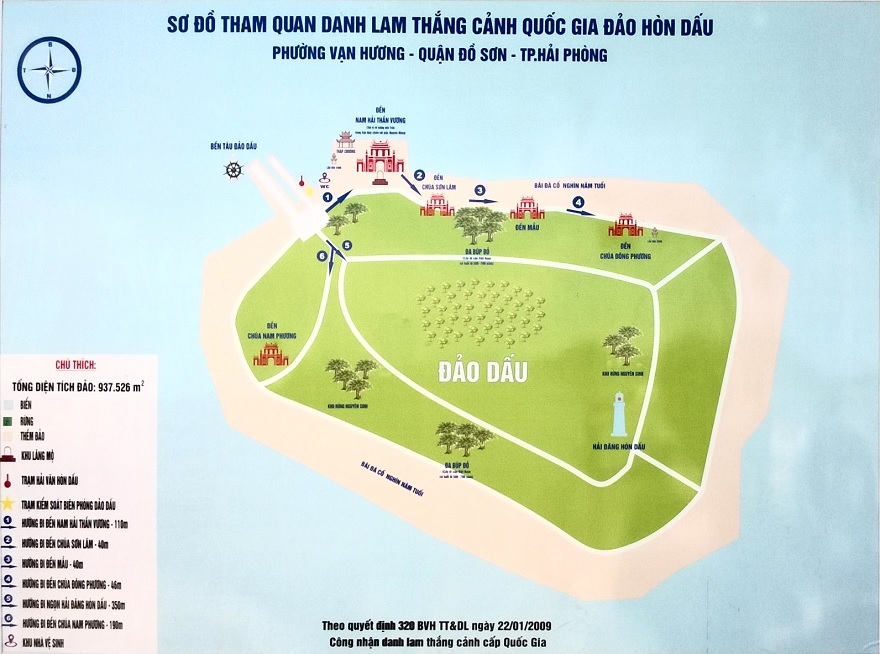
Map of tourist attractions on Hon Dau Island
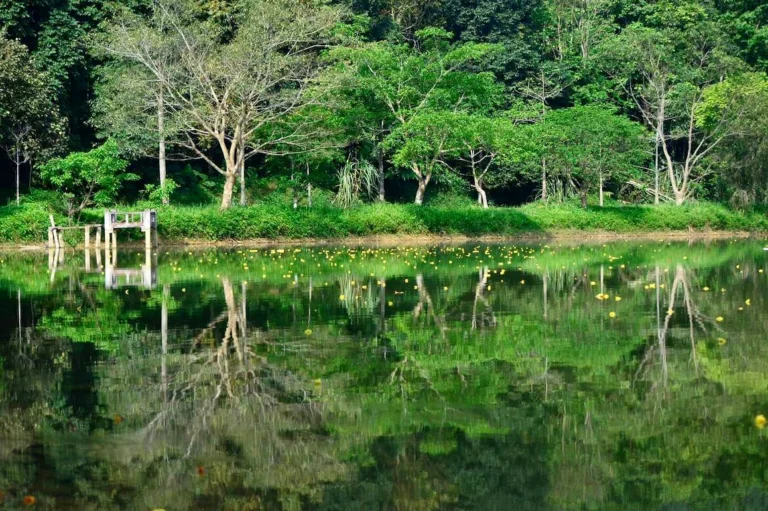
- Exploring the Primeval Forest: One of Hon Dau’s top draws, offering ancient banyan trees, rare plants and wildlife, rocky outcrops, and caves alongside hiking, picnics, and photos in a quiet, fresh natural setting.
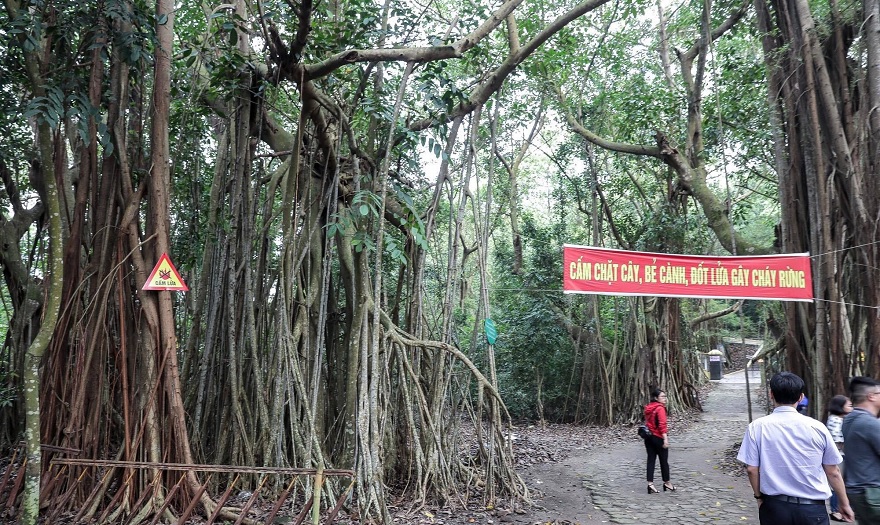
Primeval forest on Hon Dau Island
- Nam Hai Than Vuong Temple: An ancient temple honoring Nam Hai Than Vuong (Nam Hai Dai Than Vuong)—a distinguished Tran-dynasty commander who fell in the 1288 naval battle against Yuan–Mongol forces on the Bach Dang River—built in traditional Vietnamese architectural style with halls, gates, pillars, and fine carvings.
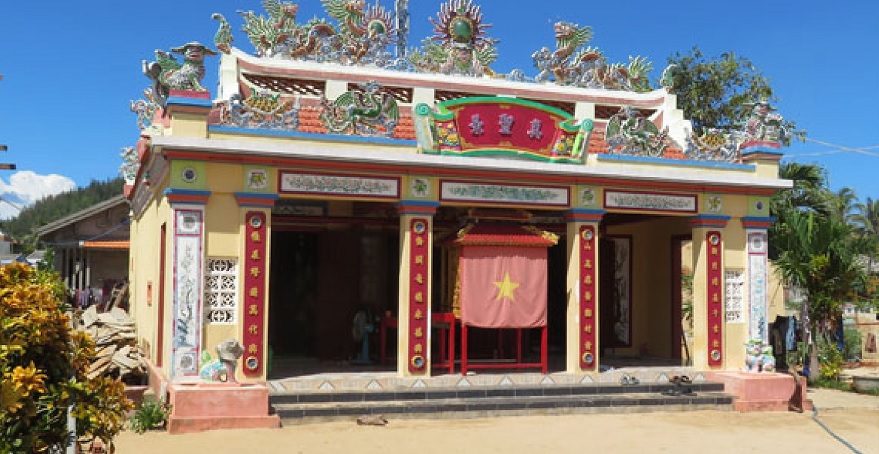
Temple of Nam Hai Than Vuong
- Hon Dau Tourist Area: A great spot for families with young children visiting Hai Phong, featuring two man-made and natural beaches, Vong Canh Hill, entertainment zones, a resort, and friendly animals such as deer and rabbits for memorable outings.
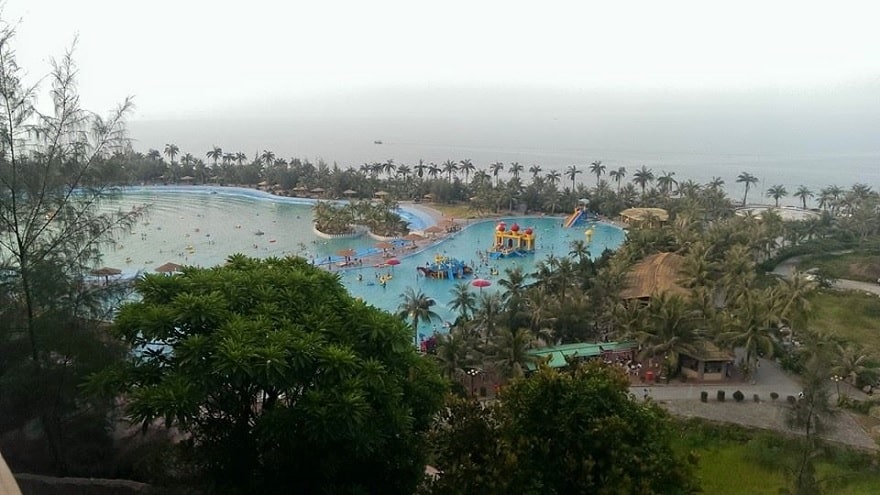
Hon Dau Tourist Area