Quietly nestled amidst the winding Nanming River that embraces the heart of Guiyang city, Jiaxiu Pavilion stands like a serene jade lotus, casting its reflection upon the tranquil waters for over four centuries of history. The name “Jiaxiu” originates from a profound aspiration for a land of spiritual excellence and outstanding talent, a place to nurture and gather the most brilliant minds in the realm (“jiaxiu” implying the gathering of top scholars). Throughout the cultural evolution of Guizhou province, this ancient structure has been more than just a pavilion for admiring the picturesque landscape; it has long established itself as an immutable spiritual landmark, a persistent witness to history that has watched the once-wild mountain region transform into a vibrant, prosperous metropolis.
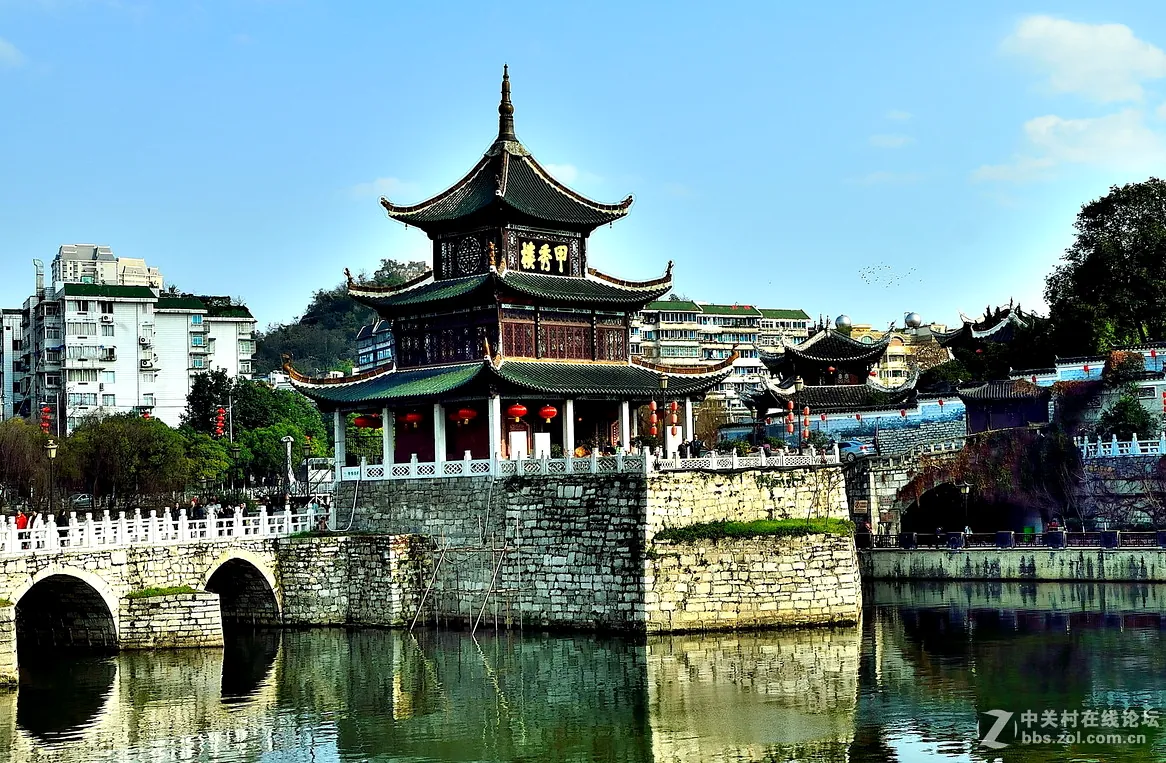
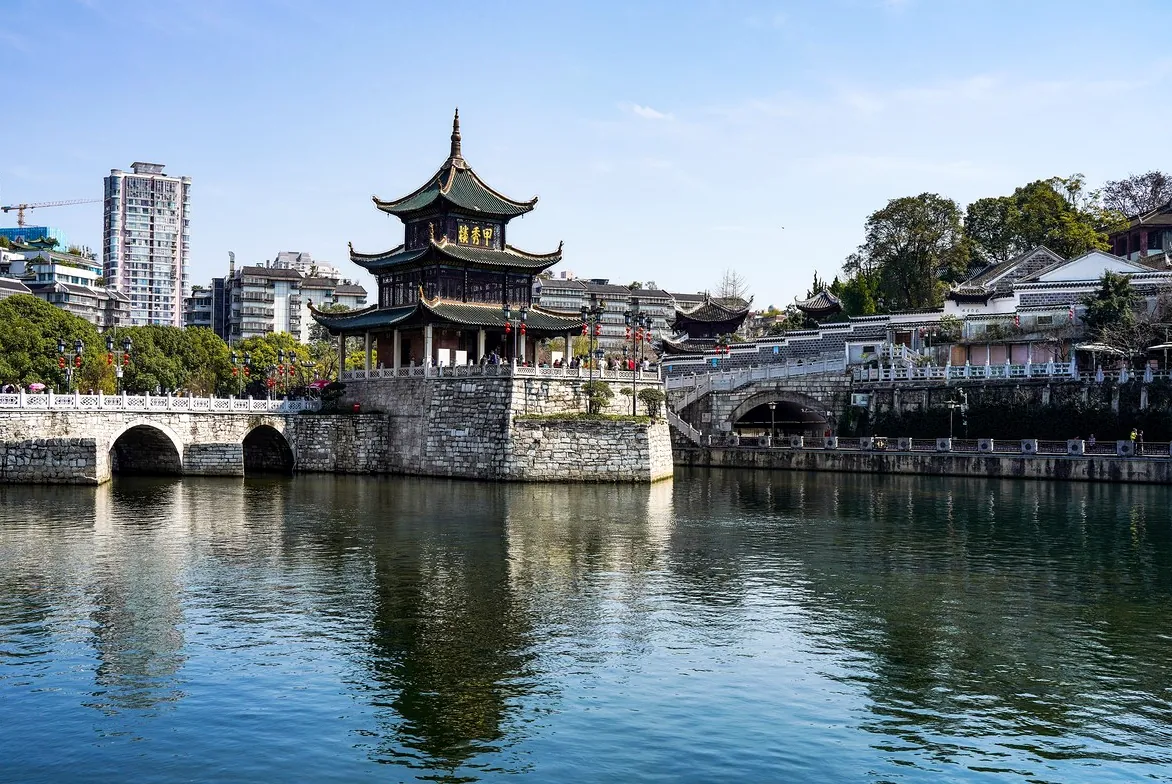
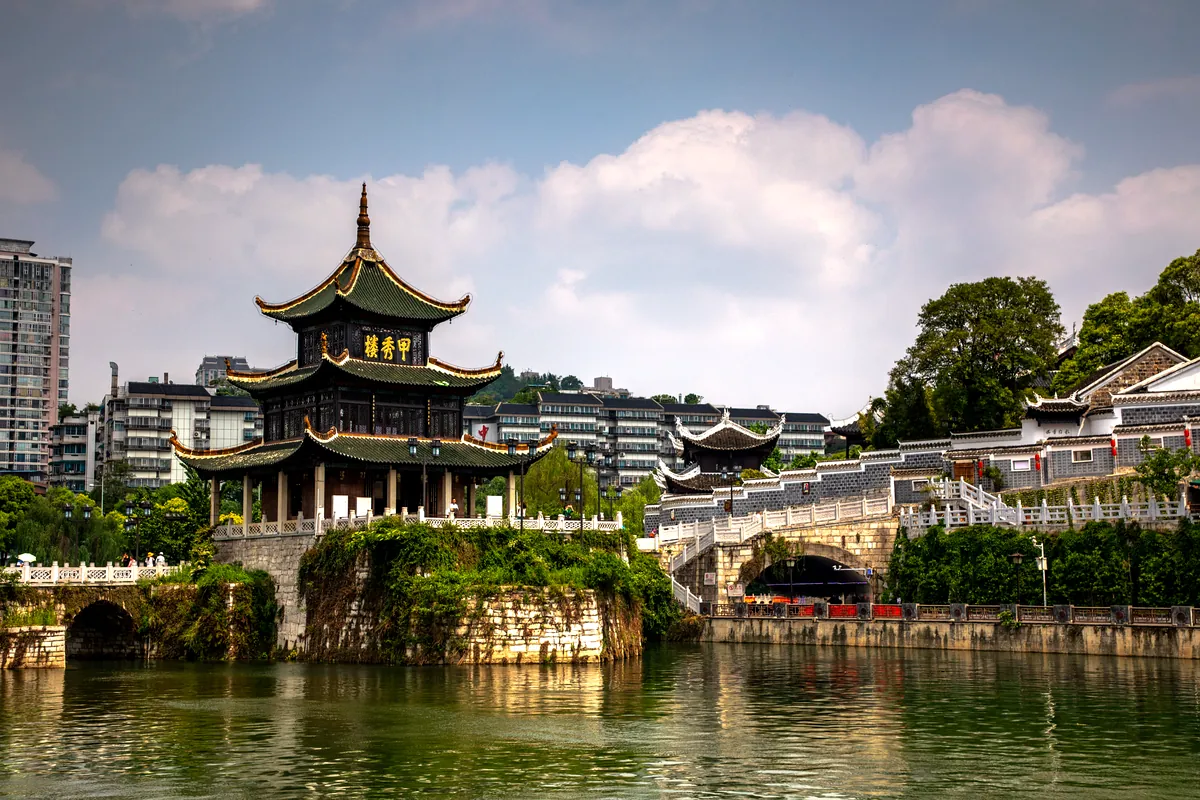
Admiring the ancient pavilion from either bank of the Nanming River, visitors are easily captivated by its majestic yet graceful silhouette, standing firmly on a massive rock known as the Ju’ao Stone. The three-story pagoda rises proudly with a unique three-eave, four-corner structure; its curved eaves, intricately carved with exquisite patterns, seem ready to take flight, blending with the deep blue glazed tiles and the time-worn, vermilion-painted wooden pillars. The twelve-arch Fuyu Stone Bridge spans the clear water, leading directly to the base of the tower, creating a classic ink-wash painting composition that reflects its ancient image shimmering in the river, standing poetically apart from the modern high-rises on the horizon.
Turning the pages of the local chronicles of the ancient Yelang land, the origin of Jiaxiu Pavilion was officially established in 1598, the twenty-sixth year of the Wanli reign under the Ming Emperor Shenzong. At that time, the Governor of Guizhou, Jiang Dongzhi, an upright official with a visionary cultural perspective, oversaw the construction of a dam and chose the massive rock in the middle of the river to build this feng shui pavilion. Jiang Dongzhi recognized that Guizhou was then considered a remote, rugged frontier plagued by harsh conditions, where local scholars faced many disadvantages and rarely achieved success in the imperial examinations. The decision to build Jiaxiu Pavilion was intended to revitalize the literary spirit, channel the natural energy of the land, and embody a burning aspiration for the academic prosperity of future generations in the Qian-Long region.
However, the fate of this historical structure has never been detached from the turbulent shifts of the times. Having endured over four hundred years of rain, wind, and the smoke of war, Jiaxiu Pavilion has undergone a total of six major renovations to maintain its original form, most notably during the Qing Dynasty and the Republican era. Under the Kangxi reign, the tower suffered heavy damage before being restored by successive governors like Tian Wen, who raised funds to renovate the entire wooden structure and added the Hanbi Pavilion to complete the riverside garden complex. Entering the Republican era, facing the pressures of time and social upheaval, the structure underwent further reinforcement of its stone foundation and replacement of decayed components, all while strictly preserving the original Ming-Qing architectural style.
Within the historical urban planning of Guiyang, Jiaxiu Pavilion serves as a spatial anchor and a core cultural coordinate. The presence of the tower on the Nanming River has defined the expansion and development of the surrounding ancient city districts for centuries. It is not only a proud symbol of Guizhou’s intellectuals of the past, evidenced by the exquisite literary inscriptions and poetry carved into the wooden walls, but it also continues to be a living heritage heart, connecting the glorious past with the ceaseless development of this land.
Like a jade gem guarding the urban artery, Jiaxiu Pavilion sits atop the massive rock known as the Ao Ji Stone in the middle of the flowing Nanming River. In traditional East Asian feng shui, the “central pillar” position—a stone column standing firm against the rushing current—symbolizes ultimate steadfastness and the ability to transform turbulent energy into pure vitality. Guiyang was once a land of rugged mountains where energy could easily dissipate into deep valleys; for this reason, the presence of the giant Ao Ji rock rising from the calm water, resembling a divine turtle carrying the tower, creates a powerful “Ao head standing alone” formation, implying that this place would soon produce brilliant scholars who would achieve the highest honors in imperial exams, bringing glory to the entire southern region.
As the sunset casts a brilliant golden-orange glow over Guiyang, Jiaxiu Pavilion appears enchanting, like a transcendent spiritual oasis amidst the gentle Nanming River. The three-story curved-roof tower is illuminated by hundreds of shimmering lights, casting a magnificent reflection upon the sparkling, rippling water, engaging in a graceful dialogue with the bustling life of the skyscrapers in the background. The highlight connecting the real world to this ethereal realm is the ancient Fuyu stone bridge with its nine charming arches, stretching out like a white silk ribbon across the water, rhythmically connecting the footsteps of travelers from the lively southern bank to the mossy, ancient courtyard of this legendary pavilion.
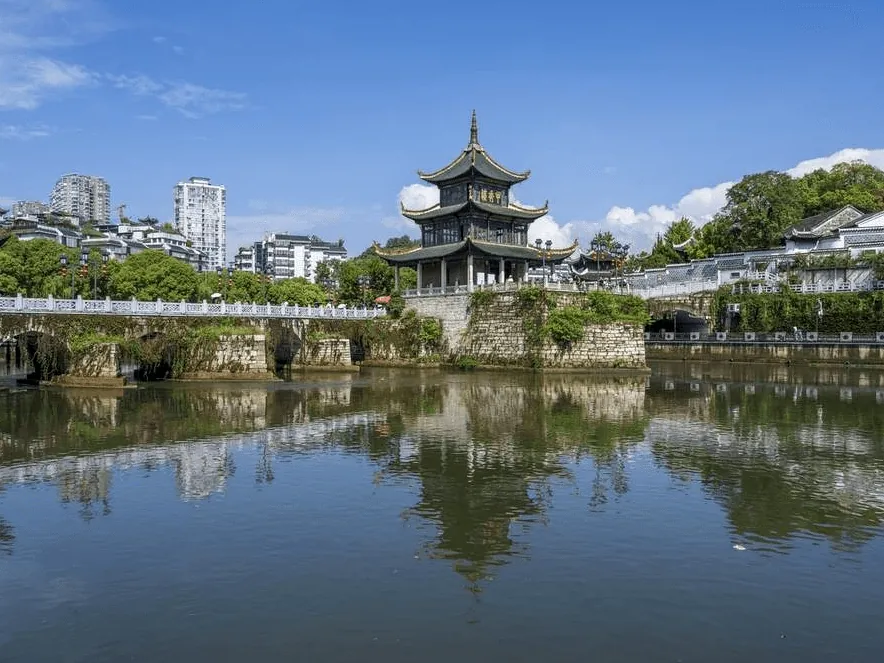
In terms of overall landscape planning, Jiaxiu Pavilion does not stand alone as an isolated structure but serves as the central link in a perfect harmony of water and wood. The Fuyu Stone Bridge, stretching over ninety meters across the water, acts as a natural screen, both slowing the swift currents during the rainy season and preserving the vital energy for the entire downstream area. On the bridge, the tranquil Tingtao Pavilion and Hanbi Pavilion form two poetic resting spots, guiding the visitor’s gaze rhythmically before they admire the elegant tower rising over twenty meters high. The interplay between natural boulders and human craftsmanship has effectively neutralized the hazards of the waterway, turning this place into a renowned site for gathering water and concealing wind, fully concentrating both pure energy and prosperity for the entire Guizhou region.
Legend has it that during the Wanli era of the Ming Dynasty, the then-Governor of Guizhou, Jiang Dongzhi, while personally surveying the terrain along the Nanming River, noticed that this massive rock formation resembled a divine turtle stretching its neck to drink water. He concluded that if a high-rise literary pavilion were built at this pivotal location, the sacred energy of the Qianzhong mountains and rivers would be captured rather than flowing away with the water, thereby activating the local academic and scholarly fortunes that were then still obscure. Through hundreds of years of sun, rain, and fierce floods, the Ao Ji rock has remained as steady as a foundation, supporting the entire weight of the ironwood columns and glazed tiles, proving the ancestors’ profound understanding of hydrogeology by skillfully turning a natural obstacle into an enduring pedestal for a century-old wonder.
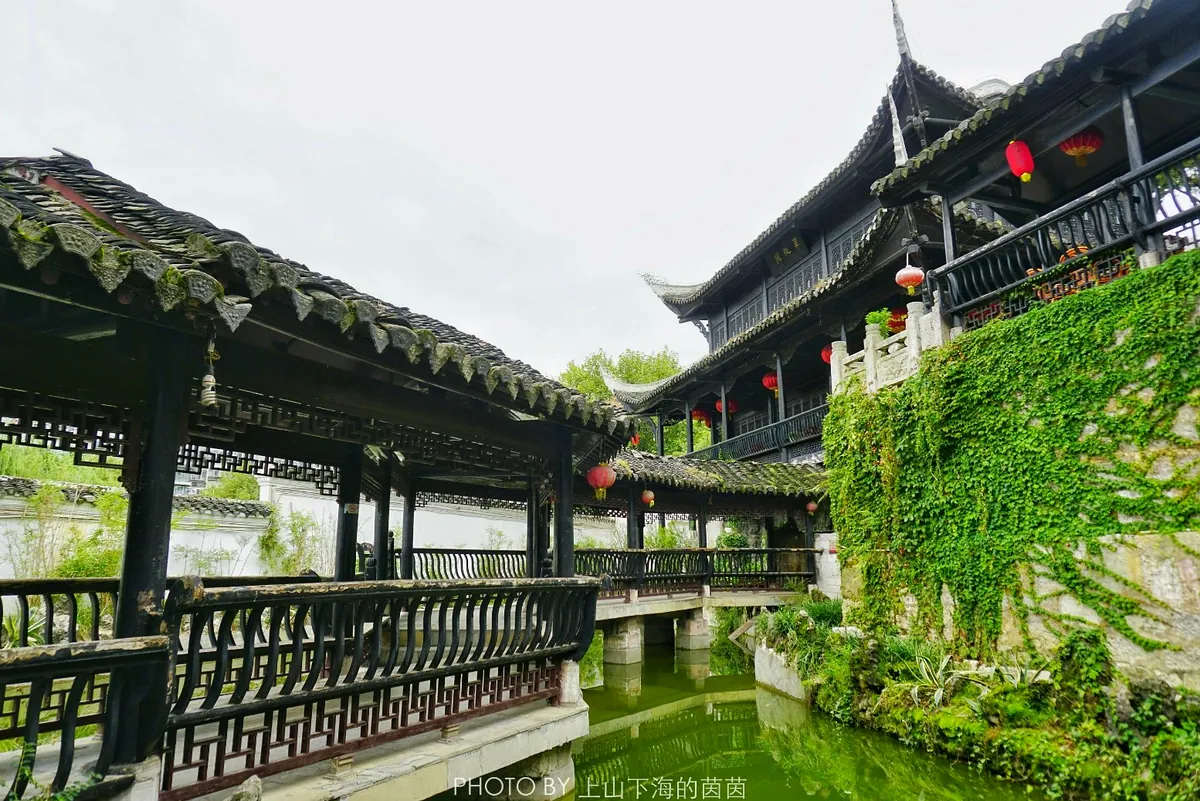
The space surrounding Jiaxiu Pavilion is further enveloped by graceful weeping willows and rows of ancient trees providing cool shade, painting a poetic landscape picture in the heart of a modern city. The Nanming River, like a jade silk ribbon, winds around the base of the tower, carrying a cool, moist breeze into every corner of the red-lacquered wooden corridors. Standing on the top floor looking out in all directions, visitors can easily feel the striking yet harmonious contrast between the profound, otherworldly nature of the ancient architecture and the bustling contemporary rhythm on both banks, affirming Jiaxiu Pavilion’s position as a green cultural heart that endures through time.
Standing majestically on the Ju’ao rock in the middle of the winding Nanming River, Jiaxiu Pavilion appears as a masterpiece of woodwork rising straight into the blue sky with a standard height of 22.9 meters. The structure features a unique three-story, three-eave design, covered with elegant blue-green glazed tiles, with four corners of the roof curving upward like the wings of an eagle catching the winds of the Qianzhong wilderness. The octagonal pavilion is supported by a system of 12 solemn white granite columns on the ground floor, combined with surrounding corridors intricately carved with dragon and cloud patterns. Viewing the panorama, the ancient wooden tower reflects on the crystal-clear water, connecting to the North bank via the nine-arched Fuyu Stone Bridge, creating a poetic landscape composition deeply imbued with the auspicious feng shui of the Guiyang region.
Delving into the architectural structure, Jiaxiu Pavilion is the pinnacle of traditional Chinese wooden construction technology, where the use of metal is completely eliminated. The entire massive weight of the three floors is distributed rhythmically through a system of load-bearing beams and tightly fitted mortise-and-tenon joints, without the use of a single iron nail. Ancient artisans selected precious thousand-year-old timber from the deep forests of Guizhou, subjecting it to a rigorous process of soaking, natural drying, and anti-termite treatment before carving. The miraculous interlocking of the layered dougong brackets under each eave not only supports the wide reach of the roof to shield the wooden details from rain and sun but also creates perfect elasticity, helping the pavilion stand resiliently through hundreds of years of seismic activity and harsh storms.
The interior of the pavilion is a living museum of poetry and calligraphy, a gathering place for the scholarly elite of Qiannan. Stepping across the threshold of the first floor, the visitor’s gaze is immediately drawn to the most valuable artistic highlight of the structure: a 206-character long couplet penned by the famous scholar Liu Yushan during the Qing Dynasty. This literary masterpiece is meticulously carved on precious wood, divided into two perfectly balanced parts in terms of tone and meaning, surpassing the famous 180-character couplet by Sun Ranweng at Daguan Pavilion by Dianchi Lake to become a renowned literary rival throughout the southwest. Each stroke of the calligraphy not only depicts the majestic mountains and rivers of Guizhou but also embodies profound ambitions for governing the country and bringing peace to the people.
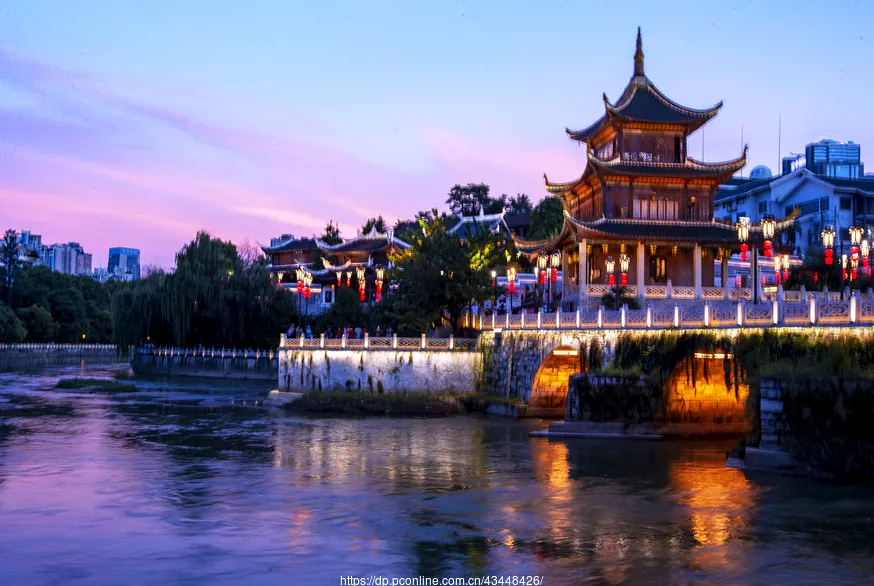
Beyond the majestic main pavilion, the entire complex extends and connects seamlessly with the adjacent Cuiwei Garden, creating a vast landscape garden spanning thousands of square meters. It blends the Jiangnan garden style with the raw, indigenous charm of the region. The combination of towering pavilions, the Fuyu Stone Bridge spanning the rushing water, and ancient structures like the Hanbi Pavilion nestled beside weeping willows creates a constantly shifting spatial rhythm. Meticulous investment in preservation across historical dynasties has transformed Jiaxiu Pavilion from a mere symbol of imperial examinations into an exemplary wooden architectural heritage site, converging unparalleled physical value with profound cultural depth.
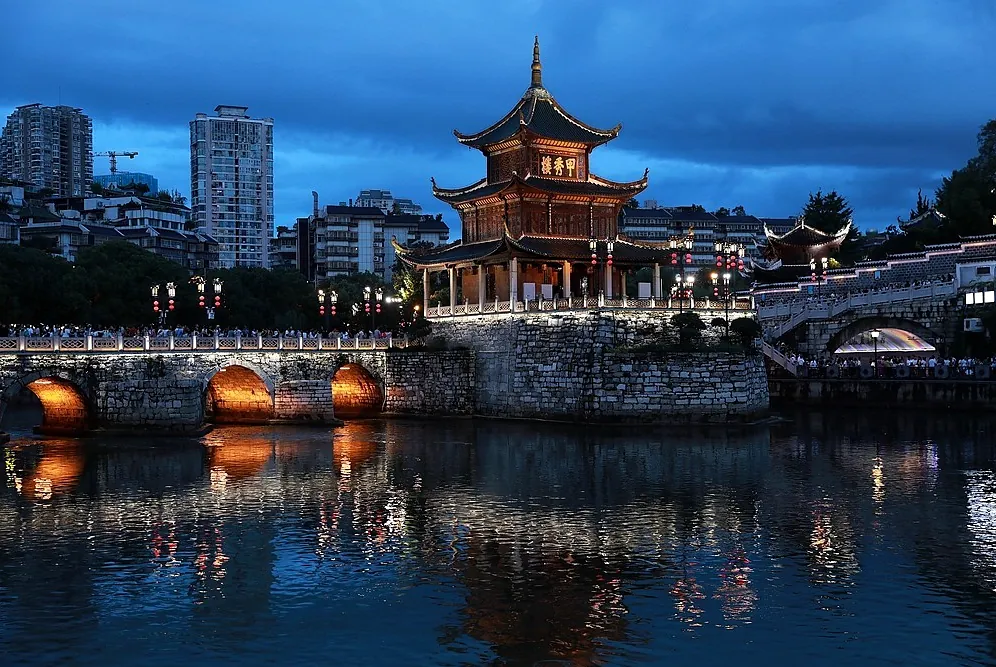
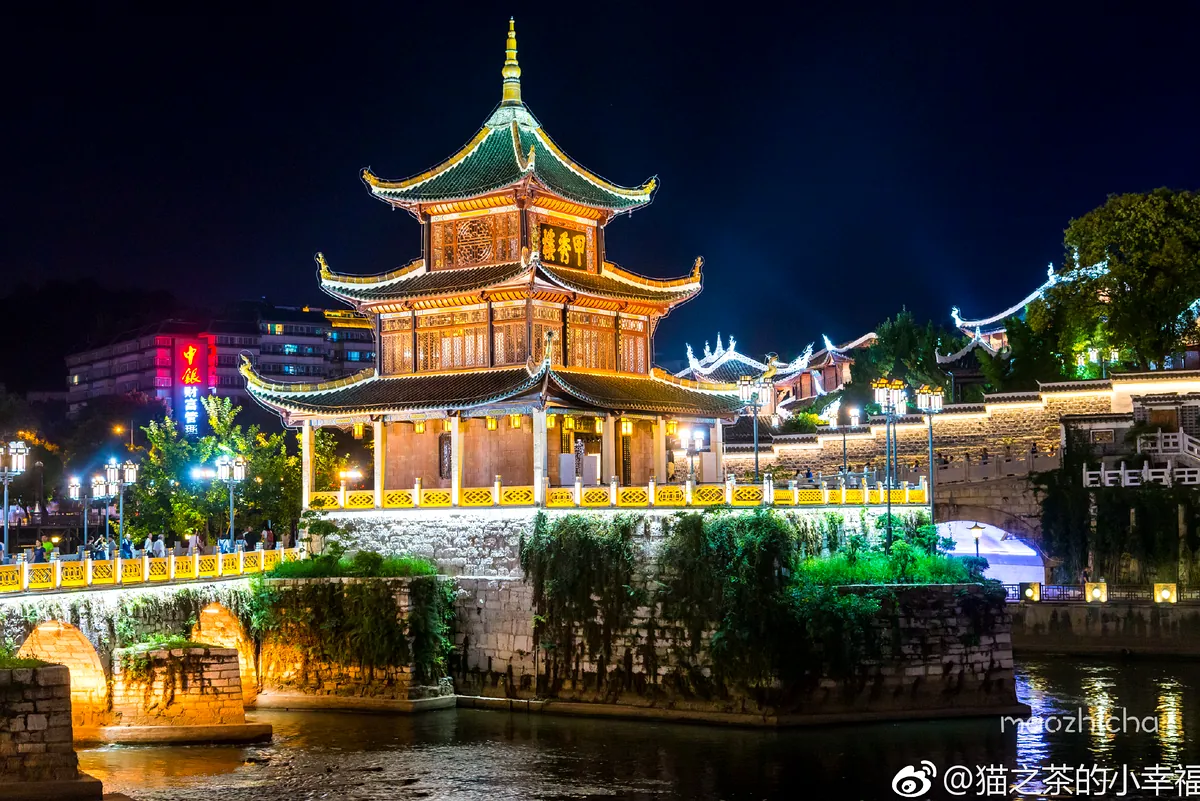
As night falls and embraces the Guiyang basin, Jiaxiu Pavilion glows brilliantly like an ancient gem floating amidst the Nanming River. Each of the three-story, four-cornered curved roofs is outlined with warm golden light, highlighting the solemn yet elegant architectural lines of the Ming and Qing dynasties. At the foot of the tower, the Fuyu Stone Bridge with its arched spans curves over the dark water, casting a shimmering, ethereal reflection alongside the lush greenery on both banks. The entire complex appears like a multi-colored ink wash painting, where modern lighting technology perfectly honors the ancient, tranquil beauty of this four-hundred-year-old historical site.
The artistic lighting system at Jiaxiu Pavilion is sophisticatedly designed according to traditional Eastern visual language, using gold and amber tones as the primary palette to highlight its status as the premier scenic spot in Qianzhong. Light from recessed LED strips is cleverly cast upward onto the eaves, balustrades carved with cloud and fire patterns, and sturdy fir wood columns, etching the depth of the multi-layered space against the silent darkness. The calm surface of the Nanming River acts as a giant mirror, doubling the stature of the twenty-meter-tall pavilion and the ninety-meter-long Fuyu Bridge. Every ripple caused by the highland night breeze shatters and then reforms the golden light, blending with the small silhouette of Hanbi Pavilion at the bridge’s end, creating a mesmerizing scene amidst the rhythm of contemporary urban life.
Nightfall also marks the most poetic cultural dimension of the Guiyang land. The daytime tranquility around the tower gives way to the elegant lifestyle of local residents and travelers from afar. Along the white granite railings of Fuyu Bridge and the banks of the Nanming River, people stroll leisurely under weeping willows swaying in the cool night breeze. From the riverside teahouses, the melodious tunes of the guzheng and erhu mingle with the hum of conversation. Many travelers choose a table on the pavilion veranda, ordering a pot of the famous Qian Maofeng tea to savor the deep, bitter-sweet notes of young mountain tea leaves while admiring the magnificent tower reflected in the rushing water.
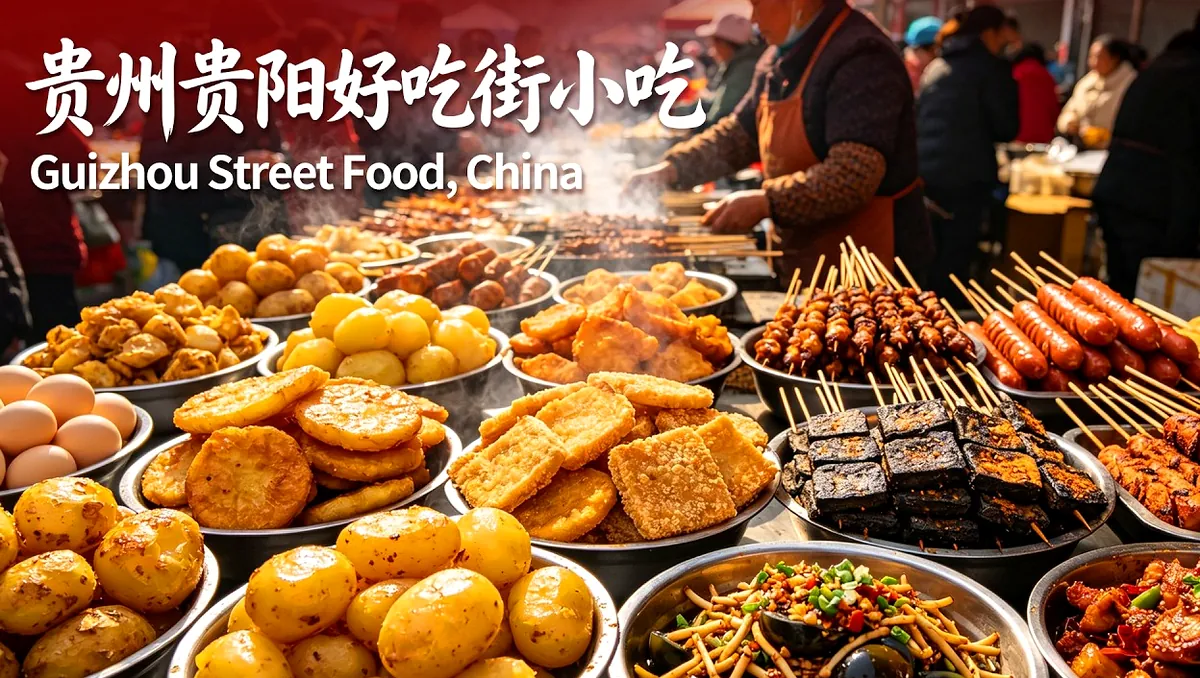
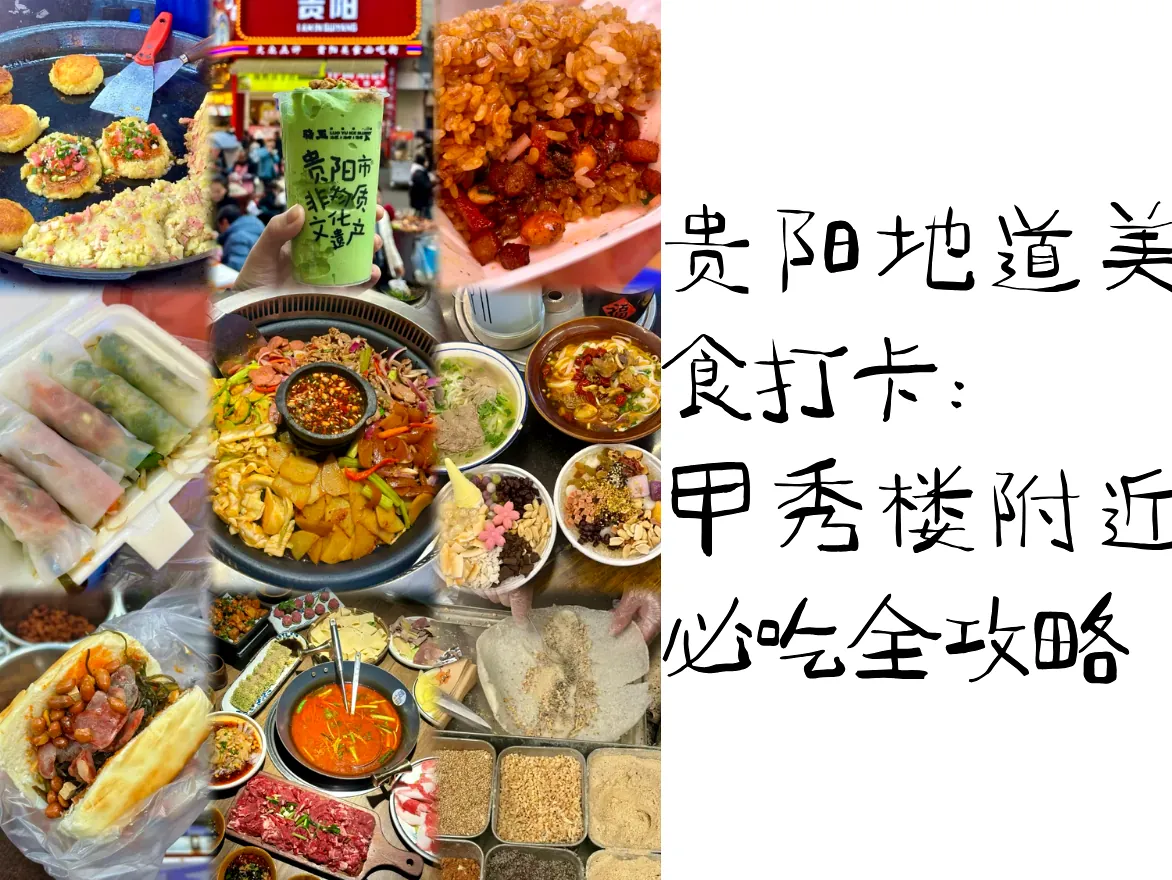
The charm of a night at Jiaxiu Pavilion is also woven by the rich street food flavors that permeate the nearby blue-stone paved alleys. The savory aroma of “Love Tofu” grilled over charcoal, stuffed with spicy chili powder, minced ginger, and herbs, blends with the steaming smoke of bowls of spicy beef noodles that warm the belly in the chilly weather. While enjoying the bold local flavors and listening to the Nanming River lapping against the Ao Ji Rock—the resilient thousand-year-old foundation of the tower—visitors can easily feel the perfect harmony between the solidified historical spirit and the endless daily life of the Guizhou region.
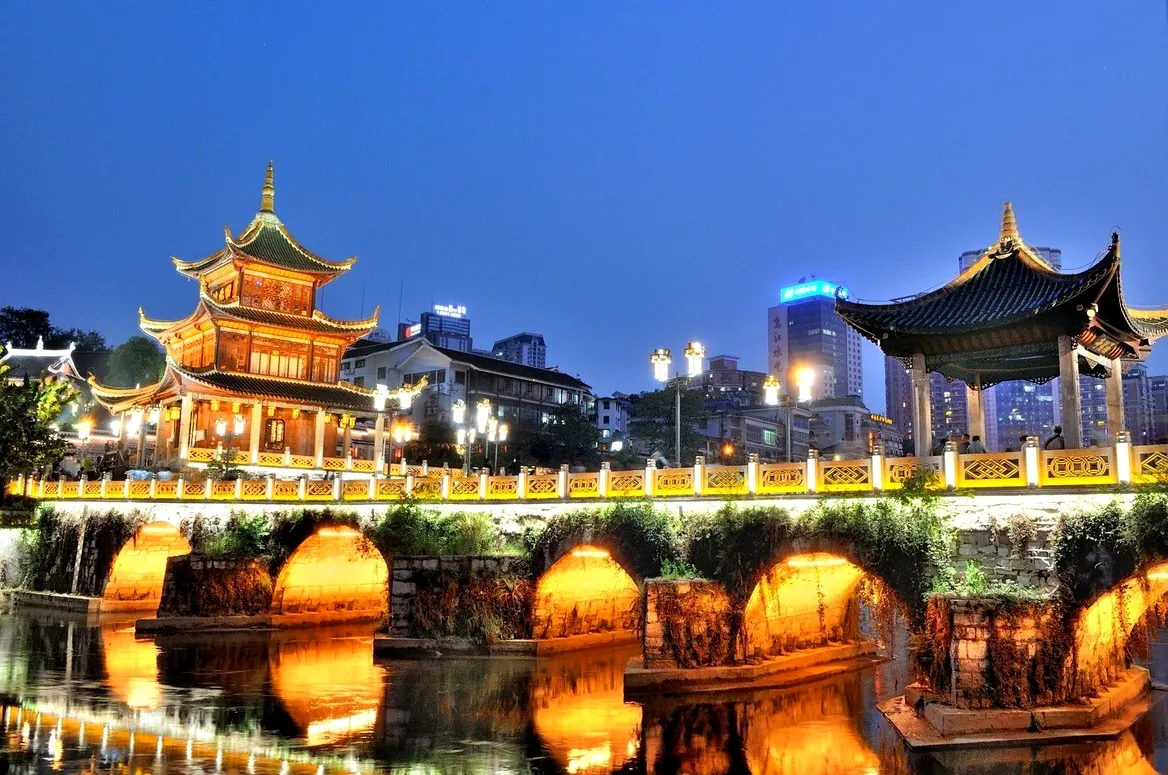
As night falls over the Nanming River, the Jiaxiu Pavilion complex appears like a magnificent, golden-drenched natural scene in the heart of the ancient city. The central highlight is the sturdy, multi-arched Fuyu Stone Bridge spanning the blue water, guiding the viewer’s gaze from the proud three-story curved-roof tower on the left bank to the charming Hanbi Pavilion nestled on the right. The entire traditional wooden architectural system is illuminated by warm golden lights, casting ethereal reflections on the rippling river, opening up a nostalgic, tranquil space that blends with the rich night culinary flavors of Guiyang.
Guizhou cuisine has long been associated with the famous proverb: “Without sourness for three days, one’s steps will falter,” which perfectly reflects the unique culinary philosophy of this cloudy, humid highland region. Unlike the numbing, intense spiciness of neighboring Sichuan or the lightness of the Jiangnan region, the culinary culture around Jiaxiu Pavilion bears the distinct mark of a fusion between the thousand-year-old customs of the Miao, Buyi, and local Han people. Here, sour and spicy flavors do not just stimulate the palate; they are an art of traditional food preservation, creating a flavor map that is simultaneously wild, rustic, and enchantingly sophisticated.
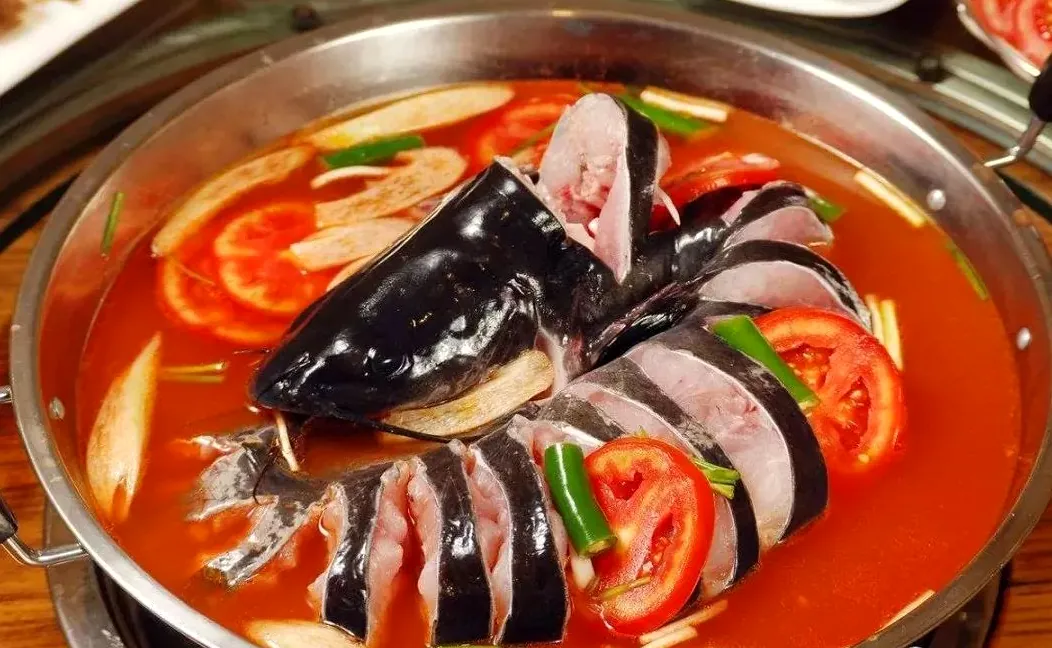
Topping the list of Guizhou’s culinary delights is undoubtedly the sour and spicy fish, also known as “suantang yu,” a legendary gastronomic heritage of the Miao people in Southeast Guizhou. The soul of this steaming hotpot lies in its vibrant red sour broth, naturally fermented for months in large earthenware jars using wild tomatoes gathered from rocky cliffs and local red chilies. Once the broth reaches a rolling boil, the chef adds fresh river carp or catfish, along with a drop of Litsea cubeba essential oil—extracted from wild mountain pepper seeds—which releases a refreshing, characteristic aroma reminiscent of lemongrass and lemon peel. The delicate, non-sharp acidity blends perfectly with the sweet, fatty fish meat and the pungent kick of fermented chilies, leaving diners longing for more after just one taste.
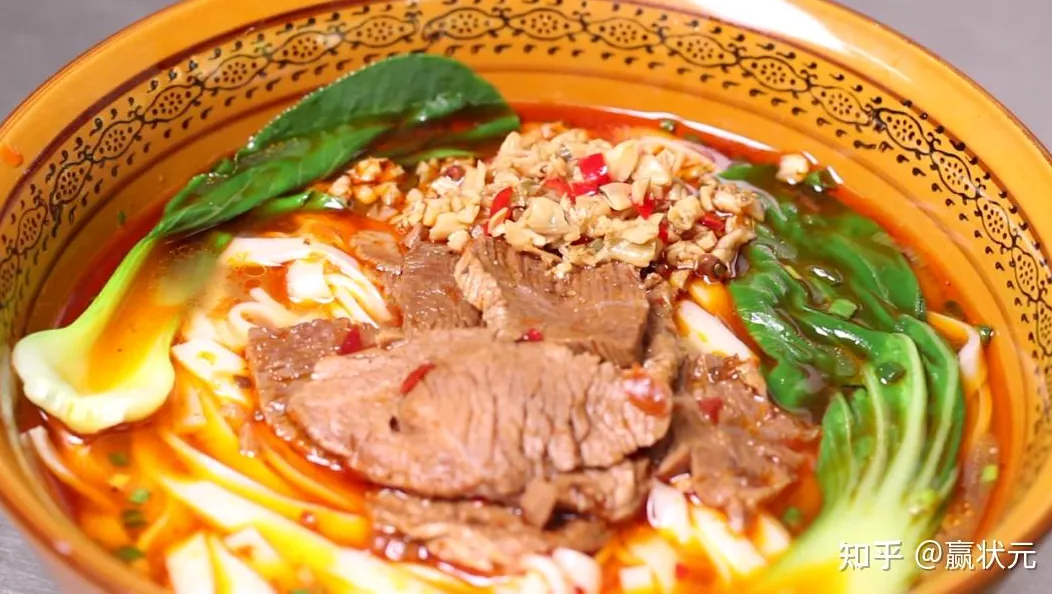
Beyond the wild flavors of suantang yu, Huaxi beef noodles represent the daily rhythm of life and are celebrated as the national breakfast dish of the region. Originating from the outskirts of the scenic Huaxi area, this dish captivates hearts with its crystal-clear yet deeply flavorful broth, simmered for over a dozen hours with highland yellow beef bones and more than ten secret traditional medicinal herbs such as star anise, black cardamom, sand ginger, and cinnamon bark. The round, chewy rice noodles are blanched until piping hot and topped with chunks of savory braised beef, thin slices of beef brisket, crunchy pickled cabbage, and a spoonful of crispy, spicy roasted chili powder, creating a perfect balance of light sweetness, richness, and a warming, spicy finish.
Late-night dining around the ancient alleys adjacent to Jiaxiu Pavilion is synonymous with the experience of charcoal-grilled Guiyang stinky tofu. These square pieces of tofu, fermented using a traditional family method, puff up when placed on the glowing charcoal grill; the outer layer becomes golden and crispy, while the inside remains soft, airy, and creamy. The essence of the dish lies in the unique dipping sauce, a blend of pungent fermented bean curd chili, coarsely ground dried chili powder, finely chopped fresh fish mint, and fragrant sesame oil. Taking a bite of the crispy tofu dipped in this rich sauce while the cool breeze blows in from the Nanming River, diners can clearly feel the depth of the simple yet captivating culinary culture of this thousand-year-old landmark.
Standing on the banks of the Nanming River as sunset falls, the entire Jiaxiu Pavilion appears like a vivid ink wash painting, with its elegant three-story, three-eave architecture rising amidst the emerald waters. The nine-arched Fuyu Bridge, soft as a white silk ribbon draped across the river, guides travelers past the solemn Hanbi Pavilion before reaching the base of the majestic ancient tower. As night falls, the artistic lighting system illuminates the curved roof tiles, casting shimmering reflections on the water and highlighting the magical contrast between a centuries-old historical monument and the glamorous urban life on the Guiyang horizon.

To fully enjoy the beauty of this premier landmark in Central Guizhou, the period from April to October each year is considered ideal. Guiyang is known as the “Forest City” due to its high forest coverage and mild highland subtropical climate, with average summer temperatures hovering between 23 and 25 degrees Celsius, making it a perfect summer escape. The grounds of Jiaxiu Pavilion and Cuiwei Garden are open for interior tours from 08:30 to 18:00 daily, while the stone Fuyu Bridge and the riverside promenade are always open to the public. International visitors should carry their original passports to scan for identification or register cultural quarantine information at the entrance gate, although admission to this site is completely free for all visitors.
Modern transportation infrastructure makes reaching Jiaxiu Pavilion extremely convenient. Today, Guiyang is a vital transportation hub in Southwest China, perfectly connected via two major high-speed rail lines: Guiyang-Guangzhou and Shanghai-Kunming. Travelers from southern provinces can easily take a high-speed train from Guangzhou South Station to Guiyang North Station in just over 4 hours. If arriving at Longdongbao International Airport or central railway stations, it takes only 15 to 20 minutes to travel via Metro Line 2 (getting off at Nanming or First People’s Hospital station) and a short walk of a few hundred meters to fully admire the jade tower.
Regarding immigration procedures and personal preparation, Vietnamese citizens should complete their China tourist visa (L-type) application at least three weeks before departure. As China operates an almost entirely cashless economy, travelers should proactively install and verify their identities on international payment apps like Alipay or WeChat Pay, linked to international credit cards, to facilitate payments for everything from taxi fares and beverages to souvenir shopping. An eSIM or a travel SIM with international roaming that bypasses the firewall will help maintain connectivity and ensure seamless map navigation throughout your journey.
A core principle for ensuring an elegant and profound trip is to firmly choose itineraries that operate on a no-shopping-stop policy, completely eliminating the hassles of cheap tour traps or being forced into jade workshops and fake herbal medicine shops. Dedicating your time to peacefully admiring the longest couplet in China by Liu Yushan, exploring the artifacts at Cuiwei Garden, and then wandering through the ancient alleys near Nanming Bridge to savor a plate of crispy grilled tofu with Qian-style chili powder or a bowl of fragrant intestine noodles with Sichuan peppercorn chili will provide an authentic cultural experience. For a relaxing, complete journey with peace of mind regarding service quality, you may consider booking a Guiyang tour focused purely on heritage exploration, organized by professional travel agencies.