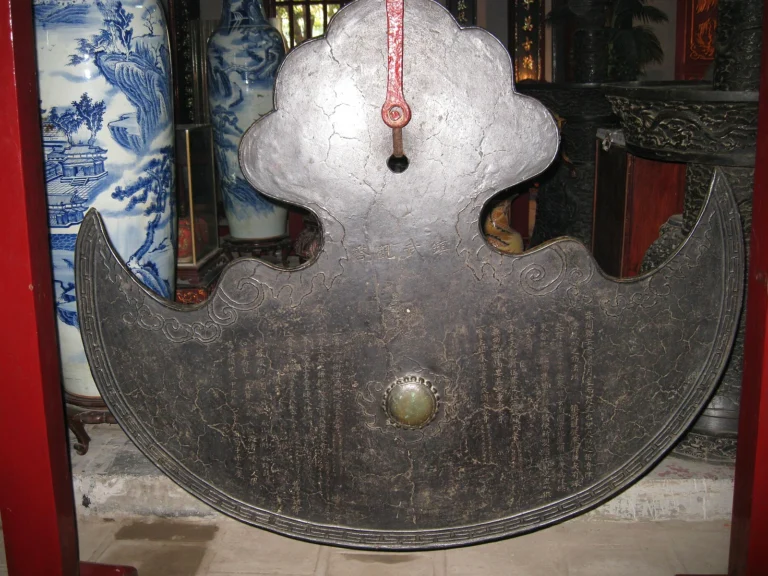
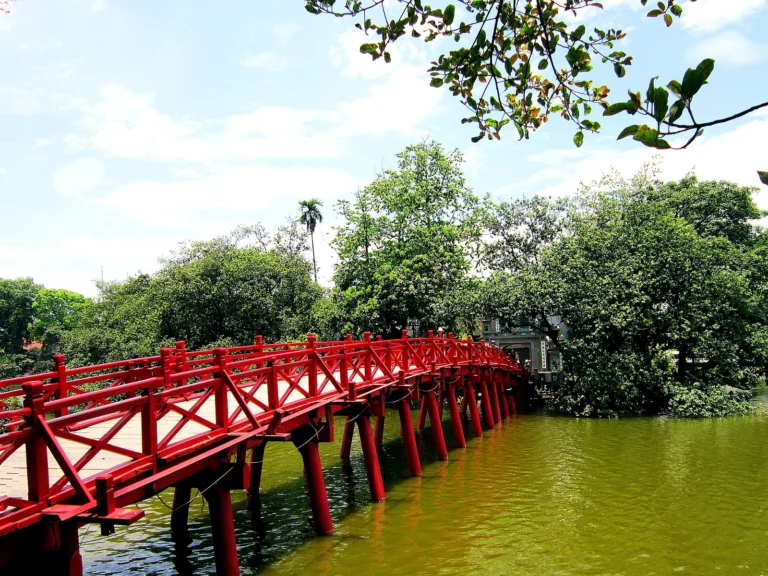
Nestled within the serene ambiance of Duong Lam ancient village in Son Tay town, Hanoi, Mong Phu Communal House emerges as a sacred landmark anchoring the cultural soul of the Xu Doai region. Situated on a terrain evaluated by feng shui masters and heritage researchers as prime real estate, the communal house faces south, backing against the elevated land of the semi-mountainous region. Its front opens up to a spacious courtyard that has served as a gathering place for natural water veins and community activities for centuries. This geography not only ensures the harmony of yin and yang according to Eastern philosophy but also demonstrates our ancestors’ sophisticated mindset in selecting settlements and establishing sacred spaces.
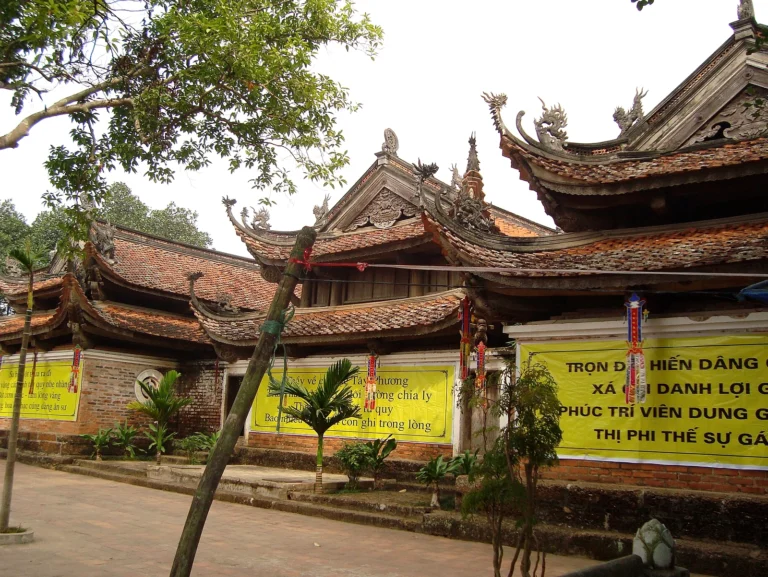
Regarding historical origin and chronology, although stone stelae and royal decrees preserved at the site record a large-scale major restoration in the second year of Thanh Thai (1890), the core wooden architecture of Mong Phu strongly bears the imprint of the Later Le dynasty artistic style, spanning from the 17th to the 18th centuries. Through the vicissitudes of time and Nguyen dynasty reigns such as Minh Mang, Tu Duc, and Khai Dinh, the communal house has preserved almost intact its massive wooden structural system featuring exquisite manual carving techniques, demonstrated through vividly sculpted openwork and relief carvings of dragons, phoenixes, Qilin, and foliage. That foundation and wooden frame are the physical manifestations of a long-standing cultural accumulation process, where every grain of wood and tile whispers tales of labor origins and Vietnamese artistic creation.
Beyond its unique architectural value, Mong Phu Communal House serves as a space that converges and reinforces the sacred consciousness of the Red River basin community by worshipping revered saints associated with national founding and defense. It honors Tan Vien Son Thanh—the foremost deity among the four immortals of ancient Vietnamese beliefs, symbolizing fierce resilience against natural disasters and floods. Simultaneously, the communal house is a place of gratitude to Phung Hung, a national hero native to Duong Lam who raised troops to expel Tang dynasty domination in the 8th century, sparking the proud lineage of Xu Doai heroes. The parallel presence of deities and village tutelary gods who reclaimed land and established hamlets has transformed the communal house space into a living museum of the moral principle of remembering the source when drinking water.
Viewed from the perspective of modern heritage studies, domestic and international management agencies and press outlets consistently regard Mong Phu Communal House as the core nucleus and priceless treasure of the Duong Lam Ancient Village complex—the first village in Vietnam awarded the national cultural-historical heritage certificate by the State. The rich collection of artifacts here, ranging from Le and Nguyen dynasty royal decrees, ancient stone stelae recording village conventions, ritual fields, to 19th-century gold-gilded lacquered horizontal lacquered boards and parallel sentences, creates a vivid material chronicle. Amidst the bustling contemporary pace, Mong Phu Communal House stands as a nostalgic coordinate where time lingers in every mossy detail, beckoning travelers to return to the pure and profound cultural roots of the Vietnamese nation.
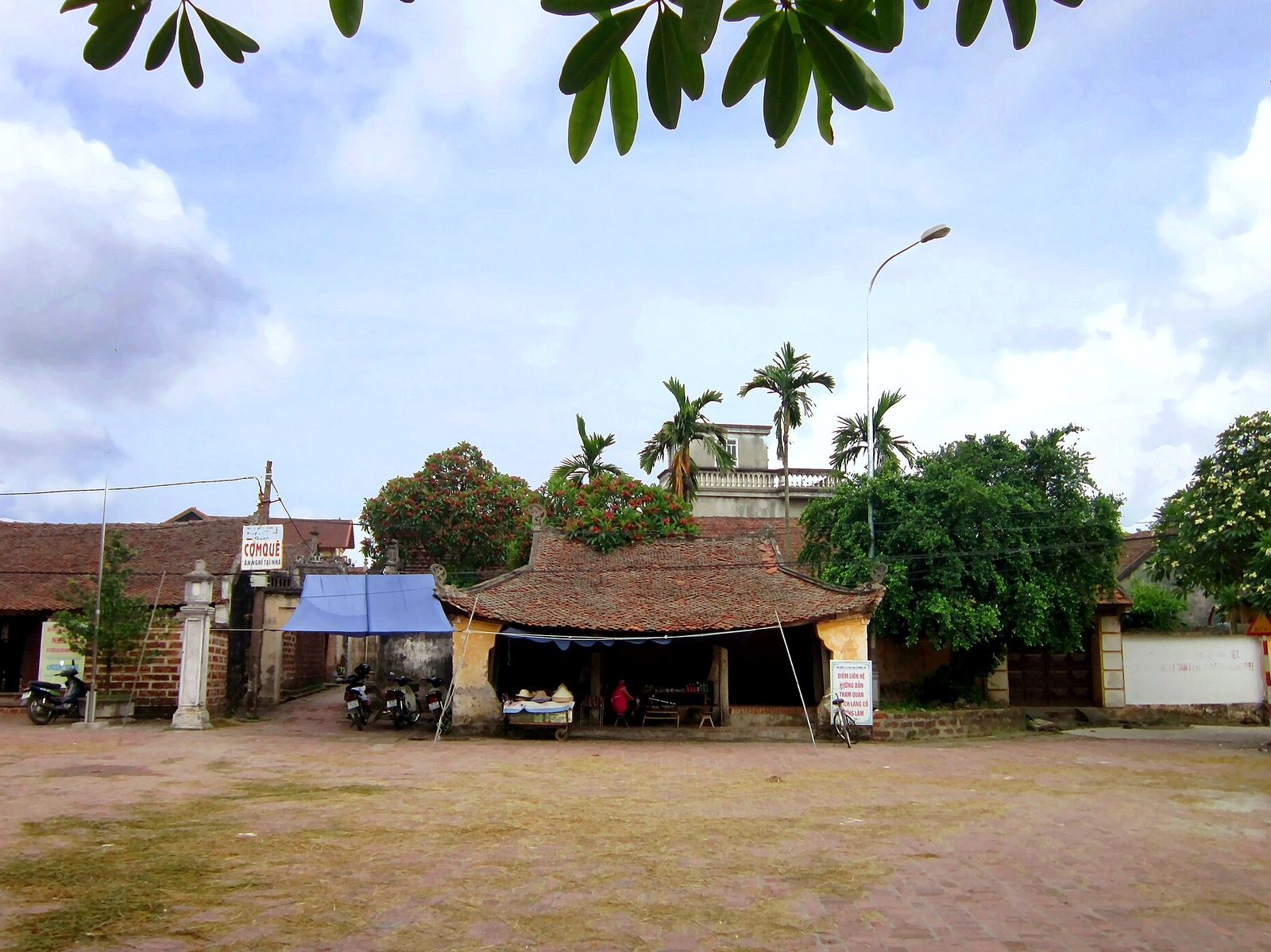
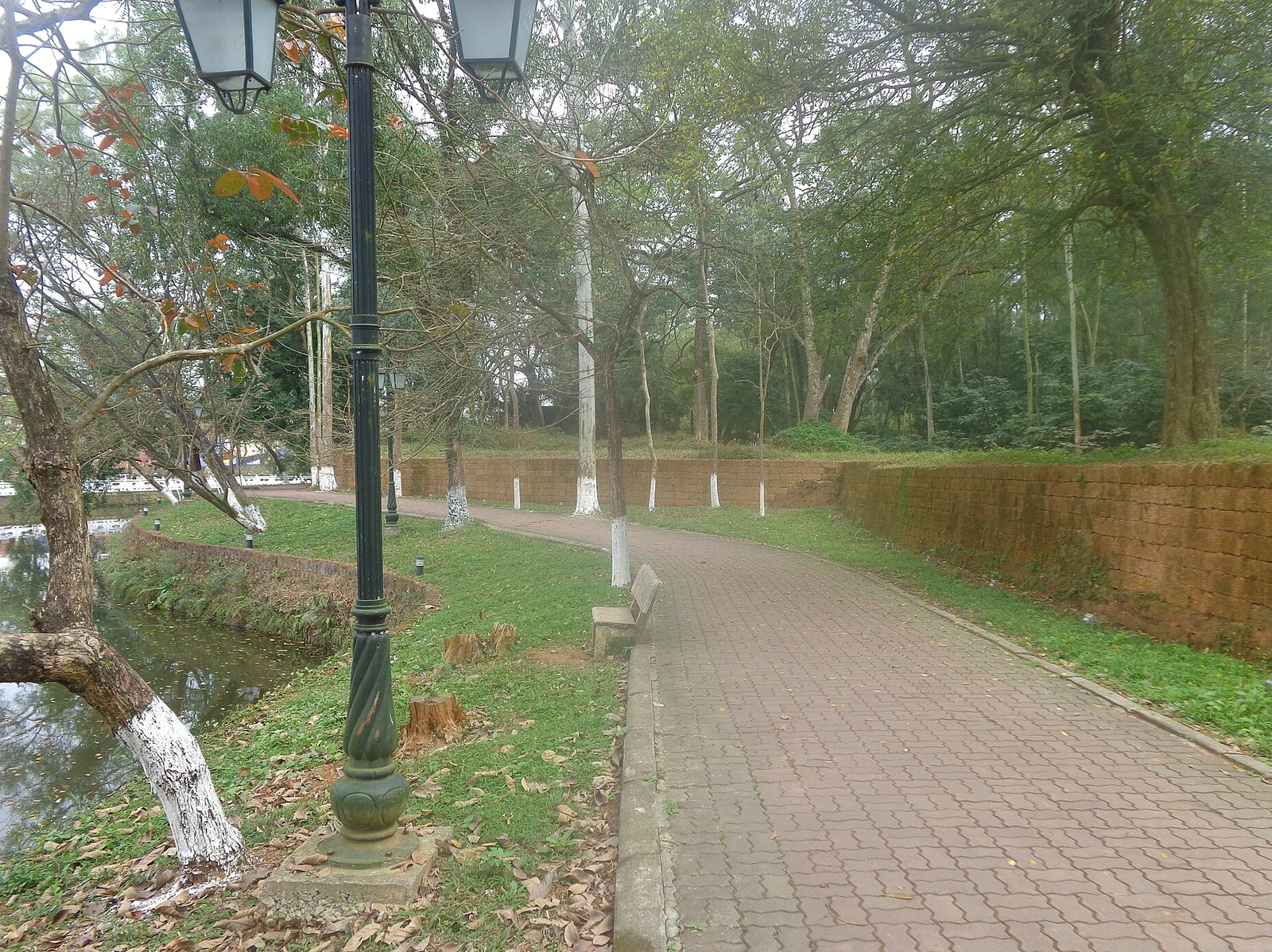
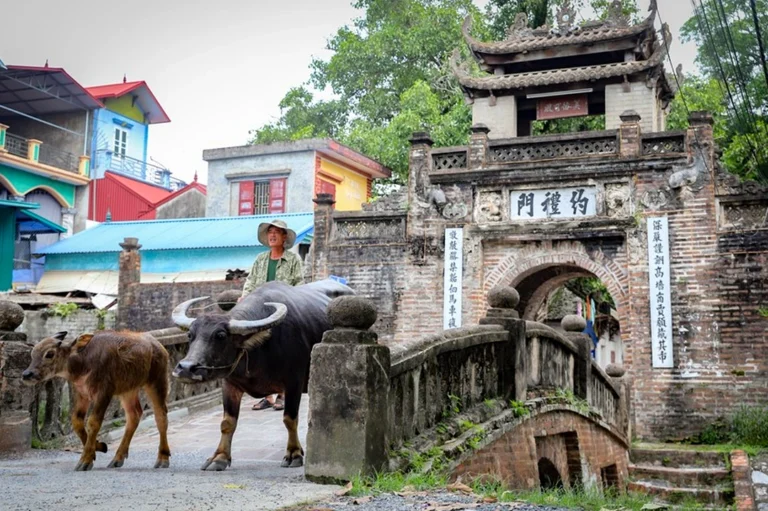
Resting quietly in the heart of Duong Lam ancient village, Mong Phu Communal House appears as a masterpiece of ancient wooden architecture, carrying the soul of Northern Delta wet-rice culture. The communal house is situated on a scenic plot facing south to welcome prosperous vital energy, fronted by a crystal-clear ancient well and a spacious courtyard paved with mossy Bat Trang bricks. The entire surrounding space is enclosed by characteristic laterite walls of the Xu Doai region, creating a landscape that is both majestic and intimate, rustic yet solemn. Stepping through the village gate and setting foot in the space of Mong Phu Communal House feels like a journey backward in time, returning to the peaceful origins of traditional Vietnamese countryside.
The most precious highlight of the monument lies in its peak wooden architectural artistry bearing the distinct stamp of the Later Le dynasty. The communal house is designed in a unique “King” (chu Vuong) layout featuring an imposing main hall and rear sanctuary, distinguished by a system of massive main columns, weather-worn curved tile roofs with fishtail tiles, and intricately carved tie-beam trusses. Ancient folk artisans breathed life into wood through carvings of dragons, phoenixes, Qilin, stylized leaves, and floral motifs. Each chisel stroke demonstrates elite woodworking technique while embodying profound humanistic philosophy and a flexible harmony between humanity and nature.
To capture prized moments and secure million-view check-in angles at Mong Phu Communal House, photographers and travel journalists often pass around two unmissable shooting coordinates. First is the perspective standing from the courtyard facing the main hall, capturing the full grandeur of the rustic wooden panel doors alongside the airy veranda system; the ideal time is early morning when soft dawn light slants through the porch, creating an ethereal and meditative natural lighting effect. Second is the angle shooting beside the ancient laterite walls enclosing the communal house grounds combined with the ancient well in front; as dusk falls, when the end-of-day golden-orange sunlight dyes the moss on rough laterite blocks, you get cinematic frames that are both nostalgic and lyrical.
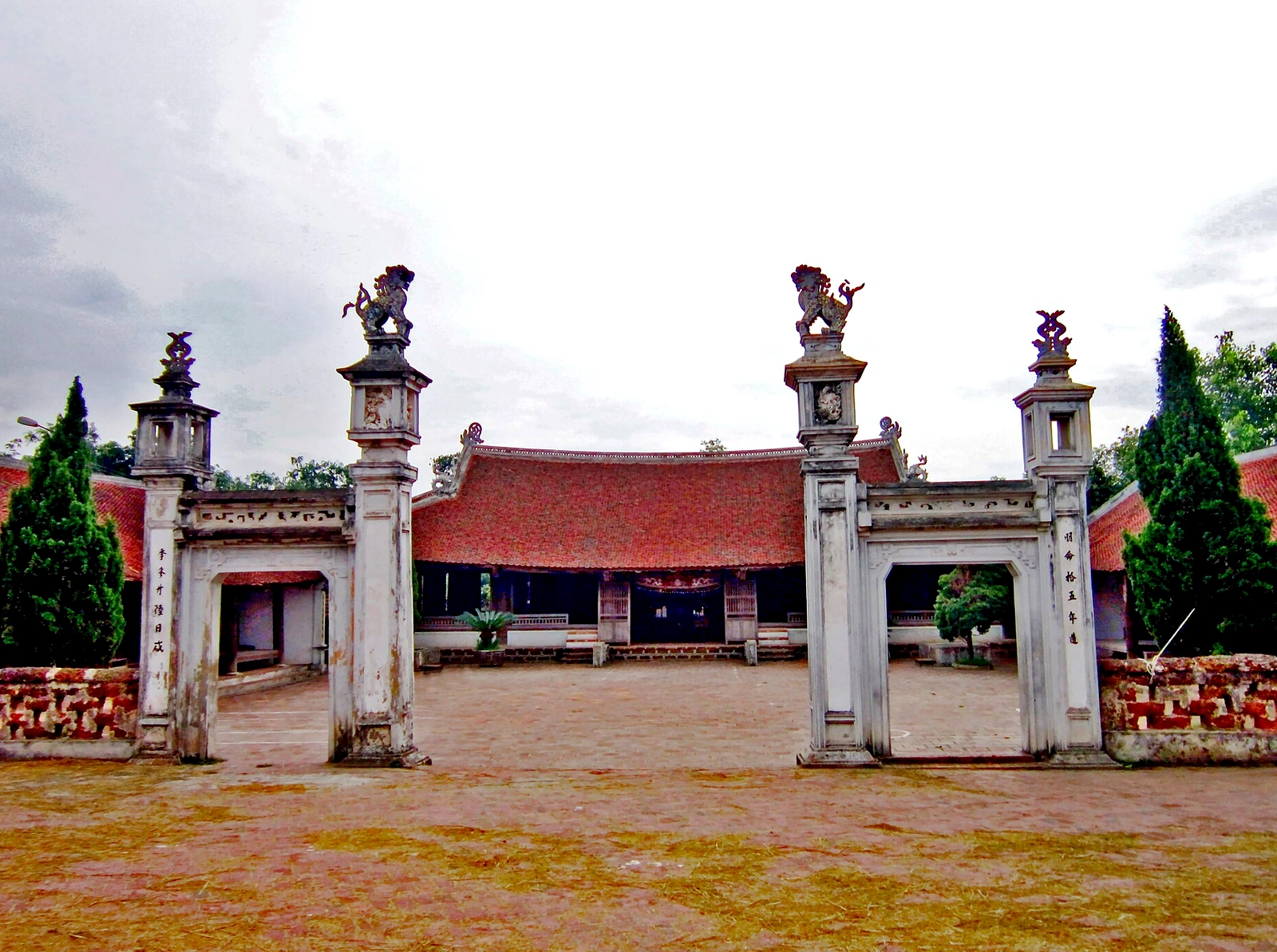
Walking through the subdued laterite village gate and entering the space of Mong Phu Communal House, visitors feel as though they are traveling back in time to ancient Vietnamese cultural roots. The first sensory experience is awe at the pristine, rustic architectural beauty beneath the canopy of centuries-old banyan trees. Rustling leaves blending with cooing doves create a tranquil symphony of the Northern countryside. Standing under the communal house veranda, gazing across the wide courtyard paved with mossy Bat Trang bricks, and touching massive ironwood columns bearing traces of time, historical heartbeats feel vividly present in this quiet yet sacred space.
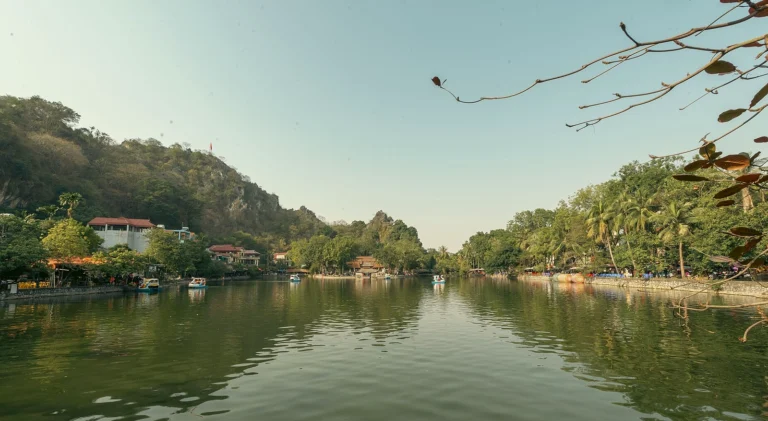
The journey to explore Mong Phu Communal House does not stop at spiritual worship, bowing reverently before the altars of Tan Vien Son Thanh and Bo Cai Dai Vuong Phung Hung to pray for peace and good fortune, but extends to rich ecological experiences in the scenic Xu Doai region. Leaving the subdued ambiance of the communal house, visitors can challenge themselves with climbing majestic Ba Vì Mountain nearby, traversing winding trails beneath primary old forest canopies to enjoy fresh, cool air. Right at the foot of the mountain, boat rides gliding down rivers and lakes across the region provide absolute relaxation, allowing travelers to admire panoramic scenic views where sky and water merge into one.
Notably, visitors’ emotions become even more profound and elevated when savoring renowned local specialties surrounding the destination. The rich sweetness of Duong Lam sugarcane chicken with its crispy golden skin, the enticing aroma of traditional roasted pork rolls, or the refreshing taste of sweetcorn soup (chè lam) paired with a cup of mildly bitter green tea… all blend to create an unforgettable culinary experience. These dishes imbued with rural soul satisfy appetites after hours of dedicated exploration while preserving the authentic flavor of a culturally rich ancient land.
Concluding the experiential journey at Mong Phu Communal House and Duong Lam ancient village, every departing traveler carries away a lingering emotional stillness. The subtle harmony between heroic history, mysterious spiritual architecture, gorgeous nature, and distinctive culinary culture transforms this place into a vibrant destination touching the depths of anyone who cherishes national heritage.
Mong Phu Communal House, the ancient structure located right in the heart of Duong Lam Ancient Village (Son Tay town, Hanoi), remains an attractive spiritual and cultural destination for travelers near and far. To make this heritage exploration complete and smooth, visitors should grasp useful information regarding timing, expenses, transportation methods, and behavioral rules when entering sacred spaces.
Regarding operating hours, the monument welcomes visitors every day of the week, from early morning to late afternoon (typically 8:00 AM to 5:00 PM). Visitors can freely drop by at any time of the year. However, the ideal time to visit is autumn (September to November) when Hanoi’s weather is cool and dry, or during traditional early spring festivals (the 1st to 3rd lunar months) when the ancient village overflows with spring colors and folk cultural activities imbued with Xu Doai identity.
Good news for travelers is that when visiting Mong Phu Communal House and all of Duong Lam Ancient Village, you do not need to purchase a separate admission ticket specifically for the communal house. However, to preserve the overall ancient village heritage, the management board applies a general sightseeing ticket for the entire ancient village area at a very reasonable and economical price for all visitors, usually just a few dozen thousand VND per entry.
Regarding routes and transportation from central Hanoi, you can choose to travel via Thang Long Boulevard or National Highway 32, covering a distance of over 45 km to the west. If using personal transport like a car or motorbike, travel time takes about an hour and a half. Taking Thang Long Boulevard and turning left toward Son Tay town is the widest, clearest, and most convenient route. Public buses are also an economical choice with routes passing Son Tay bus station, after which you can catch a motorbike taxi or taxi to travel onward to the ancient village gate.
When visiting this centuries-old structure, travelers should strictly follow regulations regarding spiritual culture and heritage preservation. Dress politely and modestly, avoiding overly short clothing when entering sacred worship spaces. Additionally, the foundational structure of the communal house, ancient brick courtyard, and stone steps can be slippery on rainy days, so choosing flat, comfortable, and easy-to-walk shoes will help you comfortably explore every intricate architectural detail left by our ancestors.
To enjoy a complete vacation and fully admire the beauty of Mong Phu Communal House without worrying about arranging transportation, booking tickets, or travel itineraries, visitors can choose VDS Travel’s premium all-inclusive Son Tay tour packages. Each tour is optimized for check-in timing when scenery is most vibrant, accompanied by a team of guides deeply knowledgeable about local culture and top-tier hotel and dining service standards.