Standing majestically at the foot of sacred Mount Inari-yama on the southern edge of Kyoto, Fushimi Inari-Taisha traces its origins to a pivotal moment in ancient Japanese history. In the spring of the 4th year of Wadō (711 AD) during the Nara-period reign of Empress Genmei, the sanctuary was formally established atop the peaks of the Inari ridge by the Hata clan—an influential immigrant family of Korean (Baekje) and East Asian mainland ancestry who brought advanced metallurgy, irrigated agriculture, and silk weaving to shape the entire Yamashiro Basin. Local legend recounts that when clan patriarch Hata no Irogu loosed an arrow at a round mochi rice cake, the cake transformed into a white bird that soared to the mountain summit and alighted as heavy stalks of ripening rice—giving birth to the name “Inari” (伏見稲荷, literally meaning “carrying rice”). Original worship centered on supreme agricultural deities collectively revered as Inari Ōkami, led by Ukanomitama-no-Ōkami (deity of grain and the sacred spirit of rice), alongside Sadahiko-no-Ōkami (deity of crossroads and guidance) and Ōmiyanome-no-Ōkami (goddess of household harmony and eloquence). Those pure agrarian roots served as a resilient spiritual foundation nourishing Japanese faith for over a millennium.
Entering the Heian period after the imperial court relocated to Heian-kyō, the shrine’s destiny intertwined with sweeping philosophical shifts of the age. In 816, Kūkai (Kōbō Daishi), founder of the Shingon school of Esoteric Buddhism, designated Inari Shrine as the southern spiritual guardian of the great state temple Tō-ji. This landmark alliance laid the groundwork for Shinbutsu-shūgō (the syncretism of Shinto and Buddhism), blending indigenous Shinto reverence with Esoteric Buddhist philosophy and shaping the enduring folk image of a bodhisattva riding a white fox bearing a wish-fulfilling jewel. In 942, during the 5th year of Tengyō under Emperor Suzaku, the imperial court elevated the shrine to the prestigious rank of Myōjin Taisha—affirming its stature as a supreme national sanctuary empowered to shield the realm from natural calamities and unrest. From that point onward, the mountain sanctuary transcended clan boundaries to become a spiritual bastion for the imperial family and capital aristocracy.
Even so, the turbulent currents of medieval Japanese history did not spare sacred Inari-yama. The devastating Ōnin War that erupted in the second half of the 15th century reduced much of Kyoto to ashes, burning nearly all of the shrine’s earliest hillside halls to the ground. Yet local devotion never faltered. In 1499, during the late Muromachi period, the imposing Main Hall (Honden) was completely rebuilt in grand Nagare-zukuri architectural style, adorned with intricate carvings reflecting the resilient spirit of the Warring States era. This magnificent structure has endured wind and rain intact to the present day and is designated by the Japanese government as an Important Cultural Property—standing as a powerful testament to spiritual vitality rising from ruin.
During the peaceful Edo period under the Tokugawa shogunate, Japan’s economy witnessed the remarkable rise of urban townspeople and merchant guilds, bringing a transformative expansion to the shrine’s protective role. Inari Ōkami evolved from guardian of bountiful harvests into patron of commerce, artisanal crafts, and mercantile prosperity. Prayers for good fortune and gratitude for business success sparked a widespread custom of donating vivid vermilion-lacquered torii gates, creating the iconic winding network of Senbon Torii (Thousands of Torii Gates) snaking up wooded slopes. Following the Meiji Restoration, in 1871, state policies separating Shinto from Buddhism formally designated Fushimi Inari-Taisha as a Kanpei-taisha, a first-rank imperial shrine supported directly by the central government. Across centuries of change, it rose to stand as the supreme head shrine (Sōhonsha) guiding roughly 30,000 branch Inari shrines across the Japanese archipelago.
Looking across the physical geography of Kyoto, Fushimi Inari-Taisha occupies Fushimi Ward along the southern margin of the ancient Yamashiro Basin. The entire complex rests upon Inari-yama—a sacred peak rising 233 meters above sea level at the southern tail of the Higashiyama mountain range. Within classical Japanese geomancy, this site ranks among the most auspicious spiritual power spots in the Kansai region, embodying ideal mountain-backed, water-facing harmony. Towering Inari-yama serves as a protective natural screen to the east, while the western side draws vitality from the Kamo and Uji rivers nourishing the fertile Yamashiro valley. A natural terrain sloping gently from west to east laid the stage for a unique multi-tiered sacred layout reflecting indigenous Shinto reverence for nature.
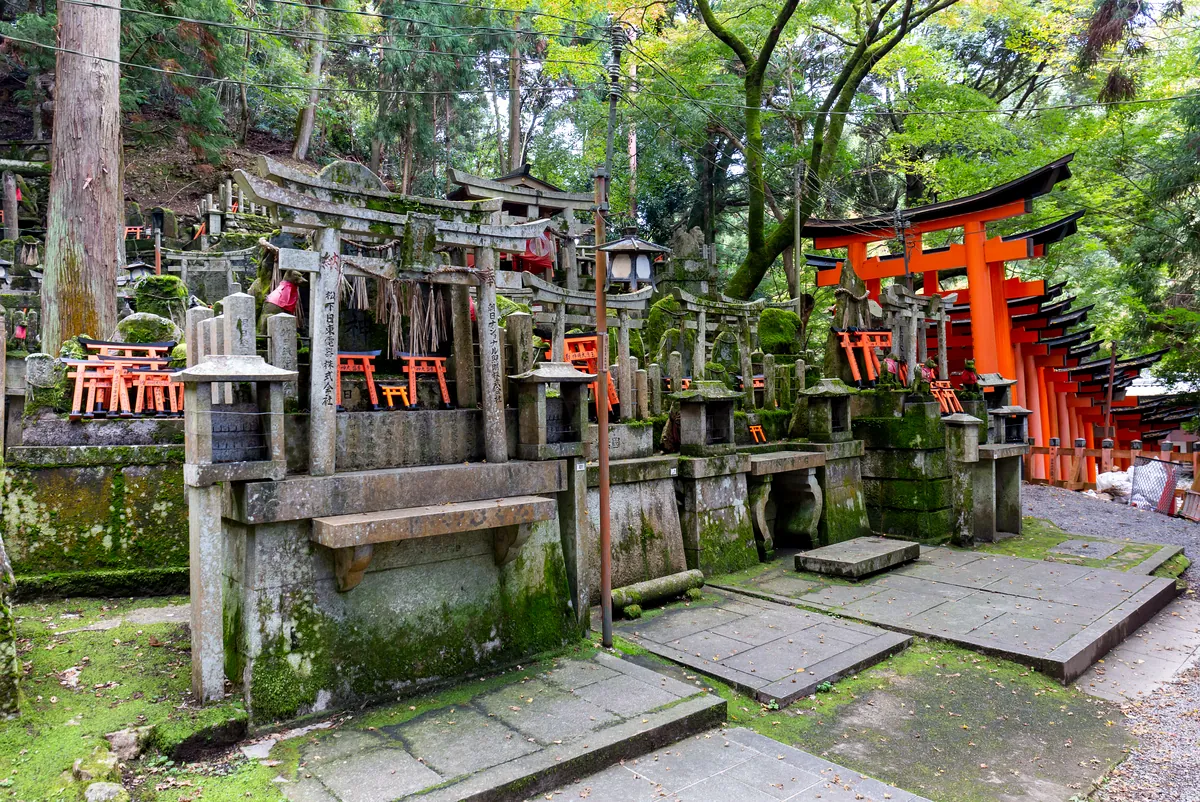
The surrounding ecosystem is rooted in the ancient concept of Chinju no mori—the sacred guardian forest sheltering a Shinto shrine. Inari-yama’s dense primeval woodland features soaring Japanese cedars (sugi), straight hinoki cypresses, red oaks, and lush bamboo groves embracing stone pilgrimage trails. Rising terrain divides the sanctuary into three distinct tiers: the Lower Shrine (Shimosha), Middle Shrine (Nakasha), and Upper Shrine (Kamisha), corresponding to the three symbolic peaks of Sannomine, Ninomine, and Ichinomine. Pilgrims embarking on the roughly four-kilometer round-trip mountain circuit (Oyama-meguri) experience a subtle shift in microclimate as they climb—cool woodland humidity and wisps of mist rising from mossy boulders gradually lower the temperature, separating the sacred precincts completely from the urban bustle of Kyoto below.
Alongside its protective mountain backdrop, Fushimi Ward’s subterranean hydrology is celebrated for producing some of the purest spring water in Japan, revered since antiquity as Fushimizu (“hidden water”). The Yamashiro Basin acts as a vast natural aquifer filtering rainwater through Inari’s sedimentary rock strata over hundreds of years. This crystal-clear groundwater not only feeds sacred ponds and waterfalls within the precincts—such as Shin-ike Pond and Otake-taki Falls, where ascetics practice cold-water purification (misogi)—but also sustained rich rice paddies and Fushimi’s famous sake-brewing heritage since the Edo period. Cool spring water seeping past cedar roots mingles with the gentle murmur of hillside streams to create a tranquil natural soundtrack surrounding the sanctuary of the Rice Deity.
Nature here transforms dramatically with the turning of the four seasons. In spring, delicate pink cherry blossoms frame the grand Romon Gate and lower foothills; in summer, maple canopies and towering cedars glow deep emerald green, shielding tens of thousands of vermilion torii gates from bright sun. Come autumn, the slopes of Inari-yama ignite in fiery crimson and amber momiji foliage, creating a mesmerizing visual duet with the vermilion tunnels of Senbon Torii. In winter, fresh snow dusts thin hinoki-bark roofs and moss-draped otsuka stone mounds, suspending the sanctuary in serene, otherworldly stillness. This seamless union of terrain-respecting design and seasonal beauty makes Fushimi Inari-Taisha a living expression of animistic Shinto philosophy, where the threshold between earthly and divine worlds is just a step beneath the forest canopy.
Standing impressively at the foot of sacred Mount Inari-yama, Fushimi Inari-Taisha’s architectural ensemble opens into a Shinto ceremonial space at once solemn and expansive, anchored at its heart by the Main Hall (Honden). Designated an Important Cultural Property of Japan, the Honden exemplifies classical Nagare-zukuri style with its signature asymmetrical roofline. Its defining visual feature is a sweeping front eave extending gracefully like a flowing silk curtain over the forecourt to shelter sacred rites. The massive roof is crafted using traditional hiwadabuki technique—layering tens of thousands of carefully selected strips of hinoki cypress bark to achieve rich thickness and organic curvature resilient against Kansai’s humid weather. Contrasting with the weathered tone of cypress bark is vibrant vermilion lacquer (shuroku) coating every pillar and timber beam; within Shinto tradition, this mineral cinnabar pigment wards off evil spirits and symbolizes life-giving vitality, while its natural sulfur and mercury compounds historically protected timber against insects and decay for centuries.
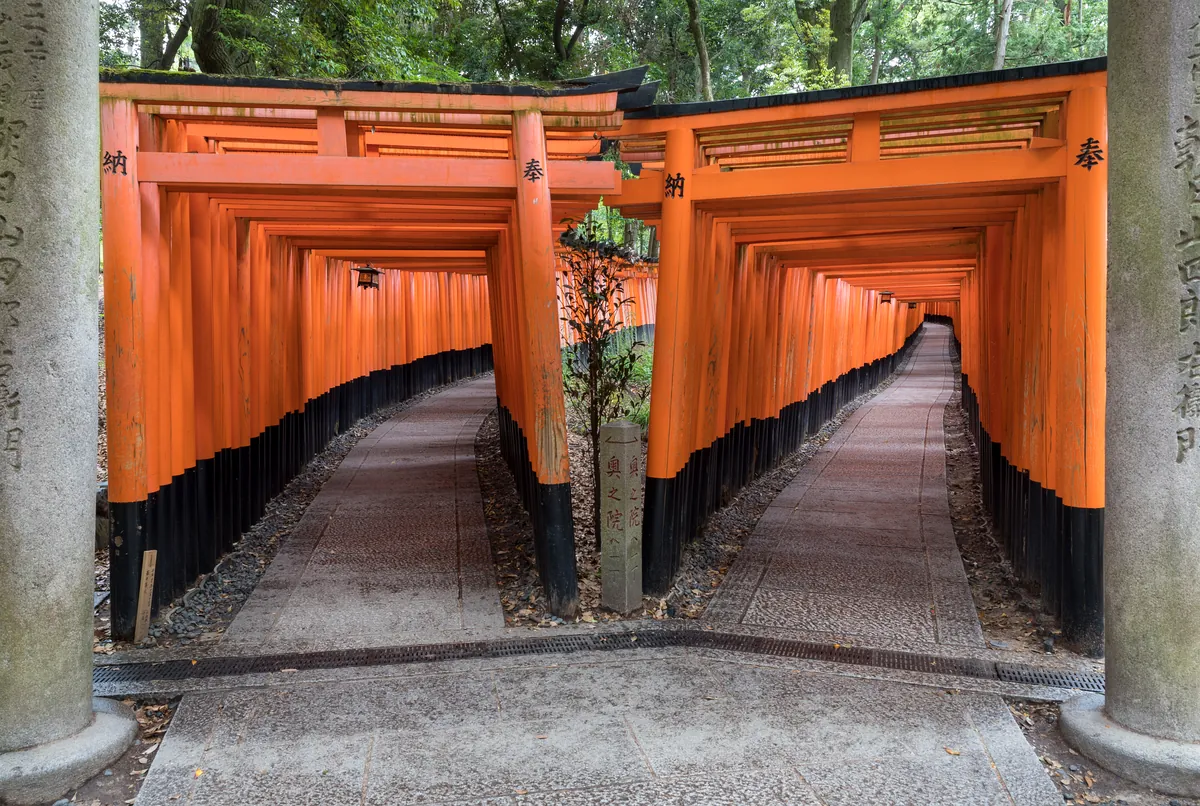
Continuing deeper up the hillside, spatial design transitions from formal shrine pavilions into the iconic ceremonial corridor of Senbon Torii. At the entrance to the Thousand Gates, the path splits into two parallel, tightly spaced tunnels curving rhythmically up the gentle slope. Each gate is fashioned from solid Japanese cedar (sugi), prized for straight grain and durability. Master carpenters plane each log smooth and join posts with precision mortise-and-tenon joinery without iron nails before coating the structure in fiery orange-red vermilion from black stone bases up to the top kasagi crossbeam. As sunlight filters through narrow gaps between densely packed pillars, Senbon Torii becomes a surreal optical tunnel where light and shadow alternate in steady cadence—separating visitors from the outside world as they step into sacred territory.
The presence of tens of thousands of consecutive torii gates winding up the mountain reflects both sincere faith and centuries of substantial patronage. Donating a torii gate took deep root during the Edo period, when merchants, trade guilds, and thriving enterprises offered wooden gates to pray for prosperity and smooth business ventures. Every gate standing on the mountain corresponds to an official donation tier scaled by size—ranging from roughly 400,000 Japanese yen for smaller gates along secondary paths to over 1.3 million yen, and even several million yen for massive grand torii positioned along prime main arteries. While the front face of every gate remains pure unadorned vermilion facing up the mountain, glancing backward reveals crisp black-inked inscriptions carved into the reverse side recording the donor’s company name, individual patron, and date of dedication—forming a living chronicle of Japanese commerce.
Viewed as a whole, Fushimi Inari-Taisha extends far beyond a single walled courtyard into a pilgrimage circuit stretching over four kilometers across 233-meter Mount Inari-yama. Thousands of moss-covered stone steps link dozens of auxiliary shrines—including Okusha Hōhaisho (the Inner Shrine Worship Hall) housing the mystical Omokaru-ishi wish-testing stones, Mitsurugi-sha tied to sacred swordsmith legends, and the breezy Yotsutsuji crossroads offering sweeping views across Kyoto. Along the steep ascent, rustic hillside teahouses serving steaming bowls of kitsune udon and sweet-savory inarizushi create an effortless harmony between everyday folk hospitality and high spiritual devotion.
Unlike landmarks that rely on high-tech digital projection mapping or mechanized stage productions, Fushimi Inari-Taisha stages no commercial night shows. Instead, the grandest performance at this thousand-year-old sanctuary belongs to the natural interplay of shadow, mountain mist, and traditional Shinto illumination. As sunset dips behind the Higashiyama mountains, 233-meter Inari-yama enters an evocative nocturnal realm where boundaries between the mortal world and the domain of the kami grow whisper-thin.
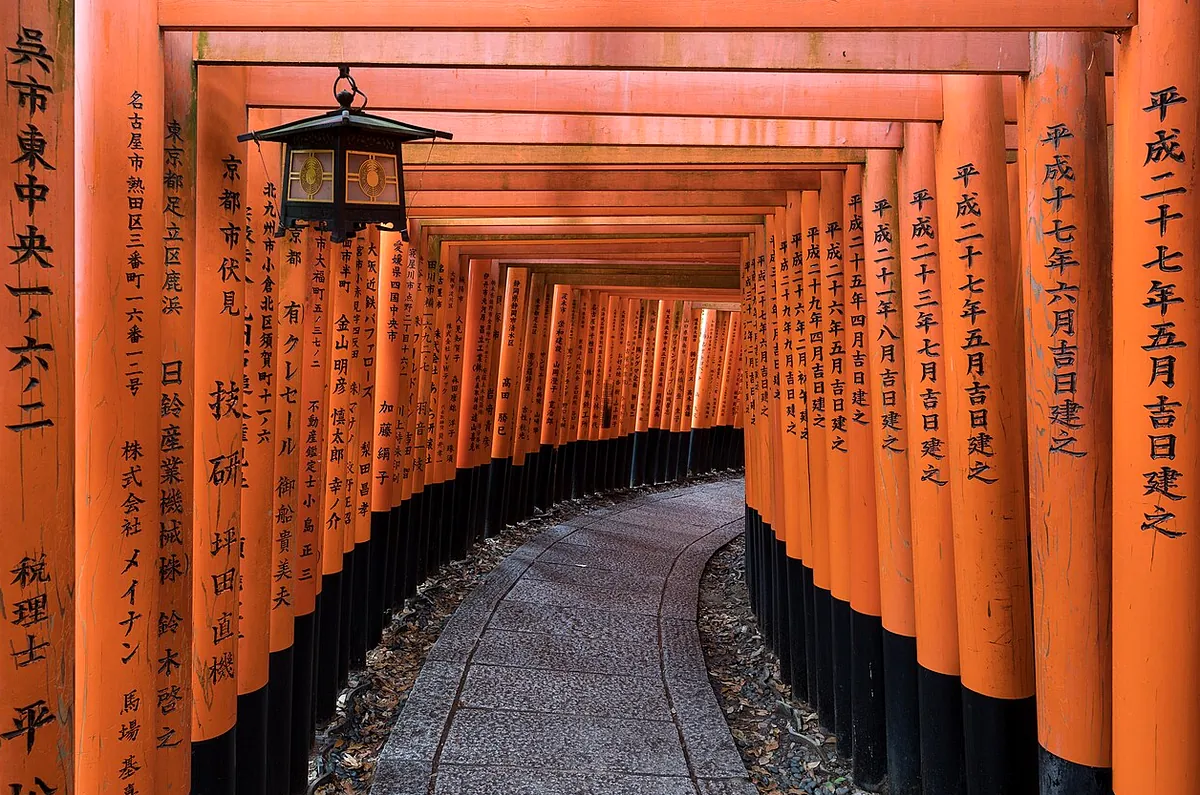
Illumination throughout the shrine embodies Japan’s classic aesthetic of quiet mystery (yūgen). Along the Senbon Torii trails and moss-lined stone stairways, weathered stone lanterns (tōrō) and paper lanterns suspended beneath hinoki eaves glow softly to life. Warm amber light flickers through narrow gaps between thousands of vermilion pillars, creating a layered visual effect like an endless corridor through time. In Japanese folklore, vermilion wards off misfortune and embodies harvest vitality; after dark, that bright red deepens into solemn crimson, evoking ancient Heian-period tales of mysterious foxfire glowing along mountain ridges.
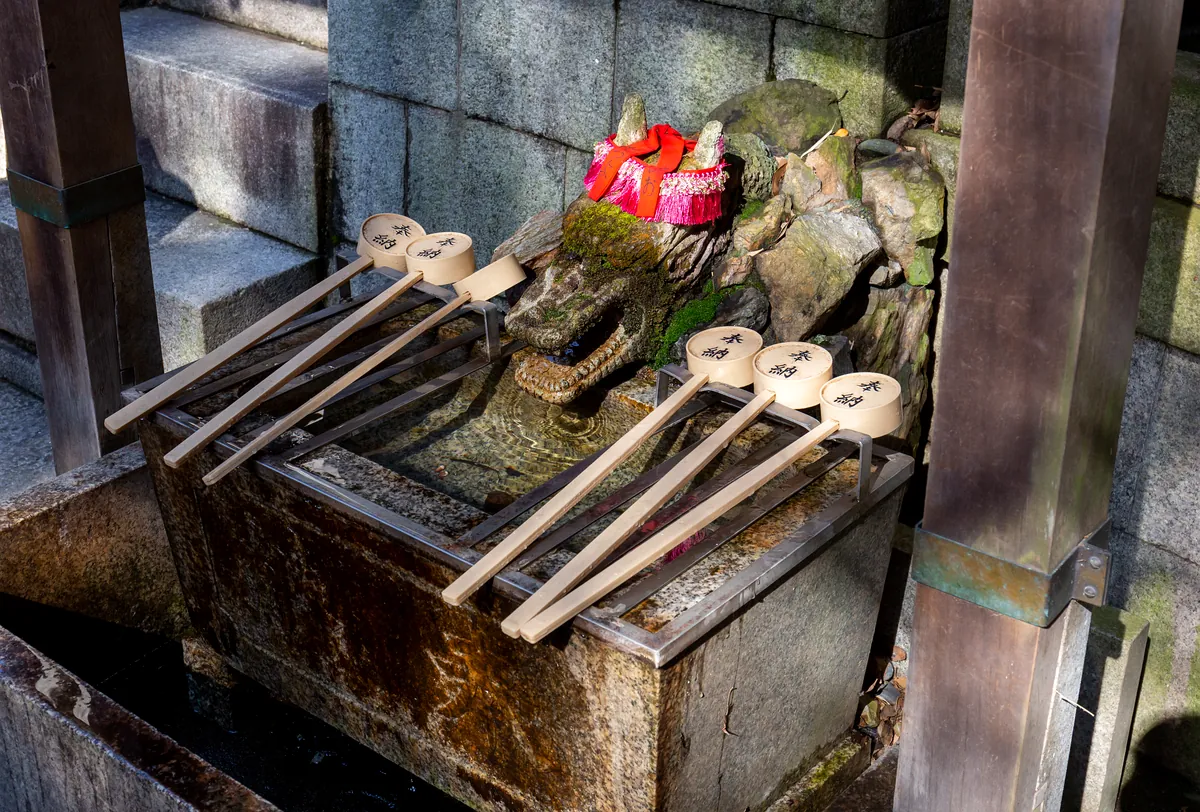
Nocturnal stillness at Fushimi Inari-Taisha settles in earnest after 6:00 PM and lingers through the quiet hours before 7:00 AM. Once daytime crowds disperse, the sanctuary takes on an extraordinarily serene, reverent atmosphere. Footsteps echo crisply across stone paving, accompanied by wind rustling through cypress boughs, spring water trickling into stone purification basins (temizuya), and the soft chime of bells at hillside sub-shrines. Stone statues of messenger foxes (kitsune) clasping granary keys or wish-fulfilling jewels in their jaws stand sentinel beside pathways, glowing faintly in the light cast against stone donor pillars.
Continuing higher at dusk brings travelers to the breezy Yotsutsuji intersection, where traditional chaya teahouses nestle into the slope, releasing gentle wisps of woodsmoke and the comforting aroma of grilled aburaage tofu and roasted hōjicha green tea into the cool mountain air. Looking out from this vantage point, Kyoto’s cityscape stretches below like a calm sea of twinkling lights contrasting sharply with the dark primeval forest enveloping the mountain. Amid this hush, flickering candles before stone Inari altars not only light the rugged path, but invite deep reflection on the timeless bond between humanity, nature, and the sacred unseen.
A pilgrimage to sacred Inari-yama would feel incomplete without sampling the heirloom culinary specialties rooted at its base. In local belief, the sanctuary honoring Inari Ōkami—deity of agriculture and commerce—is not only a place to pray for prosperity, but also the birthplace of iconic Japanese comfort foods. Descending from thousands of vermilion gates back toward town, rich aromas of simmered soy sauce, shaved bonito, and glowing charcoal from historic eateries lining the approach draw travelers straight into Kyoto’s classic culinary heritage.
The undisputed star of local gastronomy is Inari Sushi, celebrated tofu-pouch sushi dating back to the early 19th century during the Edo period. The dish is linked directly to folklore surrounding white foxes (byakko), sacred messengers of Inari believed to adore rich, deep-fried tofu pouches. To craft authentic Fushimi Inari Sushi, local artisans simmer airy pouches of aburaage in a carefully balanced broth of sweet soy sauce, mirin rice wine, and rock sugar until every fiber absorbs deep savory-sweet flavor. Plump short-grain sushi rice seasoned with mild rice vinegar—often accented with toasted sesame seeds or finely diced lotus root—is tucked neatly inside. Notably, across Kansai and around Fushimi, Inari Sushi is shaped into pointed triangles symbolizing the alert ears of Inari’s sacred foxes, uniting religious symbolism with everyday deliciousness.
Alongside tofu sushi, Kitsune Udon (“fox udon”) has warmed generations of pilgrims pausing at wooden noodle shops along the trail. Steaming bowls showcase thick, chewy wheat noodles bathed in clear amber dashi broth brewed from prized katsuobushi dried bonito flakes and kombu kelp for clean, layered umami with a lingering sweet finish. Crowning the noodles is a generous sheet of sweet-savory simmered aburaage tofu, finished with thinly sliced scallions and a dash of fiery seven-spice shichimi chili powder. Biting into juicy, broth-soaked tofu alongside springy noodles brings instant warmth in the cool mountain air.
Stepping beyond quiet traditional noodle shops, culinary energy surges along the lively approach toward the O-tabisho district right at the shrine’s foot. This bustling promenade has long served as a premier street-food paradise where travelers watch skilled local cooks at work up close. Sizzling sounds and mouthwatering smoke rise from glowing binchōtan white-charcoal grills searing skewers of marbled Wagyu beef—flipped briskly until golden, juicy, and melt-in-your-mouth tender with coarse sea salt or glossy house tare glaze—interspersed with wooden counters serving fresh-cut salmon, tuna, and octopus sashimi brimming with clean ocean sweetness.
The centuries-long endurance of food culture around Fushimi Inari-Taisha does far more than satisfy hungry travelers; it embodies Shinto gratitude for every grain of rice bestowed by Inari. Multi-generational family eateries tucked beneath ancient trees stand as living custodians preserving the humble, soulful flavors of traditional Kyoto hospitality.
Unlike most temples and shrines in Kyoto that close their gates at dusk, Fushimi Inari-Taisha remains open 24 hours a day, 365 days a year, with free admission to the grounds. This round-the-clock access creates dramatically different atmospheres depending on when you visit. To experience tranquil solitude and hear wind rustling through misty cedar groves, begin walking at daybreak around 5:00 to 6:00 AM before tour groups arrive. Conversely, after nightfall, stone lanterns lining mountain steps cast a warm amber glow through the tunnels of Senbon Torii, enveloping the trail in quiet mystery where earthly and spiritual realms feel separated by no more than a wisp of mist.
Japan’s punctual rail network makes reaching Fushimi Inari-Taisha remarkably easy. From central Kyoto Station, the fastest option is the JR Nara Line, taking just five minutes to reach Inari Station—step outside the station exit and the towering vermilion Romon Gate stands directly across the street. Alternatively, travelers wishing to combine their visit with a stroll through historic Fushimi town can take the Keihan Main Line to Fushimi-Inari Station, enjoying a short walk past alleys fragrant with soy-glazed Inari senbei crackers and traditional grilled eel shops before arriving at the shrine entrance.
Conquering the full mountain circuit around sacred Inari-yama calls for modest physical readiness. The roughly four-kilometer round trip climbs thousands of uneven stone steps past sub-shrines such as Kumataka-sha up to the 233-meter summit at Ichinomine, typically taking two to three hours. Wear comfortable, supportive athletic or walking shoes with reliable traction rather than dress shoes or heels, which slip easily on damp, mossy stones. While vending machines appear at small rest stops along the lower and middle trails, carrying a reusable water bottle and packing out all plastic waste protects the primeval forest ecosystem and shows proper respect for sacred grounds.
To keep your visit serene and rewarding, stay mindful of common commercial tourist traps around major sightseeing routes. Rather than losing valuable sightseeing time on rushed tours padded with forced stops at overpriced health-supplement or souvenir warehouses outside the shrine, honor authentic local traditions directly. Protective talismans (omamori) and fox-shaped wooden prayer plaques (ema) carry genuine spiritual meaning only when obtained directly from official shrine offices (shamusho) inside the precincts, where offerings are transparently posted at 500 to 1,000 Japanese yen per item.
Visiting Fushimi Inari-Taisha is far more than a scenic walk—it is a deeply resonant encounter with living Shinto heritage woven into the heart of Japanese culture for over a thousand years. Knowing the trail, respecting sacred etiquette, and appreciating the layers of history behind every vermilion gate turn every step up the mossy stone stairs into an unforgettable memory. To explore at an unhurried pace without worrying about navigation or logistics, traveling with a thoughtfully curated all-inclusive tour package offers an ideal way to experience the timeless grace of ancient Kyoto.