Located in the heart of Dam Square in Amsterdam, the Kingdom of the Netherlands, the Royal Palace of Amsterdam (Koninklijk Paleis Amsterdam) stands as a towering architectural and historical testament to Europe’s golden age of maritime dominance. Geographically, this structure was built upon the highly unique geological foundation of the low delta plain of the Rhine and Meuse rivers, where the groundwater table is constantly at or above natural ground level. To support a colossal mass of materials, including millions of imported white Bentheim marble stones and a dense load-bearing wall system, seventeenth-century engineers had to drive over fourteen thousand whole pine piles deep into the muddy ground. The elevation of the palace floor was carefully calculated to adapt to the surrounding intricate canal network while protecting the structure from historic storm surges from the North Sea rushing through the complex dyke system. The terrain here, originally an alluvial mudflat along the Amstel River, was transformed by human labor into an urban power center, serving as a crossroads for vital waterborne trade routes and the royal overland road system.
The historical journey of Koninklijk Paleis Amsterdam began in the mid-seventeenth century, a period when the Dutch Republic stood at the pinnacle of global economic and military power through the Dutch East India Company. In 1648, the Amsterdam City Council decided to commission a new city hall to showcase the unparalleled prosperity and political ambition of the world’s leading commercial republic. Chief architect Jacob van Campen was entrusted with the design, drawing inspiration from the pure classical style of Italian Renaissance architecture combined with practical Dutch building traditions. Construction spanned decades, involving some of the era’s most talented sculptors and painters, such as Artus Quellinus and Ferdinand Bol. The building did not originally serve a royal function but was instead dubbed the eighth wonder of the western ancient world, serving the civil administration, the judicial court, and the city bank—reflecting a society that placed the rule of law and free trade above all else.
The greatest historical turning point for the building’s function occurred in 1808 when Napoleon Bonaparte established the Kingdom of Holland and bestowed the throne upon his brother, Louis Bonaparte. This new monarch chose Amsterdam’s supreme city hall as his royal residence, ordering a complete interior renovation to suit French-style feudal court etiquette. This transition marked the moment the building officially assumed the name and function of a royal palace, even though the citizens of Amsterdam at the time remained deeply attached to the building’s original republican significance. Louis Bonaparte displayed numerous precious artworks, redesigned the staterooms and royal bedrooms in the French Empire fashion, and created a peculiar fusion of the austere Calvinist minimalism of the Dutch and the lavish splendor of the Bonapartist court. Although this dynasty was short-lived, the interior architectural imprints of this era remain perfectly preserved to this day as a precious historical sediment.
Following the fall of the French Empire and the establishment of the United Kingdom of the Netherlands under the House of Orange-Nassau in 1815, Koninklijk Paleis Amsterdam continued to serve as the monarch’s official residence whenever staying in the capital. However, according to the Dutch constitution and political tradition, the permanent residence of the royal family is located in The Hague, making this palace in Amsterdam primarily a venue for major national events. It has witnessed historic coronations of Dutch monarchs, from King Willem I to Queen Wilhelmina, Queen Beatrix, and most recently, the coronation of King Willem-Alexander in 2013. In addition, the palace serves as a venue for welcoming visiting foreign heads of state to the Kingdom of the Netherlands, hosting state banquets, major cultural award ceremonies, and key diplomatic events that shape the nation’s foreign policy.
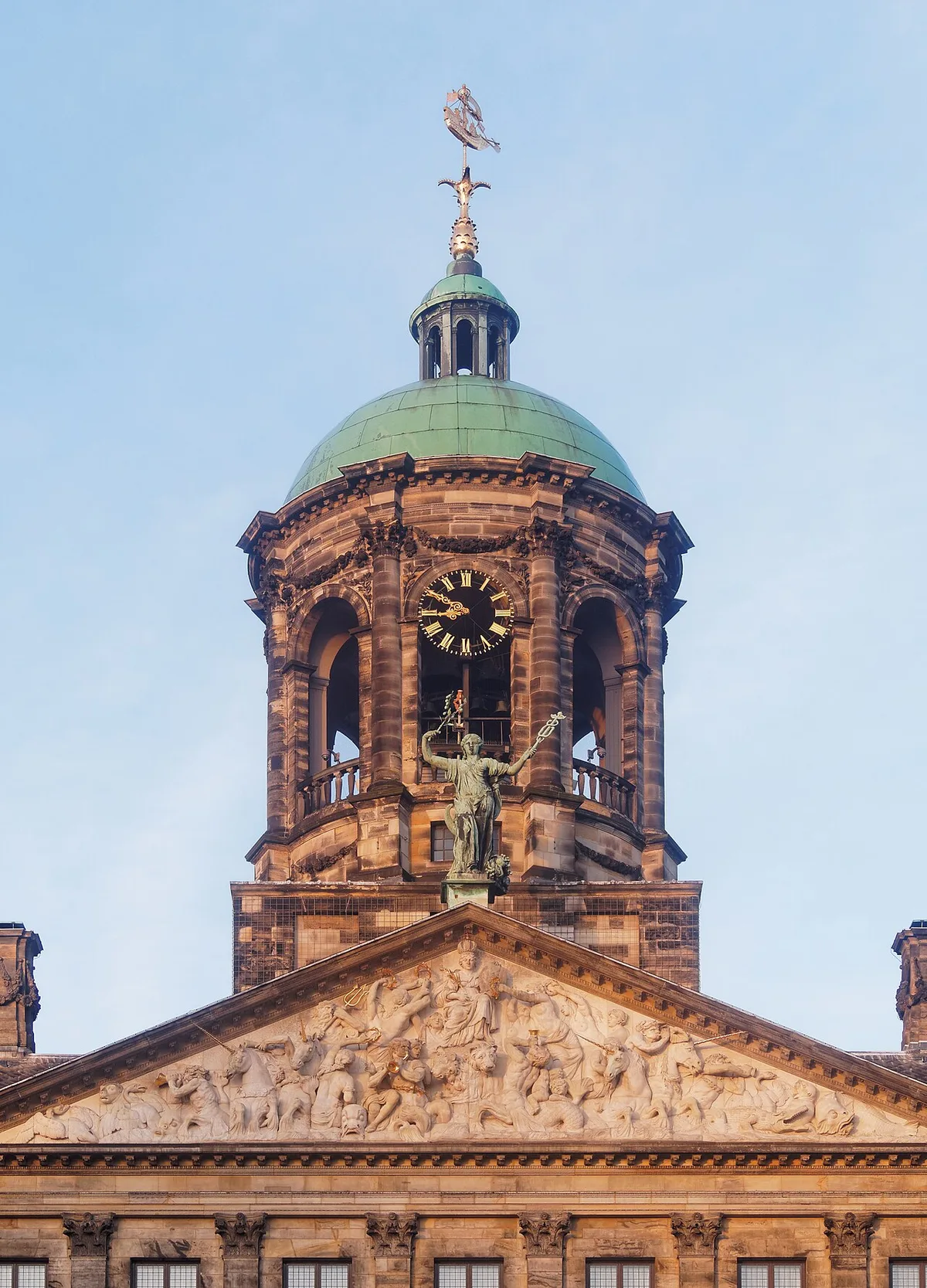
The national symbolic value of Koninklijk Paleis Amsterdam lies in how it encapsulates within its physical structure both the spirit of urban autonomy and central state authority. The exterior facade, with its heavy stone blocks and relief sculptures depicting Greek mythology combined with images of the sea god Neptune, signifies Dutch dominance across the oceans. The central hall, known as the Citizens’ Hall, is an architectural masterpiece featuring a world map inlaid in bronze and granite on the floor, illustrating Amsterdam’s central position within the global trade network of the seventeenth century. The sculptures and decorative paintings within the palace convey profound philosophical messages regarding justice, wisdom, honesty, and the responsibility of rulers toward the public. Through centuries of upheaval from world wars, economic crises, and shifting political regimes, the structure has stood firm as a milestone defining the cultural identity and resilient spirit of the Dutch people.
The cultural influence of the palace extends far beyond national borders, establishing it as a leading research site for art historians specializing in the European Golden Age. The building’s pile-driving construction techniques to combat subsidence on weak soil have become classic reference material in civil engineering and global urban planning. In contemporary life, opening a portion of the palace spaces to the public for tours when royal activities are absent demonstrates the open and progressive cultural governance of the Dutch government. It regularly hosts major contemporary art exhibitions, creating a direct dialogue between seventeenth-century classical sculptural heritage and modern plastic arts, forging a continuous, unbroken cultural flow. Therefore, Koninklijk Paleis Amsterdam is not merely a static monument of a regal past, but actively participates in the intellectual, artistic, and political life of the Kingdom of the Netherlands in the twenty-first century.
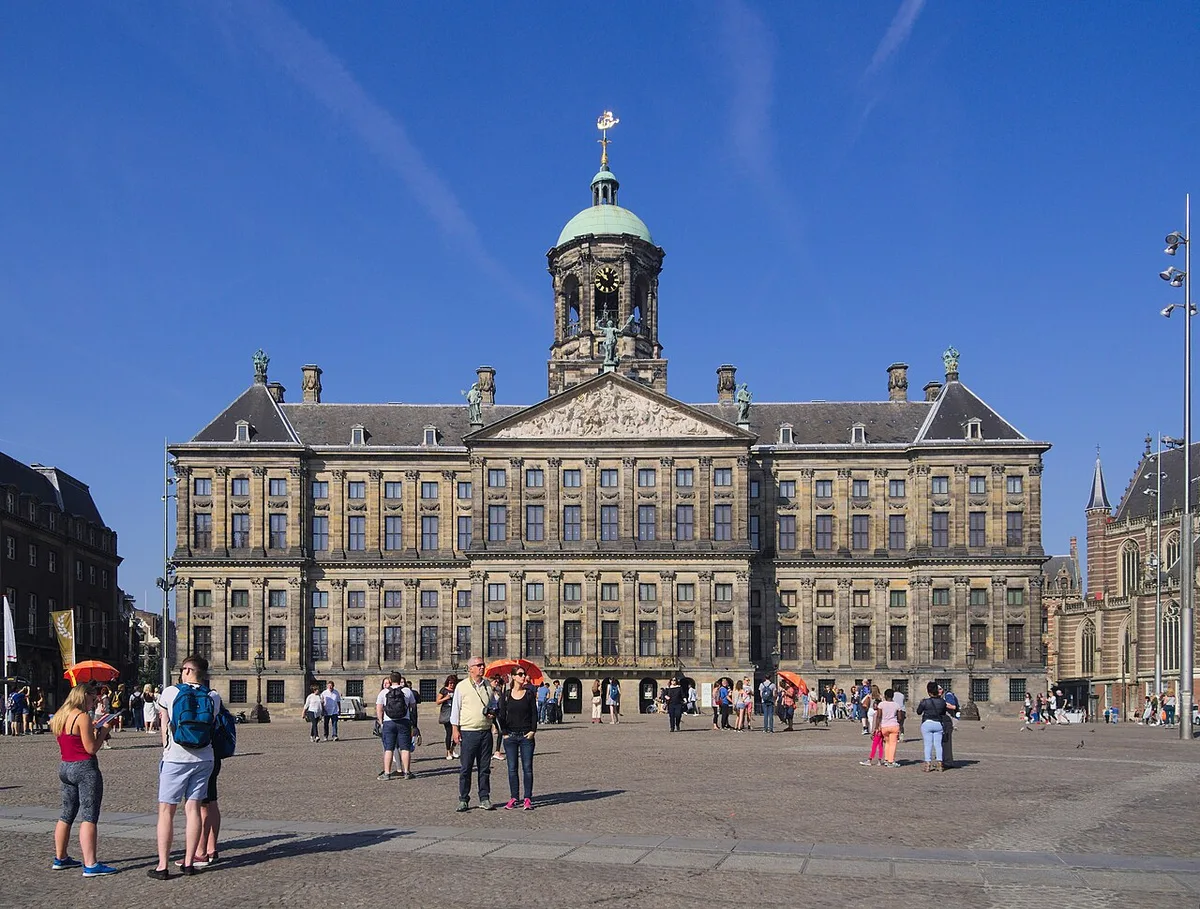
Koninklijk Paleis Amsterdam, standing majestically in the central Dam Square of Amsterdam, represents the pinnacle of seventeenth-century architectural art in the Dutch Republic. The structure began not with a royal function but was planned as the City Hall, the ultimate symbol of commercial power, economic prosperity, and the autonomous republican ideology of the maritime bourgeoisie. Construction began in 1648, the year the Peace of Westphalia (Peace of Münster) was signed, ending the Eighty Years’ War and bringing complete independence to the Netherlands. Amidst a waterlogged swamp reclaimed by the Amstel River system, engineers and architects of that era faced an unprecedented technical challenge regarding the foundation. To prevent subsidence on weak sandy mud, a total of 13,659 oak piles were driven deep into the waterlogged earth—a rustic yet sturdy engineering feat so robust that the structure has maintained its stability through over three and a half centuries of historical upheaval.
Under the masterful hand of chief architect Jacob van Campen, who was deeply influenced by the Italian Renaissance and the classical geometric principles of Andrea Palladio, the overall floor plan of the palace was shaped by strict proportions and absolute symmetry. This rigorous classical architecture creates a stark yet harmonious contrast with the surrounding dense, winding canals and traditional narrow housing of Amsterdam. Covering a vast surface area of approximately ten thousand square meters, the building dominates Dam Square with its massive, imposing, and sturdy rectangular block. The height of the main block reaches nearly fifty meters, and the top of the dome is adorned with an octagonal maritime-style observatory housing a model of the cog ship—the symbol of the city of Amsterdam—directly recalling the maritime wealth of Dutch merchants.
The primary material selected for the entire exterior facade is Bentheim sandstone imported from northwestern Germany, replacing the conventional red brick popular in Dutch urban architecture of that era. This stone possesses a characteristic light gray color, which when exposed to the humid climate and North Sea winds, transforms into subdued tones, creating a majestic, austere yet extremely luxurious appearance. The quarrying, transportation, and processing of these gigantic sandstone blocks demanded extraordinary logistical efforts using canal barges. Under the meticulous carving of renowned sculptor Artus Quellinus and his workshop, the exterior walls and interior spaces were adorned with a series of marble reliefs and exquisite free-standing statues. The sculptural themes revolve around Greek and Roman mythology, combined with allegories of global trade, subdued pirates, and the prosperity of continents converging on Amsterdam.
The layout of Koninklijk Paleis Amsterdam is organized around two large courtyards, optimizing natural light and ventilation for the vast interior suites. The heart of the entire building is the Great Hall, also known as the Burgerzaal, a central space occupying the full height of the block that acts as a microcosm reflecting the worldview of seventeenth-century Dutchmen. The floor of the Burgerzaal features three colossal inlaid maps in bronze and colored marble—showing the Western Hemisphere, Eastern Hemisphere, and a celestial map—testifying to the outreach and geographical ambitions of Amsterdam merchants. The old administrative offices, courtroom, city council chamber, and treasury are arranged symmetrically around this grand hall, creating a coherent, clear functional network reflecting transparency in republican state governance.
A major turning point in the building’s utility occurred in 1808 when Louis Bonaparte, brother of Napoleon Bonaparte appointed King of Holland, decided to convert the City Hall into a Royal Palace. This transformation brought a brand-new interior outfit in the fashionable French Empire style, featuring gilded furniture, rare silk carpets, gigantic crystal chandeliers, and intricate wood-paneled walls. Although Louis Bonaparte’s reign was short-lived, this royal interior legacy was inherited, preserved, and enriched by successive monarchs of the House of Orange-Nassau. The intersection between the austere republican power structure and the later splendor of European royal interiors created a unique spatial identity rarely found in human architectural heritage.
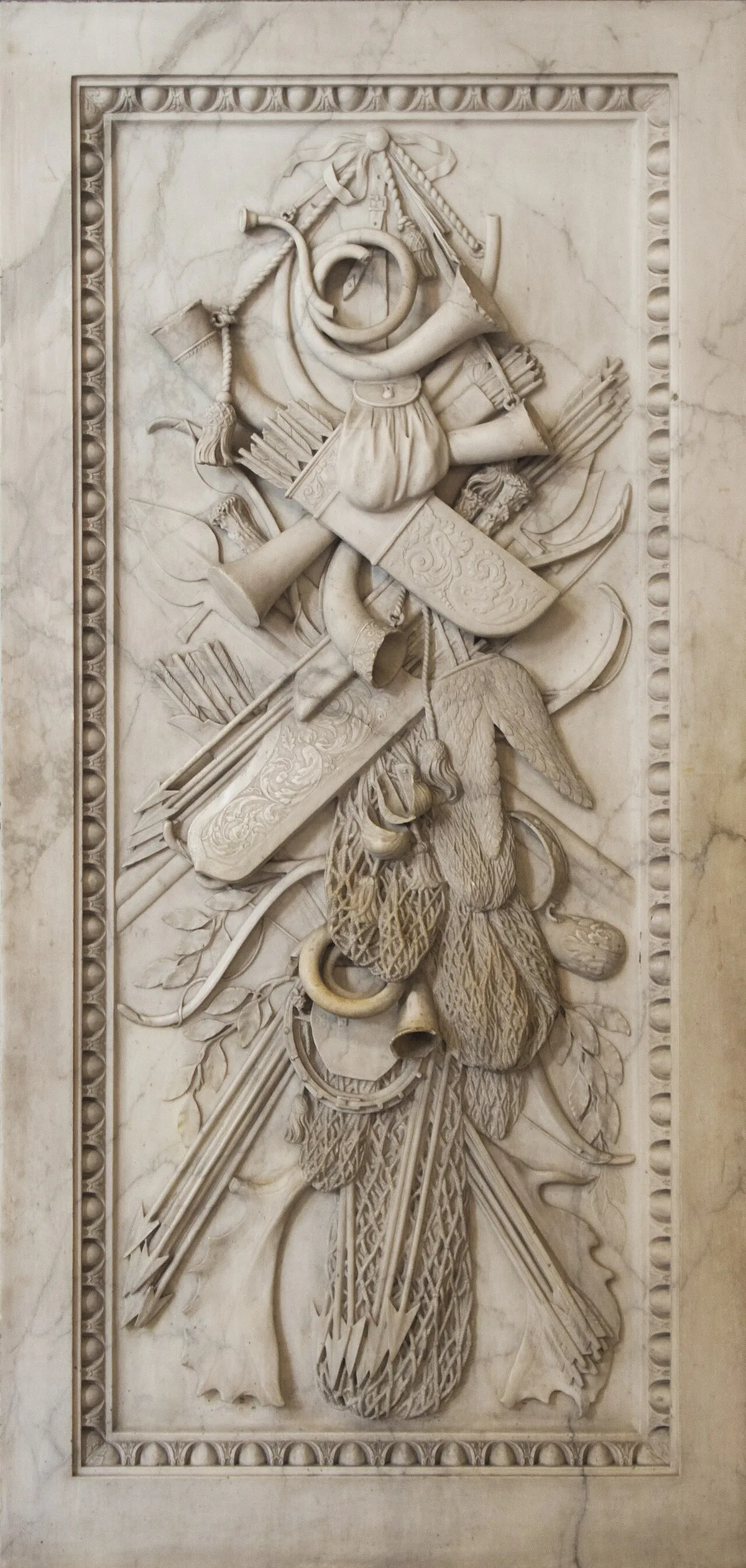
Visitor planning and heritage preservation at Koninklijk Paleis Amsterdam in the modern era demand rigorous technical standards to balance public access with protecting the fragile historical structure. Since the ancient wooden pile foundation still bears immense pressure from fluctuating groundwater levels, controlling daily tourist traffic is calculated via scientific spatial capacity management algorithms. Climate control, humidity, and lighting systems are subtly hidden within antique wall structures to prevent damage to seventeenth-century murals and Carrara marble sculptures. When open to international visitors, the palace does not act as a silent museum but maintains a living diplomatic function where the Dutch Monarch receives heads of state and hosts major national ceremonial events.
In short, the presence of Koninklijk Paleis Amsterdam is a powerful testament to visionary urban planning, timeless foundation engineering, and supreme classical architecture. From a city hall symbolizing the autonomous will of the maritime bourgeoisie to a dignified royal palace, the building retains deep academic research value in its unique spatial layout, materials, and construction techniques. Studying its compartmentalization layout, geometric proportions, and technical solutions for weak soil provides invaluable lessons for global architectural heritage conservation, affirming the enduring vitality of an architectural masterpiece in the heart of a historic European city.
Located in central Dam Square in Amsterdam, the Royal Palace of Amsterdam (Koninklijk Paleis Amsterdam) is one of the greatest testimonies to the golden age of the Dutch maritime merchant republic in the seventeenth century. Originally the Amsterdam City Hall, it was designed by the genius architect Jacob van Campen during a period when the nation’s economy and culture reached the peak of global power. Construction began in 1648, coinciding with the signing of the Peace of Münster ending the Eighty Years’ War, marking official recognition of the independence of the Republic of the Seven United Netherlands. Jacob van Campen completely abandoned Gothic or late Renaissance styles in favor of a strict Classical architectural language, deeply influenced by the ideas of Andrea Palladio and Vincenzo Scamozzi. The building signifies the secular power of city rulers, affirming Europe’s supreme commercial and financial center at the time through massive square volumes and elaborate orders carved from Bentheimer sandstone imported from Germany.
Stepping through the heavy bronze doors into the interior, the first space welcoming visitors is the grand hall, the Burgerzaal, or Citizens’ Hall. This is considered the largest and most important spatial masterpiece of the entire building, simulating an ancient Roman basilica transformed with Enlightenment philosophy. The floor of the Burgerzaal is entirely inlaid with vibrantly colored marble slabs depicting three giant hemispherical world maps: the Western Hemisphere, the Eastern Hemisphere, and a celestial map based on the era’s most advanced astronomical knowledge. These maps carry not only maritime scientific value but also profound philosophical meaning regarding humanistic ideology, positioning Amsterdam as the center of the universe and global trade, where city power reached every corner of the oceans. Natural light from soaring windows illuminates the marble maps directly, creating a strong visual effect celebrating the ambition of the Dutch maritime bourgeoisie to control space and time.
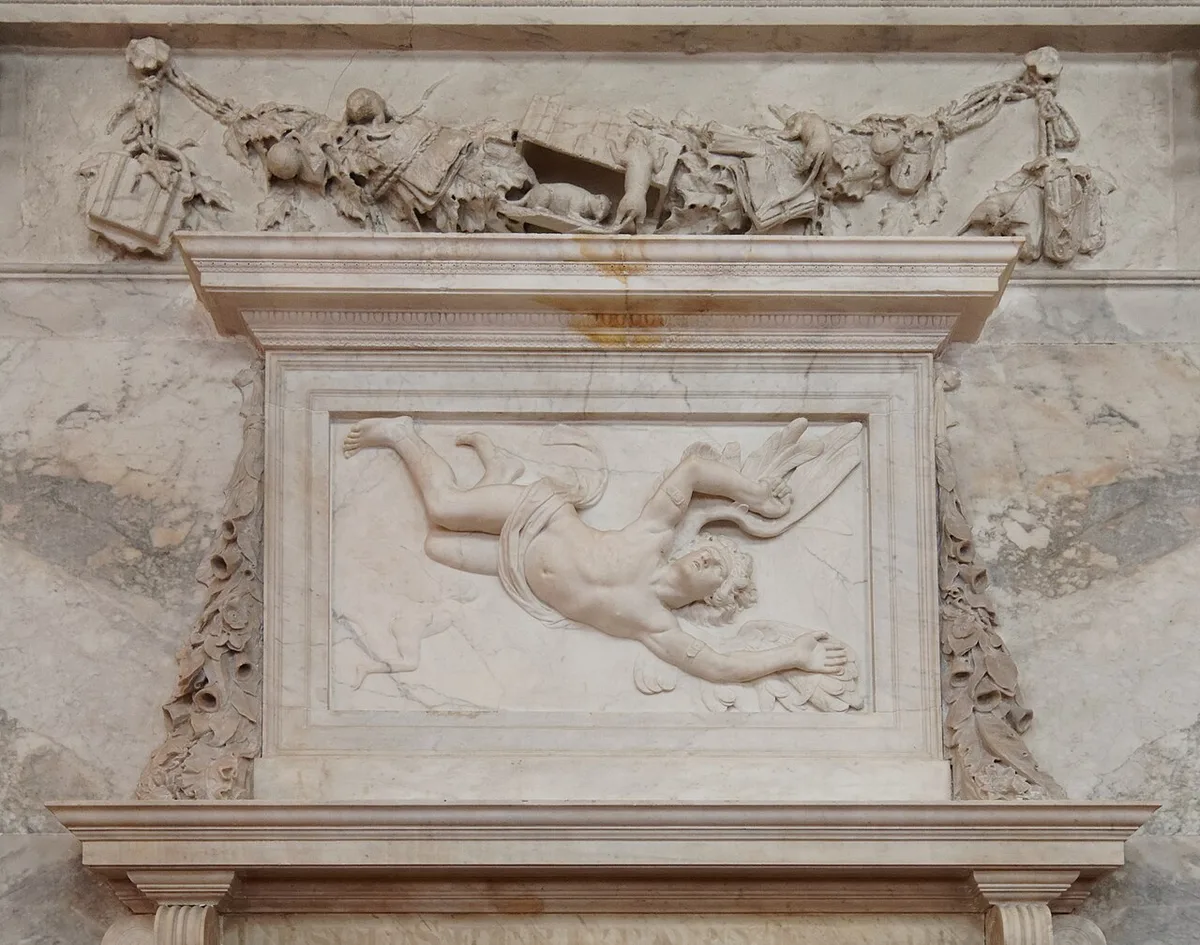
Enrounding the central space of the Burgerzaal are old courtrooms, reception rooms, and meeting chambers of the former city council, where every small corner is decorated with sculptures and murals imbued with Greek and Roman mythological symbolism blended with the republican spirit. The walls are completely clad in Italian white marble combined with exquisite carved oak, creating a striking yet harmonious contrast between chilling authoritative power and the warm luxury of northern interiors. Notable are the white marble sculptures by the great sculptor Artus Quellinus and his workshop executed over nearly two decades. Mythological figures like Atlas bearing the sky, the goddess of justice holding the scales, and Neptune ruling the oceans are carved with exquisite detail, directly reflecting moral values, judicial fairness, and the economic prosperity rooted in Amsterdam’s shipping industry.
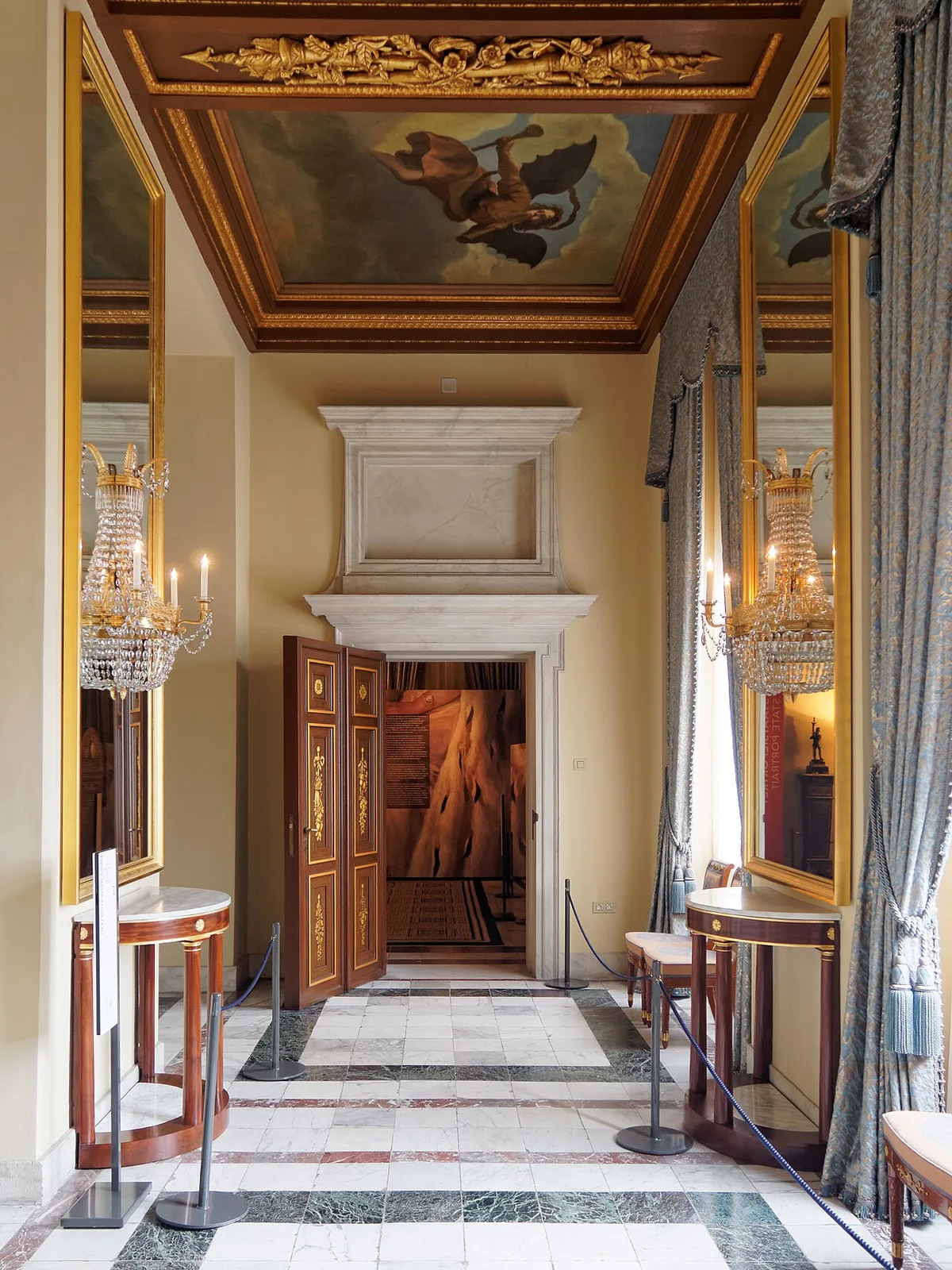
When the building’s function was converted from City Hall to Royal Palace in the early nineteenth century under the reign of Louis Bonaparte, brother of Emperor Napoleon Bonaparte, the interior underwent major remodeling in line with the trendy French Empire aesthetic. Louis Bonaparte brought to Amsterdam a fresh wave of imported mahogany furniture, glittering gilded details, premium Aubusson hand-woven carpets, and expensive wall silks. The Royal Bedroom and Staterooms were completely rearranged to suit continental European court protocol, turning a practical republican space into a lavish monarchical stage. Nevertheless, this intervention did not erase Van Campen’s original classical architectural core; instead, it created a rich historical sediment where two major European aesthetic schools merge and converse directly through every piece of wood, molding, and marble block.
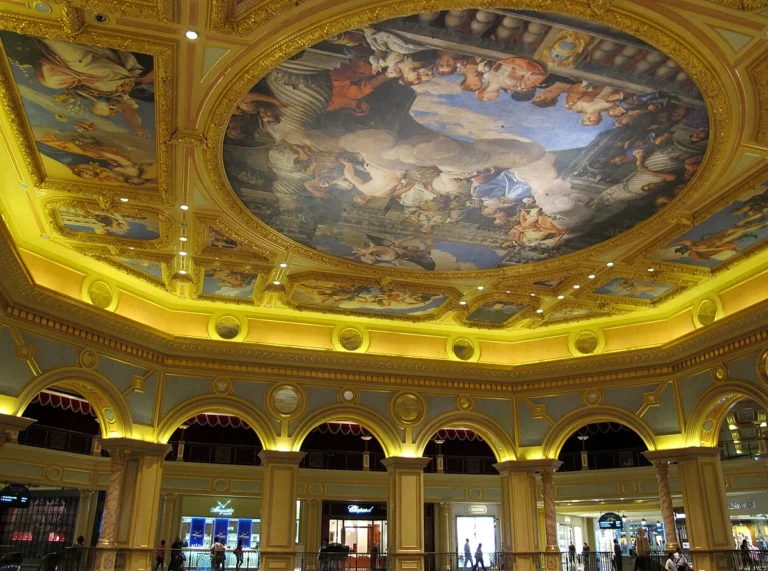
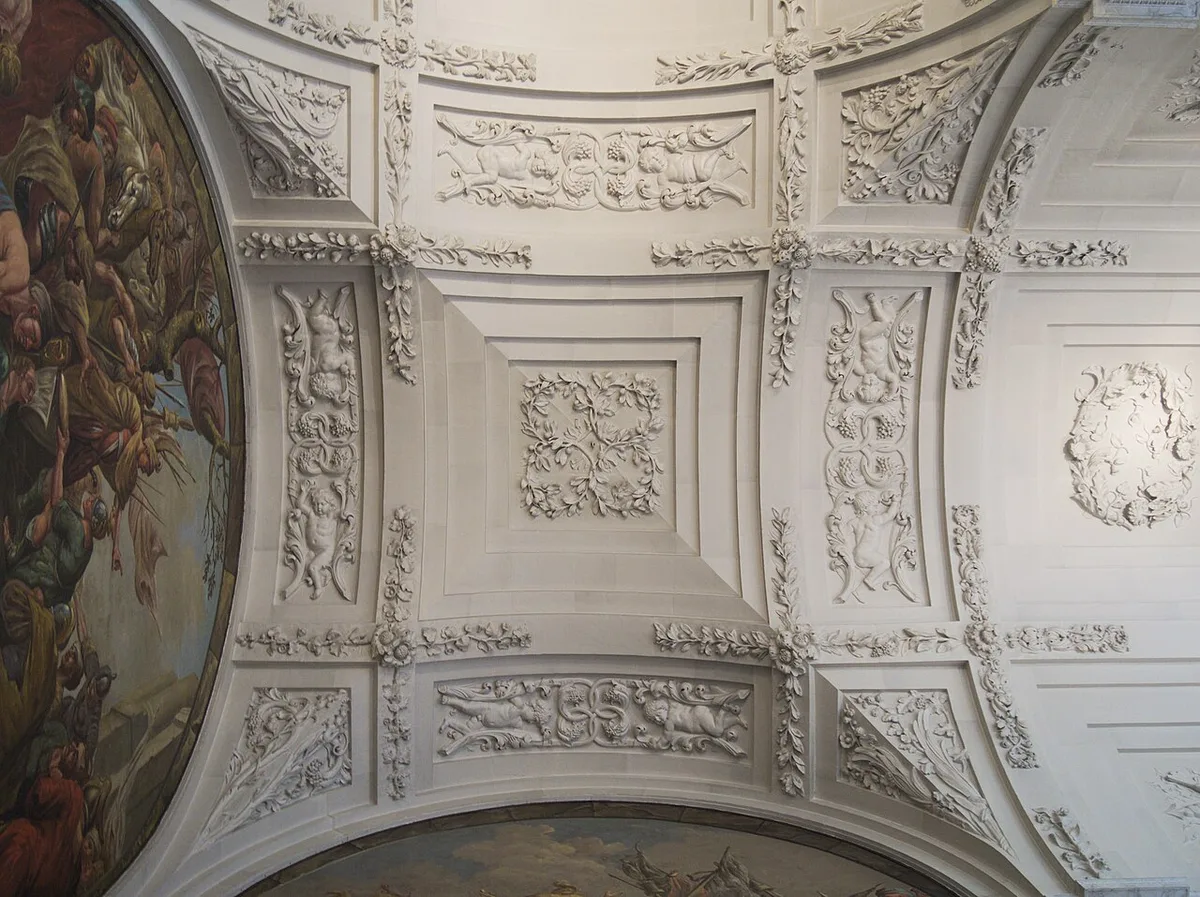
The palace ceiling system is a gallery of top-tier paintings featuring works by Rembrandt school pupils such as Govert Flinck, Ferdinand Bol, and Jacob Jordaens. Large vaulted ceiling paintings use trompe-l’œil spatial perspective techniques, making the ceiling appear to open up to a high sky with gods ruling and protecting the city. Painting themes often revolve around the triumph of peace over war, divine protection for commerce, and citizens’ loyalty to the republic. Every brushstroke and color patch reflects the delicate light-handling technique characteristic of Dutch Golden Age painting, where light and shadow intertwine to highlight the psychological depth and majesty of historical and mythological figures.
The old courtroom area, where judges once sentenced criminals to death or judged major commercial disputes, carries an austere atmosphere steeped in criminal law philosophy. The walls are decorated with large paintings depicting historic righteous judgments from antiquity, such as the judgment of Zaleucus or the steadfastness of Brutus, reminding magistrates of their heavy moral duty when holding life-and-death power. Wood carvings on the doors of this room depict skulls, crossbones, and memento mori symbols, reminding mortals of the finiteness of earthly life before the eternity of cosmic justice and law. This combination of graceful plastic arts and religious, philosophical deterrent symbols clearly displays the stoic yet ambitious Calvinist mindset of Amsterdam’s elite at the time.
The exterior facade of the palace acts as a cultural armor completely expressing the architecture’s philosophy through reliefs atop the central dome. The south facade relief depicts the goddess Amsterdam surrounded by sea gods, receiving precious tributes from four global continents brought by merchants via sea routes. This symbol affirmed the global trading supremacy of the Dutch East India Company and West India Company, the world’s first multinational corporations connecting economies from Asia and Africa to the Americas. The entire exterior limestone structure, having endured harsh North Sea climates for centuries, has turned a subdued gray, enhancing the dignified, tranquil beauty enduring alongside the ups and downs of Dutch history.
A comprehensive survey of Koninklijk Paleis Amsterdam provides deep insight into how political power, philosophical thought, and fine arts merged to create a unique architectural heritage. From giant marble maps on the Burgerzaal floor to sky-vaulted mythological frescoes, every corner tells a long story of a small nation’s ambition on muddy shores to master the world. This is not merely a royal residence or a public administrative office, but an encyclopedia in stone and visual art, fully preserving the cultural essence of the Dutch Golden Age for future generations to admire and study.
Koninklijk Paleis Amsterdam, located right in the center of the grand Dam Square in the Dutch capital, is not just a historical architectural monument bearing the stamp of the Golden Age, but a living entity blending into the daily pulse of this canal city. Examining the local rhythms of life around the palace requires a refined perspective, starting at dawn when mist lingers on the surrounding canal waters and the first rays of sunlight touch the dark gray Bentheim sandstone of the facade. At this hour, before tourist crowds arrive, the Dam Square area possesses a characteristic northern European tranquility. The first local workers appear, bicycles glide quietly over old bricks, creating a minimalist yet thoroughly practical soundscape of urban life. The antique facade of the palace, featuring marine mythology carvings by artist Artus Quellinus, gradually brightens under the morning light, reflecting centuries of history of a merchant republic that once dominated world sea charts.
As the sun climbs higher, life around Koninklijk Paleis Amsterdam shifts to a completely different, vibrant, and contemporary community tune. Dam Square becomes a crossroads of thousands of footsteps, from talented street artists performing classical ensemble pieces to crowds streaming in from neighboring shopping streets like Kalverstraat and Nieuwendijk. Locals and international tourists often choose the wide stone steps in front of the palace as a resting point, observing urban life or chatting over takeaway coffee. The palace is not isolated behind strict royal walls; instead, it serves as a grand backdrop for community activities. Tour groups line up to step through the giant bronze doors, exploring luxurious interiors with marble-paved grand halls, soaring ceilings decorated with Baroque frescoes, and tons of heavy brass chandeliers casting warm golden light.
Experiencing the interior of Koninklijk Paleis Amsterdam during daytime provides deep insight into seventeenth-century power and art. Originally built as Amsterdam City Hall during the Golden Age of the republic, it symbolizes Dutch ambitions to master the oceans and global trade. Entering the Central Hall, visitors are amazed by the world map inlaid on the floor in white and gold marble, proving the vast geographic scale reached by the nation’s explorers and merchants. The old courtrooms, reception rooms, and head of state offices preserve high aesthetic values with wall paintings by Rembrandt pupils Govert Flinck and Ferdinand Bol. Observing how natural light filters through tall windows onto gilded reliefs creates a strong visual effect, perfectly recreating the authoritative yet refined atmosphere of the ruling merchant bourgeoisie.
At special times of the year, the rhythms here peak through major national festivals and rituals. Koninklijk Paleis Amsterdam does not open year-round to the public; it maintains its practical function for royal banquets, major cultural awards, and high-level diplomatic receptions of the Dutch constitutional monarchy. On occasions like King’s Day or national historical anniversaries, Dam Square transforms into a sea of people wearing bright orange, joining voices in traditional songs directed toward the palace balcony where royals wave to the public. Light art shows projected directly onto the ancient stone facade during winter festivals create a magical dialogue between classical architecture and contemporary visual tech, drawing tens of thousands to fill the square.
As dusk falls, Amsterdam dons a poetic cloak, and the area around Koninklijk Paleis Amsterdam becomes the epicenter of artificial light merging with approaching night. Streetlights along canals turn on, reflecting in rippling water, while artistic lighting highlights every exterior sculptural detail of the palace. This offers a tranquil, profound visual experience, contrasting with daytime noise. Photography and urban exploration enthusiasts seek out prime angles to capture the moment where past and present meet. One of the best views is from Blauwbrug bridge or rooftop cafes facing Dam Square, where one can overlook the palace’s massive architecture standing amidst open space.
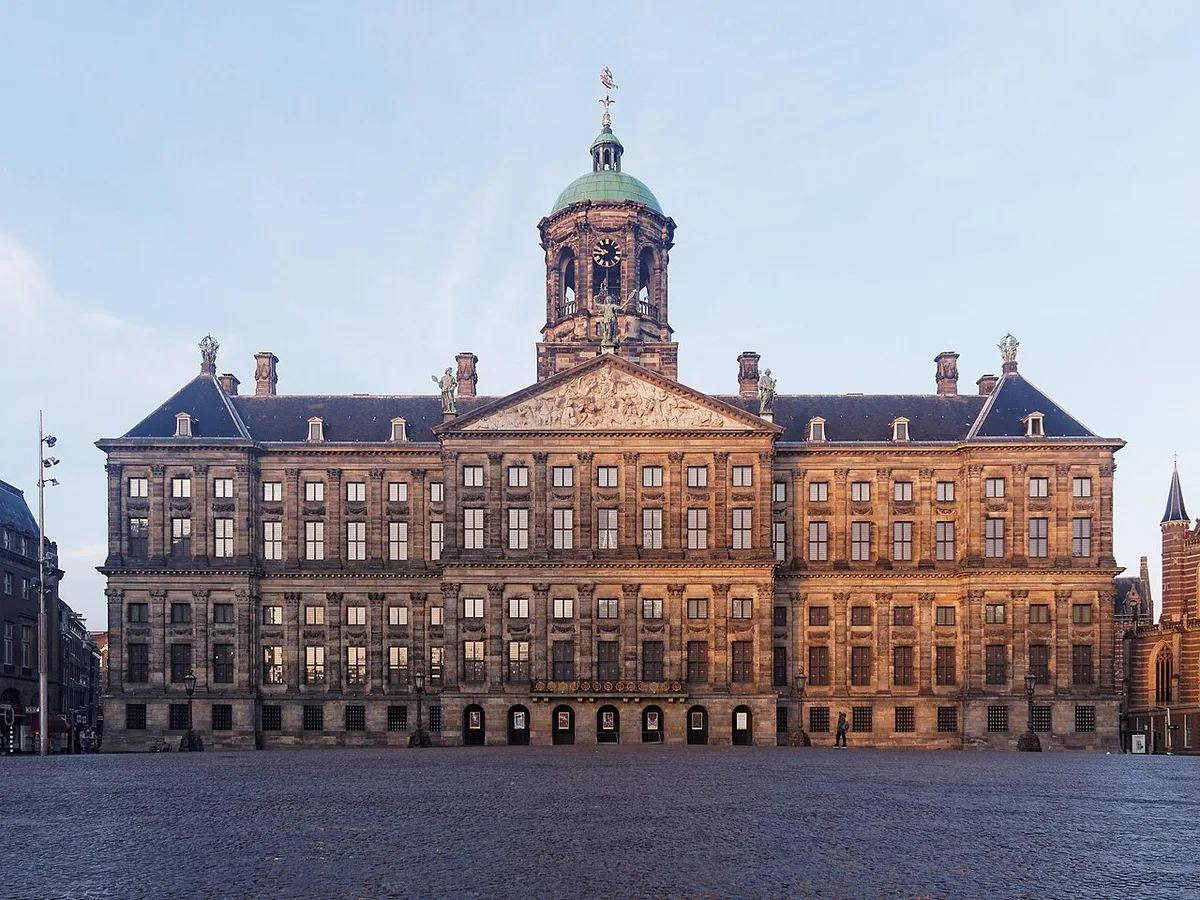
Deep night at Koninklijk Paleis Amsterdam is when cultural activities in the old center shift to more private spaces like antique tea rooms, historic bars, or small theaters hidden in winding alleys. Though palace doors close and crowds disperse, the heavy historical and cultural presence of the monument blankets the entire urban center. Experiencing local life here goes beyond observing surface activities; it involves feeling the flow of time where a glorious mercantile past and an open, free modern city merge into one. Walking the square late at night under dim yellow lights on mossy stone walls grants travelers the most authentic view of Amsterdam’s soul.
The Royal Palace of Amsterdam (Koninklijk Paleis Amsterdam) complex, located in majestic Dam Square, is not merely a power symbol of the Kingdom of the Netherlands but also the epicenter of a long-standing culinary culture ecosystem. Through centuries of upheaval from the Golden Age of East India maritime trade to modern times, the space around this 17th-century structure has formed a distinctive flavor map. Ancient streets surrounding the palace like Nieuwendijk, Kalverstraat, or the nearby Jordaan district preserve culinary heritages reflecting pragmatic living philosophies, global spice blending, and ingenious food preservation techniques of the lowlands. Here, culinary arts do not serve ostentatious luxury but aim for a perfect balance between labor energy and subtlety in raw ingredients, creating a unique identity unmatched by any other capital on the Old Continent.
The journey to explore traditional dishes must begin with dairy products and hearty stews suited for harsh northern winters. Behind the palace’s majestic marble walls, Amsterdam locals for hundreds of years have elevated potatoes, root vegetables, and beef into rustic yet vibrant culinary works. Stamppot, a symbol of family coziness, is made by mashing smooth potatoes with kale, carrots, or chicory, served alongside a large, savory, fatty smoked Rookworst sausage. This technique requires patience in braising meat to retain natural moisture, combined with a rich gravy from drippings and onions. Additionally, Hollandse Nieuwe salted herring sold at traditional stalls for centuries demonstrates top-tier preservation skills by Dutch fishermen. Fresh herrings caught in early summer are gutted, cured in mild brine with chopped onions and pickles, and eaten by holding the tail and tilting one’s head back to enjoy a rich, refreshing flavor without any fishy taste.
The formation of the Dutch East India Company (VOC) in the seventeenth century infused the culinary scene around the palace with rare spices from Asia, turning Amsterdam into a global spice trade hub. Thanks to abundant cinnamon, nutmeg, cloves, and ginger, royal pastry chefs and local artisans created Spekkoek spice cakes and especially Stroopwafel syrup waffles. Making Stroopwafel requires absolute precision in kneading flour with yeast, butter, and brown sugar to form two thin, crispy layers baked on a hot cast-iron mold, then sandwiching a warm caramel syrup layer mixed with cinnamon inside. The traditional way of enjoying Stroopwafel is an art form, as diners place the waffle over a cup of hot coffee or steaming black tea so the rising steam melts the inner syrup, making the waffle chewy and fragrant. Moreover, Pannenkoeken pancakes, large and thin, combining savory ingredients like bacon, aged Gouda cheese with sweet options like fried apples and wild honey, have become staples in traditional eateries hidden beneath gabled roofs facing canals.
Tea and coffee customs around the royal palace bear the stamp of 18th-century noble merchant elites, where cafes became forums for knowledge and commerce. The Dutch value afternoon Koffietijd, a time to pause work and gather over strong black coffee or Ceylon tea with crumbly butter cookies like Bitterkoekjes or spiced Speculaas biscuits shaped like historical figures. This beverage art pairs with premium aged cheeses matured in underground rock cellars along canal banks. Gouda and Edam cheeses, with characteristic wax rinds and firm textures containing tiny white protein crystals from years of aging, combined with Jenever (traditional juniper berry spirit), create an explosive palate experience for connoisseurs.
Strolling through ancient commercial veins radiating from Dam Square, diners immerse themselves in aromas from centuries-old bakeries. Kalverstraat and Spuistraat are famous not only for Renaissance architecture but as sanctuaries for local street food. Bitterballen, breaded and deep-fried ragout beef croquettes with hot beef filling, are indispensable starters in traditional brown cafes (Bruine Kroeg). Biting into the crispy golden crust, the savory beef stew filling mixed with parsley and nutmeg bursts forth, pairing wonderfully with spicy yellow mustard. Dining here is not just energy intake but a cultural decoding journey, where every flavor and technique tells the story of a resilient nation rising from wetlands to conquer the world.
Koninklijk Paleis Amsterdam, a monumental 17th-century architectural masterpiece in central Dam Square, requires thorough preparation and careful research from visitors wishing to access this layer of Dutch royal heritage. To fully grasp the operational rhythms of one of Europe’s most vital head-of-state residences, studying seasonal climates, dense public transit networks, and cultural etiquette is key. The capital’s climate is distinctly temperate maritime, strongly influenced by the North Sea with flexible temperature ranges and sudden rain showers year-round. Spring, from March to May, welcomes visitors with temperatures from 8 to 15 degrees Celsius, fresh air, and blooming flowers from surrounding regions, creating an ideal setting for walking historic paved streets to the palace. Summer from June to August brings bright sunshine, average temperatures of 20 to 25 degrees Celsius, occasional short heatwaves, and overall pleasant outdoor conditions. Autumn offers nostalgic beauty as maples and elms along canals turn yellow-orange, temperatures drop to 10 degrees Celsius, and chilly sea breezes blow. Winter from December to February shrouds the city in a tranquil atmosphere, with temperatures hovering around 0 to 5 degrees Celsius, occasionally dusting ancient roofs and frozen canal systems with light snow.
The urban public transit system connecting directly to Dam Square and the vicinity of Koninklijk Paleis Amsterdam is globally renowned for efficiency, punctuality, and great coordination. Amsterdam Centraal Station serves as the main transit artery, a 15-minute walk through bustling shopping streets or minutes away via dense tram networks. Trams 2, 12, and 17 stop right at Dam station, offering the most direct and convenient access for those prioritizing speed. For travelers from distant suburbs or Schiphol Airport, the Noord/Zuid Line metro with Rokin station a short walk away is an optimal technical choice, shortening underground travel time before surfacing into the city’s history. GVB public buses also offer radial routes connecting inner districts to the historic center, though peak morning and evening hours may face slight delays from traffic on narrow streets. Traditional taxis or ride-hailing near Dam Square face certain restrictions as central streets limit motor vehicles to prioritize pedestrians and cyclists. Thus, walking combined with rail and tram transit remains the most practical, sustainable, and authentic way to explore this royal monument.
Choosing the optimal time of day to step inside Koninklijk Paleis Amsterdam is decisive for visual and artistic appreciation. From 9:00 AM to 11:00 AM, right after public opening, is ideal as crowds are thin, allowing visitors to leisurely admire wall carvings and Dutch Golden Age paintings without obstruction. Morning natural light shining through large windows facing Dam Square illuminates the Central Hall, brightening massive frescoes and highlighting the majesty of pure bronze sculptures. Afternoon from 3:00 PM to 5:00 PM offers unique visual experiences as slanted sunlight casts long rays through staterooms, though tour groups gather in greater numbers. Regarding attire, due to the strict conservation nature of a historical monument serving high-level royal diplomacy, visitors must follow neat, polite dress codes, avoiding overly revealing or sloppy clothing. Soft-soled, non-slip footwear is prioritized since palace floors are mostly solid marble and centuries-old wood; high heels can damage heritage surfaces. Additionally, as local weather changes hourly, bringing a light waterproof jacket and scarf is wise for outdoor segments.
Cultural etiquette and local customs in Amsterdam require high sensitivity and respect from international guests visiting national symbols. The Dutch are known for straightforwardness, punctuality, and valuing personal space, so maintaining order, speaking moderately, and strictly following palace signage are prerequisites. Handheld cameras or video recorders are permitted in most public exhibition areas, but flash photography is strictly prohibited under any circumstances to protect sensitive pigments on 17th-century oil paintings and ancient royal tapestries. Large tripods or selfie sticks are also restricted in narrow spaces to prevent bumping into priceless artifacts. When communicating with security, guides, or order keepers, polite standard English is always met with professional and cheerful attitudes. Legally and culturally, smoking of any kind, including e-cigarettes, is strictly banned indoors and near main exits. Furthermore, bringing food and drinks, especially colored beverages and crumbly snacks, into exhibition areas violates conservation rules and will be promptly addressed by security.
Booking tickets and managing schedules at Koninklijk Paleis Amsterdam requires early initiative since daily ticket allocations are strictly limited to ensure security and climate preservation inside historical rooms. Visitors are strongly advised against purchasing tickets directly at the counter during peak summer tourism; instead, they should book in advance via the official online e-ticket system on the palace’s portal. These e-tickets typically specify entry times allocated by daily time slots, requiring punctuality; arriving more than 15 minutes late can forfeit entry without a refund. Upon arrival, visitors undergo security screening similar to major international art museums, including bag X-ray and personal checks, making it necessary to limit large backpacks or bulky luggage to save time. The palace offers multilingual audio guides at reasonable fees, allowing self-guided exploration of staterooms and sculpture galleries without depending on large tour groups. Special occasions when the palace closes partially or fully for high-level diplomatic receptions by the Dutch Monarch are usually announced in advance on the official website, so checking updated operating schedules right before departure is wise to avoid disruptions.
To fully experience this journey with a local guide, you can check out the Germany – Austria – Hungary – Czech Republic 9D8N Tour with a pre-arranged itinerary.