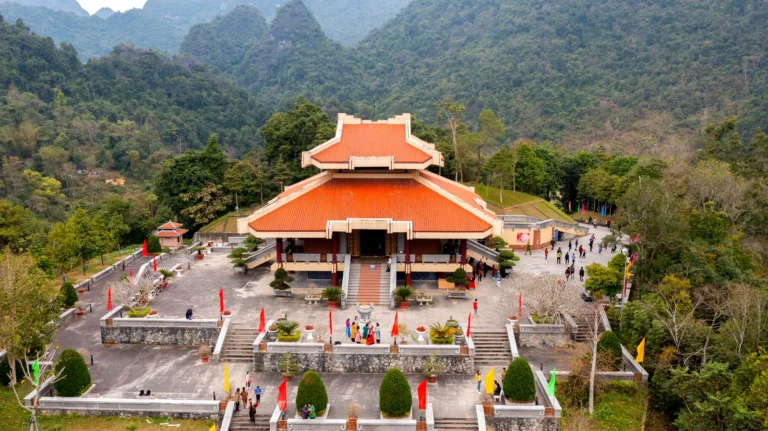
Nestled amidst the low-lying delta of Thanh Liem District in Ha Nam Province, Dia Tang Phi Lai Pagoda (originally known as Dung Pagoda) emerges as a tranquil Buddhist sanctuary where time seems suspended across a thousand years of national cultural sediment. Located in Ninh Trung Village, Liem Son Commune, this ancient temple occupies a unique geographical coordinate set far apart from the hustle and bustle of the outside world. From a feng shui perspective, the pagoda rests against the majestic Phi Lai mountain range, surrounded by prosperous villages and tranquil rice paddies, forming a picturesque mountain-and-water landscape steeped in Zen serenity. This classic “leaning against the mountain and facing the water” terrain bestows upon the land a pure, secluded, and sacred natural energy, instilling deep inner stillness in every traveler who steps onto its grounds. Looking back through the stream of time, the formation of Dia Tang Phi Lai Pagoda is intertwined with the most brilliant feudal dynasties of Dai Viet civilization. According to field historical records and archaeological remains uncovered on-site, this was once a large-scale Buddhist center dating back to the Early Le Dynasty, flourishing through the Ly and Tran dynasties with distinct cultural strata preserved in every brick, roof tile, and glazed ceramic piece bearing royal court artistry. Legend holds that this serene and sacred setting once welcomed reigning monarchs such as Emperor Tran Nhan Tong on royal visits. Through centuries of historical upheaval, the passage of time, and the devastation of natural disasters and war, the ancient pagoda fell into obscurity for a period, leaving behind only moss-covered ruins and an weathered stone stele quietly recounting tales of a glorious past. The origin of the pagoda’s modern name carries a profound layer of Buddhist philosophy. The words “Phi Lai” in Dia Tang Phi Lai Pagoda signify “Ksitigarbha Bodhisattva (Dia Tang Vuong Bo Tat) descending to save sentient beings, dwelling in seclusion, or gracing this place,” evoking his boundless vow to liberate all living beings. Legends linking this title to the Nguyen Dynasty—particularly records associated with Emperor Tu Duc bestowing royal decrees and praying for heirs as well as national peace and prosperity—further embellish the mythical aura of an architectural space that already resembles a miniature royal precinct. The contemporary restoration initiated in 2015 under the dedication and vision of Venerable Thich Minh Quang breathed new life into what was once an abandoned ruin, transforming it into an extraordinary cultural and spiritual heritage complex widely praised by researchers and the press. Throughout its restoration, work strictly adhered to the principle of preserving original elements to the fullest extent while harmonizing with traditional Northern Vietnamese Buddhist architecture, highlighting the site’s geological, archaeological, and indigenous landscape values. Today, Dia Tang Phi Lai Pagoda is not merely a peaceful spiritual haven for millions of Buddhists, but also a living museum of cultural history and a premier heritage travel destination in Ha Nam’s thousand-year-old cultural heartland.

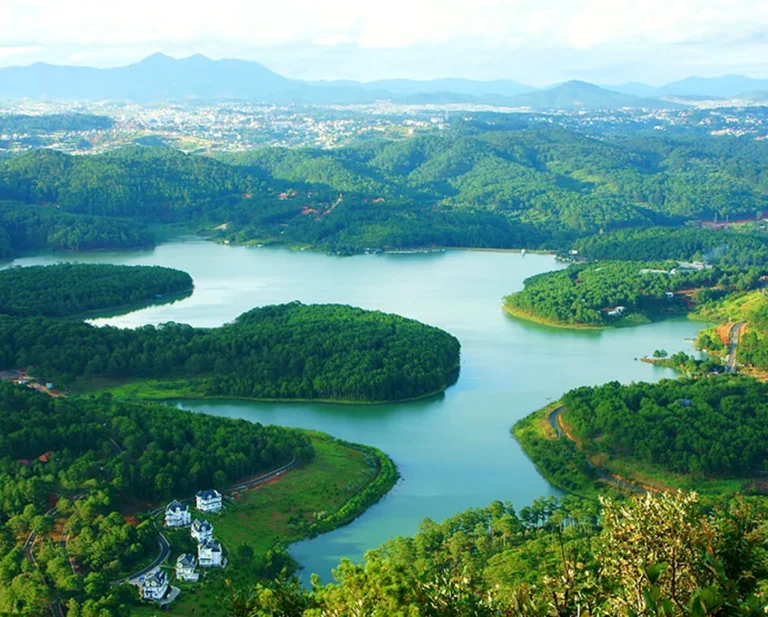
Set within the serene countryside of Thanh Liem District, Ha Nam Province, Dia Tang Phi Lai Pagoda unfolds like a breathtaking sanctuary on earth. Its geographical setting is remarkably auspicious: its back rests against the majestic, sturdy Phi Lai mountain range shaped like a protective throne, while in front lies an open expanse of tranquil ponds and lush pine hills whispering in the breeze year-round. This distinctive “mountain-backed, water-facing” terrain creates a cool microclimate completely insulated from urban noise and bustle, enveloping visitors in a remarkable sense of peace and stillness the very moment they pass through the triple-arched entrance gate.
Stepping inside, visitors are captivated by the exquisite architecture and sculpture—a seamless fusion of traditional Northern Vietnamese Buddhist heritage and contemporary aesthetic sensibility. The entire architectural complex is arranged symmetrically across terraced spatial levels. From the main courtyard carpeted in pristine white gravel symbolizing purity to the solemn Main Sanctuary (Tam Bao) crowned with sweeping phoenix-tail eaves, every detail exudes a contemplative, timeless elegance. Rustic red fired bricks and intricate dragon, phoenix, and lotus motifs hand-carved into natural stone and timber reflect the restorers’ devotion to safeguarding the nation’s cultural soul while honoring the authenticity of this thousand-year-old historical relic.
Beyond being a revered spiritual retreat, the pagoda boasts countless “million-view” photo spots that enchant travelers and photographers alike. For the most evocative shots, visitors cannot miss the forecourt of the Main Sanctuary, where an expansive sea of white gravel punctuated by artfully pruned bonsai trees evokes the serene atmosphere of ancient Japanese Zen temples. A second highly sought-after vantage point is the stone stairway ascending to the upper shrines, offering sweeping panoramic views across the entire pagoda grounds immersed in lush foliage and the Phi Lai hills. Additionally, the ancestral stupa garden with its weathered, moss-clad stupas provides a compelling backdrop for photographs rich in historical depth.
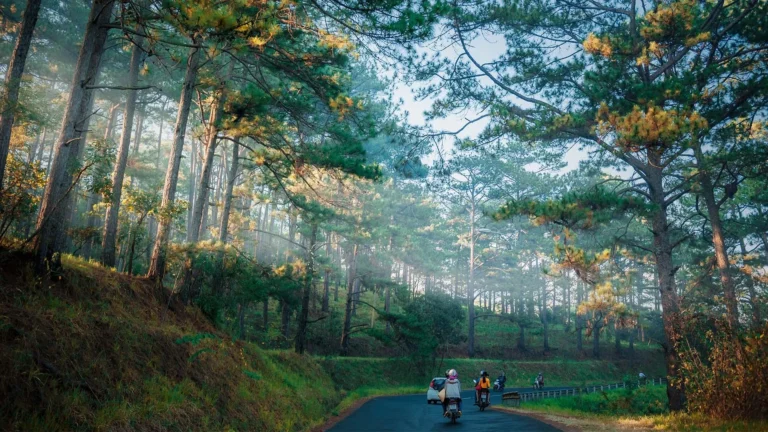
To capture the full majesty and artistic lighting of the site, professional photographers recommend visiting at two prime times of day. Dawn (from 5:30 AM to 7:00 AM) offers a magical moment when morning mist still lingers over the mountain peaks and gentle early sunlight filters through the pine canopy onto the white gravel courtyard, creating an ethereal, pristine atmosphere. Sunset (from 4:00 PM to 5:30 PM), by contrast, bathes the grounds in a warm, nostalgic golden glow; the late afternoon light casts soft shadows across mossy roof tiles and red brick walls, accentuating the contemplative, sacred beauty of this Buddhist sanctuary.
Passing through the Main Sanctuary gate of Dia Tang Phi Lai Pagoda, visitors feel as though they have stepped into a dimension wholly removed from the noise and commotion of city life. From the very first moment, the mind is overcome with awe by the solemn yet deeply tranquil beauty of the surroundings. Layers of moss-covered roof tiles, the pristine white gravel courtyard at the foot of Pho Quang Stupa, and mature pine trees rustling softly in the wind come together in a quiet symphony of nature and traditional Northern Buddhist architecture.
Exploring and paying spiritual homage at this thousand-year-old ancient temple rewards every visitor with deeply meaningful experiences. Travelers can stroll unhurriedly up moss-lined stone steps and weave through solemn shrine halls to offer incense in gratitude to Ksitigarbha Bodhisattva—the Bodhisattva of the Great Vow dedicated to rescuing all sentient beings. Every corner here, from intricately carved stone walls to meticulously tended bonsai trees, invites quiet reflection, helping visitors wash away daily worries and rediscover genuine inner peace.
Beyond quiet contemplation within the temple grounds, a visit here also invites active exploration of the captivating natural scenery around Thanh Liem, Ha Nam. For those who enjoy light adventure, a gentle hike up the hills encircling the pagoda yields a well-earned reward: a wide, open horizon unfolding before your eyes. Looking down from above, the entire architectural complex of Dia Tang Phi Lai Pagoda appears nestled amidst deep green forest, embracing the peaceful hamlets of Ninh Trung Village in a picturesque mountain-and-water tableau that stirs every traveler’s heart.
Stepping outside the quiet monastery grounds, a vibrant local cultural journey awaits through the renowned culinary specialties of Ha Nam’s lowland region. Nothing is more satisfying after hours of sightseeing than savoring the rich, soulful flavors of savory Vu Dai Village braised fish, steaming soft Cho Luong steamed rice rolls, or rustic countryside treats like sweet Dai Hoang royal bananas. Together, these experiences—spanning scenic beauty, spiritual serenity, and memorable local cuisine—weave into lasting memories of a sacred, hospitable, and vibrant land.
Located in Ninh Trung Village, Liem Son Commune, Thanh Liem District, Ha Nam Province, Dia Tang Phi Lai Pagoda (Dia Tang Phi Lai Tu) is a tranquil spiritual and sightseeing destination that draws visitors from near and far. To ensure your journey exploring this thousand-year-old ancient temple is smooth, fulfilling, and respectful, this handy pocket guide covers all the essential details you need to know.
Regarding opening hours, the pagoda welcomes sightseers and worshippers every day of the week. Visiting hours typically run from around 6:00 AM until 6:00 PM, giving visitors ample time to perform spiritual rituals and stroll unhurriedly through the unique architectural grounds without interruption. Notably, admission is completely free for all sightseers, tourists, and Buddhist pilgrims.
As for transportation and routes, departing from central Hanoi, the journey to the pagoda covers nearly 70 km along well-maintained, convenient roads. You can travel by private vehicle such as a car or motorbike via the Cau Gie – Ninh Binh Expressway, take the exit toward Phu Ly, Ha Nam, and follow map navigation or local directions to Liem Son Commune. If you prefer not to drive, taking an intercity bus from Hanoi toward Ninh Binh or Nam Dinh (with a stop in Phu Ly) and continuing by taxi or motorbike taxi is a safe and convenient alternative.
The best time of year to visit Dia Tang Phi Lai Pagoda is in spring (from the first to the third lunar month), when the weather is pleasantly cool and peace-praying festivals frequently take place. Autumn and winter also bring out a distinctive, serene beauty across this sacred landscape. When visiting, guests should dress modestly and respectfully in attire suited to sacred Buddhist spaces—such as traditional Ao Dai, long trousers, or Buddhist temple robes—when entering prayer halls. Because the grounds feature numerous stone steps, gravel courtyards, and gently sloping hills, wearing athletic shoes or soft-soled flat footwear is strongly recommended for comfortable, safe walking throughout your visit.
To enjoy a seamless getaway and admire the full beauty of Dia Tang Phi Lai Pagoda without worrying about arranging transportation, admission logistics, or itineraries, travelers can choose VDS Travel’s premium all-inclusive Thanh Liem, Ha Nam tour packages. Each tour is thoughtfully designed to optimize photo opportunities when the scenery is at its finest, accompanied by knowledgeable local guides well-versed in regional culture and top-tier hotel and dining standards.