Situated at the meeting point of two surging oceans at the southern tip of Africa, South Africa carries a heroic yet poignant chronicle woven from maritime expeditions, precious metal rushes, and the burning yearning for freedom shared by many peoples. The dawn of modern civilization in this land was shaped in 1652, when Captain Jan van Riebeeck of the Dutch East India Company (Vereenigde Oostindische Compagnie – VOC) led a fleet ashore at Table Bay. Beneath the towering Table Mountain, a fledgling settlement named Kaapstad—the forerunner of Cape Town—quickly took root with the initial mission of serving as a vital refreshment station supplying food, fresh vegetables, and drinking water to Dutch merchant ships along the grueling sea route connecting Europe with the Spice Islands of the East Indies. This fertile land gradually blossomed into a cradle of cultural diversity where indigenous Khoisan peoples, French Huguenot refugees, and Malay artisans converged, forging the unmistakable identity of the “Mother City.”
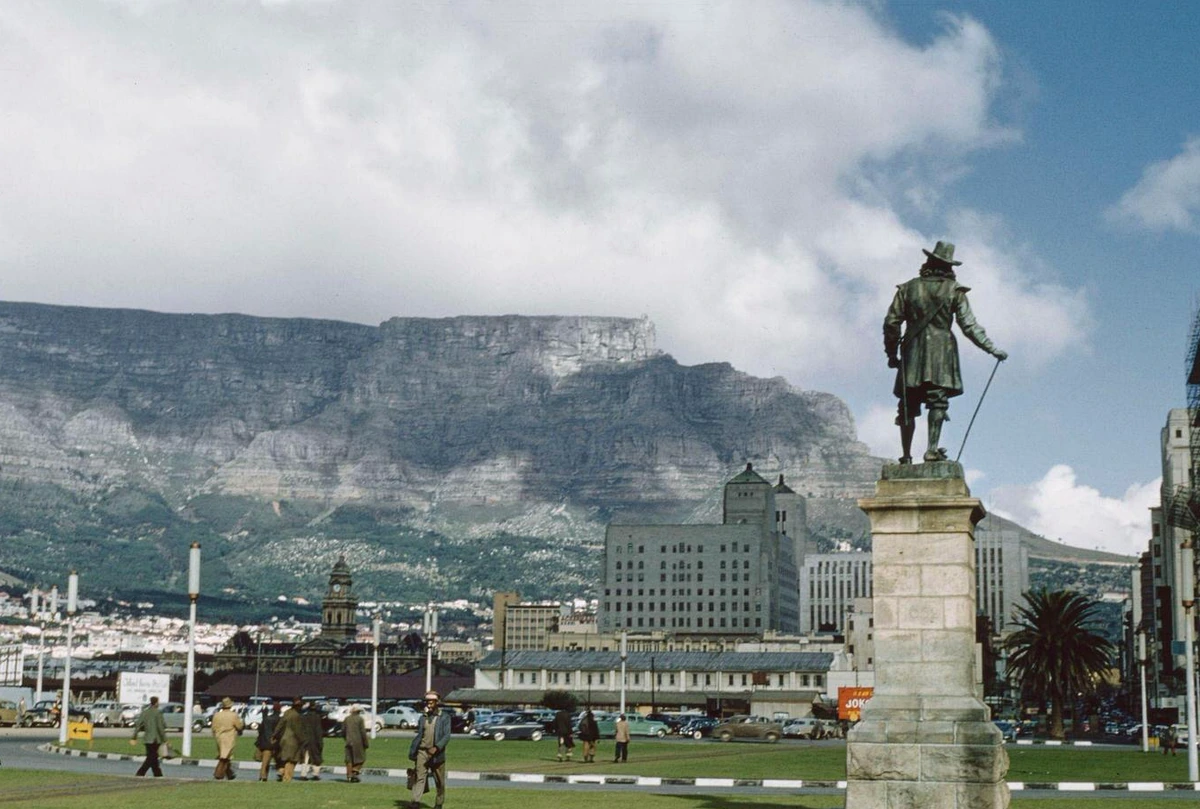
The expansion of Boer communities—descendants of Dutch settlers—during their Great Trek deep into the continent’s interior gave birth to new political entities across the inland plateau. In 1855, Marthinus Pretorius formally laid the foundations of Pretoria in the fertile Apies River valley in honor of his late father, Andries Pretorius, the famed general who commanded the historic Battle of Blood River. This tranquil town was soon chosen as the capital of the early South African Republic (Zuid-Afrikaansche Republiek – ZAR). Pretoria not only preserved imposing Dutch Renaissance architectural heritage, but also soon draped itself in regal violet when the first Jacaranda trees were imported from South America and planted in the late nineteenth century, heralding the prosperity of an administrative seat of power that would endure for centuries.
If Pretoria embodied the quiet gravitas of political authority, Johannesburg was born from the thunderous ring of picks and shovels and an unquenchable fire of ambition. In 1886, the discovery of a colossal gold reef along the Witwatersrand ridge ignited one of the most seismic gold rushes in human history. From a sprawling tent camp of fortune seekers from every corner of the globe, a modern metropolis surged upward at breakneck speed and was named Johannesburg, combining the names of two key figures in the land surveying and planning of the era: Christiaan Johannes Joubert and Johannes Rissik. Known in Zulu as Egoli—“Place of Gold”—the city swiftly became an economic powerhouse, a magnet drawing tens of thousands of laborers from indigenous nations such as the Xhosa and Sotho alongside global financial capital, setting the stage for profound cultural collisions and geopolitical upheaval.
Entering the twentieth century, shifting historical tides repeatedly reshaped the institutional face of the country. The year 1910 marked a monumental political compromise with the establishment of the Union of South Africa, merging British colonies and Boer republics into a single dominion under the British Commonwealth. By 1961, following tense referendums, the country formally severed ties with the British Crown to declare the independent Republic of South Africa. Yet this era was also shrouded under the suffocating shadow of the harsh Apartheid system of racial segregation, condemning millions of indigenous citizens to systemic injustice and extreme geographic division.
Decades of steadfast nonviolent struggle alongside armed resistance by the national liberation movement finally culminated in a historic triumph in 1994. The country’s first non-racial democratic general election officially dismantled Apartheid and ushered Nelson Mandela into the presidency, opening an era of national reconciliation under a proud new moniker: the “Rainbow Nation.” Today, the expanse stretching from the windswept summit of Table Mountain through the deep gold mines of Johannesburg to the jacaranda-lined avenues of Pretoria stands tall as a living testament to human resilience and layered cultural heritage.
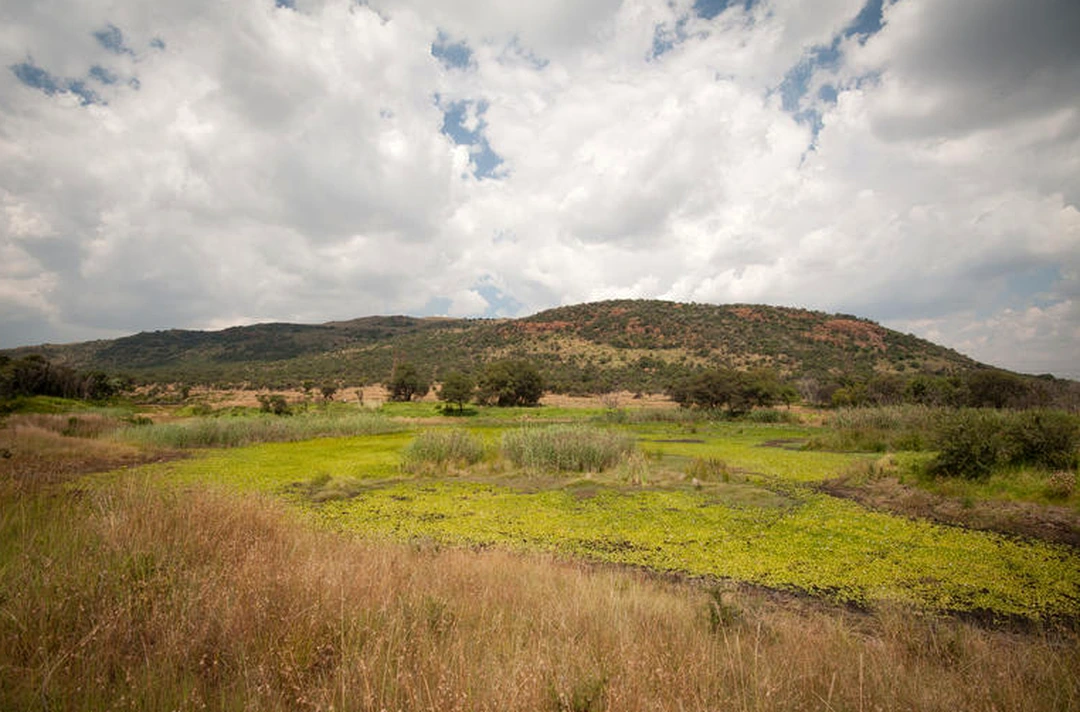
Viewed through the lens of geomorphology and African landscape dynamics, South Africa possesses a dramatic dual topography sculpted by the striking contrast between the elevated interior Highveld plateau and the storm-swept Cape coastline at the continent’s southern extremity. Both Johannesburg and the administrative capital of Pretoria sit atop the Highveld at elevations ranging from 1,500 to 1,700 meters above sea level. Here, the terrain rolls in gentle undulations characteristic of a semi-arid plateau, carpeted with endless savanna grasslands stretching to the horizon. From a geological perspective, the Witwatersrand strata running beneath Johannesburg not only hold vast deposits of quartz and gold that formed the economic lifeblood of southern Africa, but also foster a crisp, dry, sunlit climate year-round. In Pretoria, early modern urban planners capitalized on a fertile basin sheltered by the ancient Magaliesberg range, tempering the extremes of plateau weather through a triumph of urban forestry.
The most dazzling scenic highlight of the Highveld is the seamless acclimatization of more than 70,000 Jacaranda mimosifolia trees, a species native to South American river basins introduced here in the late nineteenth century. Over more than a century of rooting in mineral-rich soil, these trees have transformed Pretoria’s grid-like boulevards and the historic hillside suburbs of Johannesburg into an ethereal botanical sanctuary. When Southern Hemisphere spring arrives in October and November, the trees shed their leaves to make way for millions of bell-shaped blossoms bursting open in unison, weaving canopies of violet-blue cloud across the cityscape. The horticultural stewardship required to maintain these century-old trees involves meticulous calibration of subsurface moisture and winter frost resilience, sustaining cool green ecological corridors while lowering surface temperatures around historic concrete structures.
Turning southward, the Cape Peninsula reveals an entirely distinct geological masterpiece—a natural anchor tethering the African continent between two vast oceans. Here unfolds a dramatic oceanographic convergence between the cold Benguela Current carrying icy waters up from Antarctica via the Atlantic Ocean and the warm Agulhas Current surging south from the Indian Ocean. Standing sentinel at the heart of this extraordinary setting is the legendary Table Mountain, an ancient sandstone massif rising sheer to 1,086 meters above sea level. Its flat summit plateau, stretching nearly three kilometers across, is composed of Ordovician sandstone layers dating back more than 400 million years, sculpted through eons of geological upheaval and relentless ocean gales into a level rampart resembling a ceremonial altar.
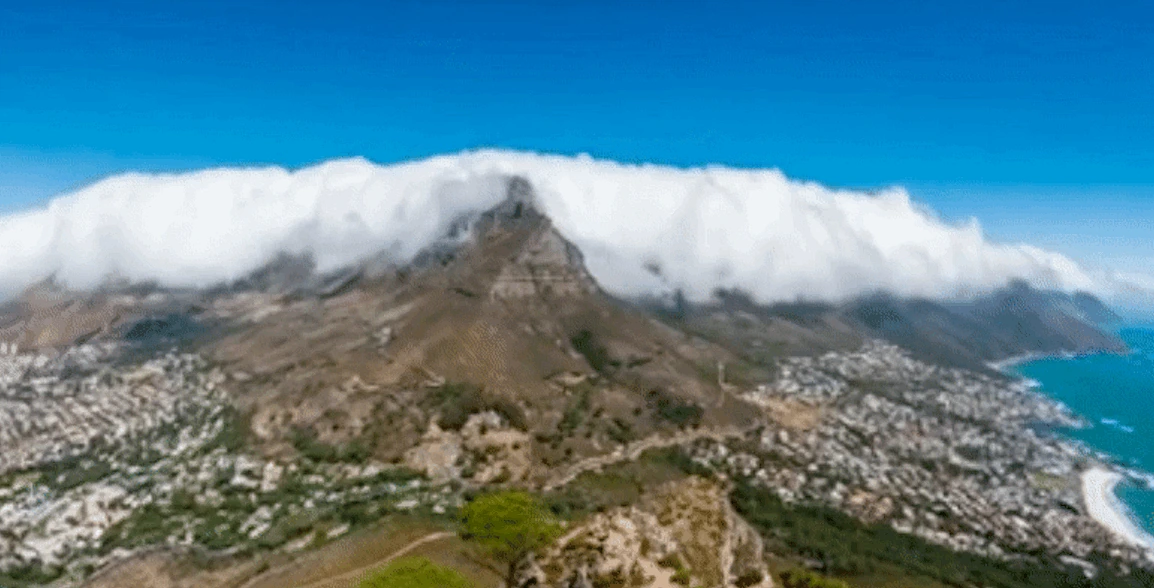
This monumental mountain massif embraces the sweeping arc of Table Bay in a classic mountain-backed, ocean-facing amphitheater cradling the city of Cape Town. The region’s unique microclimate gives rise to a captivating natural phenomenon when moisture-laden southeasterly winds—affectionately nicknamed the “Cape Doctor” by locals—sweep up the slopes and condense into a dense, billowing blanket of white cloud spilling over the plateau edge like a tablecloth spun from mist and snow. The interplay of ocean currents and nutrient-poor, acidic sandstone soils has nurtured the Cape Floral Kingdom, home to the extraordinary Fynbos biome. Occupying less than half a percent of Africa’s landmass, this botanical realm harbors nearly 9,000 indigenous plant species, epitomized by the king protea (Protea cynaroides) with its magnificent crown-like flower head.
The harmony between modern engineering and pristine environmental preservation is vividly embodied in the Table Mountain Aerial Cableway. Operating without intermediate support pylons, the system features cabins with 360-degree rotating floors that counter strong oceanic crosswinds while transporting visitors to the sandstone summit without disturbing the fragile topsoil of the ancient Fynbos ecosystem. Seen from the sea looking inland, Cape Town’s dramatic coastal topography and the jacaranda-tinted Highveld plateau to the north form two complementary scenic poles, defining the untamed yet aristocratic soul of southern Africa.
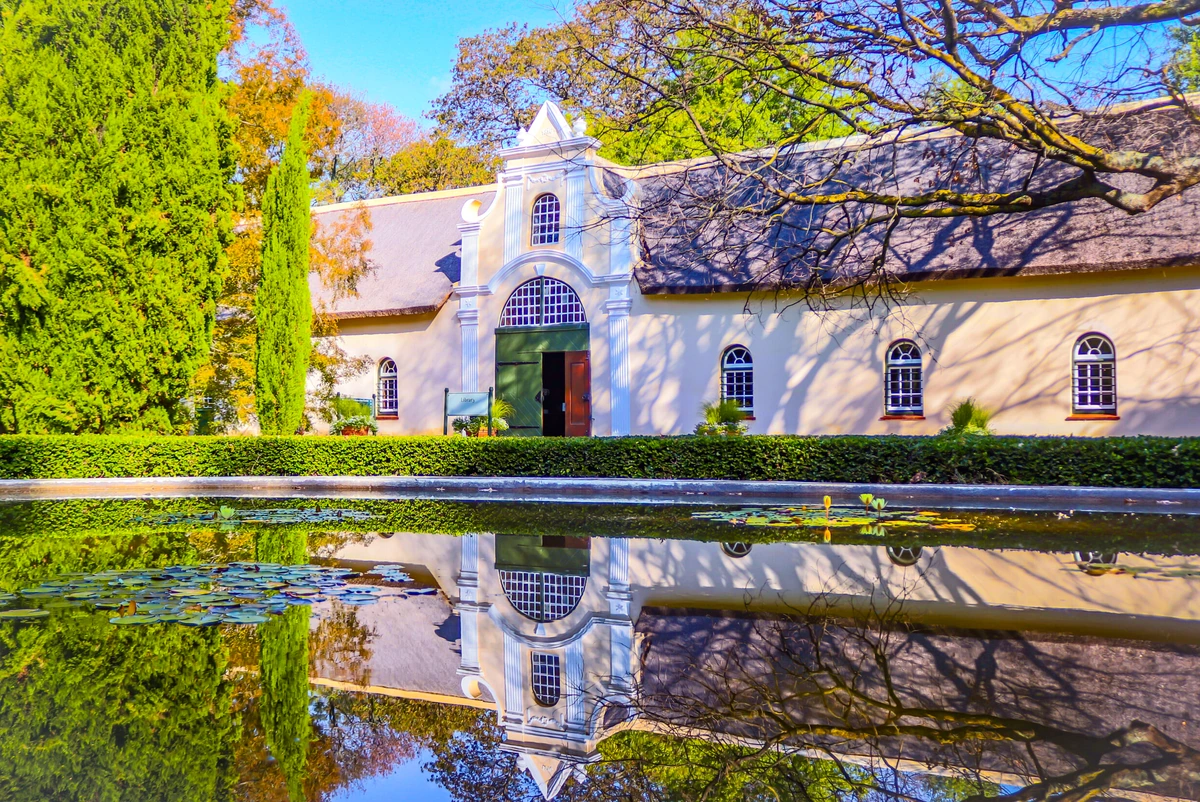
Journeying through South Africa’s major cities is a remarkable visual encounter in which layers of history and economic momentum are materialized into a polyphonic architectural language—shifting fluidly from the pastoral grace of the Cape Peninsula to monumental expressions of state authority and raw industrial concrete. In Cape Town, an architectural identity took root in the seventeenth century with the distinctive Cape Dutch style, epitomized at the Groot Constantia wine estate founded by Governor Simon van der Stel in 1685. The estate preserves the quintessential hallmarks of colonial Dutch manor houses: symmetrical H- or U-shaped floor plans and thick brick walls finished in dazzling whitewashed lime made from burned seashells, contrasting sharply against pitch-black pitched roofs thatched with indigenous reeds. Its artistic focal point lies in ornate curved gables inspired by Dutch Baroque design, paired with Batavian teak shuttered windows and interiors floored in prized yellowwood, creating living spaces ideally adapted to the breezy Mediterranean climate while exuding patrician poise. Through the British colonial era, Cape Town’s streetscapes were further enriched by Victorian terraces adorned with intricate cast-iron lacework balconies before stepping boldly into the modern age at the Victoria & Alfred Waterfront. Here, post-industrial heritage has been spectacularly reborn—most notably through the conversion of a disused grain silo complex into a contemporary art museum carved with towering concrete cylinders and pillowed polygonal glass panels glittering over Table Bay.
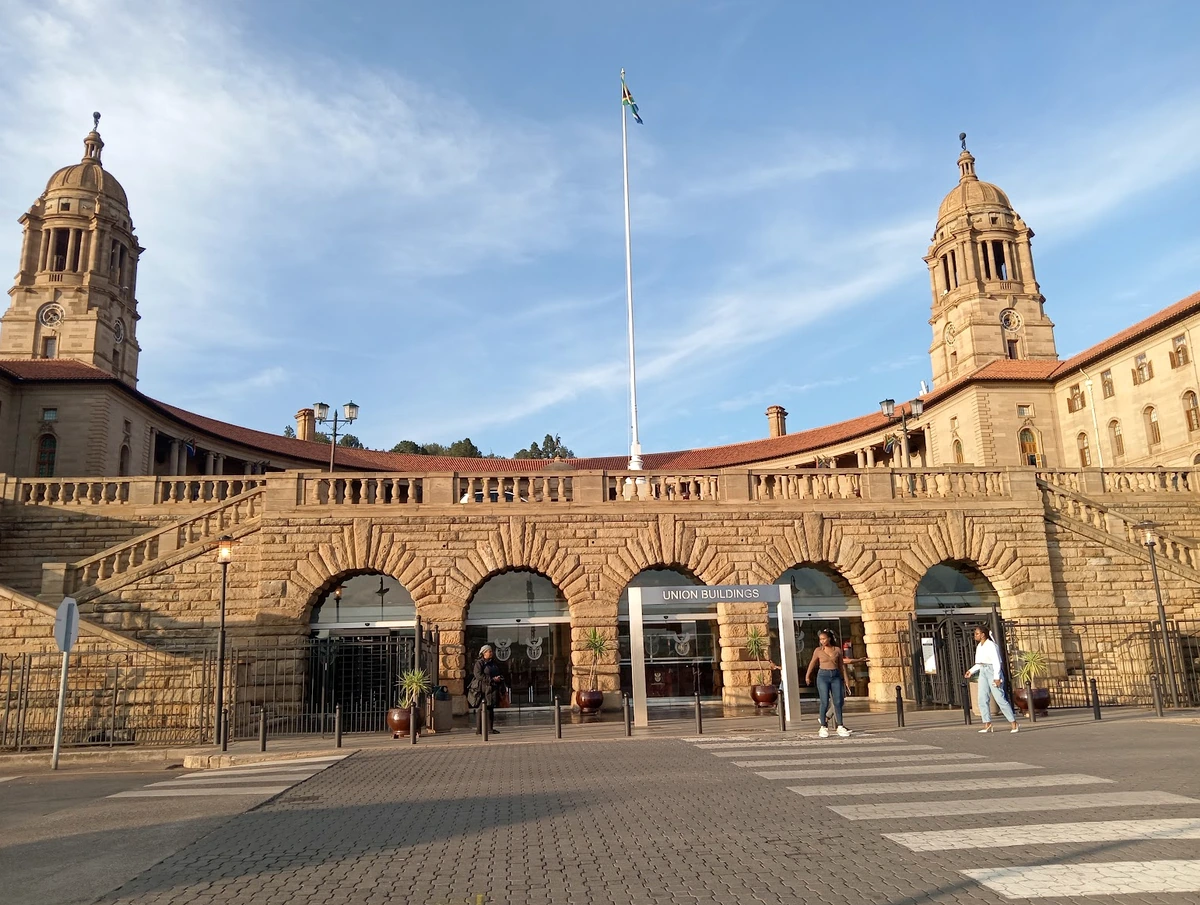
Farther north, the administrative capital of Pretoria projects national stature through an iconic spatial composition crowning Meintjieskop hill: the Union Buildings. Begun in 1910 and completed in 1913 under the masterful direction of British architect Sir Herbert Baker, this nearly 285-meter-long monument is a grand symphony blending Edwardian Neoclassicism with rustic Cape Dutch touches and Italian Renaissance flourishes. Baker skillfully employed millions of pale sandstone blocks quarried locally to craft a sweeping semicircular complex hugging the hillside, divided into two monumental wings symbolizing the two historic linguistic communities—English and Afrikaans. These stately wings are linked by a curved colonnade inspired by ancient Greek amphitheaters, commanding sweeping panoramas across the entire Pretoria valley. Surrounding the complex are vibrant terraced gardens where finely carved stonework and fountains align along strict axes of symmetry, transforming the seat of government into a grand geographic belvedere seamlessly wedded to the plateau landscape.
While Cape Town and Pretoria embody heritage and political authority, Johannesburg stands as a manifesto in steel and concrete born from the late-nineteenth-century Witwatersrand gold rush. The historic central business district still preserves a dense concentration of Art Deco skyscrapers erected during the economic boom of the 1930s and 1940s—exemplified by Ansteys Building, whose geometric moldings, carved zigzag motifs, and gleaming metalwork capture the exuberant optimism of the machine age. Advancing into the intense industrialization of the 1960s and 1970s, the cityscape pivoted dramatically toward Brutalist architecture. The pinnacle of this movement is captured in Ponte City Tower—a 54-story, 173-meter cylindrical residential skyscraper designed by architect Manfred Hermer. Featuring a hollow central lightwell plunging down to exposed natural bedrock and an exterior clad in raw cast concrete, Ponte City—alongside the 223-meter Carlton Centre—defines Johannesburg’s skyline like an imposing citadel, bearing witness to the mechanical might and skyward ambition of a mining metropolis that rose to global prominence.
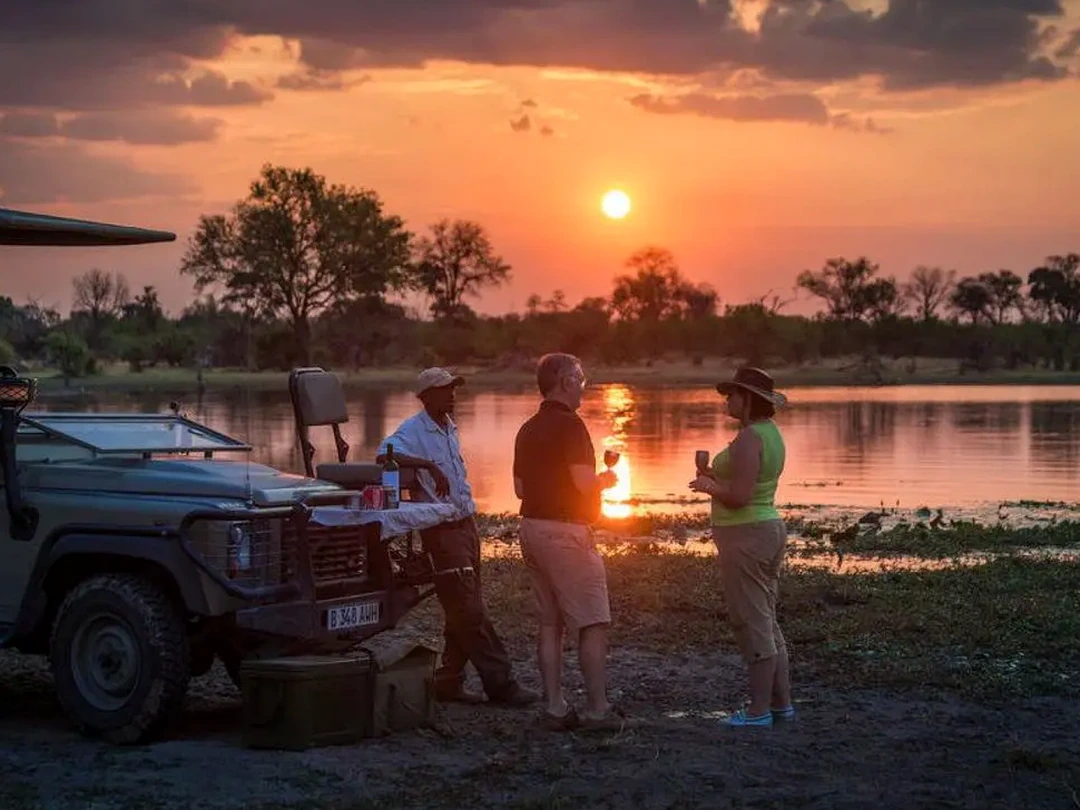
When the fiery African sun sinks behind thorny acacia trees, South Africa’s wilderness does not drift into slumber; instead, it unveils a dramatic and captivating nocturnal ballet of survival. One of the most beloved cultural rituals enchanting travelers across the vast savannas is the traditional Sundowner—an elegant legacy dating back to the earliest safari expeditions. Amid the untamed expanses of reserves such as Kruger or Pilanesberg, a custom open-top Land Cruiser pulls up beside a tranquil waterhole. A local guide spreads a coarse canvas cloth across the dust-dusted hood and sets out glasses of famed Amarula cream liqueur, distilled from succulent wild marula fruit steeped in folklore about tipsy elephants. The creamy sweetness and wild herbal aroma of Amarula mingle with the cool evening breeze, creating an unforgettable moment of stillness as guests quietly watch proud members of the “Big Five”—African bush elephant, rhinoceros, Cape buffalo, lion, and leopard—shake off their daytime lethargy to embark on nocturnal hunts beneath a sky shifting from burnt orange to deep indigo.
Far removed from the untamed savanna, nightlife in metropolitan Johannesburg—the city of gold known in Zulu as Egoli—pulses with fierce creative regeneration, shining brightest in the Maboneng Precinct. Named from the Sotho word meaning “Place of Light,” a neighborhood once lined with rusting, abandoned mechanical workshops has reinvented itself as the proud underground cultural heartbeat of the Rainbow Nation. After dark, towering graffiti murals illuminated by contemporary art lighting reflect a complex, resilient multicultural identity. Rooftop bars around Arts on Main resonate with classic Marabi jazz fused with driving Kwaito electronic beats and Afrobeats, immersing visitors in a vibrant gathering of art collectors, poets, and boundary-pushing young chefs turning Johannesburg into a sleepless nocturnal creative hub.
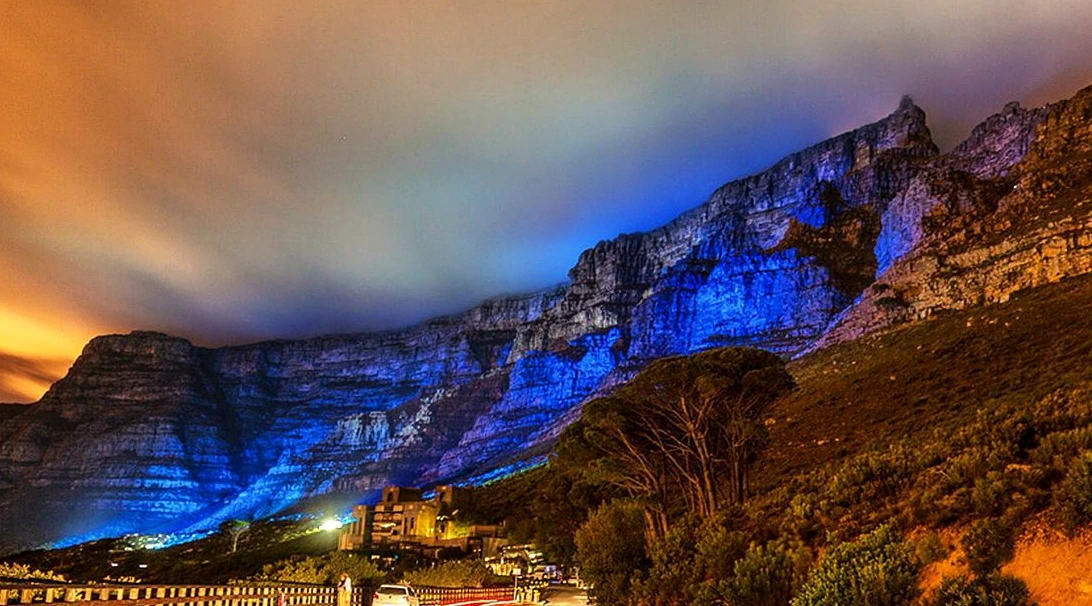
Down on the southern coast, Cape Town unveils an entirely different evening spectacle, where architectural lighting and design converge with the windswept ocean. The sheer 1,086-meter sandstone cliff face of Table Mountain glows dramatically under high-powered floodlights, rising against the ink-black sky like a natural fortress watching over sparkling Table Bay. At its foot, the historic Victoria & Alfred Waterfront—once a seventeenth-century maritime supply post for the Dutch East India Company—comes alive with street-side marimba percussion performances and Cape Malay restaurants lining granite quays. An unmissable visual centerpiece is the historic 57-meter grain silo complex, reimagined as the Zeitz Museum of Contemporary Art Africa (Zeitz MOCAA), whose faceted glass windows shimmer like a colossal lantern casting reflections across the Atlantic waters—completing a magnificent nocturnal tableau that seamlessly unites colonial history with contemporary energy.
Exploring the nation at Africa’s southern tip would remain incomplete without gathering beside a crackling fire to savor the story of national identity told through cuisine. South Africa’s culinary map is far more than a chance combination of indigenous ingredients; it is a multi-layered historical chronicle reflecting centuries of transformation, where the foodways of indigenous Khoisan and Bantu peoples intersect with the frontier traditions of Dutch Boers, waves of French Huguenot settlers, and the skilled hands of the enslaved Cape Malay community brought from the Dutch East Indies starting in the mid-seventeenth century.
The Cape Malay legacy shines brightest and most deeply in the beloved national dish known as Bobotie. Originating in the historic kitchens of Cape Town, Bobotie is a nuanced marriage of finely minced lamb or beef richly spiced with curry powder, coriander seeds, ginger, turmeric, and sweet apricot jam, crowned with a velvety egg-and-milk custard baked slowly until golden brown. Traditionally served alongside saffron-yellow rice (Geelrys) studded with plump raisins and a spoonful of iconic sweet-and-tangy Mrs. H.S. Ball’s fruit chutney, the dish delivers rich, aromatic warmth that recalls ocean-going merchant vessels laden with Eastern spices during the era of the Dutch East India Company (VOC).
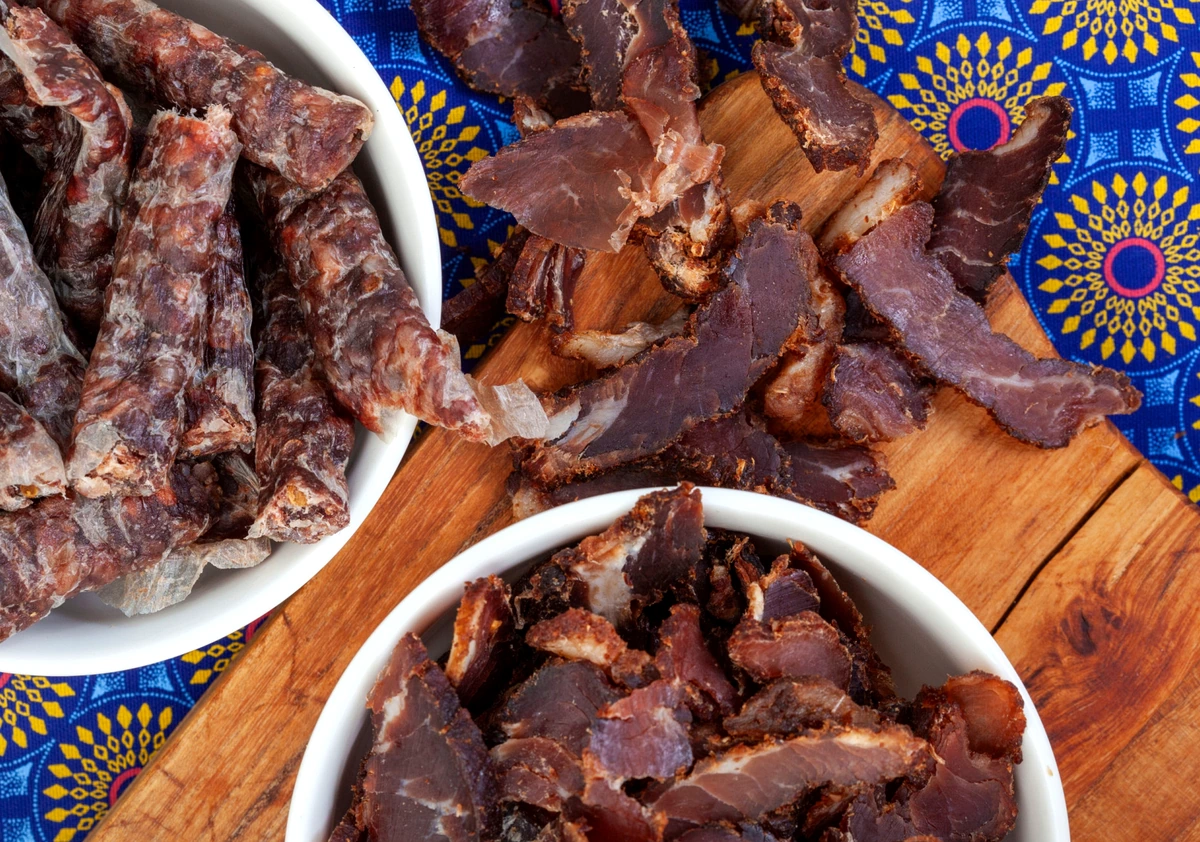
While Bobotie carries the refined flair of the coastal metropolis, Biltong and Potjiekos embody the rugged frontier resilience of the Voortrekker pioneers during the Great Trek deep into the unforgiving interior. To preserve vital protein across months of overland travel by ox-wagon, the Boers perfected Biltong by curing prime strips of beef, wildebeest, or ostrich in apple cider vinegar, coarse sea salt, brown sugar, and toasted crushed coriander seeds before air-drying them naturally in dry savanna winds. Thinly sliced, savory, chewy, and subtly tangy, Biltong has become the indispensable trail companion for travelers traversing wild safari routes. Alongside it stands Potjiekos—the art of slow-simmering stew inside a three-legged cast-iron cauldron set directly over glowing embers. According to strict family tradition, layers of game meat, potatoes, carrots, and cabbage are stacked in precise order and sealed beneath a heavy lid, never to be stirred for four to six hours so that natural steam condenses and melds the pure juices into a rich, deeply smoky gravy.
Transcending ordinary culinary conventions, the Braai—South Africa’s iconic outdoor barbecue ritual—stands as an enduring cultural symbol of social bonding and fellowship across all boundaries. An authentic Braai strictly shuns synthetic briquettes or commercial gas grills; its soul lies in indigenous hardwoods such as sekelbos or dense mopane logs burning down to glowing coals, radiating steady heat and distinctively aromatic herbal smoke. Around the flickering flames, coiled spirals of Boerewors sausage—seasoned beef and pork infused with nutmeg and cloves—sizzle alongside Karoo lamb chops, dissolving social barriers and uniting kindred spirits beneath the expansive African night sky.
South Africa’s premier culinary journey culminates in the Cape Winelands, a valley blessed with a textbook Mediterranean microclimate cradling the historic towns of Stellenbosch and Franschhoek. Since the seventeenth century, storied wine estates have flourished here—notably Vergelegen, founded in 1700 by Governor Willem Adriaan van der Stel. Beneath the shade of 300-year-old camphor trees and whitewashed Cape Dutch manor houses topped with sweeping gables, visitors can sip a glass of signature Pinotage—a uniquely South African grape varietal bred from elegant Pinot Noir and bold Cinsault. Its velvety tannins and notes of dark ripe berries, leather, and sweet smoke provide a fitting finale to a sensory journey that is both proud and unmistakably southern African.
To experience the magical seasonal transformations of South Africa at their finest, understanding local seasonal rhythms and service logistics is essential. The prime window to witness Pretoria and Johannesburg blanketed in dreamy purple Jacaranda blossoms falls between mid-October and early November, when the Southern Hemisphere transitions from winter into spring with crisp, pleasant temperatures ranging from 15°C to 26°C. This shoulder period also offers superb wildlife viewing on safari just ahead of the heavier summer rains. Because peak-season demand is immense, iconic experiences such as the 360-degree rotating Table Mountain Aerial Cableway and luxury eco-lodges in the Greater Kruger area routinely require booking at least six months in advance to secure an ideal itinerary.
South Africa’s transport network also has distinct characteristics that travelers should plan around carefully. For journeys into the Kruger wilderness, the fastest and most convenient option is taking direct domestic flights from O.R. Tambo International Airport in Johannesburg or from Cape Town to Skukuza Airport (IATA: SZK)—a remarkable airfield located right inside the national park, complete with an acacia-shaded runway and a rustic thatched-roof terminal. While staying in major urban centers such as Cape Town or Sandton, the safest, most reliable, and transparently priced way to get around is via reputable ride-hailing apps like Uber or Bolt; avoid hailing unlicensed street taxis late in the afternoon or walking alone through deserted streets after dark.
Exploring the Rainbow Nation becomes even more meaningful when travelers embrace the indigenous humanist philosophy of Ubuntu—a concept rooted in Bantu languages whose core meaning, “I am because we are,” celebrates compassion, shared humanity, and mutual respect. In everyday hospitality and service interactions, tipping is both customary and an important expression of appreciation. Standard restaurant gratuities range from 10% to 15% of the total bill whenever a service charge is not already included. For safari field guides (rangers) and animal trackers during wildlife drives, tipping roughly 200 to 300 South African Rand (ZAR) per day honors their deep bushcraft expertise and dedication.
Before departure, be sure to pack South Africa’s distinctive large three-round-pin travel adapters (Type M plugs) so your cameras and devices stay charged without interruption. Pack neutral-toned clothing in beige, olive green, or muted khaki to blend seamlessly into the savanna environment without startling wildlife. To savor every unforgettable moment—from the windswept cliffs of the Cape of Good Hope to the untamed realm of the Big Five—travelers can enjoy complete peace of mind by booking a tailored South Africa wildlife safari tour thoughtfully designed to optimize flight connections and maintain seamless safety standards throughout the journey.