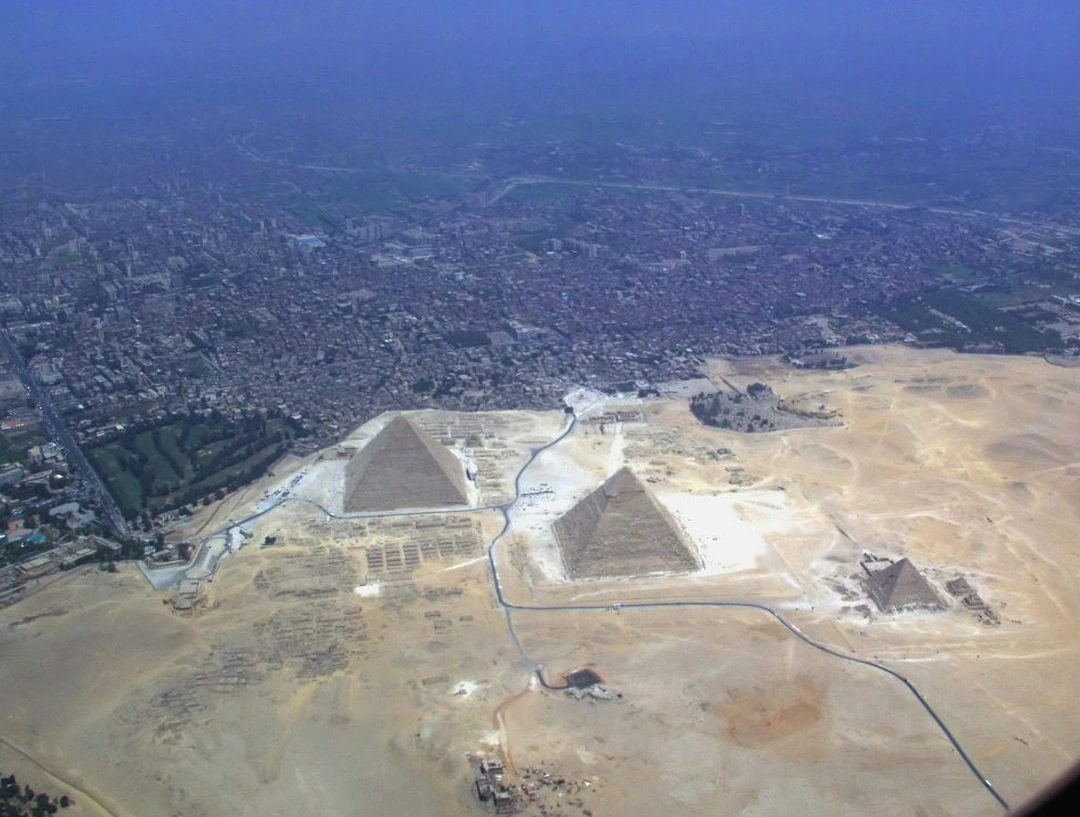
From ancient times, the Nile River has been far more than a waterway depositing fertile silt across arid desert; it has been a defining lifeblood shaping one of humanity’s most remarkable civilizations. Looking back through antiquity, ancient Egypt left a lasting mark on the Giza Plateau during the Old Kingdom, where the Fourth Dynasty reached great power around 2560 BCE. Under pharaohs such as Khufu, Khafre, and Menkaure, massive limestone and granite blocks were shaped and set into monumental pyramids aligned with cardinal directions and sky lore. Serving as royal tombs linked to beliefs in the afterlife, the Giza complex also reflects early Egyptian engineering, astronomy, and centralized statecraft.
Following history southward along the river, Egypt’s political and religious center shifted to ancient Thebes—known today as Luxor. During the New Kingdom (roughly 16th to 11th centuries BCE), Thebes rose as a major capital and ceremonial hub across the region. Under rulers such as Hatshepsut, Thutmose III, and Ramesses II, grand temple complexes dedicated to Amun-Ra—including Karnak and Luxor Temple—rose with towering hypostyle halls and sacred precincts. Across the Nile on the West Bank, the Valley of the Kings became a royal burial ground where rock-cut tombs and painted reliefs depicted beliefs surrounding kingship and the journey through the underworld (*Duat*).
Farther south, where granite cataracts narrow the Nile River, Aswan (ancient Syene) served as a southern frontier outpost and trading crossroads linking Egypt with Nubia. Sun-drenched quarries around Aswan supplied red granite for obelisks, statues, and monuments carried along the river. In Aswan, trade links bringing gold, ivory, incense, and goods from southward routes mingled with local Nubian traditions visible around Elephantine Island and Philae Temple.
As pharaonic dynasties gave way to Ptolemaic/Greco-Roman rule and later Islamic eras, Egypt’s urban story entered another major chapter. In 969 CE, Fatimid general Jawhar al-Siqilli founded a new royal city near Fustat named *Al-Qahira* (“The Victorious,” associated with Mars, *Al-Qahir*), soon followed by Al-Azhar—helping establish Cairo as a lasting center of scholarship, culture, and governance in North Africa and the Middle East.
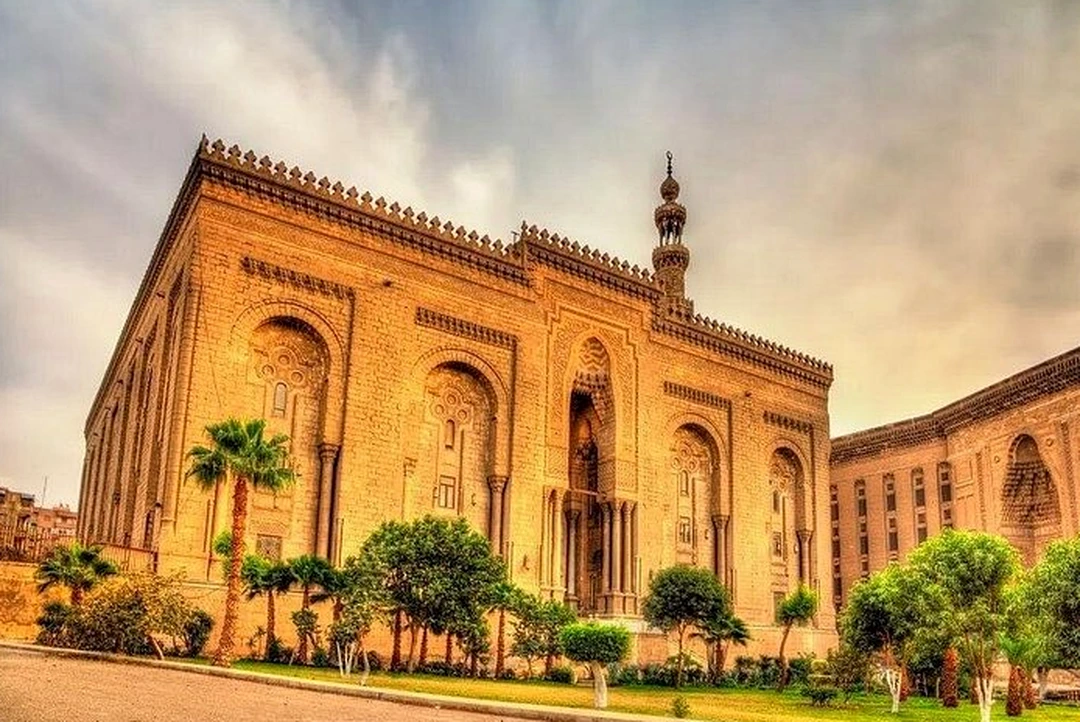
Layered across millennia—from ancient pyramids and southern frontier sites to Thebes and medieval Cairo—Egypt’s monuments trace a long historical arc. Traveling from the Nile toward the Red Sea connects visitors with shifting eras and enduring architectural achievements.
Seen from above, Egypt’s green river ribbon cuts through wide desert expanses, echoing Herodotus’s famous remark that Egypt is the “gift of the Nile.” In ancient Egyptian geography and worldview, fertile dark alluvial soil along the river (*Kemet*) contrasted with the red desert (*Deshret*). Flowing north from Upper Egypt’s narrower valley to Lower Egypt’s fan-shaped delta on the Mediterranean, the river’s annual flood cycle (*Akhet*) long shaped farming, settlement patterns, and building across dynasties.
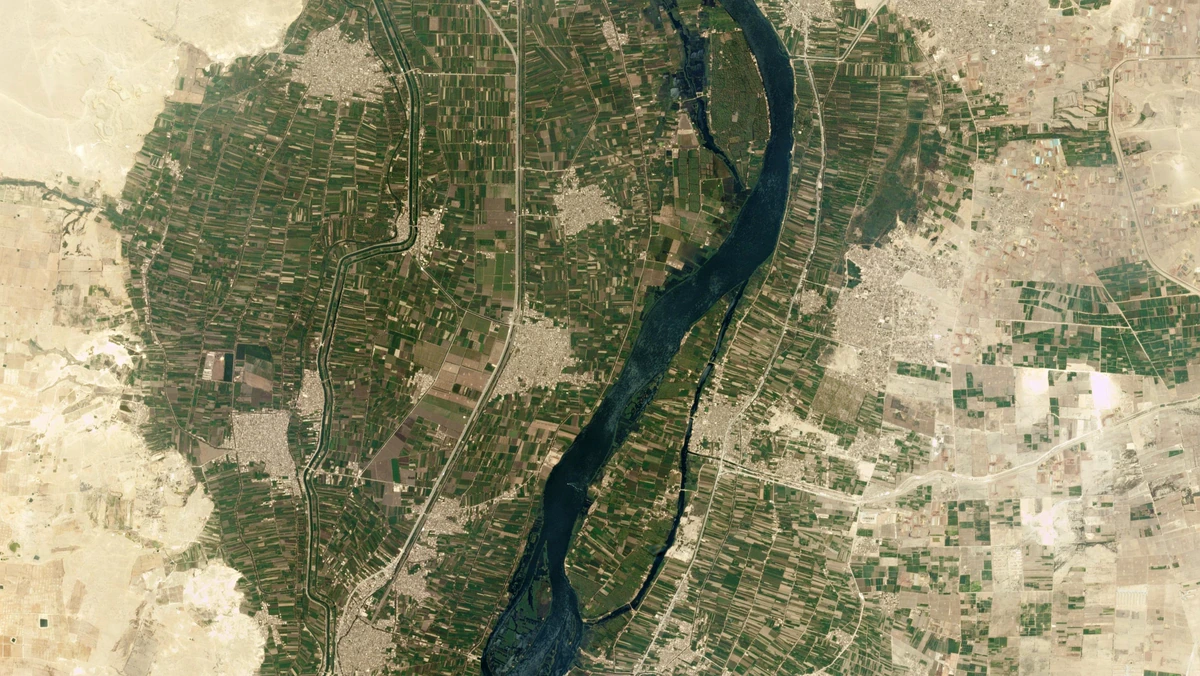
Positioned where the river valley widens toward the delta, Cairo occupies a strategic site along the Nile with the Mokattam limestone hills to the east and routes linking North Africa and Sinai. Historically, nilometers—such as the stone Nilometer on Roda Island—measured river levels to help gauge harvests and taxation. On the west bank, the Giza Plateau’s solid Eocene limestone provided durable stone and elevated ground above seasonal floods for royal pyramid complexes.
Farther south, Aswan opens a distinct landscape where dark Precambrian granite outcrops form the First Cataract near Nubia. Around these rocky islands sit landmarks such as Kitchener Island (the Aswan Botanical Garden), planted with diverse trees and shrubs, and Elephantine Island, home to ancient ruins and remains tied to local deities like Khnum—while local granite quarries long supplied stone for statues and monuments.
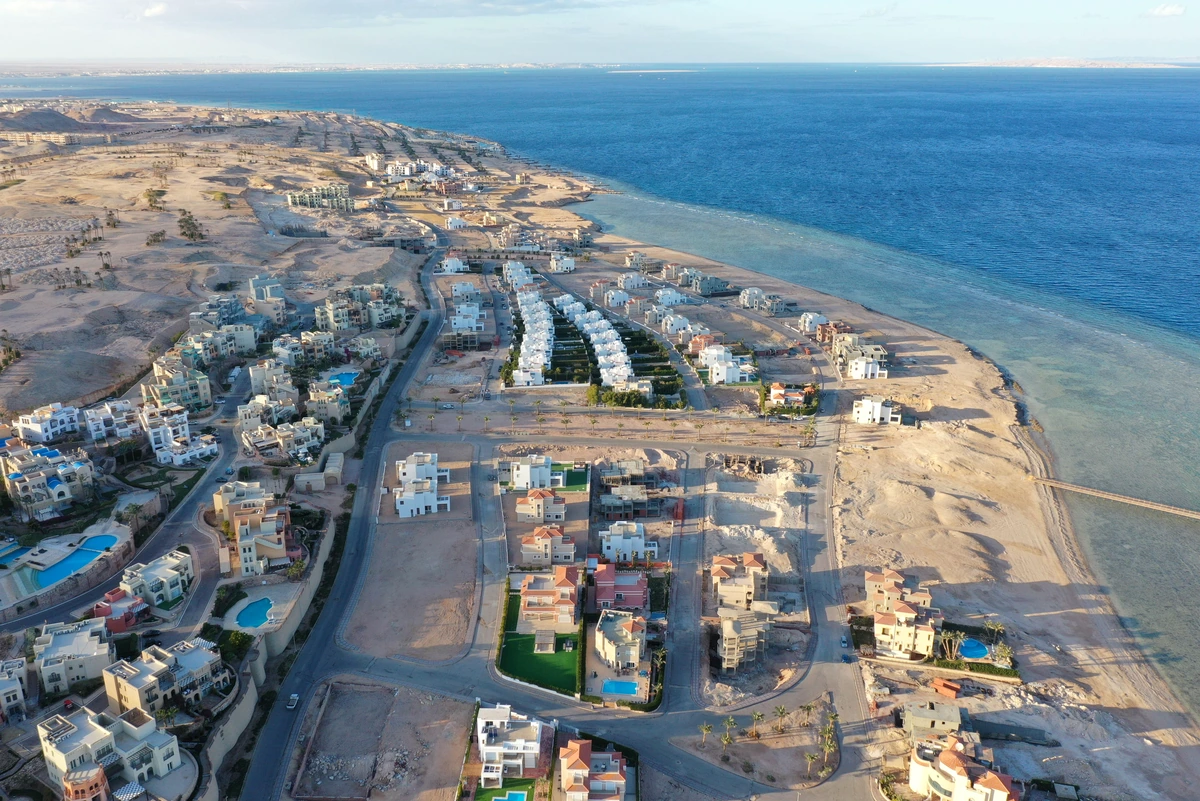
In sharp contrast to the river valley, the Red Sea coast stretching from Hurghada down toward Marsa Alam follows the tectonic rift of the Great Rift Valley. Dry desert hills meet clear turquoise water, creating a dramatic coastal boundary. Warm, sunlit, salty waters support vibrant coral reefs—from steep drop-offs around offshore sites to sheltered bays like Abu Dabbab—providing habitat for diverse marine life including sea turtles, reef fish, and occasionally dugongs or dolphins.
On the Giza Plateau, the Great Pyramid built for Fourth Dynasty Pharaoh Khufu originally rose to 146.6 meters—standing as the world’s tallest human-made structure for over three millennia. Constructed from roughly 2.3 million stone blocks averaging around 2.5 tons each (with heavy granite beams above interior chambers weighing dozens of tons), it combined local limestone with granite transported from southern quarries near Aswan, showing notable precision in orientation and masonry.
Southward in ancient Thebes (Luxor), the Karnak Temple complex spans a vast sacred precinct built and expanded across generations of pharaohs in honor of Amun-Ra and the Theban triad. Its centerpiece is the Great Hypostyle Hall—covering over 5,000 square meters with 134 massive sandstone columns arranged in rows, where towering central columns rise more than 20 meters with papyrus-capital tops and clerestory openings let daylight filter across carved hieroglyphs and reliefs.
Farther south in Nubia near the modern border, Abu Simbel showcases monumental rock-cut temple craft from the reign of Ramesses II (Nineteenth Dynasty). Carved directly into a sandstone cliff along the Nile, the Great Temple facade features four seated colossi of Ramesses II—each roughly 20 meters tall—wearing royal crowns, with smaller figures of family members near their legs.
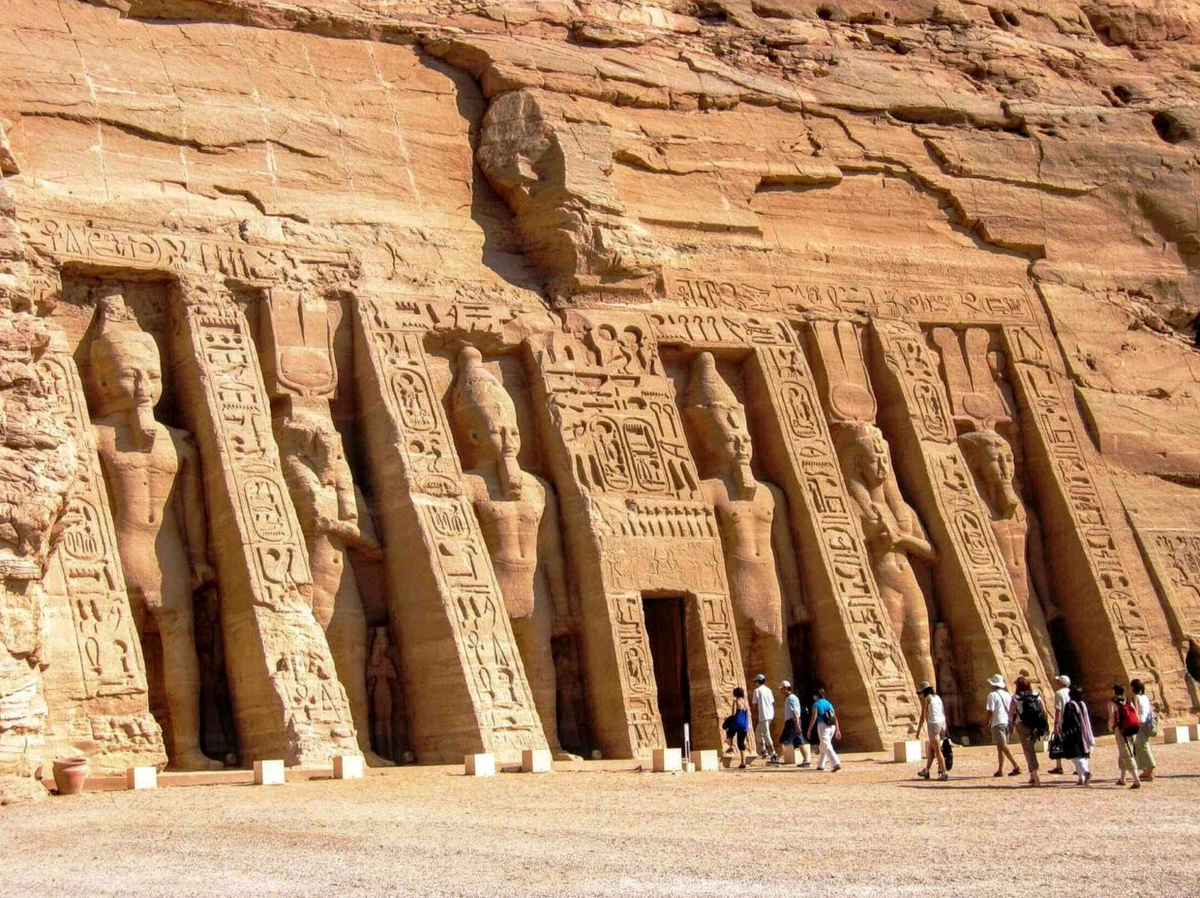
Deep inside the rock-cut sanctuary of Abu Simbel, roughly 60 meters into the cliff, sit seated statues of Ramesses II and deities—famously aligned so that twice a year (in February and October, near seasonal/anniversary dates) morning sunlight reaches into the inner sanctuary to illuminate figures there. In the 1960s, international engineers cut and relocated both temples to higher ground above rising Lake Nasser waters, preserving this remarkable rock-cut complex.
As twilight settles over the desert around Giza, evening Sound and Light shows illuminate the pyramids and Great Sphinx with spotlights, projections, and narration recounting ancient Egyptian history and pharaonic monuments beneath the desert sky.
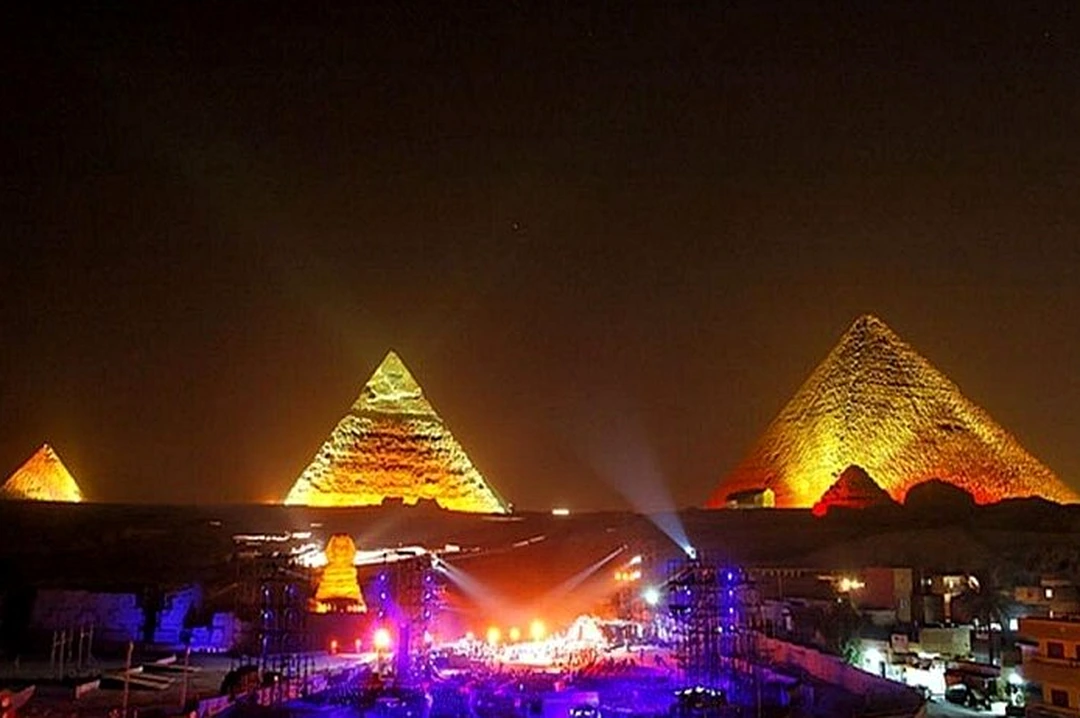
Spotlights and projections shift colors across the pyramids’ angled stone faces alongside narrated stories and sound effects evoking ancient builders and temple rites—offering an atmospheric evening look at the Giza Plateau.
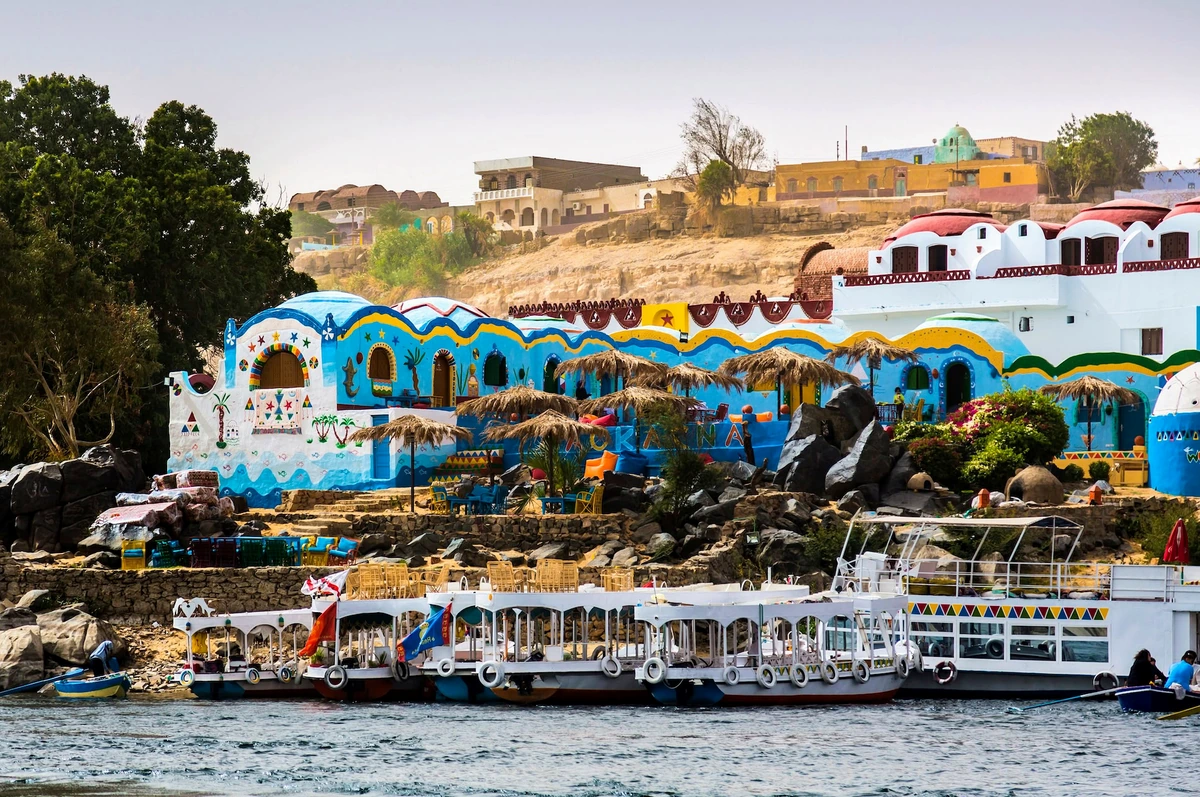
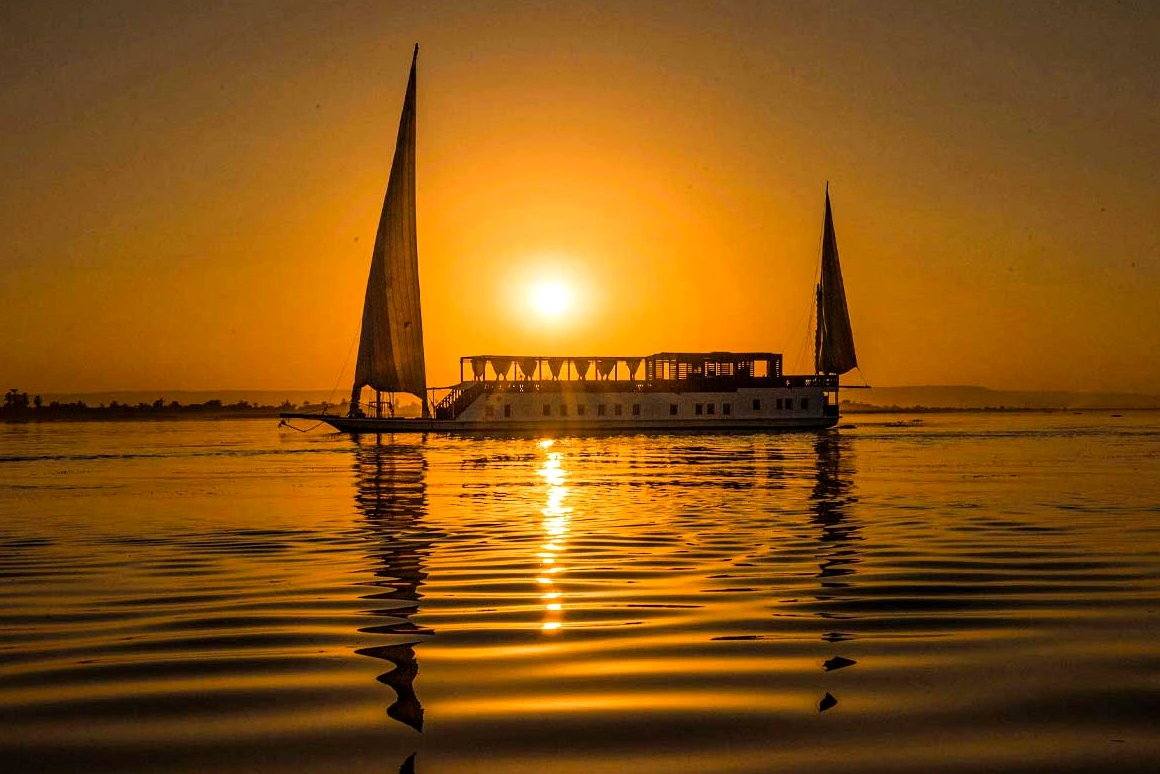
Farther south in Aswan, evenings take a quieter, more local tone along the Nile and around Nubian villages such as Gharb Soheil or areas near Elephantine Island, where colorful mud-brick houses and felucca boats along the river create a relaxed coastal-river setting.
Evening relaxation in Aswan often centers on riverside cafés and tea houses serving chilled or warm *karkadeh* (hibiscus tea) or spiced coffee alongside gentle drums and traditional music in the cool river breeze.
Egyptian food reflects Nile agriculture blended with Middle Eastern, Ottoman, and Mediterranean influences. In Cairo, *Koshary* is a popular street staple combining rice, lentils, macaroni, chickpeas, crispy fried onions, and spiced tomato sauce with garlic-vinegar and chili sauces on the side.
Traditional dishes like *Molokhia*—a savory green stew/soup made from finely chopped jute leaves cooked in chicken or meat broth and finished with garlic and coriander—pair well with roasted meats, *kofta* skewers, or stuffed pigeon around neighborhood eateries and historic lanes near Khan el-Khalili.
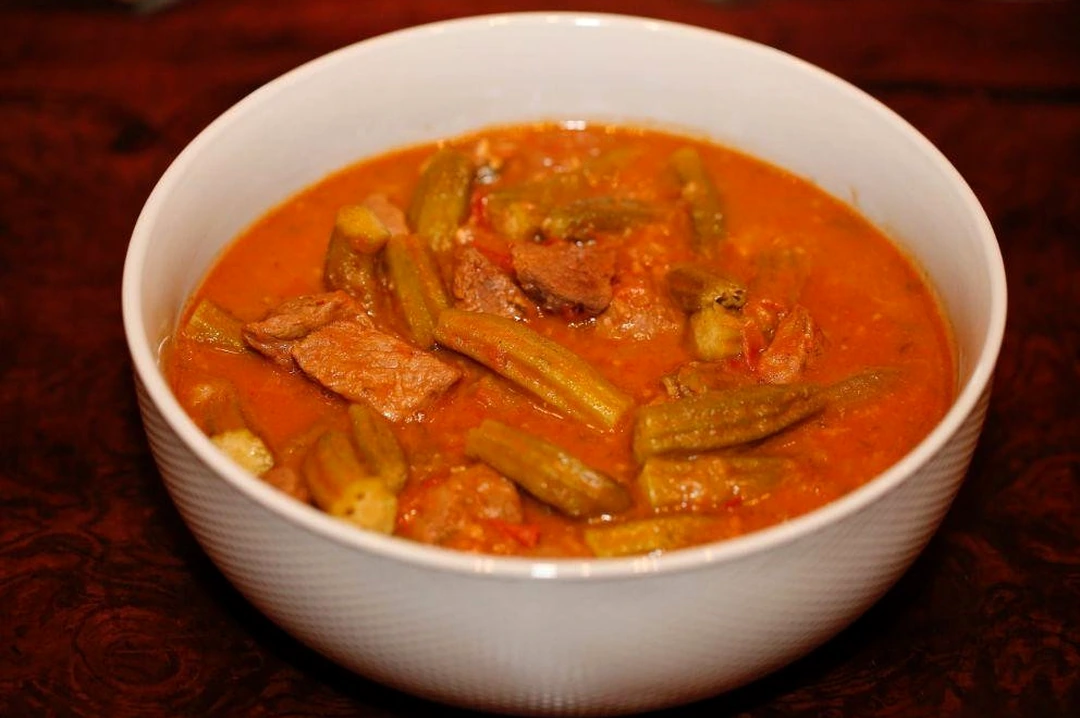
Farther south in Aswan, Nubian cooking highlights regional ingredients such as *Wika* (okra stew/soup cooked with meat broth) and *Fatta* (layered flatbread, rice, broth, and tender meat), offering hearty flavors rooted in southern traditions.
Grilled Nile perch seasoned with cumin, paprika, salt, and lemon—alongside refreshing *karkadeh* hibiscus tea served iced or hot—rounds out memorable meals along the river.
Desert climate makes timing key in Egypt. October through April offers milder temperatures—often around 18°C to 26°C in many areas—making outdoor walks at Giza, the Valley of the Kings, and temples much more comfortable than peak summer heat, which can climb well past 40°C–45°C.
Getting around Egypt combines ride-hailing apps in Cairo (such as Uber), overnight or daytime trains between Cairo, Luxor, and Aswan, and short domestic flights linking cities or Red Sea resorts like Hurghada and Sharm El-Sheikh when time is tight.
Many major sites—including Giza, the National Museum of Egyptian Civilization (NMEC), and temples—use card/electronic ticketing at official counters or online, while multi-site passes (such as Luxor Pass) can offer value for visitors exploring multiple tombs and monuments.
Respecting local customs and site rules protects both visitors and heritage: dress modestly covering shoulders and knees at mosques and religious sites, remove shoes where required, never climb on pyramids or touch fragile reliefs, and consider licensed guides/Egyptologists for deeper historical context.
Pairing historic monuments with local dishes like *Koshary* and chilled *karkadeh* makes exploring Egypt rich and rewarding. For a smoothly arranged trip covering routes and highlights, browse all-inclusive Egypt tour packages.