In the heart of the bustling southern metropolis, the Saigon Central Post Office stands as an iconic landmark—an enduring bridge between the past and the present that preserves the soul of a land once dubbed the “Pearl of the Far East.” Located at 2 Cong Xa Paris Square, Ben Nghe Ward, District 1, the building commands an exceptionally auspicious feng shui position, facing directly onto the airy plaza across from the Saigon Notre-Dame Basilica. In terms of geography and urban landscape, it sits right along the city’s historic and modern commercial and administrative artery, drawing prosperous energy from the nearby winding Saigon River to create an open space that is both majestic and expansive, imbued with Western nostalgia in the heart of Asia.
Turning back the clock to the second half of the 19th century, the historical origins of this landmark are closely tied to the early establishment of the French colonial administration in Cochinchina. Immediately after capturing the Gia Dinh Citadel in 1859, establishing a field communication system became a vital priority for the colonial government. In 1860, the first rudimentary post station was set up near the banks of the Saigon River before relocating near the Governor’s Palace. It was not until 1886, during the period when Saigon’s urban landscape was being shaped according to a European grid plan, that construction officially began on the current large-scale building, which was completed in 1891 under the administration of the Governor of Cochinchina, Henri Abelée.
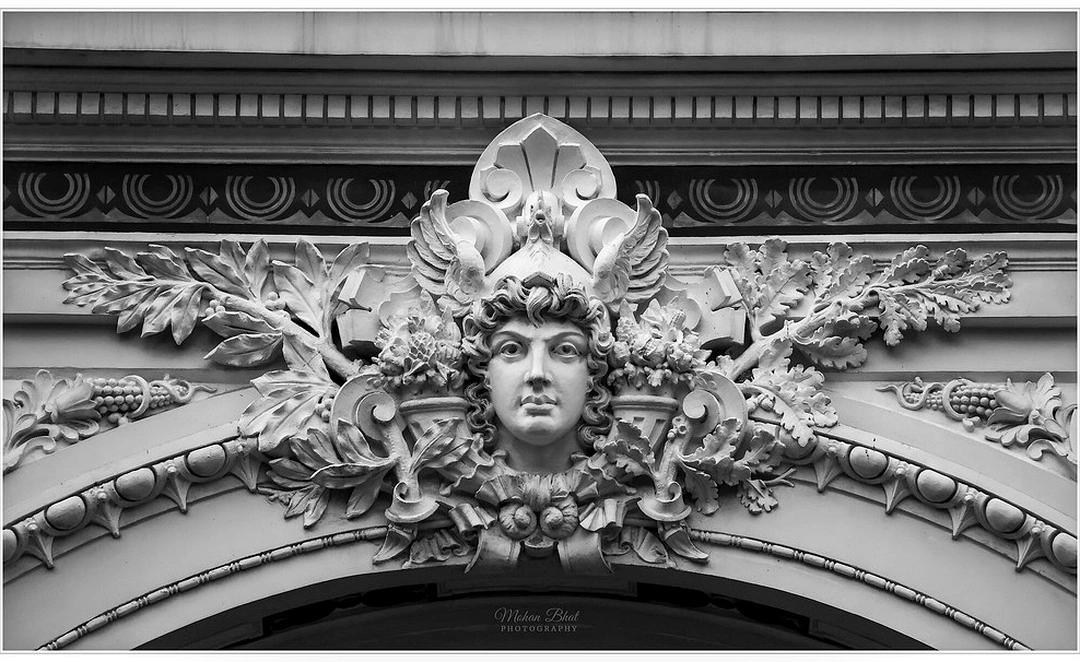
The creation of this landmark bears the profound imprint of Chief Architect and Director of Public Works of Cochinchina Alfred Foulhoux, alongside the invaluable collaboration of architect Henri Vildieu. Although shrouded for decades in the widespread misconception that it was designed by the renowned engineer Gustave Eiffel, records at the National Archives of Overseas France (ANOM) have set the historical record straight, restoring rightful credit to Foulhoux. He was the master who laid the foundation for eclectic architecture in Saigon, skillfully harmonizing Western Neoclassical and Renaissance elements with delicate Oriental decorative motifs, transforming a telecommunications office into a one-of-a-kind architectural masterpiece.
Spanning more than a century of history, this site has witnessed the sweeping transformations of the eras. From a vital communications lifeline serving French colonial exploitation, this telegraph station continued to serve as a crucial communication hub for the Republic of Vietnam government before entering a peaceful era as a beloved symbol of connection for today’s Vietnam Post Corporation (VNPost). In the eyes of the international press and cultural heritage authorities, the Saigon Central Post Office is far more than a postal address—it has risen to become a living architectural heritage site. It embodies a wealth of historical, artistic, and humanistic values, standing as a premier heritage travel destination that invites millions of domestic and international visitors to slow down and listen to the whispers of the past echoing through every arched doorway, patterned floor tile, and original antique map.
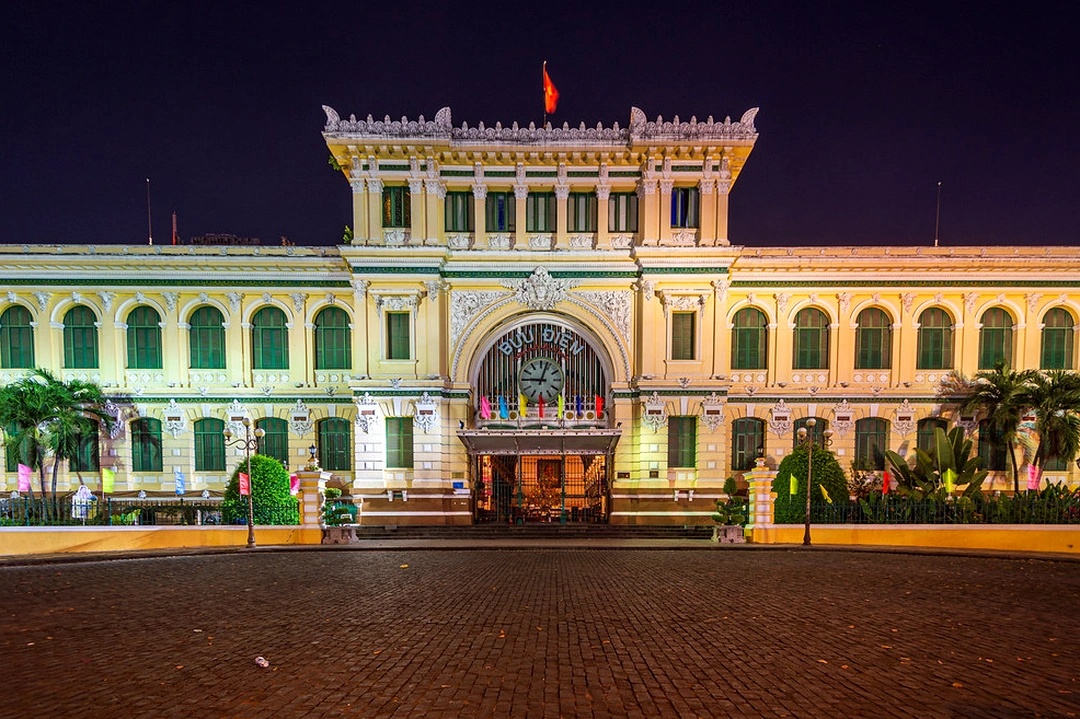
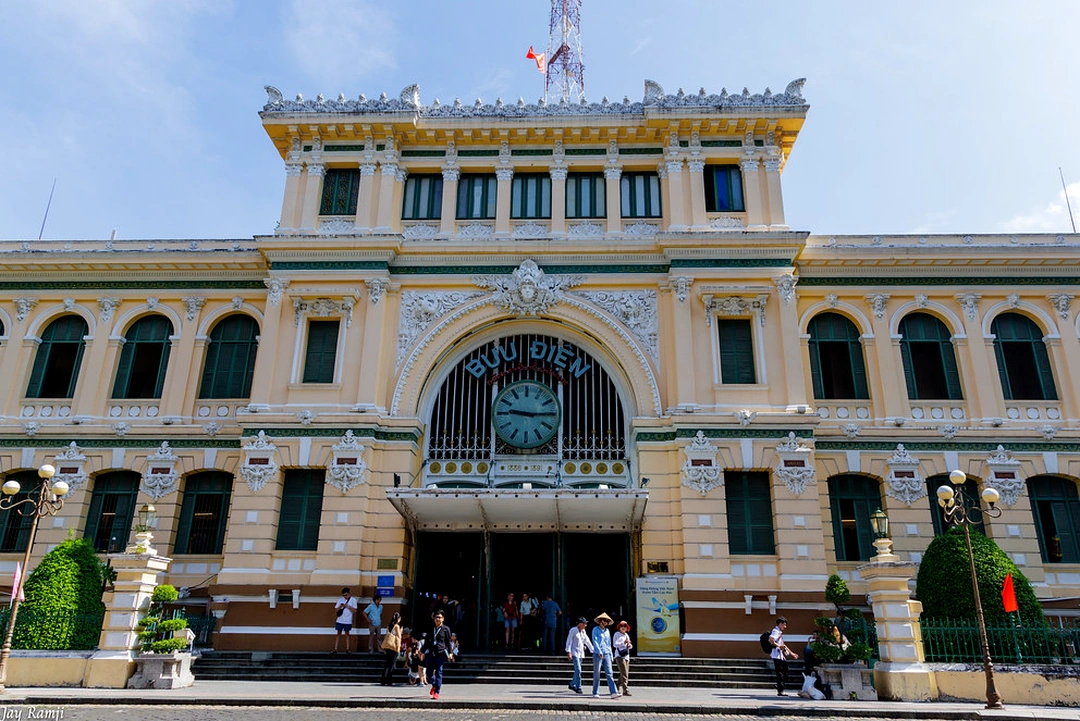
Situated right in the center of Ho Chi Minh City, directly opposite the majestic Notre-Dame Basilica, the Saigon Central Post Office emerges as an architectural masterpiece that seamlessly blends Western culture with an Eastern soul. Viewed as a whole, the building occupies a prime plot of land along a spacious square axis, seamlessly connecting with the iconic heritage landmarks of the southern metropolis. Under the masterful hand of architect Alfred Foulhoux, the building exudes an eclectic style—a refined harmony of graceful Neoclassical lines and distinctive Asian-inspired decorative motifs.
Stepping closer, visitors cannot help but marvel at the imposing yet elegant facade of the structure. Its signature mustard-yellow hue paired with creamy-white decorative moldings creates a vibrant color palette beneath the southern sun. Large arched windows, symmetrical pilasters, and intricately carved sunshades evoke the grandeur of 19th-century European palaces. Most notably, right at the center of the facade, nestled beneath the soaring roofline, sits a century-old antique mechanical clock that continues to tick quietly, keeping time at the heart of the modern city.
Stepping through the grand wooden doors into the interior, a magnificent space unfolds before your eyes, leaving every visitor in awe. The interior impresses with its lofty vaulted ceiling, supported by an artistic wrought-iron framework fabricated and assembled by engineers from Gustave Eiffel’s workshop. Lining both sides of the main hall are expansive arched windows and historic murals depicting the telegraphic maps of Cochinchina and Cambodia from the early 20th century. Antique encaustic floor tiles with symmetrical geometric patterns, polished wooden waiting benches, and nostalgic postal service counters come together to paint a vivid portrait of old Saigon, yet one brimming with contemporary vitality.
To capture the most stunning moments at this architectural icon, professional photographers and travel journalists frequently share their insider tips on the best angles. The first unmissable photo spot is standing on the steps of the Notre-Dame Basilica, framing a panoramic view of the entire facade of the Saigon Central Post Office. The golden window for this shot is early in the morning between 6:00 AM and 7:30 AM, when soft dawn sunlight shines directly onto the facade, accentuating the golden glow of the walls and highlighting every intricate carving without harsh glare or crowds.
The second prime angle lies right in the center of the main hall inside the building. Standing from an elevated vantage point on the staircase or looking straight up from the middle of the floor toward the curving wrought-iron ceiling, your lens can capture the monumental depth and flawless symmetry of the structure. The ideal time to photograph this scene is between 3:00 PM and 5:00 PM. During these hours, warm late-afternoon sunbeams stream through the tall arched glass windows, casting shimmering shafts of light across the vintage tiled floor to create a cinematic, classical, and poetic frame that captivates any photography enthusiast or heritage explorer.
Upon arriving at the Saigon Central Post Office, every visitor is instantly captivated by an architectural space that is both steeped in antiquity and alive with the vibrant energy of the modern era. Passing through the arched entrance stamped with 19th-century European charm, a sense of wonder immediately takes over as you gaze up at the soaring vaulted ceiling supported by intricately cast iron pillars and natural skylights. The atmosphere inside buzzes with the footsteps of travelers from near and far, blending with the clatter of keyboards and the stamping of envelopes to create a distinctly Saigon urban rhythm. It feels as though time momentarily stands still, transporting you back to an era of unique cultural exchange where every wall corner, window frame, and antique mailbox whispers tales of yesteryear.
Stepping outside the nostalgic interior, exploring the surrounding neighborhood opens up vibrant and rewarding local cultural experiences. Right next door stands the stately Notre-Dame Basilica with its signature red-brick facade, alongside the tranquil, tree-lined Nguyen Van Binh Book Street—an ideal spot to stroll, browse intriguing publications, and savor a rich, traditional Saigon sock-filtered coffee (cà phê vợt). A few minutes’ walk further brings you to the laid-back pulse of April 30th Park and the bustling heart of downtown District 1, where past and present blend seamlessly and brilliantly.
An unmissable highlight of this hands-on exploration is the renowned street food paradise tucked away in the nearby alleyways. Just a few steps away, travelers can indulge in the finest flavors of Southern Vietnamese and Saigon cuisine, from crispy Saigon banh mi loaded with rich pâté to a savory bowl of Mekong Delta fermented fish noodle soup (bún mắm), or a refreshing glass of kumquat iced tea (trà tắc) to cool off in the warm southern sun. Savoring local specialties while watching traffic flow past the classic French colonial facade evokes an indescribable sense of calm and nostalgia. It is a seamless intersection of historical depth, vibrant local culture, and dynamic modern life that turns every moment at the Saigon Central Post Office into an unforgettable memory.
The Saigon Central Post Office is one of the defining architectural symbols and must-visit stops for any traveler arriving in Ho Chi Minh City. To ensure your journey exploring this French-influenced heritage landmark goes smoothly and memorably, it helps to know practical details regarding operating hours, transportation options, and important etiquette during your visit.
Regarding operating hours, the Saigon Central Post Office welcomes visitors and postal customers seven days a week. Opening hours typically run from 7:30 AM to 5:00 PM or 6:00 PM Monday through Saturday, and from 8:00 AM to 5:00 PM or 6:00 PM on Sundays. These hours may be slightly adjusted during major national holidays and Tet (Lunar New Year). Best of all, admission is completely free—visitors can freely enter to admire the interior architecture and take commemorative photos without purchasing an entry ticket.
Located right at 2 Cong Xa Paris Square, Ben Nghe Ward, District 1, getting to the post office is remarkably convenient thanks to its prime downtown location directly across from the Notre-Dame Basilica and steps away from Nguyen Van Binh Book Street. If departing from Ben Thanh Market or central hotels, visitors can easily reach the site by motorbike, city buses serving District 1 routes, or ride-hailing apps. For those who enjoy walking, strolling along the leafy, shaded avenues of downtown Ho Chi Minh City to reach the post office is an enjoyable and relaxing experience in its own right.
The best times of day to visit the post office are in the morning from 8:00 AM to 10:00 AM or in the late afternoon after 3:30 PM. During these windows, gentle sunlight illuminates the creamy-yellow facade and arched windows, creating picturesque conditions for photography while helping you avoid Saigon’s midday heat. As for dress code, while it is not a strict religious site, because it is both a cultural heritage landmark and an active public administrative building, visitors are encouraged to wear neat, respectful, and modest attire suited to the dignified atmosphere of the space.
Once inside, visitors are bound to be enchanted by the vast main hall featuring its iconic glass skylight dome and wrought-iron framework modeled after classic European railway stations by architect Alfred Foulhoux. Be sure to send a vintage Saigon postcard to loved ones back home, or browse the finely crafted souvenirs available at the indoor stalls. A visit to the Saigon Central Post Office does more than let you capture timeless photos beside an enduring architectural gem—it offers a rare chance to experience the harmonious rhythm of past and present right in the heart of the southern metropolis.
To enjoy a seamless getaway and take in the full splendor of the Saigon Central Post Office without worrying about transportation, ticketing, or itinerary planning, travelers can choose from VDS Travel’s premium all-inclusive Ho Chi Minh City tour packages. Every itinerary is thoughtfully curated to maximize photo opportunities during peak lighting hours, accompanied by knowledgeable local guides and top-tier hotel and dining standards.