In the heart of the bustling Southern metropolis, Ben Thanh Market emerges as a silent witness of time, a unique coordinate converging the premier cultural, historical, and geomantic essences of Saigon – Ho Chi Minh City. Tracing back through the 17th and 18th centuries, when the Nguyen Lords began the endeavor of reclaiming and opening up the Southern realm, the Ben Nghe – Gia Din region early on shaped vital trading hubs. The name “Ben Thanh” is not merely an administrative designation, but harbors a profound geographical memory: it was the river wharf located right in front of the ancient Gia Din citadel gate, established by the court for trade, boat traffic control, and closely tied to the pioneering imprints of predecessors such as Lord Nguyen Phuc Chu and Commander Nguyen Huu Canh.
Regarding geomantic terrain and natural landscape scenery, the Ben Thanh Market area initially stood along the banks of the Ben Nghe River, the canal segment connecting to the Quy Hoa citadel built by Nguyen Anh in 1790. This terrain fully embodies the characteristics of Southern river civilization: “near rivers, near roads”, where the vital energy of heaven and earth and the bustling flow of merchant boats converge. Through the historical vicissitudes of time, especially the period of French occupation and urban redesign starting in 1859, the intricate canal systems such as Cho Dui canal or the Grand Canal (Charner) were gradually filled in, changing the urban landscape. After multiple relocations due to fires and urban planning, by the early 20th century, the colonial government together with the Saigon Municipal Council decided to design a centralized commercial project of matching stature.
The iconic architectural work that we admire today is situated on the foundation of the former Buu Vien swamp (Marais Borey). Construction began in 1912 by the renowned contracting firm Brossard et Maupin based on drawings by French architect Jules Berthet, and the market was officially inaugurated in March 1914. The formation of Ben Thanh Market was not only an achievement of colonial construction techniques, but also associated with planning vision and financial resources from the local merchant community, notably the Chinese-descended merchant Quach Dam. He was largely credited with leveling the surrounding swamp area and building an auxiliary kiosk system, thereby outlining one of the most prosperous economic spaces in Indochina during the 1920s.
Standing on the threshold of the 21st century, through countless ups and downs of modern history, Ben Thanh Market still stands firm as an immutable symbol of the Southern urban soul. From a pristine river wharf during the pioneering era to a grand commercial center blending East-West architecture, it fully preserves the cultural strata of generations of residents. This coordinate is not only the pride of the city named after Uncle Ho, but also an invaluable heritage on Vietnam’s travel cultural heritage map, where past and present harmonize in the bustling rhythms of everyday life.
Situated in a premier prime location in the very heart of Ho Chi Minh City, Ben Thanh Market appears as a timeless architectural icon, crystallized from distinctive construction arts during the East-West cultural exchange period of the early 20th century. Initiated on the foundation of the old Buu Vien swamp, the structure possesses a “mountain-backed, water-facing” terrain imbued with Eastern geomantic philosophy, featuring four facades adjoining major arterial roads: Le Loi, Phan Chu Trinh, Le Thanh Ton, and Phan Boi Chau. This convergent water terrain not only ensures that commercial currents remain thriving and bustling day and night but also creates an open, grand, and spacious urban landscape, capturing the dynamic pulse of the entire Southern metropolis.
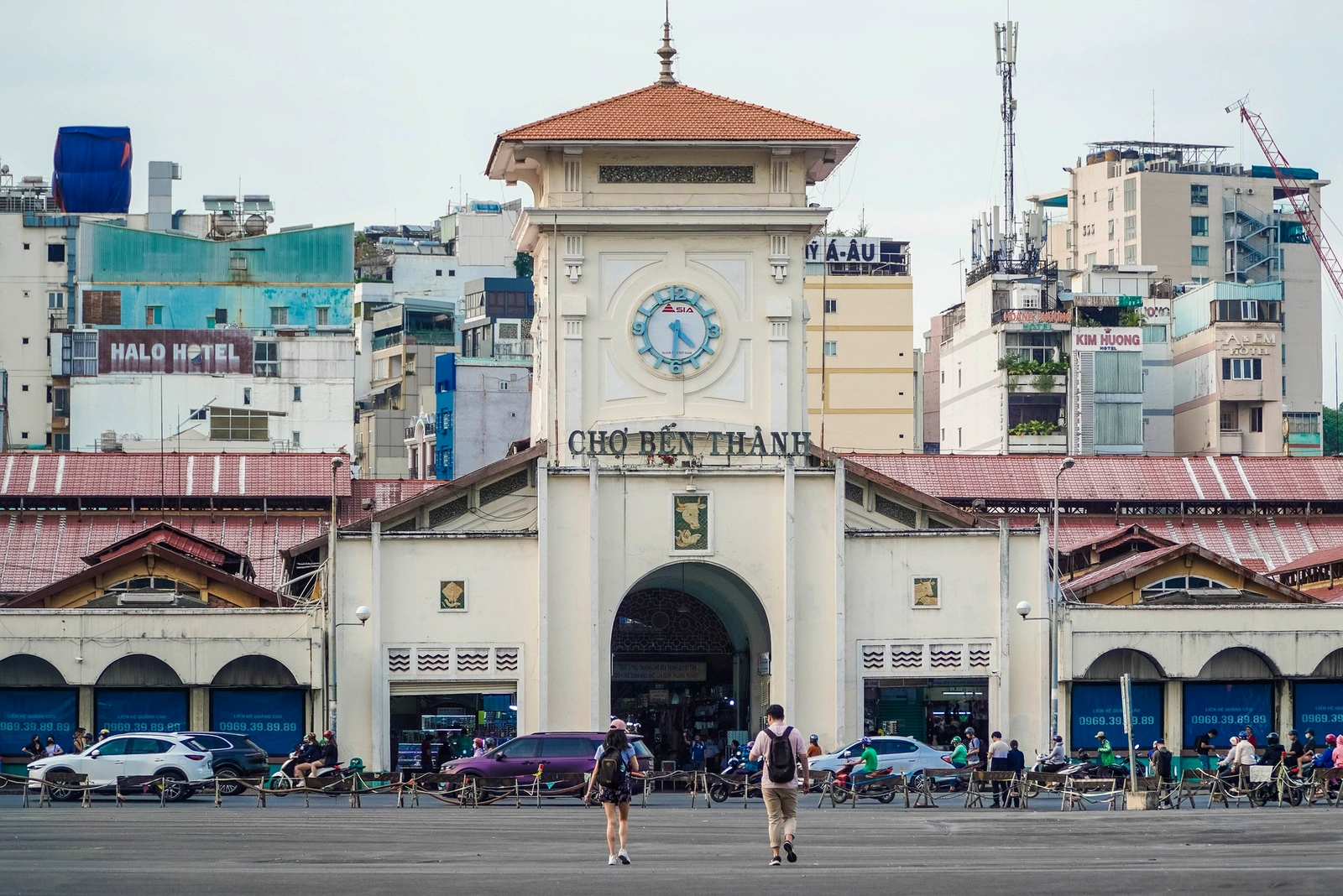
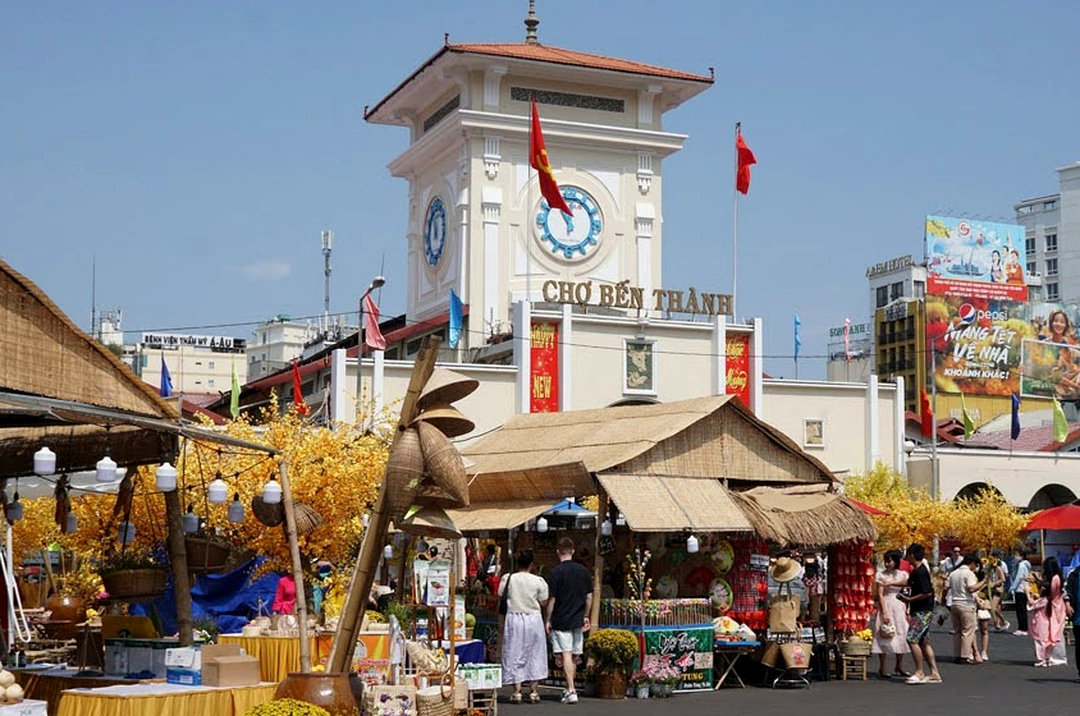
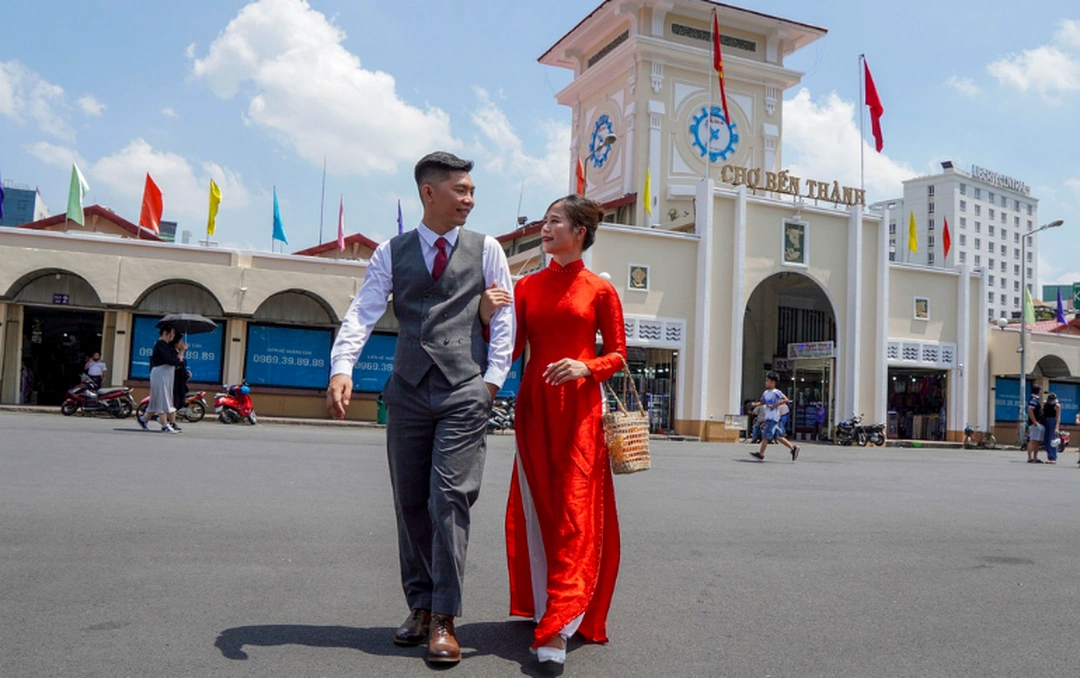
From overall layout to intricate details, the architecture of Ben Thanh Market is a masterpiece blending modern Western construction techniques with the traditional soul of Vietnam. The strongest visual highlight, and also the soul of the structure, is the three-faced clock tower at the main hall facing Quach Thi Trang park. The antique clock with Roman numerals sits majestically beneath a brilliant red yin-yang tile roof, recalling familiar rural village temple roofs while draped in the solemn robes of colonial public architecture. The market’s facade is accented by large Renaissance-style arched windows, rhythmically combined with exquisite embossed reliefs made of Bien Hoa artistic ceramics. The colored ceramic frescoes decorating the gable panels depict characteristic products of the Southern region such as fishery, agriculture, and forestry, creating a vivid open-air art gallery that celebrates the abundance of nature and people here.
To fully capture the magnificent and poetic beauty of this iconic market, professional photographers and travel journalists often pass along the most valuable shooting angles. The first classic photo spot is located at the fountain or lawn in front of the main entrance at dawn (from 5:30 to 6:30 AM). At this moment, the early morning golden sunlight pierces through thin mist, shining directly onto the ancient clock tower, illuminating the red hue of the tile roof and highlighting the quiet, majestic beauty of the structure before traffic surges. The second coordinate highly rated by connoisseurs is the balcony view from opposite cafes on Le Thanh Ton Street at sunset (from 5:00 to 6:00 PM). When twilight shifts into magical purple-orange hues, the entire massive architecture of Ben Thanh Market stands out against the brilliant evening sky, with passing crowds below creating an extremely vivid urban picture bearing contemporary breath while keeping deep historical imprints.
Upon stepping through the wide-open arched doorways of this iconic market, visitors are immediately swept into a surging current of energy where the rhythms of old and new Saigon blend into one. Ben Thanh Market is not merely a solid architectural monument with its timeless three-faced clock symbol, but also a breathtakingly vibrant indigenous cultural space. Initial awe gives way to utmost delight as the space fills with the inviting calls of vendors, the clamor of a multinational crowd, and mouth-watering aromas wafting from hundreds of stalls. Beneath the high, airy dome, sunlight filtering through windows creates dancing rays of light across stalls of brocade, fine silk, and exquisite handicrafts, displaying a brilliantly colored commercial picture.
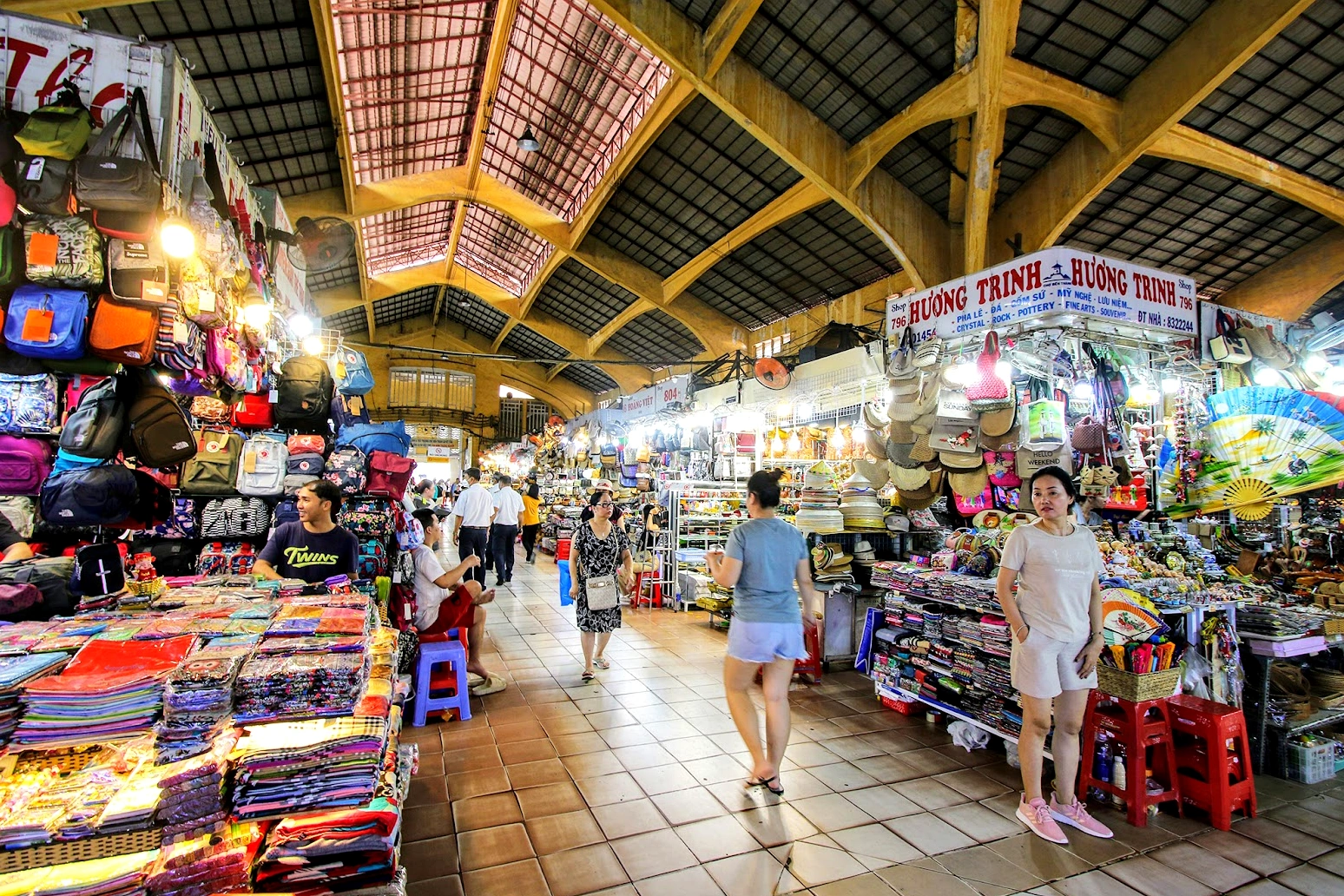
Leaving behind the bustling souvenir rows, the practical experiential journey around the Ben Thanh market area opens up unique quiet moments for the soul. Although lacking high mountains to climb, visitors find unique experiences deeply imbued with Southern riverine imprints right beside the market. That is the feeling of leisurely sitting on small boats drifting along the Ben Nghe canal – where historically bustling wharves of the Nguyen Lords once thrived. Viewing the city from the water surface, where modern high-rise buildings stand interspersed with mossy historical relics, offers a perspective that is both nostalgic and refreshing regarding the Southern metropolis’s transformation. Right at the street corners around the market, ancient temples hidden beneath old trees offer tranquil spiritual worship. Incense smoke drifting quietly amidst the noisy city creates a rare pause where visitors can pray for peace and feel the enduring spiritual cultural depth of local residents through centuries of ups and downs.
An unmissable highlight of the exploration journey is the renowned, diverse culinary paradise established for generations right inside and around the market. The dining space here is a symphony of flavors and colors, from a bowl of bun rieu rich with Southern flavors, a plate of crispy golden banh xeo to sweet, refreshing glasses of three-color dessert soup (che ba mau). Sitting on a rustic plastic stool right at the street corner, enjoying a robust glass of iced milk coffee in bustling Saigon, visitors will fully understand the free-spirited, open, and hospitable nature of the people here. Ben Thanh Market is not simply a sightseeing destination, but a place storing valuable practical experiences, awakening all senses and leaving deep unforgettable emotions in every traveler’s heart.
Ben Thanh Market is not only a historical architectural monument deeply imprinted with time but also a commercial center and unmissable stop when visitors set foot in Ho Chi Minh City. To have a complete exploration journey, grasping basic information regarding operating hours, travel methods, and practical tips is extremely essential for all visitors.
Regarding operating hours, the market opens to welcome guests from early morning until late evening, serving diverse shopping and sightseeing needs. Specifically, the daytime market starts operating from around 07:00 AM and ends at 06:00 PM, serving as the ideal time to explore handicrafts, clothing, fabrics, and local specialties. As night falls, the surrounding outdoor market area becomes vibrant with Ben Thanh night market operating from 06:00 PM to around 10:00 PM, specializing in attractive street food and a lively nighttime shopping atmosphere. Notably, visitors are completely free to enter for sightseeing and photography without buying tickets, as Ben Thanh Market is completely free of charge for everyone.
Traveling to Ben Thanh Market from the city center is extremely convenient thanks to developed transportation systems. Departing from the Municipal Theater or City Hall area, visitors take only about 5 to 10 minutes to travel. You can choose to walk along Le Loi Boulevard to enjoy the urban space, use ride-hailing services, taxis, or most conveniently experience Metro Line 1 (Ben Thanh – Suoi Tien) with its central station located right in front of the market. For those favoring independence, public bus routes with stops right at the control station in front of the market are also an economical and interesting option.
To ensure a smooth visit, visitors should note some practical tips regarding attire and timing. As this is a bustling, crowded commercial space involving mostly walking on tiled floors, you should prioritize neat, polite attire that absorbs sweat well and wear comfortable flat shoes. When entering areas housing small merchant worship spaces, visitors should pay attention to wearing modest attire. The most ideal time of year to visit Ben Thanh Market is from December to April of the following year, when the Southern weather is dry with little rain, making it very favorable for walking tours, culinary exploration, and outdoor shopping.
To enjoy a complete vacation and fully admire the beauty of Ben Thanh Market without worrying about arranging transportation, booking entrance tickets, or travel itineraries, visitors can choose high-end all-inclusive all-inclusive Ho Chi Minh City tour packages by VDS Travel. Each tour is optimized for check-in timing when the scenery is at its most vibrant, accompanied by a team of tour guides deeply knowledgeable in local culture and top-tier hotel and dining service standards.