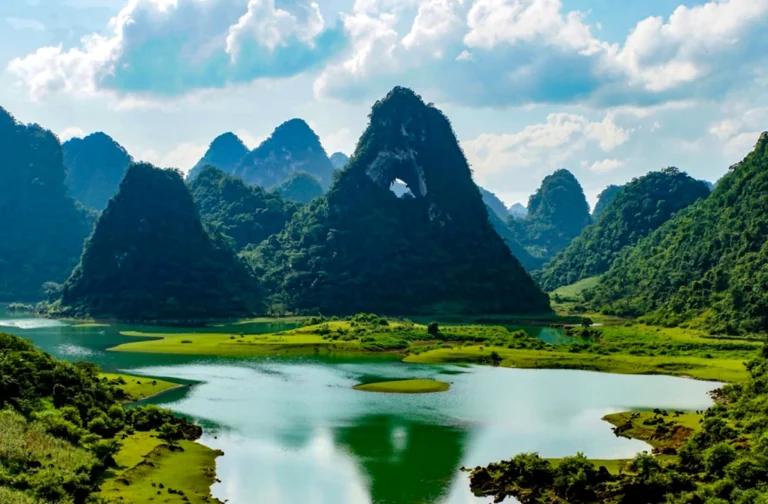
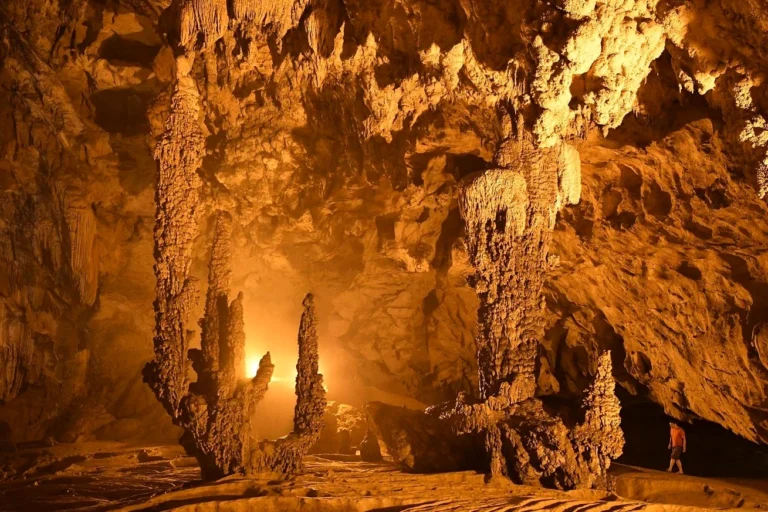
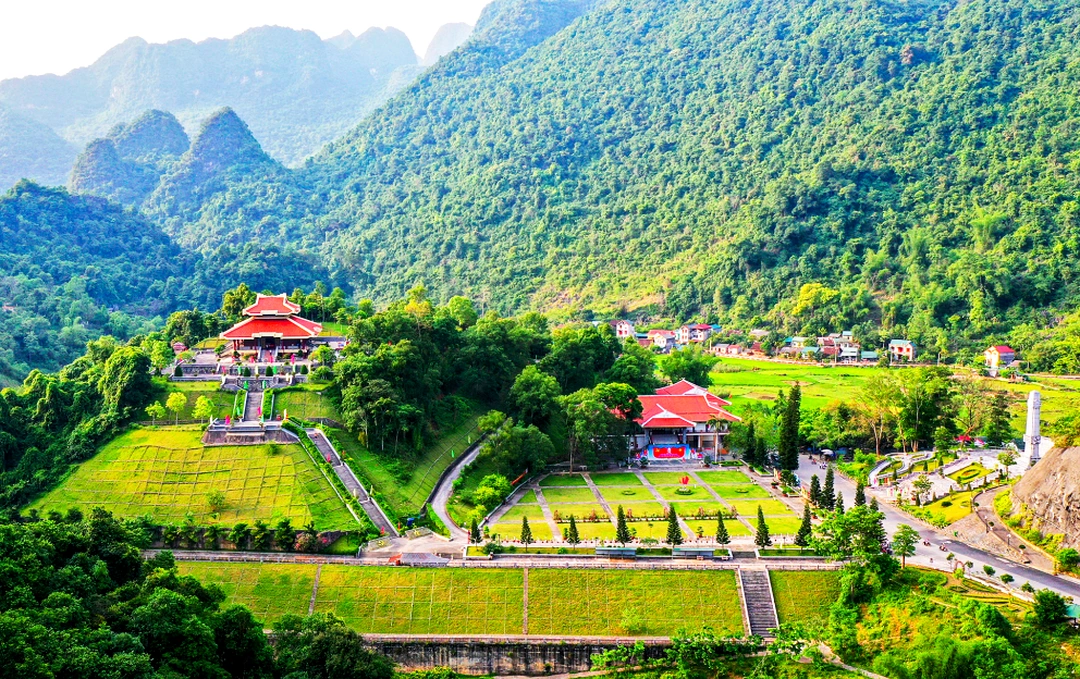
Tucked away amidst the frontier mountains of Cao Bang Province, the Pac Bo Special National Relic Site in Truong Ha Commune, Ha Quang District, stands as an enduring symbol of Vietnam’s revolutionary history and culture. Located between 22°59′ and 23°02′ North latitude and 105°57′ and 106°01′ East longitude, roughly 52 kilometers north-northwest of downtown Cao Bang City, Pac Bo occupies a singular geographical position where the nation’s northern frontier merges with the majestic spirit of its mountains and rivers. The terrain here preserves the pristine karst (limestone) characteristics of the Non Nuoc Cao Bang UNESCO Global Geopark, featuring jagged “cat-ear” limestone peaks rising sharply like stately lotus pedestals that cradle narrow valleys carved by mysterious subterranean and surface waterways. Viewed through the lens of traditional feng shui geography, Pac Bo embodies the auspicious “mountains converging, waters gathering; dragon flanking, tiger crouching” formation. Behind it stands a formidable backdrop of towering limestone ranges along the Vietnam–China border, acting as a sturdy windbreak against northern gales and creating a solemn “backed by solid ground, facing open space” orientation. Directly in front lies Lenin Stream—formerly called Giang Bay Stream, bearing the sacred meaning of “Heavenly Stream”—winding gracefully around the mountain base with crystal-clear turquoise waters year-round. According to feng shui principles, this water passage serves as a vital conduit that gathers positive energy, fosters prosperity, and regulates the microclimate, infusing the valley with tranquility and vitality. Flanking the site, surrounding peaks such as Coc Bo and Phja Cac curve inward like the armrests of a grand throne, forming a secluded, sheltered, yet expansive micro-region that distills the sacred essence of the borderlands. In the indigenous Tay–Nung language, “Pac Bo” means “Headwaters,” a simple name carrying profound symbolism of origin and source. Across centuries of history—from the Le and Mac dynasties to the Nguyen dynasty—this area served as a peaceful homeland for ethnic minority communities as well as a local trade corridor and strategic military route. Yet Pac Bo’s greatest historical turning point arrived in the spring of 1941. On January 28, 1941—the first day of the Lunar New Year of the Metal Snake—after thirty years abroad seeking a path to national salvation, Leader Nguyen Ai Quoc crossed Border Marker 108 on the Vietnam–China frontier to return to his homeland, setting foot directly on this sacred soil and opening a glorious new chapter for the Vietnamese revolution. Linked to this untamed landscape is an invaluable network of original relics, including Coc Bo Cave, Lenin Stream, President Ho Chi Minh’s stone working table, and Khuoi Nam Hut. These landmarks not only preserve the imprint of an arduous yet heroic period during which Uncle Ho lived, worked, and directly led the national liberation movement, but also stand as living proof of extraordinary historical and cultural heritage. The seamless harmony of unique karst geology, auspicious topography, and deep historical significance transforms Pac Bo into a priceless open-air natural museum—a sacred destination where generations of Vietnamese return to reconnect with their roots, reflect on enduring traditions, and take pride in a heroic era of the nation.
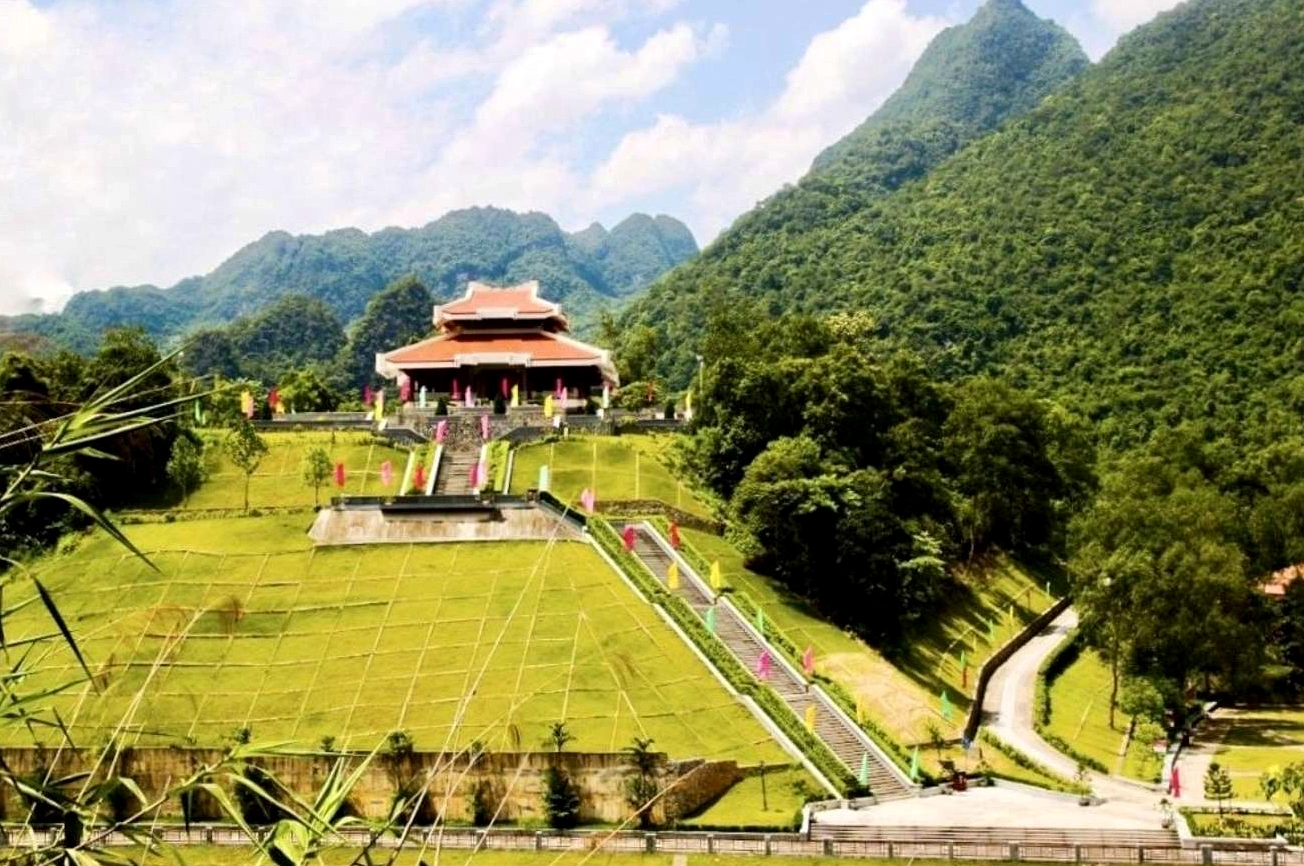
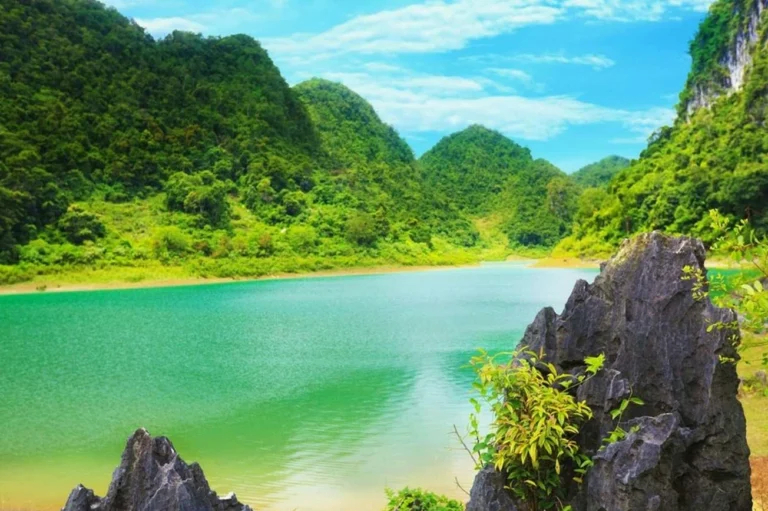
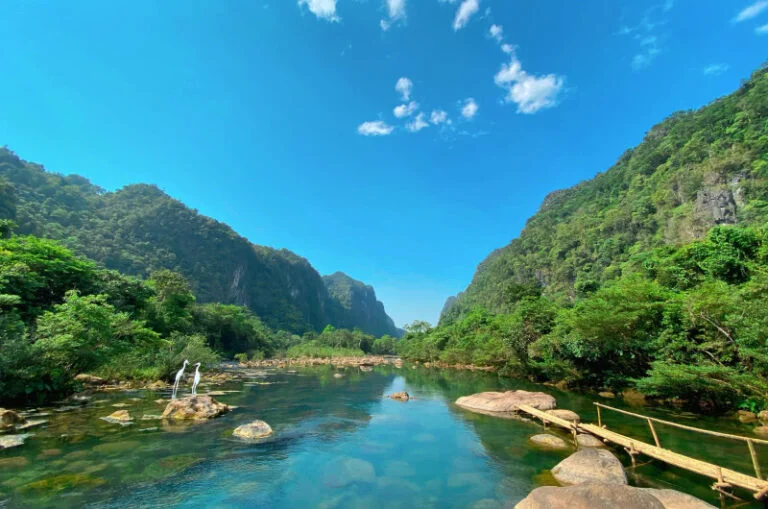
Cloaked in untamed, majestic, yet deeply poetic beauty, the Pac Bo Special National Relic Site is not only the cradle of the Vietnamese revolution, but also a rare natural masterpiece amidst the mountains and rivers of Cao Bang. Arriving in Pac Bo, visitors step into a colossal ink-wash painting where sky, peaks, and streams merge into an atmosphere at once solemn and serene, expansive and lyrical. At the heart of this landscape flows Lenin Stream, whose crystalline jade-green waters never run dry, winding gracefully beneath towering limestone cliffs. As golden sunlight filters through the primeval forest canopy, shimmering beams dance across the surface while schools of fish dart playfully through the cool water. Rising imposingly beside the stream, Karl Marx Mountain lifts sharp limestone crags skyward, forming a protective bastion over the quiet valley. Tucked deep inside the mountainside lies Coc Bo Cave, where President Ho Chi Minh lived and worked during his earliest days back in Vietnam. The cave’s natural architecture bears the timeless artistry of nature, adorned with stalactites of countless shapes glistening beneath soft golden lights. An air of antiquity and reverence lingers throughout the cavern, evoking a heroic era of national history and stirring deep emotion and pride in every visitor.
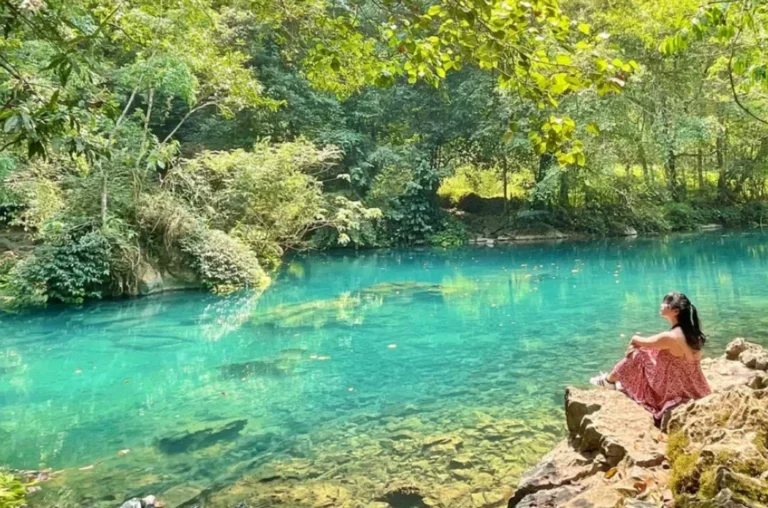
To capture the full splendor and poetic grace of Pac Bo, seasoned travelers and professional photographers often share two prized “million-dollar view” photo spots. First is the stone bridge spanning Lenin Stream right before the path leading up to Coc Bo Cave. Standing on the bridge and looking upstream, your lens takes in a flawless composition: the turquoise stream curving like a ribbon of jade, framed against the moss-draped limestone cliffs of Karl Marx Mountain rising in the background. The ideal lighting window here is between 9:00 AM and 10:00 AM, when sunlight shines directly down onto the water, penetrating its crystal clarity to illuminate its ethereal emerald hue and lend remarkable depth and brilliance to every shot. Second is the vantage point around the Coc Bo Stone Table—where Uncle Ho once worked—which evokes a quiet, contemplative, and deeply nostalgic mood. Surrounded by lush woodland, sunbeams filtering through overhead foliage create artistic patterns of light and shadow, imbuing photographs with both historical depth and the untamed spirit of the border mountains. The finest moment to capture this scene is late afternoon, when gentle sunset hues gild the treetops and cast final rays through the leaves, bathing the spot in peace, stillness, and reverence.
Stepping into the Pac Bo Special National Relic Site, every traveler is immediately drawn into a deeply moving journey where grand nature merges seamlessly with sacred history. Exploration begins by walking upstream along Lenin Stream along winding trails beneath an ancient primeval forest canopy. The gentle murmur of flowing water blends with birdsong to compose a tranquil symphony that melts away the fatigue of bustling city life. The first wave of awe arrives when Lenin Stream comes into view—an enchanting shade of emerald green so translucent that schools of fish can be seen swimming effortlessly in its cool depths. Standing before this solemn yet poetic sanctuary, visitors feel a rare sense of lightness and inner calm.
Continuing onward, travelers can challenge themselves along rugged mountain trails leading up to Coc Bo Cave, where President Ho Chi Minh lived and worked through arduous yet heroic revolutionary years. Gripping jagged limestone outcrops and ascending moss-covered stone steps offers a visceral sense of the resilience and iron will of that era. Looking out from the cave entrance, the entire picturesque panorama of Pac Bo Valley unfolds below, ringed by rolling mountain peaks—a deeply reflective moment that fills the heart with pride at touching the very wellspring of the nation’s modern history.
Beyond scenery and history, Pac Bo also captivates visitors with vibrant indigenous cultural experiences. Drifting gently along Lenin Stream aboard a small bamboo raft lets travelers admire the majestic valley from an entirely fresh perspective while breathing crisp air scented with the frontier forest. After hours of exploration, stopping at nearby Tay and Nung villages surrounding the relic site to savor celebrated local specialties is an essential experience. The rich sweetness of fragrant grilled stream fish, the chewy nuttiness of five-color upland sticky rice, and a comforting bowl of wild bamboo shoot soup—prepared with the genuine warmth and hospitality of local hosts—awaken every sense and leave a lasting impression on everyone who visits.
The Pac Bo Special National Relic Site is a sacred historical and spiritual landmark that every Vietnamese person hopes to visit at least once in a lifetime. To ensure a smooth, fulfilling journey to the cradle of the revolution, travelers should keep in mind key practical details regarding opening hours, admission fees, transportation, and attire.
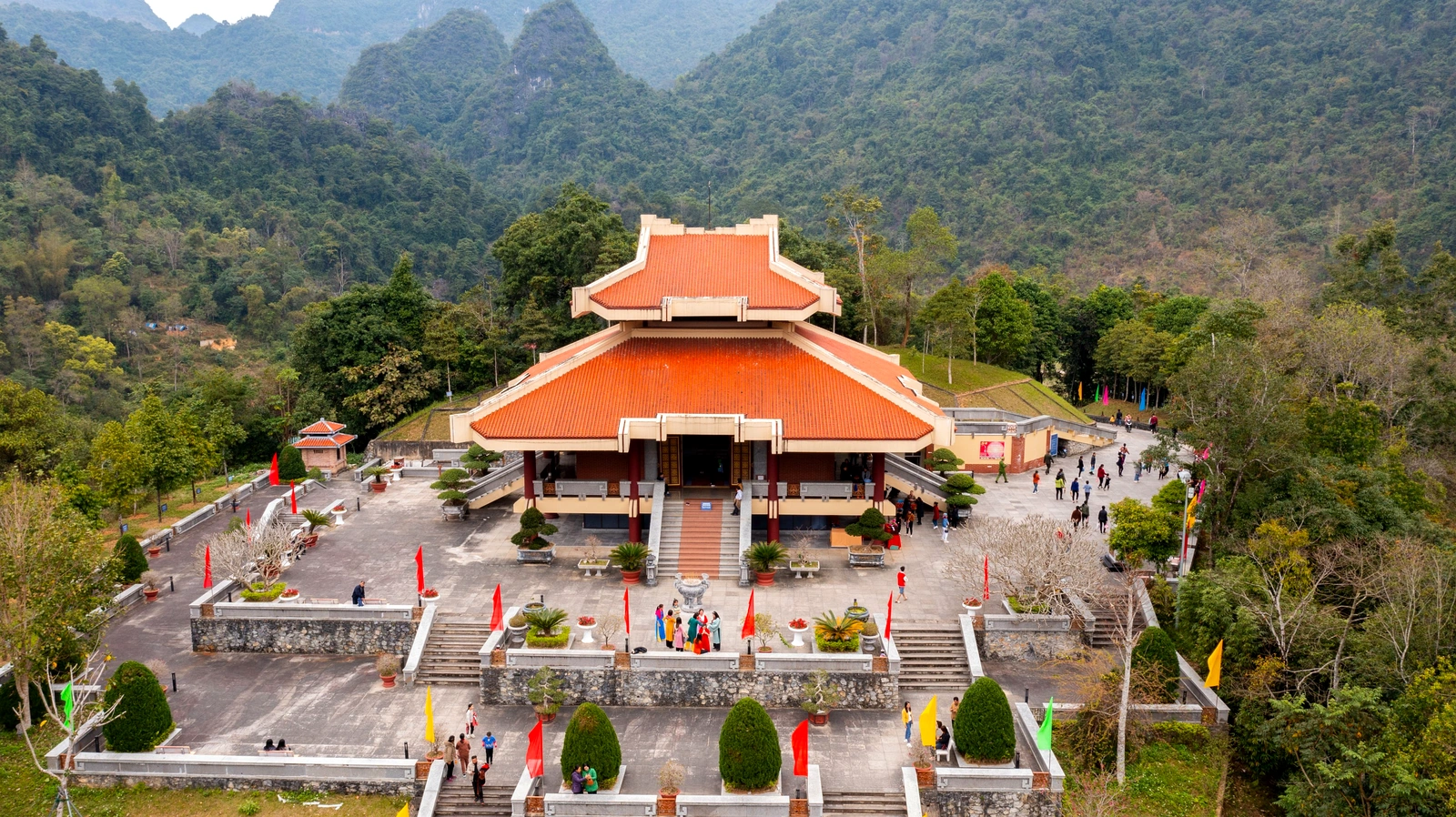
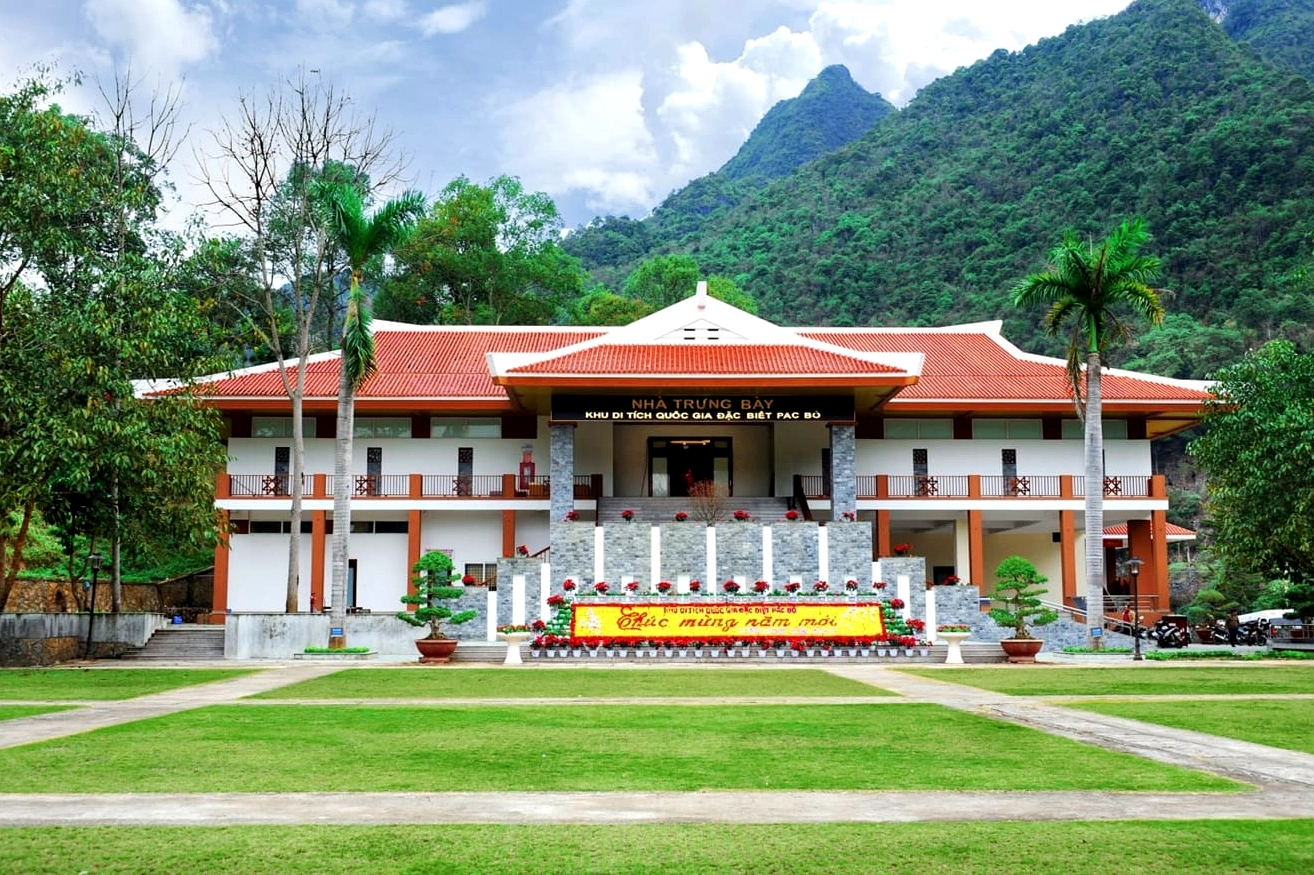
Regarding operating hours, Pac Bo Historical Site welcomes visitors every day of the week, including weekends and public holidays. Standard visiting hours typically run from early morning around 7:00 AM to 5:00 PM daily, allowing travelers to plan their schedules flexibly. In terms of costs, the site management board maintains very affordable listed rates for entrance tickets combined with electric shuttle service (where applicable), while children below the designated height threshold and eligible priority visitors generally receive complimentary admission under current site regulations.
The optimal route from downtown Cao Bang City to Pac Bo stretches roughly 52 kilometers north-northwest. Visitors can travel by motorbike, private car, or the Cao Bang City–Ha Quang local bus route. The journey follows National Highway 4A and winding provincial roads framed by dramatic mountain scenery. Although the paved road surface is smooth and well-maintained, drivers should stay alert on hairpin bends and reduce speed along steep mountain passes to ensure complete safety.
The best time of year to visit Pac Bo is during the dry season, lasting from roughly September through May of the following year. Visiting between October and December is particularly rewarding, as Lenin Stream displays its most vivid, crystal-clear jade-green hue alongside crisp, dry weather ideal for gentle forest trekking.
Given the rugged limestone terrain and commemorative nature of the site, prioritize neat, comfortable attire when visiting Pac Bo. Wear athletic shoes or hiking footwear with solid traction to navigate stone steps, valley paths, and streamside trails with ease. Additionally, dress modestly and respectfully in accordance with local customs when offering incense at the Ho Chi Minh Memorial Temple and visiting original historical landmarks.
To enjoy a seamless holiday and experience the full beauty of Pac Bo Historical Site without worrying about arranging transport, admission tickets, or itineraries, travelers can choose VDS Travel’s premium all-inclusive Cao Bang tour packages. Every itinerary is thoughtfully timed for photo stops when the scenery shines brightest, accompanied by knowledgeable guides versed in local culture and top-tier hotel and dining standards.