Nestled entirely within the core zone of the Trang An Scenic Landscape Complex—a UNESCO World Cultural and Natural Heritage Site—Tam Coc – Bich Dong emerges as both a masterpiece of natural creation and a living archive of national history. Located in Ninh Hai Commune, Hoa Lu District, Ninh Binh Province, this destination is far more than a scenic stopover; it is an ancient karst geological formation where towering limestone peaks rise abruptly from flat plains, creating a dramatic yet deeply poetic landscape. From a feng shui perspective, the complex embodies the classic ideal of “mountain-backed, water-facing” (toa son huong thuy). Undulating limestone ranges stand behind like the steadfast fortress of the Black Tortoise, while the Ngo Dong River winds gracefully like a crimson silk ribbon across golden rice paddies, serving as a water-gathering basin where the vital energies of heaven and earth circulate and converge. Tam Coc’s water-carved cave system—comprising Hang Ca (First Cave), Hang Hai (Second Cave), and Hang Ba (Third Cave)—is likened to mystical “dragon throats,” where flowing waters have sculpted limestone over millions of years into fantastical stalactites, guiding visitors into a tranquil realm far removed from worldly noise.
The history of this land flows continuously from prehistoric human habitation belonging to the Hoa Binh culture preserved in cave sediment layers to glorious chapters of the Tran Dynasty. During the resistance against Mongol-Yuan invasions, Tam Coc served as a strategic military base where Tran kings executed their “scorched-earth” defense strategy, as well as a serene sanctuary where retired emperors took monastic vows amid emerald waters and verdant peaks after abdicating the throne. This fusion of majestic nature and Buddhist spirituality reaches its zenith at Bich Dong—acclaimed as the “Second Most Beautiful Cave Under Southern Skies” (Nam thien de nhi dong). Founded in 1428 during the Thuan Thien reign of King Le Thai To, the pagoda was built through the devotion of Zen masters Tri Vien and Toi Nhat, disciples of Zen Master Chan Nguyen. The name “Bich Dong”—meaning Jade Grotto—was bestowed by the renowned scholar Nguyen Nghiem, father of the great poet Nguyen Du, when he visited to admire the scenery in 1705. In 1774, Lord Trinh Sam was so captivated by its otherworldly beauty during a visit that he personally inscribed the grand plaque “Nam thien de nhi dong,” cementing the landmark’s unrivaled stature in Vietnamese consciousness.
The significance of Tam Coc – Bich Dong extends beyond scenery to encompass invaluable relics, stone steles, and distinctive cave-pagoda architecture. Poems carved into cliff faces by literati of the Le and Nguyen dynasties remain intact as historical witnesses, harmonizing with 18th-century gilded lacquer Buddha statues and a bronze bell cast during the Canh Hung era (1740–1786). This seamless blend of traditional wooden architecture and natural caverns creates a remarkable spiritual and cultural realm where humanity and nature become one. Recognized for its exceptional geological, archaeological, and historical merit, Tam Coc – Bich Dong was designated a National Relic by the Ministry of Culture and Information in 1980 and elevated to a Special National Relic in 2012. It stands as vivid proof of a land blessed with spiritual energy and outstanding figures, where every inch of soil and every bend of the river breathes a thousand years of civilization, inviting heritage lovers to reflect and cherish.

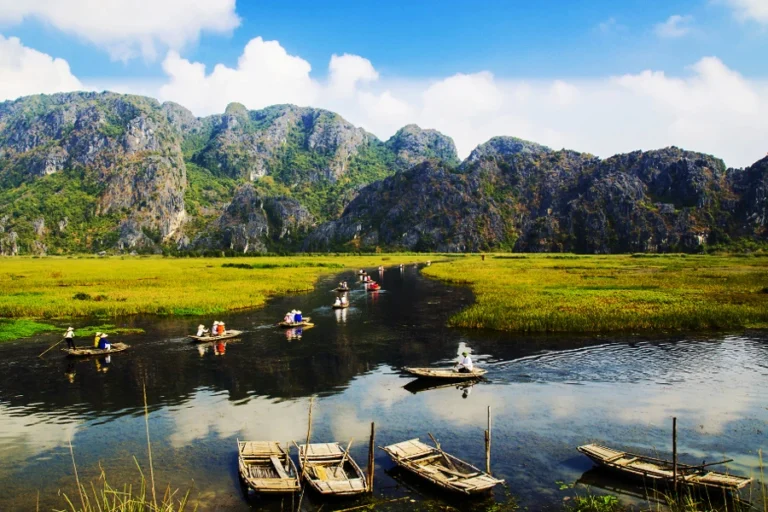
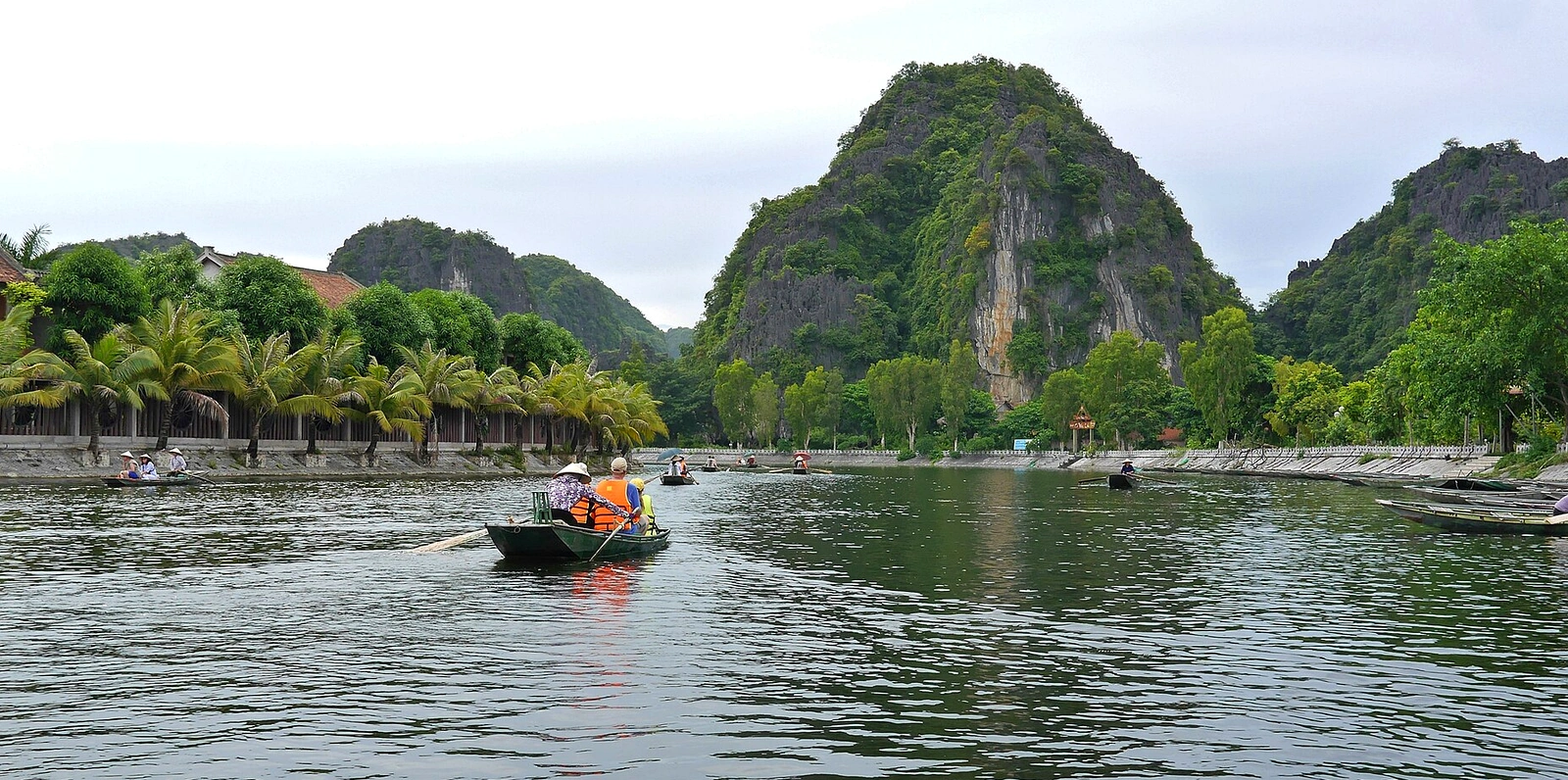
Tam Coc – Bich Dong is more than a scenic landmark—it is a flawless symphony composed by nature and human artistry. Stepping into this complex feels like entering another reality, where sheer limestone mountains rise out of still waters to form a colossal ink-wash painting. The centerpiece is the Ngo Dong River, a gentle ribbon winding through golden rice fields and leading travelers into three awe-inspiring grottoes: Hang Ca, Hang Hai, and Hang Ba. Each cavern is a natural architectural marvel adorned with myriad stalactites hanging like stone lace, shimmering beneath ethereal beams of light filtering through ceiling openings. The transition from wide-open sunlit fields to the cool, hushed depths inside the mountains delivers a captivating visual and emotional journey.
While Tam Coc radiates expansive grandeur, Bich Dong embodies delicacy and spiritual depth. Revered as the “Second Most Beautiful Cave Under Southern Skies,” Bich Dong Pagoda exemplifies the traditional architectural philosophy of “initiated by forebears, enriched by descendants.” Rather than standing apart, the pagoda leans gracefully into the mountainside and merges with natural caverns. Built in the shape of the Chinese character “Tam” (three), it rises across three tiers—Ha (Lower), Trung (Middle), and Thuong (Upper) Pagodas—along the slope. Moss-draped yin-yang tiled roofs, sturdy ironwood pillars, and 18th-century gilded Buddha statues evoke a serene, transcendent atmosphere. Climbing all the way to Thuong Pagoda rewards visitors with sweeping panoramic views over Ninh Hai, where limestone peaks ripple like silver waves across a deep green sea—an awe-inspiring vista of nature’s artistry.
To capture “million-view” photographs here, professional photographers typically prioritize two classic vantage points. The first is from the summit of Mua Cave Mountain overlooking the entire Tam Coc panorama at sunrise. As the first rays of morning light pierce through thin mist, gilding the rice paddies and the Ngo Dong River, the scene unfolds like a golden silk sash draped across majestic karst peaks. The soft early light creates ideal contrast between emerald mountains and golden rice, yielding images with extraordinary artistic depth. The prime shooting window is between 5:30 AM and 7:00 AM.
The second vantage point is at the entrance gate of Bich Dong, where an ancient stone bridge arches over a lotus pond. In summer, when lotuses burst into bloom, their soft pink petals harmonize with green limestone cliffs and the weathered pagoda gate to create a deeply poetic frame. At sunset, as late afternoon rays cast long shadows across rock walls and paint dramatic pools of light and darkness, photographers can capture the timeless, contemplative beauty of the pagoda. Using a wide-angle lens here takes in the full majesty of its “mountain-backed, water-facing” setting, where terrestrial and celestial energies converge. From every angle, Tam Coc – Bich Dong remains an endless muse where each frame tells a story of history, culture, and nature’s endurance.
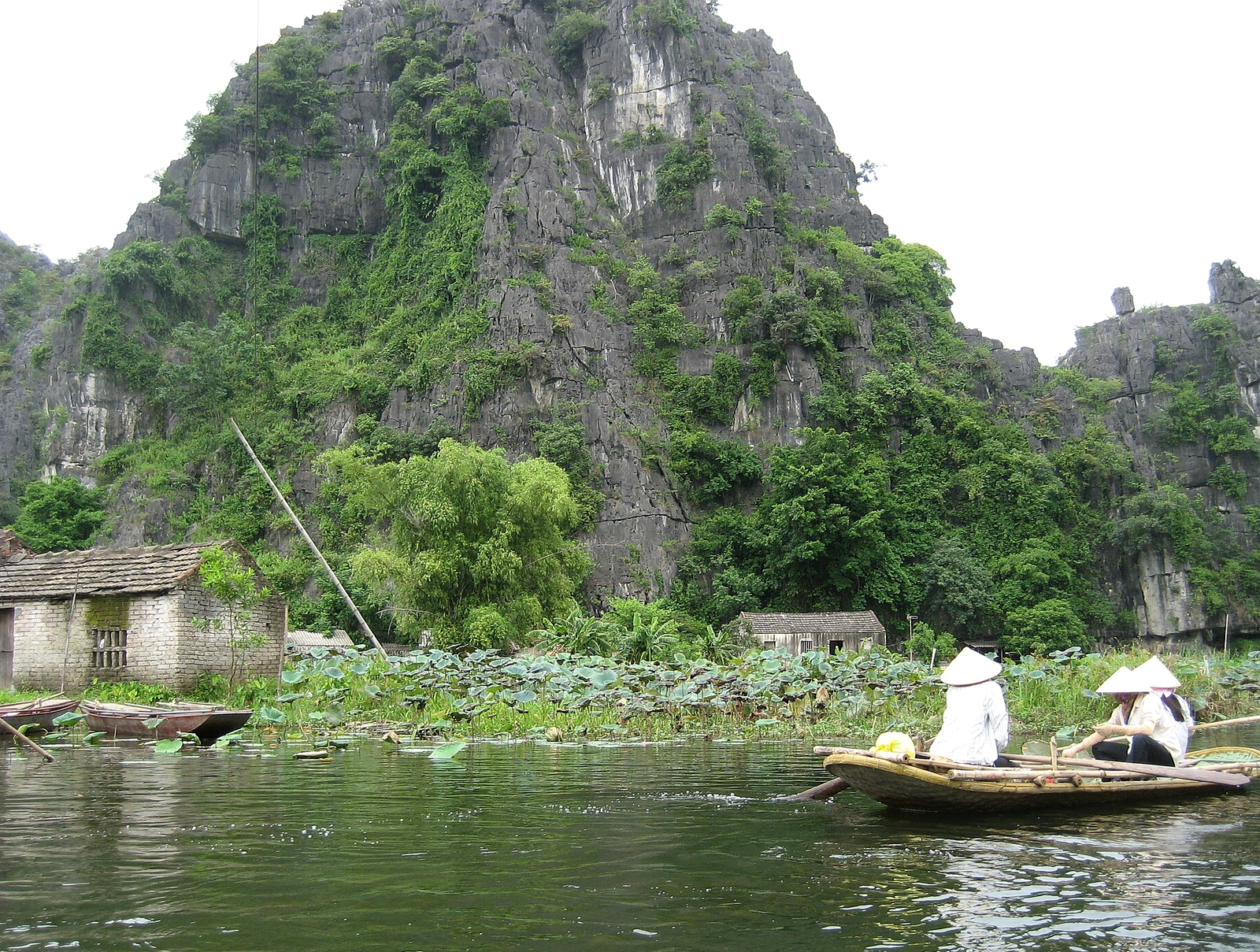
Visiting Tam Coc – Bich Dong is never just a routine sightseeing trip—it is an intimate encounter with the pulse of time and nature. The signature experience, and the very soul of this region, is gliding aboard a traditional wooden sampan along the winding Ngo Dong River. As oars dip softly into crystal-clear water reflecting towering limestone cliffs, absolute tranquility takes over, broken only by water lapping against the hull and birdsong echoing from high crags. A sense of wonder washes over visitors as the boat enters Hang Ca, Hang Hai, and Hang Ba. In the cool dimness of each cavern, fantastical stalactites emerge in soft filtered light, revealing natural sculptures honed over millions of years. During harvest season, the Ngo Dong River appears gilded by vibrant golden rice paddies lining both banks, forming a living ink-wash masterpiece that leaves every onlooker breathless.
Stepping back onto dry land, climbing up to Bich Dong offers a completely different emotional register. Moss-covered stone steps wind upward into crisper, purer air scented subtly with incense. Looking out from above, the entire Tam Coc valley appears like a vivid green ribbon cradled inside a limestone amphitheater. This is a moment of quiet reflection, when the spirit feels cleansed and attuned to the peaceful sanctity of the ancient pagoda. Paying reverence before centuries-old Buddha statues and running fingers across cliff walls inscribed with ancestral poetry, travelers feel a sacred bridge linking past and present, finite humanity and boundless nature.
Local culture in Tam Coc – Bich Dong is equally memorable through its celebrated regional cuisine. After hours of exploration, nothing compares to savoring crispy, golden scorched rice (com chay) paired with rich mountain goat sauce—a quintessential marriage of traditional culinary craft and local ingredients from the ancient capital. Ninh Binh mountain goat specialties, prized for their tender, flavorful meat from goats grazing freely on rocky cliffs, represent both a regional delicacy and the diligence and skill of local cooks. Dining in an open-air setting surrounded by picturesque rivers and mountains lets everyday worries melt away on the mountain breeze.
The vitality of Tam Coc – Bich Dong lies not only in its scenery, but also in the warm smiles of local boat rowers, the sincerity of farmers tending riverside paddies, and the dignified stillness of ancient temples. Every moment here adds a resonant note to the symphony of heritage. Initial awe at nature’s grandeur gradually deepens into quiet contemplation, leaving travelers long after departure with the lingering spirit of the “Second Most Beautiful Cave Under Southern Skies”—a place where every inch of land and bend of river tells timeless stories of Vietnamese history, culture, and love for nature.

To ensure a smooth, rewarding visit to the Tam Coc – Bich Dong scenic complex, travelers should keep essential logistics and practical tips in mind. The complex welcomes visitors every day of the week, including public holidays and Tet (Lunar New Year). Daily operating hours run from 7:30 AM to 5:00 PM. Knowing this schedule makes it easy to plan your day, especially if you intend to combine Tam Coc – Bich Dong with nearby attractions within the Trang An core heritage zone.
Regarding admission fees, visitors purchase two separate tickets: a scenic entrance ticket and a boat ride ticket. Entrance fees are posted by the Management Board, with separate rates for adults and children (based on height). Meanwhile, a sampan ride is required to travel through Tam Coc’s cave system, with strict passenger limits per boat to ensure waterway safety. Be sure to hold onto your ticket stubs throughout your journey for verification at checkpoints along the route.
Getting to Tam Coc – Bich Dong from Ninh Binh city center is quick and straightforward by several modes of transport. If traveling by private motorbike or car, the best route follows Trang An Boulevard or Provincial Road 491C, taking just 15 to 20 minutes. For families or larger groups, taxis and electric shuttle carts offer convenient, comfortable transfers. For travelers who enjoy slow exploration, renting a bicycle in the city center and pedaling past golden rice fields toward the Tam Coc boat pier is an unforgettable way to soak in the peaceful charm of the ancient capital.
The best time to visit Tam Coc – Bich Dong is during the rice harvest season, when brilliant golden hues blanket both sides of the Ngo Dong River in a vibrant living painting. Early spring is another wonderful window for visiting Bich Dong Pagoda, offering cool, crisp weather ideal for pilgrimages and temple sightseeing. As for attire, because this site combines sacred religious monuments with rugged limestone terrain, wear modest, respectful clothing when entering pagodas, paired with sturdy athletic shoes or grippy sandals suitable for climbing stone steps and exploring caves safely without slipping.
Finally, to make your visit truly meaningful, strictly follow environmental protection rules—never litter and always maintain quiet reverence around worship areas. Respecting local culture and heritage etiquette not only preserves historical treasures, but also helps share the image of civilized, sustainable tourism in Ninh Binh with travelers from around the world.
To enjoy a seamless holiday and experience the full splendor of Tam Coc – Bich Dong without worrying about transportation, entrance tickets, or itinerary logistics, travelers can choose from VDS Travel’s premium all-inclusive Ninh Binh tours. Every itinerary is thoughtfully timed to capture the scenery at its most radiant, accompanied by knowledgeable local guides and top-tier hotel and dining standards.