Nestled amidst the picturesque scenery of a thousand-year-old ancient capital, the cultural space named “Hoa Lu Ancient Town” opens up a deeply aesthetic journey of nostalgia, where history and present interweave within a uniquely special geographical coordinate. Administratively, this space is located within the Lead Tower (Tháp Chì) campus, on the banks of Ky Lan Lake Park, in Tan Thanh Ward, Ninh Binh City. However, in terms of geo-cultural and heritage space, that coordinate lies entirely within the sacred buffer zone of the Trang An Landscape Complex—once the brilliant glory of the Dai Co Viet capital from the 10th century. The local terrain bears the full characteristics of a karst semi-mountainous region, where towering limestone mountain ranges rise like solid natural ramparts, enclosing depressed valleys and winding river systems, creating both an impregnable defensive fortress and one of the most magnificent scenic spots in the Northern Delta.
From a feng shui and geological perspective, the accent dominating the entire landscape surrounding “Hoa Lu Ancient Town” is Mount Ky Lan—a famous mountain deeply imbued with spiritual and legendary significance. According to local chronicles and folklore, this mountain, along with its system of caves, temples, and ancient shrines, has witnessed countless ups and downs of the Dinh and Early Le dynasties. The presence of Ky Lan Lake right beside it not only regulates the microclimate but also creates a mirror-like water pavilion reflecting the imagery of ornate palaces, mossy tiled roofs, and sampan boats laden with glowing lanterns as night falls. This “leaning against mountains and facing water” geography bestows upon the reconstructed space an austere, tranquil yet poetic atmosphere, perfectly suited for the mission of preserving and honoring the authentic traditional cultural values of the nation.
Although the name “Hoa Lu Ancient Town” is not an original commercial urban center from the 10th century found in official historical texts such as *Đại Việt sử ký toàn thư* or *Khâm định Việt sử Thông giám cương mục*, this appellation directly evokes the heroic origins of the national title Dai Co Viet. That was in 968, when Dinh Bo Linh, the hero who suppressed the 12 warlords, ascended the throne as Emperor, choosing Hoa Lu as the first capital of an independent centralized feudal state. This land is associated with brilliant historical figures such as Dinh Tien Hoan, Le Hoan, and Empress Dowager Duong Van Nga, who laid the first bricks for the task of shaping the nation. The emergence of this cultural space at the foot of Mount Ky Lan acts as a silent tribute to ancestral memory, transforming heroic history into the most authentic visual and tactile experiences through traditional artisanal architecture.
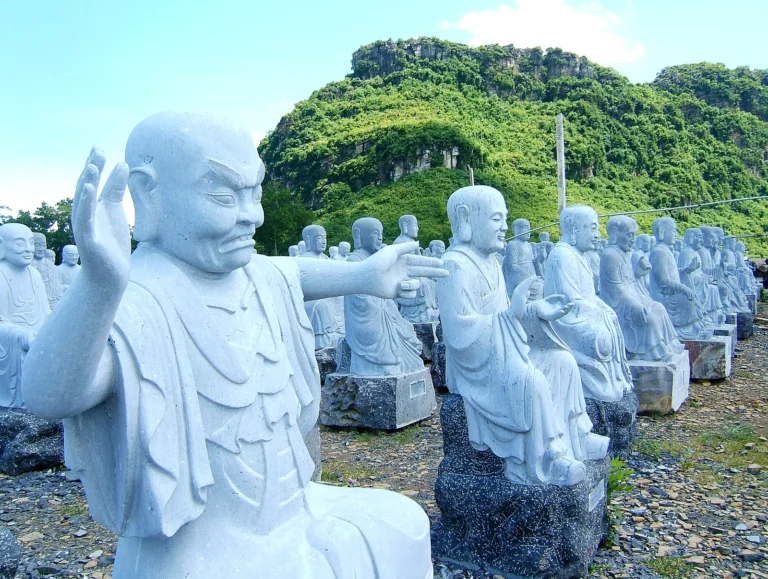
Through a process of creation and recognition by the press and tourism management agencies, “Hoa Lu Ancient Town” has become a bright spot in preserving traditional Vietnamese handicraft values. This space showcases and honors long-standing elite craft villages such as Bat Trang ceramics, Phu Lang pottery, Ninh Van fine art stone, Van Lam embroidery, along with rattan and bamboo weaving products and folk paintings. Through the lens of sustainable heritage tourism, this place is not merely a contemporary check-in spot but has risen to become a “living museum,” where the soul of 10th-century Vietnamese people is reborn through every fired brick, every carved wooden grain, and folk songs echoing by the water. It is a delicate harmony between a unique geographical coordinate, a heroic historical root, and a deeply poetic local topographic beauty that captivates every traveler on a pilgrimage back to Vietnam’s cultural roots.
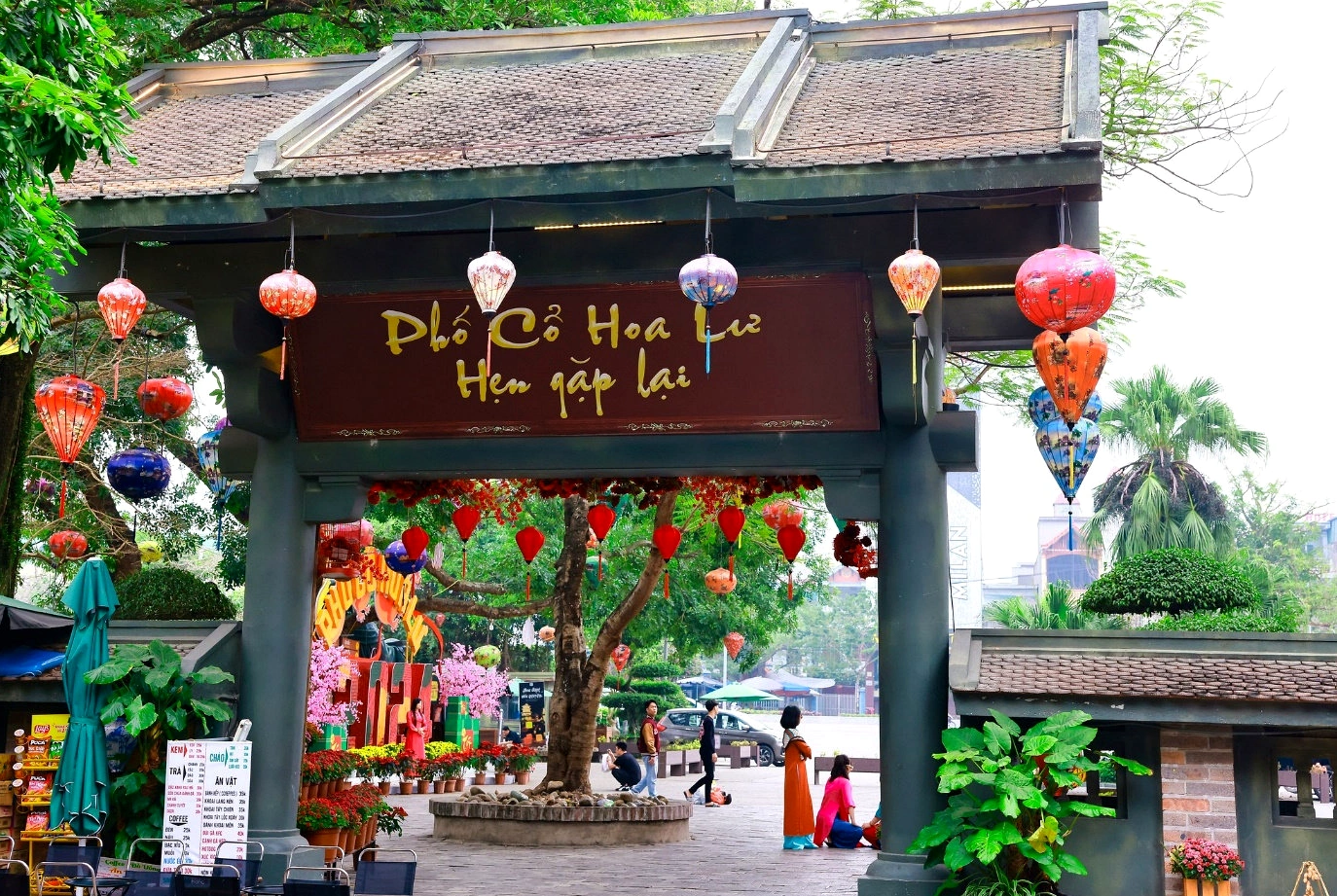
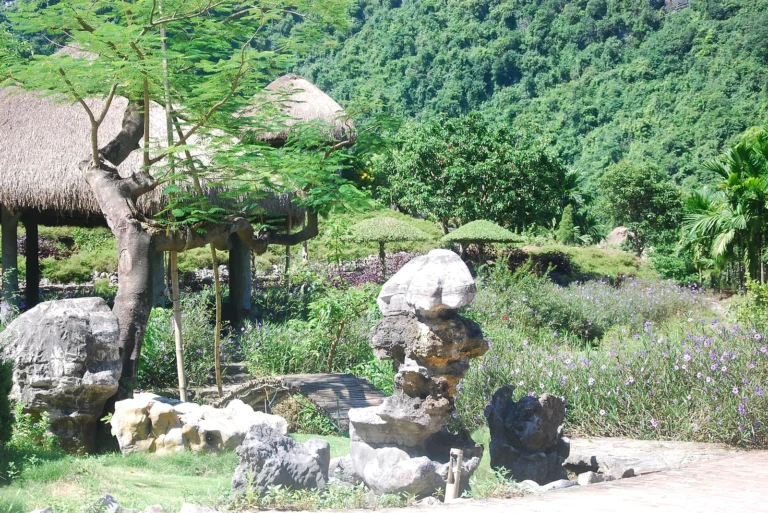
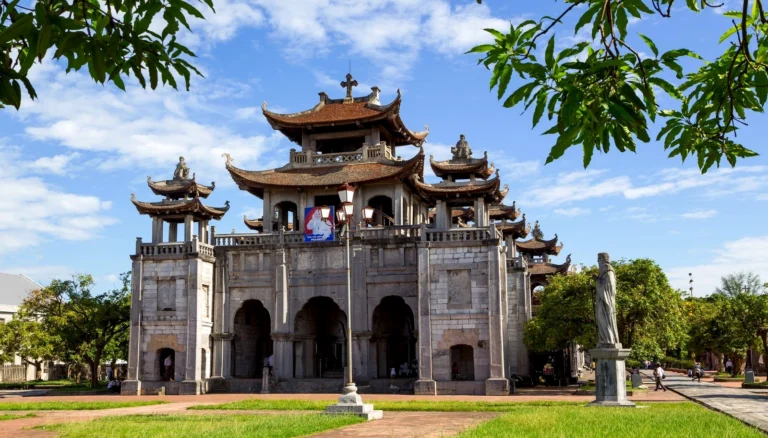
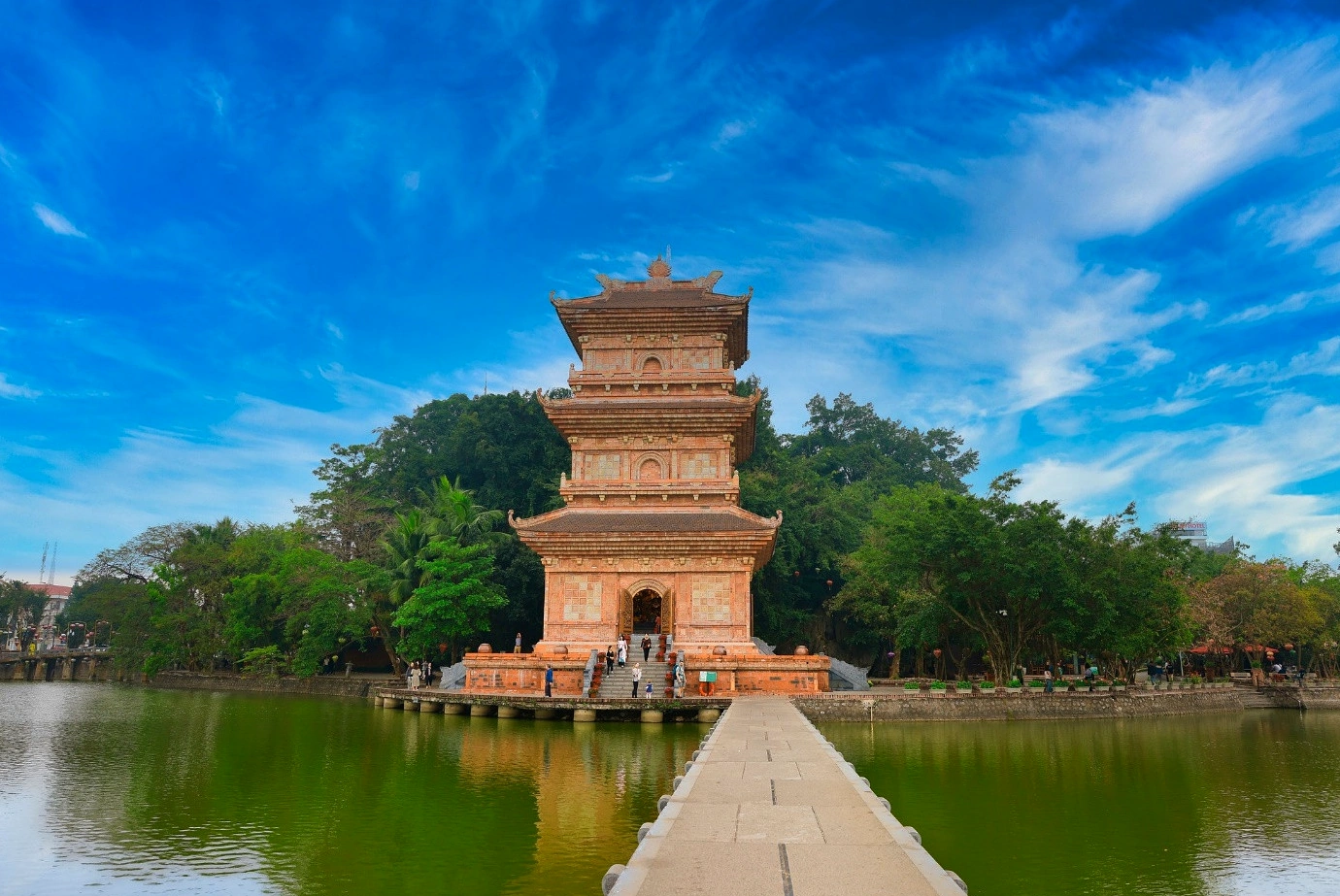
Situated right at the foot of the majestic Mount Ky Lan and along the banks of a calm, clear blue lake, the architectural space of Hoa Lu Ancient Town emerges as a vivid natural masterpiece, perfectly recreating the heroic echo of a golden historical era. From an architectural and landscape perspective, this work is a subtle combination of traditional sculpture art and the skilled hands of contemporary artisans, delivering an architectural masterpiece that is both ancient and deeply imbued with contemporary breath. Every design detail filters the cultural essence of 10th-century Dai Co Viet, combining with traditional northern delta architectural styles to form a harmonious, majestic, yet poetic whole. Ancient rows of houses with mossy yin-yang tiled roofs, rustic wooden panel doors, and intricately carved column systems featuring dragon-phoenix motifs and traditional patterns all exude an austere, nostalgic beauty. The invaluable highlight of the entire space is the wonderful blend between artificial architecture and the magnificent natural landscape of the ancient capital region. Overlapping mountains surrounding the area, combined with the rippling waters of Ky Lan Lake, create an auspicious water-gathering, blessing-gathering terrain according to Eastern feng shui concepts.
Stepping into this space at dusk or dawn, visitors and photography enthusiasts will be astonished by the magical beauty of natural light harmonizing with traditional lanterns. The dawn moment when early golden rays shine through leaves, casting bright red tones on fired brick walls and reflecting on the calm water surface, creates a peaceful, astonishingly serene scene. Conversely, as twilight falls, the entire Hoa Lu Ancient Town is immersed in the warm orange-red hues of thousands of glowing red lanterns, illuminating a corner of the ancient capital’s sky and evoking a bustling commercial and cultural activity space from a millennium ago.
To capture priceless moments and own “million-view” photo angles highly praised by photographers and travel journalists, visitors cannot miss two classic check-in coordinates. First is the stone bridge area spanning Ky Lan Lake facing directly toward the main gate of the ancient town; this is the perfect angle to capture the majestic scenery of the ancient fortress gate blending with the grandeur of Mount Ky Lan behind, ideal during the 16:30 to 17:30 timeframe when sunset creates a magical golden-orange lighting effect. The second coordinate consists of lantern-lined streets deep inside the handicraft exhibition area, where visitors can stand from a high angle aiming their camera down at winding corridors, capturing the depth of rustic wooden architecture combined with thousands of glowing lanterns at dusk. Every perspective here is not purely a beautiful frame to keep memories, but equally an emotional encounter with the nation’s profound historical culture breathed into every delicate architectural detail and breathtaking natural landscape.
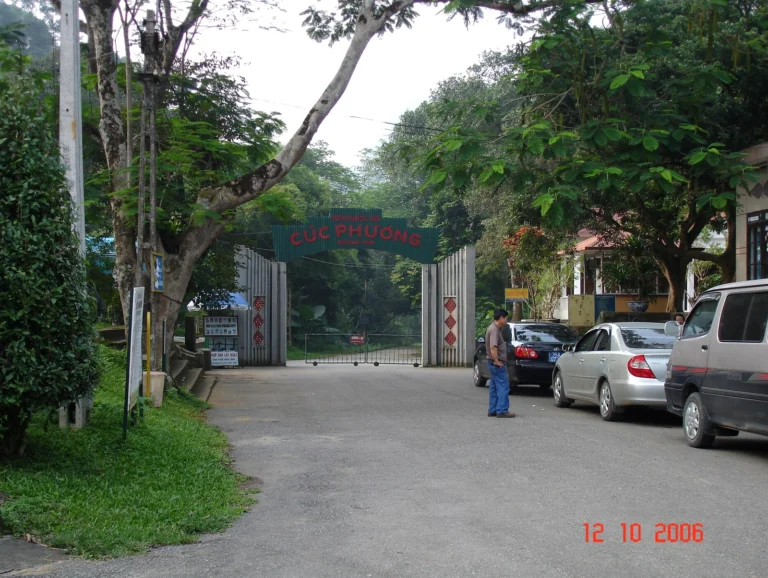
When stepping past the welcome gate featuring traditional architectural styles to officially set foot into the reconstructed space of “Hoa Lu Ancient Town,” the first thing awakening every visitor’s senses is the overwhelming harmony between past and present. No longer dry historical pages or rigorous archaeological chronicles, this place opens up a vivid native cultural space where every street corner and architectural structure echoes the soul of a heroic Dai Co Viet of yore. Beneath the austere shadow of Mount Ky Lan and the deep blue lake surface, visitors immediately feel a slowed-down rhythm of life—deep yet lively and fresh.
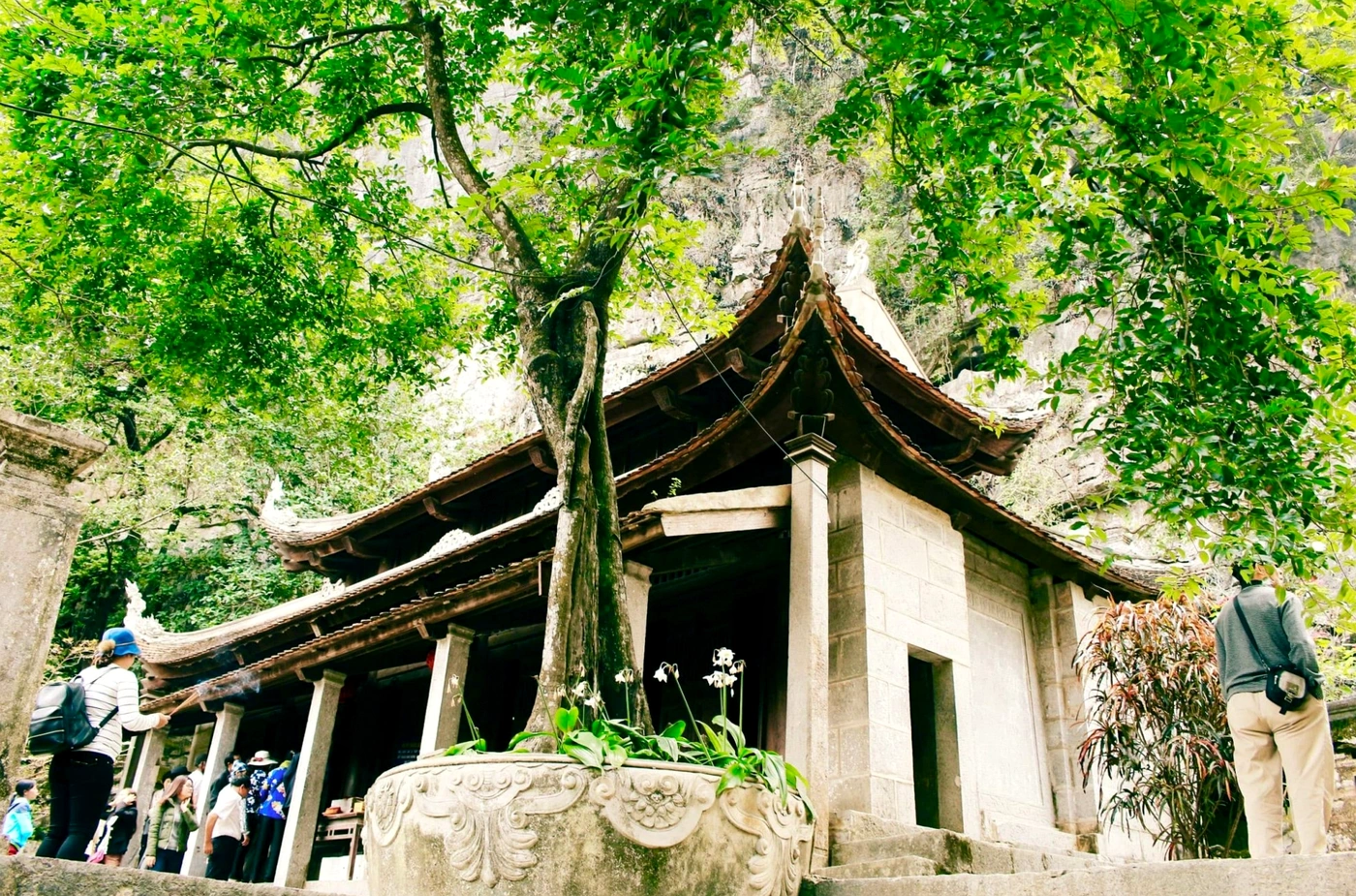
The most valuable practical exploration journey here is the perfect combination of enjoying natural scenery and deep spiritual experiences. Visitors can leisurely step up mossy stone steps, climbing the magnificent Mount Ky Lan to capture the panoramic picture of modern Ninh Binh city interlaced with the picturesque waters of the heritage region. Looking down from above, crowds strolling past wooden houses with yin-yang tiled roofs, and glowing lanterns reflecting on the calm waters of Ky Lan Lake create a magical scene as beautiful as a high-end period film sequence. Right beside it, worshiping at ancient temples around the buffer zone brings astonishing peace, helping cleanse each person’s soul and directing it toward the nation’s sacred roots.
Stopping not at visuals, Hoa Lu Ancient Town also attracts visitors with poetic tourism service experiences, prominently featuring boat sightseeing tours. Sitting on a sampan boat gliding gently along cool waters, visitors drift back in time, weaving through magnificent limestone mountain feet, enjoying fresh air, and listening to forest winds play nature’s symphony. The overwhelming grandeur of the Trang An world natural heritage surrounding the area further honors the delicate beauty of traditional craft villages vividly displayed along the ancient street space. Here, visitors can witness artisans pouring their souls into pottery, embroidery, or stone carving products, thereby better understanding the talent and resilience of the ancient capital people across generations.
Concluding the practical experiential journey must include the renowned specialty culinary flavors of Ninh Binh, a vibrant native culture charming any fastidious diner. Amidst nostalgic spaces glittering with candlelight and lanterns, savoring famous dishes such as crispy scorched rice (cơm cháy) dipped in savory goat sauce, tender mountain goat meat with lime, or sipping warm tea with traditional pastries brings unforgettable aftertastes. The moment of sitting with loved ones, tasting rustic cuisine amid distant ethnic musical instruments, is when visitors fully experience emotional stillness—a feeling both familiar and proud of touching native cultural values vigorously reviving amidst the heritage heartland.

The cultural and tourism space of Hoa Lu Ancient Town is located right within the Lead Tower campus, on the banks of scenic Ky Lan Lake right in the center of Ninh Binh city, making it an unmissable destination for anyone fond of traditional culture and nostalgic architecture. To make the exploration journey complete and smooth, visitors should grasp practical information regarding operating hours, costs, and accurate transit experience.
Regarding operating hours, the Hoa Lu Ancient Town area welcomes visitors freely throughout day and night, typically from early morning until late evening. The ideal time to visit is at dusk when twilight falls and as night descends, lighting up the entire district with thousands of glowing lanterns, creating a magical scene vividly recreating commercial vibes of ancient Dai Co Viet.
Notably, admission to Hoa Lu Ancient Town is completely free for all domestic and international visitors walking in, taking photos, and joining community cultural activities. Visitors only pay when using personal commercial services such as purchasing handicrafts, tasting local specialty cuisine at booths, or renting traditional costumes to keep commemorative photos.
Regarding transport and travel routes, from central Ninh Binh city, visitors can easily access Hoa Lu Ancient Town via motorbike, car, or taxi with a short drive of a few kilometers. The optimal route is traveling along Tran Hung Dao or Trang An axes toward Ky Lan Lake Park. This location sits right beside arterial traffic routes, making navigation extremely convenient with spacious parking lots for visitors.
When visiting this traditional and spiritual space, visitors should choose polite, elegant attire conforming to public morals and nostalgic cultural spaces. Because terrain features outdoor photo angles alongside neighboring areas within the Trang An Landscape Complex, prioritizing flat, comfortable footwear will help visitors move comfortably and fully enjoy the experience.
To enjoy a complete vacation and fully admire the beauty of Hoa Lu Ancient Town without worrying about arranging transport, booking sightseeing tickets, or travel itineraries, visitors can choose premium all-inclusive Ninh Binh tour packages by VDS Travel. Each tour is designed to optimize check-in timing when scenery is most brilliant, accompanied by a team of tour guides thoroughly knowledgeable about local culture and top-standard hotel and culinary service standards.