Located at the northern gateway of Ninh Binh Province, Van Long Lagoon is not merely a pristine wetland, but a unique geological and cultural entity where nature and history blend into a cohesive whole. Situated in Gia Vien District, Van Long is likened to a giant “natural water pocket,” nestled within an ancient karst system dating back millions of years. Geographically, it serves as a strategic transitional zone between the Red Sea delta and the majestic limestone mountain range to the west, creating a rare “sitting against mountains and facing water” terrain. Mountains bearing vivid names such as Meo Cao Mountain, Nghien Mountain, and Mo Coi Mountain act as sturdy “rear pillows” shielding the Gia Vien region, while the mirror-like flat surface of the lagoon serves as the “ming tang” (bright hall) collecting water, forming the “Dragon crouching, tiger sitting” formation—an ideal feng shui structure that ancient predecessors sought out to establish capitals and spark prosperity.
The name “Van Long”—meaning “Dragon Cloud”—not only reflects the ethereal beauty of swirling clouds hovering around limestone mountain peaks casting reflections on the water, but also embodies aspirations for sanctity and prosperity among residents of the low-lying wetland region. In the flow of national history, Van Long is closely tied to luminous milestones of the Dai Co Viet nation. It once served as the strategic buffer zone for the Hoa Lu ancient capital, where rugged ravines and magnificent cave systems became base camps, gathering points for provisions and hiding spots for Dinh Bo Linh’s rebel army during their campaign to pacify the 12 warlords and unify the country. The imprint of that era remains deeply etched in historical sites such as the Dinh Bo Linh temple in Thung Lau, preserving precious archaeological fragments of the nation-building era.
Entering the Ly and Tran dynasties, this land continued to affirm its position as a major Buddhist center. The presence of Dich Long Pagoda—the “Third Grotto under the Southern Sky”—along with an ancient system of epigraphs stands as proof of royal patronage toward the spiritual life of residents around the lagoon. By the Later Le dynasty, the village structure around Van Long gradually took clear shape, with royal decrees recognizing the contributions of local tutelary gods in land reclamation and water management. Every village communal house and shrine here functions as a “living museum,” preserving intangible cultural values cultivated over centuries.
Today, the value of Van Long has transcended local boundaries to become an international-level heritage. Recognized as a National Nature Conservation Area and an important wetland region under the Ramsar Convention, Van Long is not only a habitat for the rare Delacour’s langur but also a “chronicle” written in stone and water. The combination of unique karst geology, a diverse ecosystem, and a deep layer of historical culture has transformed Van Long into an exceptional heritage destination. It invites travelers not only with its pristine, tranquil beauty but also compels researchers to explore the roots of a land that helped shape the character and soul of the people in the ancient capital region of Ninh Binh.
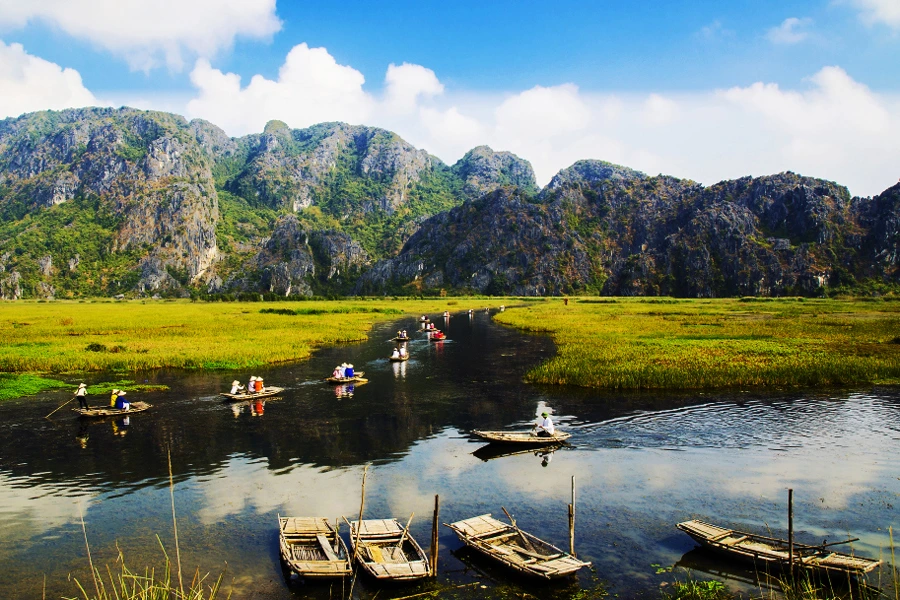
Transcending the framework of a pure wetland, Van Long Lagoon emerges as an artistic masterpiece meticulously sculpted by nature over millions of years of geological tectonic activity. It not only possesses the tranquil beauty of a mirror-flat water surface, but also represents a flawless combination of majestic vertical limestone blocks and magnificent cave systems, creating a vivid ink-wash painting in the heart of Ninh Binh. The landscape at Van Long carries the profound breath of time, where limestone mountain ranges bearing peculiar shapes such as Meo Cao Mountain, Nghien Mountain, or Mo Coi Mountain reflect upon the water, creating an ethereal space that is both majestic and steeped in legend.
The natural architecture at Van Long is a spontaneous yet exquisitely refined arrangement. The vertical limestone cliffs serve not only as “ramparts” shielding against wind and storms, but also as gigantic sculptures crafted by nature with natural rock striations and stalactites eroded over centuries. Interspersed among them are ancient pagodas such as Dich Long, where Buddhist architecture merges with natural caves, creating solemn spiritual spaces. The combination of the raw rusticity of stone, the softness of the water surface, and the serenity of ancient architecture forms a harmonious whole where humans feel truly small before the grandeur of nature.
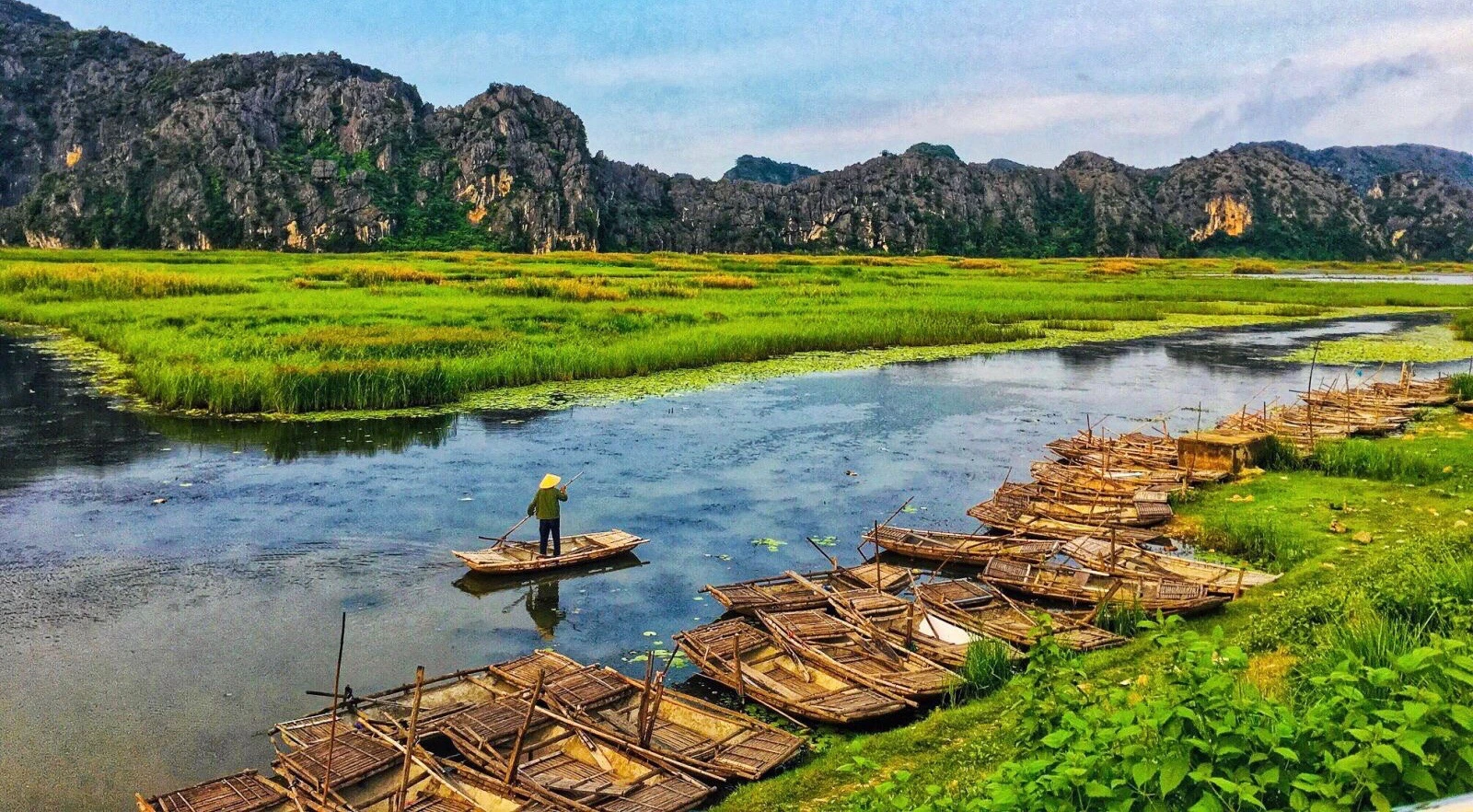
For photography enthusiasts and travelers wishing to capture “million-view” moments, Van Long Lagoon is an immaculate outdoor film set. The first shooting angle most sought after by photographers is the boat pier area at dawn. When the first rays of sunlight pierce through mountain gaps, the lagoon water begins to evaporate, creating a hazy mist that makes tiny wooden sampan boats drifting lazily on the mirror-flat water resemble a classical ink-wash painting. This is the moment when the soft, gentle golden light creates a wonderful contrast between the deep blue of the rocky mountains and the silver hue of the water.
The second unmissable check-in spot is the area near the base of the limestone mountains, where ancient tree branches stretch out over the water. The ideal time is late afternoon as twilight falls, when the last rays of the day dye the entire sky red, casting long shadows onto the limestone cliffs and creating a mystical and magnificent scene. This is when flocks of birds and egrets fly back to their nests, providing a vivid natural movement that serves as the perfect highlight for your photo. If you want a panoramic perspective, head up to high points near the Dich Long Pagoda area. From here, you can capture the entire panoramic “water pocket” of Van Long in your lens, where the lagoon resembles a giant mirror reflecting the sky, highlighting the breathtaking beauty of the surrounding rolling limestone mountains.
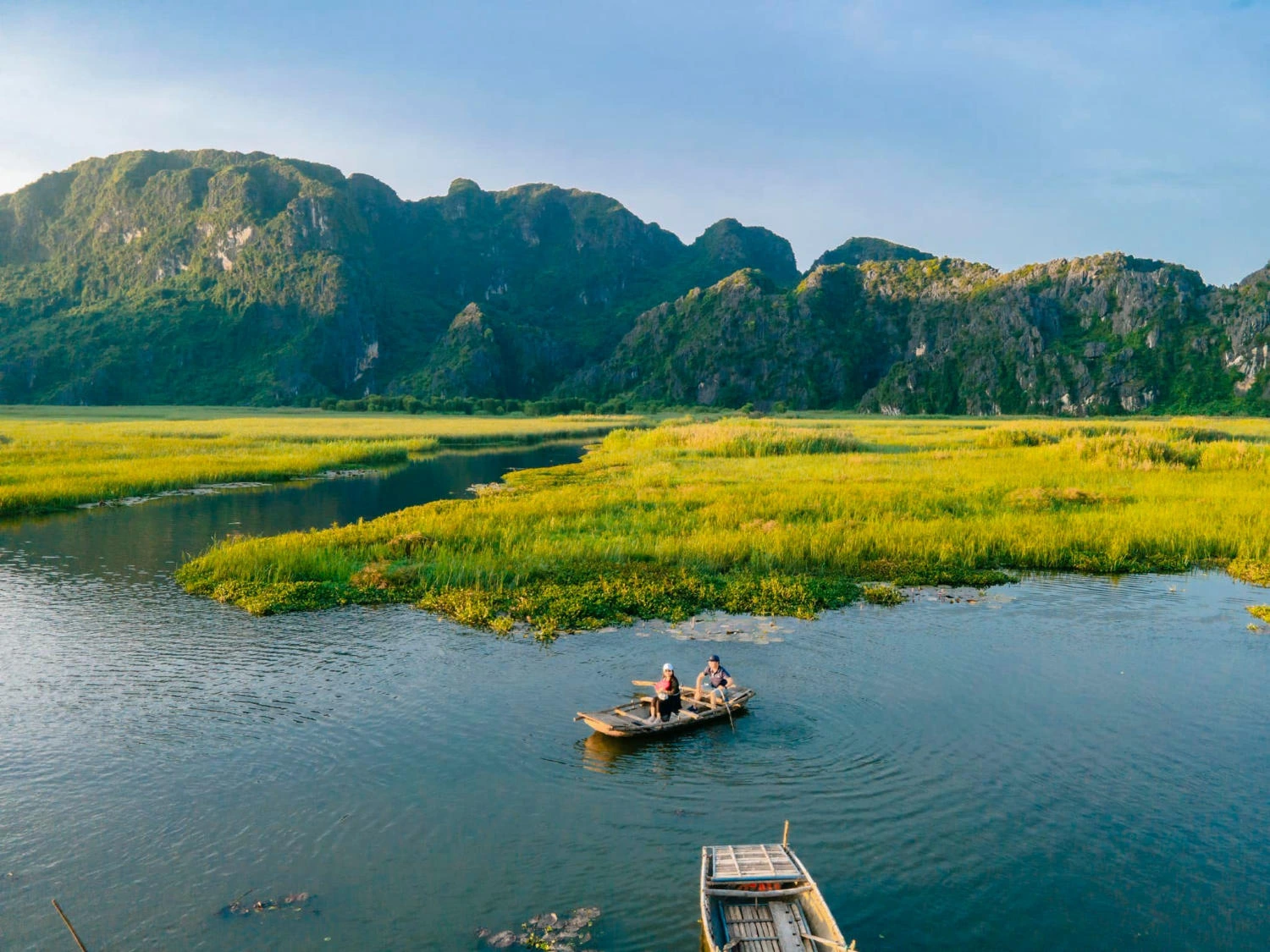
Every photographic angle at Van Long captures not just images, but an appreciation for cultural and historical depth. Whether capturing close-ups of stalactite details inside caves or panoramic shots of the interplay between mountains and water, Van Long Lagoon always captivates people with its pristine, tranquil beauty. This is the ideal destination for anyone seeking balance, where the architectural artistry of nature and human craftsmanship merge to create a living heritage in the heart of Vietnam.
When dawn softly brushes against the towering limestone mountain peaks, the journey to explore Van Long Lagoon begins with a deeply poetic experience: sitting on rustic bamboo boats, gliding gently over the mirror-flat water. Here, the concept of time seems to dissolve. Visitors cannot help but be overwhelmed by a gigantic “ink-wash painting,” where mountain ranges with bizarre shapes like Meo Cao Mountain and Nghien Mountain cast their reflections on crystal-clear water, revealing lush green mossy carpets at the bottom. The absolute tranquility of the space is broken only by the rhythmic splashing of oars and the calls of birds summoning their flocks from soaring cliffs, creating a pure natural symphony that makes anyone feel their soul cleansed, becoming light and peacefully at ease.
After letting your soul drift on the water, the journey transports visitors back in time to pay respects at sacred spiritual relics. Climbing the moss-covered stone steps leading to Dich Long Pagoda—the “Third Grotto under the Southern Sky”—is not merely a physical activity, but a dialogue with history. Standing amidst the serene ambiance of the ancient pagoda, inhaling the faint scent of incense mingling with mountain winds, visitors will feel a profound sedimentation of time. Epigraphs and ancient Buddha statues are not just archaeological artifacts, but living proof of the enduring spiritual life of residents in the low-lying region across the centuries. Looking down from above, the entire panorama of Van Long Lagoon unfolds like a soft silk ribbon draped across the mountain base, a breathtaking scenery that leaves one breathless with admiration.
Beyond landscape and spirituality, indigenous culture at Van Long is encapsulated in renowned culinary experiences. After a long day of exploration, savoring local specialties is an indispensable part of fully understanding this land. Rustic dishes such as crispy burnt rice, Ninh Binh mountain goat meat prepared according to family secret recipes, or fresh seafood delicacies caught directly from the lagoon all carry the rich flavors of this earth and water. The refreshing sweetness of fish soup and the boldness of goat meat blending with a warm cup of corn wine—sitting alongside gentle local villagers, listening to them recount the legend of the “Divine Dragon” or stories of land reclamation—will make travelers feel no longer like distant strangers, but as though they have become part of this land.
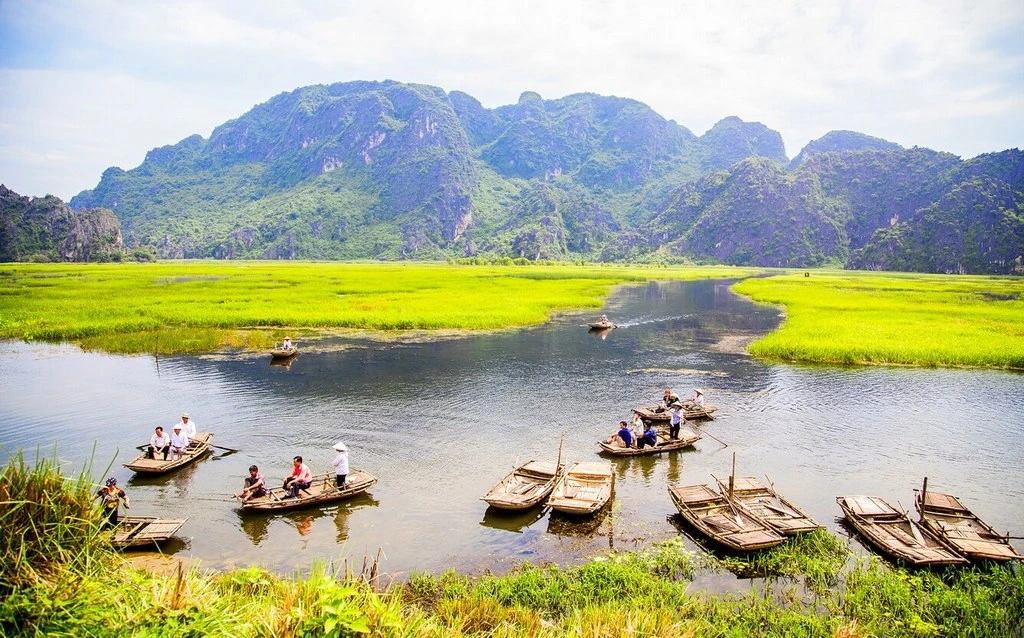
The true value of the experience at Van Long lies precisely in its pristineness and authenticity. Free from urban noise and industrialized services, this place preserves the full beauty of a legendary wetland. Every visitor leaving carries away an unforgettable lingering flavor: the awe of nature’s grandeur, the sedimentation of touching historical traces, and the warmth of connecting with indigenous culture. Van Long Lagoon is not just a destination on a tourist map, but a sanctuary for souls seeking tranquility, where humanity and nature harmonize, and past and present run alongside in a peaceful heartbeat.
To ensure your journey exploring Van Long Lagoon is complete and meaningful, visitors need to grasp essential information regarding logistics and code of conduct in this heritage land. Van Long Lagoon opens its doors to visitors every day of the week, including holidays and Tet. Operating hours typically begin early in the morning at 7:30 AM and end around 5:30 PM daily. Choosing early morning or late afternoon time slots not only helps visitors avoid the harsh heat of the wetland region, but also provides the golden hour to admire magical natural scenery, whether mist shrouding the water or Delacour’s langurs returning to cave dwellings after a day of foraging.
Regarding expenses, visitors need to prepare two main fees: sightseeing admission tickets and bamboo boat rental fees. Admission prices are publicly listed at the entrance gate of the tourist area, while boat rental fees are usually charged per trip (maximum of two adults per boat). These fees contribute directly to ecosystem conservation work and support livelihoods for the local community. Visitors should prepare small-denomination cash to facilitate payments at the boat pier and rustic dining services around the area.
Regarding transportation, from Ninh Binh city center, visitors can easily access Van Long by motorbike or personal car along National Highway 1A heading north, then turn onto Provincial Road 477 to head straight to Gia Vien District. This route is quite flat, passing through expansive rice fields and majestic limestone mountain ranges, creating an inspiring journey. If traveling from Hanoi, visitors can choose passenger buses on the Hanoi – Nho Quan or Hanoi – Ninh Binh routes, then take a taxi or motorbike taxi straight to the Van Long boat pier.
Because Van Long is a nature reserve combined with numerous spiritual sites such as Dich Long Pagoda and ancient temples, visitors should pay special attention to attire. Prioritize neat, modest clothing made of breathable materials with good sweat absorption to facilitate movement on boats as well as mountain climbing to explore caves. Wearing polite attire not only shows respect for sacred worship spaces but also protects your body from insects when venturing into rocky mountain crevices. Additionally, a pair of sports shoes with good grip is an indispensable item to ensure safety when navigating rough limestone terrain.
The ideal time to visit Van Long is during the dry season, when the water level in the lagoon is stable, creating favorable conditions for bamboo boats to travel deep into fascinating caves. Especially if you visit on clear, sunny days, you will have the opportunity to admire a mirror-flat water surface reflecting mountain shadows and cloudy skies. Please maintain public sanitation, refrain from littering, and strictly adhere to the regulations of the conservation area management board to help protect this precious “natural water pocket” for future generations.
To enjoy a complete vacation and fully admire the beauty of Van Long Lagoon without worrying about arranging transportation, booking admission tickets, or planning itineraries, travelers can choose premium all-inclusive Ninh Binh tour packages from VDS Travel. Each tour is optimized to schedule check-ins during the most vibrant scenery, accompanied by a team of guides deeply knowledgeable about local culture and top-tier hotel and dining service standards.