Tucked away inside a secluded basin valley in Duy Phu Commune, Duy Xuyen District, Quang Nam Province, My Son Sanctuary is far more than an architectural complex; it is a supreme spiritual landmark preserving the most radiant cultural layers of the ancient Kingdom of Champa. Encircled by rolling mountain ranges—with the towering peak of Mahaparvata, also known as Cat’s Tooth Mountain, rising like a pillar holding up the sky—My Son emerges as a sequestered sacred sanctuary where the earthly realm meets the mystical divine. In the worldview of the ancient Cham people, this landscape was the earthly embodiment of Mount Meru, the center of the universe in Hindu cosmology, where a sacred stream winds through the valley like a vital artery, forming a quintessential “mountain-backed, water-facing” configuration that has concentrated the spiritual energy of heaven and earth across millennia.
My Son’s historical origins trace back to its golden beginnings in the late 4th century. According to ancient inscriptions (most notably Stele C.74), the very first temple here was commissioned under King Bhadravarman I, an illustrious monarch who chose this valley for the worship of Bhadresvara—a deity symbolizing the union of royal sovereignty and divine authority. This event laid the foundation for an enduring religious center that successive Champa dynasties, from Panduranga to Vijaya, continually enriched, restored, and expanded. Despite devastating fires in the 6th century during the reign of King Sambhuvarman, crimson fired-brick temples rose anew from the ashes, affirming the indomitable vitality of a brilliant civilization. For nine centuries, My Son served not only as the stage for state rituals, but also as Southeast Asia’s most important repository of Sanskrit and Old Cham epigraphy, recording royal genealogies, wars of defense, and devout royal endowments.
My Son’s remarkable setting is further elevated by masterly construction techniques that remain an enthralling scientific enigma today. Blocks of fired brick were ground and fitted seamlessly together without organic mortar, standing firm against the ravages of time and Central Vietnam’s harsh climate. The succession of artistic styles—from My Son E1, Hoa Lai, and Dong Duong to Thap Mam—created an open-air museum of architecture, where sandstone reliefs of graceful Apsara dancers, majestic Makara sea-creatures, and icons of Shiva, Ganesha, and Skanda were intricately carved to recount the story of a golden age. Following the region’s incorporation into Dai Viet territory in 1471, My Son gradually faded into obscurity, surviving as quiet ruins hidden deep within the jungle until French scholars such as Camille Paris and Henri Parmentier rediscovered it in the late 19th century.
Today, recognized by both national and international heritage authorities, My Son is not only a UNESCO World Heritage Site, but also an enduring symbol of Cham culture within the broader tapestry of Vietnamese history. Standing in the heart of this sacred valley, visitors do more than admire moss-draped red-brick temples; they feel the living pulse of history, where every brick and every inscribed line forms a fragment of human memory, affirming the singular stature of a sanctuary that has become legend in the heart of Quang Nam.
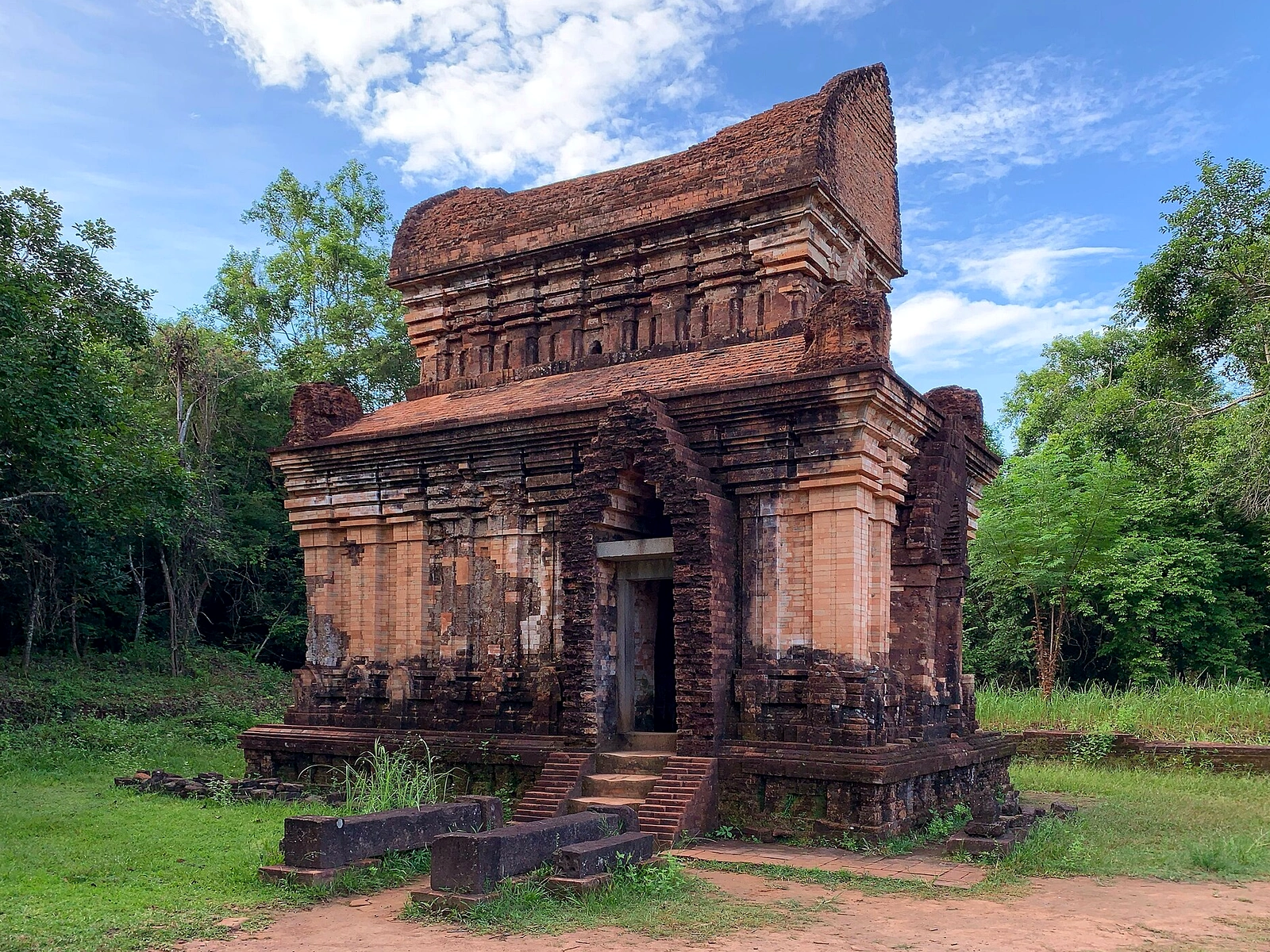
Stepping into My Son Sanctuary feels like entering a realm of myth and legend, where time seems suspended inside a basin valley ringed by overlapping mountain ranges. Its most striking natural landmark is the imposing Cat’s Tooth Peak (Mahaparvata), serving as the cosmic axis (Mount Meru) in Hindu belief and establishing a deeply sacred “mountain-backed, water-facing” setting. Amidst this hushed stillness, clusters of deep-red fired-brick temple towers rise proudly, defying centuries of erosion and unforgiving weather. The “rubbed-brick” masonry technique—stacking bricks so tightly that no mortar joints are needed—continues to command the awe of scientists, yielding smooth, resilient walls that have endured for over a thousand years.
Architecture at My Son represents a refined marriage of sandstone sculpture and fired brickwork. Bas-reliefs of lithe Apsara dancers, imposing Makara guardians, and deities such as Shiva and Ganesha are meticulously carved into archways and pediments, composing a vivid visual symphony. Each tower is far more than a building; it is a spiritual vessel through which Champa dynasties expressed their aspiration to bridge the mortal world and the realm of the gods. The earthy crimson of brick, the deep emerald of surrounding forest, and the cool gray of sandstone form a contemplative, deeply poetic palette that leaves every visitor awestruck by the cultural grandeur of a once-flourishing kingdom.
To capture million-dollar photographs at this sacred sanctuary, professional photographers typically prioritize two classic vantage points. The first is the elevated vantage point looking down toward the B–C–D tower group at sunrise (between 6:00 AM and 8:00 AM). At this hour, early sunlight filters through the forest canopy to illuminate the ancient temple spires, creating dramatic contrasts of light and shadow that accentuate the rich, weathered crimson of the brickwork. From here, you can frame the majestic Cat’s Tooth Peak rising directly behind the soaring towers, achieving a balanced composition imbued with harmony between nature and human artistry.
A second prized vantage point lies along the pathway leading into the main sanctuary area (Tower K). Here, rows of toppled sandstone pillars scattered across lush green grass form a foreground rich in depth. When morning sunlight slants through the signature spearhead-shaped archways of Cham architecture, ethereal beams of light pierce the air, yielding cinematic frames steeped in historical resonance. Finally, do not miss close-up shots of the bas-reliefs at Tower E1. In the soft light of early morning, intricate sandstone carvings stand out in crisp detail, highlighting the regal elegance and mystery of ancient Cham sculpture. Shooting from a low angle tilted upward further magnifies the monumental scale of the towers, reminding viewers of humanity’s humble place before this grand heritage.
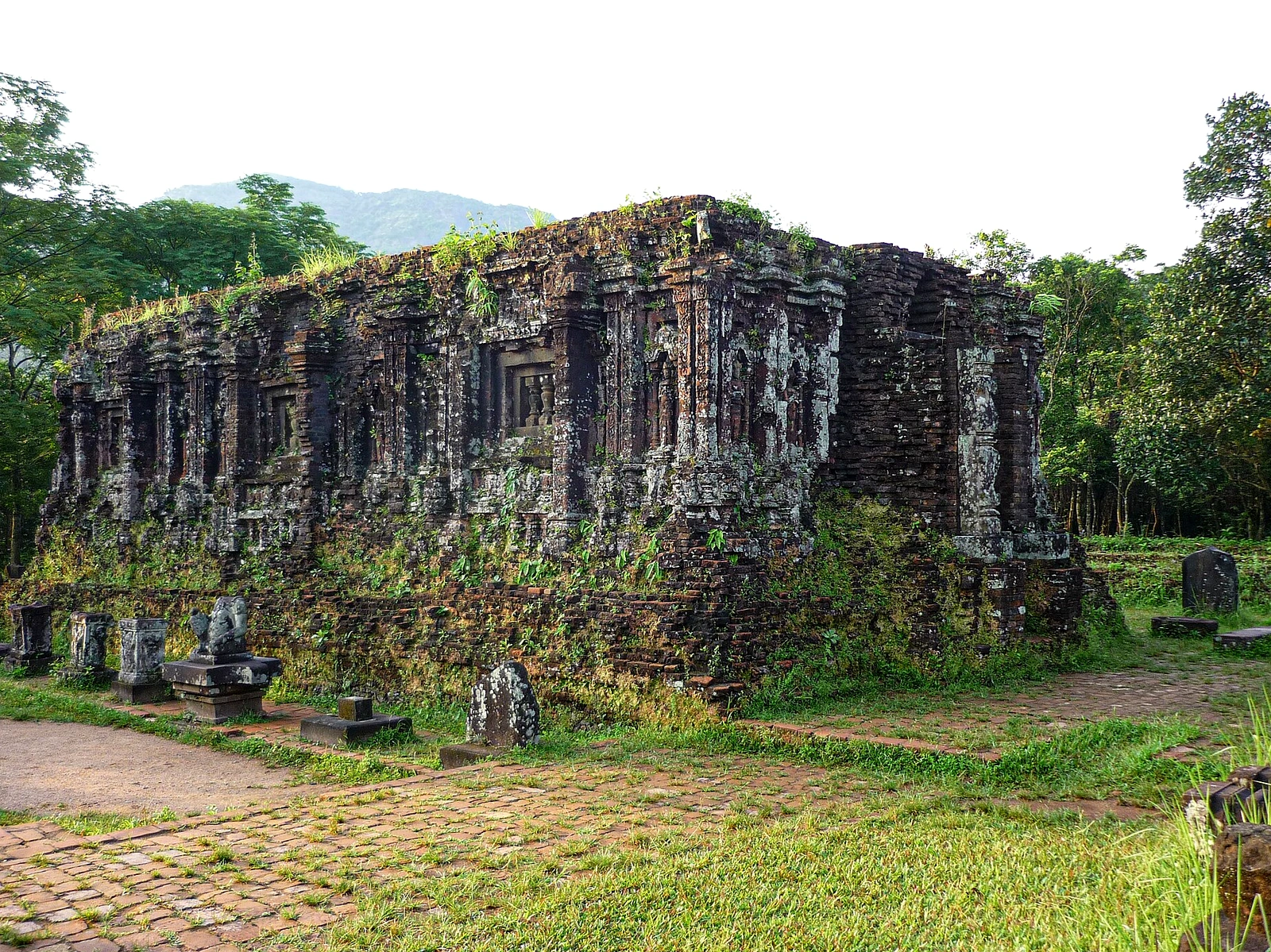
Visiting My Son Sanctuary is not merely a journey back in time to the radiant Champa civilization, but an enchanting expedition of the soul. The moment you arrive in the sacred valley, you sense a distinct shift in atmosphere: Central Vietnam’s sultry heat seems held at bay by the surrounding mountains, giving way to a tranquil, contemplative, and deeply spiritual sanctuary. A wave of awe washes over you as dark-red brick temples emerge from the deep green wilderness like proud historical witnesses defying the wear of time and nature.
To truly grasp the spirit of this land, hiking up Cat’s Tooth Mountain (Mahaparvata) is a rewarding challenge not to be missed. Though the ascent demands effort, looking down from the summit reveals the entire panorama of My Son Sanctuary like a magnificent ink-wash painting. From this vantage point, you immediately appreciate the ancients’ mastery in choosing this site: a sheltered basin valley where a slender stream winds like a silk ribbon around the temples, completing a flawless “mountain-backed, water-facing” setting. The stillness at this elevation lightens the spirit; urban noise fades away, leaving only the whisper of mountain winds and echoes of the past rising from sandstone reliefs of dancing Apsaras.
After hours of quiet spiritual reflection, visitors can follow the sacred stream by small boat to admire My Son from an entirely different perspective. The glassy surface mirrors the silhouettes of ancient towers, creating an ethereal, dreamlike reflection suspended between reality and illusion. In this tranquil state, it becomes effortless to connect with vibrant local cultural traditions. Beyond stone and brick, My Son keeps alive graceful Cham dances accompanied by the lively rhythms of Paranung drums and Saranai reed horns. Skilled local performers not only reenact age-old rituals, but breathe living soul into this heritage, transporting visitors back to the golden age of the ancient Champa Kingdom.
Your journey would be incomplete without savoring the celebrated culinary specialties of the Duy Xuyen region. After leaving the valley, stop by traditional craft villages to enjoy authentic Quang noodles (mi Quang) with golden turmeric-tinted noodles and rich, savory broth, or the famous Cau Mong roasted veal, prized for its tender, naturally sweet flavor. These rustic, unpretentious dishes encapsulate the culinary heritage of Quang Nam, serving as a delicious bridge between a glorious past and simple everyday life. Sharing local delicacies while listening to stories of the indigenous Cham community reveals that My Son is neither distant nor austere—it is welcoming, intimate, and brimming with life.
By the end of your visit, what lingers in your heart is far more than striking photographs; it is a profound sense of reverence for the endurance of human heritage. My Son is more than mortarless fired bricks—it is a confluence of earthly and celestial energy where modern travelers can rediscover inner balance and stillness. Initial awe gradually transforms into deep gratitude, ensuring every visitor departs carrying a piece of the sacred valley’s soul, forever remembering a place where history and nature merge into an endless epic.
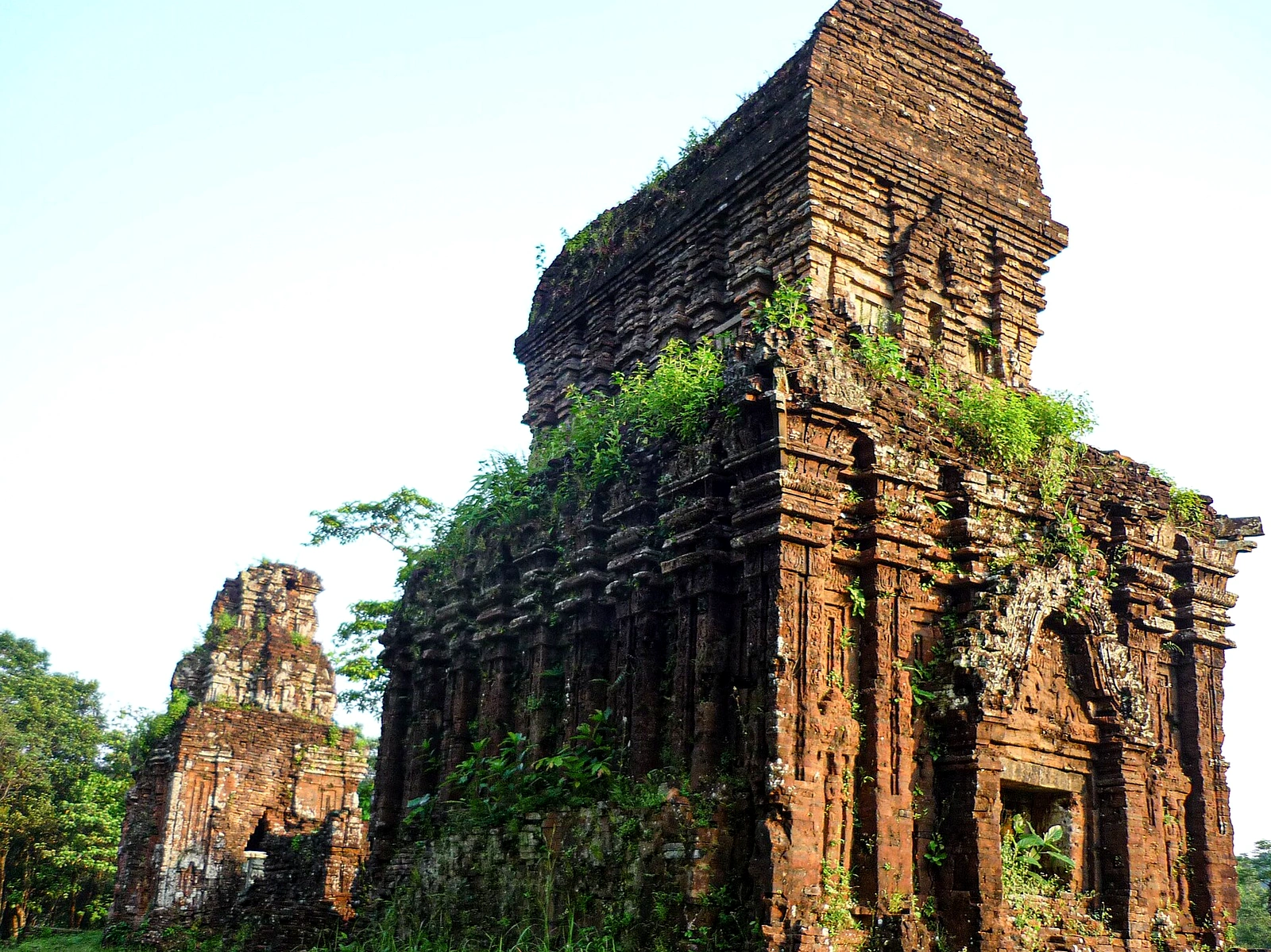
To make your visit to My Son Sanctuary smooth and meaningful, keep these practical logistics and etiquette guidelines in mind. The heritage complex welcomes visitors every day of the week, including public holidays and Tet. Operating hours run from early morning until late afternoon, giving travelers ample time and flexibility to admire the temple towers under varying lighting conditions. Knowing these hours in advance allows you to plan your itinerary proactively and avoid peak midday crowds.
Regarding admission, tickets must be purchased at the main entrance gate of the sanctuary. The ticket price includes electric shuttle service from the entrance gate to the central temple clusters, saving energy for exploring the site on foot. Standard ticket rates for domestic and international visitors are publicly posted in accordance with Heritage Management Board regulations. Eligible groups—such as senior citizens, persons with disabilities, and students—generally qualify for discounted or complimentary admission under current policies, so be sure to bring valid identification or a student ID card to receive these benefits.
For transportation, travelers departing from Da Nang or Hoi An can choose among motorbikes, private cars, public buses, or shared group tours. The most common route follows the national highway before turning onto provincial roads leading straight to Duy Phu Commune. The drive is smooth and scenic, passing peaceful rice paddies and rural villages across Quang Nam. If driving yourself, use an online navigation app for live traffic updates and watch for roadside directional signs to avoid missing turns.
Because My Son Sanctuary is a revered spiritual site, appropriate dress is a top priority. Visitors should wear modest, respectful attire and avoid overly short or revealing outfits when entering the temple precincts. Additionally, since the terrain consists mainly of dirt trails, rolling hillsides, and uneven ancient stone steps, supportive sneakers or comfortable flat shoes with good grip are essential for safe and comfortable walking throughout your visit.
The best time of day to visit My Son is early morning, when the air is crisp and the sun is not yet intense. Annually, the period from February to April is considered the golden window, offering dry, pleasantly cool weather ideal for walking tours and photography. Avoid peak storm and rainy-season months to ensure safety and an uninterrupted experience. Finally, always practice responsible heritage stewardship—never touch delicate bas-reliefs, refrain from climbing on ancient brick structures, and strictly follow on-site signage so we can safeguard this timeless treasure of humanity for generations to come.
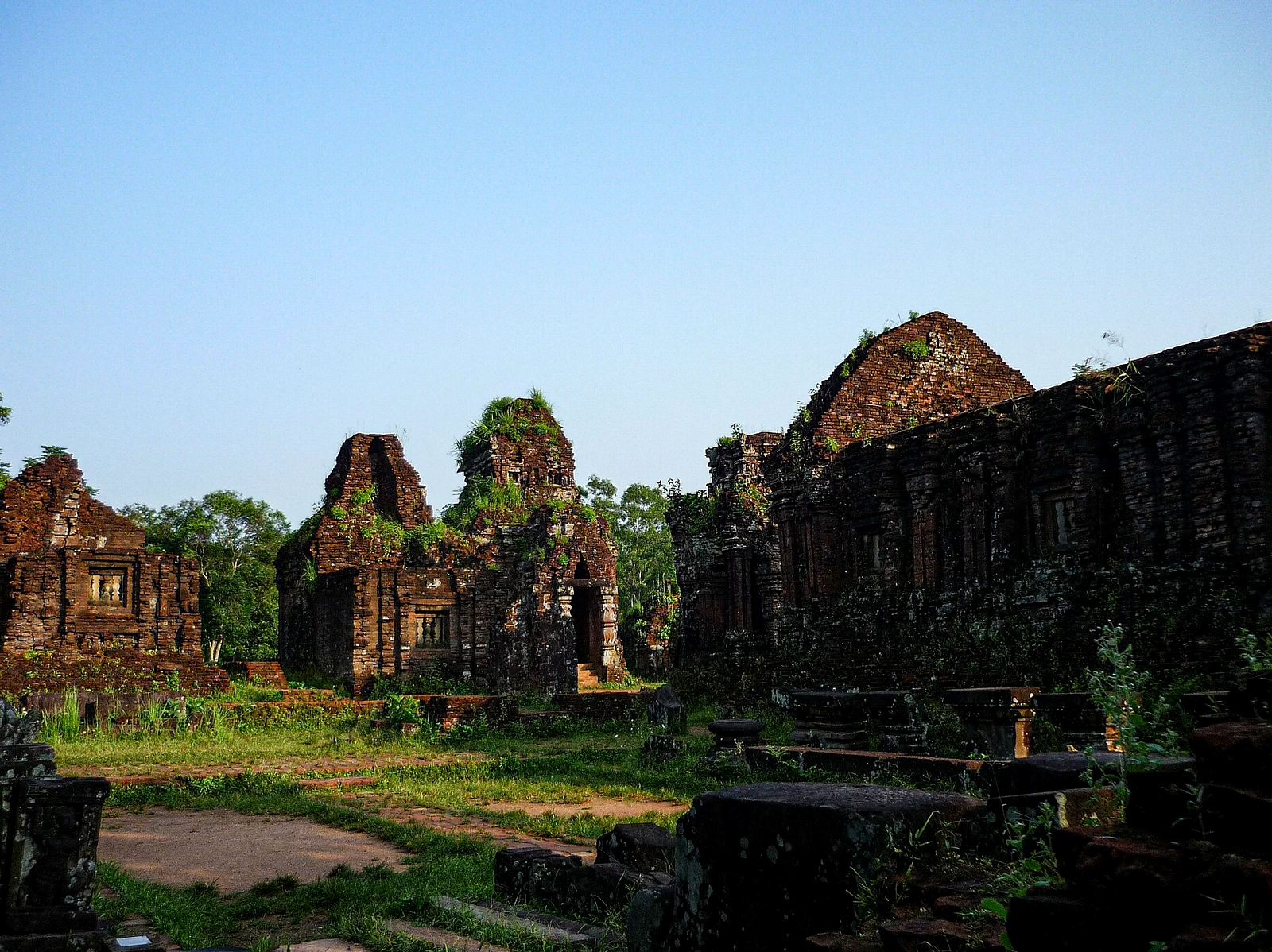
To enjoy a seamless holiday and take in the full beauty of My Son Sanctuary without worrying about arranging transportation, booking admission tickets, or planning itineraries, travelers can choose VDS Travel’s premium all-inclusive Quang Nam tour packages. Each tour is thoughtfully designed to optimize photo opportunities at the most radiant times of day, accompanied by knowledgeable local guides deeply versed in regional culture and top-tier hotel and dining standards.