Tucked quietly within the tranquil setting of ancient Duong Lam Village in Son Tay Town, Hanoi, Mia Pagoda (known in Sino-Vietnamese as Sung Nghiem Tu) rises as a living museum of Buddhist architecture and sculpture from the Revival Le Dynasty. Situated on a high, airy mound at the heart of the ancient village, this centuries-old temple commands an auspicious feng shui position where the spiritual energy of heaven and earth converges across the white-clouded Doai region. Looking out from the pagoda courtyard, the view opens onto lush green bamboo groves, moss-covered red-tiled roofs, and the serene rhythm of an authentic Vietnamese countryside—creating a sublime harmony between Buddhist spirituality and the local ecological landscape. The pagoda’s presence serves not only as a spiritual focal point, but also as a landmark anchoring the cultural memory of a once-prosperous land.
Tracing back through time, historical records and stone steles preserved at Sung Nghiem Tu attest to the deep historical roots of this monument. According to local lore and sacred chronicles, the pagoda was originally founded during the Ly Dynasty (11th–12th centuries) as a modest thatched hermitage built by local villagers for worship, closely linked to sacred legends of an ascetic monk. However, the architecture and spirit of Mia Pagoda seen today are the result of a grand restoration during the Revival Le Dynasty, marking a golden age of wooden statuary and timber architecture in northern Vietnam. The pivotal milestone heralding the pagoda’s revival and flourishing occurred in the 10th year of the Vinh To era (1628) under Emperor Le Than Tong and Lord Trinh Trang, followed by further major renovations in the 18th century that shaped the interior and exterior architectural values preserved down to the present day.
The flourishing of Sung Nghiem Tu is inextricably linked to a remarkable historical figure: Ba Chua Mia (Lady of Mia), namely Royal Consort Ngo Thi Ngoc Diem—an illustrious daughter of the Doai region and concubine of Lord Trinh Trang. Historical annals and folk legends alike portray this gifted and virtuous woman with deep reverence. Upon returning to visit her hometown and witnessing the temple in a state of disrepair, moved by profound devotion to Buddhism and heartfelt love for her homeland, she dedicated her entire personal stipend and rallied widespread public contributions to fund a comprehensive reconstruction—transforming a humble hermitage into a stately, magnificent monastic complex. Grateful for her enduring merit, local villagers honored her after her passing as the supreme “Hau Phat” (Subsequent Buddha) and erected a shrine to her right within the pagoda grounds, creating a distinctive “Buddha in front, Saint behind” layout characteristic of traditional Vietnamese belief.
Across centuries of historical upheaval, Mia Pagoda has stood resilient as an enduring witness to time, earning special acclaim from cultural authorities, heritage scholars, and the press. Not only does it house hundreds of exquisite Buddha statues—17th- and 18th-century wooden sculptural masterpieces representing the pinnacle of folk figurative art—it also stands as a proud testament to the enduring vitality of Vietnamese culture. The beauty of Mia Pagoda lies not solely in its moss-draped laterite steps or intricately carved ironwood frame, but radiates from its historical depth, the legend of Lady Mia, and the sacred spirit of the thousand-year-old Doai region.
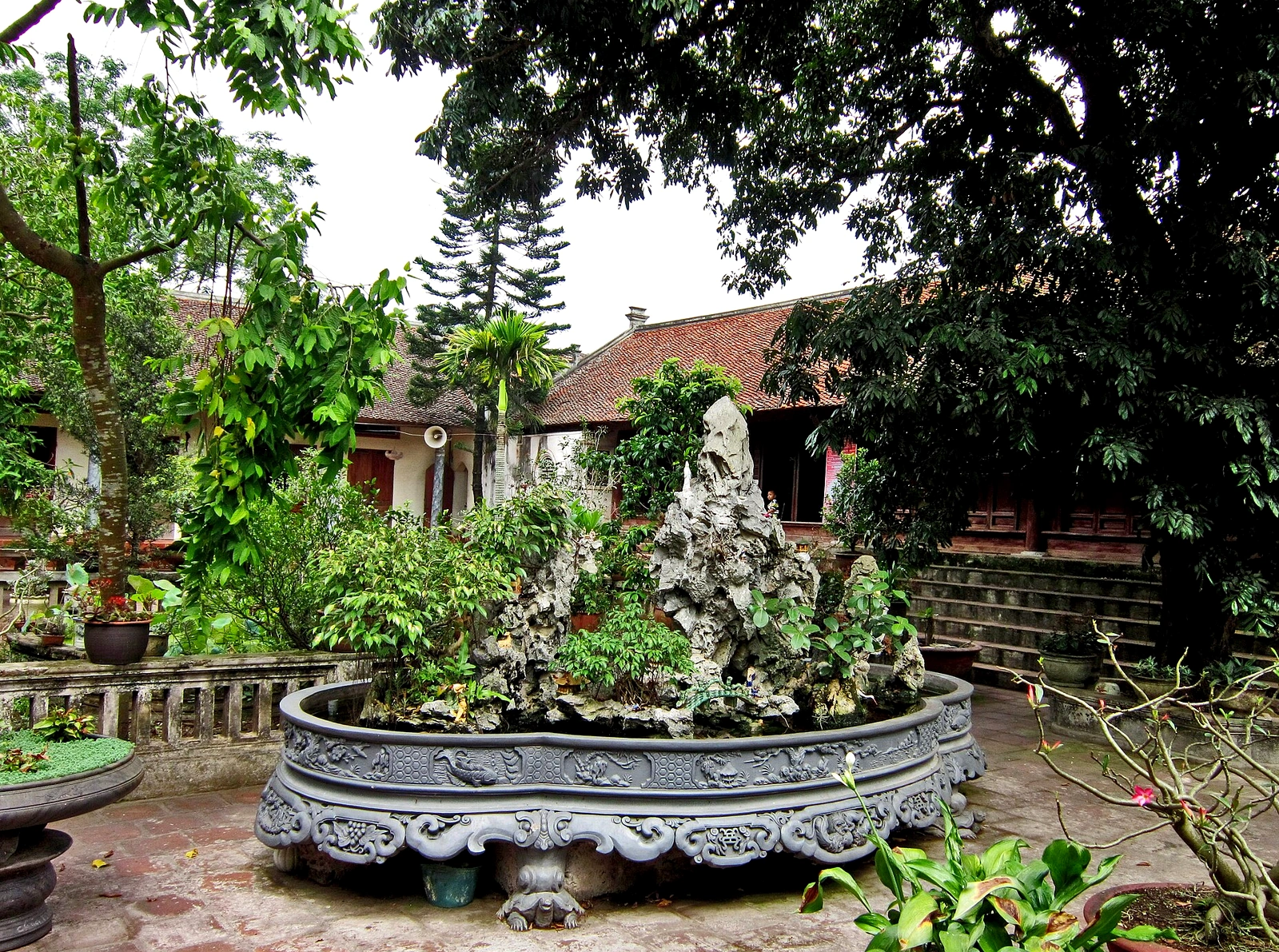
Situated in the sacred ancient land of Duong Lam, Mia Pagoda (Sung Nghiem Tu) stands as one of the finest museums of Buddhist architecture and sculpture from the Revival Le Dynasty. Beyond its profound spiritual significance, this ancient temple boasts a breathtaking architectural and natural setting that draws pilgrims and photographers alike. Ancient geomancers deemed its terrain highly auspicious—backed by a sturdy elevated mound and facing the open expanse of the ancient Doai village—fostering an atmosphere at once secluded, tranquil, and imposing.
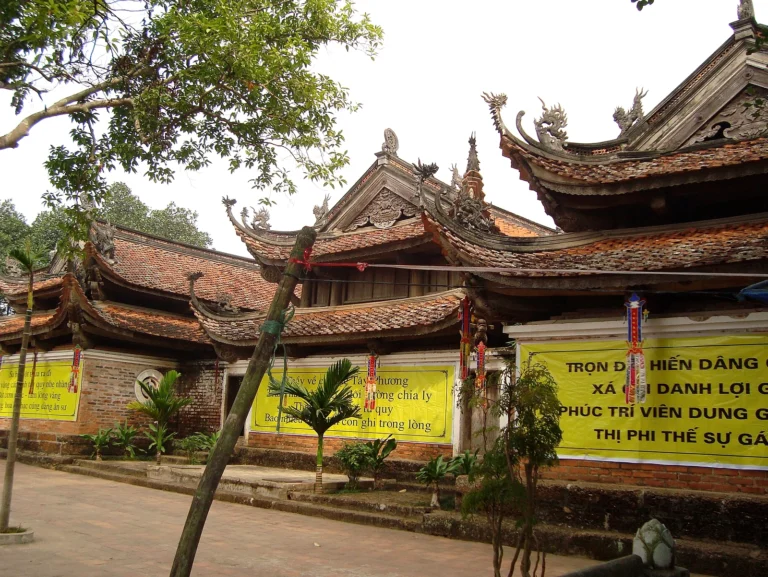
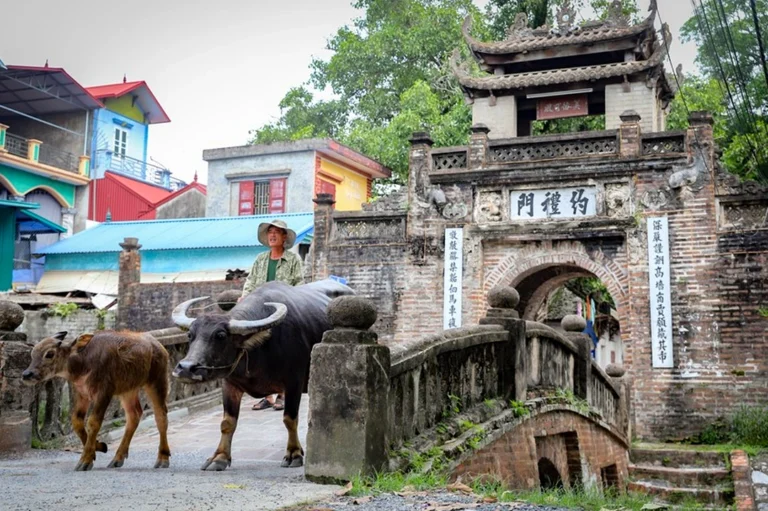
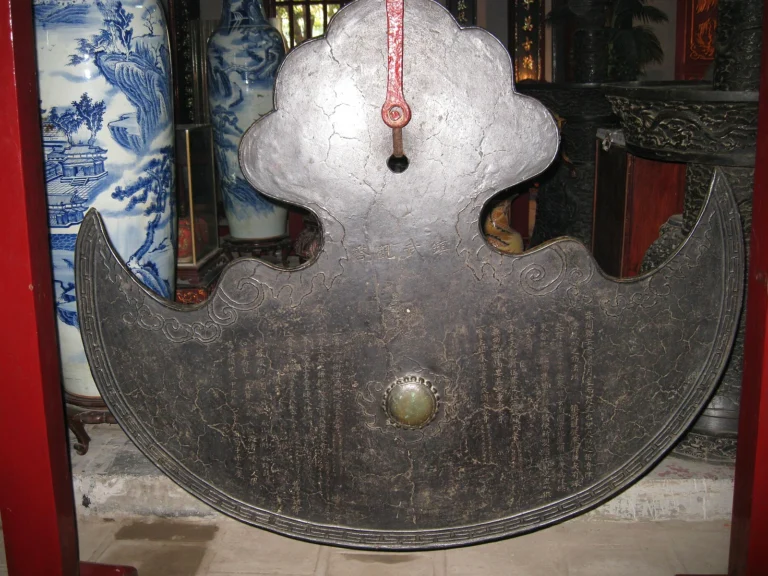
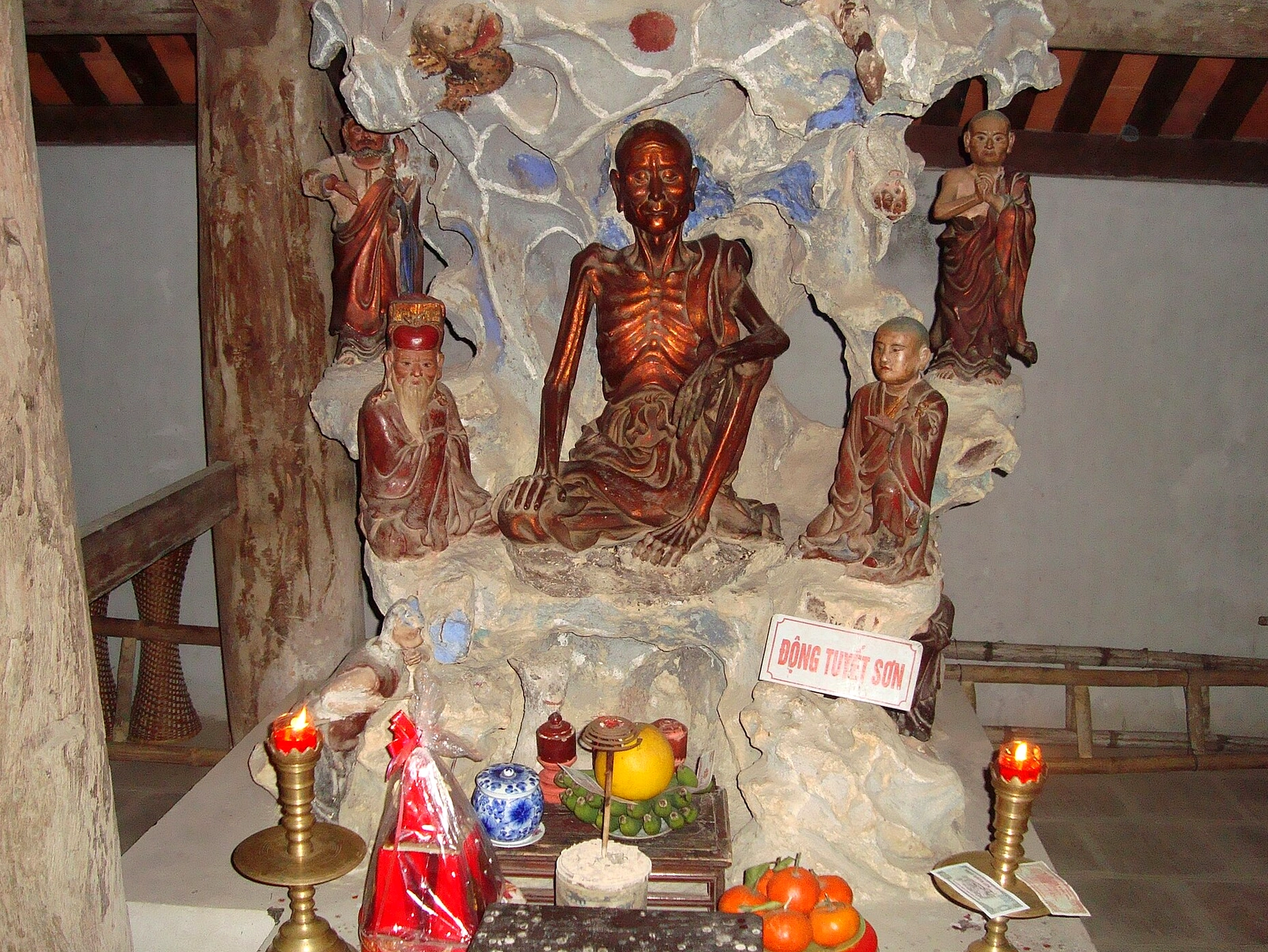
Stepping through the ancient triple-arched gate, visitors are immediately captivated by a spatial layout steeped in Eastern philosophy. Mia Pagoda is arranged in the traditional “inner 工, outer 國” architectural plan, comprising interconnected halls including the Front Hall, Middle Sanctuary, Upper Sanctuary, Patriarchs’ House, and surrounding corridors. The crowning glory of the pagoda is its extraordinarily refined hand-carved woodwork. Under the deft hands of master craftsmen of old, ancient ironwood timbers were transformed into vivid reliefs of dragons, phoenixes, foliage, and swirling clouds. Most notably, Sung Nghiem Tu safeguards a collection of nearly 300 statues large and small, ranking among Vietnam’s finest repositories of wooden Buddhist sculpture. Masterpieces such as the exquisite statue of Avalokiteshvara Bodhisattva, the Mat Tham statue, and the Tuyet Son (Snow Mountain) statue exude lifelike expressiveness and transcendent grace, exemplifying the peak of 17th- and 18th-century sculptural art.
To capture unforgettable moments and “million-view” photo angles at Mia Pagoda, professional photographers commonly recommend three standout vantage points. The first is in the main courtyard looking up toward the Front Hall and the soaring Bell Tower. Here, a wide-angle lens captures the moss-tinted patina of curved “shoe-tip” tiled roofs adorned with dragon and phoenix motifs, combined with natural light to create remarkable nostalgic depth. The ideal time for this shot is early morning, between 7:00 AM and 9:00 AM, when slanting dawn rays filter through ancient tree canopies and cast warm golden highlights across raw timber beams and moss-dappled roof tiles.
A second unmissable photo spot is the long corridor encircling the inner sanctuary and linking the worship halls. What makes this angle special is the framing effect of traditional doorways, creating captivating perspective depth that lends photographs both solemn stillness and cinematic flair. Natural afternoon light streaming across the open sections of the corridor produces artistic contrasts of light and shadow—ideal for anyone drawn to nostalgic, contemplative photography.
The third vantage point praised by travel journalists is around the octagonal Lotus Stupa (Lien Hoa Stupa), rising gracefully amidst the lush green grounds of the pagoda. Sunset—roughly from 4:30 PM to 5:30 PM—is the golden window to capture the timeless beauty of this ancient stupa. As late-afternoon light bathes the Doai sky in amber hues, the mossy silhouette of the octagonal stupa stands etched against the evening sky in a scene both sacred and deeply moving. Visiting Mia Pagoda at such hours allows travelers not only to admire an architectural treasure, but also to discover profound inner calm within a thousand-year heritage sanctuary.
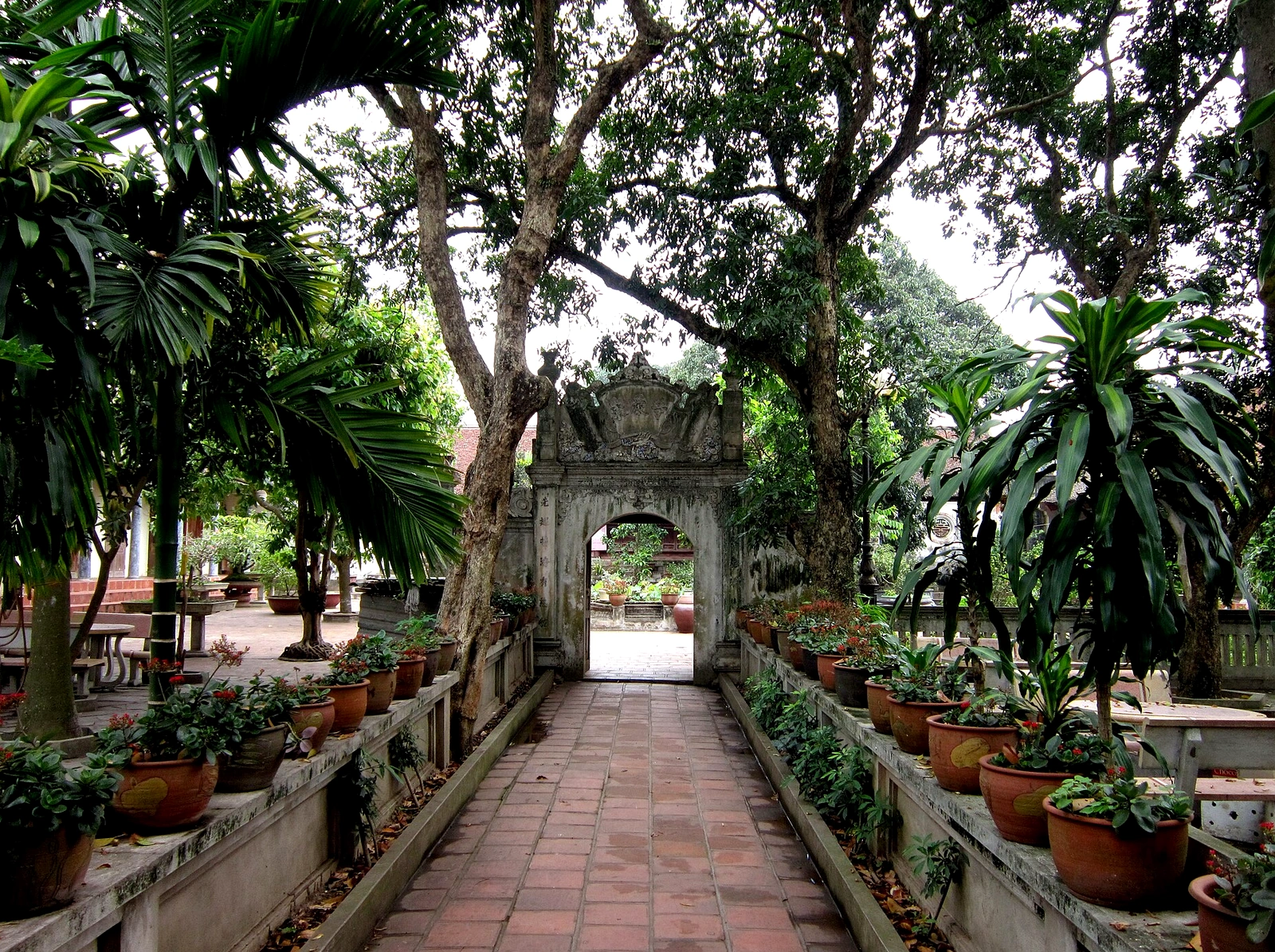
Leaving behind the noise and bustle of modern city streets, arriving at Mia Pagoda (Sung Nghiem Tu) in ancient Duong Lam, Son Tay opens up a hushed realm steeped in the patina of time. The moment you step past the moss-covered triple-arched gate, a wave of quiet awe washes over you beneath the stately timber architecture of the Revival Le Dynasty. Morning temple bells ringing softly through drifting incense smoke weave a sense of spiritual stillness. Strolling unhurriedly over stone steps worn smooth by centuries and tracing intricate carvings of dragons, phoenixes, and blossoms, visitors feel their hearts grow light and serene within this sacred Buddhist sanctuary.
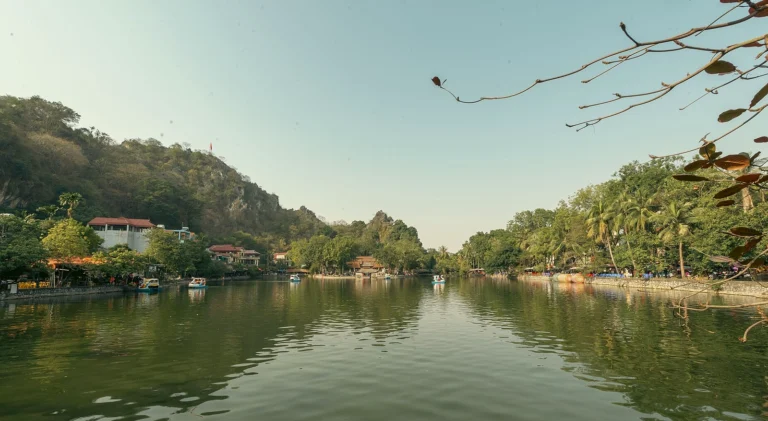
Beyond spiritual worship, exploring Mia Pagoda also offers rewarding immersion in the rolling semi-mountainous landscape of the Doai region. Visitors can combine their trip with a gentle climb up the low hills surrounding Duong Lam Ancient Village to take in sweeping pastoral vistas: weathered yin-yang tiled roofs peeking through emerald bamboo hedges and time-worn brick lanes winding through the village. Carried on the country breeze come the scent of fresh rice paddies and earthy rural air, refreshing the spirit in wide-open natural beauty.
An essential highlight of the experience is sampling the celebrated local specialties closely tied to the pagoda’s name. Pausing at a small roadside stall, travelers can enjoy famous Doai delicacies such as chewy, ginger-scented sticky rice cake (che lam), warm, tender Phu Nhi steamed rice cakes dipped in sweet-and-sour fish sauce, or crisp peanut candy infused with fragrant sugarcane molasses. In particular, the clean, rich sweetness of Duong Lam sugarcane—the very crop tied to the name of Lady Mia—lingers on the palate, carrying with it storied history and the warm hospitality of this ancient land.
At the close of a visit to Mia Pagoda, what lingers deepest is not merely awe at its extraordinary statuary or ancestral timber craftsmanship, but the living local culture still flowing quietly day by day. Amid today’s fast-paced world, slowing down to listen to echoes of centuries past in every tiled eave and blade of grass—and savoring heartfelt rural flavors at this ancient temple—becomes an unforgettable memory for anyone fortunate enough to visit the white-clouded Doai region.
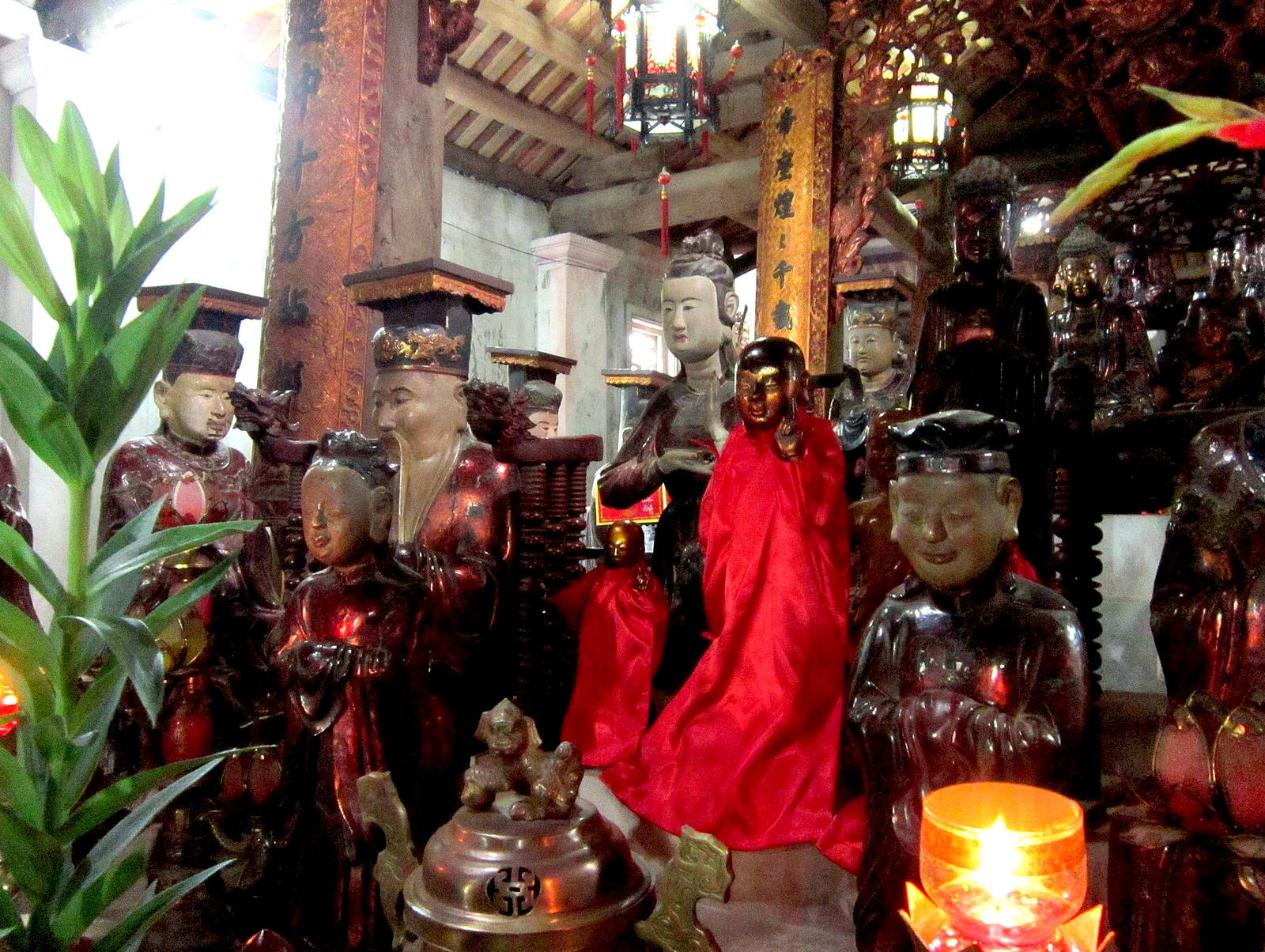
Mia Pagoda (Sung Nghiem Tu) in ancient Duong Lam, Son Tay Town is not only a Special National Architectural and Artistic Monument, but also a beloved spiritual destination attracting large numbers of visitors on weekends and holidays. To ensure your journey exploring this Revival Le Dynasty temple goes smoothly and meaningfully, refer to the practical tips gathered in the pocket guide below.
Regarding opening hours, Mia Pagoda welcomes visitors every day of the week from early morning until late afternoon (typically from around 7:00 AM to 5:00 PM). Admission is completely free for all guests coming to worship and admire the architecture. However, if you arrive by private car or motorbike, designated parking areas around the monument offer secure parking at very modest, reasonable rates.
The route from central Hanoi to Mia Pagoda is straightforward, covering roughly 45 to 50 kilometers. The most convenient way to travel is by private car or motorbike along Thang Long Boulevard or National Highway 32 toward Son Tay Town. Upon reaching the turnoff for Duong Lam Ancient Village, simply follow the signs toward Mia Hamlet to spot the stately ancient pagoda resting peacefully beneath old-growth trees. The roads are smoothly paved throughout, making them suitable for both motorcycles and family cars.
The best time of year to visit Mia Pagoda is during spring (from the first to the third lunar month), when weather in the Doai region is pleasantly cool and visits can be paired with the Duong Lam Ancient Village Festival. Autumn months also offer wonderful conditions for strolling the grounds at a leisurely pace, soaking in the serene, timeless atmosphere, and photographing architecture rich in historical character.
Because this is a sacred spiritual sanctuary with many ancient stone steps, visitors should dress neatly and modestly—favoring sleeved tops and full-length trousers or skirts—to show respect for the Buddha and Lady Mia. Wear sneakers or flat shoes with good traction so you can walk, climb steps, and explore every worship hall across the pagoda grounds safely and comfortably.
To enjoy a seamless getaway and take in the full beauty of Mia Pagoda without worrying about transportation, entry tickets, or itinerary planning, travelers can choose VDS Travel’s premium all-inclusive Son Tay tour packages. Every itinerary is thoughtfully timed for photo stops at the most scenic hours of the day, accompanied by knowledgeable local guides and top-tier hotel and dining standards.