The Jungfraujoch snow mountain, soaring to an altitude of 3,454 meters above sea level in the Bernese Alps of Switzerland, represents one of the greatest feats of extreme terrain conquest in human civilization during the nineteenth and twentieth centuries. This space is not merely a pure glacial geographical milestone, but also a living testament to the industrial revolution combined with the scientific ambitions and exploratory tourism of the Swiss Confederation. The geological formation of this mountain mass began millions of years ago through complex plate tectonic movements between the Eurasian and African continents, creating gigantic folded limestone and granite sedimentary layers. In terms of glaciology, Jungfraujoch is the saddle connecting two iconic peaks, Jungfrau and Mönch, while serving as the origin of the Aletsch Glacier, the longest glacier on the European continent with a length of over twenty-one kilometers. The historical progression of this land is tied to the transformation of human perception toward high mountain regions, shifting from a wild and perilous realm shrouded in mythic fear and reverence into a space for scientific research and a symbol of national prosperity.
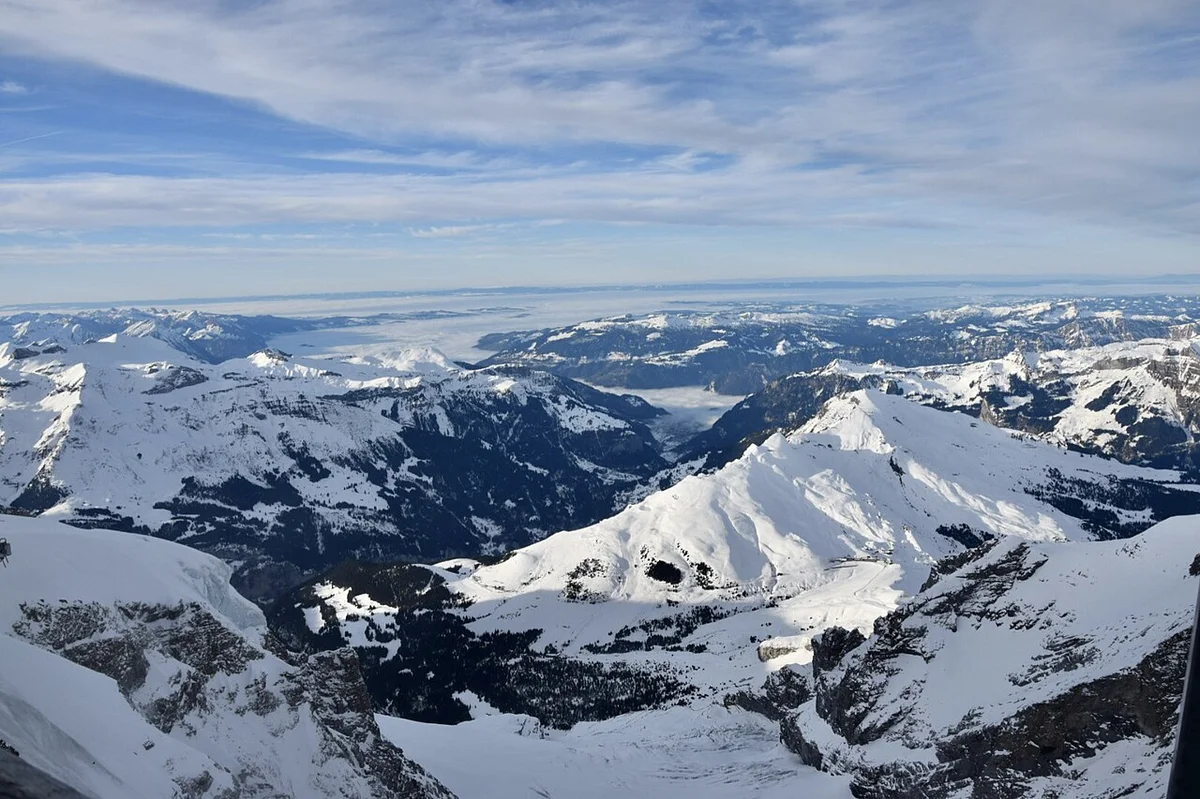
The turning point in the exploration history of Jungfraujoch began with the first mountaineering efforts in the nineteenth century. Two Swiss heroes, Johann Rudolf Meyer and Hieronymus Meyer, successfully carried out an expedition to conquer the Jungfrau peak in 1811, inaugurating the golden age of Alpine mountaineering. However, accessing the Jungfraujoch saddle remained an impossible challenge for most people and travelers at the time due to harsh climate conditions, year-round snowstorms, and dangerous steep terrain. The bold idea of building a railway tunnel through the mountain’s core emerged amidst the industrial revolution sweeping across Europe, when mechanical engineering capabilities and tunnel-drilling technology made breakthrough leaps. Adolf Guyer-Zeller, a prominent Swiss industrialist, was the genius mastermind behind this project. On a summer night in 1891, while sightseeing on the Schynige Platte pass, he sketched out the concept of building a cogwheel railway climbing directly up to Jungfraujoch, a visionary outlook that many initially considered crazy and unfeasible.
Construction of the Jungfraubahn railway began in 1896 and lasted uninterrupted for sixteen years under extremely harsh conditions. Thousands of workers, mostly Italian migrants, had to labor strenuously in dark tunnels carved deep into the core of the Eiger and Mönch mountains. They faced risks of rockfalls, blasting accidents, freezing temperatures, and severe altitude sickness. Many lives fell during construction, turning this project into an engineering miracle built with sweat and tears of the century. Instead of building an open-air route across dangerous slopes, engineers decided to excavate the vast majority of the railway entirely inside the mountain. This strategic decision helped protect the train from deadly avalanches and fierce winter storms, while maintaining smooth transportation year-round. The inauguration of underground stations inside the mountain, culminating in the Jungfraujoch station completed in 1912, officially established it as the highest railway station in Europe, a status it has preserved intact to this day.
The advent of the Jungfraujoch railway completely reshaped Switzerland’s tourism and economic map. From a country primarily living on agriculture and livestock farming in high valleys, Switzerland rose to become an international tourism powerhouse, where wild nature was skillfully tamed through technical engineering to serve human contemplation. Jungfraujoch’s symbolic status does not stop at transportation engineering values, but extends to the field of global climate and astronomical research. Since the early twentieth century, scientists recognized the unique potential of this altitude in studying cosmic rays, meteorology, and glaciology. The Sphinx Observatory, built on a precipitous rock pinnacle at an altitude of 3,571 meters near the Jungfraujoch summit and inaugurated in 1937, has become one of the world’s most advanced high-alpine scientific research centers. Data gathered from this observatory plays a core role in monitoring global climate change and the melting of glaciers on Earth’s ecosystem.
In the collective memory and cultural identity of the Swiss people, Jungfraujoch holds significance as a symbol of resilience, mechanical engineering precision, and national pride. Operating a complex transportation system stably amidst an extreme glacial environment reflects the discipline and adversity-conquering capability of modern Swiss society. It has also appeared heavily in literature, plastic arts, and photography from the nineteenth century to the present, serving as a classical model for the majestic yet pristine beauty of the Alps. The area was recognized as a UNESCO World Heritage site in 2001 under the name Jungfrau-Aletsch, affirming exceptional ecological, geological, and natural landscape values that require strict protection for future generations. This recognition poses a delicate balance challenge between preserving the fragile glacial ecosystem and welcoming millions of tourists each year.
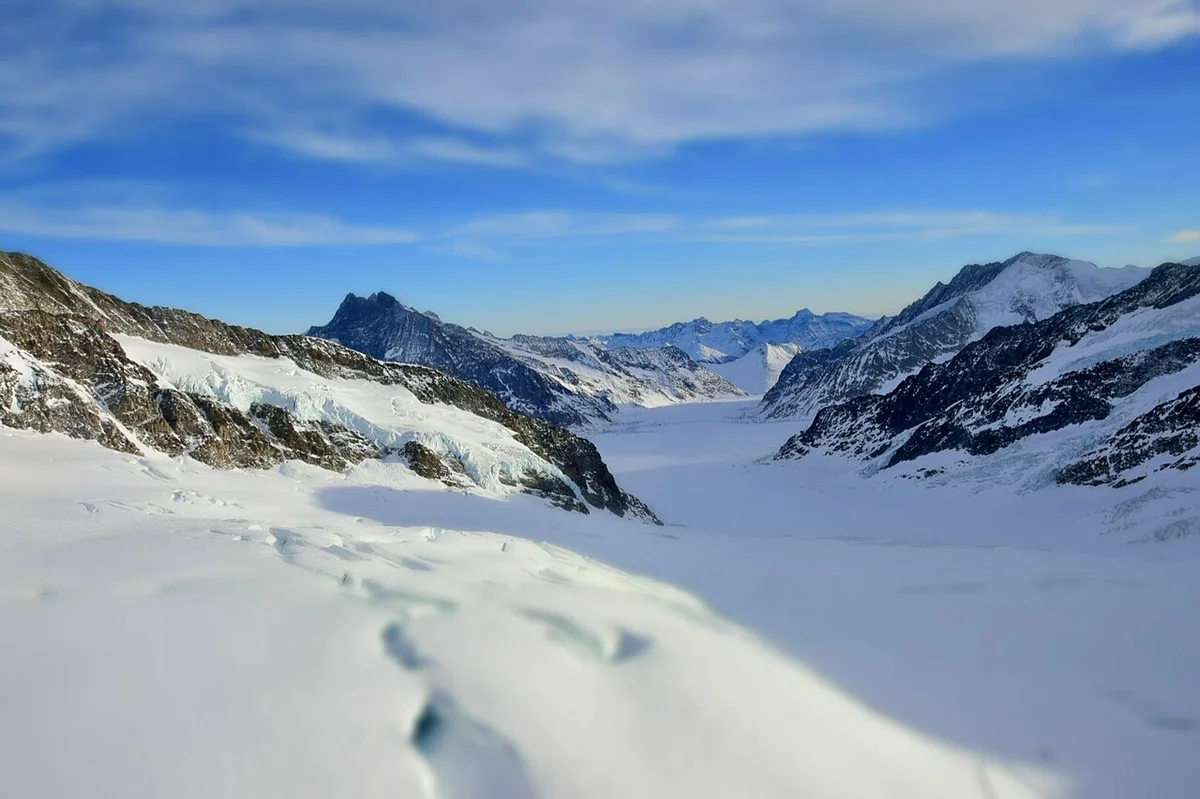
From the perspective of global symbolic culture, Jungfraujoch also represents the aspiration to transcend human physical limits. The feeling upon stepping out at the underground station after a long journey through the mountain’s core, stepping into the blinding white space of the Ice Palace and gazing across the entire Aletsch glacier valley below, delivers a profound philosophical experience regarding human insignificance before the vast universe. The facilities within the Jungfraujoch complex have been continuously upgraded and expanded over time, including interactive historical exhibitions on railway construction, artistic ice sculpture tunnels, and high-speed elevators taking visitors up to the Sphinx observatory. However, despite changes in infrastructure serving mass tourism, the sacred and majestic essence of this snow mountain remains pristine across time.
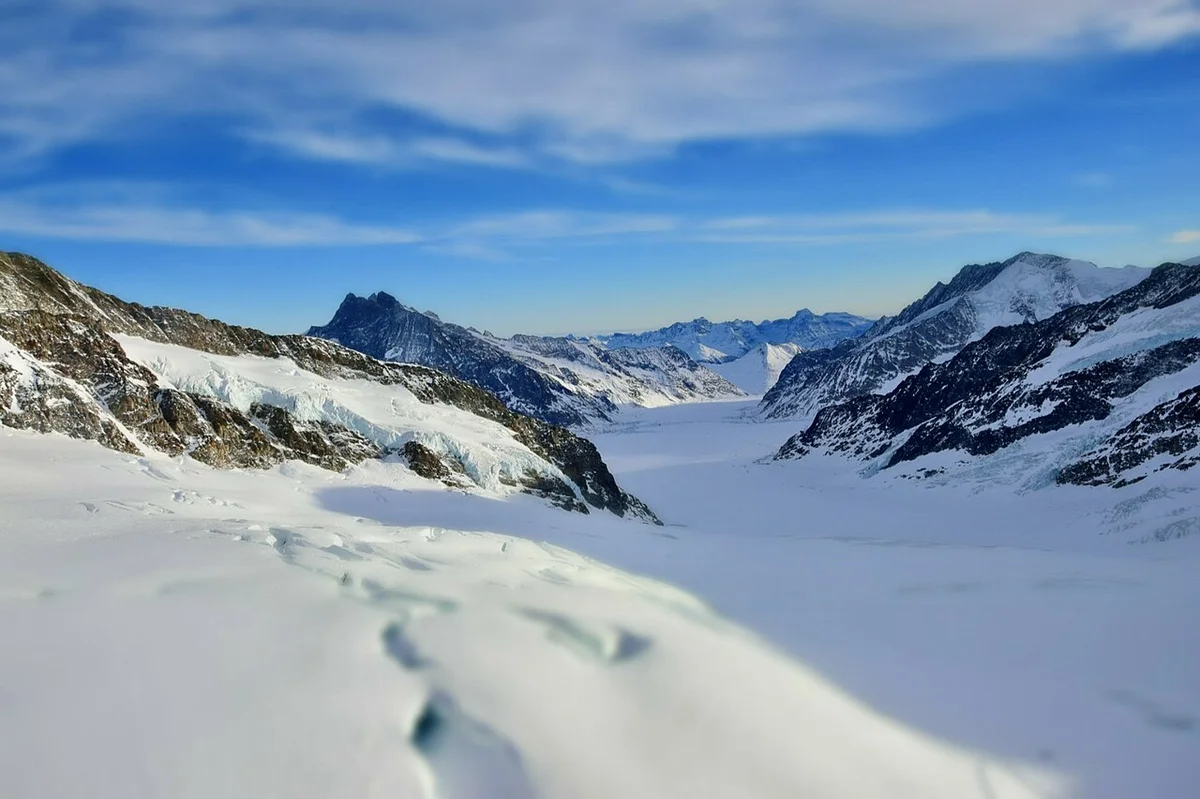
Synthesizing elements from geological tectonic history, human struggle for survival and resilient labor, railway engineering miracles to peak scientific research values and national cultural symbol status, Jungfraujoch has surpassed the limits of an ordinary destination. It stands firmly as a border between the human world and the realm of eternal glacial wilderness, leaving a deep imprint in humanity’s tourism and scientific development chronicles. The endurance of the trans-mountain railway system along with advanced climate research facilities here continues to affirm the stature of an artificial masterpiece seamlessly blending into the heart of Earth’s grand natural wonder.
The Jungfraujoch snow mountain, located at an altitude of 3,466 meters above sea level in the Bernese and Valais Alps of Switzerland, represents one of the greatest achievements of engineering and extreme spatial planning in human history. The geological tectonic process of this area began millions of years ago through the collision between the African tectonic plate and the Eurasian continent, creating a complex fold system with solid limestone layers and permanent glacier cover. The Aletsch firn basin, the longest glacier in the Alps spanning over twenty-one kilometers, flows from the southern slopes of the Jungfrau, Mönch, and Eiger massifs, creating an immensely majestic natural landscape backdrop that is also full of challenges for any artificial intervention effort. Conquering this peak not only demands superiority in railway transport technology but also poses thorny problems regarding load-bearing architectural planning, air pressure control, withstanding high-intensity snowstorms, and preserving the pristine ecosystem of the cold temperate high mountain region.
The master planning layout of the complex at Jungfraujoch, widely known as Europe’s highest railway station Top of Europe, is deployed primarily deep inside the core of the Mönch and Jungfrau mountains rather than building surface structures on ice and snow fields which are extremely unstable. The Jungfraujoch railway project, initiated in 1896 and completed in 1912 under the direction of industrialist Adolf Guyer-Zeller, shaped the entire spatial structure of this area by drilling through solid granite and slate layers. Instead of spreading across a traditional two-dimensional plane, this building complex is designed in a three-dimensional vertical model, maximizing mountain-crossing tunnel systems to house transfer stations, machine rooms, fuel storage, and technical areas, thereby protecting all infrastructure from the destruction of avalanches, storms, and the continuous shifting of external glaciers.
The spatial division solution within the rock mass and artificial structure of Jungfraujoch is clearly demarcated according to specialized functions to simultaneously serve scientific research, traffic operations, and hosting large numbers of international tourists each year. The central area of the complex is the underground railway station with a cogwheel rail system directly connecting mountain-climbing trains from Kleine Scheidegg, acting as the sole transportation lifeline supplying materials, energy, and human transit. From this core transit axis, underground tunnels excavated deep into the mountain branch out in different directions leading to functional areas such as the Sphinx observatory at 3,572 meters altitude, the Ice Palace carved deep into permanent ice beneath the Aletsch glacier, historical exhibition areas, restaurants serving dining, and commercial store systems catering to travelers’ diverse needs.
The landscape surrounding Jungfraujoch is a specialized glacial ecosystem featuring sheer cliffs, deep glacial crevasses, and year-round cloud seas at high altitude views. Outdoor landscape planning requires minimal intervention to maintain the stability of ice-snow structures highly sensitive to global temperature fluctuations. Engineers and planners established stainless steel railing systems, controlled graded walking paths on compacted snow surfaces, and outdoor observation decks anchored directly to the solid rock foundation of the Sphinx peak rather than placing them directly on the shifting glacier. The sharp contrast between reinforced concrete structures and solid rock boulders inside the mountain against the fragility and whiteness of the outdoor ice sea creates a unique spatial experience, where humans face frontally the majesty and harshness of primeval nature.
Environmental management and waste treatment within the closed space of 3,000 meters altitude is an extremely complex and pioneering aspect of sustainable construction engineering in Switzerland. Completely isolated from urban infrastructure below, all freshwater resources must be collected from melted snow and ice through closed filtration systems, while domestic wastewater and solid waste must be pre-treated before being pumped back down to the valley via specialized pipeline systems or transported by the very trains for recycling. Ventilation systems here are also designed based on natural pressure differentials between tunnel portals at different elevations, combined with high-capacity industrial fans to maintain stable oxygen levels and remove exhaust gases from operating equipment, ensuring absolute safety for the health of thousands of people circulating inside the underground space every day.
The Sphinx scientific observatory, the most visually prominent structure at Jungfraujoch, is not merely a sightseeing stop but also an important European climate and astronomical research facility from the early twentieth century to the present. The architecture of this tower is designed as a load-bearing steel frame wrapped in high-intensity UV-resistant laminated glass, anchored tightly to the natural rock peak via geological anchor bolts deep dozens of meters into the mountain core. High-speed elevator systems transport people and equipment through the vertical rock core of the mountain to reach the observatory, decisively solving vertical transit challenges under near-absolute steep terrain conditions. The interior space of the observatory is divided into meteorological laboratories, solar radiation measurement rooms, and astronomical observation areas, affirming the multi-functional role of a planning work combining commercial service stature with global scientific missions.
The Ice Palace, an ice-carving art exhibition space located deep beneath the Aletsch glacier, demonstrates human skillful adaptation to harsh natural conditions. Workers and artisans had to continuously carve and maintain a stable sub-zero temperature of minus three degrees Celsius inside these artificial ice caves by combining artificial cooling systems with utilizing natural cold airflow from outside the mountain. The corridor structure is designed windingly following natural ice veins, minimizing the use of foreign building materials to preserve the pristine nature of centuried ice crystals. Artistic lighting arrangements cast from beneath the ice floor and ceiling create a highly contemplative visual space, where observers can intuitively feel the slow yet powerful movement of the Alps’ largest glacier through layers of ancient geological structures thousands of years old.
Overall, spatial planning and architecture at the Jungfraujoch snow mountain is a classical lesson on the resilience and long-term vision of civil engineering in the nineteenth and twentieth centuries. By respecting the limits of natural terrain to the utmost, transforming disadvantages of altitude and weather into advantages through underground space exploitation, Swiss planners created a timeless work. It continues to stand firm against all climate and time changes, upholding its position as a standard model of architectural space conquest and management art in the most punishing high mountain environment on the planet.
The Jungfraujoch snow mountain, located at an altitude of 3,454 meters above sea level in the Bernese Alps of Switzerland, is not simply a natural geological wonder but also a masterpiece of artificial architectural engineering under the harshest conditions on the planet. The conquest of this space began in the late 19th century when Swiss engineers led by Adolf Guyer-Zeller formed the bold vision of connecting high peaks via a trans-mountain railway system. The Jungfraubahn railway project commenced in 1896 and lasted 16 years amid countless challenges regarding materials, climate, and construction technology. Creating Europe’s highest railway station inside the core of two gigantic massifs, Eiger and Mönch, required unprecedented construction methods in civil engineering history, turning a desolate frozen fortress into a solid artificial space capable of withstanding low atmospheric pressure, extreme freezing temperatures, and blizzards at the heights.
The main material used to shape the entire interior and exterior architectural structure at Jungfraujoch is a combination of on-site quarried monolith granite, specially reinforced load-bearing concrete, and multi-layer tempered glass. Due to extremely restricted transport conditions where all equipment and materials must be hauled by mountain-climbing trains through steep tunnels, engineers were forced to optimize material weight while ensuring an absolute safety factor against avalanches and moving glacial pressure. Reinforced concrete is formulated with a unique recipe capable of withstanding continuous freeze-thaw cycles, thoroughly preventing structural fracturing caused by water expansion inside material capillaries. Natural surrounding stone is maximally utilized in retaining wall and foundation categories, creating seamless integration between artificial structures and the natural geology of the Alps, reflecting respect for primeval landscapes while asserting enduring sturdiness against time.
Structural and spatial carving techniques here are highly groundbreaking, notably the deep rock tunnels and ice caves excavated directly into the Aletsch Glacier. To create the Ice Palace, ice sculptors and engineers had to work in deep sub-zero temperatures, utilizing manual tools combined with specialized machinery to carve deep into centuried permanent ice. The mechanics of these ice corridors are carefully calculated to maintain temperature stability, preventing localized melting caused by heat radiation from millions of annual tourists. Natural ventilation systems leverage pressure and temperature differentials between ventilation portals facing south and north mountain slopes, enabling continuous air circulation without bulky energy-consuming mechanical systems. Every space inside rock and ice masses is reinforced with hidden load-bearing steel frame structures, ensuring minimalist aesthetics while achieving maximum durability against minor seismic shocks frequently occurring in high mountains.
The aesthetic philosophy governing the entire Jungfraujoch architectural complex is tied to functionalism combined with Swiss minimalism, where form must serve survival and experiential functions entirely. There is no room for cumbersome decorative details or frivolous elements in an environment where nature always takes the upper hand. Instead, the work’s beauty stems from absolute precision in technical lines, strong contrasts between cold artificial materials like steel and glass against the gigantic natural backdrop of white snow and grey stone. Observatories like the Sphinx are designed with metal tower structures soaring into the sky, maximizing transparent glass surfaces so humans can observe the full 360-degree horizon without blocked views. This philosophy reflects the Swiss worldview regarding human-nature relationships: conquering nature is not to destroy or overwhelm, but to create an observation lens where humans recognize their own insignificance before the universe’s greatness and majesty.
The layers of artistic symbolic meaning of Jungfraujoch transcend the limits of a transportation work or ordinary tourist destination, becoming a symbol for humanity’s aspiration to reach intellectual peaks and resilient spirit. In European intellectual history, high peaks were once considered sacred, frightening places representing the ultimate boundary of human existence. The completion of the railway and architectural complex in the early 20th century marked a grand transformation as humans turned the border of fear into the border of scientific knowledge and artistic exploration. Astronomical, meteorological, and cosmic ray physics research conducted at the Sphinx Observatory over decades has bound the local architecture with humanity’s modern scientific development history.
Viewed from cultural anthropology, Jungfraujoch represents the intersection of precision mechanical engineering characteristic of the industrial revolution and the sanctity of pure natural landscapes. Interior spaces of the station, featuring interactive exhibitions on Alpine exploration history, recall the sweat and blood sacrifice of thousands of Italian and Swiss workers who labored under grueling conditions to complete this work. Every carved rock block, every laid rail bears deep imprints of strict labor discipline and long-term planning mindset. Therefore, artistic experiences at this peak lie not only in visuals before the majestic scenery of Europe’s longest Aletsch Glacier, but also in profound contemplations on human willpower rising above seemingly insurmountable natural limits.
The journey approaching the Jungfraujoch snow mountain, designated in geographical tourism discourse as the Roof of Europe, begins with rigorous logistics preparation at major transfer stations like Interlaken Ost or Grindelwald. The Bernese Oberland Railway and Jungfrau Railway systems operate in coordination with absolute precision, carrying visitors through continuously changing ecological zones from green valley floors up to cold tundra regions and finally the eternal glacial realm at 3,454 meters above sea level. This railway is an engineering marvel completed from the early 20th century, with most tracks carved deep into the core of the Eiger and Mönch massifs. Traveling via cogwheel trains not only provides pure transport connectivity but also serves as a historical spatial experience, where passengers witness views gradually opening up to sheer limestone cliffs and receding glacial valleys below.
When the train enters Jungfraujoch station, Europe’s highest underground railway station, visitors step into a solidly excavated underground complex serving as the distribution center for global tourism and an important climate research station. The first stop in real-world experiential journeys inside this complex is the Reception Hall, where geological information and tectonic history boards present details on Alpine formation as well as the arduous labor efforts of thousands of workers under industrialist Adolf Guyer-Zeller. From here, travel routes are planned into a scientific closed loop, guiding visitors to sequentially explore functional zones without congestion or missing major observation points.
The next zone is the Ice Palace, an ice-carving art exhibition space deep beneath the Aletsch Glacier. This space is directly carved by ice sculptors into natural moving ice from decades past, forming a tunnel system with temperatures maintained steadily between minus three and minus four degrees Celsius to preserve structures. Strolling along walkways lit by gentle LED lighting, visitors admire various sculptures simulating native flora and fauna like mountain eagles, polar bears, snow foxes, and human cultural artifacts carved elaborately from primitive ice blocks. Wall and floor surfaces require visitors to tread carefully with specialized anti-slip shoes, creating an authentic sensory experience regarding the harshness and tranquil beauty of the frozen world.
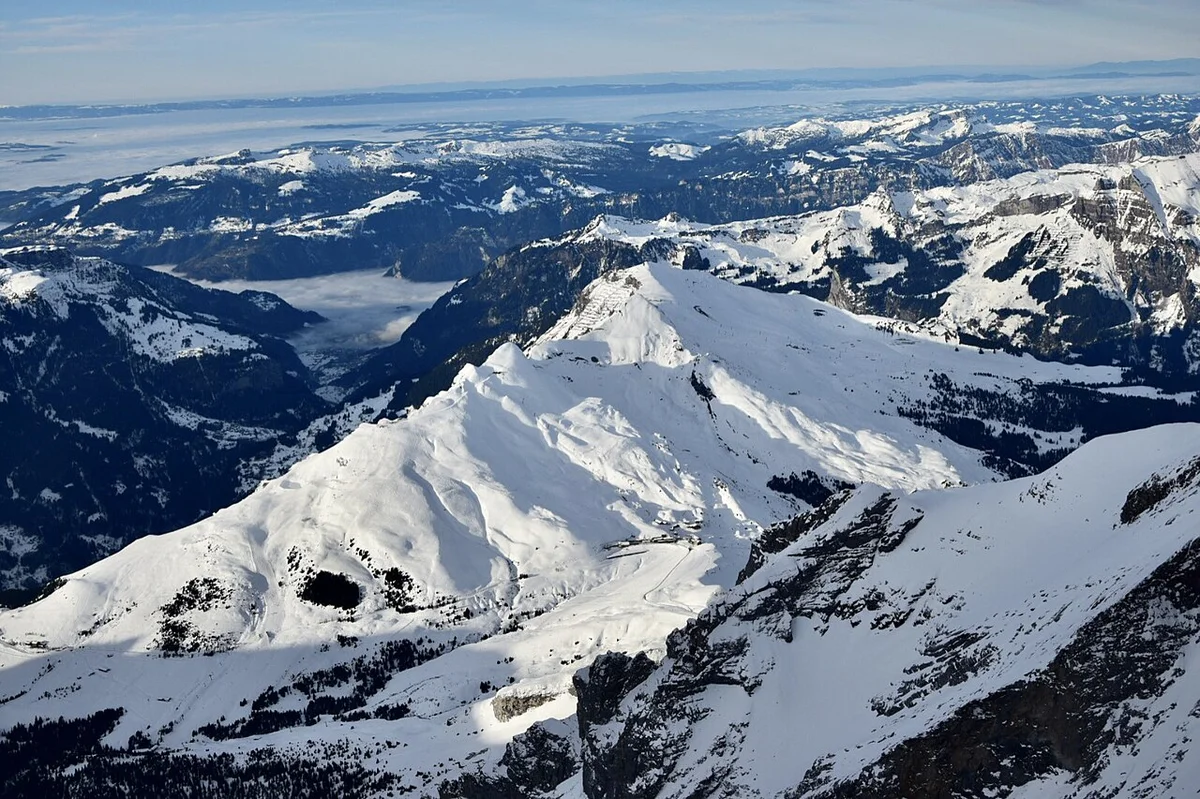
Leaving the cold Ice Palace, the journey heads up to the Sphinx Observatory area, one of the world’s highest meteorological stations set atop a precipitous rock spire. To reach this observatory, visitors take high-speed elevators overcoming a height of one hundred meters in under thirty seconds, piercing through the rock core to reach 360-degree outdoor glass observation decks. From here, the grand landscape of the Bernese Alps unfolds clearly, highlighted by the majestic Eiger, Mönch, and Jungfrau peaks under brilliant sunlight reflecting off white snow. On clear days, views from the Sphinx Observatory reach all the way to France’s Vosges mountain border and Germany’s Black Forest, providing a comprehensive panoramic geographical perspective on Europe’s continent-building structures.
Another iconic zone capturing wide tourist attention is the Snow Plateau, opening just outside the underground complex’s exit, where visitors step onto the thick permanent snow layer of the Aletsch Glacier. The Aletsch Glacier, spanning over twenty kilometers, is recognized as a UNESCO natural world heritage site, stretching endlessly like a gigantic white highway winding between dark grey rock ranges. Real-world activities here are systematically organized, including summer snow tubing, safely marked snow hiking trails, and photo spots with the Swiss national flag fluttering in strong winds. Strong snow reflection requires visitors to wear specialized sunglasses with high UV filters to protect vision throughout outdoor stays.
Besides natural and geological attractions, the Jungfraujoch complex integrates rich commercial and cultural services catering to international tourists’ shopping and dining needs. A highlight is the highest-altitude high-end watch shop displaying renowned Swiss watch brands and limited editions bearing the historic train’s symbol. Right next door is the Alpine Sensation multimedia exhibition telling stories of miners and engineers who sacrificed or dedicated their youth to trans-mountain drilling via valuable documentary footage and moving scale models. This space creates historical depth, helping visitors understand that behind modern tourism’s glamour lies sweat and blood from pioneering generations.
Diverse restaurants serving traditional Swiss dishes like cheese fondue and Bernese sausages alongside international fast food are arranged across different levels of the complex, ensuring energy replenishment for visitors after exercising under low atmospheric pressure. Moving and participating in these zones requires individuals to adjust circadian rhythms and pace to avoid altitude sickness from thin oxygen. The journey concludes by returning to the underground station, boarding afternoon trains descending toward the valley, closing a chain of days exploring an extreme yet scholarly and regal geographical space in Central Europe’s heart.
The Jungfraujoch snow mountain, at an altitude of 3,450 meters above sea level in Switzerland’s Bern canton, is not merely a technical milestone of 19th-century railways but also a sophisticatedly planned ecosystem of services, amenities, and indigenous cultural spaces. Located deep within the ice mass of Jungfrau and Mönch, Europe’s highest railway station operates like a miniature underground city where mass tourism modern amenities harmonize with the Bernese Oberland high plateau cultural heritage. Infrastructure here includes granite-carved tunnels, high-speed elevators leading to the Sphinx observatory, and ice corridors holding world altitude construction records. Transporting goods, freshwater, and energy to this altitude requires a complex logistics system tied to the Jungfrau railway, proving Swiss natural conquest capabilities while raising ecological management challenges in sensitive glacial environments.
Indigenous cultural experiential spaces at Jungfraujoch are clearly expressed through thematic exhibition areas, notably the Alpine Sensation Ice Palace inaugurated during the railway’s centenary. This area recreates the arduous history of miners and engineers spending years in harsh weather drilling mountains to open routes, combined with nostalgic light and sound effects recalling labor lives in the Bernese Alps high mountain community. Sculptures carved directly on permanent ice walls honor endemic Alpine flora and fauna like chamois, Alpine choughs, and legendary Edelweiss flowers, while conveying messages about climate change threatening the nearby Aletsch Glacier. Through these interactive spaces, visitors engage with indigenous culture not through commercialized folk performances, but through historical labor lenses, survival adaptation, and reverence for majestic nature.
Cuisine served at Jungfraujoch restaurants reflects an interesting crossover between traditional Swiss culture and high-level international hospitality standards. Panorama and Crystal restaurants serve signature dishes of Bern canton and German-speaking Switzerland, where Swiss cheese plays a central role in traditional fondue and raclette. Much of this raw material is supplied by small-scale livestock farms in valleys below like Grindelwald and Lauterbrunnen, where Swiss dairy cows graze on nutrient-rich Alpine meadows all summer long. High plateau dining experiences come with careful observation of sustainable food supply chains, as all fresh food and waste must be transported up and down via closed cogwheel train systems to protect the fragile high mountain ecosystem from plastic and wastewater pollution risks.
The lives of residents in surrounding valleys, especially in Grindelwald, Wengen, and Lauterbrunnen, are closely tied to this tourism complex’s operating rhythm while preserving traditions through long-standing community practices. Locals mainly live on family-scale agriculture, traditional livestock grazing, woodworking, and controlled eco-tourism services. Tangible and intangible cultural values like Alphorn music, yodeling, autumn cattle-driving festivals known as Alpabfahrt, and traditional Chalet wooden architecture with meticulous wood carvings remain pristine across generations. Interactions between locals and international visitors create a specialized socio-economic space where culture transmits via mutual respect rather than assimilation or erosion under mass tourism commercial pressures.
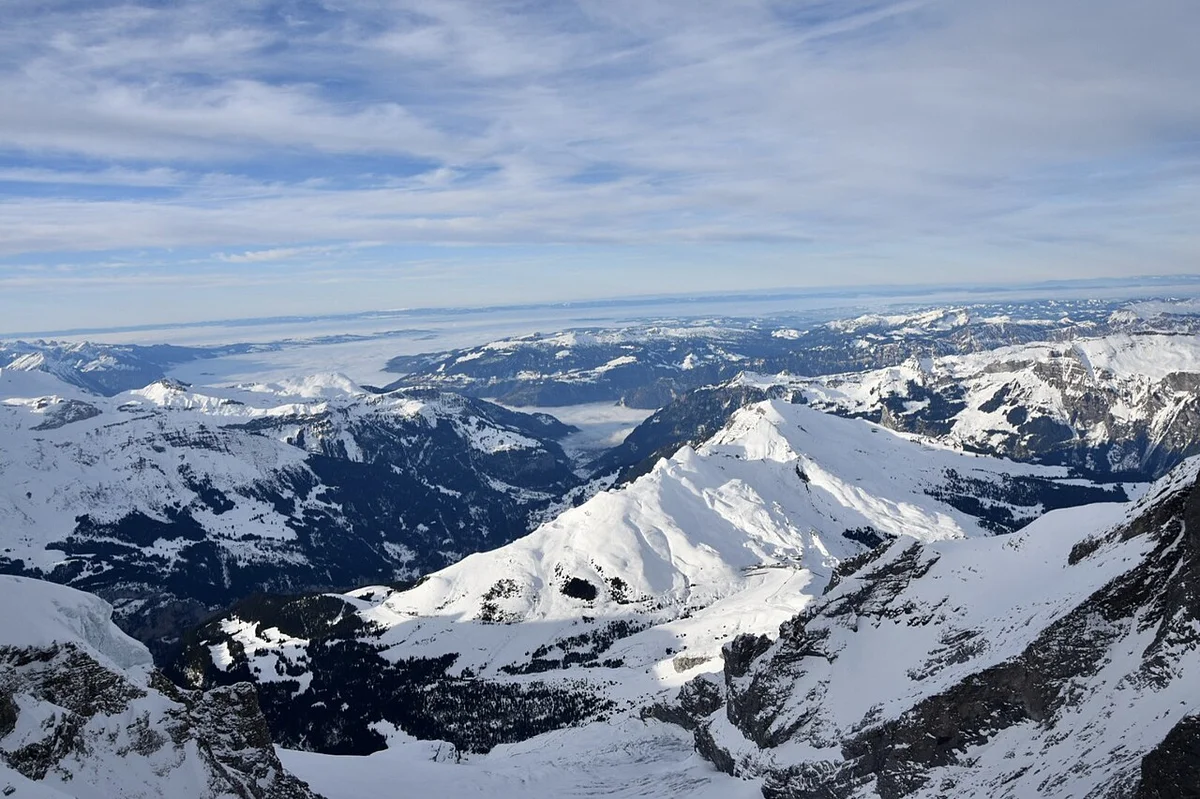
Visitor utility systems at Jungfraujoch extend to adventure sports and scientific research, forming a specialized academic and athletic community at over 3,000 meters altitude. The Sphinx Observatory is not just a sightseeing stop for casual tourists but also a major European meteorological and astronomical research station where international scientists measure atmospheric components, solar radiation, and glacial movement. Additionally, winter experiences like glacier snow tubing, guided snow hiking trails, and spring dog sledding reflect the growth of sustainable outdoor active tourism models. Strict environmental protection rules apply equally to visitors and operators, ensuring recreation and commerce comply with rigorous standards for preserving glacial ecosystems and pristine natural landscapes of the UNESCO Jungfrau-Aletsch world heritage area.
Community interaction space management reflects Swiss tourism’s sustainable development philosophy, where local governments and private corporations cooperate closely to control visitor flows and prevent infrastructure overcrowding. Shopping spaces in underground stations offer authentic Bernese Oberland handicrafts, from traditional mechanical clocks and Swiss army knives to wool textile products woven by local artisans. Transparent origins for every souvenir item protect local worker rights and sustain traditional craft guilds facing industrialization pressures. Thus, services and cultural spaces at Jungfraujoch transcend ordinary stops to become a complex destination management model where natural heritage, transport engineering, and indigenous culture harmonize strictly within modern operational structures.
Planning a field exploration itinerary to Jungfraujoch, the Roof of Europe in Bern canton, Switzerland, demands thorough preparation in physical conditioning, transit techniques, and deep understanding of atmospheric conditions at 3,454 meters altitude. This destination is not merely a nature observation station but a grand railway engineering work piercing Eiger and Mönch massifs, completed in early 20th century. Due to rugged high mountain terrain and harsh weather variations, grasping golden timeframes within days and years determines success rates and visitor experience quality. Regarding annual timing, June through September offers clearest conditions when hiking trails open and permanent snow achieves optimal stability for outdoor activities. However, if the goal is pristine winter landscapes with snow-covered glaciers without footprints, December through February is ideal, though temperatures drop severely and daylight hours shorten.
Regarding daily timing, the optimal strategy is boarding the first morning train from origin stations like Interlaken Ost, Grindelwald, or Lauterbrunnen around early morning, typically 6:00 to 7:00 AM. Arriving at Jungfraujoch station before 10:00 AM helps visitors avoid mass tour groups while utilizing morning hours before rising clouds obscure panoramic views of the Aletsch Glacier. By afternoon, atmospheric convection often causes dense fog and sudden snowstorms, reducing visibility and severely limiting outdoor observation at decks like Sphinx. Therefore, strict adherence to travel schedules is vital since the Jungfraujochbahn operates with absolute Swiss railway punctuality, and final descending trains depart mid-afternoon.
Transport connectivity to Jungfraujoch is a multimodal public transit masterpiece requiring seamless coordination between traditional cogwheel trains and world-class modern cable cars. Standard journeys depart from Interlaken Ost via Berner Oberland-Bahn networks to Grindelwald or Lauterbrunnen, transferring to specialized mountain trains. Modern technology highlights in recent years include the Eiger Express cable car departing Grindelwald Terminal, shortening travel times to Eigergletscher station to fifteen minutes in large-capacity, heated cabins. From Eigergletscher, all passengers transfer to Jungfraujochbahn red trains crossing over a seven-kilometer tunnel carved deep into granite rock walls of Eiger and Mönch. During the tunnel ride, trains stop at Eigerwand and Eismeer stations for five minutes so passengers step out via giant glass windows carved into rock faces to gaze at rolling glaciers before arriving at the underground summit station.
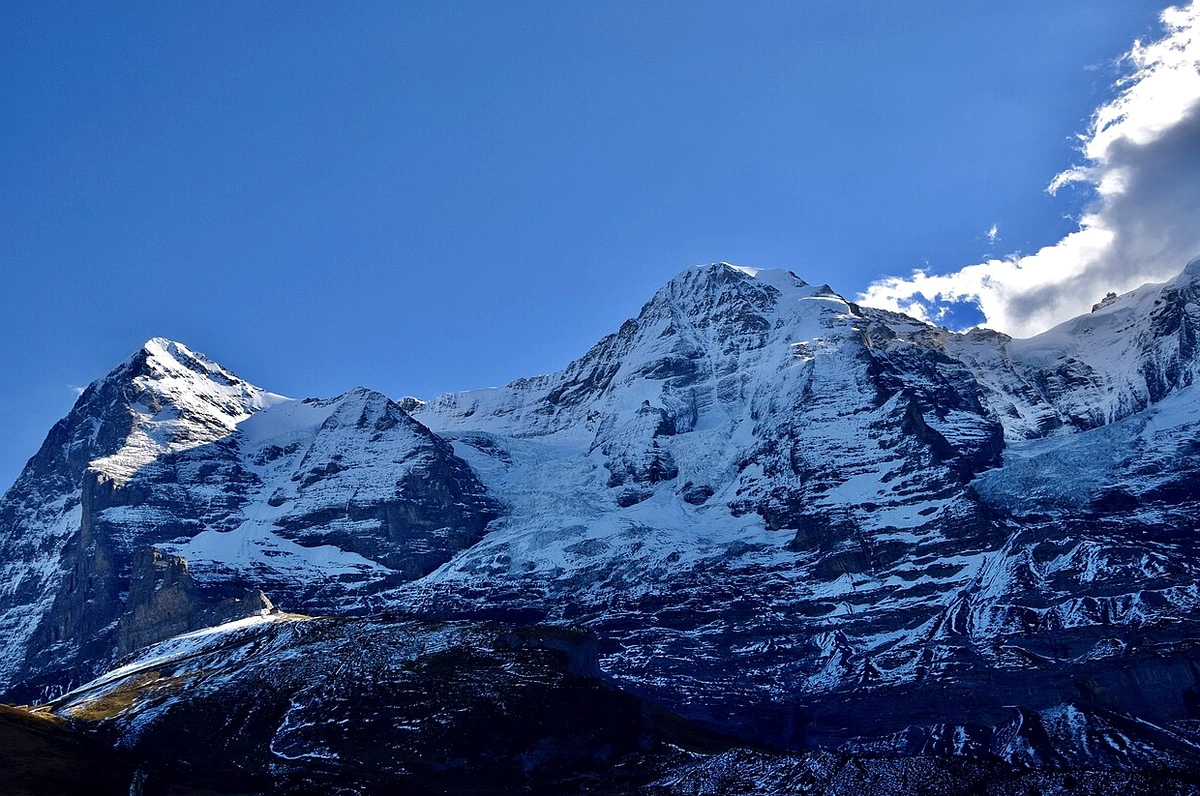
Weather conditions at Jungfraujoch fluctuate unpredictably and decouple entirely from valley climates, requiring basic meteorological knowledge before departure. Even mid-summer, summit temperatures remain sub-zero, ranging from minus ten to minus five degrees Celsius, accompanied by strong winds increasing windchill. Atmospheric pressure drops sharply here with oxygen levels at roughly sixty percent of sea level, easily inducing acute altitude sickness symptoms like headaches, dizziness, nausea, and elevated heart rates for unacclimatized individuals. For this reason, operators advise visitors against overexerting immediately upon exiting trains, spending fifteen to twenty minutes walking lightly in station areas to let bodies self-adjust blood pressure and breathing rates before physical activities on ice.
To experience this journey fully with a local guide, guests can refer to the 9D8N Germany – Austria – Hungary – Czech Republic Tour with its pre-arranged itinerary.