Situated on the left bank of the Main River in the central plains of Germany, the Römer Old City Hall in Frankfurt am Main held a strategic geographical position throughout the development of medieval European urbanism. Spatially, this architectural landmark dominates the historic Römerberg Square, a public plaza sitting at an average elevation of roughly 112 meters above sea level across the flat terrain of the Rhine-Main basin. Established as a vital commercial hub as early as the ninth century, this location served as a crossroads where major trade routes from northern Italy crossed the Alps to link directly with the North European Plain. Its geography created a natural focal point for economic, political, and social activity, turning the area surrounding the city hall into a vibrant urban organism where cultural currents converged across centuries of upheaval.
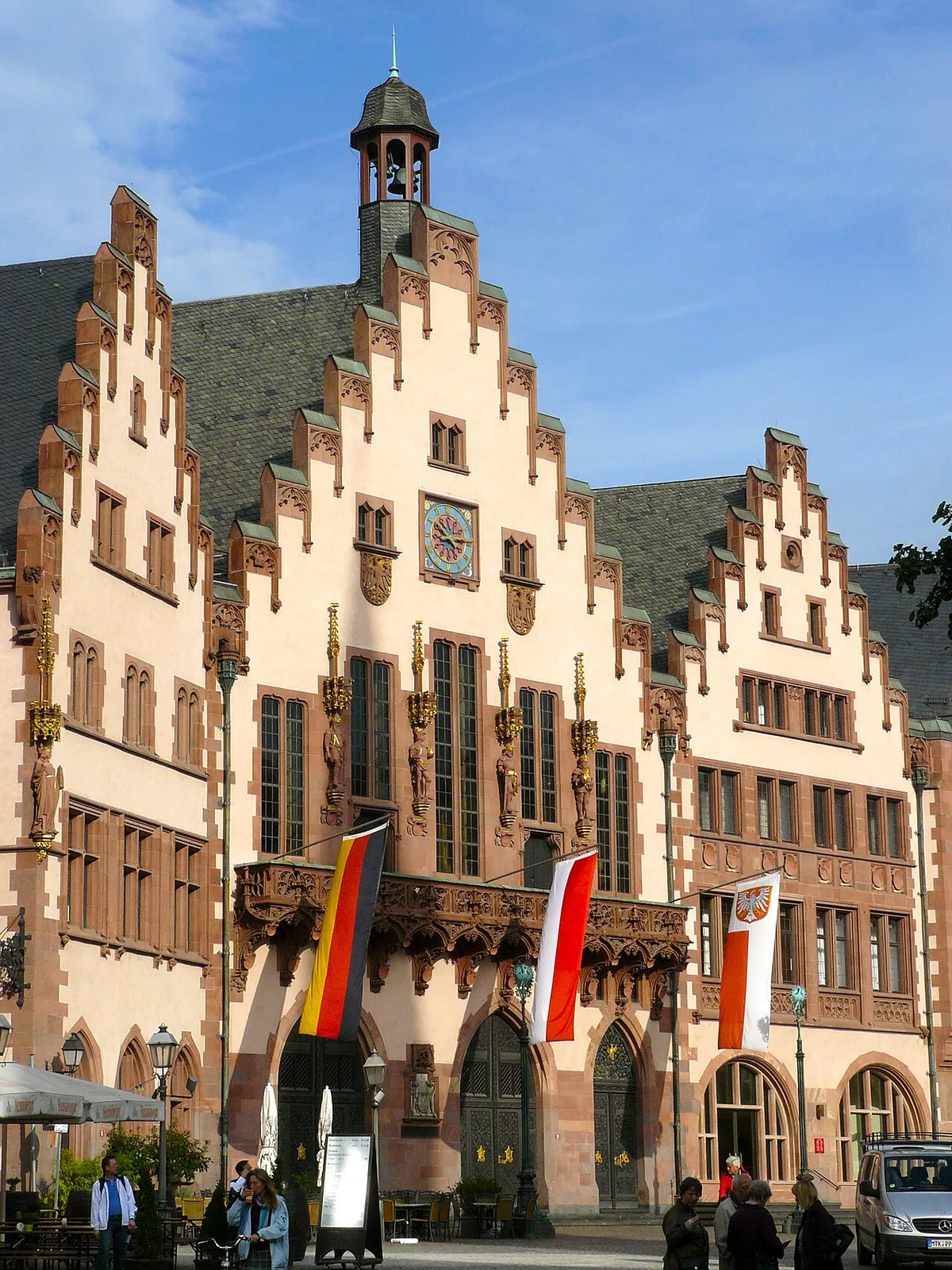
The historical journey of the Römer began in the early fifteenth century—specifically in 1405—when the Frankfurt City Council decided to purchase two medieval merchant townhouses owned by a wealthy patrician family named Römer. The principal residence among them, boasting an intricately carved oak facade and signature stepped gables, was converted into the city’s official administrative seat. Continuous expansion unfolded over subsequent decades as the city council acquired neighboring mansions such as Schwaneneck, Löwenstein, and Frauenstein, merging them into a large-scale architectural ensemble. The interconnected late-Gothic facade, highlighted by a central balcony overlooking the square and a row of sculpted Holy Roman Emperors, gradually took shape to define the iconic silhouette admired worldwide today.
Across historical eras, the Römer bore witness to dramatic turning points tied to the destiny of the Empire and the German nation. During the golden age of the Holy Roman Empire, Frankfurt served as the coronation city of the emperors, and the Römer hosted Europe’s most opulent coronation banquets inside the Imperial Hall, known as the Kaisersaal. These halls welcomed countless monarchs, dukes, and international envoys, preserving pivotal chapters of Central European feudal diplomacy. Yet this stability was repeatedly tested by religious wars during the Reformation and Catholic divisions, as well as armed conflicts sweeping across Europe in the seventeenth and eighteenth centuries, forcing the city hall to undergo repeated restorations and structural reinforcements to preserve its original architectural form.
Entering the twentieth century, the Römer faced the greatest catastrophe in its existence during World War II. Fierce Allied air raids in 1944 reduced the historic old town surrounding the square to smoldering ruins, and the Römer complex shared the same fate—most of its architectural fabric was burned to ashes, leaving only bare brick walls scorched by the inferno. The decision to rebuild the city in the postwar decades marked a resilient new chapter for Frankfurt’s citizens. Rather than adopting modernist styles aligned with contemporary urban planning trends, local authorities and the community steadfastly committed to an authentic reconstruction of every architectural detail, employing traditional materials and centuries-old building techniques to recreate the Römer as a testament to indomitable spirit and cultural heritage preservation.
The national symbolic value of the Römer reaches far beyond the routine administrative duties of a municipal town hall. To the German people, the Römer embodies the spirit of civic autonomy, where the seeds of medieval burgher democracy were sown and nurtured over centuries of struggle for self-determination against centralized feudal powers. Its distinctive stepped-gable facade in warm heritage hues has become Frankfurt’s quintessential cultural emblem on the world map, standing alongside Europe’s most celebrated landmarks. The square before the building has witnessed countless landmark events, from traditional folk festivals to demonstrations demanding civil liberties during modern Germany’s political transitions.
The Römer’s cultural influence is further affirmed through its role as a repository of artistic and historical heritage for Hesse in particular and Germany as a whole. Inside, the Imperial Hall displays oil portraits depicting every emperor who ruled the Holy Roman Empire—painted by master artists of the nineteenth-century Romantic school—offering a vivid visual chronicle of medieval power hierarchies. Regular thematic exhibitions are hosted here to research and educate the public on urban formation, architectural archaeology, and social evolution across historical eras. The Römer thus stands firm as a living entity where a glorious past blends seamlessly with a dynamic present, safeguarding core cultural identity at the heart of one of the planet’s largest financial centers.
The Römerberg architectural complex in Frankfurt am Main, Federal Republic of Germany, represents one of the most quintessential medieval urban planning and architectural legacies of Central Europe. The Römer Old City Hall, the nucleus of this historic square, is not merely a civic administrative building spanning centuries, but a three-dimensional text reflecting the evolution of urban spatial thought from the Renaissance to the modern era. Formed by consolidating independent merchant mansions in the 15th century, the Römer marked a milestone in European civic architecture, where private residences were reconfigured to serve the grand communal functions of the Holy Roman Empire. The fusion of horizontal alignment along an ancient trade axis with towering gabled facades shaped a self-contained yet welcoming urban ecosystem for the political, economic, and cultural life of the Free City of Frankfurt.
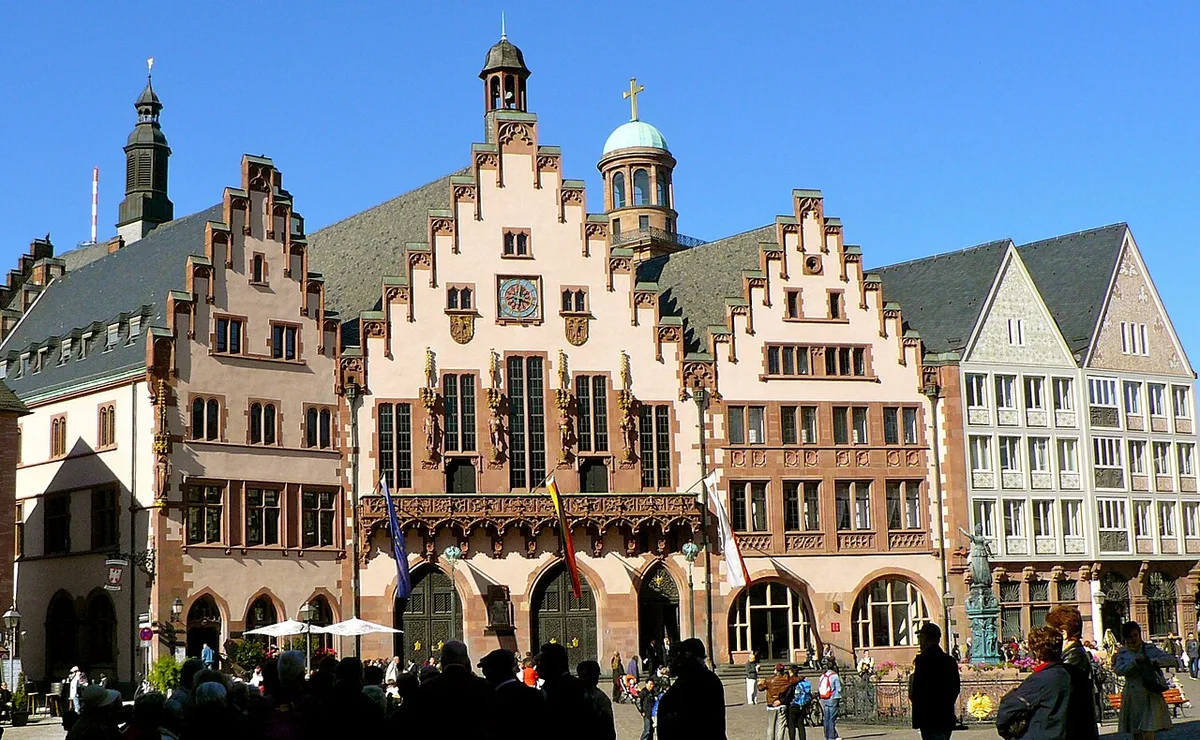
In terms of overall layout and chronological development, the Römer is actually a complex of nine individual houses acquired and linked together over time, with the residence named Zum Römer (purchased in 1405 by the City Council from a wealthy merchant family of Italian origin) lending its name to the entire ensemble. Other notable constituent buildings include Alt-Limpurg, Goldstein, Schwaneneck, and Frauenrode, creating a combined frontage nearly one hundred meters long facing Römerberg Square. Architecturally, the central structure and adjoining wings bear the unmistakable imprint of late Gothic transitioning into the German Renaissance, expressed through pale rose-tinted stucco walls paired with exposed timber framing and carved red Main sandstone details. Primary construction relied on traditional half-timbered framing, in which load-bearing columns and beams of seasoned oak were erected in diagonal bracing patterns, granting the structure high resilience against minor seismic shifts and the dramatic temperature swings of a temperate continental climate.
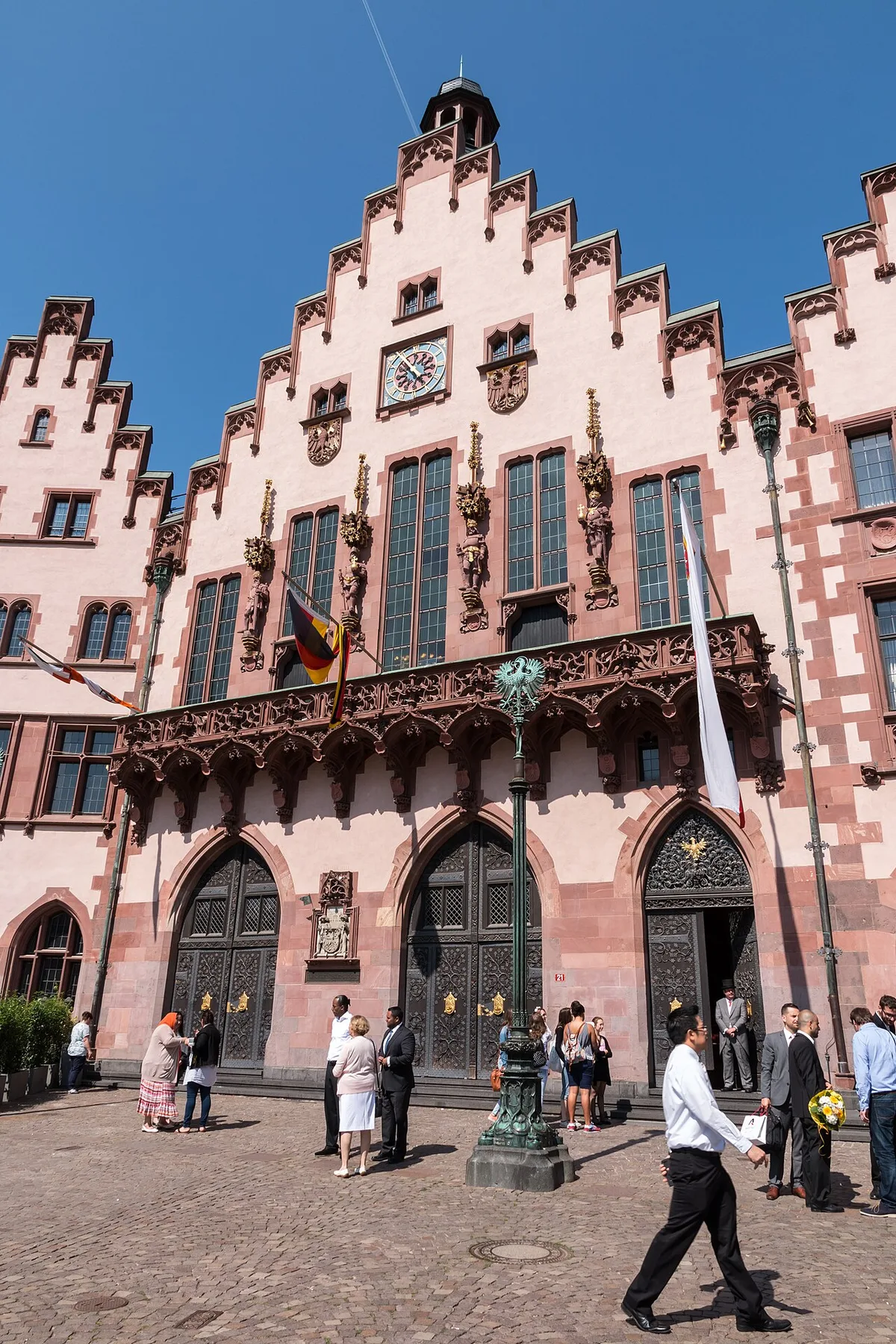
The Römer’s most famous facade—crowned by three characteristic stepped gables (Stufengiebel)—is a masterpiece of exterior sculpture and symmetrical massing. Above the second-story windows runs a finely carved stone balcony displaying portrait statues of Holy Roman Emperors from Charlemagne to Francis II, affirming Frankfurt’s supreme political stature in the history of imperial elections. Alongside aged oak and traditional lime plaster, quarried sandstone from the Main River valley played a major structural role, reinforcing wall corners, arched portals, and heavy load-bearing window sills. Construction techniques of this period demanded rigorous coordination among master guilds, from carpenters carving structural timber frames to masons applying insulating lime render and stonemasons sculpting cornices with mythological motifs and family coats of arms.
The interior floor plan of the Römer was organized along strictly stratified functional axes, mirroring class divisions and authority within feudal urban society. The ground floor was originally designated for commerce, where merchants convened and displayed goods inside spacious vaulted halls supported by sturdy square stone pillars. The first and second upper floors housed legislative chambers, city council meeting rooms, and above all the Imperial Hall (Kaisersaal), where Europe’s monarchs celebrated lavish coronation banquets after completing sacred rites at neighboring Frankfurt Cathedral. Spanning thousands of square meters of floor space with main buildings rising between fifteen and twenty-five meters high, the administrative complex maintains harmonious spatial proportions relative to the broad square out front, avoiding any sense of overwhelming monumental bulk.
Conservation and restoration following the severe devastation of World War II required urban planners and architectural historians to apply the strictest methods of architectural archaeology. Every shattered brick wall, charred timber beam, and fallen stone sculpture was recovered, cataloged, and reassembled under maximum authenticity principles, paired with concealed modern structural steel reinforcement to ensure load-bearing safety without compromising the classical aesthetic of the exterior. Engineers meticulously studied nineteenth-century technical drawings and imperial archives to replicate exact traditional paint pigments and lime-and-straw plaster formulations matching the original recipes of medieval craftsmen.
Today, visitor capacity and public events at the Römer are managed under a sustainable heritage stewardship strategy balancing academic research, international cultural tourism, and its ongoing role as an honorary seat of city government. Strict visitor flow controls safeguard fragile antique wooden floors and indoor microclimates inside historic galleries such as the Kaisersaal and the traditional civil marriage registry offices in the west wing. Each year, millions of visitors arrive to admire its architecture, explore its diplomatic legacy, and take part in major cultural festivities like the traditional Christmas Market held right outside on Römerberg Square—turning the site into a living bridge between Frankfurt’s golden past and its dynamic modern present.
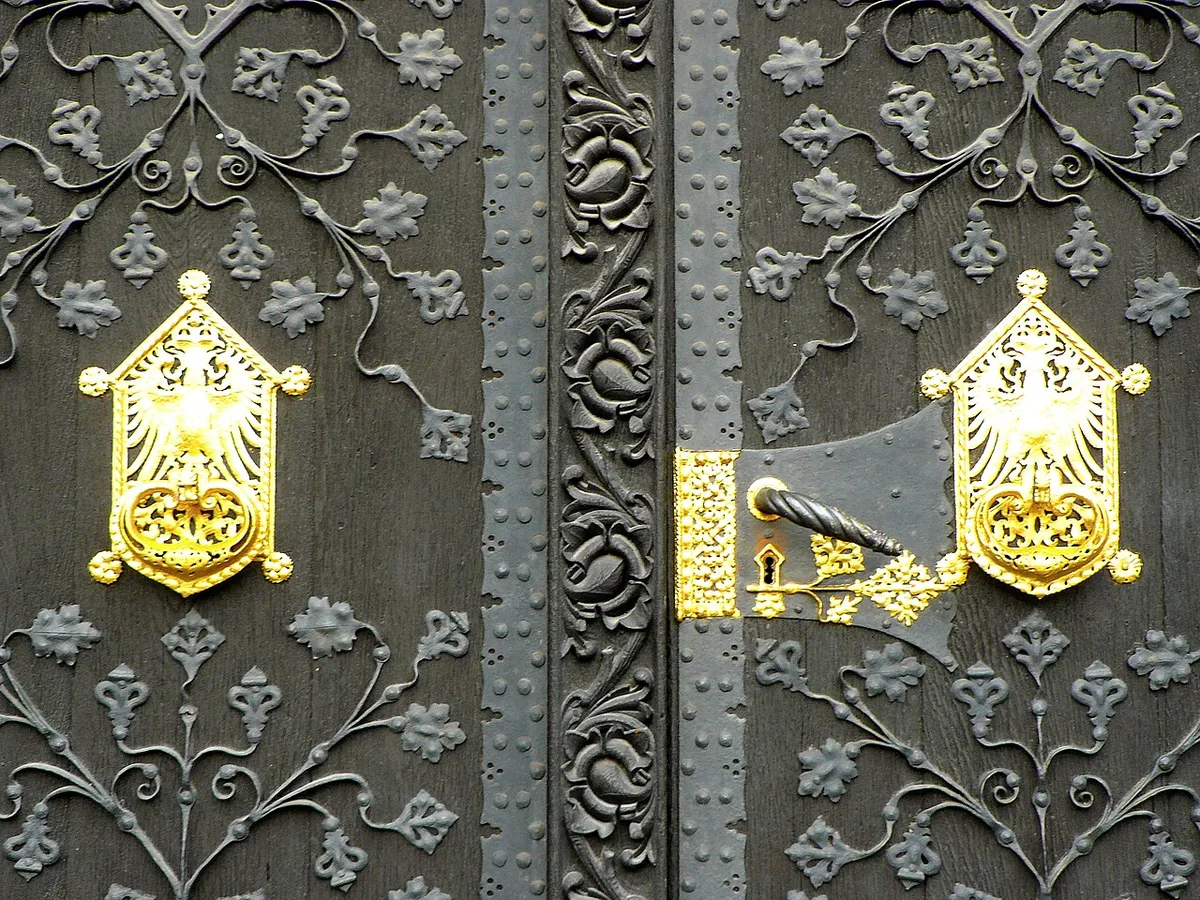
The Römer Old City Hall in Frankfurt am Main rises as a resplendent Gothic and Renaissance architectural icon, carrying historical depth intimately bound to the rise and evolution of the Holy Roman Empire. Acquired and renovated in the fifteenth century by the city council from a prosperous merchant named Römer, this complex stood witness to countless defining events in Central European history. Examining the overall structure of the Römer invites a thoughtful appreciation of architectural styles layered across centuries, where every building block and carved ornament reflects the aesthetic sensibilities, social order, and civic pride of Frankfurt’s medieval burgher class.
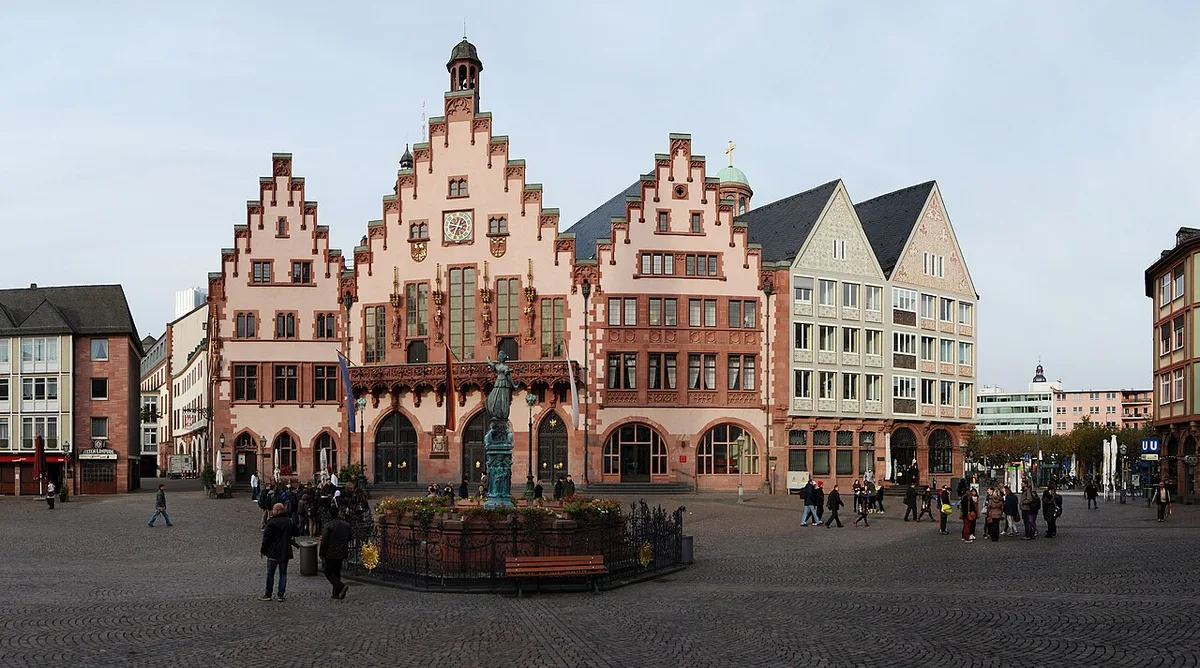
The most celebrated section of the facade comprises three adjoining houses topped by signature stepped gables, with the central structure bearing the name Zum Römer flanked by Schwaneneck and Alt-Limpurg. This exterior vividly showcases late Gothic artistry through pointed-arch window frames, bay windows richly embellished with stone reliefs, and delicate wood carvings reflecting the mastery of period artisan guilds. Far more than utilitarian municipal offices, these buildings stood as a proud declaration of economic prosperity for a vital trading center along the Main River, where trans-European commercial corridors converged to generate immense civic wealth.
Stepping through the main portal into the interior, the first space to captivate archaeologists and art historians is the Great Imperial Hall, or Kaisersaal. This chamber holds the highest symbolic prestige in the city hall, having hosted opulent coronation feasts and solemn ceremonies for Holy Roman Emperors following their investiture at nearby St. Bartholomew’s Cathedral. Lining the walls of the Kaisersaal is a monumental portrait gallery depicting all fifty-two emperors who reigned over the empire from Charlemagne to Francis II. Painted by accomplished artists during a major nineteenth-century restoration, these works revive bygone imperial splendor through commanding compositions, dignified expressions, and royal regalia rendered with exacting historical accuracy.
The ceiling and wall ornamentation of the Kaisersaal likewise exemplifies the pinnacle of Historicist interior decoration, weaving geometric motifs, gilded bas-reliefs, and feudal symbols of authority into a cohesive ensemble. The political philosophy embedded within this space expresses reverence for cosmic order and divinely ordained sovereignty while simultaneously asserting Frankfurt’s staunch municipal autonomy within the empire’s intricate governance system. Every carving on door frames and decorative motif on load-bearing timber beams adheres to strict principles of geometric proportion and symmetry, cultivating an atmosphere of solemn majesty and grandeur.
Moving through other wings of the complex, visitors and scholars encounter the central reception hall, which preserves priceless records of medieval legislative history and civic life. Marked by late Renaissance elegance, this chamber features marble columns sculpted in classical orders harmonizing with intricately fretworked oak doorways. Wall ornamentation frequently blends classical mythological emblems with agricultural and commercial motifs, conveying divine protection over Frankfurt’s thriving trade and burgher community.
Among the priceless artifacts and treasures tied to the Römer’s history are imperial trade charters bearing royal seals, alongside ancient bells and collections of guild coats of arms belonging to the merchant associations that once governed the city’s economic life. Beyond their material worth, these treasures serve as primary historical documents illuminating power structures, maritime regulations, tax codes, and diplomatic ties between Frankfurt and other European feudal powers. Their preservation in the city hall’s secure archives underscores the Römer’s stature as one of the most sophisticated and smoothly run administrative institutions of its age.
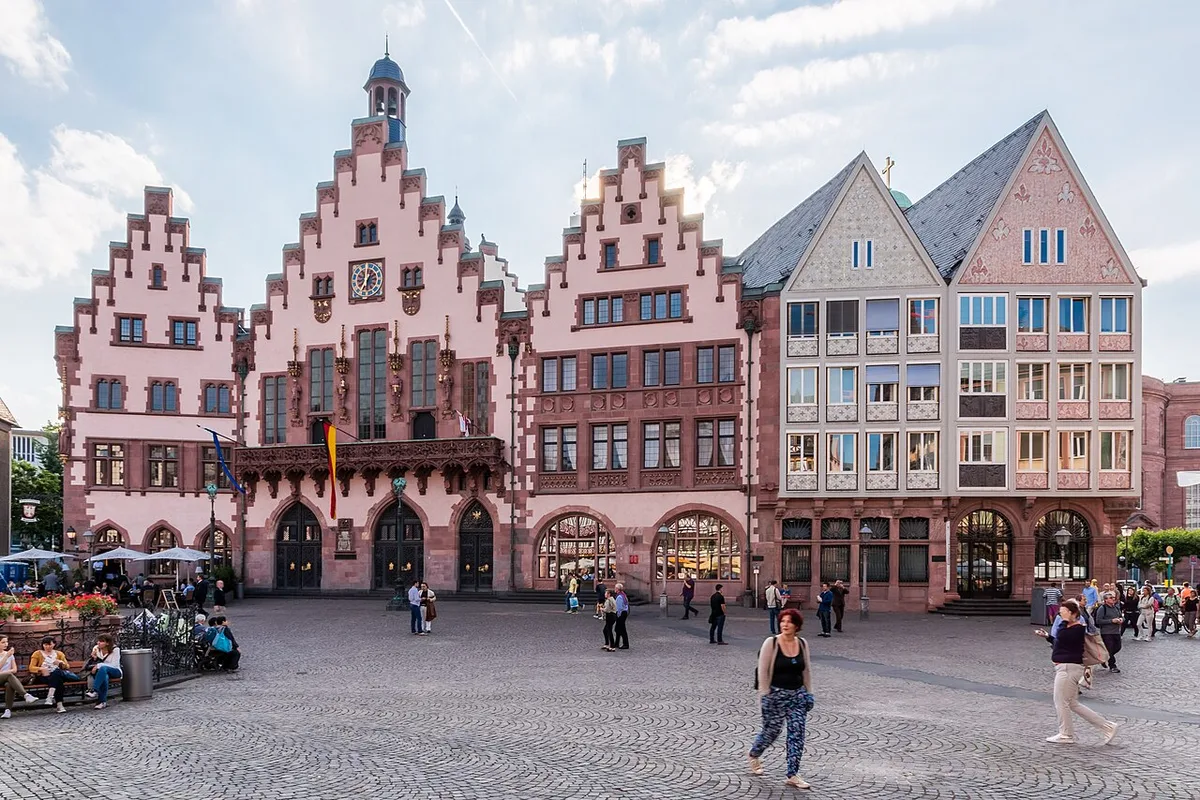
The facade overlooking Römerberg Square also speaks a distinct sculptural language anchored by its central balcony, where for centuries city leaders and royal guests appeared before the public to proclaim decrees or celebrate major national occasions. Exterior sculptures depict historical figures, mythological heroes, and emblems of justice—echoed by the Fountain of Justice (Gerechtigkeitsbrunnen) standing proudly at the center of the square, where Lady Justice holds sword and scales facing the city hall to remind rulers of fairness, transparency, and ethical governance.
From an architectural conservation perspective, the Römer Old City Hall endured the brutal ravages of war—most notably near-total destruction during World War II—only to be painstakingly resurrected through modern archaeological science paired with traditional craftsmanship. This reconstruction was never merely a patching together of fallen stones, but a dedicated effort to restore the collective memory and cultural soul of an entire nation. Every brick was carefully selected and every fresco restored from original archival records, ensuring the highest possible historical fidelity throughout the complex.
The cultural depth of the Römer therefore lies not only in static artifacts or the material richness of its interiors, but equally in the unbroken continuity of civic governance traditions and burgher freedom cultivated over hundreds of years. Every corner of the city hall tells a story of architecture meeting human philosophy, where medieval citizens inscribed their aspirations for perfection, order, and enduring prosperity. Exploring the Römer is a journey of decoding Europe’s rich cultural layers, where architecture becomes a living chronicle recording the advance of human civilization across the ages.
The Römer Old City Hall complex in Frankfurt am Main stands not merely as a monument to medieval administrative power under the Holy Roman Empire, but as an urban cultural living space pulsing with an enduring daily rhythm across centuries. To grasp the true soul of this landmark, one must immerse oneself in its shifting moods from dawn till dusk, as the public space of Römerberg Square subtly transforms from early-morning serenity into vibrant evening festivity. Observing local daily life here offers a compelling anthropological lens into how Frankfurt’s residents keep heritage alive at the core of one of Europe’s foremost modern financial capitals.
Dawn at Römerberg Square offers a visual and acoustic experience wholly distinct from the rest of the day. As the first rays of sunlight pierce the morning mist rising off the Main River to the south and illuminate the fifteenth-century stepped-gable timber facades, the plaza rests in an archaeological stillness. Dew from the night still glistens on the cobblestones, undisturbed by bustling footsteps. Now and then, bells from St. Bartholomew’s Cathedral chime softly down narrow historic lanes, awakening a new day in the Altstadt old town. Municipal street cleaners and local artisans preparing to open traditional neighborhood shops are the first to appear, painting an unhurried portrait of authentic community life before international tour groups arrive.
As the sun climbs toward midday, daily rhythms around the Römer enter their liveliest phase, blending modern urban energy with cultural exploration. The square becomes a gathering ground for historians, architects, travelers, and local residents seeking a nostalgic pause amid a city of banking towers. Academic tour groups frequently cluster before the Römer’s three-gabled facade to hear accounts of the Holy Roman imperial elections once held inside the Imperial Hall. Footsteps tapping across cobblestones, the lively melodies of street musicians playing accordion or saxophone, and the flutter of pigeons circling the Fountain of Justice in the center of the plaza combine into an authentic, resonant urban atmosphere.
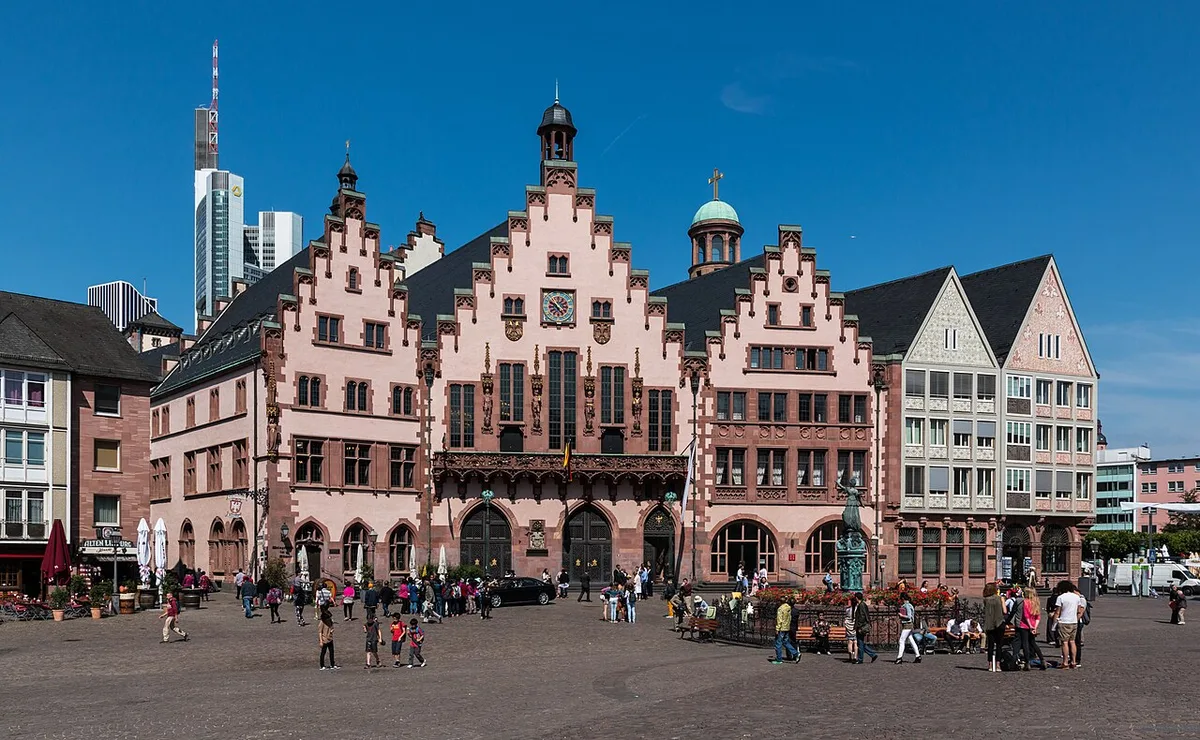
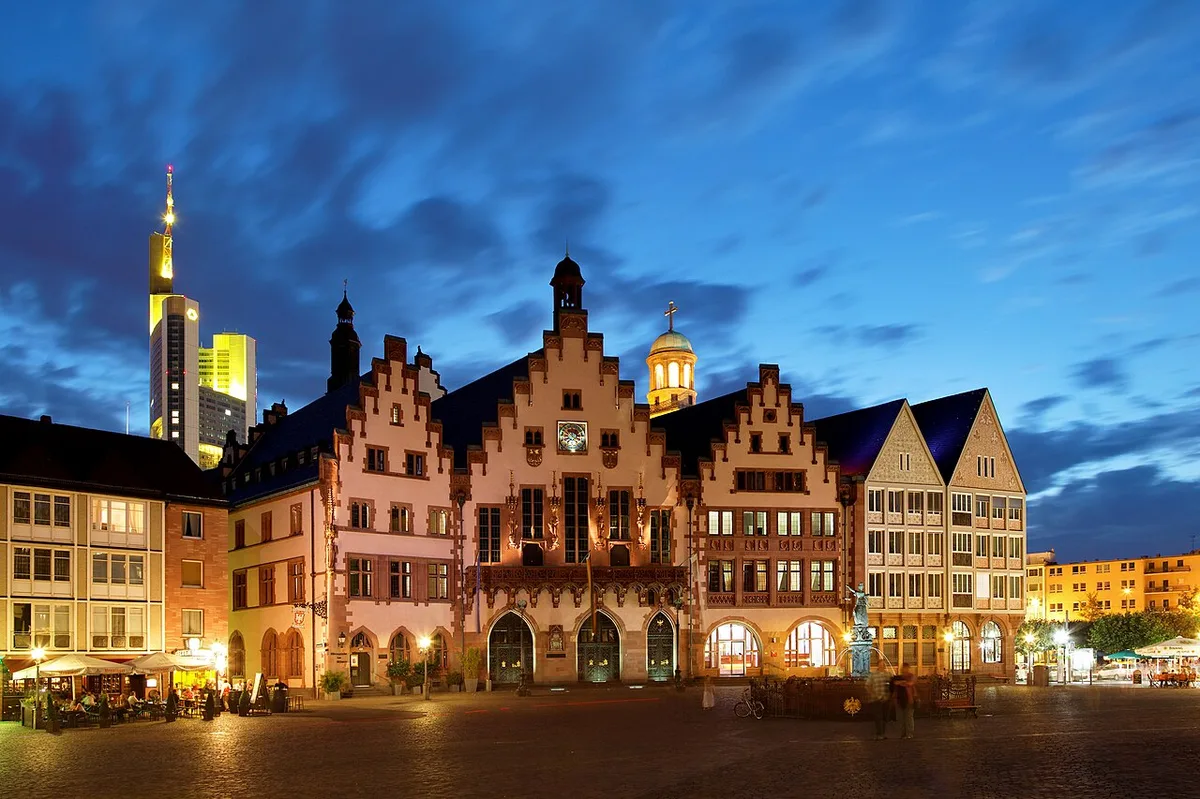
At sunset, the architecture of the Römer undergoes a dramatic transformation bathed in the warm amber-gold glow of the setting sun. Rose-tinted plaster walls and dark carved timber beams appear sharper and more evocative than at any other hour. This is prime time for photographers and urban observers to capture the complex’s finest vantage points. Looking out from the upper balcony of the Frankfurt Historical Museum directly across the square yields a sweeping panorama encompassing the historic fountain all the way to the Römer’s three iconic stepped gables. Another striking viewpoint lies at the northwest corner of the square, where a camera lens can frame the fascinating contrast between the city hall’s late-Gothic heritage and the sleek skyscrapers of Frankfurt’s Financial District rising along the distant skyline.
Once night falls, the Römer Old City Hall takes on a luminous presence thanks to sophisticated architectural lighting designed to accentuate every Gothic and Renaissance contour. Warm uplighting from the base illuminates sculpted reliefs of monarchs and intricate timber carvings, turning the square into a grand open-air historical stage. During major annual festivals—such as the traditional Christkindlesmarkt Christmas market, summer music festivals, and civic folk celebrations—the plaza fills with joyful crowds. Laughter and conversation mingle with the enticing aromas of grilled Bratwurst, spiced Lebkuchen gingerbread, and steaming Glühwein mulled wine in the crisp winter air, vividly recreating the communal commerce and camaraderie of medieval times.
Experiencing the Römer vividly also means stepping inside its historically significant interior chambers, most notably the Imperial Hall (Kaisersaal). Here, newly crowned emperors once celebrated extravagant banquets immediately after their sacred anointing at the cathedral. Nineteenth-century wall portraits of all fifty-two Holy Roman Emperors provide rich historical depth for every visitor who enters. Examining interior details up close—from ceremonial armor displays to finely carved antique woodwork—offers tangible insight into the political life and decorative arts of Europe’s ruling elite.
Viewed through urban cultural anthropology, the living rhythm of Frankfurt’s Römer Old City Hall demonstrates the remarkable vitality of architectural heritage woven into contemporary city life. Rather than a static museum locking lifeless relics behind glass, it remains a living civic heart where past and present continually intersect through every toll of cathedral bells, every footstep across cobblestones, and year-round community festivities. Experiencing the Römer across the arc of a single day invites both visual sensitivity and historical curiosity, revealing the enduring human values nurtured and safeguarded by generations of Frankfurt citizens through history’s trials.
The neighborhood enveloping historic Römerberg Square in central Frankfurt am Main carries not only the symbolic prestige of medieval and Renaissance architecture, but also a centuries-old culinary ecosystem reflecting the authentic identity of the Hesse region. Developed over hundreds of years, the food culture surrounding the old city hall forms an intangible heritage where artisanal preparation techniques have been passed down from generation to generation. Distinct from the sleek modern financial towers encircling it, the Altstadt old town preserves traditional apple-wine taverns, craft bakeries, and open-air food markets governed by time-honored local dining customs. Regional gastronomy here is deeply rooted in the agricultural heritage of the Main River plain, where fertile soils and a temperate climate shaped the signature ingredients at the heart of Frankfurt’s most celebrated dishes.
Taking center stage on the traditional culinary map around the Römer is the iconic Frankfurter Würstchen, a sausage specialty dating back to the fifteenth century. Crafted from finely minced pork blended with a precise proportion of fat, it is seasoned strictly with salt, white pepper, and coriander before undergoing hours of cold smoking over seasoned oak or beechwood. This artisanal process demands exacting precision so that the natural casing achieves a crisp snap when gently poached in warm water without splitting. Served according to longstanding tradition at historic eateries around Römerberg Square, Frankfurter sausages are traditionally presented not with fiery mustard common elsewhere in Germany, but laid over a crisp white linen napkin alongside dark sourdough rye bread, naturally fermented sauerkraut, and grated horseradish or root-vegetable purée.
Standing alongside sausages in Frankfurt’s culinary pantheon is traditional Green Sauce (Grüne Soße), a refined creation uniting local gardening craft with regional gastronomy. This beloved dish relies on a precise blend of seven fresh herbs harvested from gardens around the city in springtime: borage, sorrel, cress, chervil, chives, parsley, and salad burnet. According to recipes documented in the nineteenth century, these herbs must be finely chopped by hand rather than blended mechanically to avoid bruising their delicate plant cells, then folded into sour cream, oil, vinegar, hard-boiled egg yolks, and a hint of mild mustard. Refreshingly bright, gently tangy, and intensely herbaceous, Frankfurt Green Sauce is traditionally served chilled over halved hard-boiled eggs and tender boiled new potatoes, achieving a harmonious balance of nutrition and flavor.
An inseparable highlight of dining culture around the Römer is the tradition of drinking local apple wine, known in the local dialect as Apfelwein or Ebbelwoi. Unlike sweeter ciders found in other countries, Frankfurt’s apple wine is distinctively tart, low in alcohol, and pale golden, produced through the natural fermentation of sharp-tasting apples harvested from orchards across the Main Valley. Drinking customs revolve around iconic blue-gray salt-glazed stoneware jugs engraved with geometric patterns—called a Bembel—paired with diamond-cut ribbed glasses known as Geripptes that catch the light. Etiquette calls for pouring the wine from high above into the glass to raise a fine head of foam, releasing complex fermented fruit aromas before sipping alongside hearty savory specialties.
Alongside apple wine, traditional beverages served to visitors around the old city hall include local regional craft beers as well as coffee and herbal tea traditions dating back to the bustling era of European merchant fairs. Historic tearooms lining cobblestone lanes leading off Römerberg Square serve chamomile and peppermint infusions paired with artisanal gingerbread biscuits baked in heritage brick ovens. These rituals reflect Frankfurt’s unhurried appreciation for everyday pleasures, where every dish and drink tells a story of human adaptation to the natural environment and family traditions preserved across generations.
The urban fabric surrounding the Römer also encompasses lively culinary streets and traditional markets vital to daily community life. Foremost among them is the central Kleinmarkthalle indoor food market just steps from the historic square, bringing together over a hundred stalls offering specialty produce from around the globe while spotlighting Hessian regional delicacies. Here, food artisans display hand-twisted pretzels sprinkled with coarse salt, cheeses crafted from milk grazed on nearby upland pastures, and meats cured using medieval family recipes. Strolling through these aisles is not only a feast for the palate, but also an intimate glimpse into everyday life where time-honored culinary crafts are lovingly safeguarded against modern industrial homogenization.
Traditional preservation and preparation techniques here also reflect ecological wisdom and deep familiarity with seasonal cycles. Fermenting cabbage into tangy sauerkraut to pair with rich roasted meats, or drying wild forest mushrooms and herbs foraged from surrounding woodlands in preparation for cold winters, remain living skills passed down among chefs at historic restaurants near the city hall. Respect for local ingredients, subtle seasoning that lets natural flavors shine, and disciplined service standards combine to forge a distinct culinary identity unlike any other region in Germany.
Exploring the culinary landscape around Frankfurt’s Römer thus opens a comprehensive window into how tangible and intangible cultural heritage intertwine within a single historic setting. From the crisp aroma of aged apple wine poured from stoneware jugs to the vibrant freshness of hand-chopped green herb sauce prepared daily, every detail reinforces the enduring vitality of this quarter as a living historical witness. Having survived the passage of time and wartime devastation, the faithfully restored old town and its culinary traditions continue to share the story of Frankfurt’s civic culture, gastronomic artistry, and local customs with future generations through flavors preserved for centuries.
The Römerberg architectural ensemble, anchored by the Römer Old City Hall in Frankfurt am Main, stands as one of Central Europe’s most important urban and political heritage sites. Planning a rewarding visit to this Gothic and Renaissance landmark benefits greatly from understanding seasonal weather patterns, Frankfurt’s integrated public transit network, and local cultural etiquette. Climatically, Frankfurt experiences a temperate oceanic-continental climate with pronounced seasonal temperature swings that call for thoughtful wardrobe and itinerary planning. Spring, spanning March through May, brings fresh vitality to the cityscape as temperatures climb from roughly 10°C toward 20°C, creating crisp, pleasant conditions for strolling across Römerberg Square to admire its meticulously reconstructed Fachwerk half-timbered houses. Summer runs from June to August with average highs hovering around 25°C and occasional brief heatwaves, making sun protection, drinking water, and light breathable clothing useful when lingering outdoors to study facade sculptures.
Transitioning into autumn from September through November, Frankfurt takes on a classic Central European atmosphere with passing rain showers and temperatures dipping below 10°C by late season—yielding richly atmospheric scenes for photography while calling for waterproof outerwear and warm layers. Winter, lasting from December through February, frequently sees temperatures hover near freezing, occasionally dusting the Römer’s steep pitched roofs in snow. Even so, winter draws massive global crowds thanks to the historic Frankfurt Christmas Market held right on the square, transforming the historic plaza into a living celebration of local festive heritage. As for the best time of day to visit, early morning between 8:00 AM and 10:00 AM—before large tour groups arrive—offers maximum tranquility for admiring architectural details, photographing historic stone steps, and viewing the famous balcony where heads of state and Germany’s national football team greet cheering crowds. Conversely, at dusk, artistic architectural illumination highlights the building’s Gothic contours to create a dramatic, dignified evening perspective.
Public transit serving the Römer Old City Hall is operated by the Rhein-Main-Verkehrsverbund (RMV) network with remarkable punctuality and seamless connectivity, making access effortless from anywhere in the city. The nearest major transit hubs are Hauptwache and Konstablerwache stations, served by U-Bahn subway lines U4, U5, and U8 alongside S-Bahn commuter rail lines S1 through S6, enabling direct travel from Frankfurt International Airport in under fifteen minutes. From either central station, a pleasant ten-minute stroll through the historic pedestrian shopping district leads straight into Römerberg Square. For surface transit, bus line 36 runs frequent service through the city center with a stop steps away, offering convenient access for visitors with limited mobility. While taxis in Frankfurt cost considerably more than public transit, they remain practical in inclement weather, late at night, or when carrying heavy luggage—though note that vehicles must drop passengers at designated perimeter stands around the old town, as Römerberg and its immediate lanes are strictly pedestrianized to protect the historic streetscape.
Dressing for a visit to the Römer Old City Hall calls for pairing smart, respectful attire with practical footwear suited for walking extensively across historic cobblestones. Sturdy walking shoes with non-slip rubber soles are essential, as centuries-old paving stones have worn smooth and can become slippery during rain or winter frost. Smart-casual, modest clothing fitting a revered historical and civic landmark is recommended. During winter months, a windproof coat, wool gloves, scarf, and warm hat are indispensable due to brisk wind tunnels funneling between tall historic buildings around the square. When entering historic interior spaces such as the Imperial Hall (Kaisersaal), visitors must follow security guidelines, including checking bulky coats and large bags in cloakroom lockers to help protect delicate antique woodwork and historical artworks.
Observing local social norms and etiquette in Frankfurt helps ensure smooth, respectful interactions throughout your visit. Locals place high value on punctuality for guided tours, respect for shared public spaces, and strict cleanliness. Littering on Römerberg Square or smoking inside historic buildings violates municipal regulations and can incur steep fines from local enforcement officers. When photographing outdoors around the city hall, respecting the privacy of residents and street performers is paramount; avoid pointing cameras directly at individuals without asking permission first. When purchasing souvenirs or enjoying refreshments at historic cafes around the square, carrying a modest amount of euro cash is advisable—while card payments are widely accepted, several family-run establishments still prefer cash for small transactions.
Ticketing and visitor access to interior exhibition spaces inside the Römer City Hall benefit from checking official municipal schedules ahead of time. While the exterior plaza and iconic stepped-gable facade remain open free of charge day and night, ceremonial interior rooms such as the Imperial Hall—site of Holy Roman imperial coronation banquets—open to visitors during set hours depending on official municipal government schedules. Checking online timetables beforehand helps avoid days when the building closes for high-level state or diplomatic receptions. General admission to the historic exhibition halls is modestly priced, with discounted rates available for students, seniors, and academic groups presenting valid identification. Purchasing tickets online in advance through the city’s official tourism portal saves significant queuing time during peak summer travel months and year-end holiday festivities, ensuring a smooth, enriching exploration of this landmark.
To experience this journey to the fullest alongside a local guide, explore our 9D8N Germany – Austria – Hungary – Czech Republic Tour with a thoughtfully curated itinerary.