Quietly yet proudly embracing the winding shores of Farm Cove, the Royal Botanic Garden Sydney emerges as a timeless green masterpiece, where endemic ecological values, colonial architectural heritage, and over two centuries of Australian history converge. Spanning a vast scale of up to 30 hectares, equivalent to 74 acres, this space does not merely serve as a heritage-listed botanical garden but also functions as a pioneering scientific institution and a botanical research center of global influence. Strategically positioned, the garden occupies a peerless location right at the eastern edge of Sydney’s central business district within New South Wales, creating a majestic topographical symphony between modern urbanity and pristine nature. The spatial boundaries of this area are clearly defined by arterial transportation networks and characteristic maritime landscapes, bordered to the south and west by the Cahill Expressway, to the northwest by the historic Macquarie Street, extending eastward along Art Gallery Road, while its entire northern frontage opens onto the breezy wonders of Sydney Harbour. This prime intersecting coordinate has transformed the Royal Botanic Garden Sydney into the nucleus of an unparalleled cultural-tourist complex, situated right next to the iconic Sydney Opera House and seamlessly blending with the verdant parklands of The Domain, creating one of the world’s most renowned ecological and recreational corridors.
Looking back through the flow of time, the precursor of the Royal Botanic Garden Sydney is intertwined with the earliest footsteps of European expeditions setting foot on the Southern Hemisphere. In 1788, the first Governor of New South Wales, Arthur Phillip, selected Farm Cove as the colony’s inaugural agricultural garden to ensure essential food supplies for the British settlers who had just endured a ten-thousand-mile voyage. However, the scientific and aesthetic potential of this bay-side valley was only truly planned and systematically shaped when Governor Lachlan Macquarie officially opened the botanical garden in 1816. Having evolved over 200 years, it proudly holds the title of Australia’s oldest scientific institution, as well as one of the most vital historical plant research institutes internationally. The historical value and overall architectural structure of the garden are the fruits of tireless labor across generations of brilliant botanists and landscape architects. Among them, the majority of the overarching layout and core architectural elements were designed by Charles Moore and Joseph Maiden, masters who laid the foundation for collecting and domesticating native and exotic flora. Additionally, the silent yet invaluable contributions of Allan Cunningham, Richard Cunningham, and Carrick Chambers through construction supervision, specimen collection, and landscape shaping breathed life into every lawn, pond corner, and winding path within the garden grounds.
The developmental journey of the Royal Botanic Garden Sydney is equally bound to royal architectural works imbued with the power and building arts of the colonial era, most notably Government House. Situated on Conservatorium Road right beside the garden and south of the Sydney Opera House, this viceregal mansion serves as the official residence and workplace of the Governor of New South Wales. Meticulously constructed from 1837 to 1843 and fully completed in 1847 in the magnificent Gothic Revival architectural style, the structure utilizes local sandstone materials and exquisite manual craftsmanship under the hands of talented stonemasons of the era. This residence has witnessed countless political upheavals in the land Down Under, serving as the official residence of the Governor-General of Australia from 1901 to 1914 when the colony transitioned into a federation, and undergoing another hiatus from 1996 to 2011 before being entirely restored to its inherent viceregal function in October 2011. The majestic presence of Government House alongside the rich vegetation of the Botanic Garden has created a flawless architectural counterweight, where political power and natural heritage run parallel, glorifying one another within a space steeped in historical gravity.
Recognizing these immense historical, ecological, and cultural values, the Government of New South Wales directly owns and entrusts the Royal Botanic Gardens and Domain Trust with the strict management and preservation of the entire complex. On April 2, 1999, the Royal Botanic Garden Sydney and neighboring The Domain were officially honored and inscribed on the New South Wales State Heritage Register, affirming their enduring value in biodiversity, landscape art, and community identity. To sustain the vitality of an open heritage institution, the entire garden together with the adjacent Domain space opens its doors to welcome the public every single day of the year with completely free admission. This openness turns this location into a highly democratic community space where indigenous locals, international researchers, and visitors from afar can freely immerse themselves in nature, learn about the rich ecosystem encompassing tens of thousands of plant species from across the planet, and reflect upon the miraculous transformation journey of Sydney from a lonely coastal colonial outpost into a radiant and multicultural global metropolis.
Stepping into the interior space of the Royal Botanic Garden Sydney, visitors immediately perceive a sensory experiential dimension completely isolated from the hurried, bustling pace of the nearby financial center. The space here unfolds a natural blend woven from the rustling sounds of giant fig trees, the chirping songs of hundreds of native bird species such as cockatoos and honeyeaters gliding through the foliage, mingling with the gentle murmurs of small waves washing against the rocky shores of Farm Cove. Early morning sunlight piercing through the vegetative strata creates shimmering golden light streaks stretching across lush green lawns, reflecting upon the crystal-clear pond surface where giant Victoria water lilies spread their leaves to flaunt their beauty. The intoxicating fragrance of temperate flowers in The Cadi Jam Ora – First Nation’s Garden or the faint scent of eucalyptus oil in the breeze brings absolute relaxation to the soul. Far beyond a living museum of botany, the garden is also a repository of profound indigenous cultural values belonging to the Gadigal people—the rightful custodians of this land before European arrival. Through educational programs and indigenous cultural heritage tours, visitors are guided into a unique spiritual worldview where plants do not merely hold biological value but also serve as medicine, tools for survival, and sacred entities binding humanity to Mother Earth. The delicate combination of British colonial heritage and millennia-old indigenous culture has shaped the irreplaceable iconic standing of the Royal Botanic Garden Sydney within the historical and contemporary cultural currents of Australia.
The Royal Botanic Garden Sydney is not merely an urban green space but a globally scaled landscape planning and ecological architecture masterpiece, where Australia’s colonial history blends with 19th-century landscape design arts. Spanning 30 hectares (equivalent to 74 acres) at Farm Cove, a small bay on the eastern edge of Sydney’s financial center, the garden possesses an exceptionally prime geographical position, embracing the winding coastline of the renowned Sydney Harbour. Regarding the process of spatial creation and architectural planning, the garden’s modern overall structure is the result of persistent artistic and scientific labor, shaped under the talented hands of exceptional botanists and landscape architects across generations. The structural foundation of the garden stems from the strategic vision of pioneering directors and managers, among whom Charles Moore and Joseph Maiden played the greatest roles in establishing botanical zoning systems, shaping grand avenues, open lawns, and plant collections of high scientific value. Additionally, other landscape components, glasshouses, pedestrian path systems, and auxiliary works were designed and implemented under the rigorous supervision of scholars and renowned explorers such as Allan Cunningham, Richard Cunningham, and later Carrick Chambers, creating a multi-layered spatial system that is both strictly scientifically normative and imbued with the poetry of English romantic landscape gardening.
Legally, administratively, and in terms of heritage conservation, the garden is owned by the Government of New South Wales and managed directly by the Royal Botanic Gardens and Domain Trust, ensuring the maintenance of rigorous standards regarding scientific research, public education, and cultural-natural heritage preservation. The milestone of April 2, 1999 marked a crucial turning point when the Botanic Garden along with the adjacent Domain were officially inscribed on the New South Wales State Heritage Register, affirming the irreplaceable historical value of Australia’s oldest scientific institution since its official opening in 1816. The boundaries of the garden are defined by a strategic transportation and landscape system of modern urban Sydney. The south and west of the garden are bounded by the bustling Cahill Expressway, creating an abrupt yet fascinating transition from congested urban traffic into the tranquil world of plants. The northwest adjoins the historic Macquarie Street, which preserves numerous early European architectural works in Australia. The east opens onto Art Gallery Road leading toward major cultural institutions, while its entire northern border forms a frontage stretching to embrace the deep blue waters of Sydney Harbour, creating an invaluable panoramic view directed toward the Sydney Opera House and the iconic Sydney Harbour Bridge.
Nestled right on the northeastern edge of the garden, stretching out onto the Farm Cove peninsula, is one of the unique manual stone sculpture architectural monuments holding priceless historical value from the colonial pioneering era: Mrs Macquarie’s Chair. This peninsula originally bore the native root name given by the Gadigal indigenous tribe as Yurong Point, a sacred space and traditional livelihood before European arrival. Today, it is widely known as Mrs Macquarie’s Chair, adjacent within the grounds of The Domain. This work is a vivid testament to crude manual construction techniques from the early 19th century, under the reign of Governor Lachlan Macquarie. Lacking modern machinery assistance, stonemasons and convicts of that era relied entirely on manual human strength, directly chiseling into the natural sandstone outcrop along the peninsula’s cliffside to sculpt a majestic backed chair facing straight toward the spectacular scenery of the harbor. The combination of this primitive manual carving technique with the majestic natural scenery of the bay created a timeless iconic structure, once chosen by Mrs. Elizabeth Macquarie as a tranquil resting place to watch merchant ships from England arrive in port after a multi-month voyage.
Adjacent to this botanical landscape space and historic peninsula is a heritage architectural complex with an intrinsic relationship to the garden’s development, namely Government House. Situated on Conservatorium Road, Government House is the official vice-regal residence of the Governor of New South Wales, constructed south of the Sydney Opera House and overlooking Sydney Harbour. Construction of this work extended from 1837 to 1843 under rigorous technical supervision in the Gothic Revival architectural style, imparting a solemn, stately, and regally British appearance in the heart of the Southern Hemisphere. The structure was officially completed in 1847 and promptly inscribed on the New South Wales State Heritage Register thanks to its superior architectural and historical value. Throughout its history, Government House has served as the epicenter of political power and state diplomacy, barring two notable hiatuses. The first period spanned from 1901 to 1914, when the mansion was leased to the Commonwealth Government of Australia to serve as the official residence of the Governor-General of Australia right after federation. The second period occurred from 1996 to 2011, when the building temporarily suspended its traditional residential function to serve museum displays and heritage management under the administration of the Historic Houses Trust of New South Wales from March 1996 to December 2013. By October 2011, Government House was officially returned to its original function as the Governor’s official residence, continuing its historical lineage tied to the green space of the Botanic Garden.
The 30-hectare scale of the Botanic Garden is not simply statistical acreage but a sophisticated spatial planning task, scientifically allocated to optimize the display of Australia’s rich native ecosystem alongside rare exotic plant collections from around the globe. The thematic areas are harmoniously arranged along gentle slopes facing the water surface, including Palm Grove, the Rainforest Collection, the Succulent Garden featuring unique succulent species, and the colorful organic Palace Rose Garden. Each area is designed with an advanced subterranean irrigation system, combined with native sandstone-lined walkways, facilitating scientific research work for the National Herbarium of New South Wales located right on site, while offering the public vivid educational experiences regarding biodiversity conservation.
The sensory experience at the Royal Botanic Garden Sydney is a delicate blend of nature and urbanity. Strolling beneath century-old Moreton Bay fig trees, visitors can listen to sea breezes blowing through leaf crevices mingling with the chirping songs of hundreds of native birds such as kookaburras and white cockatoos. Early morning sunlight piercing through tree layers creates shimmering golden streaks on smooth lawns, reflecting sparkling lights from the surface of Sydney Harbour right beside it. The space here is imbued with the intoxicating fragrance of roses, the briny scent of sea breezes blending with the fragrance of rotting wood and moist earth after tropical rains. The interweaving of hand-crafted historical architectural values from the colonial era, scientific plant flora meeting international standards, and its prime location right beside modern iconic structures has transformed the Royal Botanic Garden Sydney into a consummate model of coastal urban landscape planning art, where past and present coexist within a sustainable and magnificent green ecological space.
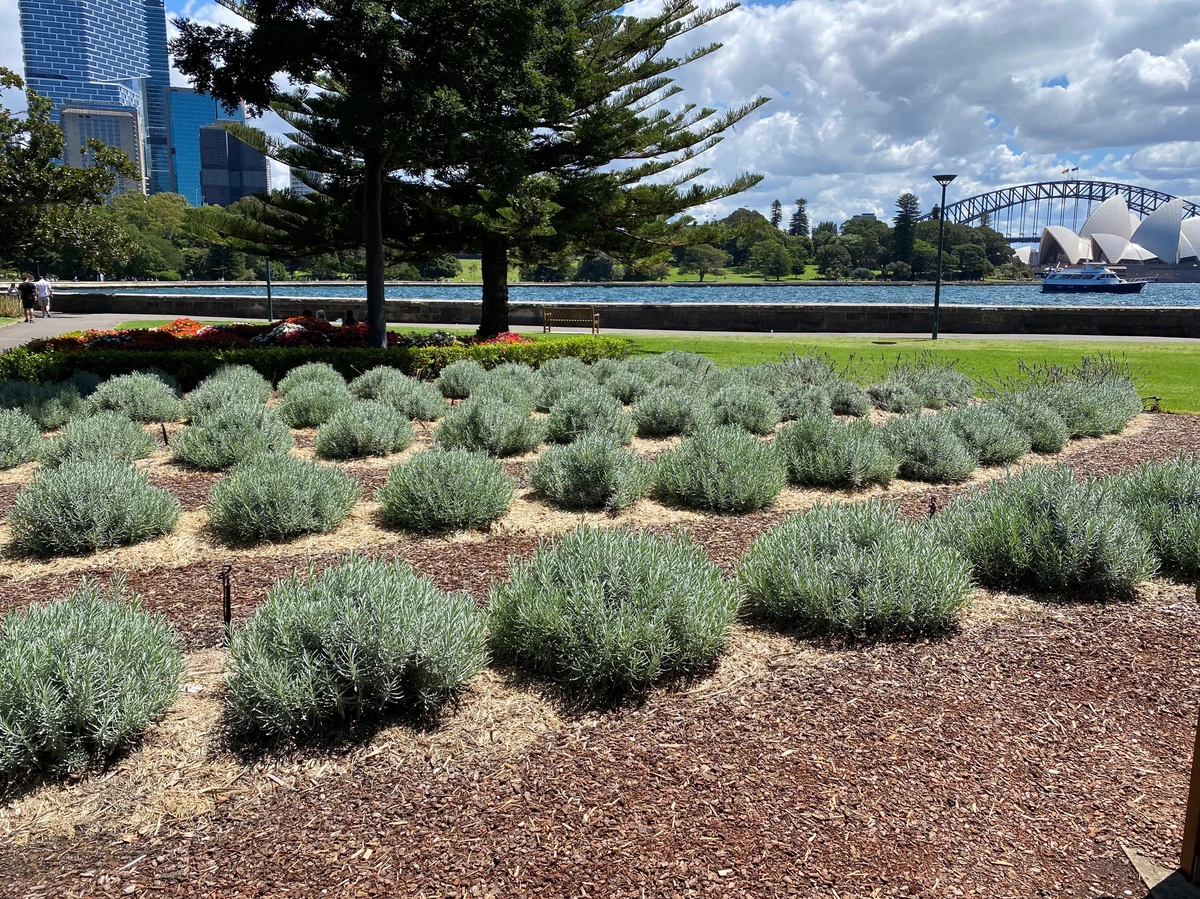
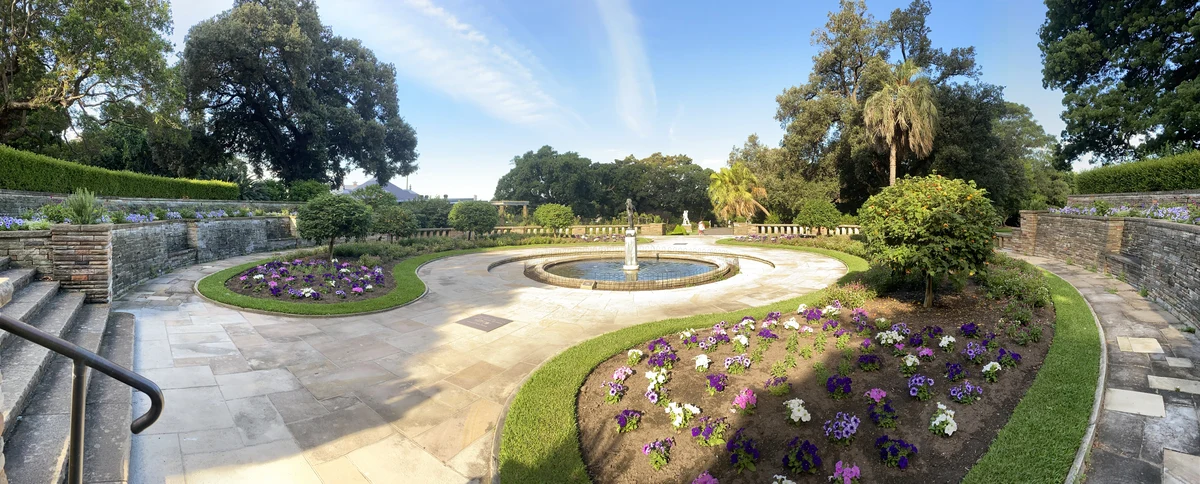
The lush green lawns of the botanical garden stretch directly toward the picturesque Sydney Harbour bay
Practical perspective of distinctive architecture and landscapes at the Royal Botanic Garden Sydney (Illustration 6)
The space of the Royal Botanic Garden Sydney and the adjacent The Domain is not merely an urban green zone, but also contains unique cultural and carved art values alongside historical depth tied to the pioneering process and shaping of identity for New South Wales specifically and Australia broadly. Having evolved over two centuries of formation and development since opening in 1816, it has preserved rich memory layers interweaving the primitive indigenous culture of the Gadigal people, the arduous labor imprints of the British colonial era, and the encyclopedic landscape planning mindset of generations of scholars and brilliant botanists. Stepping into this space, visitors immediately perceive a sublime blend of landscape architectural art imbued with the English school, stone sculpture works of high symbolic value, and the deep spiritual atmosphere of a sacred coastal land.
Most prominent and outstanding for 19th-century manual carving art here is Mrs Macquarie’s Chair, a unique historical and art monument situated right on the peninsula point facing Sydney Harbour. This work is a natural exposed sandstone slab, meticulously chiseled and polished to form a long bench with a sturdy, majestic backrest right at the water’s edge. Initiated and completed in 1810 during the reign of the then Governor of New South Wales, Major General Lachlan Macquarie, the stone chair was born from the grueling labor sweat and calloused hands of colonial convicts. Governor Macquarie’s initial intent was to create a wonderful, secluded yet breezy relaxation nook exclusively for his beloved wife, Mrs. Elizabeth Macquarie, to enjoy scenery harmonizing earth, sky, and bay. Beneath the guise of a romantic love symbol from the pioneering era, this sandstone slab also holds silent tales of human destiny during early European migration history to Australia, when tens of thousands of stone blocks and kilometers of trails were shaped by penal labor.
Transcending the value of a colonial architectural heritage, this historic stone chair is also perched on Yurong Point, a primitive sacred land holding supreme spiritual value for the Gadigal clan of the Eora language group. Before First Fleet ships dropped anchor in 1788, this place was a space for cultural activities, performing traditional rituals, clan gatherings, and profound spiritual bonding between humanity, land, forests, and rivers. Shell middens accumulated from communal meals, rock art engravings, and traces of sacred hearths once present around this peninsula are vivid testimony to an indigenous civilization that survived and harmonized with nature here for tens of thousands of years. The parallel presence of European convict labor imprints and Gadigal spiritual memory has forged an invaluable historical depth for Farm Cove and the Botanic Garden, turning this location into a living outdoor museum where past and present converse incessantly across every stone slab and tree branch.
Alongside Mrs Macquarie’s Chair, the overall architectural and landscape topology of the garden has been forged and enriched by the strategic vision of generations of talented botanists and architects. The overarching structure and key garden elements were designed and systematically planned under the talented hands of veteran directors such as Charles Moore and Joseph Maiden, who laid firm foundations for botanical research and conservation in Australia. Numerous other vital landscape components were similarly shaped and built under the rigorous supervision of renowned explorer-botanists such as Allan Cunningham, Richard Cunningham, and Carrick Chambers. Thanks to scientific thinking combined with sophisticated spatial placement art, the garden not only boasts rare plant collections displayed across vivid biological themes but also delivers breathtaking visual art vistas, where every path bend opens up a natural ink-wash painting scene featuring deep blue bay waters as a backdrop.
Adjoining the western boundary of the Royal Botanic Garden is The Domain, an expansive, verdant public space overflowing with state-level architectural heritage values. Once an area for recreation, military training, and experimental cultivation from early nation-building years, it has transformed into a green lung connecting Sydney’s bustling commercial center with a poetic coastline. Situated within this zone, right on the edge of the Botanic Garden facing the harbor bay, is Government House—a listed royal representative heritage mansion of the Governor of New South Wales. Built between 1837 and 1843 and completed in 1847, this structure is a magnificent Gothic Revival architectural masterpiece. Featuring elaborate chiseled sandstone walls, characteristic pointed arch windows, majestic spires, and precious wood interiors preserved intact across over a century and a half, Government House is not merely the official residence and workplace of the British royal representative in Australia but also a living architectural museum preserving diplomatic, political, and social narratives across historical periods.
Through historical fluctuations, this mansion also underwent special functional transitions. From 1901 to 1914, when the Commonwealth of Australia came into being, it was leased to serve as the official residence of the Governor-General of Australia prior to the completion of the capital Canberra. Afterward, from 1996 to 2011, it experienced another functional transformation, managed by the Historic Houses Trust of New South Wales and partially opened for public tours before officially being returned as the Governor’s official residence in October 2011. The presence of Government House inside the green space of the Botanic Garden and The Domain creates a majestic, solemn counterweight alongside the soft, liberated beauty of flora and harbor waves.
Strolling within the sprawling grounds of the Royal Botanic Garden Sydney today, visitors are not merely admiring the abundance of tens of thousands of plant species from worldwide origins but also losing themselves in an artistic and spiritual space full of philosophical nature. Beneath giant fig canopies, ancient ferns, or prehistoric Wollemi pines, the gurgling sounds of archaic fountains, wind rustling through foliage mingling with distant ship horns from Sydney Harbour create a serene and tranquil auditory blend. Golden Australian sunlight pierces through leaf gaps, casting shimmering light streaks across lush lawns, generating a uniquely special visual and tactile experience. Here, boundaries between natural and artificial, colonial history and indigenous culture seem to blur, leaving every far-flung traveler with profound resonances regarding a sustainable living outdoor museum enduring across centuries.
Situated in a prime location right on the eastern edge of Sydney’s central business district in New South Wales, Australia, the Royal Botanic Garden Sydney and neighboring public space The Domain open up a privileged ecological realm where botanical history across the entire Southern Hemisphere converges and radiates. Spanning 30 hectares (equivalent to 74 acres) embracing the blue water arc of Farm Cove, this garden is not merely Australia’s oldest scientific institution inaugurated in 1816 but also one of the world’s leading historically vital botanical establishments. Most precious to locals and international tourists alike is the open policy welcoming the public every day of the year with completely free admission, generating a democratic open space where anyone can access pristine fresh air, peak scientific values, and breathtaking natural scenery without encountering any economic barriers.
The tourism rhythm at the Royal Botanic Garden Sydney unfolds with a unique cadence, interweaving the hustle of a premier modern global metropolis with the calm, solemn demeanor of a royal heritage spanning over two centuries. Stepping past historical welcome gates, visitors are instantly enveloped in a tranquil space where the hurried pulse of Sydney’s financial center recedes, yielding to absolute relaxation. The sensory experience here is a delicate blend of nature, where hearing is soothed by native bird songs chirping across towering ancient trees, smell is intoxicated by rich fragrances from thousands of temperate and tropical flowers blooming year-round, while sight is rewarded with world-class panoramas as expansive skies embrace Sydney Harbour, the famous Sydney Harbour Bridge, and the iconic Sydney Opera House rising majestically from every angle of the bay-jutting land strip.
Besides landscape and ecological values, this space is deeply bound to the historical, architectural, and political currents of New South Wales, evidenced by Government House located within adjacent grounds. Built between 1837 and 1843 and completed in 1847 in the Gothic Revival architectural style, this heritage mansion is the official vice-regal seat of the Governor of New South Wales, witnessing countless historical shifts from the colonial era until Australia became a modern independent nation. The presence of Government House, combined with overall landscape structures created by brilliant botanists such as Charles Moore, Joseph Maiden, alongside early contributions from Allan Cunningham, Richard Cunningham, and Carrick Chambers, has transformed this location into a living outdoor museum. Strolling along shaded paths, visitors perceive clear shifts of time, where royal past and communal present blend seamlessly and solemnly.
During major annual festivals, the Royal Botanic Garden Sydney frequently transforms magically, shedding daytime tranquility to don brilliant attire as a grand outdoor performing arts stage. International-scale cultural events like Vivid Sydney—Festival of Light, Music and Ideas—turn lawns, ponds, and heritage trees into breathtaking light and visual art exhibitions, drawing tens of thousands of locals and international tourists each night. Under the talented hands of lighting artists and advanced digital technology, giant trees are brilliantly illuminated, contemporary art sculptures lurk among flower beds, and Farm Cove waters reflect myriad colorful light rays, establishing a magical space where botanical science, visual arts, and cultural heritage powerfully intersect.
The local lifestyle rhythm at the garden bears strong colors of modern urban living while remaining deeply respectful and bound to nature. For Sydney residents, the Botanic Garden and open Domain space are not merely tourist sights but have become indispensable parts of daily life. From early morning rays illuminating lush lawns, this place echoes with footsteps of morning joggers, yoga groups meditating under shade trees of rare heritage species, or sports enthusiasts enjoying fresh air right beside the coast. During late afternoons or weekends, families and friends gather for outdoor picnics on meticulously tended lawns, reading books under cool shade, or leisurely enjoying authentic Australian coffee at luxury cafes hidden within greenery.
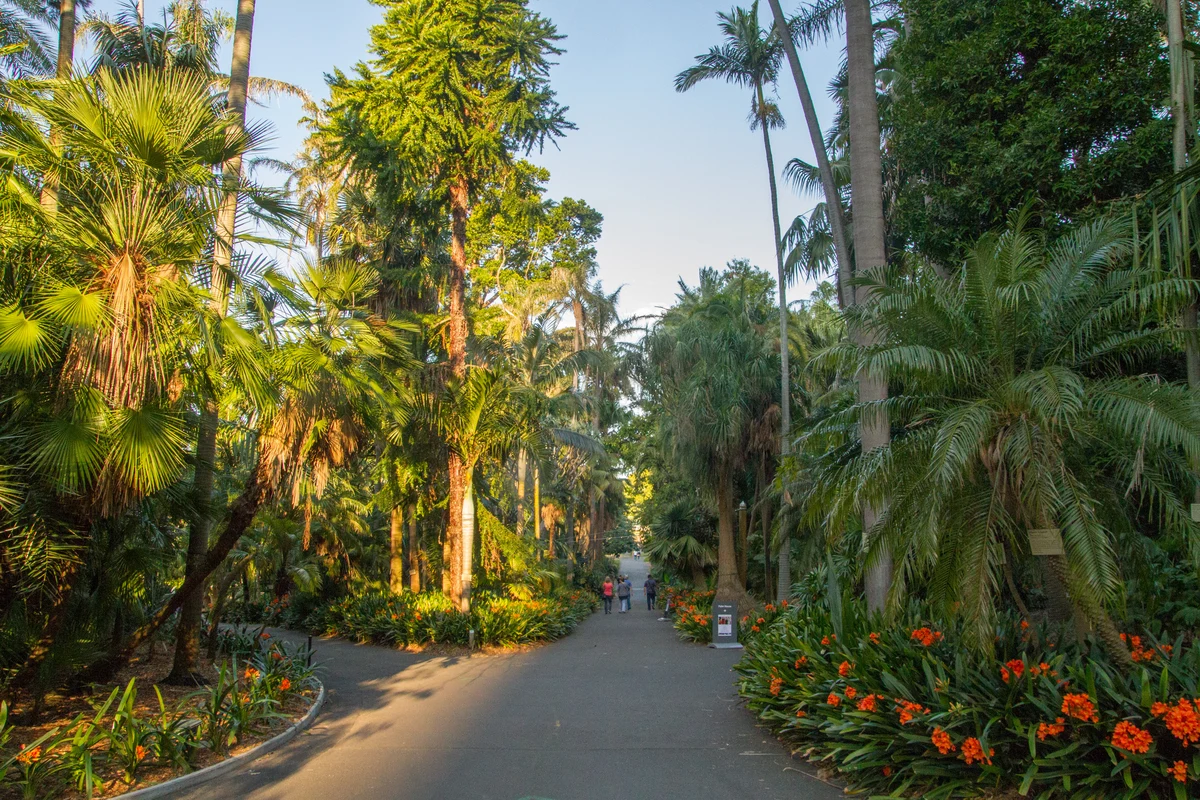
Practical perspective of distinctive architecture and landscapes at the Royal Botanic Garden Sydney (Illustration 7)
International tourism experiences at the Royal Botanic Garden Sydney thus transcend standard botanical tours. Visitors come not only to admire rich plant collections, spanning unique native Australian species to botanical wonders worldwide, but also to immerse in leisurely rhythms—a rare peaceful pause in the heart of one of the planet’s busiest financial and commercial hubs. Transit and access to the garden are remarkably convenient thanks to strategic positioning bordered by the Cahill Expressway to the south and west, Macquarie Street to the northwest, Art Gallery Road to the east, and Sydney Harbour to the north, allowing travelers to effortlessly combine botanical explorations with visits to the Sydney Opera House, the historic Rocks district, or bustling downtown shopping districts.
Every step along winding trails at the Royal Botanic Garden Sydney delivers sacred, profound connections between humanity and the expansive southern hemisphere natural world. From the renowned viewpoint of Mrs Macquarie’s Chair—where Governor Lachlan Macquarie’s wife sat watching English ships arrive in port during the 19th century—to humid fern gardens, ancient palm groves, or fragrant rose gardens, every corner whispers tales of life, resilience, and reverence toward nature. The flawless reconciliation of rich historical heritage, majestic natural scenery, friendly public open policies, and soulful local lifestyles defines the Royal Botanic Garden Sydney as an immutable cultural icon, an unmissable destination for anyone yearning to fully comprehend the core and supreme beauty of Australia.
Located on the eastern edge of Sydney’s central business district, the Royal Botanic Garden Sydney possesses absolute geographical advantages adjoining restaurants, cafes, and bustling culinary districts of Australia, connecting directly with architectural heritage and urban spaces bearing 19th-century historical imprints. Spanning 30 hectares at Farm Cove, the garden is not merely Australia’s oldest scientific institution since its 1816 founding but also a cultural intersection where modern global urban life blends deeply with global botanical heritage. Local gastronomy in surrounding districts is a polychromatic canvas, testifying to refined fusions of fresh seafood caught directly from breezy Tasman seas, British traditional food tones from the pioneering era, and modern culinary styles carrying contemporary Sydney multi-cultural breaths.
Strolling out from gates adjoining Macquarie Street or The Domain—the historic public space added to the New South Wales State Heritage Register alongside the botanical garden on April 2, 1999—visitors easily find renowned Australian-style cafes, icons of native coffee culture. These cafes serve rich flat white coffees featuring flawless velvety milk foam, paired with classic breakfast dishes such as whole-grain toast topped with smashed avocado, poached eggs, and native nutritious seeds. Coffee culture here is no longer a mere morning consumption habit but has evolved into a social ritual, reflecting lifestyles bound to nature and health consciousness among Sydney residents. Roasted coffee bean aromas mingling with sea breezes from Sydney Harbour forge unforgettable sensory experiences for anyone setting foot on this land.
Traditional culinary customs linked to the Royal Botanic Garden Sydney and surrounding regions carry strong community traits and reverence for natural landscapes. Outdoor picnic traditions on lush lawns facing breezy Sydney Harbour waters, looking toward the iconic Sydney Opera House and grand Sydney Harbour Bridge, date back to colonial eras when the Governor of New South Wales and upper classes sought relaxation within sprawling public parks. This habit persists across generations, where families and visitors gather around elaborately prepared picnic baskets comprising artisanal cheeses, premium cold cuts, artisan bread, and seasonal fresh fruits. This experience is elevated manifold by majestic natural backdrops, where historical architectural works such as Government House—the Gothic Revival viceregal mansion built from 1837 to 1843 under talented architects—stand solemnly beside ancient trees painstakingly cultivated by Charles Moore and Joseph Maiden.
Alongside traditional picnic styles, surrounding garden districts converge multiple international standard restaurants where Australia’s leading chefs pioneer “Modern Australian” culinary movements. Within these culinary spaces, ancestral recipes are restructured through creative lenses, harmoniously combining herbal components, spices, and unique native ingredients from the Australasian continent. Diners savor refined dishes garnished with Tasmanian mountain pepper yielding characteristic pungent heat, Davidson plums with tart profiles, or finger limes featuring juice vesicles bursting in the mouth, delivering explosive flavors of native rainforests. Chefs also fully leverage abundant surrounding seafood supplies, from cold-water rock lobsters, local groupers to fresh oysters harvested from adjacent estuaries, prepared via methods maximizing original flavor respect.
Culinary experiences around the Royal Botanic Garden thus transcend tasting ordinary foods, rising into multi-dimensional cultural journeys. Every dish, from 19th-century British-influenced meat pies to contemporary culinary creations incorporating native indigenous produce, narrates profound tales regarding Australia’s bountiful nature, the formation history of a bustling port city, and continuous human creative spirit here. As dusk falls over Sydney Harbour waters, warm golden illumination reflects upon surrounding heritage works across The Domain and the garden, transforming culinary spaces into elegant stages where palates, sights, and smells sublimate amid historical, natural, and refined artistic lifestyles of the land Down Under.
To fully understand and experience the Royal Botanic Garden Sydney, a botanical landscape masterpiece and Australia’s oldest scientific institution opened in 1816, preparing a methodical, scientific excursion plan is prerequisite. Spanning a vast 30 hectares (74 acres) at Farm Cove on the eastern edge of the Sydney central business district (Sydney CBD), this heritage green space embraces harbor-facing viewpoints. Exploring this heritage-listed facility requires travelers not only to grasp cultural etiquette and access methods but also comprehend weather rhythms and golden annual seasons to fully savor every intersection of nature, history, and indigenous architecture.
Regarding ideal seasonal timing, the Royal Botanic Garden Sydney possesses shifting beauty across four distinct southern hemisphere seasons, opening independent visual and emotional experiences. Spring, spanning September through November, is widely agreed upon by botanical researchers and international travelers as golden visitation windows. Sydney weather turns mild, warm yet retaining brisk refreshing morning air, featuring average temperatures between 11°C and 23°C, cloudless blue skies, and golden sunlight stretching across plush lawns. This period witnesses colorful flower bursts across rare plants, from azalea beds, classical roses in The Rose Garden to hundreds of native blooming trees scenting winding paths beneath ancient tree shades crafted by visionary landscape designers Charles Moore and Joseph Maiden in the 19th century.
Besides spring, autumn from March to May represents an equally exquisite choice for connoisseurs of leisure travel art. When harsh summer heat yields to sweet chilly breezes, deciduous trees shift from green to golden hues, fiery oranges, and deep reds, forging nostalgic European-inspired canvases within modern port metropolises. Autumn temperatures suit hiking and gentle picnics on velvety lawns without exhaustion. Meanwhile, summer (December to February) brings vibrant outdoor arts energies around adjacent The Domain, though visitors should pack rigorous sun protection given Australian UV radiation peaks. Winter (June to August) welcomes travelers with rare tranquility, ideal for contemplative seekers looking at misty Farm Cove waters and exploring colonial scientific institutional histories.
Regarding transit, accessing the Royal Botanic Garden Sydney is convenient given its core city location and world-class public transit. The garden is bounded by Cahill Expressway south and west, Macquarie Street northwest, Art Gallery Road east, and Sydney Harbour north. International travelers utilizing Sydney Trains subways alight at Circular Quay or St James stations. From Circular Quay, visitors walk ten minutes through tree-lined Circular Quay spaces past the Sydney Opera House directly into the garden’s northern main gate. Starting from St James, visitors traverse historic The Domain, passing Gothic Revival heritage buildings and Government House built between 1837 and 1843, a sturdy sandstone monument listed on the New South Wales State Heritage Register.
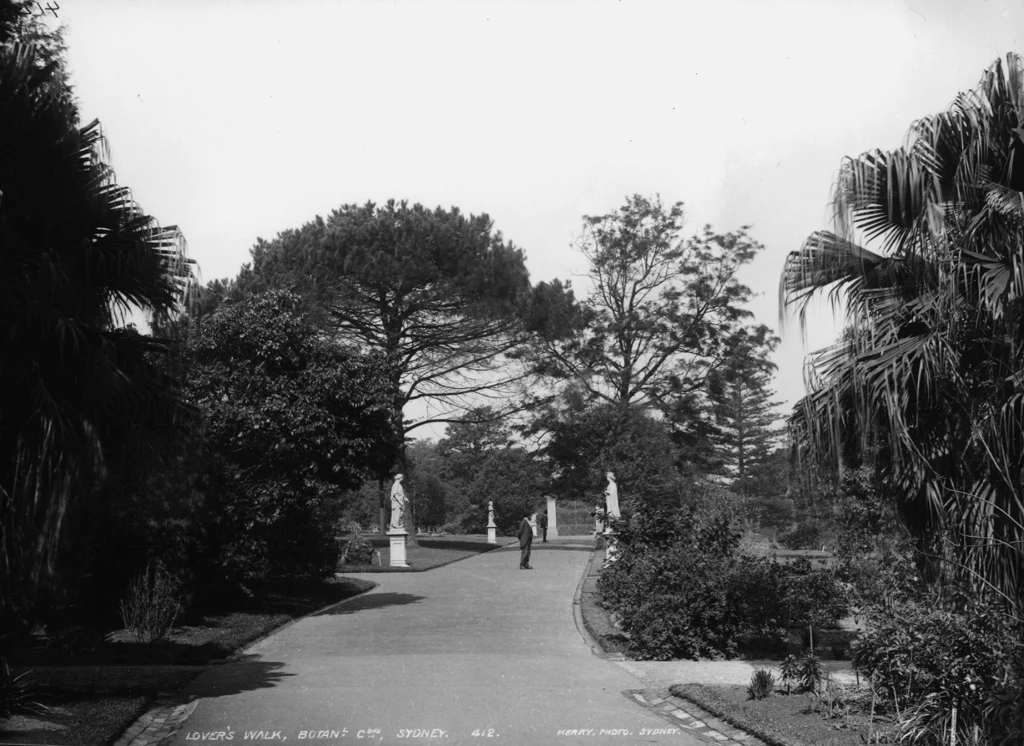
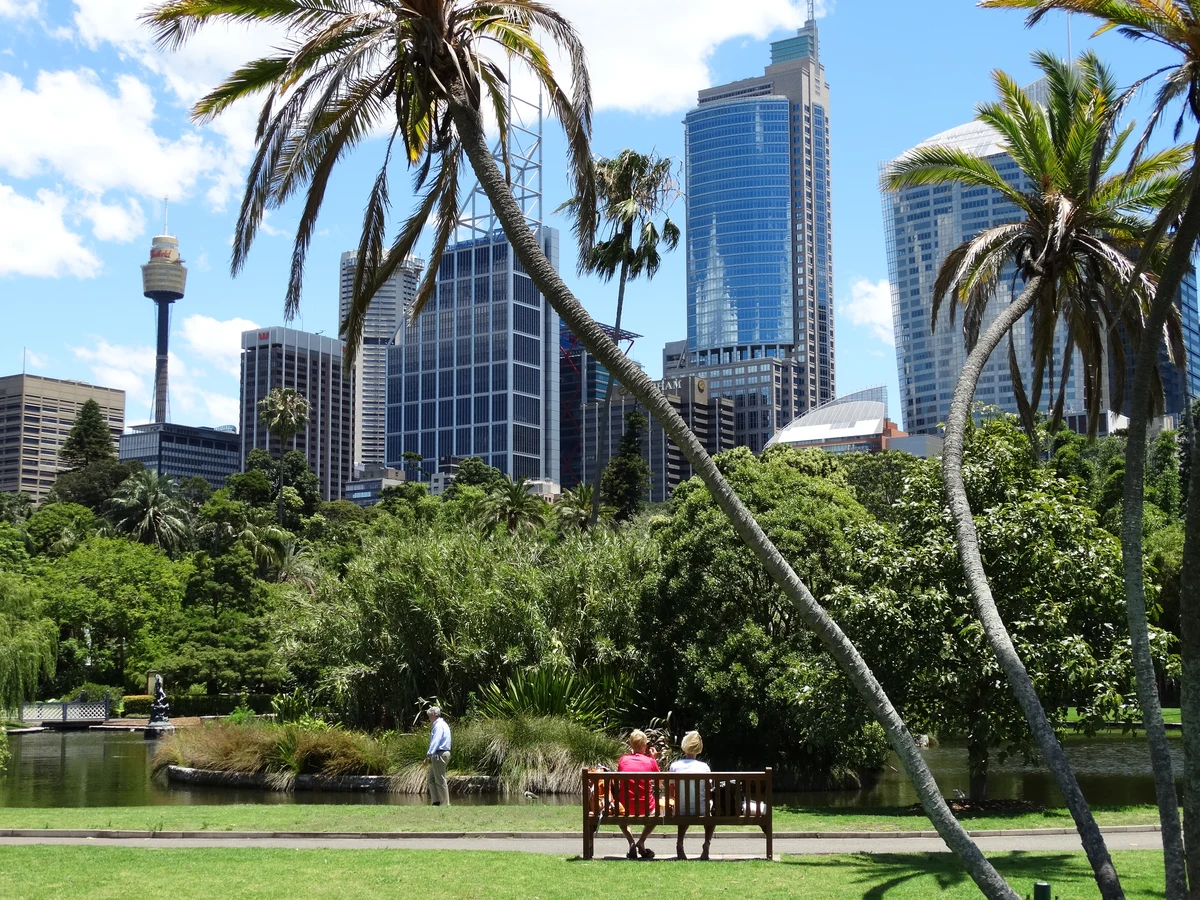
Practical perspective of distinctive architecture and landscapes at the Royal Botanic Garden Sydney (Illustration 8)
Classic scenic viewpoint from Mrs Macquarie’s Chair overlooking the Opera House and Harbour Bridge
Besides subways, public bus networks and Sydney Ferries offer exceptional harbor-view transit experiences. Ferries docking at Circular Quay or Wharves 2 and 3 enable harbor-wide panoramas before stepping onto lush botanical lawns. A wonderful boon for global visitors visiting this international destination is that the Royal Botanic Garden and The Domain park open 365 days annually, including holidays, with completely free admission. This free-admission policy reflects New South Wales’ profound humanistic vision of sharing natural and cultural heritage with global publics, turning this into an open community space where all social strata and international travelers find natural origins amid bustling cities.
However, to preserve fragile ecological values and precious heritage, visitors crossing welcome gates must adhere strictly to cultural etiquette and environmental rules. The garden is not merely an amusement park but a leading southern hemisphere botanical research agency holding priceless specimens and biological experiments. Visitors must not trample dedicated research flora, pluck branches, pick flowers, or harvest natural specimens without management approval. Maintaining cleanliness via proper waste disposal, recycling separation, and avoiding single-use plastics represents minimal ethical duty.
The Calyx greenhouse displaying unique floral and tropical plant artworks
Furthermore, bordering heritage sites and native communities mandates respectful shared spaces, keeping conversation volumes moderate to protect wildlife and rare birds dwelling freely on ancient trees. Night camping, campfires, unpermitted drones, or pets in sensitive zones are prohibited to safeguard ecosystems. Respecting indigenous cultures by learning about the Gadigal people of the Eora nation—traditional custodians prior to European arrival—transforms standard tours into profound cultural exchanges.
To optimize expeditions, practical tips from veteran international travel experts act as golden keys. First, given combined garden and Domain acreage spans dozens of hectares with crisscrossing trails, walking extensive distances is guaranteed; supportive athletic footwear is required to prevent blisters. Australian sunlight is famously intense; high-SPF sunscreen reapplied bi-hourly, wide-brimmed hats, UV sunglasses, and compact umbrellas are indispensable.
Centuries-old ancient trees provide peaceful shade in the heart of the port city
Though public drinking water and eco-cafes exist inside, carrying large personal water bottles sustains energy. A priceless tip for photographers is scheduling arrivals at Mrs Macquarie’s Chair during sunset. Hewn directly from sandstone in 1810 by Governor Lachlan Macquarie for his wife Elizabeth, this historic chair offers world-class panoramas.
As evening sun angles amber-red hues across calm harbor waters, magnificent vistas of the Sydney Opera House with sparkling white sails beside the towering Sydney Harbour Bridge emerge spectacularly. Sunset light filtering through ancient tree branches over harbor waters creates sensory impressions, deeply engraving timeless cultural-natural icons.
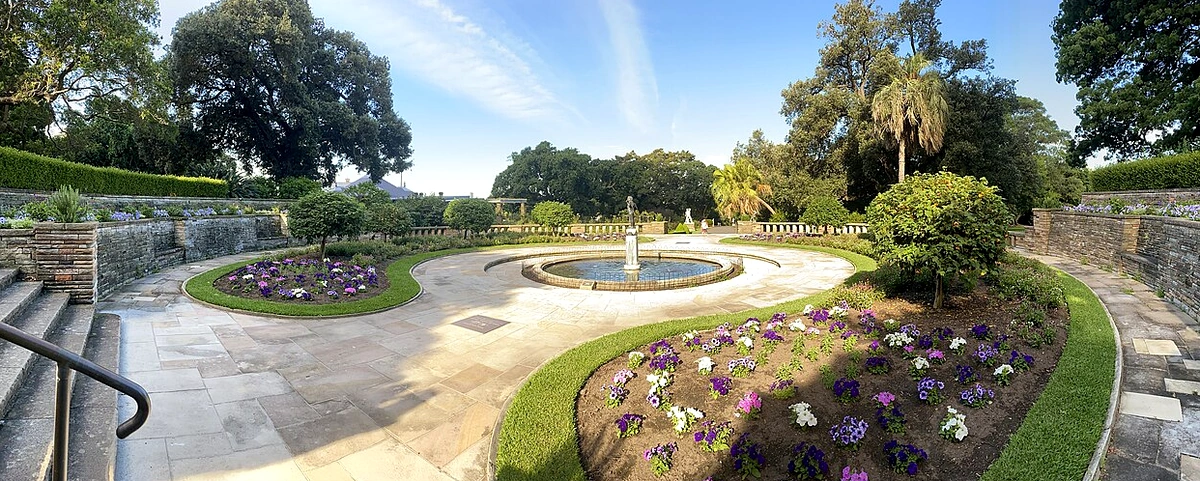
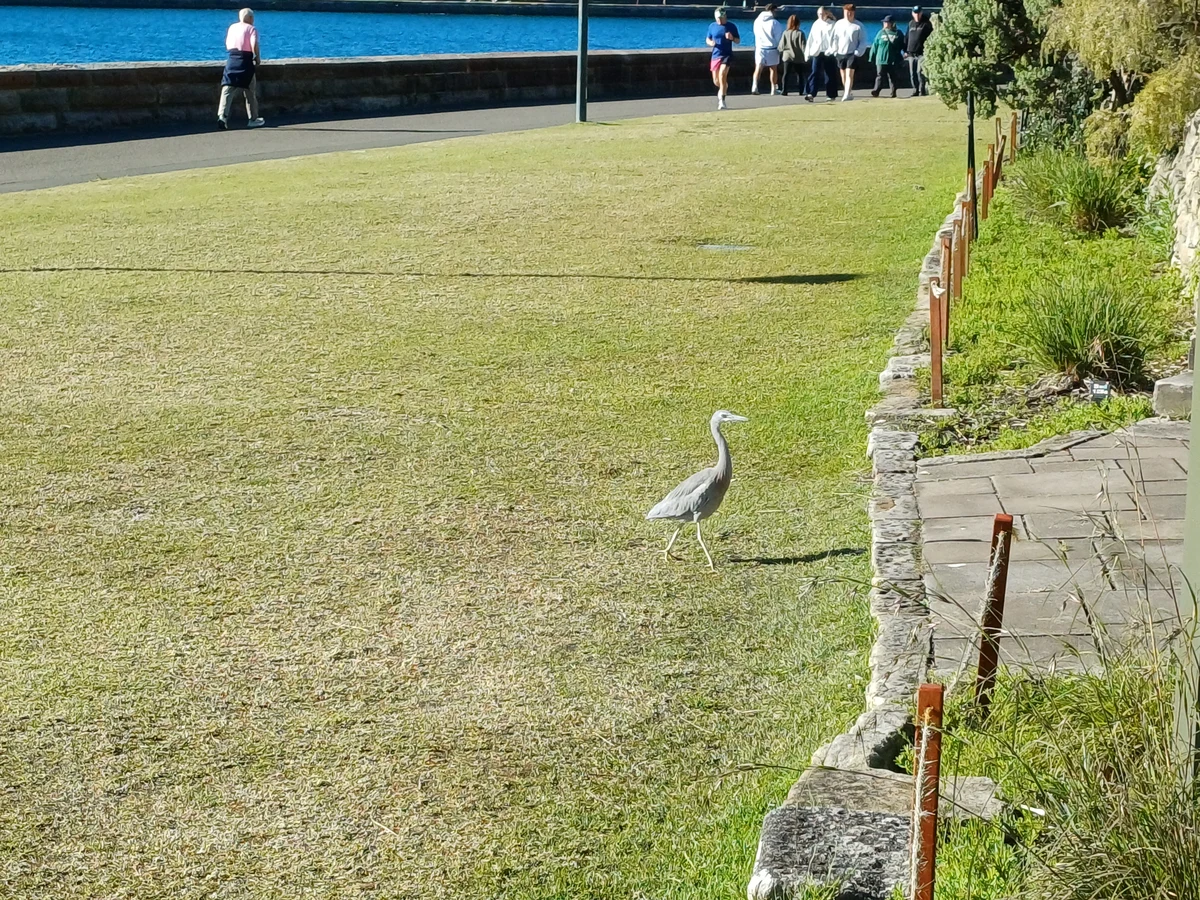
Harmonious natural ecological spaces dwelling numerous Australian native birds and animals
To experience this journey seamlessly with a local guide, you can refer to the Germany – Austria – Hungary – Czechia 9D8N Tour with its pre-arranged itinerary.