Located at 24.5333 degrees north latitude and 54.3928 degrees east longitude, the Louvre Abu Dhabi occupies an exceptionally prime geographical position on Saadiyat Island, a land master-planned to become the pinnacle art and cultural center of the Emirate of Abu Dhabi, United Arab Emirates. This island is situated not far from the downtown commercial district of the capital, distinguished by its long coastline embracing the turquoise waters of the Persian Gulf. In terms of landscape, the Louvre Abu Dhabi is not simply an isolated architectural structure but part of a coastal ecosystem blending golden sand deserts with the vast ocean. This location establishes a unique microclimatic ecosystem where sea breezes mingle with the year-round brilliant sunshine of the Arabian Peninsula, providing a flawless natural backdrop for a global-scale artificial marvel. Choosing Saadiyat Island as the museum’s home reflects the strategic vision of Abu Dhabi’s leadership in transforming a pristine coastal strip into a cultural rendezvous bridging East and West, attracting high-end travel enthusiasts from across the globe to admire and experience.
The genesis of the Louvre Abu Dhabi is the result of a landmark intergovernmental agreement signed between the government of Abu Dhabi and France, marking a new chapter in global cultural diplomacy. This project reflects Abu Dhabi’s fervent aspiration to transition its economy from a reliance on fossil fuels toward a knowledge-based, creative economy centered on sustainable cultural tourism. Realizing this vision required decades of meticulous planning, the participation of the world’s leading art historians, and immense financial resources to build a universal museum. Unlike traditional museums that solely display the heritage of a single nation or civilization, the Louvre Abu Dhabi is positioned as the first universal museum in the Arab world. The core philosophy behind its collection is to shatter traditional geographical and chronological boundaries, replacing them with a dialogue where artifacts from different continents and historical eras are juxtaposed. Through this, the museum narrates the shared story of humanity, emphasizing the invisible yet sturdy bonds linking cultures from prehistory to contemporary art, affirming the spirit of openness, tolerance, and cross-cultural dialogue that Abu Dhabi consistently pursues.
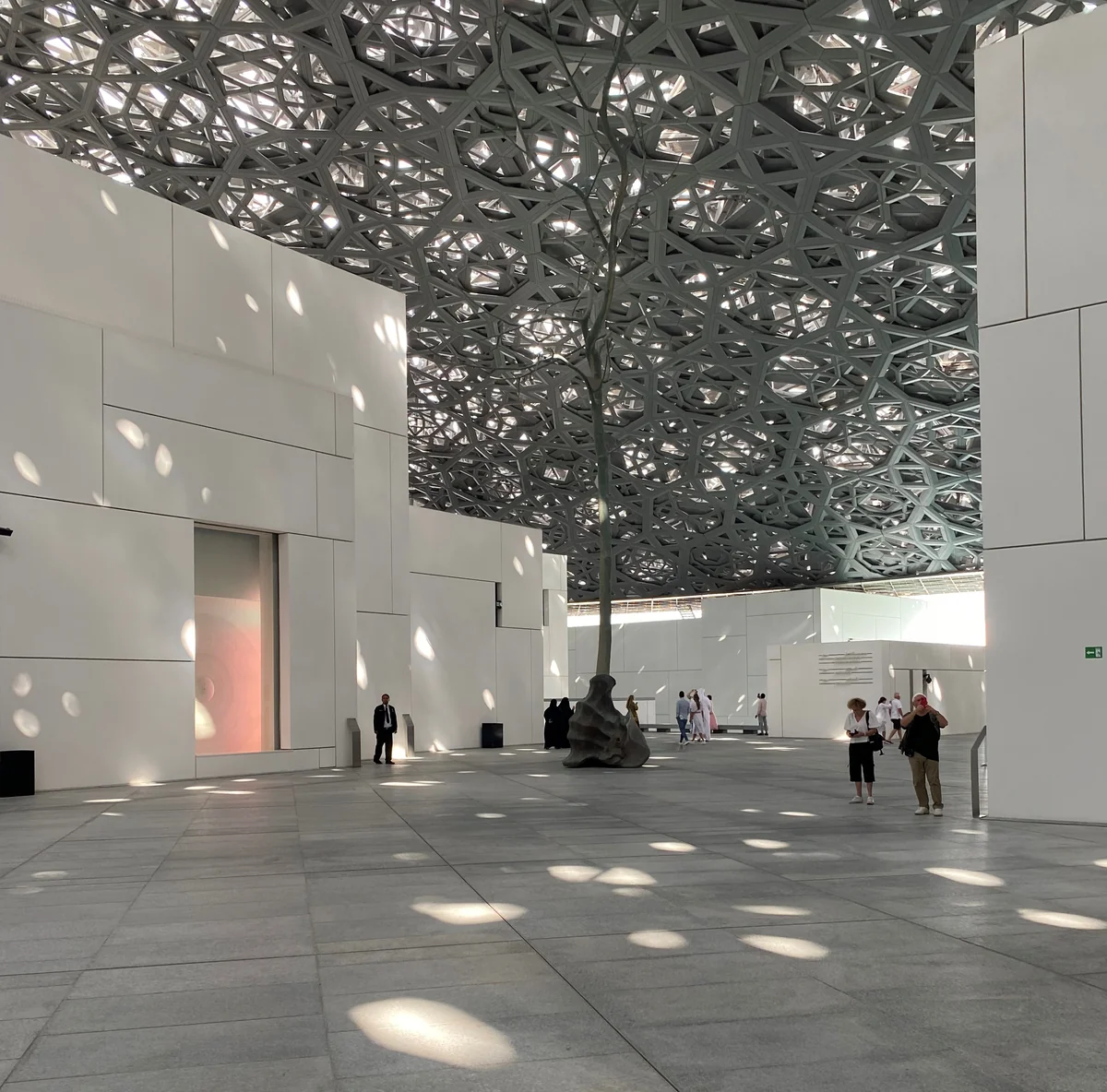
The unique dome architecture mimicking traditional palm fronds at the Louvre Abu Dhabi museum.
Designed by visionary French architect Jean Nouvel, a laureate of the prestigious Pritzker Architecture Prize, the Louvre Abu Dhabi building is an engineering and aesthetic marvel defying standard conventions. Drawing inspiration from traditional Arabian architecture—particularly the imagery of palace domes, traditional domed marketplaces, and shaded oases—Jean Nouvel created a “museum city” floating upon the water. The most brilliant and iconic highlight of the complex is its colossal dome, spanning 180 meters in diameter and weighing nearly 7,000 tons (equivalent to the weight of the Eiffel Tower) yet feeling as light as a feather thanks to its intricate structure. This dome is constructed from eight layers of aluminum and stainless steel alloys, interwoven in a complex geometric pattern comprising nearly 8,000 stars of varying sizes and angles. When the harsh desert sunlight filters through these interlaced layers, it creates a breathtaking optical phenomenon known as the “Rain of Light,” where thousands of moving rays dance gracefully across pristine white walls and the tranquil waters below, delivering a deeply sacred, serene, and meditative visual experience to every visitor stepping foot inside.
The Louvre Abu Dhabi transcends the concept of a conventional art exhibition space to become a sacred symbol of harmony and dialogue between East and West, between Islam and world cultures. The presence of the Louvre name on the shores of the Persian Gulf is not merely a franchised cultural brand, but a commitment to sharing universal human heritage. The museum serves as a bridge connecting a glorious past with a digital future, where core humanistic values are celebrated across thousands of years of history. The galleries are designed as a seamless flow guiding visitors through various epochs: from prehistoric stone tools and divine statues from ancient Mesopotamia and Egypt, to ancient handwritten Qur’an folios on precious parchment, and culminating in masterpieces by European masters such as Leonardo da Vinci, Vincent van Gogh, Claude Monet, alongside vanguard contemporary art pieces. Through this curation, the museum conveys the profound message that humanity—despite differences in skin color, language, or creed—forever shares a common origin of creativity and an aspiration toward eternal beauty.
The magical “Rain of Light” visual effect filtering through the multi-layered metallic dome structure.
To fully savor the refined beauty of the Louvre Abu Dhabi, choosing the right time to visit plays a vital role for discerning cultural explorers. The period from November of the previous year to April of the following year is considered the golden window, when the weather in Abu Dhabi is extremely pleasant, skies are clear, and temperatures are moderate, making it ideal to combine outdoor sightseeing on Saadiyat Island. To bypass crowded peak hours, visitors should schedule morning visits right as the museum opens or choose a late afternoon slot near sunset to witness the colossal dome reflecting the brilliant golden hues of the setting sun over the Persian Gulf. Regarding transportation, from downtown Abu Dhabi, visitors can easily hire a luxury chauffeured car or use premium taxi services to reach Saadiyat Island within a 15-minute drive from the Corniche area. For those departing from Dubai, the car journey via the Sheikh Zayed Highway takes just over an hour across some of the world’s most modern roadways before setting foot in this realm of art.
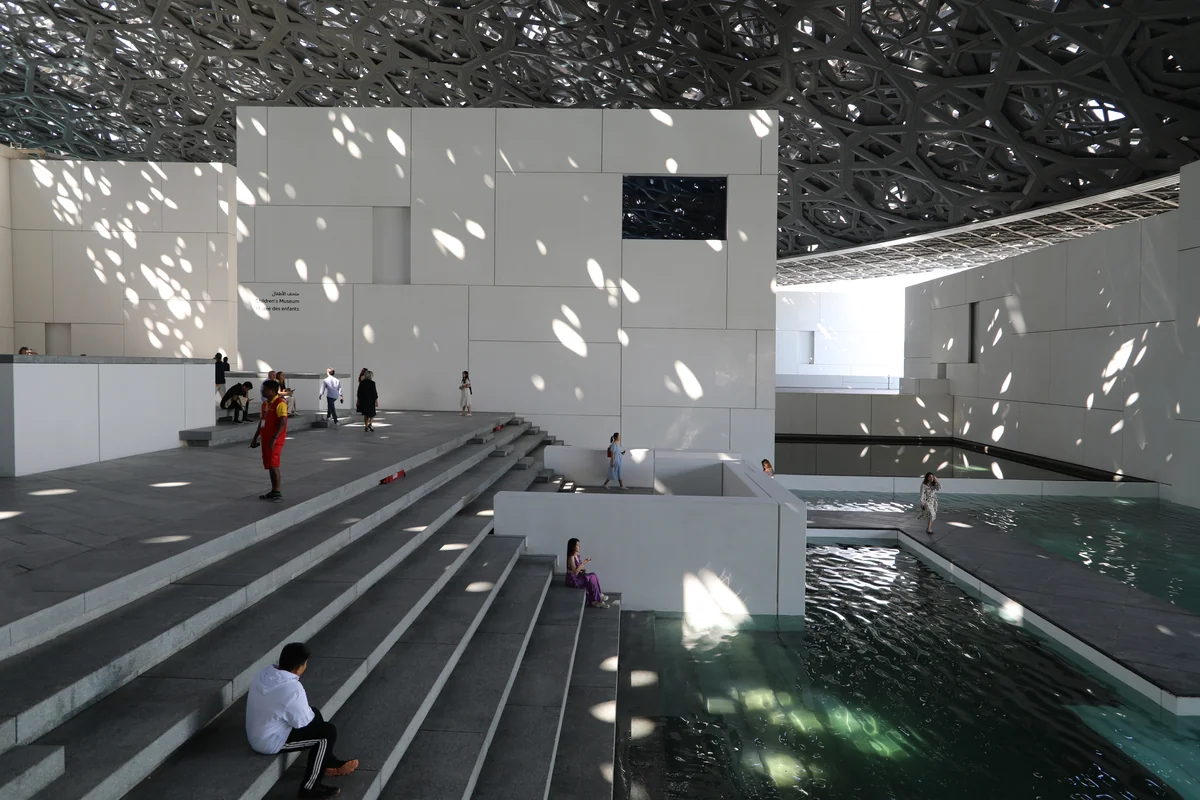
Pristine white exhibition blocks extending out into the azure sea waters of Saadiyat Island.
Every vantage point at the Louvre Abu Dhabi is calculated to become a flawless artistic frame, satisfying the most sophisticated travel connoisseurs. The classic and most sought-after photo spot is the outdoor promenade located directly beneath the colossal dome, where sunlight piercing through gaps creates shimmering light spots dancing upon the water and white granite flooring. Standing here, visitors can capture the exquisite harmony between the modern geometric structure of the dome and the distant marine horizon. Another iconic photo angle is the spiral staircase inside the galleries, featuring a minimalist, refined design that accentuates the majesty of surrounding rare historical artifacts. Furthermore, kayaking around the museum’s base at sunset is an exclusive activity not to be missed for anyone wishing to view the entire complex from the water, fully feeling the grandeur and fluidity of this floating architecture amidst the ocean.
The cultural exploration journey at the Louvre Abu Dhabi would feel incomplete without world-class culinary experiences served right within the heart of the museum. The main restaurant, blending French flair with refined Middle Eastern cuisine inside the museum complex, offers diners supreme meals with direct views facing the azure Persian Gulf. Talented chefs skillfully combine signature fresh Gulf ingredients—such as catch-of-the-day seafood and passionate oriental spices—with standard French haute cuisine techniques. Additionally, the Art Lounge rooftop café is the perfect stopover to enjoy refined afternoon tea or a refreshing tropical fruit drink while taking in panoramic views of the dome architecture under magical nocturnal lighting. Designed with luxury, tranquility, and elegance, this space is where art collectors, international travelers, and intellectuals gather to exchange profound perspectives on culture and art following hours of contemplating human masterpieces.
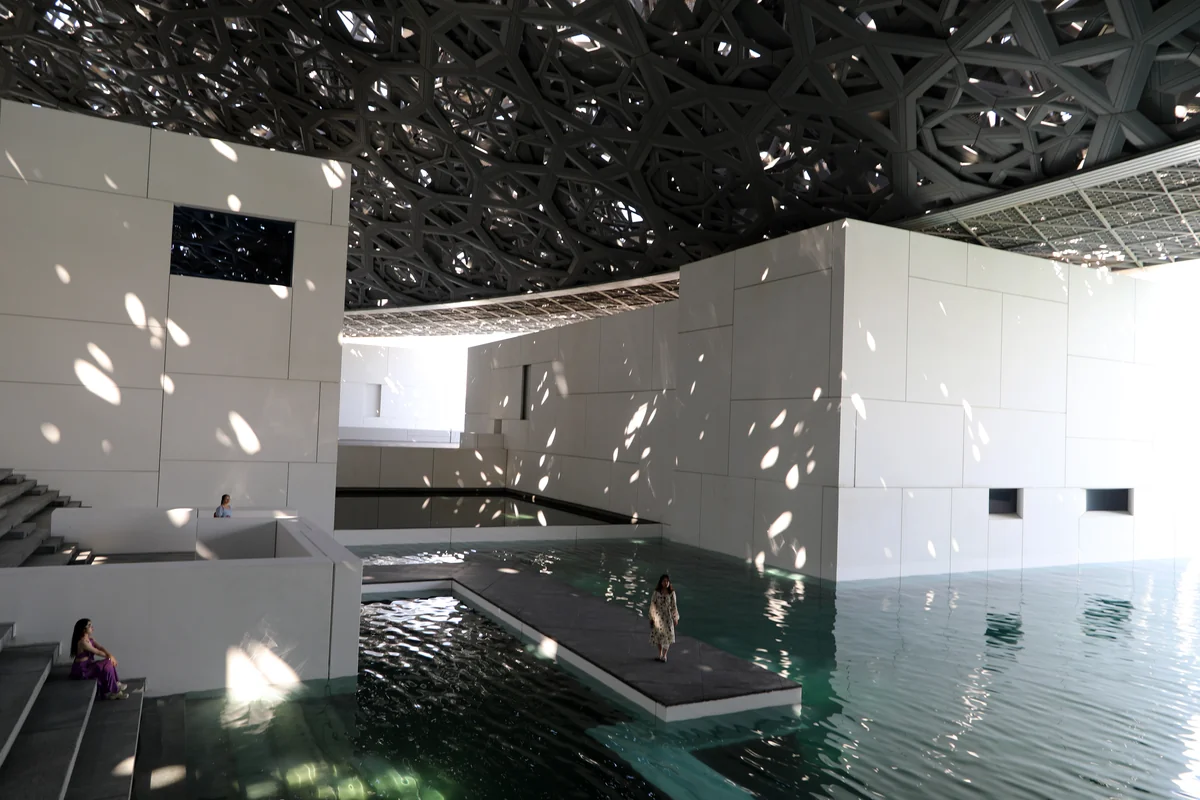
An outdoor art space in absolute harmony between contemporary architecture and the water surface.
When stepping into the solemn and internationally scaled space of the Louvre Abu Dhabi, adhering to cultural norms and etiquette signifies respect for the host community and human heritage. Although the United Arab Emirates is an open and modern nation, Abu Dhabi maintains deep traditional Islamic values. Therefore, visitors touring the museum are encouraged to dress politely and gracefully, with shoulders and knees covered modestly to suit an academic public environment. Personal mobile phone photography and casual travel cameras are permitted in most public areas and galleries; however, using flash, professional tripods, or commercial filming requires prior permission and special permits from museum management to protect artworks sensitive to light. Such understanding, courtesy, and respect for these principles will ensure your journey becomes fulfilling and profound, leaving wonderful civilized impressions at one of the greatest art centers of the contemporary world.
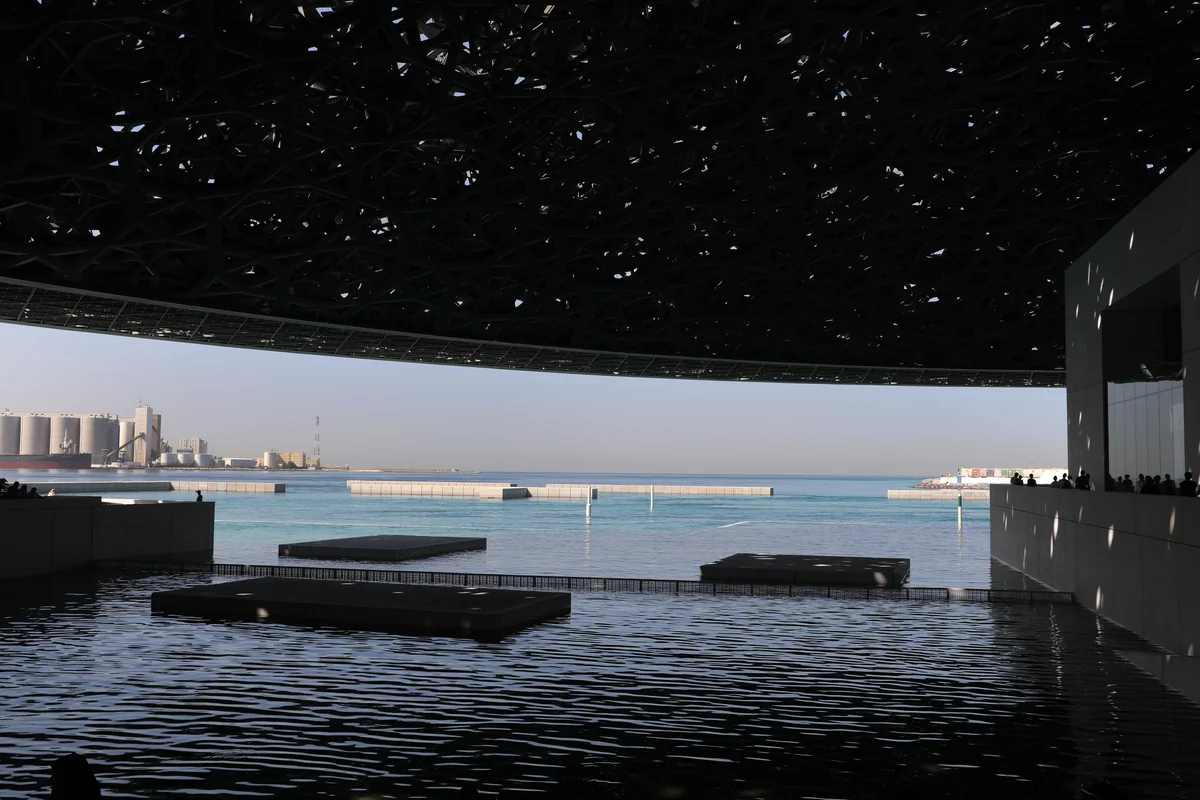
Panoramic view of the Louvre Abu Dhabi sparkling in the Persian Gulf sunset.
The magical “Rain of Light” effect filtering through the colossal metallic dome at the Louvre Abu Dhabi is not simply a visual architectural marvel, but a profound humanistic message regarding the interconnection among human civilizations. Set amidst the azure sea waters of Saadiyat Island, the museum offers an unparalleled serene and expansive space for artistic contemplation.
Visit the Louvre Museum and Middle Eastern architectural masterpieces on the Dubai – Abu Dhabi Tour Package.