In the heart of the magnificent capital city of Abu Dhabi in the United Arab Emirates—where the intersection of millennia-old traditions and a visionary future creates dazzling man-made wonders—Qasr Al Watan emerges as the supreme symbol of power, art, and knowledge. Far more than a presidential palace serving high-level diplomatic protocols and meetings of the federal supreme council, this structure also opens its doors to welcome the world into the inner sanctum of contemporary Arabian culture. As a cultural scholar and international geographer, studying Qasr Al Watan is not merely about admiring a priceless architectural work, but a journey to decode the philosophy of space, where every stone and every dome carries the soul of a nation rising from the desert to touch the stars.
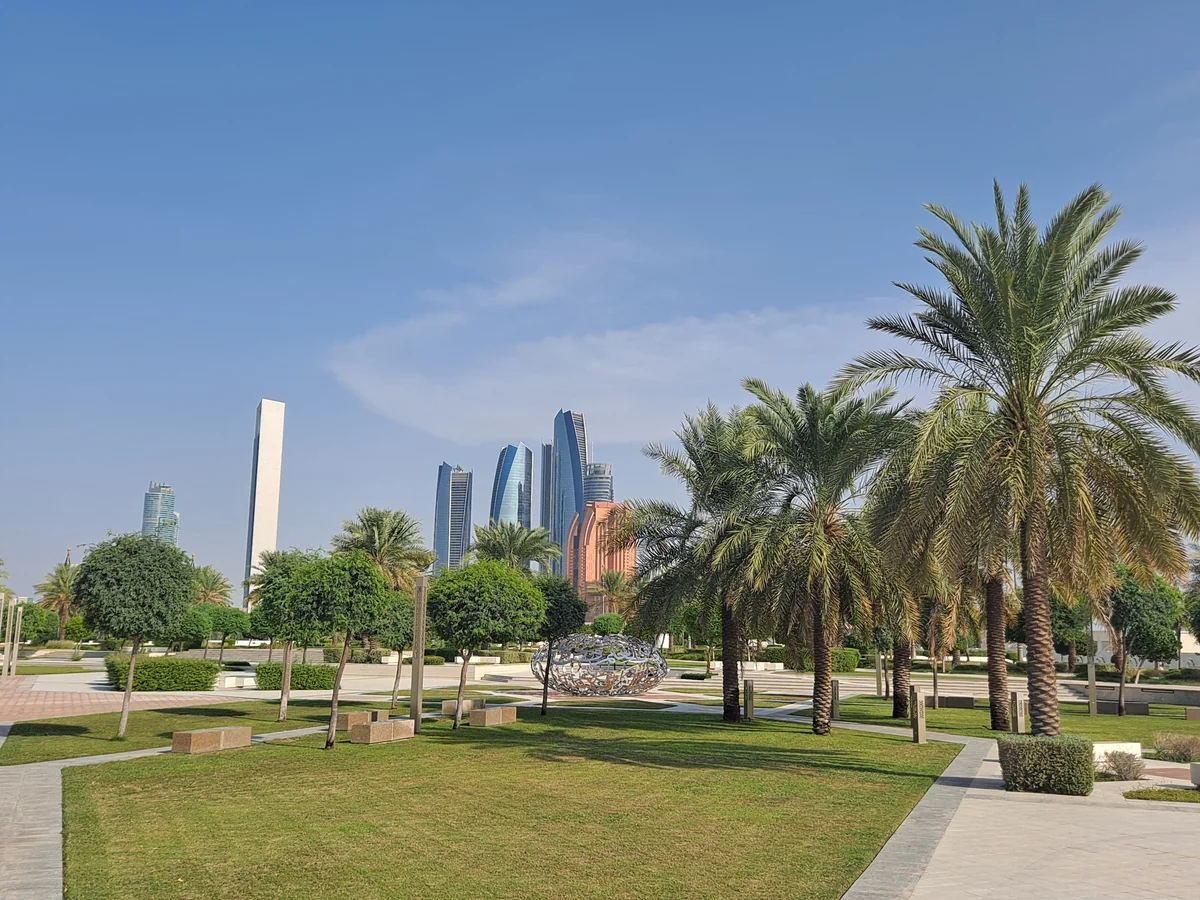
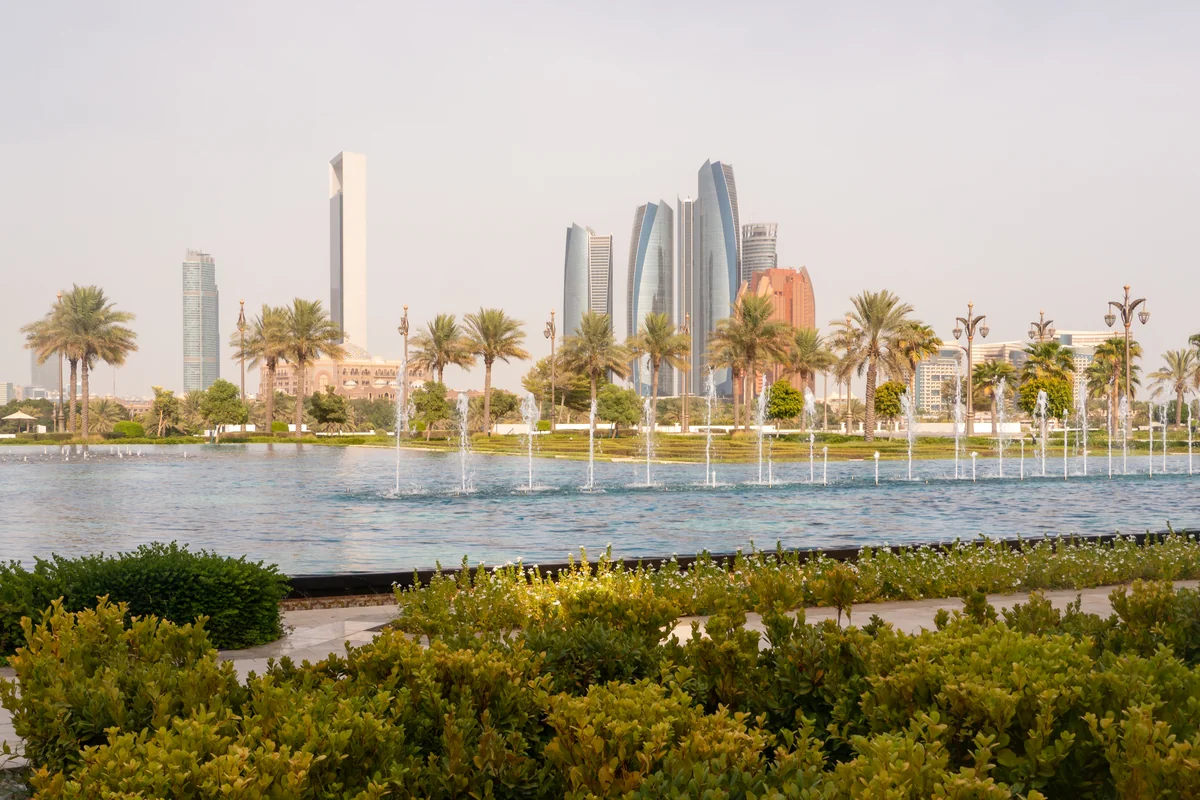
Situated at the western promontory of Abu Dhabi Island, Qasr Al Watan occupies a strategically symbolic position, gazing expansively out over the deep blue waters of the Persian Gulf. Geographically, Abu Dhabi is an offshore desert archipelago, where an arid climate once shaped the austere nomadic lifestyle of the Bedouin tribes. Raising such a palatial edifice of white granite and monolithic marble here is a powerful proclamation of conquering nature through pinnacle engineering and art. The palace’s creation process is a marvel of modern construction, as thousands of master artisans, architects, and craftsmen from around the globe converged to realize the vision of preserving Islamic heritage. The palace’s unique structure draws inspiration from traditional Mughal and Moorish architectural styles, featuring intricate geometric lines, perfectly symmetrical floral motifs, and gigantic royal-sounding domes. The central highlight of the entire complex is the main dome, measuring up to forty meters in diameter—one of the largest domes in the world housed within a government building, symbolizing the vastness of knowledge and supreme power illuminated by the light of truth.
The exquisite white marble and granite facade of the Qasr Al Watan presidential palace
Qasr Al Watan fulfills not only public administrative functions but also acts as a strategically visionary cultural institution, reflecting a governing philosophy rooted in transparency, openness, and respect for ancestral heritage. The name Qasr Al Watan translates literally as the Palace of the Nation, affirming that this is the common property of the UAE people and a bridge of knowledge between East and West. Stepping into the interior, visitors are instantly overwhelmed by the Great Hall, where space expands infinitely owing to pure white tones combined with the golden luster of millions of pure gold leaves applied by hand onto carved details. The exhibition areas inside the palace celebrate the monumental contributions of Arab civilization to humanity across the golden eras of mathematics, astronomy, medicine, and philosophy. The Qasr Al Watan Library and the Presidential Exhibition are priceless treasuries, preserving tens of thousands of rare literary works, ancient manuscripts chronicling the Arabian Peninsula’s developmental journey, and lavish diplomatic gifts presented to the UAE government by heads of state worldwide. Through these artifacts, the palace successfully conveys the message of a nation that cherishes its past, comprehends the present, and proactively shapes the future through the power of human knowledge.
Every step through the halls of Qasr Al Watan plunges visitors into a living museum of pinnacle craftsmanship. The Spirit of Collaboration Hall, featuring large doors of meticulously hand-carved sycamore wood, leads into the room where the nation’s historical decisions are forged. The Presidential Banquet Hall embodies traditional Arabian hospitality, where gigantic hand-woven Persian carpets stretch alongside rows of marble columns inlaid with intricate mother-of-pearl. The visual highlight that stirs the deepest emotions for anyone setting foot here is the artistic sculpture entitled “Power of Words,” created by UAE artist Mattar bin Lahej. This artwork employs flowing Arabic calligraphy to form the shape of a stylized globe, inscribed within with the immortal quote of the late founding father Sheikh Zayed bin Sultan Al Nahyan regarding education and knowledge as the firmest foundations for building a mighty nation. Natural light streaming through large arched windows casts reflections across polished marble, producing visual effects that shift by the moment, making the palace appear to breathe and move with the rhythm of time.
The majestic Great Hall featuring a resplendent gold-gilded central dome 37 meters in diameter
To fully appreciate the heroic beauty and refinement of Qasr Al Watan, choosing the right time to visit plays a crucial role for international travelers. Abu Dhabi’s subtropical desert climate divides distinctly into two seasons, with the period from November to April marking the most perfect time when daytime weather remains pleasant, fluctuating between twenty and thirty degrees Celsius. Exploring the palace is best initiated in the afternoon to fully enjoy the brilliant golden sunlight cascading over the white stone exterior, right before dusk falls and the outdoor artistic lighting system activates. As night descends, the entire exterior architecture of Qasr Al Watan ignites in a breathtaking sound and light show entitled “Palace in Motion,” recreating the proud story of the past, present, and future of the United Arab Emirates through mesmerizing 3D spatial projections cast directly onto the main palace facade.

Classic arch systems and quintessential Islamic geometric patterns inside the royal palace
For photography and visual arts enthusiasts, Qasr Al Watan is a sanctuary with countless camera angles boasting the golden ratio and flawless symmetry. The classic and most prized shooting angle is the central axis from the main gate looking straight into the center of the grand dome, where still reflecting pools generate a dual visual effect, doubling the grandeur of the structure. Inside the Great Hall, framing a shot from the mezzanine level looking downward captures the full majesty of white marble columns and a gigantic chandelier crystallized from thousands of sparkling crystals. The “Power of Words” calligraphy sculpture in the courtyard also serves as a deeply symbolic check-in spot, where camera lenses can capture the fusion of ancient script art and minimalist modern architecture. Those favoring close-up details can direct their lenses toward walls inlaid with colorful marble mosaic patterns, hand-carved gold-plated details on windows, or rare ancient manuscripts displayed under specialized museum lighting, yielding cinematic, luxurious, and highly academic imagery and footage.
The experience at Qasr Al Watan would remain incomplete without the sensory elevation provided by premium traditional Middle Eastern gastronomy. Right within the palace grounds and nearby areas belonging to the royal residential complex, restaurants serve guests traditional dishes prepared and presented to world-class fine dining standards. Diners can embark on a culinary journey with classic appetizers such as velvety hummus fragrant with pure olive oil, freshly oven-baked flatbreads, paired with lamb stews simmered with saffron, cinnamon, and premium dried nuts. Notably, the ritual of traditional afternoon tea paired with Arabic gahwa coffee brewed with cardamom and saffron, served alongside premium sweet dates in intricately carved brass pots and cups, is an unmissable cultural experience. This is a moment for travelers to relax their souls, savoring the flavors of the desert within a serene, luxurious atmosphere imbued with the noble resonance of the Gulf elite.
The luxurious council chamber where head-of-state diplomatic protocols take place
Entering a space of national stature and solemnity such as Qasr Al Watan requires international travelers to master and strictly observe cultural codes and basic diplomatic etiquette. Regarding attire, while traditional local garments are not required, visitors are obliged to dress politely, elegantly, and modestly to show utmost respect for the government institution and Islamic cultural traditions. Men should wear polite collared shirts or polo shirts paired with tailored long trousers, while women should select dresses falling below the knee or long pants paired with sleeved tops covering shoulders and chests, avoiding excessively sheer or tight outfits. When moving through official exhibition areas, maintaining a calm demeanor, speaking softly, and strictly complying with regulations regarding permitted photography zones demonstrates the refined behavior of an exquisite traveler. Refraining from touching exhibits, especially ancient manuscripts and gold-plated art sculptures, not only safeguards humanity’s priceless heritage but also preserves the inherent solemnity of one of the most magnificent and esteemed presidential palaces on the modern global map.
Panoramic view of the palace grounds glowing with artistic lights reflecting along the Persian Gulf
As night falls and the mystical light show Palace in Motion blankets the white marble arches, Qasr Al Watan emerges like a fairytale masterpiece stepped out of One Thousand and One Nights in the 21st century. The flawless synthesis of traditional Islamic art and contemporary architectural stature has turned this place into an eternal symbol of pride and soaring aspirations for the United Arab Emirates.
Visitors can easily explore this magnificent presidential palace when participating in the Dubai – Abu Dhabi Tour voyage featuring top-tier resort services and benchmark experiences.